Water Lantern: A Festival of Reflection 

It was a warm summer evening, when my sister and I embarked on a journey to the far east or rather to partake in some food and traditions imported from Asia to the United States. This particular evening, we were attended a Water Lantern Festival. One of the amazing things about America is our immigrant roots, welcoming people from across the globe. These people come and bring with them their culture, traditions, beliefs, music and cuisines. It is what makes America a rich, cultural tapestry of endless variety.

We began our journey by stopping at a Thai restaurant which is owned and operated by Thai people. I always get excited when I can stop at places owned by people who intimately understand the cuisine they are cooking, whether that be because they are originally from there, have family originally from there or spent enough time in careful study to obtain a level of mastery in the authentic way the cuisine ought to be prepared. As someone who doesn’t necessarily have the money to hop on a plane to experience authentic Thai food, I appreciated the opportunity and the culinary skill of the chef. Dinner was a delicious red curry, since I cannot resist a menu item with Thai Basil and my sister had their drunken noodles of which I stole a few bites. 

After dinner, we headed over to Harrisburg to the Italian garden where the Water Lantern Fest would be held. The Italian garden is beautiful in its own right, but it was extra festive for the fest and the weather proved to be perfect. It wasn’t too hot, nor was it chilly. The blue sky was clear overhead and it promised to be a lovely evening. It took us a little time to locate the actual stand to obtain the water lanterns as the park was open for all to enjoy. We did eventually find the true “entrance” to the fest by asking some people for directions and headed up the hill to obtain our goodie bags and lanterns. After claiming our prizes, we walked around the end of the manmade lake to find a good spot under the shade of a tree. 

I had attended a lantern fest before, where you release lanterns into the sky which took on a more party atmosphere for the people attending with music and bounce houses, bonfires and food trucks. This one had most of those things tucked away from the main event so that you could still enjoy vendors, food and other activities, but it did not distract from what you were there to do.  Nor was the crowd quite as big as at the Lantern Fest which was just as well, since I tend to favor smaller events to the massive crowds. What I enjoyed about this one was the more subdued and even reflective atmosphere. Flags proudly proclaimed things like gratitude, healing, love and connection, encouraging you to reflect rather than party. The crowd was fairly quiet with many people conversing with their heads together, smiling and laughing. The goodie bag even included conversation cards with prompts to start deeper discussions with the people you were with in order to foster deeper connections. My sister and I were delighted by these and have taken them out at other occasions and have found them to be great at prompting conversations. 

The kit for the lantern included a wooden base, a lantern which could be written upon and a small led candle to turn on and place in the lantern. We noted that most of the lantern components could be reused, recycled or easily be broken down in the environment. Being a manmade lake, the lanterns were in no danger of polluting local waterways or interfering with native wildlife. In addition, the event organizer One World proudly supports water.org. Water.org is an organization which focuses on increasing global access to safe drinking water. They include an informational pamphlet and easy options to donate to raise money to support this cause. I love it when an event is able to go beyond just an enjoyable evening and helps to provide a positive impact.

I decorated my lantern with things that I was grateful for and my sister decorated hers with art including a celtic knot and a flowers. Once the sun slipped beneath the horizon, they asked us to gather around the edges of the lake and to pause for reflection. Then they invited us to release our lanterns to allow them to float upon the water. One by one, they spread out, glittering together like stars. As I stepped back to take in the sight, I was able to let out a deep sigh of contentment. Naturally, we snapped a few photos, but mostly my sister and I just walked along the path enjoying the sight and quietly conversing. 

It should be noted that while my dinner was still firmly rooted in its culture of origin, the Water Lantern Fest was less so. Water Lamps originated in India and spread throughout Asia most likely through Buddhist diffusion. They appear in many festivals and have many meanings ranging from worshiping gods, praying for a good marriage, welcoming happiness, guiding the spirits of the departed or welcoming happiness. In Vietnam, there is a town which releases them quite frequently. In China, they are released throughout the year. In Japan, they usually release them to help guide the souls of the dead to the spirit world and allows for reflection for lost loved ones. Sometimes, things are lost in translation especially as it gets diffused across different cultures as it has in Asia since they have a lot of different meanings all over the continent.

Still, despite being a bit unmoored from its roots, it still felt as if it were in the spirit of the original customs. Where other events encourage a sort of frantic, frenanic frenzy of activity, this festival invited you to slow down, to pause and reflect. It encouraged building relationships between people and being more mindful of your surroundings. They also allowed people to come up to a microphone and share their stories. Some people shared their loss, others shared their victories, whereas others shared gratitude. There were lanterns that people dedicated to their loved ones. In a sense, the festival was a melting pot of the many traditions associated with water lanterns from Asia and transforming into something uniquely American. It certainly was not an authentic experience, but it falls under my “good enough” category. 

How can you experience a Water Lantern Fest?

The best way is to go to their website WaterLanternFestival.com and click on your state to see when they might be coming to you. I encourage you to buy tickets early since they increase in price as the date approaches. 

However, there is nothing to stop you from ordering some lanterns and LED candles and hosting your own smaller version with a group of friends. Although, it doesn’t quite hold a candle (pun intended) to seeing a few hundred floating all together, their reflections shimmering in the darkness of the water. It is also important to note that there may be local ordinances preventing such an activity and you would need to ensure proper clean up. After all, we want to keep our local environments beautiful so we can continue to enjoy it for years to come.

Completed: July 15, 2023

Cost: $36 per person (was advertised as $27 but there were vendor fees)

Miles from home: 45 

Travel Tips: The Art of the Deal

To continue on my tips for traveling, we’re going to talk about deals, their pros, cons, constraints and other considerations. Because we’ve all seen those travel blogs and social media posts promising cheap travel or insider tips and it can be tempting to jump on what seems to be an offer you can’t refuse, but there can be pitfalls that even the savviest person may find themselves prey to.. Here’s my tips on how to help you find good deals and how I keep costs down when I travel. After all this is a budget bucket list blog and I hope to show you how to live a life full of adventure without having to go into debt to do it.  

In a previous post, I discussed a form of reverse travel planning of considering all your constraints ahead of time and then picking your destination. There are some people who will do a form of reverse travel by first picking the time they want to travel and then just look for deals to any destination and go based on that. I had a work colleague who took off for three weeks every summer and would travel for about one to two of those weeks being highly flexible with the dates and going to wherever was cheapest during that time. She enjoyed using Kayak to help her find those deals and then usually backpacked her way around a given country. There are many other websites and social media pages devoted to helping people find cheap flights and accommodations. Some people swear by hello going and others will literally troll websites for mistake deals and price track. If you aren’t too picky about where you’re going, these are great resources and can help you cross off your bucket list for less than you’d ever imagine. 

Photo by Pixabay on Pexels.com

Checking out a cruise line for last minute deals for cruises departing in only a few weeks or even days, could yield fantastic savings. I remember seeing a cruise to Iceland and the British Isles for two weeks for about $700 a person for a balcony suite. Booking it in advance would have been about $2,000 or more. So if you don’t much care where you go, then finding a destination at the last minute could open up a world of possibilities.  

However, there are some considerations before grabbing your credit card and jumping on cheap fares. As previously discussed, one may find that you’ll be traveling to the destination when the weather is terrible for what you want to do. If you planned on going hiking in the mountains of Colorado, going in January might prove difficult given the snow cover, but if you want to go skiing then it’s probably the perfect time to go! The other consideration is the cost of the other parts of the vacation. The flight might be cheap but the accommodations are astronomical or it’s a flight to the middle of nowhere and it will cost you an arm and a leg to get to the actual place you want to go. Perhaps as with Rayanair the flight is cheap but it’s out of an airport that isn’t easily accessible necessitating extra travel time. It may be during a big festival that closes down the sites you want to visit or if you’re relying on public transit, there’s been a series of strikes over the past several months with no end in sight. It’s important to research the destination first before hitting that payment button. 

While a cruise may seem like a surefire way to ensure that you will go to a destination during a prime time to visit, if you were hoping to join the excursions you’ll probably find them booked up meaning that you’ll be running an increased risk of being left behind. Be certain to plan plenty of extra time to return to the ship as you’ll be exploring the ports on your own. 

Now before you resign yourself to only traveling during peak seasons, the off season can have its charm and with some careful timing, it may be the perfect time to go. Consider Cornwall in the UK. Its off season is the winter, many attractions are shut down, the weather isn’t the greatest, and the beaches are home to freezing waters. One may think me insane for having traveled towards the end of February. However, my visit coincided with the Half-term break for school children. This meant that attractions typically closed for the winter were open to welcome parents and children looking to pass the time. Ticket prices were still lower than during peak season, saving me money for sight-seeing. Additionally, the crowds were much lower than during the peak season because most of the people visiting were locals rather than throngs of foreign visitors. 

Photo by Rachel Claire on Pexels.com

The wonderful part of Cornwall is that the weather is actually fairly stable throughout the year so even though the summer is better weather, with the exception of one day, the weather was actually quite nice. Yes, it had frequent cloud cover, but the clouds are what help keep the climate so stable. I avoided crowds, had cheaper tickets and was still able to access everything I wanted to see by timing my visit with half-term. So before crossing off a destination because it’s not the “best time” to visit, take the time to investigate why. If you’re not someone who wants to lounge about on the beach but rather want to take in the local culture, see their museums and visit religious sites then perhaps a trip during the rainy season won’t be so bad, so long as you don’t time it with the peak of the rainy season. 

Personally, a beach is a beach, so I see little reason to travel far just to lounge about when I have plenty of beaches nearby my home, but to each their own. I’m not here to judge, I’ll be a bit quizzical about it, but if you’re on the beach it means you aren’t crowding my museums or historic sites so by all means kick back and relax! 

There are other tricks to keeping costs down. One of my favorite tricks comes from my time as a student studying abroad. Rather than paying to eat out for every meal, I would go to the local grocery store to pick up bread, meat and cheese. I could pack these in my backpack as I ran about a city which gave me extra time to sightsee and saved me a lot of money. For the cost of one meal out, I was able to eat two to three meals. It can certainly be fun to sample the local cuisine and to enjoy a hot meal, but if one is trying to keep a lower budget then this is a great way to do it. Of course before traveling ensure you’re done your research into what food items are generally safe to purchase for example fresh fruit may not always be safe unless you peel them or wash them yourself. One should always be mindful about the potential for food borne illnesses. 

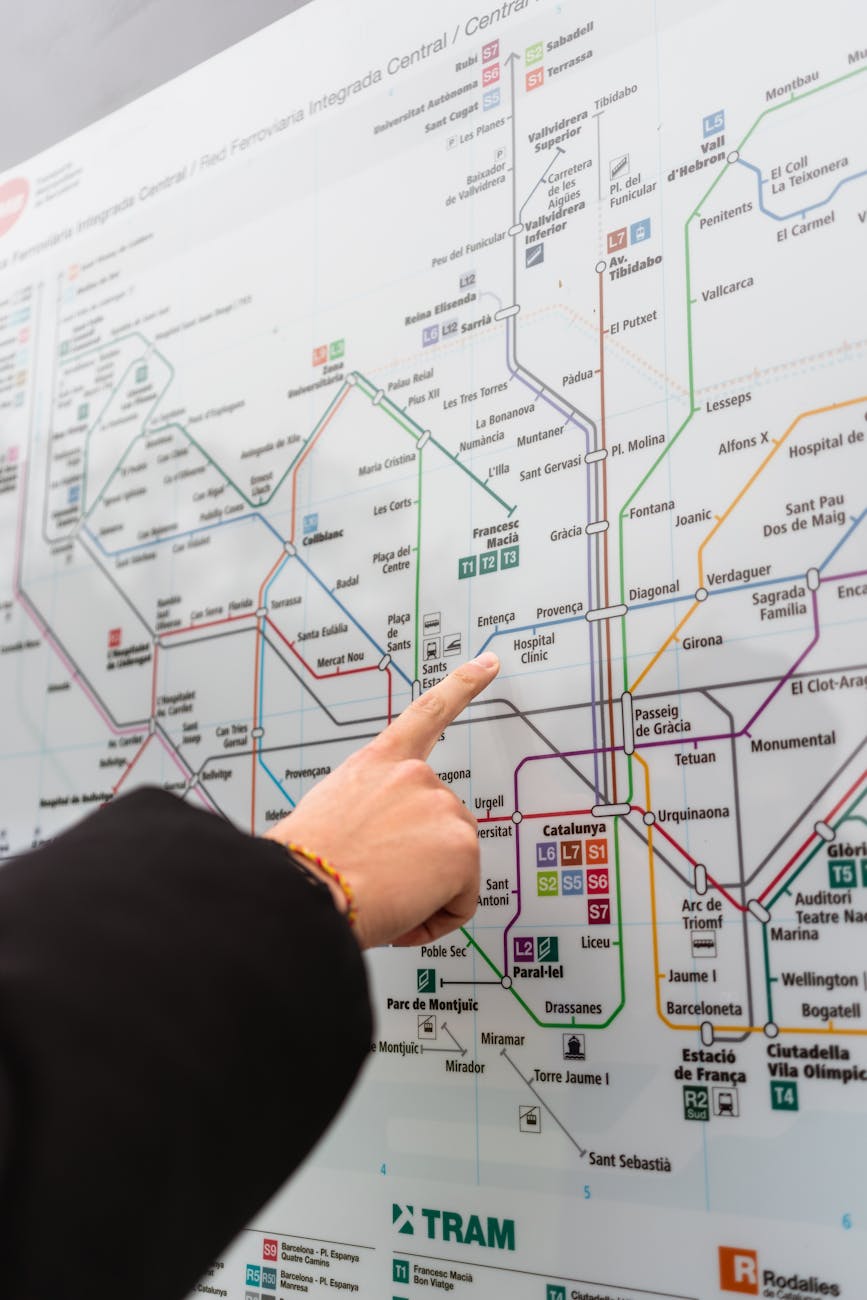
Another way I kept costs down while traveling was making liberal use of public transportation. It can be a bit tricky to use, but I will cover that in a later post. If you’re traveling to a major city the chances are pretty good that you’ll have access to half decent public transit to most major tourist destinations. I especially liked the transportation in Rome because the subway system was marked with pictures of the popular attractions making it a breeze to navigate. 

Photo by Paul IJsendoorn on Pexels.com

When it comes to accommodations, there are ways to keep the costs down. As with everything, do your research. In the United States, many national and state parks have affordable cabins to camp in. Although they may not be more than a roof over your head with limited access to toilets, electricity and running water, so double check what sort of site you’re booking and be sure to do it in advance since they’ve become quite popular in recent years. Perhaps the country you’re visiting has a similar system. 

In many European countries, youth hostels are the cheapest places to stay. The trick with them is to try and find ones in the safer part of the city and to pay a little bit more for your own private room rather than more open areas as there are some safety concerns with using them. There are some social media groups for people to house sit or even pet sit in various cities. Some groups will do house exchanges among members where they come to your house and you go to theirs. I shouldn’t have to outline the risks to these particular ventures such as people stealing from you, abusing your pets, accusing you of stealing or damage to the home, getting to the destination and finding out they were dishonest about their housing, stalking, etc. That isn’t to say staying at a regular hotel doesn’t have risks, but in general they are less risky than going to a stranger’s house from the internet. However, this is one way to get cheap accommodations. 

You can also use tools to price track or even do it yourself. I found that for Norwegian Cruise Line for whatever reason booking 5 to 6 months out from the fall season yielded the best price (this may have changed). If you’re someone who is just starting to save up money and it’s going to take you several years then it might be a good idea to start tracking the prices of flights and accommodations for where you want to go. You can see when a company typically offers their best sales and adjust your plans accordingly. 

One other trick is using your connections. My recent trip to the United Kingdom was only possible because I was invited to stay for free at a friend’s long term rental. That saved me about a third of the cost of the overall trip, turning it from unaffordable to affordable. My trip to Colorado and Montana was made possible by staying with some distant relatives (my mother’s uncle and cousins). My trip to Vermont was with a friend of my mom’s and while we were up North, we spent some time in the Boston area with another family friend. Be sure that if you’ve been invited to stay, you extend an invitation to your own area. I am sure after reading my blog, you have lots of ideas of fun things to do in your area to make their trip truly memorable.

Another way to use your connections is inviting them along. A hotel room split among several people can drastically reduce the cost (just ensure you know how many guests a room can accommodate and watch out for charges for extra guests). When traveling to Michigan solo, it made more sense to fly since the cost of gas and tolls was almost as expensive and it was significantly more time. However, when traveling with a companion suddenly my cost was halved and I had someone to switch off driving, which made driving the much more affordable option. My friend worked for a rental car company and so by traveling with her we were able to save on a rental car when I was going down to North Carolina. Another friend’s parents had a timeshare and we were able to use it for a hotel. 

As you can see there are many ways to help keep the costs of travel down with some creativity and flexibility. 

Ocean Dreams

As a native of Pennsylvania, I am relatively close to the coast meaning that a trip to the beach can be an easy day trip. It’s about 2 to 3 hours away depending on whether I want to enjoy a direct ocean front of the Jersey shore or a salt-water bay in Delaware and traffic. This means that I grew up going to the beach, not every summer but with enough frequency for it to seem like a fairly common experience. 

However, if you dear reader have never been to the ocean it’s rather difficult to explain in words the sheer vastness that one is faced with when standing upon the shore. Yes, I have certainly spent time on the shore of a lake and enjoyed swimming in them, but most of them do not hold the same awe as the ocean. The sound of the water echoes miles inland. The power of the waves striking the shore push and pull you alternatively, sometimes rushing in with such force it pushes you forward or even down beneath the surface. Sometimes the pull of the water is just as powerful, ripping you from the safety of the shallow water, dragging you out towards the depths, in the infamous rip tides. To stand at the shoreline of the ocean is to stand at the precipice of nature’s power. 

The only other body of water that held the same primal awe for me, was Lake Superior when the strength of the November winds proved too treacherous for even the most stalwart of ships to traverse. Perhaps, the Great Lakes are the only bodies of water to truly rival the ocean in terms of power and danger. 

Yet, despite the sheer awesome force that is the ocean, even with its dangers lurking just below the surface, a day at the beach is one that I look forward to. I have many fond memories of being packed up into the car and driven to the beaches of Delaware or New Jersey. The water is not the crystal blue featured on postcards from the topics, but instead may range in color from gray, to navy, to even a sort of olive green depending on the weather and time of year. 

I have spent many long hours diving into the waves, letting them take me as they will either towards or away from the shore. I have pushed and challenged myself against the ocean’s might fighting both against its power. There was something satisfying in defying the fury of the waves. It was also just plain fun to let myself be battered about, the thrill of the sheer force behind the ebb and flow of the ocean’s waves. I have tried my hand at bodyboarding to some success, but, as of this writing, I’ve never gotten to surfboard – it’s on the list.

When I was not deep in the waters, I would walk along the shore line enjoying the playful echoes of the more powerful wave which swirled about my ankles bringing in and revealing seashells. When one would catch my eye, I’d bend down and pick them up admiring the jewels of the sea. Although, I encourage you dear reader to leave the shells be or at least only take the choicest ones for I have since learned that our obsession with shell collection has had a detrimental effect on the shoreline. It is far better to take pictures and leave the shells behind or only take a very few if you absolutely must.  

I have certainly taken the time to build sandcastles and make sculptures from the sand. I have enjoyed the boardwalks snacking on popcorn, devouring ice cream and taking in the ongoing carnival just off the shore. Although, one of my favorite activities is honestly, taking a low sitting chair, positioning myself in among the waves and reading a good book. I love listening to the sound of the waves as I read and to feel the gentle caress of the waves against my legs. 

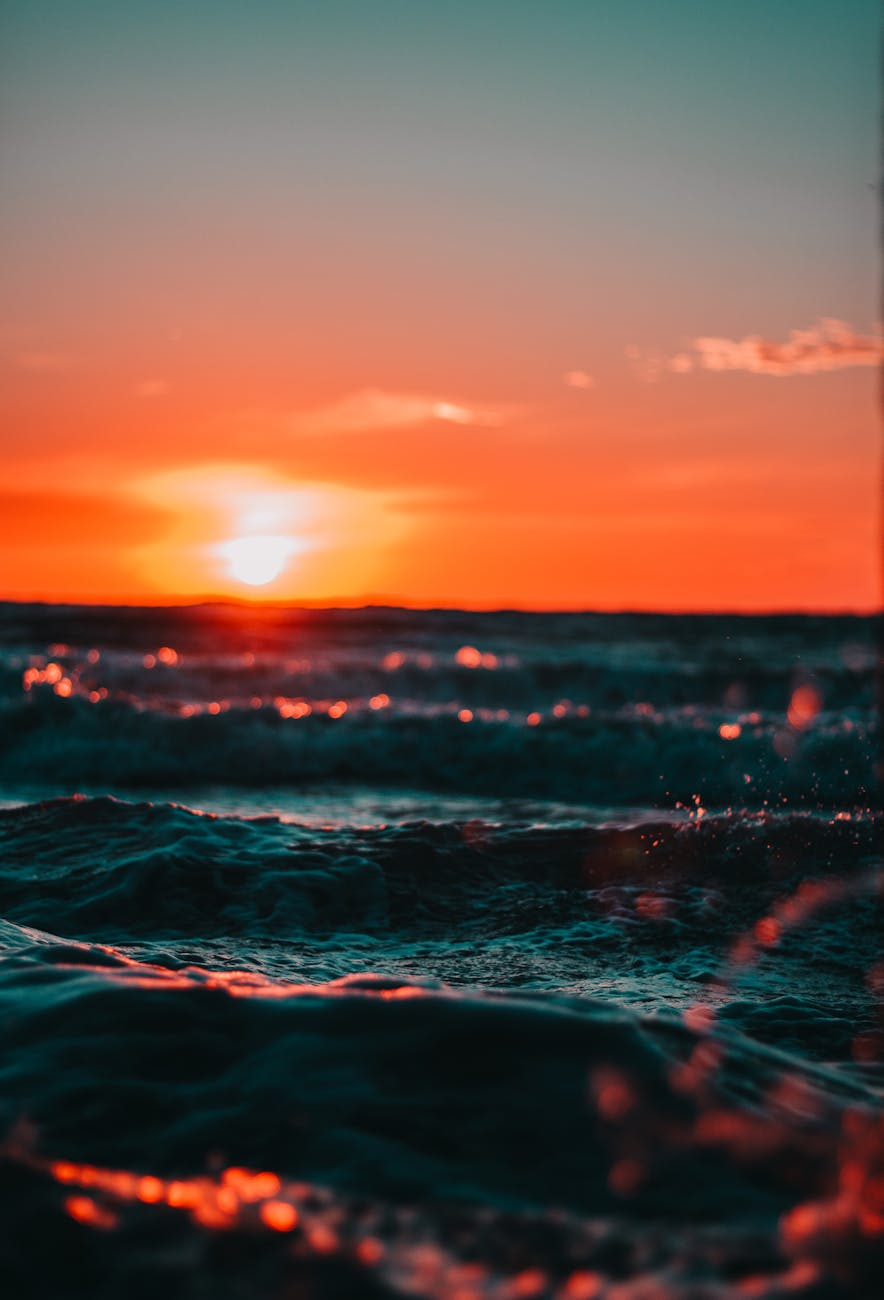
As an adult, I will typically spend the morning wading in the shallows and swimming in the deeper waters until the sun begins to beat down oppressively. After enjoying a picnic of whatever food I’ve packed, I pull out my book position myself in the water and start to read under the shade of my umbrella. After an hour or so, I will go for a long stroll along the shore line, keeping my path to where the sand and water meet, splashing in the waves as they swirl about my ankels, scouring the landscape for the choicest of shells until I begin to tire. When I return to my umbrella, I read more and then it’s back into the water I go. I may keep up the pattern of reading and swimming for several more hours until the sun begins to get low in the sky and I know that I should probably head home. A handful of times, I have stayed long enough to witness a sunset and linger until it was dark. That was usually when I was spending more than a day. 

I have gotten the chance to enjoy beaches in various parts of the world, the north Atlantic, the Mediterranean and the Caribbean. I had spent a week in Rome and so one of the days, I decided to take the train over to the Mediterranean with my friend Erica and her friend Danielle. The three of us happened to make fast friends with two other American families who were also visiting Rome with their children. As it turned out they were two military families who took it upon themselves to ensure that the three young American women were taken care of. The three groups took turns watching one another’s items which allowed us to fully enjoy the ocean even with the advisory in place to be careful in the water. The men ensured that we were watched and safe the entire time. I am truly grateful to those service members who saw our protection as an extension of their duties even when not on official military business. The beaches of Rome were not all that different than the beaches of North America. The ocean’s color was almost the same and it carried similar risks. 

The beaches of the caribbean were similar but in many ways different. The biggest difference was of course the color. The water was crystal clear allowing me to see the tiny fish swimming in the shallows. Farther out the color was a bright, blue rather than the grayish tones of the north. The waves were gentle, almost lapping against the shoreline rather than crashing into it. Of course, the vegetarian was also different. The northern climates is populated with shrubs and tall grasses jutting out of the sand, whereas the southern climates enjoyed towering palm trees which provided shade against the harsh sun. I would not say it was necessarily better or even vastly different, but it was a gentler experience. I can certainly understand the appeal of the calm, crystal clear waters. 


Perhaps, it is my own more gothic nature, that I find myself drawn more to the wild oceans of the north over the calmer, gentler seas of the south. Give me the rough, rugged and untamed seas with their biting winds and frigid, gray waters. I do so enjoy a dark sky and a cool ocean as the perfect backdrop. Fall is probably one of my favorite times to visit, when the crowds of summer have dissipated and the weather starts to have a bit of a bite to it. I don’t mind needing a blanket to curl up under against the winds. I also enjoy the early spring, when the sea is still wild from the winter and the water carries winter’s sharp sting. Whatever the time of year or the weather, I do simply enjoy the ocean. A day on its shore is always relaxing and a bit exciting. 

How can you enjoy a day at the beach?

Obviously, if you are along the coast line, spending a day at the beach is relatively easy. Many public beaches are free or have only a minimal fee for parking. As hard as it is for me to believe, I have met people who despite living within a 2 to 3 hour drive of the coast have never been. By all means if you do live within a day’s drive, take some time to enjoy the coastline. As I wrote above, the shore does not even need to be enjoyed during the peak season. I found my favorite times to go were in the spring and fall during the off season when the crowds were lessened. If you go in the fall, the water will most likely still be warm from the summer, but the colder water can be exhilarating in its own right. 

If you are not near the coast line, there are of course lakes for you to visit. Although, I will say a day at a lake is quite different than a day at the shore with few exceptions. However, it is not so different that you cannot enjoy similar activities. Each person is different and may find different thresholds for meaningful differences than I do. To me at a certain point, a beach is a beach whether that is in the North Atlantic or Caribbean. To others, there may be such a vast difference between the two kinds of beaches as to warrant the necessity of visiting one or the other. It was my general feeling that at a certain point a beach is a beach which led me not to want to spend too many days at tropical beaches when in the Caribbean and South America. As it turns out, I am actually more fond of northern beaches anyways. I absolutely loved the beach in Cornwall and it was in the middle of February when we went.

As always, beauty is in the eye of the beholder. You, dear reader, may decide that a day at the lake is equal to a day at the beach. You may also decide that you want to check off tropical beach rather than any old beach. To that, I say, tack on a beach day to a trip if you can. If like me when staying in Rome, you’re spending a week somewhere and you can easily access a beach, then take the time to visit the shore. I do not regret spending the day in the Mediterranean. It was a lovely day to relax and recover from trekking all over the city. 

Completed: childhood 

Cost: Gas money and a packed picnic ($100) 

Miles from home: Nearest 135 miles to nearest beach (approximately 3 hours)

Travel Tips for Travel: Preparation

One may be forgiven for thinking that I’ve already covered preparation in the packing section. After all, is that not where one places all the things that one will need in the luggage? Well yes, but this is a dedicated section to logistical and necessary paperwork considerations. 

Americans have been a bit spoiled since the advent of commercial flights given that our passports have pretty much cleared us through most countries without much fuss. However with the increased concern for security over the years more and more countries are implementing pre-checks and restrictions to people looking to cross their borders. For example, when I was a student studying in Germany I could have easily hopped a plane last minute to visit the UK without any additional paperwork than my passport. In fact, I was a little disappointed that most of the borders I crossed didn’t require any stamp or passport check during my time in Europe because of the European Union allowing for easy travel across borders. However, on my recent trip to the UK, I was required to download an app and apply for an Electronic Travel Authorization. It’s essentially a pre-screening tool for people intending to travel into a country and it is linked to your passport. They’re intended to help catch high risk individuals who may overstay their welcome or pose other security threats. I imagine that more and more countries will be adopting these in the future. Some countries require your passport to be no more than 6 or even 3 months from expiration. Other countries require visas, even for US citizens. As always research the country’s requirements before visiting and do not assume that because you were able to freely cross even a few months ago that you will be able to freely cross again as laws are constantly being updated. 

Another lesser known consideration is vaccinations. During COVID some places were requiring proof of vaccination and even to this day there are countries which require you to show proof of a yellow fever vaccination. While a COVID shot was easily obtained at a local pharmacy or doctor’s office, a yellow fever vaccination is less readily available and may require an appointment at a travel clinic. Keep in mind most of these vaccinations are not necessarily covered by insurance and will cost you out of pocket to obtain them. Double check which vaccinations are covered by insurance and arrange with your doctor to obtain them there since many travel clinics don’t accept insurance. 

Photo by Nataliya Vaitkevich on Pexels.com

Now just because a country doesn’t require a vaccination doesn’t mean you shouldn’t consider visiting a travel clinic anyways. While traveling to many countries along the equator is affordable they do tend to be places with higher levels of disease and thus pose an increased health risk. My personal recommendation is to visit the U.S. Department of State for travel advisories. This website often lists potential concerns for travelers including diseases. When going on a mission trip to Haiti, I invested in some malaria medication to ensure I did not contract it. Not everyone in my group did but given that mosquitos adore me, I felt that I ran a higher risk than others. This website can also tell you about other risks that a country may pose. It may advise you to stay away from certain areas or of ongoing conflicts that the news may have not covered. Be mindful that when you go to the travel clinic they will try and upsell you additional things, be certain of what you want before you go in to avoid unnecessary expenses. 

When looking up information on the US Department of State, I make sure to write down the US Embassy information for the country I will be visiting and you can even register your visit with the US Consulate to help smooth out processes should the need arise. I always make a copy of my passport and other travel documents, not that these will get your very far but they are helpful in emergency situations where they’ve been stolen or lost. 

In addition to safety, be sure to look up the local emergency number for the country you are visiting. Dialing 911 is not a universal number which will connect you to emergency services. Be sure to program that number in your phone along with the number of the US consultant for the country you’ll be going to. 

I also try and google “things Americans should know about traveling to x” to help keep me appraised of local laws we typically run afoul of. Did you know in certain countries wearing camouflage is illegal? Not that I am a fan of wearing camo for myself, but I know many Americans are. There may also be certain customs and social expectations that we frequently break through ignorance. For example, while visiting in Boston, I took up with a few German tourists and we went out to eat together. I was horrified when I realized that they were only going to round up to the nearest dollar amount as a tip instead of giving the customary minimum of 15%. I had to explain to them that what they were doing was extremely rude to the waitstaff. See, Americans aren’t the only ones who mess up when traveling abroad. It is easy to assume similarities when visiting other Western nations since we are so culturally similar in most respects, but still do your research and don’t be afraid to inquire about local customs. If people see you are earnestly trying to be polite, they usually appreciate the effort and are happy to educate you if you miss something. 

Now when traveling it can be tempting to simply call your bank, inform them of your plans and then use your credit or debit card. However, this can lead to unexpected charges and cost you money in the end. Many bank cards charge additional fees unless you have obtained a card intended for travel, so double check with your bank to avoid unexpected costs. Additionally, consider going to the bank and exchanging your money for the local currency. As always double check the currencies that a country accepts. Many Caribbean and Central American countries accept dollars when visiting. As of this writing, Venezuela even accepts bitcoin if you happen to have that. Keep in mind, it can take several days for your bank to get the money in so my advice is to do it two weeks prior to your departure that way in case you make a mistake, you have time to rectify the situation. Remember most banks will exchange notes and not coins so when you are abroad be sure to use up your coins when possible to maximize your ability to exchange the money upon your return. Always take more money than you think you’ll need as you may need the money for tips, parking and other miscellaneous items.Your cards can be lost, stolen or mistakenly locked out. You’ll be grateful to have cash to get you through emergency situations. 

The other phone call to make is to your phone company for potential international plans. AT&T offers a 12 dollar a day plan and you only pay for the days you access their network. It’s not terribly expensive if you plan to keep your phone in airplane mode and only plan to use it for emergencies as I personally don’t recommend using your phone abroad. Instead, if your phone is unlocked you can purchase a sim card or download an app for an electronic sim card for the country you’re in. Often you can purchase plans for about 10-15 dollars for an entire month rather than per day. If your phone isn’t unlocked, you can either get it unlocked or purchase a cheap phone for purposes of GPS and local phone calls. To communicate to people back in the US, I currently recommend Whatsapp as a way to make phone calls without incurring tons of additional costs. Along the same lines with the phone, don’t assume your apps and things will work to access items like tickets. Always download the tickets to your phone or print them out and pack them. 

Photo by FOX ^.u11bd.^= u222b on Pexels.com

Depending on where you’re going, you may want to consider purchasing a camera instead of using your phone as one. Certain places in the UK, are known for phone theft and there are plenty of videos of thieves snatching phones right out of the hands of unsuspecting victims. Don’t think that because you’re going to a first world country that you won’t encounter crime. I had a work colleague whose phone was stolen off the secretary’s desk. Within minutes the thieves had broken into her phone, accessed a money transfer app and stole $1,000 out of her bank account. Her photos were never recovered and she was out $1,000 because neither the bank nor the app would reimburse her. It can and does happen here at home and abroad, so consider the risks carefully. 

Along with other electronic devices, make sure you know what the electrical outlet situation is like in the places you’re going to. Nothing would be more frustrating than arriving with a low battery only to discover that the plug you packed doesn’t fit! If you think you’ll be going to a lot of different countries you can purchase one that has different attachments and then you won’t have to worry about it. 

Finally consider the pros and cons of travel insurance. Are you traveling to a place where you can access their healthcare? What sort of healthcare are they offering? Are you planning on going hiking in the mountains? Do you have emergency evacuation covered? There are lots of different options and some of them are practically scams promising coverage for things that in the fine print aren’t as covered as one would think or offer coverage for things that you could have gotten for free or low cost. Research, research and research.

When encountering issues with my phone abroad, I was grateful I had the foresight to print out my tickets having solved the problem before it even happened. When driving in a foreign country, I had already looked up the common road signs so I knew what they meant and avoided potential tickets. By looking up potential risks, I knew better than to pet the local cats as they may have been carrying rabies (it was very tempting to befriend them). Although, I suppose  for $700 I could have gotten a rabies vaccine and then felt free to pet, so maybe next time? With the right preparation, your trip can run smoothly even with unexpected difficulties and pitfalls. 

Did I visit a Botanical Garden or Paradise?

The title is a slight exaggeration, but I think the comparison is apt. After all, in three of the world’s major monotheistic religions, paradise is a garden. 

So, what exactly is a botanical garden? Aside from being a beautiful place to wander around in quiet contemplation, botanical gardens are gardens with a documented collection of plants for the purposes of scientific research, education, conservation and display. They feature the botanical names of the plants. Hence the name botanical garden – not necessarily the cleverest of names, but it certainly gets the job done. 

Some of my earliest memories consist of gardening. Lacking cable, one of my favorite pastimes was actually watching “The Digging Show” or my parents gardening. I loved spending time among the plants and the flowers learning their names, cataloging their color, inhaling their scents and at times nibbling upon them. I quite enjoyed the various herbs and was quite familiar with which ones were safe for me to consume and which ones were best avoided. I spent many hours going to various nurseries. As my parents shopped, they became my playgrounds. Not that I disturbed the merchandise (I had been taught to look not to touch), but I still explored, searching out new plants and finding the statutory and other garden decor scattered about. Our garden was huge and well known in the neighborhood as one of the best. We even had a photographer request to come and take photographs of our garden. 

It should come as no surprise then, that I love going to botanical gardens to stroll among the flowers and greenery. Each one is so different which only serves to highlight the vast biodiversity of our planet where no two gardens are alike. Some focus on specific areas while others span ecosystems throughout the planet. No matter what I always find a bit of wonder in them as I am taken in by the majestic blooms and vibrant hues of the leaves. I’ve seen giant lilly pads and a huge array of orchids. I have been overpowered by the sweet scent of roses and delighted by the scent of apple blossoms.

The architecture of these gardens are often a highlight as well featuring delicate archways and imposing pillars. Many of the gardens have various fountains and waterways snaking through them. They may even have plunging waterfalls. Longwood Gardens in particular is known for its spectacular water show which is predominately displayed in the center of the gardens. However, it is also home to more humble buildings, small wooden cottages or small towers tucked away in forested areas.  To traverse the gardens is to move from landscape to landscape each with its own unique take on what makes a garden. There are times when the juxtaposition of the two can almost seem jarring as one moves from one area to the next as if the doorways themselves are portals to between worlds. 

Each world is a delight to the senses and one hardly notices the passage of time or the encroaching heat of a warm day or the way the chill of a winter begins to seep its way into your bones on those cooler days. In all seasons, the gardens offer something new as they are always changing with the pattern of the year. It means there is never a bad time to visit and one can visit quite often as there is always a shift. What was in bloom only a few weeks ago may have faded and a new plant has come to take its turn in the spotlight. The gardens can be enjoyed both in quiet solitude or with a group of friends. 

I find that day among the plants and flowers is as refreshing as a day at the spa. A connection to nature is an important part of mental health. Time outdoors helps to reduce stress and anxiety. Fresh air is also correlated with increased physical health. Exposure to nature is associated with better cognitive function. Certainly spending time in such oxygen rich environments is good for your lungs when we spend so much of our time inside. So yes, it can certainly feel like one has discovered a small slice of paradise when visiting as the stress of the outside world begins to melt away. I certainly envision heaven as a botanical garden, populated with cats of course, with ready access to a vast library of books and tea. 

How can you visit your own slice of paradise?

Luckily, botanical gardens are found throughout the country and indeed the world, so finding one should be relatively simple. I recommend wearing comfortable walking shoes and to pick a day when the weather is particularly good. You will most likely want to bring some water as they are often deceptive in size – they are always bigger than you anticipate. Armed with proper hydration and shoes, you will ensure that your beautiful garden experience doesn’t become hellish. 

Completed: First completed in childhood in a visit to Longwood Gardens

Cost: $32 per person (can vary depending on time of year)

Miles from home: 45 miles from home

I have also visited other gardens throughout the country as I am always up for visiting a garden.

Travel Tips: Packing

One might not think that this topic deserves its own post, after all packing is pretty simple, gather things, throw in luggage, take with you, done! However, this is a vital part of travel as it can make or break your whole trip. Pack too little and you may find yourself in a rather awkward situation or in need of some vital item that you cannot precure easily. Pack too much and you don’t have room for souvenirs, you end up having to pay more to check your luggage and your back is sore from carrying it around everywhere. 

Obviously the first step is to double check the luggage allotment for how you’re traveling. After all, that will often determine what you can even take, so before you even start selecting items, it’s important to consider how much room you even have for all those cute outfits and stylish heels. How many carry-ons can you take, what are the allowed dimensions? Don’t assume that every mode of transportation or even company has the same rules. Check every one and go with the least/smallest amount, this will help you avoid unexpected fees and difficult decisions.

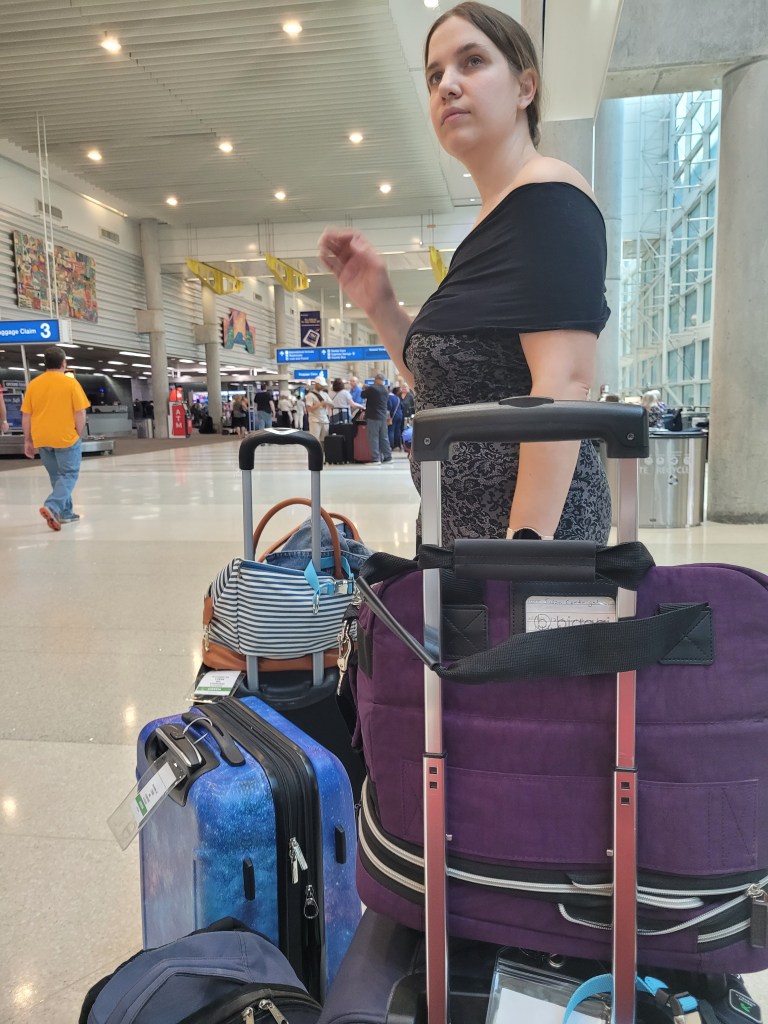
Personally, I try to avoid checking luggage whenever possible, especially when going to a place. I don’t mind it as much on my return because if luggage is lost I usually have the essentials in my carry on and I have plenty of extras at my house. However, if luggage is lost when I’m traveling to a place, I may find myself without enough clothing or I missed a connection trying to sort out the lost luggage resulting in extra expenses and unnecessary stress. Most of the time if I have to gate check luggage I can pick it up at the gate. Sometimes, I will pack an extra bag that I can use as a personal item later and then check my carry on and turn my previous personal item into my carry on. This ensures I have plenty of room for souvenirs. Another consideration is wheeling your luggage versus carrying it. One might think that the best answer is wheels. After all, I just said earlier how carrying luggage around can make your back sore. 

Photo by Abdulvahap Demir on Pexels.com

However, that doesn’t take into consideration the bane of wheeled luggage, stairs. This can be especially important if one is trying to take more than two wheeled pieces of luggage which I did when I spent a semester abroad in Germany. Not having traveled much previously, I only ever encountered transportation which was easily accessible meaning that wheeled luggage had no problems. Not so, in Germany where the trains had steps. Narrow almost ladder-like steps. This meant I had to quickly throw my luggage up the steps and try to climb up myself all before the doors closed. I almost fell out of the train and got left behind because I was struggling with my luggage. Had I been able to put it around my body and just climb up, I wouldn’t have had that issue. My recommendation is try not to bring more than one wheeled luggage and make sure your other luggage can comfortably sit on top of the wheeled luggage for easy transportation. This also means that you can easily switch to carrying your luggage if the terrain calls for it. 

There is also the debate between hard and soft luggage. Some people swear by the soft luggage, others by the hard cases. The soft luggage tends to give a bit more give for packing, but is less secure. It comes down to a matter of preference and what you’re using the luggage for. There is also a large market out there for luggage that helps you maximize space. Before shelling out tons of money for expensive bags, remember there is really only so much you can do to reduce the amount of space an object takes up in your bag. Often those viral videos are too good, so maybe save your money for souvenirs.

Now if one is pressed for space, then clever use of pockets may be necessary to help expand your carry-on capacity. There are all sorts of things one can purchase from cargo pants, to scarves with hidden pockets to jackets that specialize in acting as a second carry-on. Just be mindful that stuffing your pants pockets full of various items won’t make you the most popular person at the security line and will add extra time to your check in procedure. This method can lead to extra discomfort during your travels. A scarf will make you warm. A jacket with items in it, won’t be comfortable to sit with. Just like with luggage, vial videos make it seem like a great idea until you actually try it it.

Additional thought and consideration should be given to what you’re going to wear. It is generally recommended to wear your bulkiest items when traveling. Maximizing what’s on your person will help maximize your limited space. Wearing layers on the plane is another good way to turn your body into additional bag storage. However, you do want to consider your travel outfit for more than just storage so don’t go too crazy here or your may end up on a very long flight wearing things that are very uncomfortable. I usually opt for an extra layer, a scarf with a pocket and shoes that are easy to slip on and off, breathable fabrics that are stretchy and I avoid anything with zippers or buttons. 

As you can see before you’ve even packed a single item, careful thought must be given to your luggage and potentially the outfit you’re going to wear to travel. 

During COVID, I opted for a sleeves top with a light jacket and a Norwex cloth mask for a plane ride. My hair was up in braids that kept it out of my way and allowed me to comfortably recline when I went out to visit some friends in Michigan.

So once you’ve figured out what luggage to use, then it’s a matter of figuring out what to pack. Pretty much googling “essential packing list” will pull up a good checklist for packing. Obviously, don’t pack everything suggested on the list, you’re supposed to make adjustments based on where you’re going. If traveling to a tropical beach destination you probably don’t want to pack a sweater. If you aren’t going anywhere formal, then leave the formalwear at home, but if you’re going to a wedding, then pack your formal attire. When picking outfits, consider sticking with a color pallet that mixes well together so you can mix and match. You should also try and pack items that can be dressed up or dressed down. I happen to own several yoga pants that look like dress pants, so I can pack those and be comfortable going on a hike or attending a meeting. I usually pack more tops than bottoms since my legs don’t usually get sweaty so I can wear bottoms several times. However, if one is expecting to get muddy then you may want to pack more bottoms than tops. Most carry-on luggage fits roughly two pairs of jeans, three sweaters, two dresses, and five shirts, so if you’re going longer than a week, you may need to get creative. Often people advise you to pick out what you need and then halve (with exception of underwear) the clothes you’re going to take. Consideration should be given for how often you can do laundry and for how sweaty you will get. Some people will pack small laundry sheets to be able to do laundry in their sink or utilize the laundry services at their destination.

Try to get liquids that can multitask. For example, did you know that you can use conditioner for shaving cream? If you can get a tinted moisturizer you can use that as foundation. You can also get tinted chapstick to substitute for lipstick. If you’re going to a hotel, most provide some toiletries, usually shampoo, conditioner and soap. You could also consider purchasing travel sized from a local store at your destination if the prices aren’t too different from your home. If traveling with companions, consider sharing some items like sunscreen, bug spray or moisturizers.

Try and minimize your devices if you can substitute with another you should. My only exception is my kindle because it’s bad for your eyes to read books from a tiny phone screen and I’m not getting a headache from tiny print. I have one universal portable charger that has all the attachments for various devices neatly attached to it. Always try and get creative with

Once you formalize your packing list, it’s a matter of locating the items. 

Photo by Hana Brannigan on Pexels.com

In general, pack clothes that won’t wrinkle like knits and stretchy fabrics. Fabrics that are woven tend to wrinkle more. Unfortunately, traveling in colder months or to cooler destinations means that your clothes will take up more space. A good trick is to pack lighter clothes with a light sweater that can go over them rather than several bulkier items. There are lots of videos debating between rolling or folding clothing, but in general either method will work so long as the focus is on eliminating air. Packing cubes can be very helpful in squeezing out extra air and ensuring every space is filled. They can also help create easily arranged “blocks” inside your luggage. I personally, like to use several smaller cubes rather than one big cube. If packing an extra purse or tote, these can also be used to organize and store items. This also helps make unpacking easy and keeps my stuff organized at the hotel. I often will pack two empty cubes for dirty laundry which helps keep my luggage from smelling. I have a bag for my shoes which also keeps the rest of my luggage clean. 

Place heavier items, like shoes, towards the bottom to help stabilize the luggage. As shoes often result in wasted space, consider packing items inside the shoes, like socks. The key is to try and maximize every inch of your luggage and ensure there’s no wasted space in between items. Although many airports no longer make you take your liquids out, organize your liquids in one bag that you keep at the top of your luggage for easy access to help make security a breeze just in case. If you have outside pockets, then packing items that you want ready access to should be placed there. 

If traveling with fragile items, place them in a plastic bag (in case they break) and pack them surrounded by clothing to help act as a cushion or bubble wrap substitute. 

Photo by Esther on Pexels.com

If you do decide to check your luggage make sure to put essentials such as medications, at least one change of clean clothes, a cell phone charger, etc. inside your carry-on luggage. You should be able to survive at least one to two days without your checked luggage. Make sure you have your contact information, like your email and phone number, on your checked luggage in case the airline loses it so they’re able to contact you. I would not put your home address on it for security reasons. 

Unless your luggage is a unique color or design consider putting a brightly colored ribbon or other distinguishing mark on your luggage to help prevent people from accidentally grabbing yours or from you accidently grabbing someone else’s. I usually have a yellow ribbon on mine since it’s black.  Baggage claim can take a long while as luggage has the lowest priority when it comes to runway traffic, so if you think you’ll have to catch a train or other form of transportation at your destination be sure to add plenty of time when purchasing tickets.

Hopefully, these tips will help you maximize your available space and ensure you have everything you need to make your trip wonderful.

East Meets West: D.C.’s Annual Cherry Blossom Festival

This post comes from one of my reverse bucket list items, cataloged in 2017. 

It was my senior year of college and I was the co-president of the Japanese Culture Club with my roommate Ray. The official name was Kouen-Kai for lecture and gathering. Myself and other anime/Japanese culture enthusiasts would gather together each week to watch shows from Japan, talk about Japanese history and learn about the culture. Some of our members had family members who were stationed or resided in Japan. Some were learning the language. It was a way to expand our horizons and share a mutual passion. We might snag Japanese treats from online or local specialty stores or attempt to cook something we found online. It was a causal club of nerds who developed friendships and hung out. We found we had more in common than just a love of anime and so for the next four years, the anime club members became my besties at college. 

Over the years, members came and went, but the greatest loss for myself and Ray came in our senior year when most of our closest friends graduated. I was worried the club would feel empty without these people who I had come to know so well. Then in came the freshman, an adorable group of a-dork-able, socially awkward boys who, if left to their own devices, would isolate themselves in their rooms and never see the sun. Naturally, we pushed them to get out and socialize, not allowing them to sit alone for days on end without human interaction or forget what grass looked like.

We developed a semi-mom like affection for them and so in the spring of 2006, we decided to take the club on tour. Each year, there is a massive Japanese culture festival in Washington D.C. when the Cherry Blossoms bloom. Being the nerds we are, it was a natural leap to get down to D.C. and experience a taste of Japan in the USA. We gathered up the troops, hopped in a mini-van, drove to a train station in Maryland and hopped on a train. 

Sidenote: I do recommend this for people nervous about driving in D.C. or even other big cities. You can always park outside it and take the light rail in. You often save on parking and you don’t have the stress of trying to navigate a busy unfamiliar place. The light rails are designed to take you to the tourist destinations and most of them are very safe and clean. Plus, walking is healthy for you!

The streets were crowded with all kinds of people. Vendors featuring goods from Japan were around every corner. There were demonstrations of traditional arts from sword fighting, to dance, to tea, to music and more. Food from every corner of Japan was offered. It was a delight for any anime nerd or cultural enthusiast.

We wondered about the festival together taking in everything we could and pointing things out to one another to watch or do. Naturally, we enjoyed looking at the blossoming cherry trees, a gift from Japan to the United States in 1912. A highlight for me was watching the archery demonstration. It was amazing to see the skill up close and to see the differences between the west and the east. 

Which is really what such a festival is all about. It’s about showcasing a given culture where they can celebrate their heritage and share it with those of us not from it. We get to experience something exotic to us without stepping into the airport all while remaining authentic to the original people. Isn’t that what we’re looking for when we go abroad? A festival such as this one can bring that to you! 

I had a blast leading the gang around and not once did they get lost! Though wrangling them at times was a chore – like herding cats! Still, we managed to have an amazing day together sampling the delights of Japan and having one last hurrah as a group of friends before Ray and I graduated. 

How can you complete a cultural festival and get a taste of a different country?

Usually, you can see these events advertised in the local newspapers or on community event websites. Oftentimes they’re on Facebook. There are times when you may learn about a festival after the fact. The good thing is so many of them are annual things, so you can mark your calendar and come back to it next year. As you go, remember you are a guest of your host and should conduct yourself accordingly. They are sharing their heritage with you and you should honor that gift with respect and courtesy. 

Completed: 2010

Miles from home: 122

Cost: Attendance was Free – travel was about $20, splitting gas and buying the train ticket, plus lunch $20 

Travel Tips: Reverse Planning

In honor of the coming spring, I’ve decided to do a few travel posts. You see dear reader, it seems that with the end of winter with the warmer weather on the horizon, I always get a bit of wanderlust at this time of year and find myself going to far flung corners of the world. Or at least farther afield than is typical as I certainly can’t afford to travel too far every spring. Perhaps, it’s something in the air, maybe it’s from being cooped up in the house during the cold winter months. 

Before we clutch our pearls in shock at such a notion, remember dear reader, I am not against travel. I simply believe that we can live a bucket-list life right where we are and that we needn’t travel frequently to experience amazing things. However, there are times when we do travel, so we may as well do it well, to ensure that it is a wise investment of our limited resources. After all, traveling is expensive and time consuming. As budget conscious people, we certainly don’t want to experience travel regret or wish we had been more thoughtful prior to hopping on a plane and wasting hundreds of dollars on a less than stellar trip. To that end, I hope that these tips will help you make the most of your travels. At this point I believe I am at least a fairly experienced traveler to be speaking on such things.

I shall begin my travel tips with the most fundamental decision of all, where to go. 

Photo by Andrea Piacquadio on Pexels.com

Now there are many considerations to picking a place to travel. Now you may have a very specific place in mind already. In which case skip this post and read the Travel Tips for the First Time Traveler: The Art of the Deal. In this post, I’m going to share a method of reverse planning or rather than picking a place first and then planning around that. You first plan the big three: time, budget and season and based on those constraints narrow down options of where to go. It can be helpful in managing your budget and ensuring you stay within the constraints of your means. Many people underestimate the cost of their trips and it’s easier to do when blinded by a pre-made decision. This method allows you to place your constraints ahead of time and then plan from there. 

My very first consideration would be time, how much time do you realistically have? Time can be a huge constraint. For example, I recently traveled to England after being invited to join a friend in her long term rental down in Penzance. The accommodations were completely free and I naturally took advantage of this. However, it took 2 hours to get to the airport, allowing for the recommended 2.5 hours to get through security and boarding onto the plane before take off, another 6 hour flight, another hour to deboard, get through customs and navigate a new airport, and another 8 hours of buses and trains. I left my house at 2 pm and arrived at 5 pm the next day. The return flight was 7 hours, with almost 2 hours to get through customs, secure our bags, take a bus back to the economy parking and 2 hours to get home. We left the hotel in London at 8 am and arrived home at 7 pm. That wasn’t accounting for the 6 hour train ride back north to London that we took 3 days before our flight to allow us two days in London. Just travel alone was 3 days of our trip. That also didn’t account for recovery days from jet lag which depending on how easily you bounce back from disrupted sleep could take another whole day from your trip. So, I really don’t recommend taking a week to travel across an ocean because you realistically end up with maybe 3 to 4 good days. This is why I took two weeks off of work to allow myself plenty of time for travel to and from, recover, unpack and get ready to return to my normally scheduled programming. 

Time really determines a lot of things. It can influence your budget, how far you can travel, what you can do and whether it’s worth adding in things like rental cars and taxis or if you can stick to public transit. After all, public transit adds time to a trip. If I had access to a car that 5 to 6 hour train ride could have been closer to 3 and with the multiple train delays stretching the initial ride down to 8 hours, a car would have been preferable.  Time also determines how much you can do. I only had two days in London which meant that I had to be picky about what I did and what I saw. One could spend an entire day at the British Museum but then one will have only seen one museum, granted it packs a lot into one place, but then one isn’t seeing other things. If one rushes through things can one really enjoy it or will you be so exhausted from your vacation you need a vacation to recover from your vacation? It’s very easy to overestimate the amount of time you have which can lead to exhaustion from rushing around and stress from worrying about things like missed train connections, traffic or just getting lost in a strange place. 

Photo by Photo By: Kaboompics.com on Pexels.com

The other major consideration is of course budget. How much money can you spend on a holiday? Do you have paid time off? If you don’t, then any time off work is calculated into the cost of your trip. The budget can really determine how and where you can travel. Perhaps you can take a 12 hour direct flight to that far flung place, but it costs twice as much as the 20 hour flight with multiple connections. When considering a budget, you should be asking yourself how much are you typically saving in a month, how much have you already saved and how much can you still save? Consider the costs of transportation, accommodations, food and souvenirs. Hint: it is always more than you think, especially if you’re going to places where your currency is weaker than theirs where it’s easy to underestimate how much you’re spending. Just because the flight is cheap doesn’t mean accommodations will be, just because the accommodations are free doesn’t mean the flights will be cheap. I recently read a blog post outlining the actual cost of a trip for a couple who managed to snag really cheap flight tickets. Even though their flight was very affordable, the cost of other transportation, sight-seeing, food, accommodations, etc. for two weeks was still $5,000. So before jumping on that “great deal”, consider the other costs. 

To help you plan you may want to check out places like Expatistan, Price of Travel or Numbeo. These resources can help you with your budget to see if where you’re going is actually somewhere you can afford to go. What is cheap to one person may be expensive to another person. If you make 100,000 a year spending 5,000 is only 5% of your yearly salary but if you only make 45,000 then it’s 11% which is a significant difference. However, if you make 100,000 and you’re supporting a family of 5, spending 5,000 is less affordable than if it’s just you and your cats.

The final consideration is the time of year you’re able to travel. My sister’s job requires her to help test major systems updates which happen routinely at certain points of the year. This means there are just certain times when she knows she cannot reasonably take off without it causing a lot of issues for her work and her time off approval is tentative. When I was the Winter Shelter Coordinator for an Emergency Winter Homeless Shelter at one of my jobs, I knew I could not take off during the Winter months for extended periods of time. It was a major job expectation that I would be generally available during that season. There are certain times of the year that just aren’t good for certain destinations. It may look like an amazing deal to go during the off season, but good luck enjoying that tropical beach vacation in Maldives during the rainy season. 

Now depending if you’re traveling solo or in a group, you may have to consider what others can afford in terms of time, money and when they can take off. As I previously stated, my sister has a job that semi-dictates when she can take off and I also had a job where I couldn’t take off during the winter months. If you’re traveling with a school employee, you can’t travel much from August through June. Additionally, if your travel companion has limited mobility that can impact when and how you travel. Someone who needs assistance at the airport will most likely need an additional hour or more for pre-boarding. It’s important to have open and honest discussions with your travel companions before you spend a dime. 

One subcategory of all these considerations is the type of traveler you are. Do you like museums or the party scene? Do you want to spend your time lounging on the beach or do you want to go hiking? Are you content so long as you have a roof over your head and a pillow under it or do you want a little more luxury? When I was a student studying abroad I traveled as cheaply as I could, snagging deals on Ryanair, booking hostels and buying most of my food at local stores rather than eating out. Are you comfortable flying economy or do you require extra leg room? When traveling to England my mom paid for an upgraded seat both ways because she has had blood clots and decided it was worth having extra leg room and the ability to put her feet up in order to ensure she wasn’t going to spend her trip in the hospital. That impacted her budget. 

Once you have your time, budget and season you’ll be traveling, it’s much easier to narrow down where you can go based on your research. Depending on where you’re traveling from you can reasonably estimate how far you can go based on your time. If you’re on the East Coast like me then Europe is a more reasonable flight than from the West Coast. There can be surprises that pop up for example, flying to Costa Rica was a 10 hour flight despite it being about the same distance as the United Kingdom. However, Costa Rica is a lot cheaper to visit. The constraints of your aforementioned decisions can dictate where you’re going to go. If you divide up your budget and discover that you only have about 50 dollars a day then you may need to go to cheaper areas of the world. Once you have your list of possible places to go, you can pick.

Step Up: Irish Step Dancing

When I was a little girl, I loved watching people dance. I was absolutely obsessed, spending hours watching the Nutcracker Ballet and Riverdance on VHS. I wanted so badly to take dance lessons, but sadly, growing up in a lower middle class household we lacked the funds for dance. This meant I would have to content myself with mimicking what I saw on the screen in my living room with little success both from lack of coaching and space. Jumping around in my room, causing a ruckus wouldn’t have been appreciated. 

As I entered my teen years, it was something that I began to mentally put away. Dance was something that kids and teens did and after highschool, if you didn’t “make it” by having the skill and talent to progress beyond, it was “too late”. I enjoyed color guard for three of my six years in marching band, but that was as close as I came to it. I still sighed somewhat wistfully whenever I got a chance to watch professional dancers especially ballet or Irish Step dance, but I accepted they were things that I wouldn’t be doing. 

However, that was not to be the final chapter on my foray into dance. Because, in the fall of my freshman year at college, I discovered there was in fact a dance ministry on campus. The ministry was student run by young women who had been doing dance since they were young and were willing to pass on their knowledge and skills to anyone who wanted to join up. They did group us by skill level so the more advanced dancers could still be challenged and grow, but they were incredibly welcoming to those of us who had never danced before. 

We were given the option to try out different dances and then commit for the semester (or full year). I ended up picking Irish Step Dancing and flags. We paid a small membership due of about $10 each semester. So for $20 bucks, I was able to have a year’s worth of dance classes. Not only that, but also they had a huge collection of costumes meaning that I had very little to buy for the concerts. They directed us to a discount retailer for things like our shoes and I was able to snag my Irish Step Dancing shoes for $10. I believe the total cost for the year was about $50 between the dues, the shoes and one or two items for the costumes.

I will say my first day of class, I felt a bit like a five year old again. I was so excited to finally learn at least something of a dance I’ve loved so much for so long. My teacher was absolutely amazing and the sweetest person. She was a junior year nursing student who brought her calm, compassionate bedside manner into the classroom. She never scolded or lectured us when we messed up, but instead offered gentle correction and critique. We never sought perfection, only to do better each time. 

There are references to Irish step dancing as far back as the 16th century. In a letter to Queen Elizabeth, Sir Henry Sydney references his love for Irish jigs. At first, the music was primarily bagpipes with the hornpipe entering in the 1760’s giving the music its distinctive rhythms. There is some arguments as to when the fiddle was introduced with some people placing it in the 1700’s, but there are references in writing to fiddles in the mid to late 1600’s. 

The modern day form is recognizable for its rigid torso and dancing primarily on the balls of ones feet – like in Riverdance. However, that wasn’t always the case and it is as the name suggests a more modern form of the dance. There are also two distinctive types known as hard shoe and soft shoe. Hard shoe is basically like the tap dance of Irish Step. The hard shoe clacks on the floor making a noise and so the dancer becomes a moving percussion instrument. I danced soft shoe as hard shoe was for the more advanced students. I, sadly, did not get to dance hard shoe. Long story short, I needed to have two years of experience to be able to go into the more advanced class, I went abroad my junior year to study German and in my senior year, there was no one to teach Irish Step as the dances offered depended on having dancers with enough experience to teach it. 

What I found interesting about learning Irish step was that I expected the steps to have fancy Irish sounding names like how ballet has french words for their many movements. We did not have those at all, we had a seemingly limited vocabulary mostly consisting of lifts, beats, cuts, steps, and overs. She would tell us “now we’re going to do the step, step, back” or “Lift, step, step” to help us figure out what set of movements we were about to do. We’d put them together to the beat do them with one foot, then reverse it and do it on the other foot. The pieces of the whole movement would last a few bars of the music. We’d take turns circling our partners and join up as a larger circle going in and out. I cannot say that we were ready to take on the world stage by any stretch of the imagination. Our lifts were certainly not as high as they could be, legs lower, foot movements were decidedly sloppy at times, but we had fun learning. 

Each week I looked forward to going to it even if I was left exhausted by the end of class. Although, it did make going to flags right afterward difficult. My legs would feel like jelly by the time we were finished and instead of being able to go back to my nearby dorm room, I had to trek across campus, often in the cold darkness to the racquetball courts where we held flag practice. By the time I finished flags both my legs and my arms were exhausted. In between class, I practiced my steps in my dorm room and tried to increase my flexibility. I like to think it paid off in our performances.

Every year, we put on two concerts. One was the Christmas concert in the small chapel on campus. That one was free for anyone to attend. The other was the larger one in the gymnasium which was put on each spring, to the delight of the entire school. The second one had a small fee to attend to help us raise money to continue to buy costumes. The college let us have access to the sound system and set up a stage for us. During the concerts, each class picked a bible verse to share which went along with the song that we picked. 

My favorite song and verse combination came from my freshman year. Our song was the Salt Lick by Gaelic Storm and our verse was Mathew 5:30 “You are the salt of the earth. But if the salt loses its saltiness, how can it be made salty again? It is no longer good for anything, except to be thrown out and trampled underfoot.” It was a verse to remind us to be as salt, preserving, enhancing and flavoring the world with God’s love and light. 

I was incredibly blessed to have the opportunity to dance in college and to live out a childhood dream of learning a skill I thought was closed off to me. I think many of us wish we had certain opportunities to learn things when we were younger, but we think that there won’t be people to teach us. Perhaps, like me, you may think that unless you’re super talented there isn’t aren’t opportunities for you as an adult to learn. It may seem that the time to try and get into an interest has passed, but there are actually opportunities all around you if you keep your eyes and ears open. I can say that there are places which offer adult dance lessons even if they are harder to find. I also see that there are places for adult beginners to learn martial arts, sports, music, art and more. 

One of the people I do a podcast with, started his martial arts journey in his late 40’s. While he may not be as flexible or learn as quickly as some of the younger guys, he is doing it and loving it. He wasn’t afraid to be embarrassed by his lack of skill and embraced learning something new. Nor is the goal or focus to be a world champion or professional, it’s something that can be done just for fun. 

So often the activities we do in childhood semi-translate to work at this thing really hard so you can get a scholarship or go be a professional. The messages we receive as children is that these activities are not for themselves, they’re for doing something with them. They have to be tied to these larger goals. There’s also this obsession with accomplishing things as a young person and this false narrative that if you don’t master it by the time you’re 20, you’re never going to, so don’t even bother. So as adult learners we have to say to the first, actually, I can do this just for fun. To the second, we can say my life has not already been completely written and I can still accomplish a lot, so if I want to master this thing, I still can. It really depends on your own individual goals for whatever it is you want to do. 

So how can you step up as it were?

As I said earlier, it’s a matter of keeping your eyes and ears open. In my area, there are several places which offer adult classes for dance. One place is another dance ministry which helps keep the cost down. It is even offering a martial arts class which I am hopeful to join next year! Occasionally, you can find places offering introductory workshops for dance which gives you a taste of what a class would be like. It’s really a matter of actively seeking out those opportunities. 

Now, I have seen some online dance apps and courses. I’m not sure how effective they are because you may not have the feedback that you’d get from a live person to help correct your form and to explain a move more fully if you don’t understand the first explanation. Also you won’t be in an actual dance studio. I personally found the mirrors in the dance studio to be really helpful because I could visually see exactly what my body looked like. So I knew that my leg wasn’t perfectly straight or the lift was sloppy. I could see if my arms weren’t held up evenly with one side dropping down. I think they’d be really good for absolute beginners and for people who just want to try it for fun. There is of course no substitution for personalized instruction that live classes bring, but I do think the apps provide access to tools and information that are difficult to otherwise obtain.

Completed: Fall 2006 through Fall 2008

Cost: $100 for 3 semesters

Miles from home: 0 from college dorm / 39 from home

How To Cultivate Opportunities

At the end of most of my posts, I will write a little “How You Can” section so that if something I have done peaks your interest, you have a starting point. However, one may very well wonder how I’ve gathered this information in the first place. After all, how did I discover the Wolf Sanctuary or the Firebird Festival or the Wine and Cheese Tasting on the Train? How have I cultivated opportunities for myself to check off my list or to add new things? 

Simply put, I have a few go-to places for inspiration that I regularly check and encourage you, dear reader, to do the same. The first is Onlyinyourstate or atlas obscura to discover unique things that are in my area. Now, Onlyinyourstate isn’t exactly the most accurate name, after all there are many states that share common experiences, it would be more aptly named “collection of cool things to see and do in your state” – that is understandably less catchy, but some of us are sticklers for accuracy. The website is semi-easy to navigate. You click on your state and it brings up a long list of various posts of interesting sights to see and things to do. What makes it difficult is many posts are repetitive, and some of the listed items have closed or are no longer available to the public. 

Since at this point, they’ve pretty much covered most of the things to do, newer posts just tend to rehash what has already been written about but as new things do get added occasionally, one still has to sift through to find the gems. Atlasobscura is similar in both scope and difficulty of use. There are other websites that are similar, such as PAbucklist.com, but I have yet to find one that organizes itself really well. I review these sites maybe once every 6-12 months. Despite their difficulty in use, I still recommend visiting at least once, especially if you are at the start of your Bucket List journey. They not only can help you discover how to check off your list, but also can open your eyes to new and novel possibilities you’ve never even thought of before. 

One of my biggest go-to’s is Facebook Events which I will typically review once to twice a month as it is being continually updated. It’s where I’ve discovered most of my events, festivals and workshops.On almost any given week, I could log on and find something that would interest me for the upcoming weekend and many of the events are relatively cheap or free. It’s become one of the main things I use Facebook for. That’s how I found out about the Christkindlmarkt and Eco-dying. I pay attention to my local newspaper as well checking out announcements from my community which the Facebook algorithm may have missed. 

I also keep a running list of the museums, colleges, universities and theaters in the area making sure to check at the beginning of each season. Depending on the venue, most of the time this means the beginning of the year in January or in July.  That’s how I discovered the Da Vinci Exhibit at the Reading Museum and the performance of Drum Tao at Millersville University. Even smaller universities and colleges can have amazing events and opportunities. In 2016, my small Christian College hosted a presidential debate for the DNC primaries between Obama and Clinton. I have often been surprised at what a small venue can pull off and because of their smaller size many of their events are more intimate affairs. So don’t write off your own smaller venues just yet, dear reader. 

Consider other attractions in your area: aquariums, zoos, community centers and even parks may play host to your dreams. Longs Park in Lancaster City has a summer music series that has brought some serious talent to its small stage for free, opening the opportunity for many to enjoy live concerts and other performances. It was the stage that introduced me to Shakespeare as a child. You will be surprised at the wide variety of opportunities these places offer and often for free or greatly reduced cost. 

Photo by Pixabay on Pexels.com

There is also a simple google search. I will do this for things that may take a little creativity or require me to go a little farther afield than my typical roaming grounds. For example, I read about grape stomping in Italy. It seemed like it would be a fun thing to try. I hadn’t seen it on any previous intel missions to my usual corners of the internet, so I did what any good millennial would do, I went to google to start to see if there were any wineries nearby that would indulge in this ancient tradition. As it turns out there is one in the neighboring state of New Jersey. 

Once I discover a place in a reasonable vicinity (typically no more than 2 hours away unless I really want to make a day of it), I will make a note on my list for future reference. I won’t necessarily rush to go do it just that moment, but I will keep the information tucked away until I have need of it or for when the time is right. Perhaps, if I find myself making plans and I will be in the area anyways then I will tack on my item to the trip. I may also make specific plans to complete the item but cross reference my list to see if there are any other items that may be nearby. I am after all all about being efficient with my time and resources. 

The final way is that my friends and family know that I am always on the hunt for new and novel things to try, so word of mouth goes a long way. When they see something cool that they know I might like to try, they tell me or even better invite me to join them! 

As you can see, dear reader, I am not someone who sits around waiting for good things to come to her. Sometimes the fates need a little nudge. It’s about keeping your eyes and ears open, seeking opportunities and being mindful of what might be around the corner. It doesn’t mean that I can necessarily jump at every opportunity that comes my way or thing that I discover, I have (as of this writing) yet to go indoor skydiving, learn to pole dance, spend time at the alpaca farm, learn a signature dish from a cook or go grape stomping. However, I have pretty good leads on where I might do those things. Which is half the fun! I always have a list of potential adventures I could go on. There’s almost always something new around the corner waiting for me to discover and with only one glaring exception are all within a hour’s drive from my house (most are within 30 minutes). Who needs to dream of escaping your corner of the world to far flung places when it’s so full of excitement?