The title is a slight exaggeration, but I think the comparison is apt. After all, in three of the world’s major monotheistic religions, paradise is a garden.
So, what exactly is a botanical garden? Aside from being a beautiful place to wander around in quiet contemplation, botanical gardens are gardens with a documented collection of plants for the purposes of scientific research, education, conservation and display. They feature the botanical names of the plants. Hence the name botanical garden – not necessarily the cleverest of names, but it certainly gets the job done.
Some of my earliest memories consist of gardening. Lacking cable, one of my favorite pastimes was actually watching “The Digging Show” or my parents gardening. I loved spending time among the plants and the flowers learning their names, cataloging their color, inhaling their scents and at times nibbling upon them. I quite enjoyed the various herbs and was quite familiar with which ones were safe for me to consume and which ones were best avoided. I spent many hours going to various nurseries. As my parents shopped, they became my playgrounds. Not that I disturbed the merchandise (I had been taught to look not to touch), but I still explored, searching out new plants and finding the statutory and other garden decor scattered about. Our garden was huge and well known in the neighborhood as one of the best. We even had a photographer request to come and take photographs of our garden.
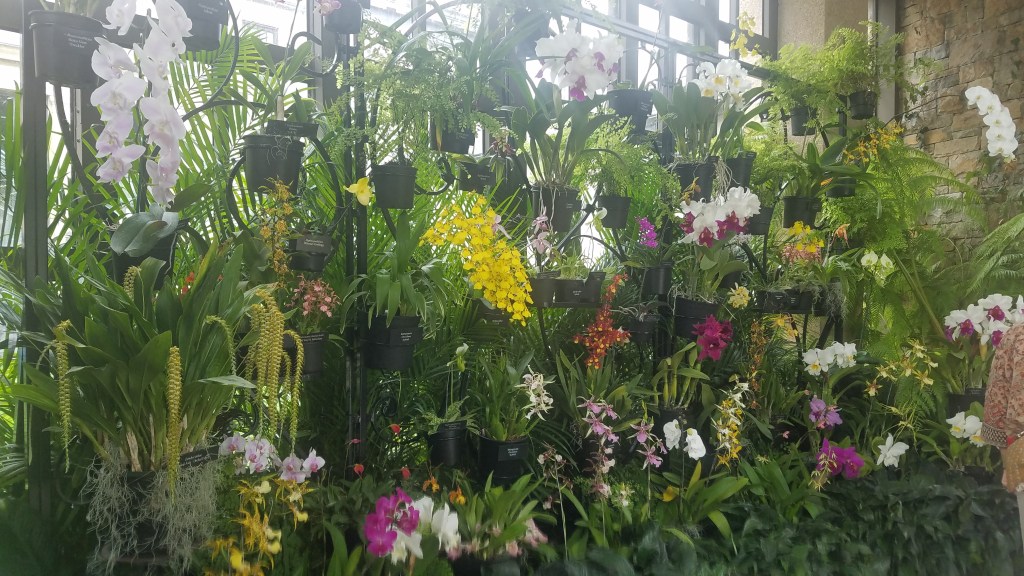
It should come as no surprise then, that I love going to botanical gardens to stroll among the flowers and greenery. Each one is so different which only serves to highlight the vast biodiversity of our planet where no two gardens are alike. Some focus on specific areas while others span ecosystems throughout the planet. No matter what I always find a bit of wonder in them as I am taken in by the majestic blooms and vibrant hues of the leaves. I’ve seen giant lilly pads and a huge array of orchids. I have been overpowered by the sweet scent of roses and delighted by the scent of apple blossoms.
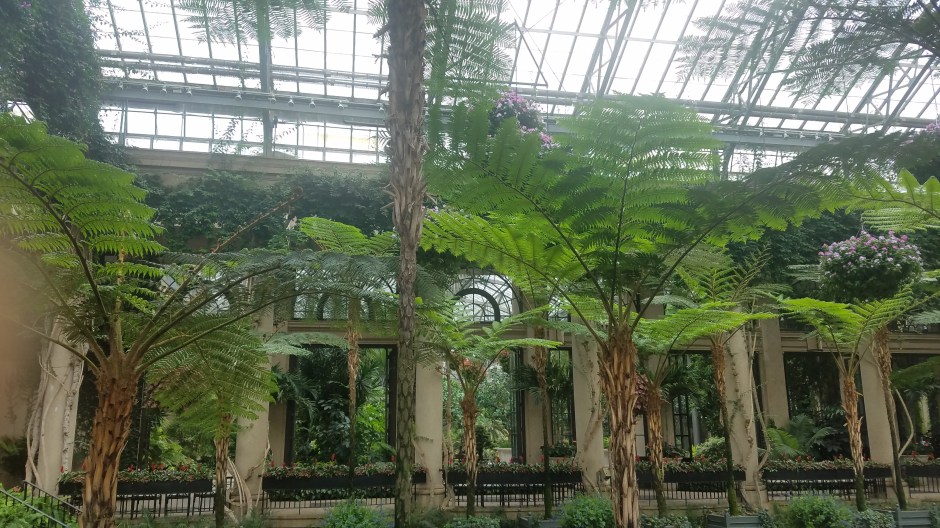
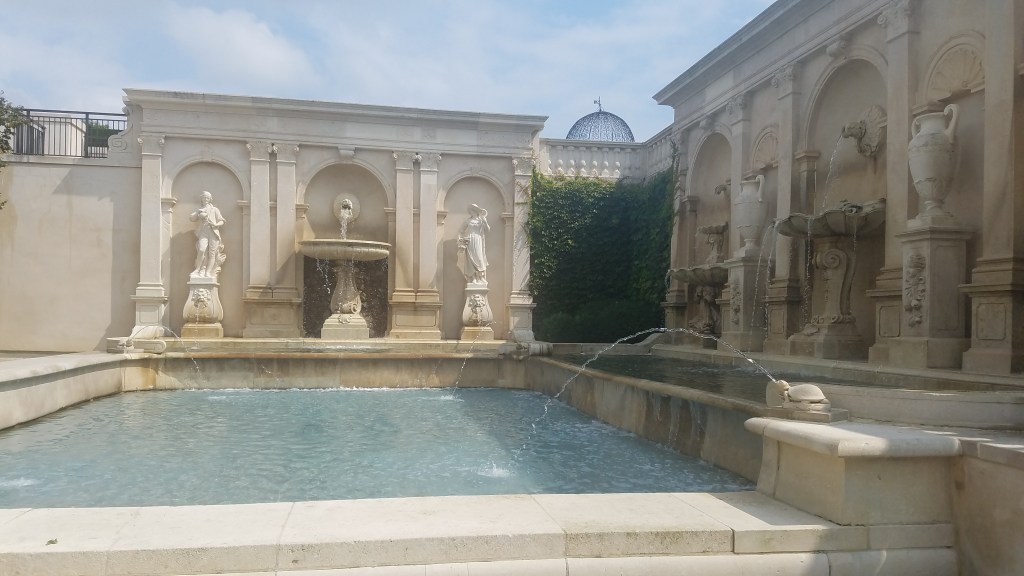
The architecture of these gardens are often a highlight as well featuring delicate archways and imposing pillars. Many of the gardens have various fountains and waterways snaking through them. They may even have plunging waterfalls. Longwood Gardens in particular is known for its spectacular water show which is predominately displayed in the center of the gardens. However, it is also home to more humble buildings, small wooden cottages or small towers tucked away in forested areas. To traverse the gardens is to move from landscape to landscape each with its own unique take on what makes a garden. There are times when the juxtaposition of the two can almost seem jarring as one moves from one area to the next as if the doorways themselves are portals to between worlds.
Each world is a delight to the senses and one hardly notices the passage of time or the encroaching heat of a warm day or the way the chill of a winter begins to seep its way into your bones on those cooler days. In all seasons, the gardens offer something new as they are always changing with the pattern of the year. It means there is never a bad time to visit and one can visit quite often as there is always a shift. What was in bloom only a few weeks ago may have faded and a new plant has come to take its turn in the spotlight. The gardens can be enjoyed both in quiet solitude or with a group of friends.
I find that day among the plants and flowers is as refreshing as a day at the spa. A connection to nature is an important part of mental health. Time outdoors helps to reduce stress and anxiety. Fresh air is also correlated with increased physical health. Exposure to nature is associated with better cognitive function. Certainly spending time in such oxygen rich environments is good for your lungs when we spend so much of our time inside. So yes, it can certainly feel like one has discovered a small slice of paradise when visiting as the stress of the outside world begins to melt away. I certainly envision heaven as a botanical garden, populated with cats of course, with ready access to a vast library of books and tea.
How can you visit your own slice of paradise?
Luckily, botanical gardens are found throughout the country and indeed the world, so finding one should be relatively simple. I recommend wearing comfortable walking shoes and to pick a day when the weather is particularly good. You will most likely want to bring some water as they are often deceptive in size – they are always bigger than you anticipate. Armed with proper hydration and shoes, you will ensure that your beautiful garden experience doesn’t become hellish.
Completed: First completed in childhood in a visit to Longwood Gardens
Cost: $32 per person (can vary depending on time of year)
Miles from home: 45 miles from home
I have also visited other gardens throughout the country as I am always up for visiting a garden.
This post comes from one of my reverse bucket list items, cataloged in 2017.
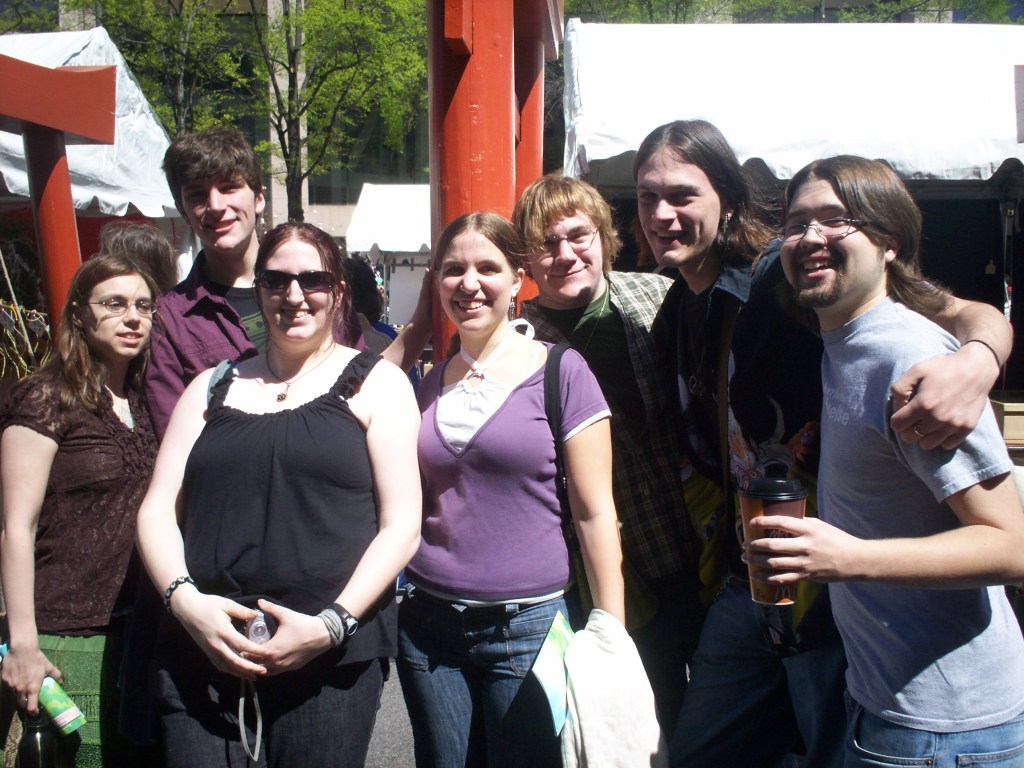
It was my senior year of college and I was the co-president of the Japanese Culture Club with my roommate Ray. The official name was Kouen-Kai for lecture and gathering. Myself and other anime/Japanese culture enthusiasts would gather together each week to watch shows from Japan, talk about Japanese history and learn about the culture. Some of our members had family members who were stationed or resided in Japan. Some were learning the language. It was a way to expand our horizons and share a mutual passion. We might snag Japanese treats from online or local specialty stores or attempt to cook something we found online. It was a causal club of nerds who developed friendships and hung out. We found we had more in common than just a love of anime and so for the next four years, the anime club members became my besties at college.
Over the years, members came and went, but the greatest loss for myself and Ray came in our senior year when most of our closest friends graduated. I was worried the club would feel empty without these people who I had come to know so well. Then in came the freshman, an adorable group of a-dork-able, socially awkward boys who, if left to their own devices, would isolate themselves in their rooms and never see the sun. Naturally, we pushed them to get out and socialize, not allowing them to sit alone for days on end without human interaction or forget what grass looked like.
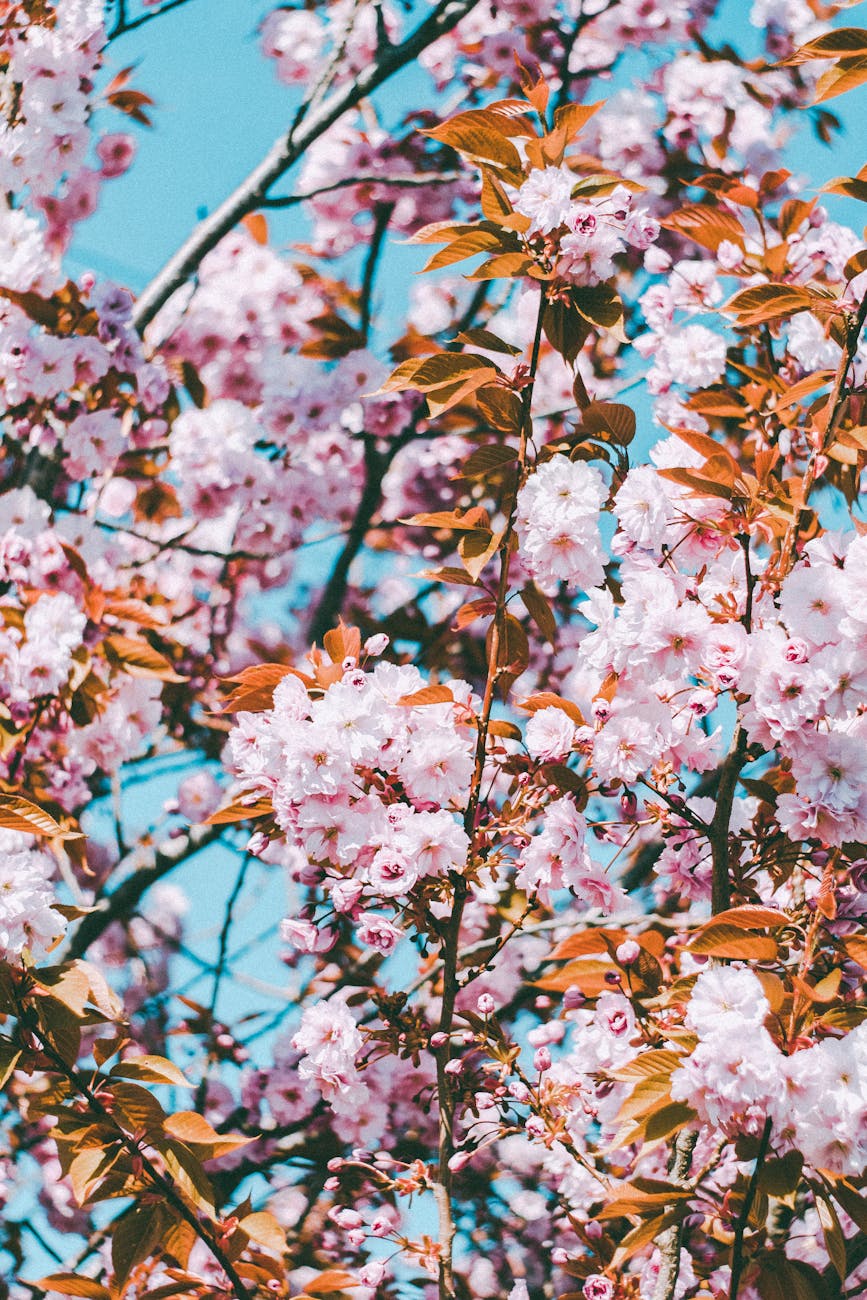
We developed a semi-mom like affection for them and so in the spring of 2006, we decided to take the club on tour. Each year, there is a massive Japanese culture festival in Washington D.C. when the Cherry Blossoms bloom. Being the nerds we are, it was a natural leap to get down to D.C. and experience a taste of Japan in the USA. We gathered up the troops, hopped in a mini-van, drove to a train station in Maryland and hopped on a train.
Sidenote: I do recommend this for people nervous about driving in D.C. or even other big cities. You can always park outside it and take the light rail in. You often save on parking and you don’t have the stress of trying to navigate a busy unfamiliar place. The light rails are designed to take you to the tourist destinations and most of them are very safe and clean. Plus, walking is healthy for you!
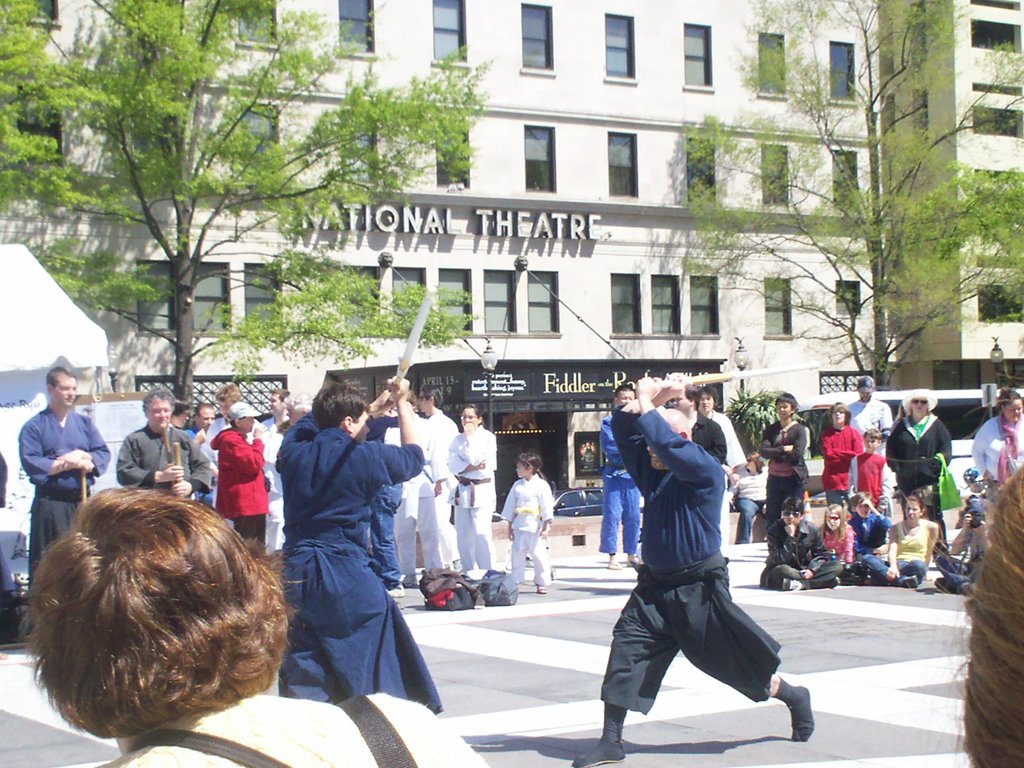
The streets were crowded with all kinds of people. Vendors featuring goods from Japan were around every corner. There were demonstrations of traditional arts from sword fighting, to dance, to tea, to music and more. Food from every corner of Japan was offered. It was a delight for any anime nerd or cultural enthusiast.
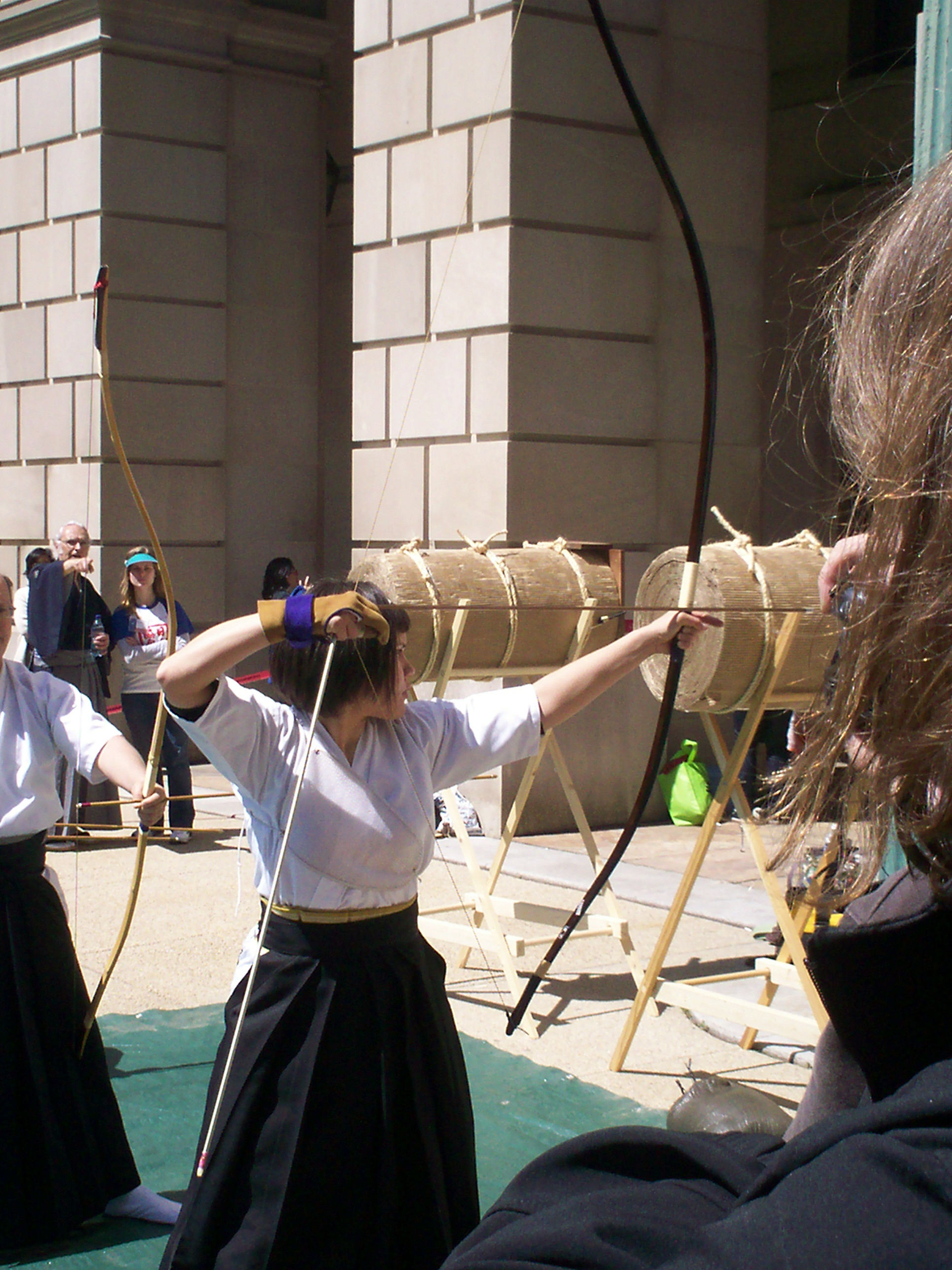
We wondered about the festival together taking in everything we could and pointing things out to one another to watch or do. Naturally, we enjoyed looking at the blossoming cherry trees, a gift from Japan to the United States in 1912. A highlight for me was watching the archery demonstration. It was amazing to see the skill up close and to see the differences between the west and the east.
Which is really what such a festival is all about. It’s about showcasing a given culture where they can celebrate their heritage and share it with those of us not from it. We get to experience something exotic to us without stepping into the airport all while remaining authentic to the original people. Isn’t that what we’re looking for when we go abroad? A festival such as this one can bring that to you!
I had a blast leading the gang around and not once did they get lost! Though wrangling them at times was a chore – like herding cats! Still, we managed to have an amazing day together sampling the delights of Japan and having one last hurrah as a group of friends before Ray and I graduated.
How can you complete a cultural festival and get a taste of a different country?
Usually, you can see these events advertised in the local newspapers or on community event websites. Oftentimes they’re on Facebook. There are times when you may learn about a festival after the fact. The good thing is so many of them are annual things, so you can mark your calendar and come back to it next year. As you go, remember you are a guest of your host and should conduct yourself accordingly. They are sharing their heritage with you and you should honor that gift with respect and courtesy.
Completed: 2010
Miles from home: 122
Cost: Attendance was Free – travel was about $20, splitting gas and buying the train ticket, plus lunch $20
At the end of most of my posts, I will write a little “How You Can” section so that if something I have done peaks your interest, you have a starting point. However, one may very well wonder how I’ve gathered this information in the first place. After all, how did I discover the Wolf Sanctuary or the Firebird Festival or the Wine and Cheese Tasting on the Train? How have I cultivated opportunities for myself to check off my list or to add new things?
Simply put, I have a few go-to places for inspiration that I regularly check and encourage you, dear reader, to do the same. The first is Onlyinyourstate or atlas obscura to discover unique things that are in my area. Now, Onlyinyourstate isn’t exactly the most accurate name, after all there are many states that share common experiences, it would be more aptly named “collection of cool things to see and do in your state” – that is understandably less catchy, but some of us are sticklers for accuracy. The website is semi-easy to navigate. You click on your state and it brings up a long list of various posts of interesting sights to see and things to do. What makes it difficult is many posts are repetitive, and some of the listed items have closed or are no longer available to the public.
Since at this point, they’ve pretty much covered most of the things to do, newer posts just tend to rehash what has already been written about but as new things do get added occasionally, one still has to sift through to find the gems. Atlasobscura is similar in both scope and difficulty of use. There are other websites that are similar, such as PAbucklist.com, but I have yet to find one that organizes itself really well. I review these sites maybe once every 6-12 months. Despite their difficulty in use, I still recommend visiting at least once, especially if you are at the start of your Bucket List journey. They not only can help you discover how to check off your list, but also can open your eyes to new and novel possibilities you’ve never even thought of before.
One of my biggest go-to’s is Facebook Events which I will typically review once to twice a month as it is being continually updated. It’s where I’ve discovered most of my events, festivals and workshops.On almost any given week, I could log on and find something that would interest me for the upcoming weekend and many of the events are relatively cheap or free. It’s become one of the main things I use Facebook for. That’s how I found out about the Christkindlmarkt and Eco-dying. I pay attention to my local newspaper as well checking out announcements from my community which the Facebook algorithm may have missed.
I also keep a running list of the museums, colleges, universities and theaters in the area making sure to check at the beginning of each season. Depending on the venue, most of the time this means the beginning of the year in January or in July. That’s how I discovered the Da Vinci Exhibit at the Reading Museum and the performance of Drum Tao at Millersville University. Even smaller universities and colleges can have amazing events and opportunities. In 2016, my small Christian College hosted a presidential debate for the DNC primaries between Obama and Clinton. I have often been surprised at what a small venue can pull off and because of their smaller size many of their events are more intimate affairs. So don’t write off your own smaller venues just yet, dear reader.
Consider other attractions in your area: aquariums, zoos, community centers and even parks may play host to your dreams. Longs Park in Lancaster City has a summer music series that has brought some serious talent to its small stage for free, opening the opportunity for many to enjoy live concerts and other performances. It was the stage that introduced me to Shakespeare as a child. You will be surprised at the wide variety of opportunities these places offer and often for free or greatly reduced cost.
There is also a simple google search. I will do this for things that may take a little creativity or require me to go a little farther afield than my typical roaming grounds. For example, I read about grape stomping in Italy. It seemed like it would be a fun thing to try. I hadn’t seen it on any previous intel missions to my usual corners of the internet, so I did what any good millennial would do, I went to google to start to see if there were any wineries nearby that would indulge in this ancient tradition. As it turns out there is one in the neighboring state of New Jersey.
Once I discover a place in a reasonable vicinity (typically no more than 2 hours away unless I really want to make a day of it), I will make a note on my list for future reference. I won’t necessarily rush to go do it just that moment, but I will keep the information tucked away until I have need of it or for when the time is right. Perhaps, if I find myself making plans and I will be in the area anyways then I will tack on my item to the trip. I may also make specific plans to complete the item but cross reference my list to see if there are any other items that may be nearby. I am after all all about being efficient with my time and resources.
The final way is that my friends and family know that I am always on the hunt for new and novel things to try, so word of mouth goes a long way. When they see something cool that they know I might like to try, they tell me or even better invite me to join them!
As you can see, dear reader, I am not someone who sits around waiting for good things to come to her. Sometimes the fates need a little nudge. It’s about keeping your eyes and ears open, seeking opportunities and being mindful of what might be around the corner. It doesn’t mean that I can necessarily jump at every opportunity that comes my way or thing that I discover, I have (as of this writing) yet to go indoor skydiving, learn to pole dance, spend time at the alpaca farm, learn a signature dish from a cook or go grape stomping. However, I have pretty good leads on where I might do those things. Which is half the fun! I always have a list of potential adventures I could go on. There’s almost always something new around the corner waiting for me to discover and with only one glaring exception are all within a hour’s drive from my house (most are within 30 minutes). Who needs to dream of escaping your corner of the world to far flung places when it’s so full of excitement?
I had the privilege of spending a semester abroad in my academic studies. For five months, I was halfway across the world, in a non-English speaking country for the most part on my own with limited support. This was a world before smart phones and easy roaming charges. I was for the most part armed with a local flip phone for emergencies, my wits and conversational German. It was just as daunting and fun as one imagines.
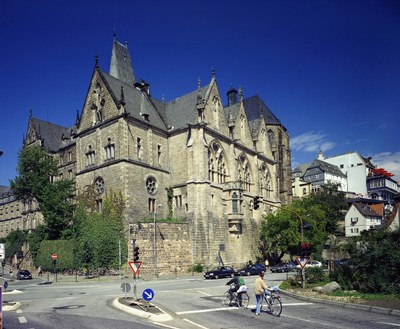
I suppose it was this experience that really solidified my adventurous spirit. How many times have I thought to myself “If I can get lost in the middle of Paris and still catch the train back to Marburg how hard can this be?” It instilled in me a sense of confidence to be able to navigate foreign places, solve problems on the fly and still be successful. There were certainly challenges.
There were the physical challenges that Germany presented me on day one. I thought I was a fairly experienced traveler having flown numerous times in the United States and I figured that Germany being another Western Country wouldn’t be too different. Stairs are apparently a thing everywhere in Germany and pose a much more serious problem than in the US when it comes to traveling with multiple bags. I had packed my bags anticipating the ease of traversing an airport with multiple rolling bags that I had in America, but Germany wasn’t as accommodating when it comes to rolling suitcases. Luckily, I did have some help in that I was traveling with a group of students, but they weren’t always the most helpful.
First, getting the bags down the escalators was a nightmare. I distinctly remember one of our bags just tumbling down the escalator as a complete hazard. Second, the trains had stairs. I had never encountered trains with stairs. I don’t even think I had seen such things in movies. Now, it does seem that since I’ve been in the country the train system is not as ruthlessly efficient as I remember it being. However, when I went, the trains were almost always on time and they did not wait for you to finish boarding, you had to get on or you would be left behind and the staff would not wave to the conductor to hold for you.
So there I was tossing my bags up onto the train and trying to get myself on with probably less than two minutes to get myself on board. The stairs were more akin to ladders than stairs, so I was trying to frantically climb onto the train with my bags. Being a naturally clumsy person, in a situation where balance was particularly challenging, I of course started to fall backwards. Luckily for me, the train doors shut just as I was about to stumble back onto the platform. Had I fallen back sooner, I would have been left on the platform with my bags on the train in a strange country and no real way to contact anyone. Had I not managed to get my bags on, I would have been on the train with the bags left behind! Certainly not my best moment! The saga of the stairs did not end there, there were stairs everywhere with almost no elevators to speak of, my legs looked amazing my the end of the trip and I do recommend the Germany Stair Master 5000, 5 month workout plan to you aspiring models.
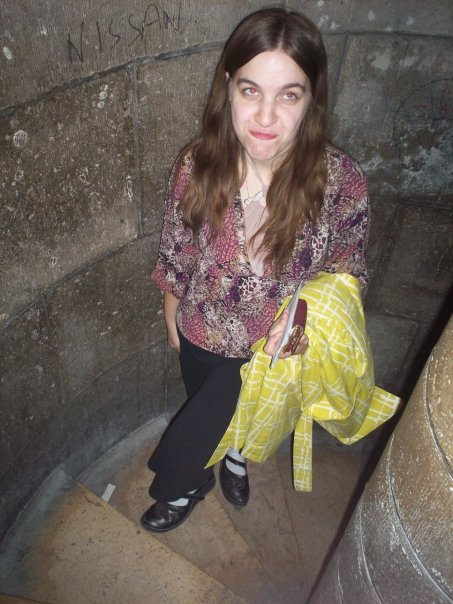
My face at seeing that I had to climb yet MORE stairs!
I faced the challenge of navigating a truly arcane system for signing up for classes. I had never seen such a discombobulated, uncoordinated system in my life. Some classes you signed up for in person, some were online, some you had to practically hunt down like some sort of secret cult meeting. I’m still not exactly sure how I managed to actually sign up for my classes, but I somehow squeaked by with the requirements and managed to get myself in courses I felt i could handle with my level of German. Although Frankfurt in Mittelalter was more than I could chew since the first day they wanted me to read latin and I had to read 15th century German documents for a research paper. Essentially, it was like handing a non native speaker of English the original Canterbury Tales and telling them to have at it. I may have spent 3 days researching the history of the German language in order to translate what I was reading before attempting to write anything.
While I was there, I independently traveled to Paris, Dublin, Nuremberg, Cologne, Frankfurt, and Rome. I planned every part of those trips from booking the plane tickets, navigating transportation to and from the airports, found the hostels and traversed the cities learning the unique public transit of each one. I went with a group of school students on a trip to Berlin and joined Brethren Colleges Abroad for trips to Vienna and Strasbourg. These trips did not involve how to get there or where to stay, but I did have to traverse them on my own, figure out which sights I wanted to see and ensure that I was on time for the checks in.
While there, I bought my own groceries on a strict budget (most of my money went to my trips rather than to food). I cooked my own food learning how to use a gas oven which terrified me the first time I used it because I had never had to light an oven with a match before. I had to learn how to sort trash like the Germans and all the quirks of their culture. I learned to navigate a completely arcane university system as well as see the world a little differently. I met a fantastic travel companion, a fellow American who shared my love of reading. I wish I could say we stayed in touch and are still best friends, but sadly like many adult friendships it did not last much beyond our semester in Germany as we were from and returned to different parts of the country.
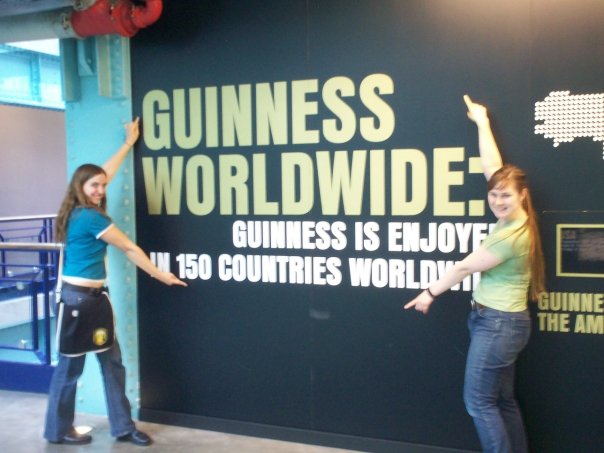
My trip to Dublin
While I was in Germany, I took advantage of the relatively cheap travel through Ryanair and checked many things off my list. I will say that for the most part I was unable to savor the cities that I visited as I often only had 1 ½ to 2 days in which to see them. That did require me to at times semi-race through places focusing on the absolute “musts” rather than casually strolling through as I may have liked. The Louver itself is a whole day affair if one is to truly take it all in. Sadly, I only saw the highlights rather than everything it had to offer. Which is really what can be said of several of the places I visited (Paris, Dublin, Berlin, and Strasbourg) other places I like Vienna and Rome, I had an entire week to see which allowed me to do much more. I even took a day trip to the beach while in Rome, so I can say that I swam in the Mediterranean. It is unsurprisingly much like swimming in the Atlantic, at least just outside of Rome it is. Also, after Paris I was much more able to navigate the foreign public transit system as I had very little experience prior to coming to Europe
Through all my adventures, I was required to bring a “can do attitude” and resourcefulness. I managed almost all my mistakes or set backs with grace under fire with one exception. But even that turned out well.
I got to know so many people in my travels. I listened to their perspective and saw how the different parts of the world views America and by extension me as an American. Some of them were harsh criticisms, others were high praise. I was baffled by the Spaniard who was insulted that I hadn’t chosen to learn Spanish rather than German. I was embraced by a very drunk Irishmen who was just thrilled to death about Obama’s recent election after George Bush. I got to witness a student protest over tuition which blew my mind because back home we all just sort of shrugged with a “what can we do?” when faced by yet more college fees. I listened to young and old shared their lives, their hopes and their thoughts.
Traveling abroad expanded my horizons, strengthened my character and taught me resilience. It reinforced my spirit of adventure and voracious appetite to learn about places, experience things and know new people.
Myself and my travel buddy Erica whom I met in Marburg
How can you live abroad?
For many people this is a Bucket List item. Although, I suspect it was mostly put there by people who are much richer than the rest of us. If you aren’t a college student, this is a much more difficult prospect as the semester abroad only cost me $600 more than staying at college (not counting the extra trips I took). To me it was well worth the $600 extra investment on top of the investment I was already making in my education. Otherwise living abroad can be quite costly without gainful employment and how many of us realistically are going to find jobs where we can work in another country? I have seen some groups which advertise house sitting in Europe which would help take care of your accommodations, but there’s still pesky things like food that you need to pay for and if you’re house sitting you can’t really travel around all that much. Plus, what about your own house back home and your job?
That doesn’t mean that all is lost. One of the principles of the thing is that you’re willing to put yourself in a fairly unfamiliar situation, with limited access to outside supports forcing you to navigate unique challenges and overcome. A solo road trip through the United States where you just jump in the car and go, may present you with similar challenges.
The other principle is that you’re interacting with a lot of different people from around the globe with a willing and humble spirit to be shown their perspective. I continue to do both things in my life. Taking a short week backpacking in Mexico or Peru can be just as challenging if not more than navigating a semester in Germany. Talking to someone online who’s from Beirut may expand your understanding of the world far more than talking to someone you met in France because of the greater cultural differences.
Just living abroad does not necessarily confer these challenges either. It is easy to wall yourself off in an English speaking enclave and never leave depending on where you go. Had I gone to Germany, only hung out with American students, taken classes in English and never left my dorm, would that have given me the same experience? No, I may as well have stayed in America for all it did for me other than give me some social clout to say “I spent a semester abroad”. Remember, dear readers, we do not marry the principles of what we desire to the thing itself. Our desires can manifest in many forms and be just as satisfying if not moreso.
Still if you truly desire to do so, then my recommendation is to learn another language and start applying for jobs abroad. You obviously don’t need to learn another language, but it is certainly helpful. As of this writing the best jobs abroad are teacher, volunteer, medical industry, tour guide, yachting, au pair, scuba dive instructor, yoga instructor, working for an international company and obtaining a working holiday visa. As you can see many of them are easier said than done and do require some sort of specialization. So do your market research and consider what it would really mean to go abroad. After all you only live once, why not live it a little unbound?
Completed: Spring 2009
Cost: $600
Miles from home: about 4,000
Full disclosure: As stated above, it was only $600 in addition to my college tuition, so I’m not counting the cost of tuition as I would have paid that one way or the other. I also didn’t include my additional travels but all told they probably cost me about $1500. Two of those trips were covered in the cost of my studies.
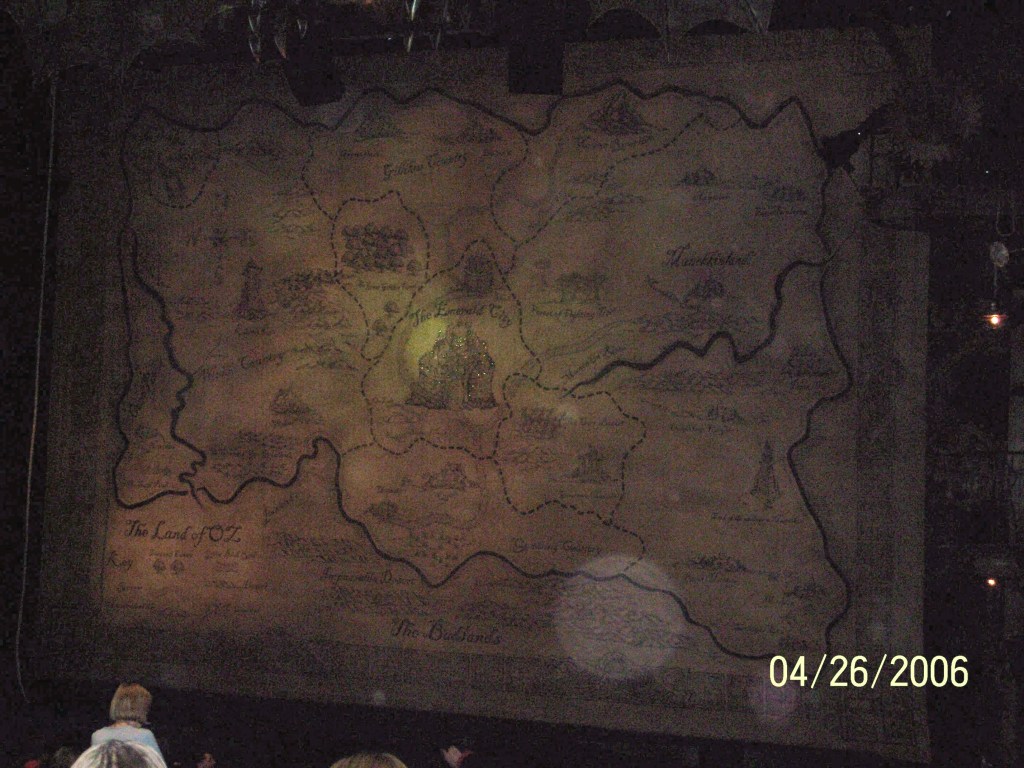
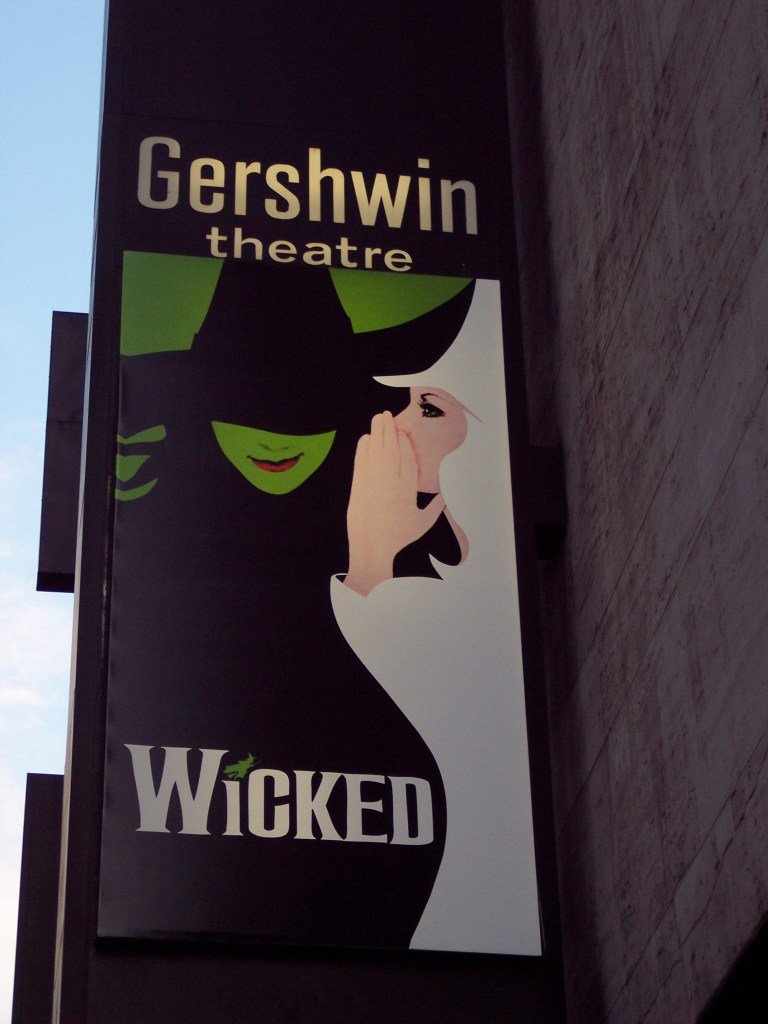
Considering the movie version is at its height of being popular, It seems that now is the perfect time to write about my very first Broadway Musical experience, Wicked (from my Reverse Bucket List).
I must confess my confusion that after 20 plus years of being on the stage, the musical is still so beloved that it should have such a large fanbase that has flocked to the theaters to see it and sing along. It certainly is a good musical, catchy music, compelling characters, interesting plot, and full of deeper themes that will stand the test of time. However, I just hadn’t heard much about it since it first debuted back in 2003 which followed on the heels of the 1995 book. Seeing all the excitement surrounding the movie version of it has made me reminisce about my Broadway experience.
I was in my senior year of high school when the music department was able to schedule a trip up to New York city in order to see Wicked the musical. As our high school was about a 3 hour drive from New York, it wasn’t too far for us to do occasional class trips. As it happened, this trip was scheduled for the day after another trip to New York to see the Darwin Exhibit – so I happened to go twice in one week (but a post for another time). I had recently read the book from my library, curiosity finally winning out to discover what precisely had everyone in such a frenzy of excitement. As my school had done the Wizard of Oz musical in my freshman year, i was extremely curious to not only read the story from an alternative point of view but see the story from an alternative point of view.
Our field trip actually began in the later part of the school day as the performance would not be until the twilight hours. We piled onto the charter bus as a group of exuberant, nerdy teens ready to take on the world. For most of us, this would be the first time seeing a Broadway musical and for some it was their first time going to New York. The air was palpable with excitement which soon wore off after the initial jostling for seats and everyone settled into their places for the long trip up. There was the usual chatter, the occasional flirtatious glance between people, whispered gossip and playful teasing for which groups of teens are known for.
I was no different sitting with my friends and giggling most of the way uncertain of exactly what I was in for. I had of course heard of the infamous broadway and grew up watching various performances of musicals recorded on video. I didn’t know precisely what made Broadway so special other than that was where musicals were born. Even though I had just seen the famous city, I had not yet visited when the daylight fades and gives way to the bright lights of the streets. Would it really transform itself as I had been lead to believe?
As the bus rolled along, we began to start seeing signs for New York and signs for Wicked. The excitement on the bus began to build once again. The energy was barely contained within the seats. For myself, I remember half bouncing up and down in glee. Shortly – though not nearly quick enough – we had arrived in the big city. We were given leave to divide ourselves up into groups and we were taken to have pizza.
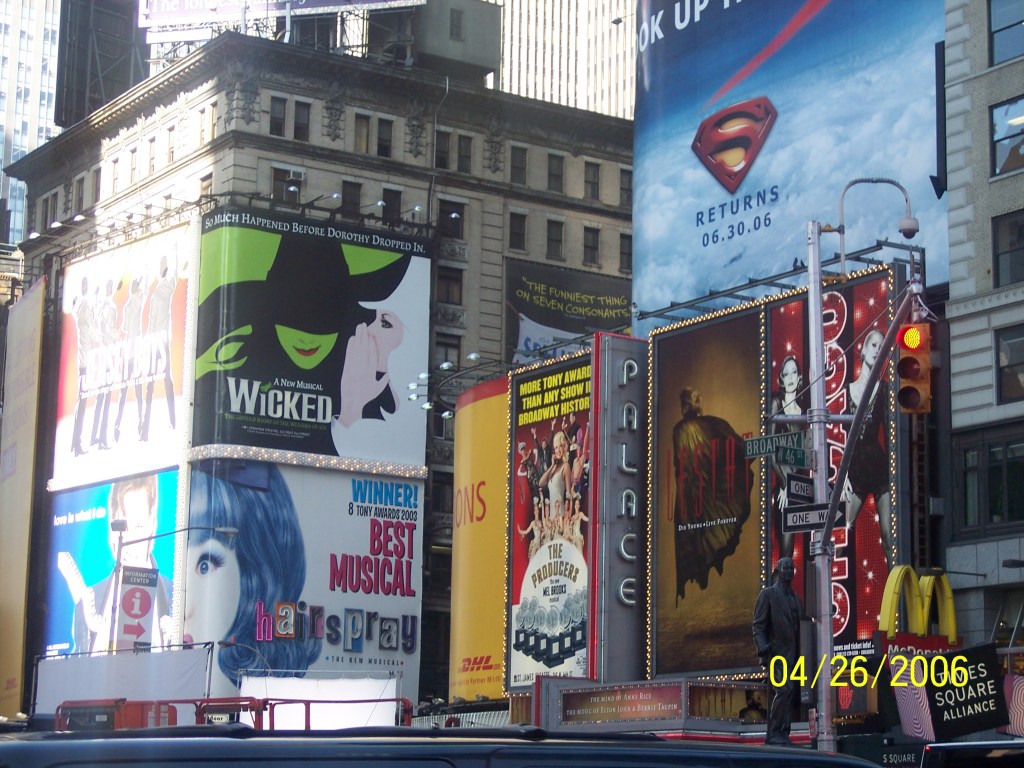
I remember walking through the streets taking in all the sites. The daylight had just started to fade, turning the sunlight to rose. There seemed to be too much to take in at once. Buildings towering over us. Music blared over the cacophony of sounds, traffic, horns, and construction. We spotted a street performer. Cars were everywhere, some of them quite unique like the limo humvee which alternatively amused and baffled us as quintessentially New York. Looking up we saw the famous billboards and lights, soon they would light the night and block out the stars and moon.
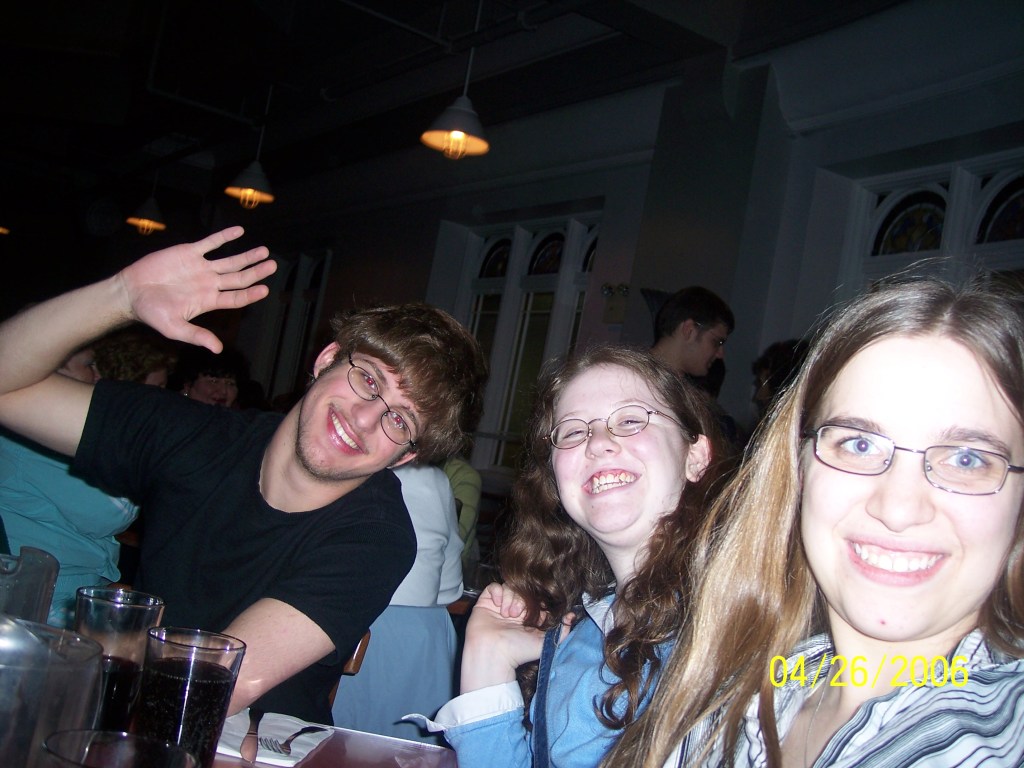
We were ushered into an upscale restaurant which was known for its pizza, though to this day I cannot quite recall its name. But I recall the atmosphere quite well. Like most upscale restaurants, the lighting was dim which only accentuated the richness of the dark wooden panels on the lower part of the walls. The upper half seemed to be a lighter cream though the shadows obscured the truth. I distinctly recall that we ate on the upper level looking down over the rest of the patrons. Perhaps, knowing that they would play host to rambunctious adolescents they wisely seated us away from their other customers lest we became a disturbance. If we were, I did not hear of it, though I cannot quite imagine that we were not at least slightly disruptive. However, most of us had been raised with at least decent enough manners, the problem of course is that when in the company of other teens, those manners seem to get forgotten.
I will fully admit that while yes, I had the infamous New York pizza, it didn’t really taste all that much better than the pizza I order from down the block monthly. Granted, the pizzeria is owned by a 2nd generation Italian immigrant whose grandparents owned a restaurant in Italy, so I may be a bit spoiled when it comes to Italian food.
What I remember most about the evening after arriving at the theater was that it was both exactly what I expected and not what I expected at all. First, dear reader, you must recall that a Broadway musical or really any theatrical performance “on Broadway” could take place on any one of 41 stages in New York City which can seat 500 or more persons. There are in point of fact only three theaters located on Broadway itself: Broadway Theater, Palace Theatre and Winter Garden Theatre. So even though one might picture Broadway and one of these three theaters, one might find oneself in a theater several blocks away.
Prior to going to a Broadway production, my theater experiences consisted of the Fulton in Lancaster and the Hershey Theater, neither of which are architectural sisters to those in New York. So while I had a vague notion of what a theater looked like from pictures and movies, it was still in juxtaposition to the Hershey which was designed after a cathedral in Venice and the Fulton which was designed as a Victorian Opera house. What struck me most was the sheer amount of red velvet that they had at the entrance. It seemed quite a bit odd while still ornate. I remember thinking that the entrance was a bit smaller than I had imagined as we were ushered into what seemed to be too small a space before opening up into a larger area.
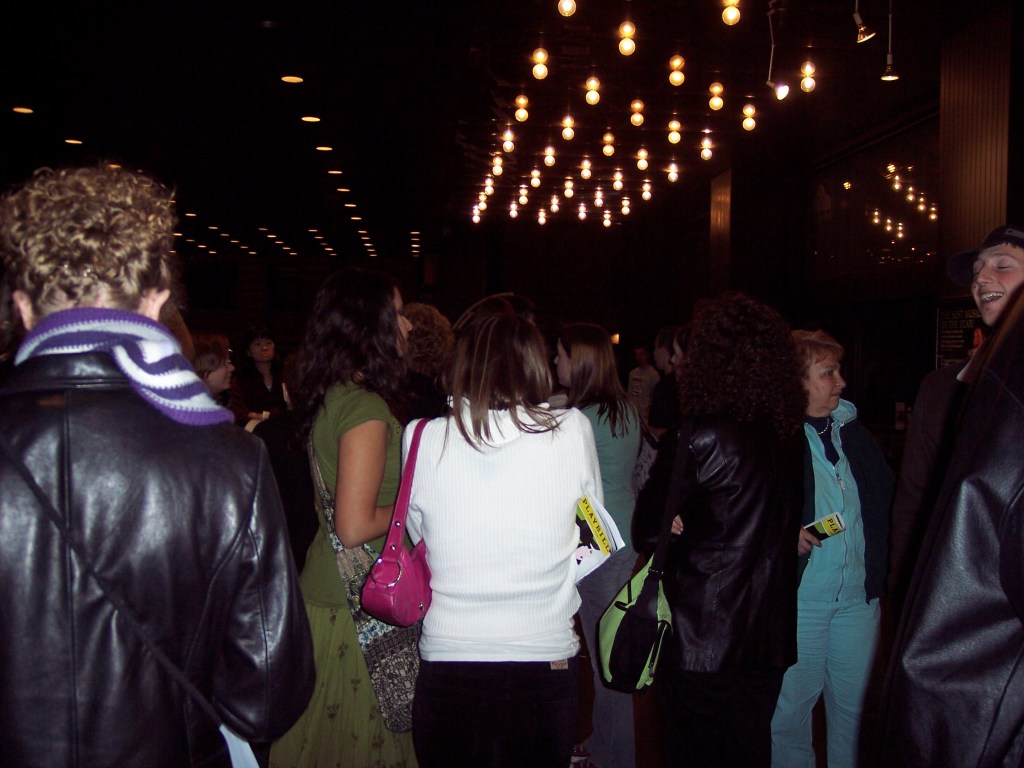
To be honest, the venue vaguely reminded me of a posh movie theater. It had a more modern flair and everything was a rich dark red and black accented with golds. Sound was softened by the lush carpet so that the conversation of the crowd swarming inside was a hushed murmur around me. Everywhere I looked people were smiling with an eagerness of anticipation. Once inside the theater, the air positively hummed with the activity of people quickly seeking out their spots. I was situated stage left towards the middle of theater close enough to see well enough but not to really see the more subtle expressions of the actors.
It hardly mattered, from the moment the curtain rose and the first notes rang out, I was transfixed. Glinda floated down in a sparkling blue dress singing that no one would mourn the Wicked Witch. I remember watching the Wizard dance around the stage with Elphaba’s mother singing and giggling with one another, a slight deviation from the book already. By the second song of Dear Ol’ Shiz, I was taken up into the story which asks what makes someone wicked? The very same question that first led me to explore psychology and later a career in social work.
It’s hard to exactly describe the sheer spectacle of a broadway production from the sets to the costumes; everything is meticulously crafted to convey subtle messages and create impressions which help tell the story. Scattered throughout were small references to the original Wizard of Oz while still firmly establishing the differences from the source material. It began to take an almost dreamlike quality where your mind begins to fill in the holes that the set leaves open, a few trees become a forest, a few mock houses spring into a whole town until your mind is sort of tricked into thinking there was more than there really was.
It could be that it’s the songs that help weave the enchantment for there is ever magic in song. It makes it easy to slip out of solid reality and into the dream realm. After all, it’s really only in dreams that people would be singing and dancing to tell a story. Perhaps, the music really does help place your mind in an altered state allowing you to more fully experience it. The choreography only adds to dream as people twirl about the stage becoming whirls of color. During the songs with larger ensembles it becomes too much to take all in, your eyes unable to drink in each movement and the lyrics blend together in your ears.
However, just like the spells woven in the musical, so too, does the spell the cast holds over the audience eventually shatter. The last song sung, the last line spoken and as if on cue the audience breaks into applause the thundering of hundreds of hands slapping together creating a wave of discordant sound which rouses them out of their half dazed slumber. Half stumbling out into the night and slightly stiff from sitting too long, the crowd begins to dissipate. Each person with a sort of half glazed look in their eyes as if they aren’t quite free from the enchantment of the stage. Patrons speak excitedly to one another, a few hum, fewer still hum on key. A number of them will most likely find themselves in bars later drunk on more than just showtunes. For a group of rowdy teens, the only thing left to do was to be herded back onto the coach bus.
Considering the lateness of the night, we returned in relative quiet, the lights were turned low to allow us the opportunity to sleep. I was never one to really sleep during transportation, did not. Although the next day, I was exhausted for yet a third field trip with my German class, but that is a post for another time. I recall mostly stumbling into my bed in the wee hours of the morning resigned to the idea that in only a few short hours I would have to return to the waking world. Still, as I lay in my bed the songs played over in my mind and my dreams were swirls of color.
Years later, I went to another Broadway Musical, this time Kiss Me Kate, a retelling of Shakespear’s Taming of the Shrew. The magic that was cast was as real as the first time. Time once again was suspended and I was overtaken by the spell of the theater.
How can you see a Broadway Musical?
If you are lucky enough to be relatively close to New York City, then it is quite easy for one to get there. You can either be like my music department and secure transportation for the same day knowing that you may end up crawling back into your bed in the wee hours of the morning utterly spent and exhausted or you can arrange to stay overnight like I did when I went with my sister with a hotel close by. The latter option is of course far more expensive.
However, my sister and I had tacked on an evening in New York as part of a larger trip as we were departing from New York. We had determined that rather than trying to get to New York the same day as departure we opted to go the day before to ensure that we did not miss our cruise ship. This is certainly an option I encourage you to consider when traveling, dear reader. If you find that you need to arrive to or depart from a city you otherwise would not travel to, consider if it’s possible to extend your trip by a day in order to enjoy the sights. My sister did this in Barcelona as well and I hope to do so in London. If one is going to be there anyways then it is far cheaper in the long run to spend a little extra on a day rather than spending even more later on a separate trip.
Still, not everyone will be traveling in and out of New York nor is everyone able to travel to it on a lark for a day trip. Then the principle of the thing is what one must turn to. Now a Broadway production is a grand thing, but it is not the only way to enjoy a Broadway Musical which is a genre rather than the thing itself. There are many beautiful and glorious venues which put on performances of musicals. Take the earlier mentioned Hershey Theater which is a masterpiece of architecture. The quality of performances that have graced its stage are certainly equal to New York’s Broadway or London’s West End. Some performances may even surpass what one may see on Broadway depending on the quality of the actors, costumes and set pieces.
There is after all nothing inherently magical about a particular venue, Broadway just happens to be the place where most musical productions are developed and debuted. It is the place to go if you want to see the newest musicals; it is not the only place with capable of phenomenal performances. This is great news, as you, dear reader, are almost certainly within a reasonable distance of a grand theater which hosts performances. I encourage you to go forth to your nearest performance hall and find yourself lost in the magic of musical theater!
The battle of Gettysburg was one of the defining moments of American history. The Union’s victory over the Confederate army was the turning point in the Civil War, leading to the restoration of the union and ensuring the end of slavery. The battle took place over the course of three days from July 1st to July 3rd, almost coinciding with our nation’s 86th birthday. It was also one of the bloodiest most devastating battles in our history.
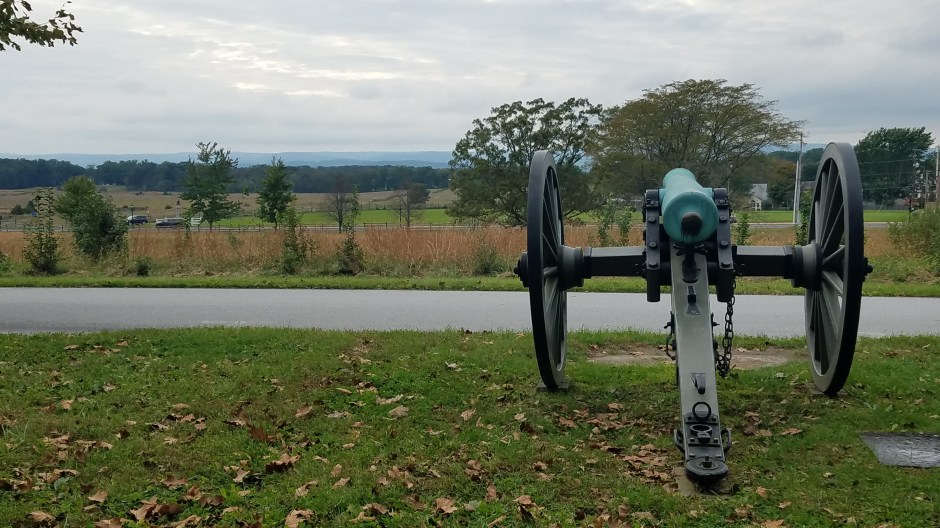
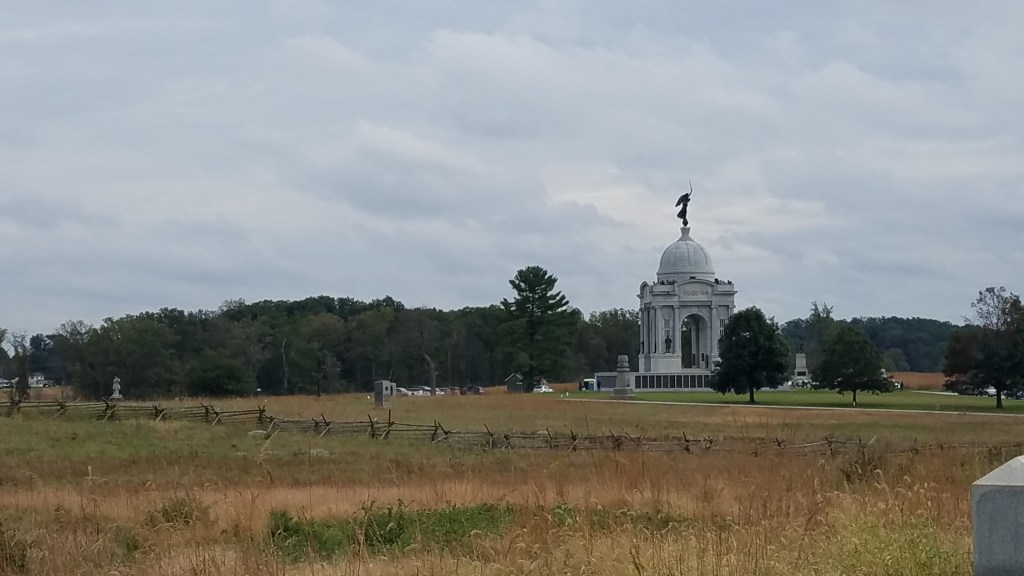
Visiting the site of this place can be a bit surreal. Today, the fields lay semi-empty. The dead have been given proper burial. The gunfire has long since ceased and it only returns for reenactments and salutes to honor the fallen. To the educated eye one can still see the evidence of the battle and how the lay of the land was shaped by it and helped to shape the battle itself. For example, one can still see clearly how the Union’s superior position of the high ground helped them win despite having less troops.
It is now home to many monuments to the fallen from all over the states. Naturally, the Pennsylvania monument is absolutely massive, but others are smaller. Some are dedicated to large groups, but then there are more specific battalions and legions remembered. It is easy to forget that each of the men who perished on the field had a name, a story and purpose to be there. It is not easy to take up arms against one’s own countrymen.
In the surrounding town, they offer various walking tours highlighting moments of history. They talk about the miracle that only one civilian died in the fighting, they point out bullet holes. What is really striking though is the sheer amount of death the residents saw, the description of pools of blood from the surgeries and piles of limbs that had been hacked off to try to save lives. They describe the stench that lingered for weeks in the hot summer. They whisper of ghosts still lingering on over a century later. If one believes in such things.
Still in among the ghost stories, there is real history being remembered. There was a high cost to pay to preserve our country more than the cost to form it originally. It answered the question of whether we truly were a nation of freedom for all or only for some. A question that will need to be periodically asked and answered as we continue to navigate conflicting rights and values. It is a place that when visited demands at least some reflection of the cost that had to be paid for today’s America.
Despite growing up relatively close to it, I had not really visited the battlefield until I was an adult. The annual classroom field trip that year had been replaced with a trip to Philadelphia to see the visiting display of the Russian Tsars. When my family did finally visit, I was a teenager and the thought of tramping about a field in the heat of summer with my father was unappealing, and I opted to go elsewhere with my mom and let my brother and father walk about the fields. So in the fall of 2018, I finally went with my boyfriend to see where it all happened, put history in perspective and learn more about this monumental event in our nation’s history.
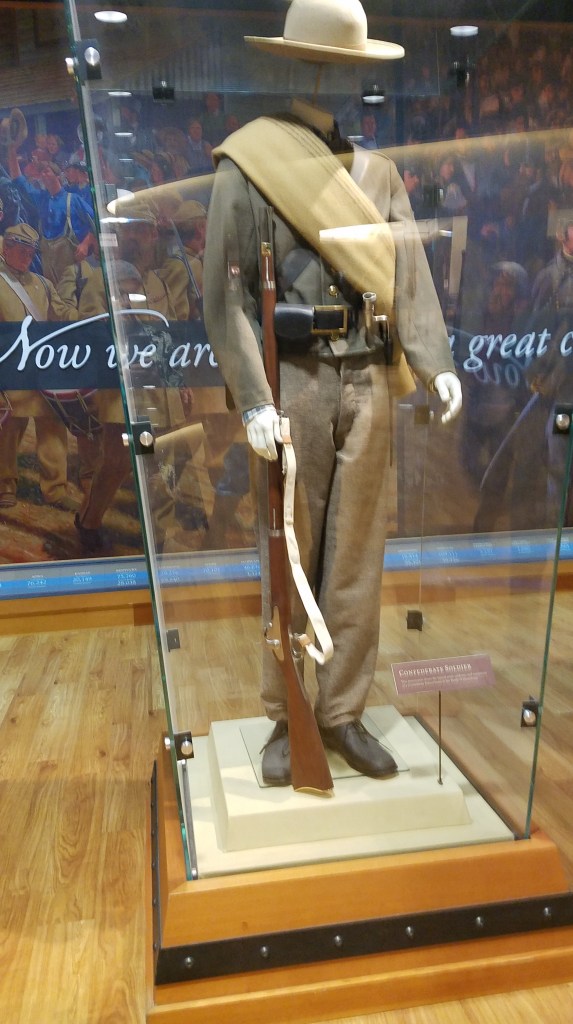
I can’t say that I necessarily learned anything new about the battle that I hadn’t already heard in the classroom or seen in documentaries, but what I did know was brought to life by seeing the physical artifacts from the battle and hearing the intimate stories of the people who were there both solider and civilian on both sides of the war. There’s something to be said about seeing and interacting with physical objects that allows our minds to form a more emotional connection with the knowledge or at least enhance our knowledge through other senses.
It is always strange to visit the site where tragedy took place and one must acknowledge the Civil War was tragic. It was tragic for a nation to be ripped apart and that the effects of that can still be seen over a hundred years later. It is also tragic it took a civil war to confer the basic human right of freedom from slavery to all living under our nation’s flag. On one hand, it is a place of history that should be remembered and respected, a place where people died to give other people freedom. On the other hand, it’s a site of enjoyment and relaxation. People come to visit on their vacations and for a day off of school. They enact the battle for entertainment, as well as to keep the stories alive. Children run through the fields laughing and playing around the cannons. Tourists take goofy pictures in front of memorials. For me the juxtaposition of both is important, because in some ways it means healing has taken place and is a testament to the resilience of people and our nation.
How can you add this to your own bucket list?
Unfortunately, this is one of those things that cannot be substituted easily if going to the actual Battlefield of Gettysburg is on your list. It’s in PA and unless you’re nearby, it won’t be cheap or easy to get here. In which case, may I recommend google flight tracker and hotels.com? This may be an instance of the principle of the item rather than the item itself. The principle behind visiting Gettysburg was to see an important site of our nation’s history that helped shape our identity and defined us. If you live in the south, there are many other Civil War battlefields that you can visit. If you live in the North East, especially in New England, then you can visit many sites from the Revolutionary War. In the South West, you have the Mexican-American War. California was home to the gold rush as well as the Japanese Internment Camps and the Watts-Riots. The Midwest is of course home to the west itself and the expansion of white settlers into the territories. I highly recommend seeing what is near your hometown. You may be surprised to find your seemingly insignificant part of the country actually helped shape us in the amazing country that it is today.
Completed: 2018
Miles from home: 75
Cost: Free to visit the Battlefield, Visitor’s Center. Museum is $15, Museum+ Film is $21
I have been remiss, dear reader, in neglecting to tell the dastardly tale of the real beginning of my sister dates. Yes, technically, we did do the chocolate walk in October a few months before the night of the ‘incident”, but it was that very night that the idea itself took off and we determined to make it a monthly outing.
It began of course with an invitation to dinner at the Mount Hope Estate, which the original mansion being built in early 1800’s and later additions in the late 1800’s makes it a unique blend of Federalist and Victorian styles. How apropos when considering the events of the night. At first, my sister lamented being unable to attend without a second guest, what would people say to show up to an event sans escort, but to go with a different gentleman would be quite out of the question for a married woman, such as herself. It of course fell to her sister to chaperone, or rather she could use the excuse to chaperone me her unmarried sister for a bit of fun together.
Now any true society dinner begins with the mingling of the guests to share juicy gossip and tales of one another. Our hosts that night were no different, slipping tantalizing details of the other guests. And such scheming amongst each other as I never did before see. Perhaps, my friends are above such petty squabbles, or perhaps they are simply better at disguising their nefarious ways. Either way, keep your secrets to yourself lest you become the subject of such gossip!
Having thoroughly enjoyed mingling, slowly sipping on wine and engorged ourselves on the latest potential scandals, we were called to be seated four our four course meal. The food was as delightful as the entertainment! A feast for both the eyes and the mouth! My sister and I compared notes from our careful study of the key players for the night. We sensed a plot afoot and we would not be caught out unawares.
Well, we certainly were right in our suspicions for shortly after dinner, came the cries of murder! But who had done it and why? My sister and I only needed to give one another a short nod before jumping into the adventure to help solve the mystery! Naturally, we had to launch an investigation of our own, questioning the key players and making careful observations of the crime scene. Having made our careful inquiries we were certain we knew the culprit! Alas, we were fooled! ‘Tis a good thing, she and I were not official investigators or else an innocent would be locked up and the foul murderer would have escaped!
As it turns out, the play rotates who “done it” so that even if friends share the experience with one another or social media, the night is not entirely spoiled ahead of time. A clever idea on the part of the organizers of the play. Our play was set in the 1940’s, so I donned an outfit to reflect the late 30’s/early 40’s to really help me “get into it”. It really is up to you how much to “lean into” the character of the night.
I’ve done other dinner plays where the play happens around you as part of the process of dinner. While they were enjoyable, the added element of being able to get up to interact with the players as if you were actually part of the story was what elevated the whole experience. Additionally, the backdrop of a murder mystery in the midst of a Victorian mansion was an added bonus, few places can boast of. The mansion is not located among the bustling cities, but rather out in the countryside, surrounded by the fields of grapes for the winery which only added to the more gothic elements of the mystery. And did I mention the food? Mount Hope outdid itself with the food. That alone was worth the ticket price!
So how can you find a murder mystery dinner?
I would suggest starting with google or facebook events to see what places in your area may periodically host one. If you have more than one option then, consider other “enhancements” to the experience. Do you have the option for a gothic Victorian mansion like myself? I certainly recommend thinking through the setting of your play. Is there a time of year that more suits you for mystery and fun, like in October or in the darkness of winter? You can also often see hints of the plot and setting that might strike your fancy more than another.
I certainly encourage you to dress up a little, take on a “part” yourself and have a bit of fun with it. Obviously, don’t be an obnoxious audience member and try to be part of the play itself. Don’t go in stealing all the attention and confusing the other audience members who can’t tell if you’re supposed to be part of the theater trope or not. However, a little more immersion can make your evening more magical.
I want to drink deeply from the cup of life. I want to see the wonders of nature. I want to try new things. I want to challenge myself. I want to grow and change and become a better version of myself than I was yesterday. I want to gain new skills. I want to meet interesting people. I want to see art, appreciate beauty, appreciate architecture and see with new eyes. I want to listen to music that is reminiscent of heaven and speaks to my soul. I want to stay up so late I see the sunrise the next morning. I want to dance and sing without regard to what others think. I want to take candid pictures and post them without filtering or editing. I want to take road trips. I want to be spontaneous. I want to run through the forest. I want to chase fog and make flower crowns. I want to visit coffee shops, browse thrift stores for treasures and explore craft fairs. I want to visit museums and archaeological sites. I want to explore places. I want to simply stop and admire the view. I want to make memories and deepen my relationships with people.
I don’t want to spend my life in regret wondering about the chances I never took. I don’t want to spend hours scrolling through on my phone wishing I could have the life I see on social media. I don’t want to waste my time dreaming of things I can’t afford or do or places I can’t afford to travel to. I don’t want to miss out on the things I could be doing because I was too busy wishing for the things that are out of reach. I don’t want to spend all day with my head in the clouds not minding what is right in front of me. I don’t want to listen to the people telling me that what I am isn’t good enough or that my life isn’t there yet. I don’t want to miss the blessings I have demanding the blessings I don’t have yet. I don’t want to live in fear of what people might think or say or do because of being authentic to myself.
My bucket list isn’t just a checklist, it’s a call to action to remind me that I get to create an adventurous life. It helps push me to keep trying new things and to seek out new experiences. I’m always adding things to my list and revising it. I am constantly on the lookout for opportunities and unexplored areas. I may not always be doing things that people would consider “bucket list worthy”, but they’re moments outside my usual routine whether it’s taking a train ride to do a wine tasting or dying a scarf.
It’s also not about chasing the next thing because life is supposed to have the mundane and the routine. There will be dishes and laundry, there will be days at home with tea and books. There will be lazy mornings snuggling with cats. Those are moments to savor as well which is why adopting a cat is on my list. It’s about living. Whether it be the everyday moments or the extraordinary and all the moments in between.
And more than anything, dear reader, I want to live.
Slowly, slowly he worked stone against stone chiseling out a dimed sized impression. The sun marched its way across the sky as he worked each part of the snake. An hour’s work would only yield four and he had so many to go. Still in this sacred place of sun, earth, water and sky where the underworld opened to the deep below, he kept to his work. One piece among a dozen others each marking the important spiritual events of his people. As the sun kissed the rock on the fall equinox lined up perfectly with the head of the man’s snake, he smiled. The stories of these drawings the life, spirit and blood of his people, a testament to their presence which would continue to echo for a thousand years and more. A thousand years later, though lost to time after the conquest of the Susquehannocks and the colonization of the Europeans, they are not forgotten but remembered simply as the Safe Harbor tribe.
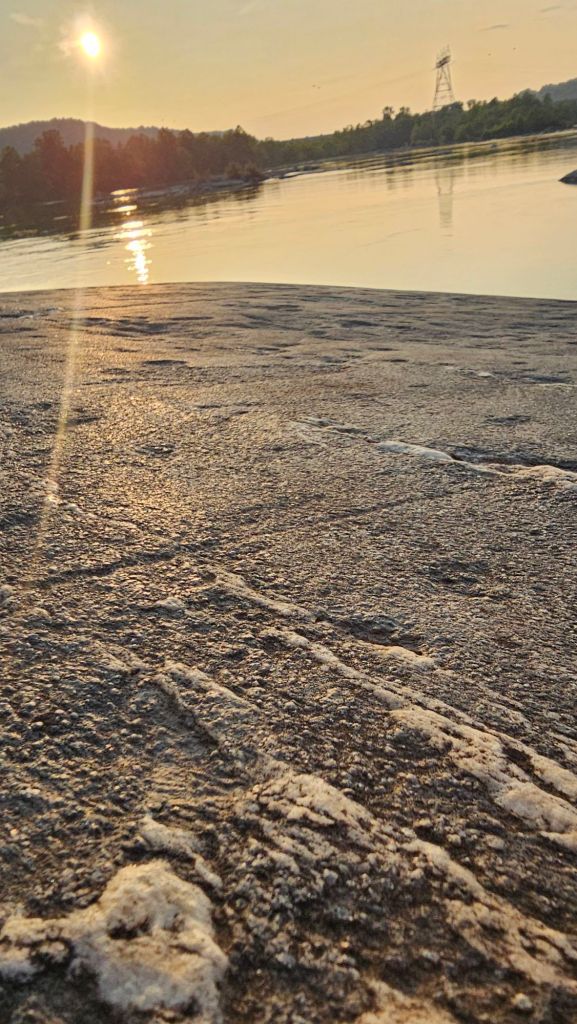
To stand on the Little Indian Rock and Big Indian Rock is to be transported back in time. On either side of the river the trees still stand tall and proud and to the west, not even the telephone lines can break the illusion that one is seeing the forest as it has been for a thousand years. Though truthfully the dam has raised the water levels significantly and the river has eroded the shore line. Still one can see why they felt this place was special. With the thickness of the forest the sky would have been often blocked out from view under the canopy of leaves. The wide river would have opened up to the glittering cosmos even as the deep crevasses beckoned to the underworld below. The jutting rock up out of the water would have been a place of earth within water. A place of earth, water, sky and the underworld colliding where the river goes from a soft, lazy merading flow to rushing current as it suddenly drops.
Big Indian Rock seemed to have been used primarily for social purposes with its markings for hunting, directions and even a helpful gps tag noting that it is a two day’s walk to the mouth of the river. There is evidence of camp fires perhaps for when they wished to view the night sky. Despite its size the petroglyphs are mainly concentrated in the cardinal directions. Little Indian Rock seems to have primarily been used for spiritual purposes having several Thunderbirds and snakes which line up with the spring and summer equinoxes. There are several which seem to depict the mystical Wendigo and even a Misiginebig.
One of the largest collections of petroglyphs east of the Mississippi. In this picture you can see a Thunderbird and the mysterious water serpant.
Graffiti dots the rest of the rock from the various visitors over the years primarily from the 1800’s until about the 1980’s when the rediscovery of the petroglyphs and their significance put a halt to any additional markings. Not through any sort of ordinance, but through education and the respect that education has bred through the local populace who still kayak and fish around the rocks. Despite its historical significance and being home to what is considered the greatest collections of petroglyphs east of the Mississippi there is no official protection for either Big or Little Indian Rock, no barriers preventing anyone from clamoring up the rocks to see them. The location of this ancient art is perhaps the best protection that can be offered: a wall of water separates it from the land on either side requiring a boat to gain access and most mischief makers are easily deterred by the strenuous physical exercise required to obtain access.
At first, one could easily miss the ancient markings as no more than strange impressions in the rock. It takes a sharp eye to spot them, they are most easily seen at sunrise and sunset when the angle of the light allows them to stand out in sharp contrast. Which is why on a late August evening, my sister and I set out with a small tour group in kayaks to the two islands. I was a little nervous having grown up hearing the dangers of the river especially around the dams which so easily can sweep a person down into their churning depths never to be recovered as their body remains trapped within. However, we were a safe distance from the dam and our guides delayed our departure twice due to unsafe river conditions, so I trusted them to take us out. We donned our life jackets and were given a quick overview of kayaking. My sister and I were the only two non-experienced kayakers as the other members of the tour had brought their own kayaks.
With little ceremony, we hauled our small vessels to the launch site and were quickly swept up in the quick current of the conestoga river rushing to meet the Susquehanna. At first, I paid little heed to my natural surroundings focusing primarily on learning how to steer and maneuver the kayak. There were a few run ins with others but we laughed it off with some pirate jokes. One of our guides rushed to the front of the group where the other stayed in the back to assist any stragglers. We were assured that if we needed a tow back they would assist to ensure we all made it back safely. Being a novice, I was not very good at reading the river and got swept up a few times in quick, churning currents which swirled my vessel around. After a few moments of panic and fruitless fighting, anxious that I would be swept away from the group and lost down river, I regained my footing (so to speak) and allowed myself to literally go with the flow. I was able to maneuver my kayak behind some rocks which broke up the flow long enough for me to jet across to rejoin the group of boats. Having conquered my first challenge, I felt much more confident in my ability to traverse the waterway, though I was certainly not ready for a solo venture.
Not being quite so nervous about the river, I was able to start to take in my surroundings and really enjoy the experience of the kayak gliding across the surface as my paddle dipped into water. Overhead birds circled and cried to one another. The trees on either side of the river blocked out signs of civilization, the illusion only broken by the distant sounds of traffic and the dam nearby. However, with the dam behind me it was easy to get lost in it. Occasionally, I would place my paddle across the kayak to simply float and breathe. I could see why so many people will spend their weekends out on the water leaving behind the sometimes suffocating atmosphere of the urban environment for the open expanse.
We first visited Big Indian Rock where we were shown the petroglyphs and given some education on the people who once made them. Though we no longer know their name they are thought to have been part of the Algonquin people who were known for their making of petroglyphs; other artifacts that have been found in the area also point to cultural similarities with other known Algonquins. We were given a brief overview of native beliefs when he showed us a thunderbird. The one on Big Indian Rock is a rarity for its depiction of feathers on the wings. It is uncertain what the significance of the feathers were. We then clamored down the rock back to our kayaks to go back up the river to Little Indian Rock. We were warned to stay away from the poison oak. Having had poison ivy earlier in the summer, I was quite motivated to stay away.
I was absolutely amazed by the incredible amount of petroglyphs concentrated on Little Indian Rock, a feast, a mythical serpent creature, snakes marking the passage of the sun, deer prints, footprints, bear paws, thunderbirds, animals that could be beavers or otters and more. It was such a plethora of art made meticulously over hundreds of hours. Each dime sized impression took over twenty minutes to make leaving little doubt that it was done with intention rather than something a few bored teens may have completed. It seemed that all too soon we had to leave this magical place, but the announcements coming from the dam warned us that it would soon be time to get off the river and the setting sun threatened us with coming darkness. As a novice kayaker I did not wish to embark on my first night adventure.
The trip back was considerably more effort than going down as the primary task was steering the kayak with the current. The trip back was against so it required us to hug the shore of the larger island in the middle for a significant portion where the current was slower. I made the mistake of trying to jut across too soon which left me fighting the current. I strained my muscles forcing them to conquer the river’s strength with my own and was quite grateful I had been working out using a sledgehammer to mimic kayaking throughout the summer. My sister required some assistance and was towed part way for the trip back. Primarily to help her navigate the river and not get caught as I was in the stronger currents which threatened to push me back. Despite a novice’s mistake, I was able to overcome and make it back on my own, my arms happily exhausted but not overdone.
The sun had not yet completed its journey to the underworld and we were happy to have made it back. We helped haul the kayaks back up the shore to the grass and thanked our guides for the lovely evening and assistance in getting back.
How Can You Kayak or See Petroglyphs?
This was definitely one of those “bang for your bucks” kind of trips in that it crossed two things off my list at the same time: petroglyphs and kayaking. I had been kayaking as a child, but it was only on a small lake at summer camp and I wanted a real experience. Renting a kayak would have been pretty easy, but given the dangers of the river nearby, I wasn’t comfortable exploring on my own. Just two weeks before, two people perished in the aftermath of the flooding from the hurricane, and others had to be rescued. The river can be quite dangerous under certain conditions and had it not been for the guide shouting some advice to get out of the churning current, I may have ended up many miles downriver. I recommend that while you can easily purchase or rent a kayak, you ensure you have completed any necessary licensing requirements for boating and you have done the necessary research to ensure you understand the dangers of any particular river.
As for the petroglyphs, they are found throughout the United States and even the world. They range in ages from 1,000 to 40,000. Some can be found still in the native surroundings like the petroglyphs on Big and Little Indian Rock whereas others have been removed and placed in museums or have had barriers built around them to protect them from harm. It really depends on what you consider “good enough”. For most people, I imagine seeing them in a museum is perfectly fine. For me, it was important to view a set in their original surroundings. For instance, it was really cool to see how close the sun aligned with the snake marking the fall solstice which was only a month away when this trip was untaken. There were footprints on the rocks and we stood close by them wondering what they marked and whether we were supposed to look out and see something important. Has anyone looked to see if they align with any star signs? All of these questions can only be asked and answered if they remain where they were untouched. Unfortunately, leaving them untouched also means risking them to the elements and potential vandalism.
I found out about these petroglyphs several years ago and was very disappointed to see that they were nearly inaccessible for someone without access to the water via boat or kayak. I had almost resigned myself to not being able to see them, until a post on Facebook caught my eye, Lancaster Uncharted was hosting kayaking tours to them. It was unfortunate that because of an earlier trip I took that year, I was unable to afford to go that summer, but I marked my calendar for the following spring when I was sure tickets would go on sale and sure enough was able to snag them in May for August of the same year. There are many sites dedicated to the location of various petroglyphs and tours to go see them. As always, I encourage you to decide what suits you. Remember it’s not about replicating my adventures as they are merely to inspire you with the possibilities that are out there! After all, what is available in my backyard may not be in yours, but that’s what makes these adventures so fun and unique! Go forth and explore dear reader one never knows when and where one might find a portal to 1,000 years in the past.
Completed: Aug 23, 2024
Cost: $115 per person
Miles from home: 20 (plus another 1/2 mile of kayaking down the river)
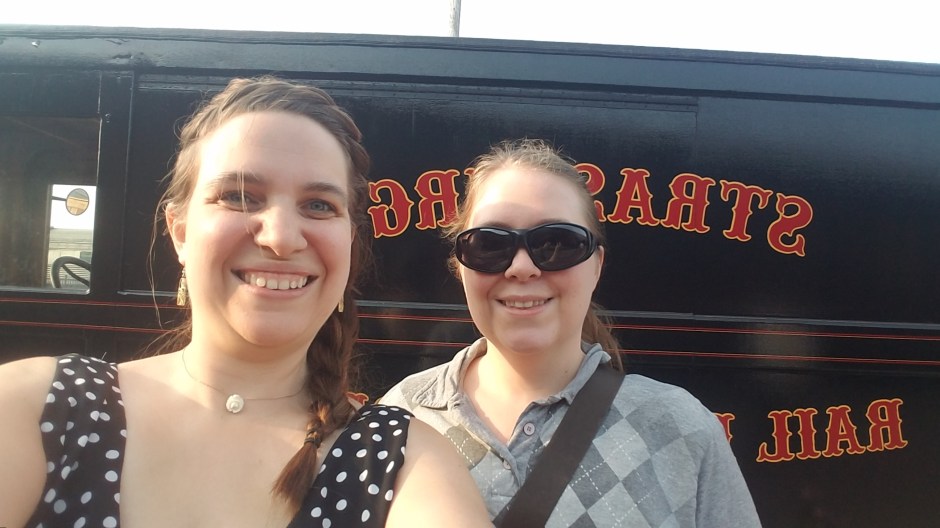
hat could possibly be more romantic than an antique train through the summer countryside, the cornfields lush and green, cows grazing in their pastures and the blue skies dotted with clouds? Other than including a companion known for her poise and stimulating conversation? Why a little wine, of course! And what could be a more perfect place for such an adventure than the oldest continuous railroad in the United States?
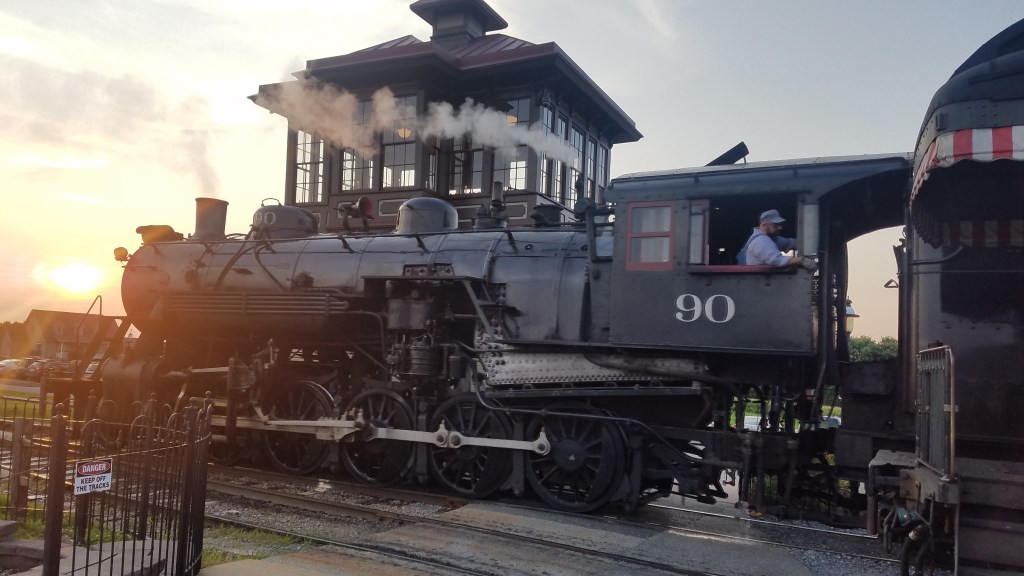
Built in the mid 1800’s, the Strasburg Rail line faithfully provided transportation to the residents of Lancaster county to ensure they stayed connected to the larger railroads. However, with the rise of the automobile and significant changes in rail usage, it had been reduced to the poorest and smallest railroads in the country. In order to save this piece of history, a group of railroad enthusiasts purchased the railroad and began to offer tourist excursion trips. Within three years, ridership had grown from 9,00 a year to 125,000. In order to keep up with customer demand the directors turned to the steam engine. Today, Strasburg offers visitors the opportunity to climb aboard a fully restored steam locomotive in a beautifully restored wooden railcar and gaze out at the lovely Lancaster County countryside.
While not train enthusiasts per say, my sister and I are history buffs who enjoy experiencing how life once was. What was impressive was not only were the trains historical, the railroad itself from the ticket booth to the staff were also historical. It felt like stepping into a history book where we could leave the hustle of modern life to embrace a slower time. We had arrived early so we were able to not only stake out our seats but also to explore the railcar a little. We loved the details that went into every inch of the car from the light fixtures to the woodwork. It is difficult to imagine such care and craftsmanship being put into our railcars or airplanes today. The environment of the old-fashioned railcar was warm and welcoming rather than the cold industrial experience public transit currently offers. I immediately relaxed into the comfortable leather seats settling in for my 45 minute ride.
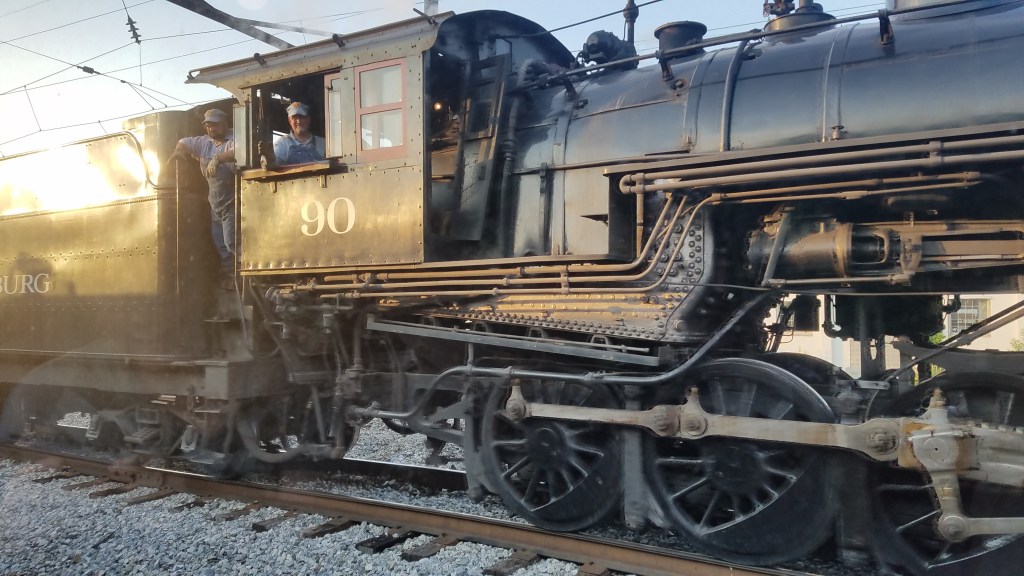
The steam locomotive, also called the Iron Horse, dominated the railways from the early 19th century through the middle of the 20th century. They were a vast improvement over the old system where horses were used to pull carts along rail tracks – hence their nickname. An early model was designed and constructed by John Fitch a steamboat pioneer in the United States in 1794, but it’s the United Kingdom that gets the credit for fully developing the idea and utilizing it for commercial use. They work by using steam to push the pistons of the engine up and down. That movement is converted into the back and forth motion of the wheels through a series of rods – piston rod to main rod, main rod to side rod, side rode to driving wheels. Through such a simple system the age of steam revolutionized the west.
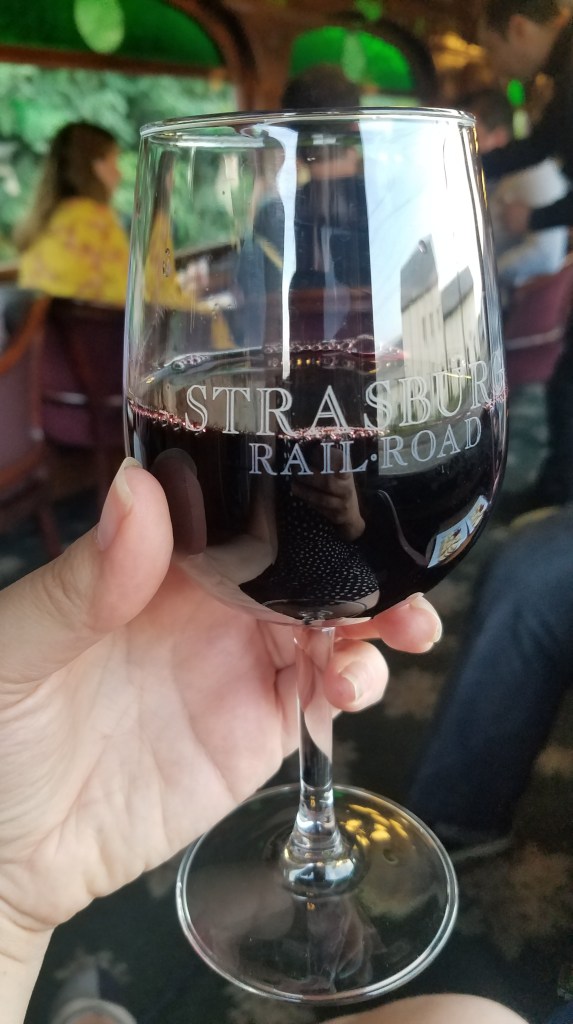
The staff, like the staff at the ticket booth, were dressed as they would have been in the 1800’s when the train was operating to connect passengers to the larger rail systems. They punched our tickets to get us started and gave a brief overview of the train. Then we began the wine tasting being offered two different whites and reds. From the four wines, we would be able to select one to enjoy a full glass. Naturally, I chose one of the reds and my sister, surprisingly, enjoyed the same one – she usually prefers the whites.
As we snacked on the offering of cheese, crackers and grapes, we gazed out at the rolling hills. The rail car shook rhythmically and under the murmur of conversations, one could hear the characteristic pattern of the steam engine chugging along. The sun began to set, changing the sky from a near perfect blue to a paler almost lavender hue. We sipped on the full bodied red, toasting to life and adventure. We were able to catch sight of another steam engine on the tracks and even snap a few pictures of it in action as it passed us by.
How forty five minutes manages to stretch out into what could have easily felt like two hours of relaxation can only be explained by the time machine that was the Strasburg Railroad. It seemed as if no time had passed since we started our journey and yet it also felt as if we had just spent hours traversing the fields. We disembarked fairly content with our adventure and with hopes to enjoy the other offerings that the railroad has to offer in the future. Though with an ever growing list of adventures to try, it may be a while until we are able to step back into the history books.
How can you experience a historic train ride?
Luckily, there are many places where you can experience a ride on a historic steam locomotive, from the line of Whitepass & Yukon in Alaska to the State Train Museum in Georgia. Many places can be found https://www.trainchasers.com/steamdirectory.html though if you don’t see your state listed, it’s not an exhaustive list. It’s just a very good starting point for where you might a locomotive near you. Unfortunately, for those of you living in the middle of the country, most of our rail lines have disappeared, so if this interests you, consider checking out if there are any historical railways near your next travel destination. Remember when we do travel, we want to try and make the most of our travels and explore things we don’t typically have access to. You may also see if there are other historic modes of transportation available to you such as a steamboat ride or early automobile. Perhaps, you can enjoy a steam engine in a train museum. Remember, it isn’t about doing the exact thing but looking at what it symbolizes and what sort of experience you desire to have.
Additionally, I cannot promise that any of these will offer a wine and cheese pairing, but each of them offer a unique experience from Murder Mystery theaters to sight-seeing to simply moving from one place to the next. On a historic train ride in Panama, we were treated to seeing the country from coast to coast, sampling coffee and being entertained with songs.








 Budget Bliss: Bucket List