Mid-January Musings: Embracing the Pause

It’s the middle of January. The year stretches ahead, vast and unknown, while the busyness of the holidays has already slipped behind. Resolutions that felt urgent on January 1 may have already slipped through your fingers. PTO is carefully rationed for future trips. Unless you’re a federal employee, the next holiday is a small consolation at best. Life feels paused, caught in the gray space between what has ended and what has yet to begin. There is nothing to mark the calendar, nothing urgent to do, and maybe you’re not even sure what you’re waiting for.

For many, this stretch can feel unsettling — a restlessness like an itch you can’t quite scratch. It’s a space that’s heavy with anticipation yet empty of drama. It could drive even the most patient person slightly mad if we try to resist it.

And yet, I’ve learned that this “long middle” is fertile if we allow it to be. You see, dear reader, I approach my year much as I approach my day: with contemplation and reflection. Of course, the day does not begin quietly. I am awakened by two yowling, demanding, furry tyrants named Gemini and Orion, who treat my legs like an obstacle course and my face like a morning bell. I weave around them, careful not to trip, while they make it abundantly clear that food is a matter of life and death. Only once their bowls are full and their attention momentarily diverted do I grab my journal. One might ask why I don’t start journaling first — but only someone who has never had a cat would pose such a question. Thinking, let alone writing, with feline insurrection in full swing is impossible.

Once fed, my little darlings curl up beside me, their purrs vibrating softly against the quiet room, a small price to pay for peace. In that early window, my mind hovers delicately between sleep and wakefulness, with the last traces of dreams still clinging like morning fog. I often surprise myself with what emerges on the page — fleeting worries, lingering hopes, tiny insights I might never notice in the rush of the day. For fifteen minutes, I am fully present with my own thoughts, listening as the day slowly unfolds around me. The gentle hum of a cat’s contentment is the perfect backdrop for reflection, a reminder that even chaos can give way to stillness if we wait for it patiently.

This early-morning clarity feels like a metaphor for January itself. The holidays are over, spring is far off, and yet there is a quiet, powerful energy in the pause. The month stretches before us, unspectacular on the surface, but full of potential for reflection, insight, and subtle preparation. Like my journaling practice, mid-January asks us to slow down, to notice, and to tune into what is quietly emerging.


Learning to Live Well in the Liminal Space

So how do we inhabit this “long middle” without feeling restless or lost? The answer is not in rushing or in forcing productivity. It is in embracing the small windows of presence, in tuning in instead of turning away. Some practices I have found particularly grounding:

  • Early-morning reflection: Like my journaling habit, these quiet moments give you access to thoughts and feelings that are often buried under daily noise. Your subconscious speaks differently when the world is still.
  • Observation: Take notice of subtle details around you — the shifting patterns of light through bare trees, the smell of frost in the air, the warmth of a cat curled at your feet.
  • Gentle intentions: Instead of big, sweeping resolutions, consider small focus points for the day or week. What do you want to notice? How do you want to feel?
  • Micro-reflections: Write down one fleeting thought, one small win, or one subtle insight each day. Over time, these quiet observations add up into something meaningful.

January, like those first fifteen minutes of the day, is an invitation to listen. To yourself. To your environment. To the stillness that so often goes unnoticed during busier seasons.


Restlessness as Opportunity

That itch of January is not a problem. It is a signal, a nudge toward attention, reflection, and subtle growth. It can be uncomfortable, yes, but it is alive, and alive is what matters. By leaning into this restlessness, rather than avoiding it, you cultivate patience and clarity. You discover small insights that can set the tone for your weeks and months ahead.

Think of it like seeds beneath frozen soil. The ground seems still, colorless, empty. And yet beneath the surface, quiet processes are unfolding, preparing for bloom. So it is with mid-January. What appears as waiting or monotony is, in fact, preparation. The quiet work of thought, reflection, and noticing lays the foundation for meaningful action in the months ahead.


The Gift of Mid-January

January is not empty. It is full, not with spectacle or noise, but with subtle, meaningful opportunities. The long middle teaches us to slow down, pay attention, and care for ourselves in ways the busyness of December rarely allows.

Much like my morning journaling ritual, this month invites us to stop, listen, and notice. To honor the stillness and let it guide us. To embrace small rituals, quiet reflection, and gentle intentions.

So rather than rushing to fill the days, linger. Observe. Journal. Walk. Notice. And trust that this quiet, understated month is shaping you in ways that will ripple through your year. Even in the gray, even in the waiting, there is quiet wonder.


How to Find Wonder Again: Practicing Everyday Awe in Darker Months

December is always the darkest month. The Winter Solstice arrives with the longest night of the year, quietly marking the slow ascent back toward the light of spring. It is both an ending and a beginning. A hinge in the calendar. A pause between what has been and what might be.

It is also a time of renewal. We reflect on the year behind us, tallying lessons learned and losses survived, and we look ahead with cautious hope. Yet for all that symbolism, December still represents another three to four months before winter fully loosens its grip. The cold does not politely retreat once the holidays end. The bitter reach of Arctic winds lingers, stretching farther south than usual this year, brushing even warmer regions with frost and ice.

With the sun reduced to a pale visitor and the cold driving us indoors, many people feel the familiar post-holiday letdown. The lights come down. The tinsel disappears. The steady drumbeat of gatherings and celebrations fades into silence. Roads turn ugly with soot and slush. Gardens lie flattened and forgotten. Trees stand stripped bare, their branches like exposed bones against the sky. Everything feels gray, muted, suspended.

Time stretches out ahead of us, long and uncertain, offering only the occasional tease of warmth on a rare day that creeps near fifty degrees. It can feel like winter has sucked the life out of the world. And sometimes, out of us too.

All this to say, winter can really drain a person.

And yet, over the years, I have learned something important. Winter is not devoid of wonder. We are simply out of practice at seeing it.

Photo by Dave Haas on Pexels.com

Why Wonder Feels Harder in Winter

Wonder thrives on contrast, novelty, and movement. Spring explodes with color. Summer buzzes with life. Autumn dazzles us with fire and gold. Winter, by comparison, feels like subtraction. Color drains away. Sound is muffled. Life retreats underground or inward. Our modern world does not help. We are conditioned to associate wonder with spectacle, with big moments and bright displays especially at Christmas time. When those disappear, we assume wonder has gone with them. 

But winter does not offer pageantry in the same way. It offers something quieter. Subtler. More restrained. Like a dancer who understands that all she needs is a stage and her movements to create beauty, rather than an entire set and multiple costume changes. 

As we are often exhausted by the time winter truly sets in, we are not exactly primed to go looking for subtlety. December often follows a marathon of busyness. Social obligations. Emotional labor. Financial strain. The pressure to show up smiling and generous even when you are running on fumes. By the time January arrives, many of us are not ready to be curious. We are ready to be done.

So when the world slows down, we interpret it as emptiness instead of invitation to rest, reflect and truly see what is all around us.

Photo by Darius Krause on Pexels.com

The Magic Hidden in Plain Sight

Yes, driving in snow can be maddening. The clenched jaw. The white knuckles on the steering wheel. The muttered curses when traffic crawls and visibility drops. And yet, there are moments when the frustration cracks open into something else. Sunlight hits freshly fallen snow and suddenly everything sparkles. The world looks newly made. Ordinary streets turn luminous. Even the most familiar landscape feels briefly enchanted.

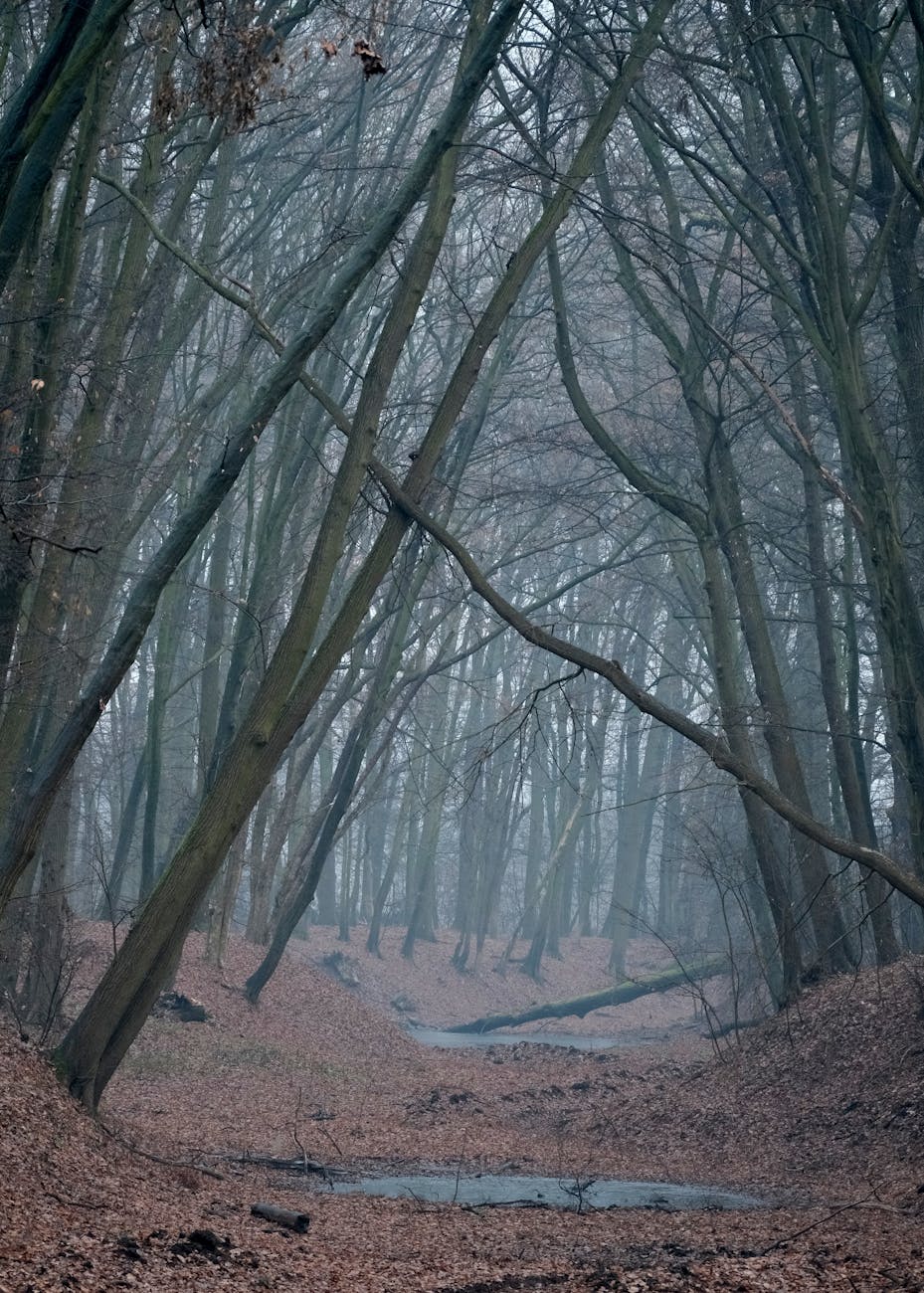
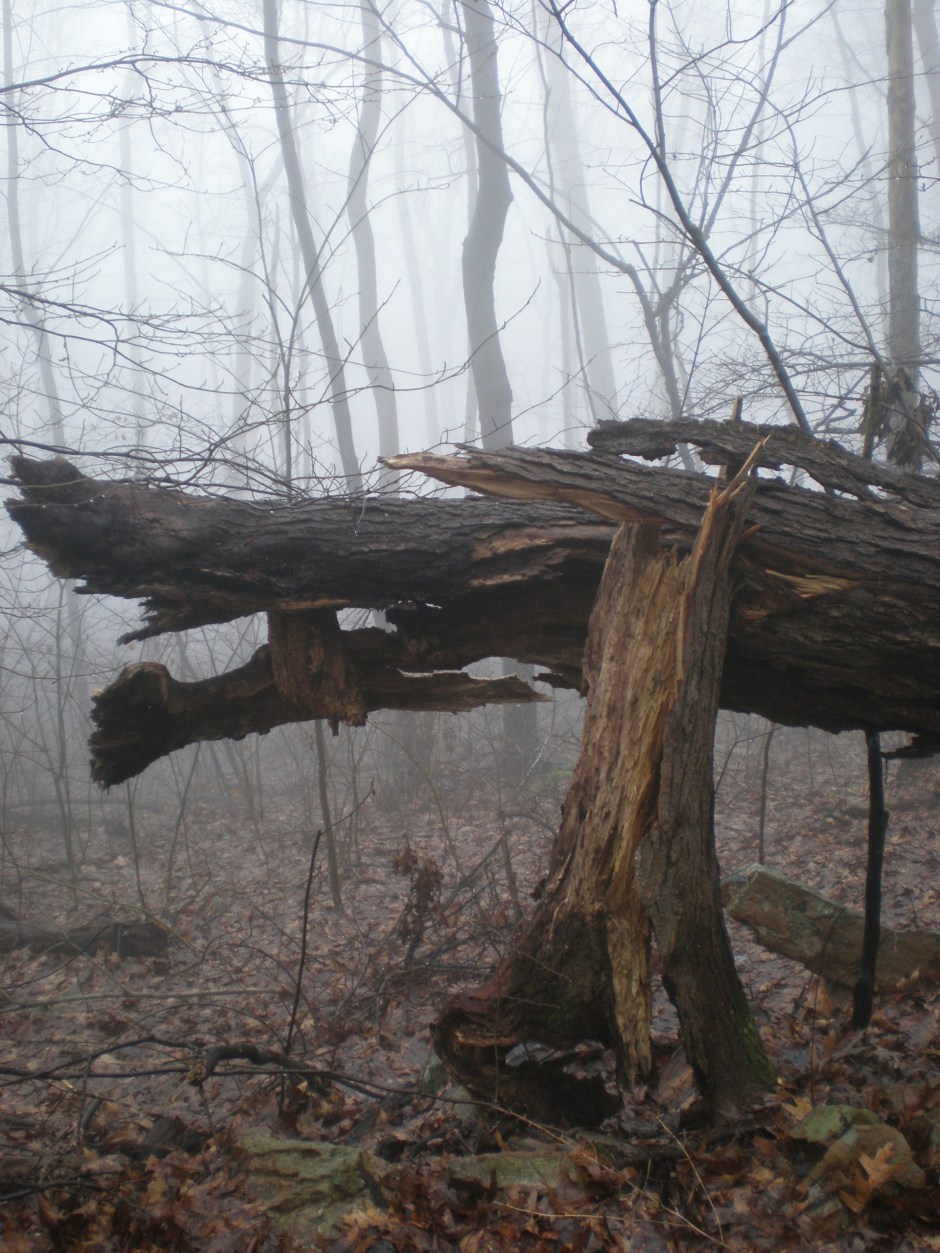
A winter forest carries its own kind of beauty. Bare trees reveal shapes and patterns hidden all summer long. Branches lace together like sketches against the sky. Fog drapes itself through trunks and hollows, softening edges and swallowing sound. There is a stillness there that feels almost sacred. There is nothing quite like a walk in the forest alone in the winter. For that brief time it feels as if you have been swallowed up into another world long forgotten. 

Winter wonder often arrives unannounced and unadorned. It does not shout for attention. It waits for you to notice.

Learning to Look Differently

Finding wonder in darker months requires a shift in how we look at the world. Not faster. Slower. Not broader. Narrower. It asks us to trade spectacle for attention.

This is not a season that rewards multitasking. It rewards presence, something many of us struggle with these days. Winter is asking us to be grounded, to notice the smaller things. It’s the warm cup of tea in your hands. Watching the steam curling upwards as you gaze out at footprints in freshly fallen snow an echo of life passing through. These are not dramatic moments. They are small, fleeting, and easily overlooked.

Winter teaches us that awe does not always arrive dressed in grandeur. Sometimes it arrives disguised as ordinary.

Photo by Roman Biernacki on Pexels.com

Practicing Everyday Awe

Awe is often framed as something rare. Something reserved for mountaintops and once-in-a-lifetime experiences. But everyday awe is built through habit, not circumstance.

Start small. Choose one moment each day to truly notice. The quality of the light. The texture of cold air in your lungs. The sound of wind moving through bare branches. Write it down if you can. Not to be poetic. Just to be honest.

Create rituals that slow you down. An evening walk at dusk. A morning routine that does not involve a screen. Lighting a candle not for ambiance but for intention. These small acts train your attention. They remind your nervous system that the world is still capable of holding beauty, even now.

Stillness as a Teacher

After a month of constant motion, winter almost demands that we become still. Nature itself seems to insist on it. Fields lie fallow. Animals hibernate. Growth pauses beneath frozen ground. Nothing is rushed, but rather everything seems to be waiting. 

We resist this at first. Stillness can feel uncomfortable. Without constant distraction, we are left alone with our thoughts, a dangerous proposition for many.  We are faced with questions we have postponed and emotions we have not fully processed. But stillness is not emptiness. 

Winter invites us to stop long enough to hear what has been whispering beneath the noise all year. It asks us to listen not to the loud and boisterous, but to the quiet and the waiting. To the parts of ourselves that are not yet ready to bloom but are still very much alive. Perhaps, they are parts that we have not heard in years. We may find that whatever those parts have to offer are far better ideas to pursue than whatever resolution we came up with when we were caught up in the dazzle of celebrations. 

Photo by Teona Swift on Pexels.com

Carrying Wonder Forward

Winter wonder is fragile. It thrives in moments of pause and disappears when rushed. But once you learn how to find it here, you can find it anywhere.

The practice of noticing does not end when spring returns. It deepens. The quiet skills winter teaches us carry forward into brighter seasons. Attention. Patience. Reverence for small things.

Winter is not an obstacle to wonder. It is a different teacher of it.

And perhaps that is the greatest gift of the darker months. They remind us that beauty does not only exist in bloom and abundance. Sometimes it exists in rest. In waiting. In the soft whispers of what has not yet awakened.

If you listen closely enough, winter is not empty at all. It is full of quiet promises.

The Gift You Give Yourself

There comes a point in adulthood when you look around at your own life and realize just how much of it was built from other people’s expectations. Parents, partners, coworkers, even strangers on the internet all seem to carry opinions about what a “good” life should look like whether that’s the classic white picket fence and 2 kids, jetting around the world or having that corner office. With the shorter days and colder nights which entice us to stay inside sipping a warm cup of tea, December has a way of handing us a quiet pause in the middle of all that noise. In that stillness you can ask a gentler and more liberating question: What if the best gift you give yourself this year is a life that actually fits you? Not a life you are supposed to want. Not a life that earns gold stars. A life that feels like home when you step into it.

Most of us carry at least a few pieces of life that no longer fit. A commitment you keep out of habit. A routine that once served you but now drains you. A goal you set years ago that you are still dragging around even though it no longer reflects who you are. Just like clothes that shrink in the dryer, some roles tighten over time until they restrict your movement. One of the most compassionate things you can do for yourself is to notice what feels constricting. If something consistently brings dread or resentment, it deserves a second look.

Try asking yourself: What do I continue to do only because I feel I should? What parts of my week feel like a performance? What drains me more than it fills me? These small gut checks can reveal more truth than grand resolutions ever will. Because often resolutions are about adding things to our lives when maybe we should be asking what isn’t serving us anymore. 

Photo by The Lazy Artist Gallery on Pexels.com

Permission to Want What You Want

Wanting something different for your life can feel almost rebellious. We are taught early that desire is selfish or impractical. Yet desire is really a compass. It points you toward what brings meaning. The permission you refuse to give yourself is often the permission you most need. You are allowed to want a simple life. You are allowed to want a bold one. You are allowed to want rest, creativity, adventure, peace or a mix of them. 

Let go of the guilt around wanting something others do not understand. You do not have to justify your dream life like it is a court case. Your preferences do not require a panel of approval. They only require your honesty. After all, the only person who gets to live your life is you. They have their own. 

Every person inherits a set of default settings. These can be expectations from family, cultural messages or values absorbed without question. Some defaults are helpful. Others keep you living a script that never belonged to you. December is an ideal moment to ask where those settings came from. Did you choose them or were they assigned to you? Are they aligned with who you are now or with a past version of you who no longer exists?

Letting go does not always require a dramatic overhaul. It can be as simple as replacing one outdated belief with a more generous one. It can be as quiet as deciding your worth is not measured by productivity. Sometimes the life that fits begins with subtracting what never matched your shape in the first place.

Photo by Kassandre Pedro on Pexels.com

Crafting a Life That Fits

Once you clear the space, you can begin creating a life that feels right in your hands. Think of it like tailoring. Small adjustments can change everything. You might shift your morning routine to match your natural rhythm. You might redefine what rest means so it supports you instead of feeling like a guilty pleasure. You might choose relationships that nourish you instead of ones that keep you hustling for belonging.

Crafting a life that fits is not a single grand gesture. It is a set of choices made consistently. When something feels peaceful instead of performative, you are moving in the right direction.

A good life should give you room. Room to breathe. Room to change your mind. Room to fail safely. Room to explore new interests without embarrassment. If your life feels like a tight shoe, it is not a sign that you need to force yourself into it. It is a sign that you need to loosen the laces. When you prioritize a life that can expand with you, you trade perfection for sustainability. You also create conditions in which joy can actually take root instead of feeling like a visitor.

Photo by JESHOOTS.com on Pexels.com

A Gift You Keep Giving Yourself

The gift of a well-fitting life is not wrapped once and placed under a tree. It is something you give yourself again and again. Through honesty. Through reflection. Through paying attention to what your life is telling you. You will outgrow some things. You will discover new ones. You will learn what brings you back to yourself. The point is not to build a life that looks impressive. The point is to build one that feels true.

As this year winds down, take a moment to appreciate the small ways you have already reshaped your life into something more authentic. And if you have not started yet, that is all right. The gift is not in the timing. The gift is in choosing yourself.

Reclaiming Boredom: Why Doing Nothing Might Be the Best Thing You Do

I know, dear reader, this might be the last place you’d expect to find a defense of boredom. After all, many of you probably clicked here to escape boredom, not embrace it. I may even be digging my own blogging grave by suggesting you spend less time scrolling and more time staring at your ceiling. But this space was never meant to trap you for hours. Its intention has always been to help you live a fuller, more mindful life, without breaking the bank.

As someone with ADHD, the idea of boredom used to feel impossible. Tedium was my sworn enemy. Yet I’ve come to realize that boredom is a rare luxury these days. With our phones glued to our palms, we rarely get the stillness that allows us to simply be.

And here’s the secret: boredom isn’t the enemy. It’s the birthplace of philosophy, creativity, and growth.


Why We Need Boredom

When you’re left alone with your thoughts, they can be loud, uncomfortable, even overwhelming. But without that discomfort, how can you truly know yourself? When do you ever stop to ask:

  • Am I on the right path?
  • Are my relationships enriching or draining me?
  • What do I actually want out of this short, strange life?

Noise drowns out those questions. Silence, and yes, boredom, makes space for them. And while the answers might not always be pleasant, they’re necessary for meaningful growth. It’s only when we ask those questions that we begin to fully develop a meaningful life which according to some researchers may be the antidote for the crushing anxiety we’ve all been feeling. According to Harvard Professor Arthur Brooks, it is the lack of meaning that drives so much of our modern world’s anxiety and depression and boredom would be part of the cure!

Boredom also boosts creativity. When the mind wanders, it problem-solves. Einstein famously worked at the Swiss Patent Office for seven years, a job so dull it practically begs for daydreaming. Out of that monotony came some of the most groundbreaking ideas in physics. Imagine what we might uncover if we swapped YouTube shorts for a little mental white space. You may be quite shocked at what problems you solve whilst driving your car.

Finally, boredom sparks curiosity. That restless itch pushes us to seek out novelty, to wander past the familiar bend in the road. Dissatisfaction with the status quo has always been the engine of human progress. It’s what drove Columbus to set sail and spark the West’s discovery of the world. It’s what drove the Wright Brothers to the sky. It’s what made humanity ask “what is up there in the vast expanse above us?”

Photo by cottonbro studio on Pexels.com

Boredom in Real Life

Some of my best ideas have come when I was bored. This very blog was born while I was gardening. Insights about my therapy clients have surfaced while I was elbow-deep in dishes. I’ve written entire stories in my head while waiting in line, or mulled over questions of faith while driving down long stretches of highway.

Boredom isn’t wasted time, it’s compost. Given space, it grows something new.


How to Reclaim It

So how do you let boredom back in? Start small.

  • Turn off your podcast or music while you drive or clean.
  • Try a tech-free meal and see what real conversation shows up.
  • Block out one phone-free evening a week.
  • Take breaks from social media, or better yet, set parental controls on yourself.
  • Use your phone’s Do Not Disturb mode generously (you can allow emergency calls to still come through).

Will it be fun at first? No. That’s the point. But over time, you’ll come to see boredom not as an absence but as an opening. I’ve even started protecting mine, because that mental wandering is often far richer than anything TikTok could offer.