With summer fast approaching, many of us will find ourselves a little more social. The days are longer, the weather is warmer, and suddenly your calendar is filling up with invitations. Garden tea parties, picnics in the park, birthday celebrations at the lake, beach days, you name it, and someone is planning a soiree.
And yet… as the days creep closer, you start to dread the plans you already agreed to. You sigh the morning of the event, stare at your closet half-heartedly, and start crafting increasingly creative excuses in your head.
But why?
Maybe you forgot about that post I wrote on boundaries (tsk tsk) and said “yes” when you should have said “no.” Or maybe you genuinely thought you’d enjoy it, after all you want to spend more time connecting with others. You’ve read this wonderful blog encouraging you to get off your phone and into the world more, to drink richly from the marrow of life. It was actually quite exciting until you remembered who would be there. Ask yourself: are you about to spend time with people who energize and encourage you? Or with people who make you feel small, doubtful, and drained?
Spending time with the wrong crowd can take a real toll:
But the right people? They light a fire in you. They cheer you on, challenge you in healthy ways, and help you see the best version of yourself, even when you can’t or stubbornly won’t. When I make plans with people who lift me up, I’m counting down the days with excitement, not dread. I leave those hangouts feeling joyful, recharged, and more motivated than ever. Do not mistake my tea parties for merely places to spill the tea, it may also be the place to plan my next conquest!
My village doesn’t agree with me on everything, far from it. But they challenge me with kindness, although tinged with sarcasm and playful barbs to get me really thinking. I truly do enjoy the mental sparring matches that comes from a good debate! They point out gaps in my logic or offer new perspectives, not to tear me down, but to help me grow. Iron sharpens iron, as they say. And I do the same for them.
So yes, I consider the invite and the guest list. My time is precious, and I’d rather spend it watering relationships that nourish me than trying to revive ones that wilt my spirit.
It’s because of these people that I started working out. That I dove deeper into history. That I re-examined and reshaped long-held beliefs. That I went back to school, earned my LCSW, and am (hopefully soon) launching my own practice.
None of that would’ve happened if I’d kept company with people who doubted me or discouraged growth. Because while I do believe in spending time connecting with others and combating the loneliness epidemic, I want to make sure that I am spending my time wisely. After all, the loneliest people are usually the most popular as they are surrounded by the crowd of the wrong people. You will gain none of the benefits of spending time with others described in earlier post if you aren’t with people who build you up. Connection is more than just spending time with others, it’s about being in community with them. A community that thrives together and works towards the good of its members.
So as you fill your own social calendar this summer, ask yourself:
Do these people build me up—or tear me down?
If it’s the latter, it’s okay to politely decline. Protect your time. Spend it with people who inspire you, support your growth, and believe in the version of yourself you’re working toward. You deserve nothing less.
It may seem shocking to people who know me as a bit of a workaholic, but rest isn’t a reward. It’s not something we earn by slogging through long days, hitting every deadline, or checking every box. Rest is a fundamental human need. Still, how often do we hear ourselves or others say, “I’ll rest when I’m done,” or worse, “I can sleep when I’m dead”? An amusing turn of phrase to be sure, but there’s hard truth behind it and that truth often lands us squarely in the doctor’s office or emotionally drained on the bathroom floor.
Rest isn’t a luxury. It’s a lifeline.
This is hardly a new idea. In fact, it’s deeply rooted in the rhythms of life and spirituality. Two of the major monotheistic religions, Judaism and Christianity, place rest at the center of their practice. In both traditions, followers are instructed to rest every seven days, mirroring the divine pattern of creation. Jesus himself reminds us: “The Sabbath was made for man.” That is, we were created to rest. It is not merely permissible; it is essential.
Nature mirrors this cycle. Soil that lies fallow becomes fertile. Trees drop their leaves to rest in winter. Crops rotate and fields pause. So why do we, of all living things, believe that perpetual output makes us better?
Ironically, research shows the opposite: productivity increases when we work less, not more. Countries with shorter workweeks and more frequent breaks often report higher productivity, not lower. It’s not about working harder; it’s about working smarter and that includes knowing when to stop.
There was a video circulating online of two people racing to move bottles into a box. The first ran the length of the line, starting from the farthest bottle and working toward the closest. The second began with the closest bottles, exerting more effort up front. Though they both moved the same number of bottles, the first person conserved energy, maintained a steadier pace, and completed the task with less fatigue. The lesson? We aren’t machines. Even in short bursts, poor pacing exhausts us. Conserving energy through rest lets us go further.
Beyond productivity, rest is a matter of health. Chronic stress has been shown to reduce cognitive performance, compromise immune function, and even shrink parts of the brain related to memory and decision-making. One study found that high stress can drop your IQ by as much as 20 points in the moment. That’s not just inconvenient; it’s dangerous. When we’re running on fumes, we’re more likely to make poor decisions, lash out, or withdraw.
Here’s where things get even more interesting: when we rest, we’re not just recovering. We’re improving. Creativity increases. Problem-solving sharpens. Emotional regulation steadies. We return to ourselves.
I used to think I couldn’t rest until everything on my list was done. Laundry needed folding, emails needed replies, the garden needed weeding. There was always something. I would sit down, tea in hand, only to jump back up at the sight of a dusty shelf or an unchecked item on my to-do list. I felt guilty for resting. It felt lazy. But I’ve come to understand that rest itself is a task, one just as essential as any errand. If I only ever rested when the work was done, I’d never rest at all.
Now, I protect my rest. I schedule it, defend it, honor it. Just like I wouldn’t skip meals, I won’t skip rest. And something beautiful has happened: I’m more present. More focused. More me.
Practical Ways to Prioritize Rest
Schedule it. Treat rest like an appointment. Block it off.
Start small. Try a “mini-Sabbath”: 30 minutes of screen-free silence, a guilt-free nap, or a short walk with no destination.
Name your rest. Know what makes you feel restored—books, baths, hikes, baking, journaling, music.
Watch the guilt. If you feel it creeping in, treat it as a signal—not to push harder, but to ask yourself why rest feels wrong.
Other cultures have long understood this need. In Spain, the siesta remains a valued (if shrinking) tradition. In Japan, the concept of forest bathing walking quietly in the woods is seen as medicine. Scandinavians practice hygge, a cozy kind of restful living that celebrates softness and slowness. These aren’t lazy practices, they’re wise.
Rest also helps us manage crisis. When I’m in a high-stress period, family illness, professional setbacks, emotional upheaval, I know now that my first move isn’t to power through. It’s to pause. Even five minutes of stillness can reset my thinking, stop a spiral, and allow my rational brain to return. Otherwise, I’m just making tired decisions on a tired brain that will create more problems down the line.
Let me be clear: sometimes we do need to push through. Emergencies happen. Sacrifice is real. But those should be the exception, not the norm. If we consistently ignore our bodies and brains when they beg for rest, we won’t just burn out; we’ll break down.
We live in a culture that worships hustle and labels exhaustion as noble. It tells us to chase productivity like a prize. We see rest as a reward to be earned something we get only when everything else is perfect. But life doesn’t work that way. There’s always another errand. Another inbox. Another obligation.
So here’s your permission, if you needed it: you don’t have to finish everything to earn rest. You’re allowed to stop. You’re allowed to care for yourself not because you’ve done enough but because you are enough.
Rest isn’t about checking out. It’s about tuning in. It’s the quiet space where we meet ourselves again.
So kick up your heels, grab a cup of tea, find your favorite corner of the couch, and take the rest of the afternoon off. You’ve got nothing to prove. And everything to gain.
Reflection prompt: When was the last time you rested—not because you earned it, but because you needed it? What changed afterward?
In the world before COVID, there was a growing tradition in my local city. A secret, invitation only pop-up party to kick off the summer season. One could only be invited. There was no ticket payment system or special way to get in. You simply reached out to have your name on a list. Then the list for invitees was opened and you could sign up to go (at least that is what happened the year I went and my sister went). Those in the know, knew how to find their way to this not well advertised gem. I heard about it through the grapevine, whispers in the community of such an event and with a little investigation, I found it.
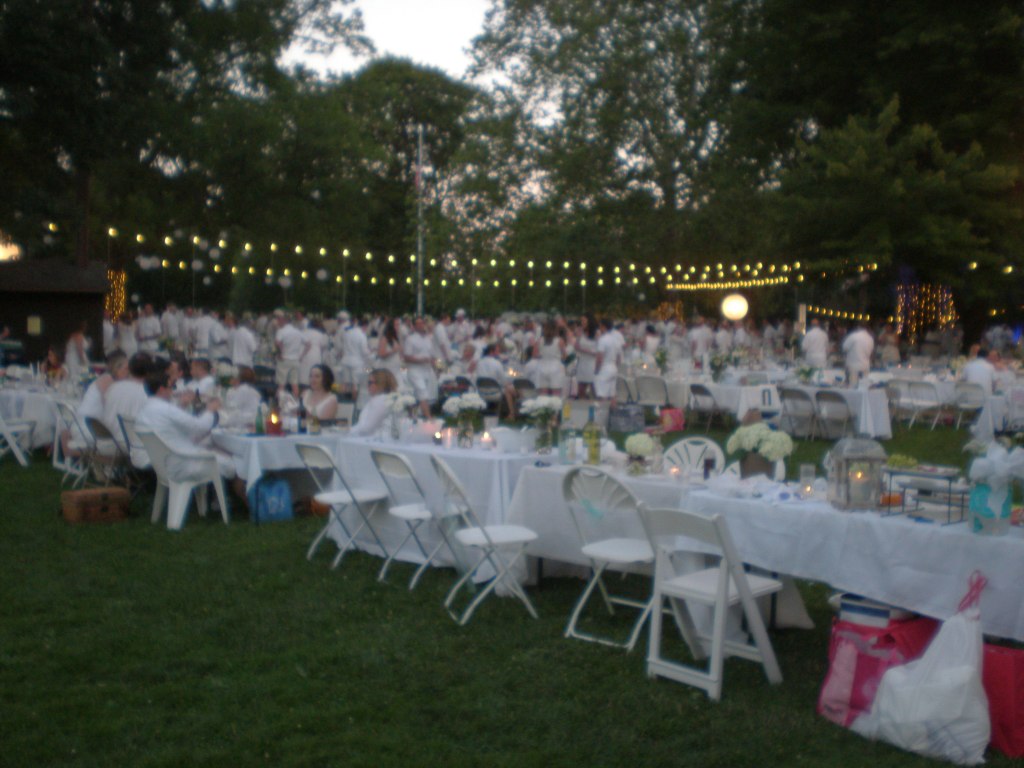
Despite the location of the event being a closely held secret, the theme of the party was not. Fete en Blanc or Party in White was a premier event. Everyone, dressed up in white, brought their own picnic, wine, tables, chairs and table decorations to create the signature party of the summer. Courtesy of our hosts, they provided the decorations and music. You found yourself seated in a long row next to neighboring tables and just enjoying the spectacle.
OLYMPUS DIGITAL CAMERA
Fete en Blanc is one of hundreds of white pop-up parties started in Paris in 1988. The theme has always been the same. No one knows where dinner will be until the last moment and everyone wears white. You bring your own table and chairs and until recently you provided your own food. The tradition has spread to hundreds of other cities around the world. Some of them do have a ticket fee. Some are more strict on what counts as white. Whereas many places will allow “pops” of color or off white, Philadelphia is a strict white only. It varies from place to place.
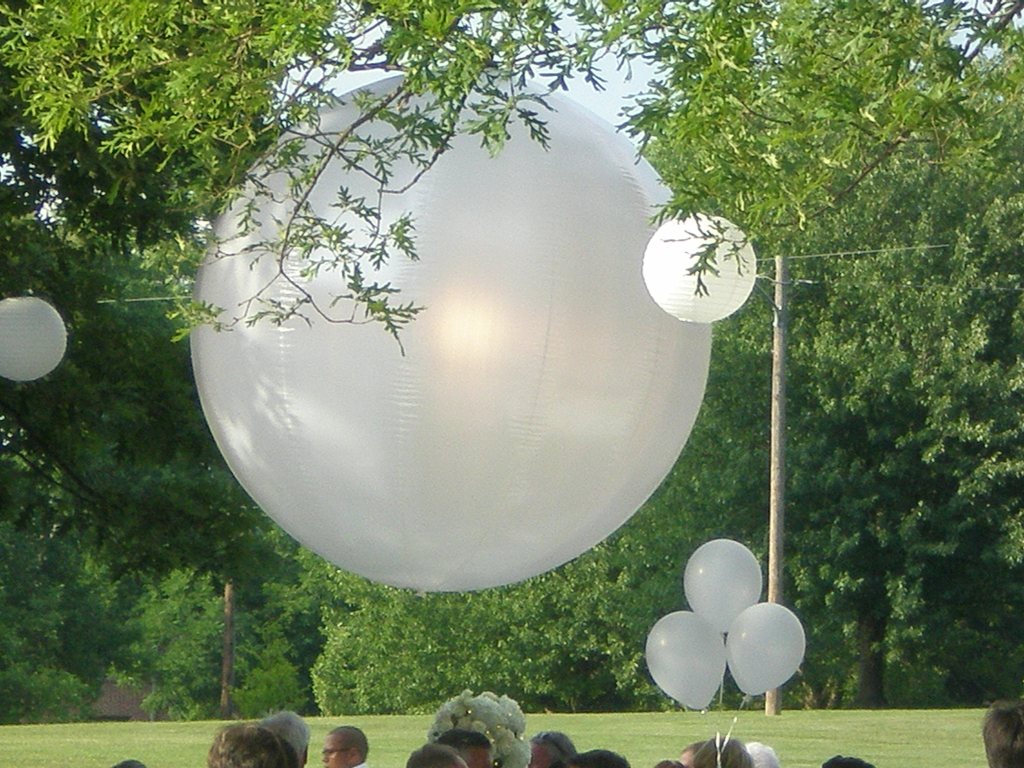
An army of volunteers helped to direct the crowd of people all overseen by an intrepid Master of Ceremonies to ensure all had a delightful time. The local park had been transformed into a magical world of floating spheres and twinkling lights. What made it special was precisely that it was not an event held only for those who could afford it. As tickets were free and by invite only, there was no monetary barrier to entry. As you were directed to sit wherever by the volunteers, one could easily find themselves shoulder to shoulder with Lancaster’s finest. Imagine what sort of friends one might make at such an event!
OLYMPUS DIGITAL CAMERA
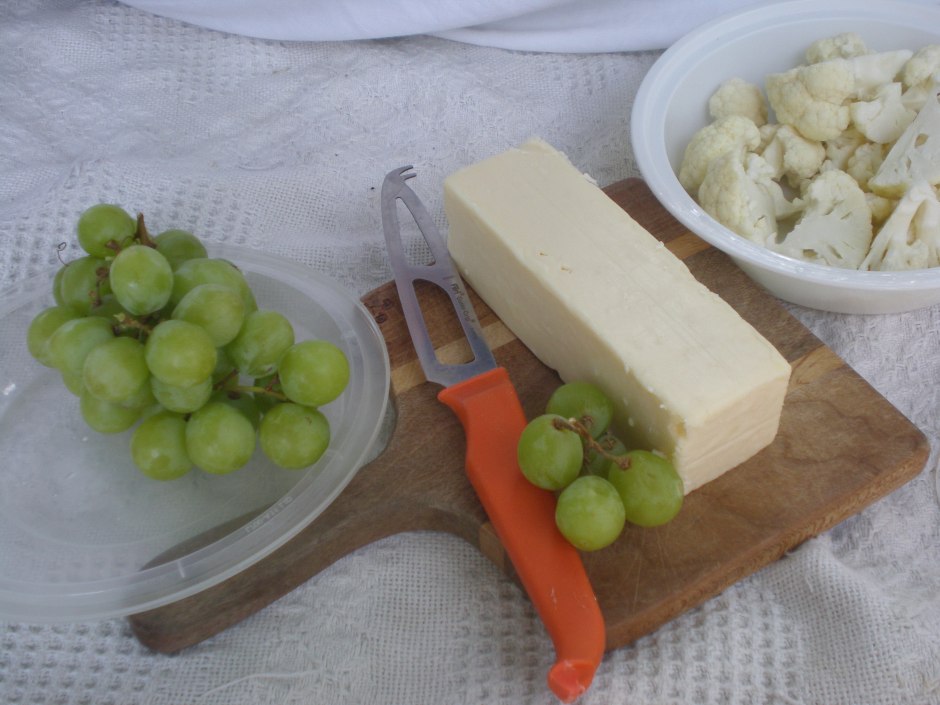
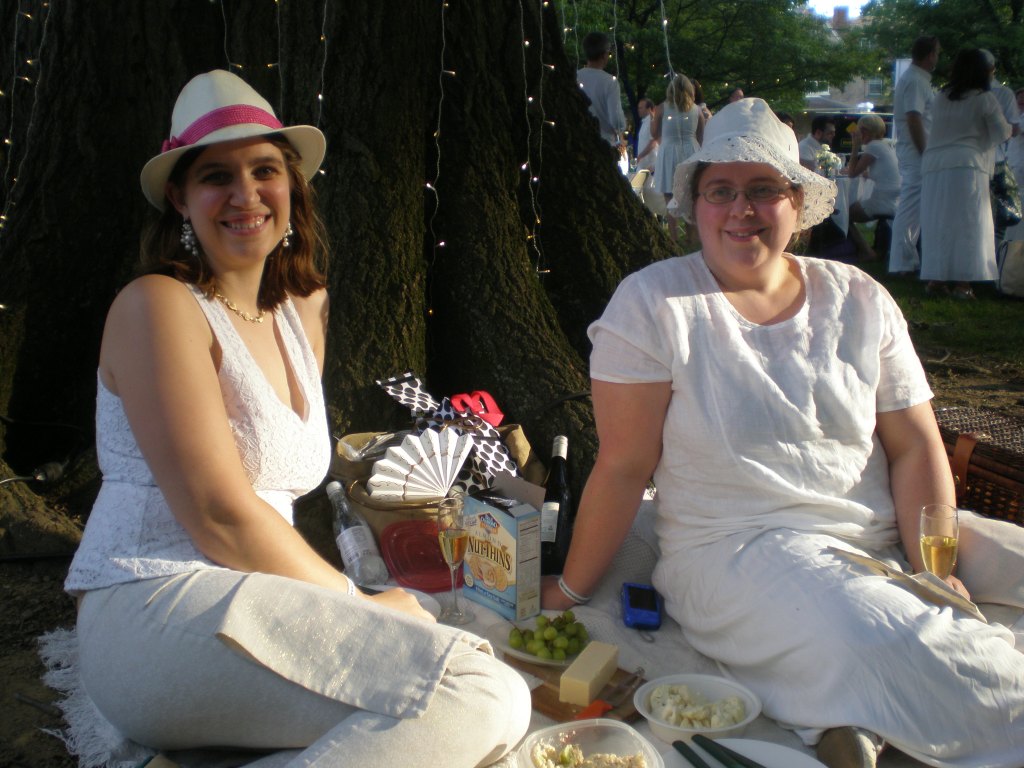
My sister and I did not have a table, so we spread ourselves out near the bottom of a tree. We enjoyed a spread of white wine, white cheese, white grapes, cauliflower and light crackers. After all, a party in white ought to have white food. However, me being myself, I could not resist just a small “pop” of bright, pink color on my hat. I always did have to stand out in a crowd and besides, rules were made to be broken, darling! As we ate, a duo of drummers moved throughout the tables, their pops of color stark against the white of the crowd. Their enthusiasm was contagious and all to kick off the summer season!
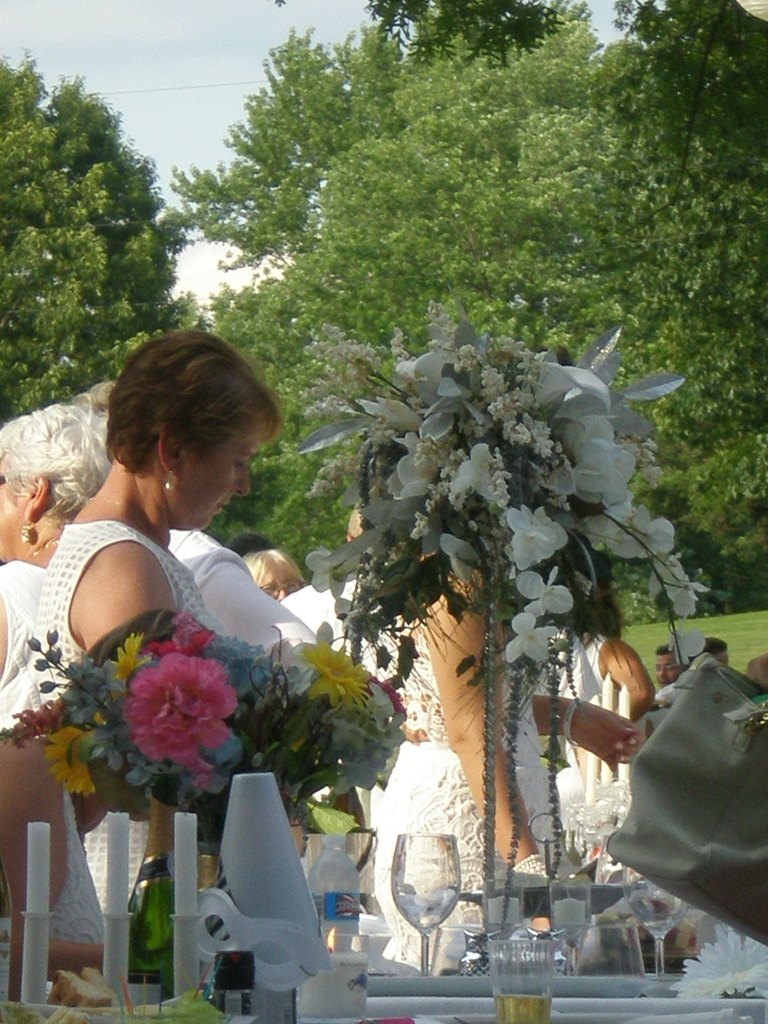
After we ate, we meandered through the crowd taking in the different decorations that graced the tables. Those who were clearly experienced party goers had some truly elaborate displays in stark contrast to our simple set up. As the dusk settled, the atmosphere took on an almost dream-like quality. One could almost believe you had been transported into an in-between realm with the changing of the season. Was the veil between worlds just a little thin that night? Perhaps, it was the wine, perhaps it really was the magic of midsummer.
We did not stay long into the night, both of us had work in the morning. So we packed up our small picnic and made our way out of the dream and back into reality. We were unable to snag tickets the following year in 2017 and in 2018, we determined we wanted to focus on new experiences rather than repeating ones we already had. Sadly, 2019, seems to have been the last year for Fete en Blanc at least for the Lancaster area. Covid came in 2020 canceling any plans for the event and I have not seen its return since. I hope to see its return one day as it was a truly special thing for our community. Perhaps with the advent of my new job I may have extra time on my hands and it is something I could organize here in my local community. It might be something to add to my list – throw a giant party for my community? What do you think dear reader?
OLYMPUS DIGITAL CAMERA
How can you experience a Fete en Blanc?
Well, as I said, our own local White Party does not seem to have returned after COVID, so if you happen to be in my area you will have to look further afield. If you do manage to locate one, be rest assured it is a difficult event to get into as most are lottery based given the demand for attendance typically overtakes the capacity of the given venue. In Paris, over 13,000 people may attend and they still do not have enough spaces for all the people who wish to go. Paris has a waitlist of over a million people and is considered one of the most exclusive dinner parties in the world.
The copy-cats around the world are little different in terms of demand outpacing capacity. Almost all of them take place between May and September as a celebration of the summer and given that they occur all over the world, there is a very good chance you can find one in your area. Given the difficulty and exclusivity of such an event, you may dear reader feel a bit disheartened by the prospect of ever experiencing the spectacle yourself even if you are nearby.
Now, what have we learned in such situations? When one cannot do a specific item, one can examine the principles and values of the experience. That is not to discourage you from throwing your hat in the ring and trying to get a coveted spot, after all most of the time it is a matter of throwing your name on a list and hoping your name is drawn.
OLYMPUS DIGITAL CAMERA
In this case there are many festivals, events, parties and even secret going-ons that are occurring in your local community. One must merely be attuned to what might be happening around you. I found that the more I got out to do things the more things I found to do. Your friends and family start reaching out with cool ideas that might interest you for your next adventure. They start inviting you to things to do with them. Do you know the number of your friends and family who want to do things but have difficulty finding people to do things with? When you’re the person always going off and doing new things, you’re often the first person they call!
I was not looking to do this party, I heard about it, signed up and snagged a coveted spot! I encourage you dear reader to get out and do! Soon enough you’ll be hearing about all the secrets your community has been hiding right under your nose!
There is also another option. Given that all that is necessary is a venue, some music, white decor and a few friends, there is nothing to say that you can’t start your own Fete en Blanc tradition in your local community. Imagine being able to give a bucket list experience to not only yourself but your whole town as well? That’s how Lancaster got started and I hope to see its return soon.
Completed: June 2017
Miles from home: 11
Cost: Free Invite – $30 for dinner supplies, I already had an entirely white outfit from my wardrobe
Now, while other people may be good at keeping secrets, clearly I am not. In fact, I’m revealing all my best secrets on how to have bucket list experiences on a budget both here on my Bucket List and here on my Reverse Bucket List.
This is a list of all the major cities that hosted a Fete en Blanc in 2018
We all have goals and if you’re reading this blog, you probably have a long list of them like me. Things you want to do, places you want to see, milestones you want to accomplish. Some of the items on the list are more just for fun or it seems like it would be a cool thing, some are things we really do want to do and a few of them are deep, burning desires. It’s those last ones that this post is for. After all one will not obtain goals simply by sitting around awaiting the golden opportunity. As in a previous post, sometimes fate needs a little nudge in the right direction. If one is going to achieve something truly worthwhile then it stands to reason that one will be putting a significant amount of effort into the cause.
Obtaining a goal is about clarity, focus and action. It’s those first two steps that often trip people up because before one acts one ought to take time to plan, right? Maybe not or at least not how most people plan. What if we stopped asking “How” and instead started to ask “What”?
I’m stealing this piece of advice from the business world for improving our lives and meeting our goals. It takes the classic approach of obtaining goals and turns it on its head. Most people set a goal then ask the next, seemingly logical question of, how am I going to achieve that? After all that’s the problem solving approach most of us were taught. You set a goal and make a plan which is always followed by “How am I going to do it”? However, that question is a trap! It’s a question designed to take you down a path that’s ineffective and frustrating, to get you bogged down in the details. You’re bound to get yourself so tied up in knots thinking of all the reasons you can’t achieve your goal and the seemingly insurmountable barriers that the question is bound to bring up. You lose your focus and start trying to break down the goal into other sub-goals to get around the barriers which only lead to more how questions. It can also get you lost in the illusion of taking the action of “planning” rather than the action of “doing”.
What skills and resources do I have to make it happen?
What resources do I have need?
What people should I connect with?
What will keep me motivated and inspired?
What will I do to celebrate the milestones?
What will I do when I’ve obtained this goal?
It’s about shifting you from thinking about a plan to actually doing the steps which will actually take you there. There isn’t time to worry about the barriers because you’re too busy ticking off your to-do list after answering those questions. It moves the goal from a what if to a when. In the immortal words of Zig Ziglar “when obstacles arise, you change your direction to reach your goal; you do not change your decision to get there”.
When I set out to start checking off my list, I didn’t really focus on the how. Had I done that, I probably wouldn’t have much checked off because I would have gotten caught up in all the barriers, the cost of travel, the distance, the time, the difficulties, etc. But because I’m not focused on the how, I’ve found that I am constantly finding and stumbling upon opportunities to complete my goals. When I decided to become a therapist, I didn’t worry about the exact how but rather the what college would I go to, what major, what jobs should I apply for? It also keeps you flexible to discover a different path to your goal that you may not have realized was there before. When becoming a therapist, I had a path that I thought I would need to follow, which was to get a PhD in psychology. Instead, I ended up with a LCSW, which was a much cheaper option. Had I been too focused on the how, I would have never strayed from the original “what” to a much better fit for my goal. I have a friend whose goal is to help people in a similar way and is in the process of becoming a Life Coach.
This simple but powerful change can help you go from merely goal setting to goal achievement.
I am, as of this writing, recently returned from a trip to Merry Ol’ England after finding myself with the unexpected invitation to join a family friend, Shelia, at her long term rental in the beautiful Penzance area of Cornwall. The previously unaffordable trip of plane tickets, lodging, food and sightseeing, suddenly became much more affordable with her willingness to host myself and my mom for over a week. Naturally, I did not let such an opportunity slip through my fingers as England was home to one of my top Bucket List items, Stonehenge.
Now, my non-American readers may be a bit perplexed at my excitement of going to Penzance when Stonehenge is a good four hours away. You may very well think, it’s so far, you couldn’t possibly add that on to your trip! First, dear reader, you underestimate the American enthusiasm for driving. After all, the road trip is a quintessential American experience! Besides lacking any sort of reasonable public transit, driving is just what we do and if you’re like me who drives for a living (at the time of this writing) spending several hours in the car is nothing. I had a co-worker who regularly thought nothing of driving 8 hours every other weekend up to New England to help take care of her ailing mother. Americans love driving.
Second, given that in order to have the opportunity to see Stonehenge again I would need to take another 6 hour flight after needing to take up an additional 2 to 3 hours just to get onto the flight after arriving at the airport after a 2 hour drive to the airport, and another 2 hours driving from London to Stonehenge, I think I can afford the day trip back and forth when considering the time and money it would cost to do at a later date. It was this cost analysis that really tipped the scales in favor of renting a car and visiting this site. As I am always reminding you, dear reader, that when one travels one ought to maximize the opportunity in order to get the most bang for your buck. We are, as much as it pains us all to admit, on a budget and when’s the next time we’re gonna be able to hop a plane to England from America? Exactly.
After determining that in addition to Stonehenge there were sites scattered about Cornwall that were simply too inconvenient to get to via bus (why they don’t go to the neolithic sites like the Merry Maidens or the Cuny Village is beyond me) and given that taking multiple taxis in a day would prove to be quite expensive to do multiple trips to various places around Cornwall in one day, renting a car ended for the week ended up being the optimal solution of almost $175 in savings when I broke down the costs. Plus, I didn’t have to wait around for rides or worry about meeting my taxi driver at a designated pre-booked time. Once again, my cost benefit analysis kicked in and it tipped it in favor of car rental as much as I prefer relying on public transit.
Now, the best laid plans of mice and men will go astray. In this case, the hiccup I encountered was my phone’s gps. Despite paying for the ability to roam and setting it up ahead of time, when I arrived in England my phone refused to connect and kept telling me that I needed to turn on international data. I would go into the phone settings to see that it was indeed turned on and got a text message from my provider stating that it was turned on. We tried several different work-arounds suggested by the internet once I got to my friend’s place and was able to connect to her internet but nothing worked. Luckily, Sheila allowed us to use her phone for the day to get around. With the crisis adverted, we set out in the wee hours of the morning to make it for our 10 am admission time.
I had downloaded music to my phone for us to jam to and decided to put my newfound mastery of the British road system to the test. I had (smartly in my estimation) scheduled Stonehenge for the middle of the week in order to give me two full days of test driving on the opposite side of the road in more rural areas before trying to go to more populated and congested places. I actually took to it quite well and credit my dyslexia for being an advantage as I really could hardly tell the difference. I just kept the steering wheel in the middle and followed the visuals provided by the gps rather than following her left or right turns since I can’t do that anyways. So, cross off driving on the opposite side of the road as a bonus!
The way up to Stonehenge was relatively uneventful and I got to really take in the rolling English countryside. The morning started out with classic English weather of rain. However, by the time we reached our destination the rain had cleared leaving a mostly overcast sky that threatened sunshine.
Now to say that I was excited to see this legendary place, is bit of an understatement. Of all the monuments and sights in this world, Stonehenge is without a doubt one of my top destinations and probably one of the first places I ever truly longed to visit. I was fascinated by the ancient world of Great Britain and Ireland, obsessed with learning about them even though I could (when I was younger) find very little about it. It was this blank hole of questions that burned into my mind, what were they like, why did they build this, how did they build it, what spiritual meaning did it have, how did it connect to other sites and on and on these questions plagued me. I loved the theories, no matter how crazy or outlandish they were. And what I love is that we’re still uncovering things about it, only just last year they did yet another study of the stones and discovered that they come from all over indicating that this may have been a unifying project to unite the island.How does that fit with other archaeological evidence for the rest of Britain? There’s just so much we don’t know.
Stonehenge is over 5,000 years old and is the largest neolithic monument in Britain. There is evidence of important structures and even other henges prior to the building of Stonehenge in the general area marking it as an important or prominent site in the stone age. Some of those sites are from 8000 BC You may be forgiven dear reader for thinking it’s just a stone circle, as impressive as that may be; it actually sits upon an earther work with a marked avenue leading up to it. A “heel stone’ marks the alignment with the summer solstice. This avenue and stone is the reason we can say it aligns with solstice and not some other random astrological event. It is also not just one stone circle but two concentric circles and other stone pieces to create a masterpiece of that era.
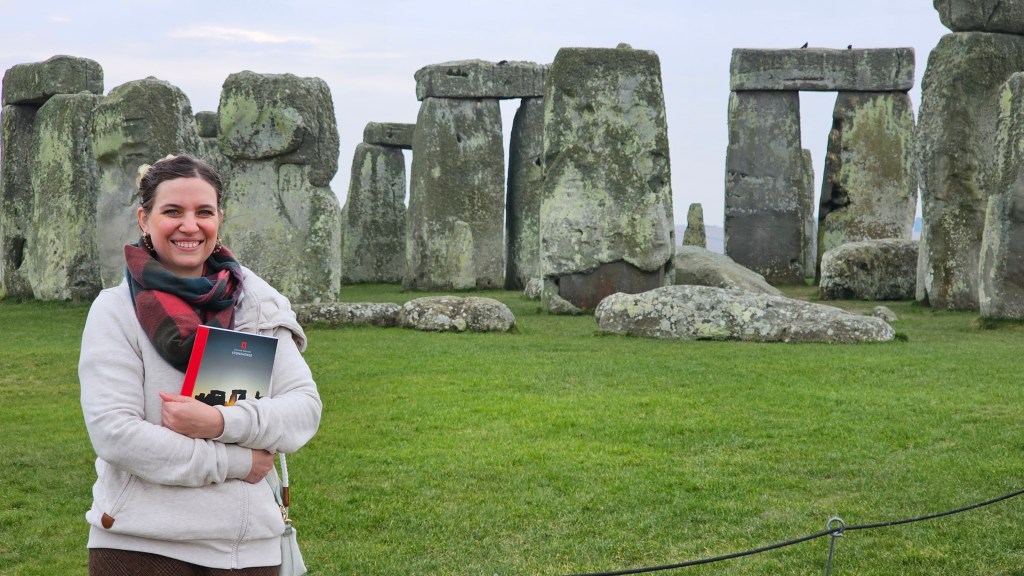
I am standing by the “heel stone” which marks the line of the summer solstice
It took over 1,500 years to complete in four different stages. The first stage was in 3100 BC, the second stage occurred in 2500 BC; the third took place 150 years later and the final stage occurred in 1,500 BC. This is when the stones were rearranged into their iconic horseshoe shape. There were about 60 stones originally, but sadly many are broken or even missing today. Despite the presence of human remains, it is not believed to have been a burial site but that these remains were utilized in religious ritual. Although if you read other people’s opinions they’ll tell you that it was a burial site. See? So much mystery!
It was being armed with this knowledge (and much more, but I shalln’t bore you with all the details), that I practically squealed in sheer anticipation more than once as we approached. I was finally actually there, instead of seeing it on a screen or in a book. There was equal parts excitement and awe as we drew closer. The thing about the site is it is actually located in an almost surreal location because one expects that it would be in an area relatively built up. However, it is just out in the middle of nowhere surrounded by sheep and farmer’s fields. Yet, it fits exactly in the landscape that one finds it in because thousands of years ago the builders may have had sheep. For all we know sheep have been hanging out near those stones this entire time.
I loved being able to closely study the stones, to see how they may have been joined together by the knobs at the top of some of them and to picture how it may have once been so many years ago. I marveled at the craftsmanship that must have taken to hew rock into rough formations of giant blocks and to lift them up atop each other.
What was particularly nice was that I went at the slower time of the year for England, choosing to go right before spring at the end of winter, so it was relatively uncrowded. I didn’t have to fight to look at it and I was even able to snag pictures without people in them. Most pictures contained very few people. This also meant that I was able to really focus on what I was seeing without having to worry about what everyone else was doing around me. After my first circle around the stones snapping lots of pictures, I put my phone away and made another loop so that I would be able to just enjoy the place taking in the sight and locking it in my memory. Too often we are so busy “documenting” our experiences we forget to actually experience them. I was determined to not make that mistake.
After spending nearly two hours at Stonehenge, we journeyed back on the bus to the visitor center for a quick bite to eat before departing. There was a reconstructed Stoneage village that I took a brief detour in. But having been in the ancient village of Carn Euny the day before (another post on that later), I didn’t spend very long. They also had a small museum of the artefacts found in and around Stonehenge which is very informative if you haven’t spent a lot of time studying the site.
How to visit Stonehenge (and other suggested sites):
I’ll not insult you with instructions on how to get to England. However, it is important to know Stonehenge is located about 2 hours south of London making it a fairly easy trip for most people who are intended to tour the country. It is a far less easy trip if you’re flying into Scotland. My American readers may be forgiven for underestimating the size of Great Britain as it is about a 7 hour drive between the two and while we do love driving that is a bit of a haul even for us unless it’s part of an entire road trip especially since most of us only have two weeks of vacation a year.
However upon arrival, you have two options to see the actual site. Option 1: Is paying the admission ticket (and parking) to Stonehenge which grants you access to the bus transfer over, the reconstructed village and museum. The main advantages to this option is the bus transfer if you’re with someone with mobility issues and the ability to walk around the entire site to see it from all angles.
Option 2: Is parking a little away from the site and accessing the footpath which traverses right next to the walkway in front of Stonehenge. It does require a bit of a hike to get from where you can park the car and Stonehenge. The path isn’t well maintained, in part because while the English have the right to roam on the ancient footpaths, the right to roam doesn’t necessarily convey the promise that someone will be maintaining those footpaths. It also only allows you to really see the front, but it is the best and most famous vantage point. If you go during the peak season you’ll probably be disappointed by the sheer number of people blocking your view and any pictures you’ll want to take. If you go during the non peak season you will probably be able to get a decent view and maybe a few pictures with only a few people milling around in the background. It honestly depends on your priorities.
My wonderful and amazing mum!
For me, I was traveling with my mom, who doesn’t have the best health and needed the extra support with mobility. I also wanted to be able to get as close as I was permitted. There was an option to get there at 8 am, pay a lot of extra money and be able to go into the circle at sunrise, but I would have needed to leave by like 3:30 am, wake up at like 2:30 am which would have meant no sleep for me and I didn’t want to be driving that long on no sleep as driving without sleep is akin to driving drunk. I wanted to see Stonehenge, not die in a car accident on the way there. Remember we want to check off our bucket list, not hurry the bucket along.
Now, you may be thinking that there is absolutely no way that I could possibly write a list of “good enoughs” when comparing them to Stonehenge, but it entirely depends on you as an individual. For me, Stonehenge has been a top priority since childhood, so when given the opportunity I jumped on it. However, there are many Neolithic sites and Neolithic stone circles scattered not only across Britain and Europe but also throughout the world and you may be closer to them than you think. Granted there aren’t many that are quite as old as Stonehenge but there are many that are within the 3,000 – 1,000 range.
If you don’t care much about the size of the stone circles, Britain, Ireland, and Brittany (France) has over 1,300 circles. Many are quite impressive in their own way. They are also less visited and often allow you to be able to go right up to them without needing to pay for tickets or have them roped off, meaning you don’t have to fight with crowds, you can actually touch them and you can enjoy them more as they were intended, as places of spiritual connection, celebration and reflection.
The Merry Maidens of Cornwall!
Stone circles aren’t just found in Europe. There are stone circles in Australia which are sacred to the Aboriginal peoples like the stone arrangements in Victoria at Carisbrook. You may also be surprised to find out that Japan has stone circles from the late Jomon period located in the northern region. Like Stonehenge the Japanese Stone circles contain an inner and outer ring which is aligned with solstices. Even the states has its own stone circle in Wyoming called the Medicine wheel. There are other less famous circles hidden in Nebraska’s Sandhills and Bluemont Virginia.
If you don’t really care what formation a neolithic site takes, then the world is truly your oyster because scattered throughout the globe are sites from ancient pre-civilization peoples. Ohio is famous for its Great Snake Mound as well as the Newark Earthworks. White Sands New Mexico has footprints from over 20,000 years ago – take that Stonehenge! Colorado is home to the Cliff Palace located in Mesa Verde National Park. New Mexico has its own cliff dwellings as well as Aztec ruins. The small island of Malta has Megalithic temples. Ireland is home to Newgrange. One of the oldest known megaliths in the world, Gobekli Tepe, can be found in Turkey. Spain is home to the Dolmen Menga. India has its own dolmens in Marayoor Munnar and I could go on. As you can see dear reader the world is awash with ancient monuments if you know where to look. You may very well be shocked at how close you are to one. So don’t feel the need to put Stonehenge on your list of “must-do’s” if you haven’t already developed an obsession like me, but if you happen to find yourself in England the it is decidedly something I would recommend you make part of your trip.
Cost: $50*
* give or take with the exchange rate, going during non-peak season for a “super saver” discount and pre-booking online for an additional 15% discount and then accounting for the gas to arrive there from the rental.
Miles from home: 2,000
Miles from rental: 200 miles
Cost accounting for plane tickets, etc.: $150*
* You may wonder how I arrived at this number, it’s simple, I took the total cost of my travel (planes, buses, taxis, etc.) and then counted up all the places I checked off my list as a result of traveling to England, divided the total cost of travel by the number of places I got to go to arrive at about $100 per place. As it turns out England has a lot of places and experiences that are on my list which is why it was a top place to visit. I made certain to check off that list to maximize the money I was spending.Using this basic formula is something you can do when deciding where to go and what to do in order to maximize your travels. Yes, the upfront overall cost is quite high, but when considering how many things you can do at once, it may be worth the cost.
While this post was from an adventure many miles from home and involved a plane ride, many of my adventures were just a short drive away. Be sure to check my other posts listed on my Bucket List and Reverse Bucket List.
One thing that I love about my Bucket List is that I’m almost always trying new things. I recently read somewhere that research indicates that when we focus solely on the interests we’re already interested about we can miss out on entirely undiscovered aspects of ourselves. We may limit ourselves artificially without even knowing it. We may love art and never take up a paint brush or admire finely made clothes and never consider sewing.
I never thought I’d enjoy a videogame but I certainly enjoy playing World of Warcraft (I’m a nerd deal with it). I wouldn’t have thought I’d like D’n’D but as it turns out, I do enjoy collaborative storytelling. I’ve discovered I draw the line at larping which was a surprise because I would have thought I’d love dressing up and acting out the story like D’n’D after enjoying D’n’D, going to the Renaissance Faire, acting, etc., but absolutely not for me. My sister is afraid of heights but I have discovered a thrill for them. I’ve learned I like hacking down trees and the physical labor of gardening. I don’t have the patience for a lot of crafts, but I love trying to hone my skills on the violin.
We don’t even need to do them well. We can do something poorly, in fact it’s almost better to do something poorly at first. After all, if we’re good at it then we think that we have a “knack” for it and then when we inevitably come up against a hurtle, we lack the skills we need to overcome. Sometimes just doing something for the sheer thrill of doing it is the best way to learn. When we have fun we aren’t focused so much on doing it perfectly as enjoying ourselves. We’re no longer motivated by outside rewards and people pushing us to do it. We are competing against ourselves, learning our way of doing things and probably becoming better than we would have if it just came easy.
I think it’s good to explore new things that we may have dismissed when we were younger or just missed out on. I remember thinking that learning to ride a horse wasn’t something I could do, but then I spoke with a work colleague who was taking lessons bi-weekly. Another work colleague had joined a small college’s orchestra after taking up the violin again post-high school which in part inspired me to take up the instrument once again. It’s caused me to re-evaluate what I can do as an adult and that maybe I didn’t actually miss out on opportunities or that I could return to things that I did as a child. As it turned out the only person keeping the doors shut to possibilities was me.
I’ve also been pushed to try things I wouldn’t have previously thought to try like Eco-dying, water tubing, and zip-lining. I find myself saying “sure why not” when presented with new adventures and raising my hand to volunteer at public events because “why not”? It was that attitude that pushed me to rent a car in Britain. Before, I’m not sure that I would have had the confidence to drive on the opposite side of the road because I’m dyslexic and ADHD with poor spatial awareness and their roads are tiny. Now granted I didn’t just hop in a car and drive out of London. I knew I was going to be jet lagged, without sleep for over 24 hours (I don’t sleep in planes I have insomnia, it’s a whole thing) and so even driving under normal circumstances would not be advisable let alone in another country, on the opposite side of the road. However, I was undaunted by the idea in part because I am already in the habit of getting outside my comfort zone.
And this is sort of a life hack. When we push ourselves, we feed our confidence and our feelings of competence. Which you may think, “wait, didn’t she just say that some of the stuff she was bad at? So how does it help her feel competent?” Yes! Here’s the awesome, amazing thing, it didn’t kill me! It didn’t end me and in fact, I embraced being bad at it at first because I’ve learned to enjoy the process of mastering something. It’s about learning and growing your inner self not just checking boxes and doing something for an afternoon before swiftly moving on to the next thing. I feel more competent to try things and look foolish even in front of others. I am conquering anxiety and loving it!
We are wired for growth, not stagnation. We are meant to go, explore and conquer. Too many times we assume that we will stay the same person that we are today until we die, that we’ve already completed our growth. However, that’s not the case and studies show that its the people who don’t stop growing that live longer, healthier, happier lives. So what are you waiting for? Go out and try that new thing!
You may be familiar, dear reader, with the traveling shows, carnivals and even houses of “oddities” of yesteryear. Those peddlers of myths and horror to fascinate and perhaps even, scandalize their audience. The most famous of which would have been P.T. Barnum’s, Barnum & Bailey Circus home to such attractions as Myrtle Corbin the Four Legged Woman (a woman born with two pelvises and four legs), Fedor Jeftichuw, The Dog Boy (an individual with hypertrichosis), Isaac Sprague, the Feejee mermaid (a small monkey glued to the tail of a large fish), and many more. Though the “freak show” has been around since the medieval era (and probably before) where crowds would gather to see humans with deformities, it wasn’t until the Victorian Era that they fully matured into a for profit exhibition. It was Barnum’s “Greatest Show on Earth” that truly brought it to the forefront of American culture. Though not all abnormalities were real and were actually made up for the purposes of the show. While freak shows and circuses were exploitative, some, like P. T. Barnum’s Circus did pay well and was (for the time) quite progressive in its treatment of its “human oddities”.
Under brightly colored fabric and dazzling lights, crowds of spectators stared in amazement at the parade of “strangeness” before them. This was in a time before movies and colored photographs where one might see such things otherwise. It was certainly before commercial flight where far flung places such as Siam and Turkey were easily accessible. Certainly before the internet where one could fact check to see that, there was no missing Albanian prince who was raised in a harem and that woman he claims is 160 years old, is in fact only 80. I imagine quite a few left the shows believing they had seen something truly remarkable and perhaps even mythical. Is it any wonder this was the same era for seances and contacting the dead?
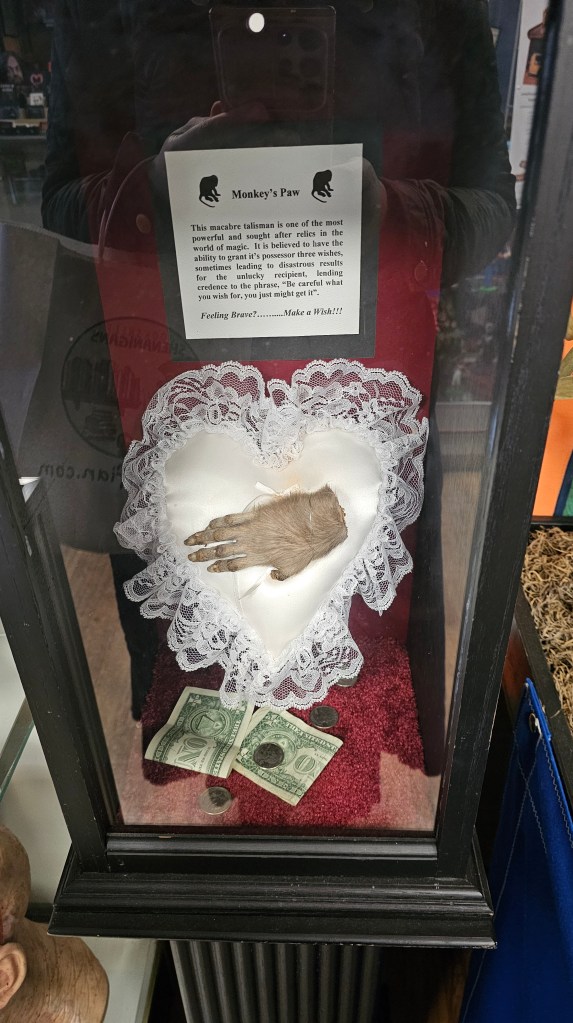
When perusing freak shows and museums of strangeness, visitors unfamiliar with taxidermy were easily fooled by the macabre art of combining parts of different animals to support outlandish claims of myth come true such as the Jackalope. They may also display artifacts such as cursed monkey paws or pictures. As America expanded its colonization of the New World, so too did folk stories of the legendary creatures and strange happenings such as sasquatch or the vampires of New England. All adding to the idea that the world is truly far stranger than science can account for.
For the most part it seems that over the years, such places have dwindled down. The circuses no longer showcase individuals with abnormalities for exploitation and with medical advancements many are able to be addressed to improve quality of life. Nor are abnormalities viewed with such suspicion and fear, but are increasingly welcomed as a part of life. Most of the oddities have been lost, destroyed or merely forgotten. Although there are a few small roadside attractions which have collected or perhaps re-created various pieces of history in the same spirit of P. T. Barnum who when accused of duping the public with hoaxes responded “I don’t believe in duping the public, but I believe in first attracting and then pleasing them.” So it made no difference to me if what I was looking at was truly the same pair of pants from Barnum’s giant or just a really large pair of pants. That’s part of the charm, it is a house of hoaxes. Perhaps, it is fun to pretend for a bit.
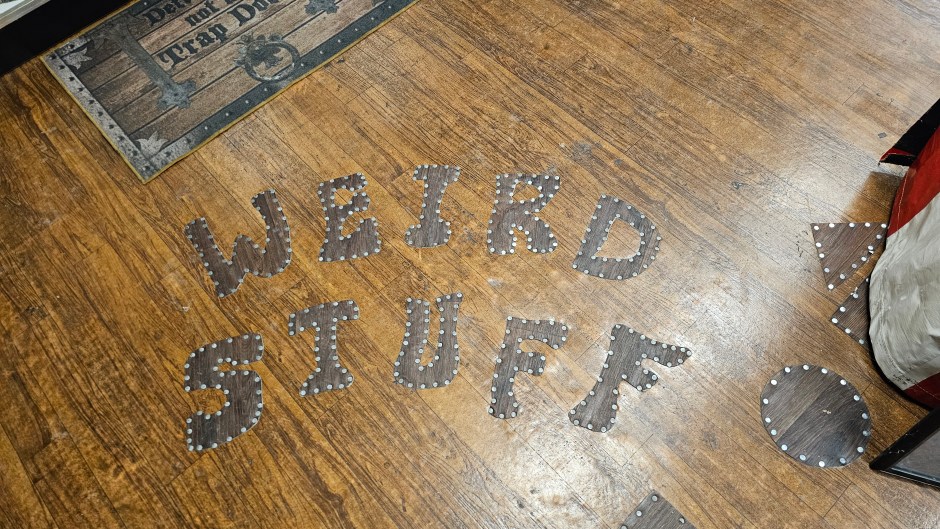
It was with this strange and controversial history in mind, that I went to the House of Oddities and Curious Goods in Elizabethtown, PA. This free museum was the beneficiary of a now closed down Gettysburg Dime Museum preserving Jo-Jo the Dog-Faced Boy (from P. T. Barnum’s circus) and Edgar the Alligator Man. The house certainly captures the odd mixture of barely contained horror and ridiculousness. Like almost all museums of this nature there is little rhyme or reason to the displays as everything is haphazardly squeezed together. Everywhere one looks there is a new, at times stomach churning, oddity as music reminiscent of the circuses of old plays in the background.
It was a small place of barely two rooms, though the second room was more of a back hallway. Most of it were obvious hoaxes that at one time fascinated the public and led the more easily duped into belief that monsters truly do exist. There were a few genuine gems such as the alligators who had been deformed due to improper disposal of chemicals in the neighboring bayous. Some of the items had small paper “plaques” with explanations of what they were, but most were left to my imagination. I found most of it to be a strange mix of delight and eerie. It was truly like stepping into the beginning of a horror movie. The only thing missing was the creepy person offering to tell your fortune or to sell you some cursed object. Actually, there was a small offer to purchase some cursed objects at the front, but I kindly passed and instead put a small donation in the box (after all, one should probably avoid the ire of the owner of so many “cursed and powerful objects”).
The museum was less a museum of true oddities and more an experiential museum of what people may have seen in decades past and how they thought of seemingly unexplainable phenomena. It was intriguing to see how people interpreted scant pieces of data and extrapolated it out as evidence for monsters. I wondered how many people walk away from it truly believing in what they see or if, like me, they find it a fascinating piece of living history of a time and phenomena of when such shows were taken seriously. Of a time when the world still held a hint of magic before all the maps were filled in and science explained most of what we experience. Do not get me wrong, I like living in the era I live in now, but we don’t have a must mystery as we once did. Still, I can now tell people I have beheld one of the legendary Giants of Lovelock Cave and a Wolpertinger!
Ready for your own adventure into the macabre, mysterious and strange?
Obviously a google search of your local area would be easiest. However, it can be a bit difficult to know precisely what to google “freak show”, “museum” “house of oddities”, “curiosity house”. You may need to play around with the precise terms of your search as they are not (to my knowledge) the most popular of attractions. I have stumbled upon the site https://www.roadsideamerica.com which may be a good source for not only such places as these but also other fun attractions not readily advertised. I was surprised by the number of curiosity houses listed nearby that I had never heard of before.
Completed: Early 2025
Cost: Suggested Donation $5
Miles from home: 20
There are certainly more unique and interesting discoveries to be made and some of them can be found on my Bucket List and Reverse Bucket List.
It is easy dear reader to compare ourselves to others especially since others splash their lives up on social media for all to see. Granted, they are curated versions of themselves, but it’s so difficult to remember that. We see people more successful, more well traveled, in the perfect job, having the perfect relationship, enjoying their children, wearing the latest fashion, doing whatever it is we wish we were doing. The algorithm is merciless in that it shows us that which we engage with and of course we are going to engage in the very things we long to have and thus the viscous cycle.
In focusing so much on all the things we do not have, we lose sight of the things we have. We are lost in the mire of have not. Not only that but it robs us of the joy of the things we previously had. How often have we finally received that which we asked for, full of joy and wonder only for a few months later to be grumbling about it?
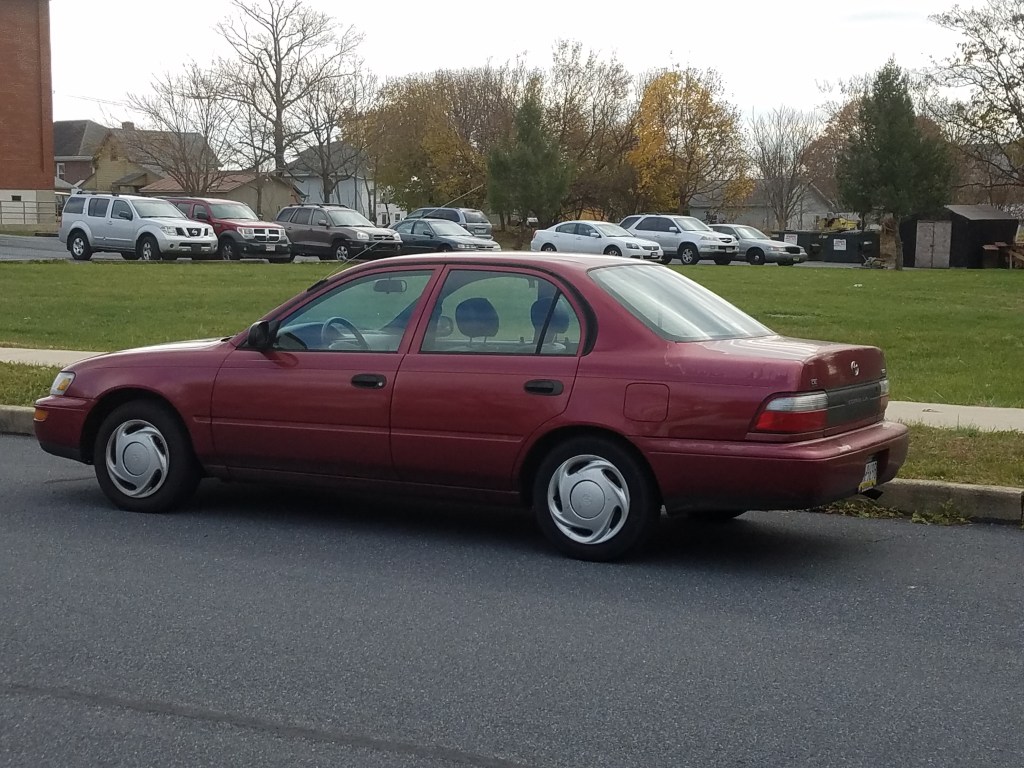
When I received a rather cheap car that had been through a hailstorm and was close to 20 years old, I was incredibly grateful and amazed at my luck. After all, having not had a car before, having any car was a dream. However, it wasn’t long before the twinges of comparison started. It was by no means a looker in the car department with its dents, faded color and sagging cloth. It was clearly old and not only that but also dented from the hailstorm. When I was interning for an organization whose donors were from the higher echelons of society, I was embarrassed by it. Where was my joy? Where was my gratitude? And frankly, why did I care what they thought?
We pray for a house and then grumble that it doesn’t have a living room and a family room after visiting our aunt’s house. We pay for new floors and then wish we had paid for a vacation instead when we see our friend’s Instagram photos. We give our boyfriend the cold shoulder when Jill from accounting flashes her new engagement ring. We force a smile when our sister announces her second pregnancy and then go home to cry. Our best friend gets a promotion at work and we feel that we’ve fallen behind now. We scroll online and see a headline of a 26 year old retiring using the Fire Method or a list of 30 millionaires under 30 when our 40th birthday looms ever closer. We forget what we have when we start focusing on others. Their blessings become our lack.
Do not get me wrong, ambition and wanting more can be great things. After all, it’s drive and ambition that has put a man on the moon, given us electricity, discovered antibiotics, written symphonies and painted masterpieces. Without it we wouldn’t have our modern world. Competition can also be a good thing when you have someone to push against and with, you both can end up going further than if you were by yourself. However, when that comparison of value and worth starts to creep in, we lose. Part of the problem is that there is always someone above us on the ladder of life and we tend to look ahead of us rather than behind us.
When you move to a nicer neighborhood that you’ve dreamed of being able to be in, after a few months you start seeing the cracks in the sidewalk, the unkempt garden (sorry, neighbors I don’t use herbicides, it’s more a habitat for pollinators) and soon the next neighborhood looks much better. Each house is detached with a garage and clearly has plenty of space each surrounded by a nice neat fence. If you do manage to move then you start eyeing the one where everyone has a 3 to 5 door garage, the houses are more accurately described as mansions with private pools and there’s even a gate to keep out the riff raff. We are so prone to eye the next rung up to strive for what we do not have that we become burdened by ambition creating our own gilded cages of dissatisfaction and envy.
No matter how much we get, how far we go, how much we achieve, it will never be enough so long as we keep comparing ourselves to others because we can never win. The happiest people I know are the ones who live simply unburdened by things, pretenses and social status. They’re the ones who live in the woods or cultivate a small garden in the midst of their urban center. They snuggle cats and walk their dogs. They form genuine connections with others.
Not only does comparison rob us of our joy, but also it robs us of shared joy with others and the connections those shared joys can form. Rather than celebrating those we care most about and instead those moments are like small thorns twisting in our hearts poisoning our spirit. It also poisons our relationships causing a rift to form as you turn away. You begin to question your value and what you bring to the relationship. Perhaps, they sense your distance and wonder at your less than enthusiastic response to their news. They may attribute it to jealousy rather than feelings of inadequacy which can erode the foundations of your relationship.
It robs them of their joy as well. Have you ever gotten great news and when you shared it with someone you got a less than enthusiastic response? What about one that sucks the joy right out of you, leaving you with guilt or remorse? Yes, there are certain circumstances where two people cannot have the same thing, two friends may enter a contest knowing that if one wins the other will lose, but often that’s not the case. If my friend gets a promotion and I respond making it about me and my lack of one, I’ve just diminished her joy instead of amplifying it.
This isn’t to say that you can’t feel how you feel. After all, when you have worked really hard to get somewhere only to see someone else seemingly skate on by to the top, it can be incredibly frustrating and disheartening. You absolutely should let yourself feel those feelings in order to process them. I never recommend suppression and pretending. You can be joyful for another’s triumph while holding your own pain. That’s why I speak about joy rather than happiness. I don’t want to be happy, I want to be joyful.
However, bitterness against your circumstances, the world and even those you care about can set in. Usually, it’s not about the not having, it’s about what the not having means, that you’re less than everyone else. You’re not your job title, your social status, your income bracket, your marital status or any of the world’s measures for worth and value. Focusing on what brings you joy and bringing beauty, kindness, compassion, hope and love to the world are far more worthy pursuits than keeping up with the Joneses. Besides, why do we care what they think? If they look down on you for not having a brand new car or being able to go on a vacation in Belize every summer, that speaks to the low level of their character not yours.
When we stop worrying about what others think and embrace ourselves fully we find joy. When we stop comparing ourselves to everyone around us and “above” us, we find that we are enough just as we are. You are enough, dear reader.
Ah, summer. What springs to mind when we think of those blazing hot days and long evenings? Cookouts and water games, people gathered round, laughing gaily as dogs drift in and among the crowd, children playing lawn games? The reality is that, sadly, summer is spent far too often on our phones. Even when out and about, they are an ever-present distraction. Speaking with strangers is practically taboo, lest you disrupt their very important text conversation or latest social media doom-scrolling venture. There are few sanctuaries of the bygone eras where summer meant a blissful abandonment of the world for nature and all her bountiful glory.
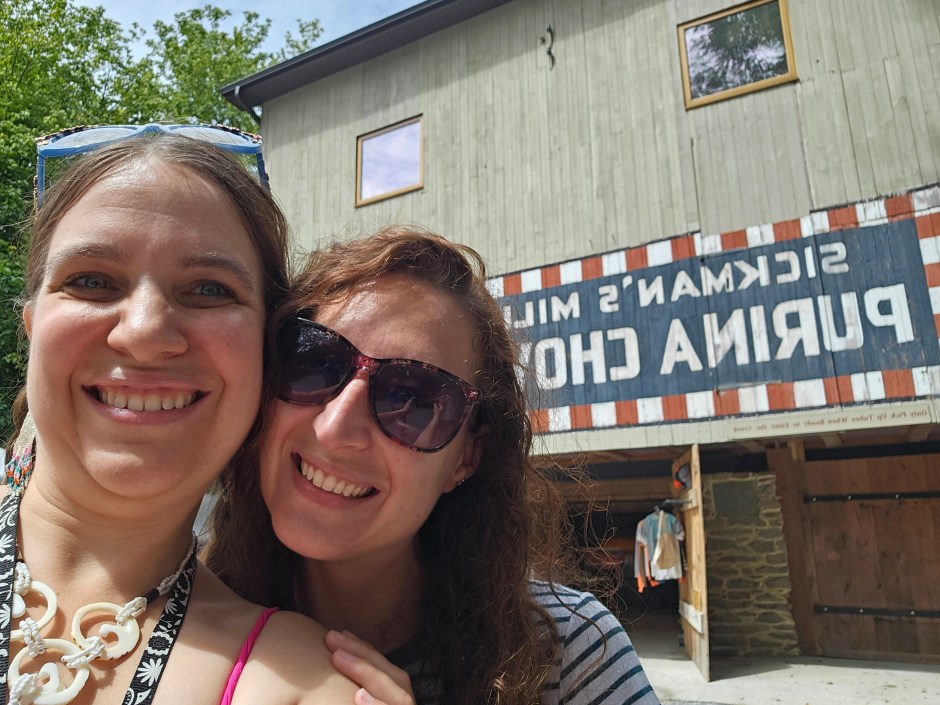
It was one such sanctuary that I happened upon on a summer morning—not entirely by accident, as I had made plans to go—but I was surprised to discover that Sickman’s Mill was such a place. Nestled in the southern part of Lancaster County, it doesn’t have the best reception, and lacking any Wi-Fi, one is forced, as their sign proudly declares, to pretend it’s 1969 and talk to other people. I found the bartenders friendly and hospitable, eager to make me feel welcome to a party I didn’t know I’d been invited to as I awaited my friend Kayla’s arrival. They assured me that despite the weather forecast for potential showers, I would still be able to participate in the not-quite-forgotten summer tradition of tubing down a river.
Almost as soon as there were rubber inner tubes leftover from tires, there have been people putting tubs in rivers and floating down them. What could be a more relaxing way to beat the summer heat? After a trip down the Pequea Creek, I’m not sure I can answer that question. It was the perfect panacea for the blistering heat of the season.
The rain from the night before had raised the creek’s levels and left the morning quite comfortable. The clouds that had threatened thunderstorms gave way to beautiful blue skies, allowing dappled rays of sunlight to stream down through the trees. The crowds had not yet arrived, leaving the creek mostly to ourselves to enjoy the sounds of nature all around us. Occasionally, we were treated to faster-moving sections as the water flowed rapidly over a series of rocks. The only main concern was the occasional felled tree that created unexpected obstacles, but aside from those minor disruptions, it was a beautifully relaxing trip.
The entire route took us about an hour to complete, as the creek was moving more rapidly that morning due to the recent rainfall. It can take up to two hours when the water is slower. We were directed by a polite young man to get out of our tubes and climb the convenient stairs to await a bus that would transport us back to the mill. We didn’t need to wait long before it came lumbering up the lane, and after another group disembarked from the creek to board, we were on our way. It was a short but delightful ride through the countryside.
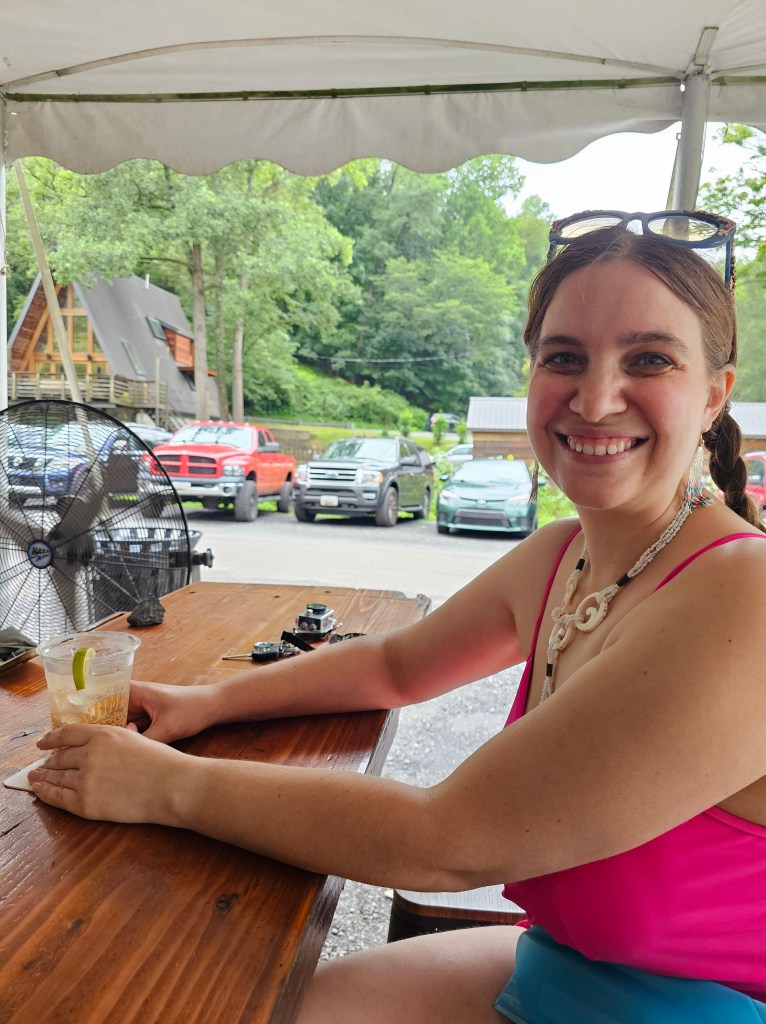
The old mill itself was not open for exploration, but they more than made up for it with the bar affectionately named Jimmy’s Place after the family’s dog. Naturally, Kayla and I tried the Jimmy Juice—all four flavors. She had the Pineapple and Cranberry, whereas I enjoyed an Orange and a Ginger. Our favorites were the Pineapple and the Ginger, and we were able to take a four-pack home to share. For food, we went only a few feet away from the bar to Mama T’s. I learned the name is a bit of a joke, as Mama T is by all accounts a terrible cook. Don’t worry—the food was quite delicious and includes vegetarian options. Prices ranged from $5 for a slice of sourdough pizza to the more expensive Mama T Burger at $14. The portion sizes were as generous as the people serving us.
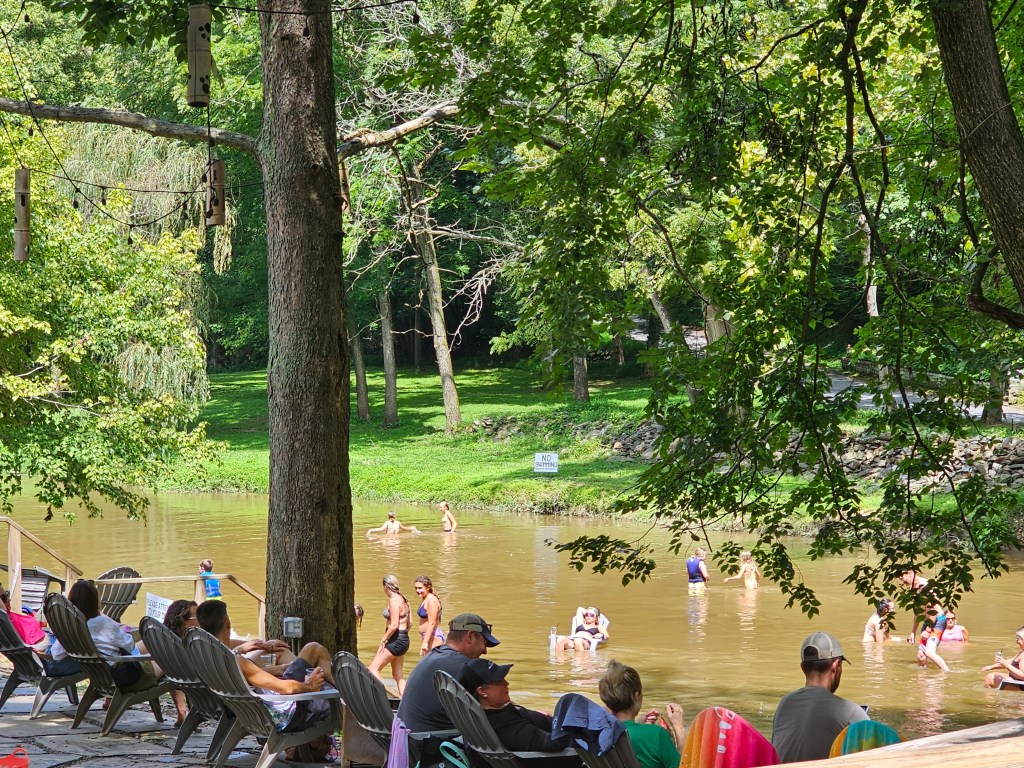
When we returned to the mill, we were surprised to see that the sleepy bar had transformed into an impromptu party. Dogs ran among the people and splashed into the creek with their owners. Some had taken chairs to sit directly in the creek while sipping on the infamous Jimmy Juice, a vodka-based cocktail. Children and adults played lawn games together, and everywhere I looked, people were actually talking to each other instead of scrolling on their phones. It felt as if I had indeed been transported back to 1969. I even had the distinct pleasure of meeting Mama T, who had just landed from Ireland.
It would seem that while the mill has taken on many purposes in its 250-plus years of existence, it remains timeless. One certainly feels as if time simply melts away. Hours and minutes blend together as the party stretches into the afternoon. You forget to check the time, and text messages go unanswered—if they even get through the spotty reception. It is a place to forget the modern world and embrace the echoes of summers past. Though I wouldn’t have thought it all that different from a lazy river at an amusement park, there was something special about tubing down a real river in the middle of the woods. It may be a relic of an era now gone, but it remains a time-honored tradition. As long as there are tubes and rivers, people will continue to float down them.
How can you go tubing?
Luckily, the United States is dotted with rivers, and if nothing else, you can probably find one nearby to float down—provided you have a tube. It’s recommended to bring a friend along and park your cars in two different places unless you find a spot like Sickman’s Mill where you can rent a tube and catch a bus ride back. It’s a bit more adventurous doing it yourself. Though I must confess, as someone with a poor sense of direction, I’d likely miss the designated pickup spot, drift miles downriver, and end up hopelessly lost.
If you don’t want to go the DIY route, finding a place like Sickman’s is usually as simple as Googling “water tubing.” There are plenty of places that offer this kind of summer activity. I can’t promise they’ll all have the same family cookout atmosphere, but the river experience will be similar. I do think there’s something magical about finding a place where cell service isn’t great and Wi-Fi isn’t available. It encourages people to put their phones away and genuinely engage with each other.
Completed: August 2024 Cost: $25 for tubing ($40 additional for drinks and food) Miles from home: 20 Potentially time warped: 55 years into the past
Be sure to check out my other adventures on my Bucket List and if you’re looking to travel back in time again with me, check out my Reverse Bucket List.
We now, come to the end of my travel tips and my post on various modes of traveling, automobiles which usually come in two flavors when traveling abroad, taxis/ubers and rental cars.
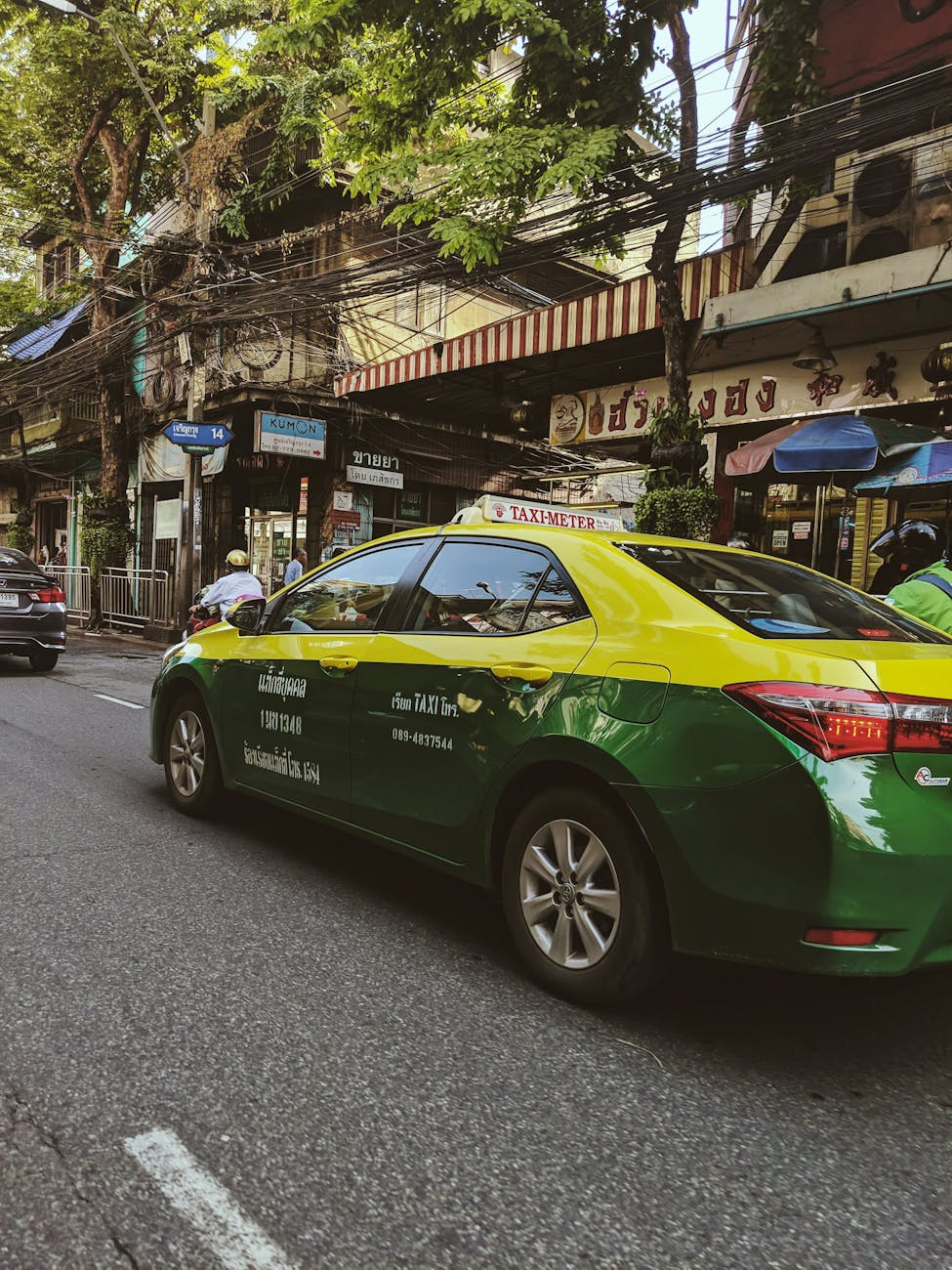
Taxis are famously expensive and so I avoid them if possible, but sometimes you simply won’t have much of a choice, whether public transit isn’t running, doesn’t go to the destination or you’re simply too exhausted to bother hauling your luggage onto a subway in the middle of rush hour. On a recent trip to England, I actually opted for a combination of all these forms of transportation, a plane, buses, trains, subways, taxis and a rental car. I ended up taking a taxi mostly when the rental car wasn’t available because I arrived late on a Saturday afternoon several hours after it closed and it didn’t open until Monday and I really wanted to have time to go to Saint Michael’s Mount that Sunday because of other various parameters, Sunday was the optimal time to visit. Now as a tidal island, it’s only accessible by a causeway during low tide which happened to be from 11:30 to about 3:30 that. The bus didn’t leave until Sennen Cove until 12:00 pm and was an hour and a half ride meaning I wouldn’t have arrived until 1:30 pm, I still would have had a significant walk to the causeway giving me a rather slim amount of time to visit. Additionally, I would have been waiting until about 5 pm for a bus back to Sennen Cove. Meaning I would have had almost and hour and a half of waiting around outside. Given the parameters, I opted for a taxi.
If you find yourself at a major hub, hailing a taxi is usually as easy as walking up to the assembled line of taxis and hopping in the first one. Just be sure you’re going to an official taxi stand. Keep in mind you will pay an arm and a leg if you’re traveling far away from the hub. Now if you are going further out, you may run into taxi drivers refusing your business. Most countries have laws in place to protect you, but they may still try to. The best way to avoid that is first do your research to see if there are laws to protect you and the second is to wait until you get in the cab to tell the driver where you’re going. It’s a little harder for them to simply refuse your business once you’re all settled and they’ve pretty much committed to driving you.
If you aren’t at a major hub, you may need to either reserve a taxi ahead of time or call one. Make sure to verify the taxi’s credential look for the company’s name, logo and the driver’s identification card. If the local laws don’t require that or you’re using an app like Uber or Lyft be certain to note the license plate number. When using an ride hailing app double-check the car’s make, model and license plate match the information provided in the app. Other safety tips include refraining from sharing personal information, paying in cash if possible, sharing your trip details and keeping your valuables secure. If you ever feel unsafe, you can always request the driver drop you off at a safe place and call for a different cab. Make sure you know the local emergency numbers.
Make sure you have the address of your destination in an easily accessible place as you would hate to have the meter start running while you fumble about trying to confirm your destination. Don’t assume your driver will know precisely where to go.
Be sure you understand the fare structure when you’re traveling some places may charge a flat rate for rides within a given area, most use a meter to calculate fares based on distance and time. Knowing this ahead of time can help you budget. Make sure you research common scams and pitfalls related to taxi fares especially in high tourist areas as you may find yourself being charged unfairly. However, most of the time the drivers are honest and quite pleasant. In my experience most drivers prefer cash over card and they will often round down if you do offer them cash rather than card. You won’t save a ton of money but you may save a few bucks, so be prepared to pay with cash over card.
Now you may say, to heck with all this public transit and taxi nonsense, I’ll simply rent a car and drive as God intended! And it may be worth doing that. Depending on where you want to go, the availability of public transit to your desired destinations, how much time you have and the expense of taxis, renting a car may be the best option.
Remember that small trip to Saint Michael’s Mount? The taxi ended up costing me nearly 80 pounds for just one back and forth trip. Given that I desired to go to multiple places where buses and other forms of public transit simply did not go, taking a taxi everywhere was going to be quite a bit expensive. This meant that I opted for a rental. My rental car cost me 60 a day for the week (perhaps a little more with gas factored in). I was able to take multiple trips in a day, didn’t have to wait for a taxi to pick me up and didn’t have to worry about a meter running.
Additionally, I wanted to venture a bit further afield visiting Stonehenge, Bath, the Seal Sanctuary and Tintagel. Had I attempted to visit Stonehenge using public transit, I would have spent nearly 7 to 9 hours traversing the country side by taxi, bus and train. With a rental car, the trip was only 4 hours and I was able to add on Bath. The unexpected expense was of course the price of gas. It was astronomical, I certainly complain about gas prices in my home state of PA, but the UK made it look positively cheap.
The other unexpected challenge was not that I was driving on a different side of the road or even the traffic circles (we actually have several of them in my area), no instead it was that I had inadvertently rented a giant SUV and those roads are tiny! There were plenty of places in Cornwall where you couldn’t even fit two cars together meaning you had to drive backwards until hitting a spot with a section just wide enough for your to squeeze your car into while they passed you or they had to drive backwards to let you pass (I shall write a whole post about the adventures of driving in a foreign country eventually).
This meant that everytime I drove, I was worried about scratching the darn thing, so much so that I sprang for a little extra protection against damage to the car to reduce potential costs from 2,000 to 250. As it turns out most of the world does have tiny roads and unfortunately car manufacturers insist on making ever bigger cars. It may be worth it to research the models of car and pick the smaller one or to simply forego the SUV. Although, you may not want to do that if you will be going into the backroads since some of them are little more than dirt paths. I really felt that it was a no win situation with regards to the risk of damage to the car. Luckily, the fates were with me and I managed not to scratch the car. The key is not to rely solely on the camera and the sensors but rather ensure your mirrors are positioned so you can see the rear wheels and a little bit next to them. I learned this trick from an ambulance driver and I think if anyone knows how to maneuver a vehicle backwards without getting into an accident it would be them.
Additionally when renting a car, and this is very important, make sure you’ve rented an automatic car. Much of the world drives stick and much of America does not. I do not recommend renting a manual car if you’ve not driven them much before especially if going to a country like the UK. Do you really want to try driving on the opposite side of the road, with a million traffic circles, trying to drive stick while jet lagged? I didn’t think so. Additionally, make sure you’ve taken the time to research and review the relevant traffic laws and common symbols of the country you’ll be traveling to. Don’t assume that traffic signs are universal, yes most are self-explanatory but some aren’t.
There are other common pitfalls with rentals such as mileage, tolls, insurance, late returns and different pick up and drop off locations which can cost you money. When you do rent a car be certain to check the mileage as not every rental comes with unlimited mileage. Some will even limit you on taking your rental out of state or the local region. When traveling in the United States, a common issue for tolls is that rental cars will vastly overcharge you for any tolls that they cover. It can be difficult to opt out unless you ensure the toll transponder is closed and that you make sure you pay directly at the booth or online. Most places recommend you bring your transponder. The other option is to avoid toll roads altogether.
Insurance can be another place where you get overcharged. If you have a personal car insurance policy or a credit card that covers rental car insurance then getting it through the rental car company may be something you don’t need. If you have a credit card for coverage make sure it offers primary collision damage waiver and that the type of car you’re renting is covered and the country you’re traveling in is covered. However, credit card collision damage waivers do not cover personal injuries to you, your passenger or pedestrians involved in an accident.
Many rental car companies define rental period by 24 hours so if your return time is later than your pick up time, you’re going to pay for an entire additional day even if it’s a few hours difference. Some companies do have a grace period from 30 minutes to 2 hours if you return the car after the designated return time. This probably would have been helpful knowledge when I rented a car in England and saved me $60 as my pick up time was 9 am and I selected my drop off time as 12. I ended up picking it up closer to 10 am and dropping it off at around 11 am and could have saved about $60. Additionally if you pick up and drop off at a different location be prepared to be charged extra. Even if it’s convenient and easy for you to do so, it isn’t for the company and they’ll be certain to charge you for their trouble.
I also would recommend avoiding booking through third party sites. They may be attractive for lower prices but you lose a lot of protections if something goes amiss. If you need to alter your reservation or get a refund, it’s much easier to get what you need if dealing directly with the rental car company to begin with.
Finally, make sure that you check the vehicle before you drive off. Make sure that it has a full tank of gas, you take pictures and video of the car to note any damage and make sure you check the car’s vehicle identification number for information on the car’s features and any recalls. Be certain that any of issues are documented at the time of pick up.
Hopefully, you’ve found my tips to be informative and helpful for maximizing your travels and checking off your list. After all, while most of the things can be done closer to home, there are some things that can only truly be experienced by traveling.