Living Your Best Life

We often hear or even say the phrase “living my best life”, but what does it actually mean? Is it being able to reach your goals? To live a full life? What is a full life? In general when we use say look at this person living their best life, we usually see someone who has fully embraced being themselves without caring what others think. But how do we even know that they really are living their best life? What does a “best life” even entail? It probably does and should look different for different people. What makes my life “best” isn’t what will make your life “best”. There are, of course, guiding principles. After all, this whole blog is in part to help people live better lives. For most people a best life is one that comes from connection to others and a sense of meaning or purpose without worrying too much about the judgment of people. 

There are a myriad of ways to arrive at those two things. I have seen lists of anywhere from 6 items to 30 items of how to arrive at a “best life” or to live a fuller one. Some of these lists even conflict with each other like focusing on yourself and your own personal growth yet being “other” centered. If you grew up in the Christian community you may have been told that JOY comes by putting Jesus first, others second and yourself last. All well and good, until you stop caring for yourself at all and forgetting that you can’t help other people if you haven’t been taking care of yourself first. On the other hand, always putting yourself first is obviously narcissistic and self-ish, certainly not the way to form meaningful connections to others. How to reconcile the two conflicting sides? 

This post isn’t necessarily to tell you how to arrive at those two things, more to get you to try and think about what might help you get there. As illustrated above, there are people for whom the advice of putting yourself first is absolutely necessary! I talk about boundaries and self-care in other posts precisely because putting my own needs last was something I struggled with leading to burn out, resentment and bitterness. Not things that helped my relationships. 

However, there are certainly many people who need to be told to put others at the center and to focus on getting out of their own world and be more mindful about how their actions affect others. The character of Ebenezer Scrooge in Charles Dickens’ A Christmas Carol certainly needed that lesson lest he find himself cast into hell for his self-centeredness. All things in moderation I suppose. 

Photo by Andrea Piacquadio on Pexels.com

For some people living their best life may be learning to let go of stress and worries, for other people it may be that they need to worry about the future a little more. You may need to learn to stop caring so much about what others think or you may want to consider others opinions a little more. The path to a “best life” is one that is always evolving and changing. Each person is an individual and what their best life looks like is going to be different. 

One of the best ways to achieve a best life is through self-reflection. 

After all, how do we know what we need to learn and how do we know when we’re being ourselves if we don’t take time to self-reflect? One way to really get to know ourselves is to “talk to ourselves”, not in the crazy person sort of way, but through journaling. I often find myself surprised by some of the things that come out of my own journaling where I let the flow of the subconscious go where it will. I may look for various prompts to consider to help jump start my self-exploration. There are also journals out there geared to specific topics or goals. For journaling to be truly effective requires us to be really honest with ourselves willing to face possibly ugly truths. 

Journaling can also help us explore our relationships to help us determine if we are truly connected to others. In learning more about ourselves, would we be able to share these insights with those closest to us? Do we have people who we can truly express ourselves and be vulnerable with? True connection to others means that you can be authentically yourself. After all, some of the loneliest people on the planet are those who are extremely popular. Why? Because in pursuing being liked by everyone, they are too afraid to show their real selves lest they be rejected. The hard truth is that you won’t be everyone’s cup of tea, but you have a choice to make, be your authentic self to have real connection with others or disguise yourself and be alone.  

This can be extremely difficult because it requires us to live without fear of the judgment of others, which is the main reason so many of us choose to live inauthentic lives and to settle for relationships that are shallow. However, this is a key piece of living our best lives. As I said at the beginning of this post, when we say “look at this person living their best life” it’s often said as a form of respect for someone who clearly doesn’t give a “f” what others think. They’re the people walking down the street dressed outrageously. The people dancing in the street to a musician. The ones who call you darling as they don a hat before splashing in a fountain. They laugh too loud, love too deeply, hear poetry in the rain and see works of art in the swirling of leaves in the wind. They may also be the ones who aren’t afraid to piss people off with how they view the world, unafraid to speak up and speak out. However they live, they are authentically and unapologetically themselves. 

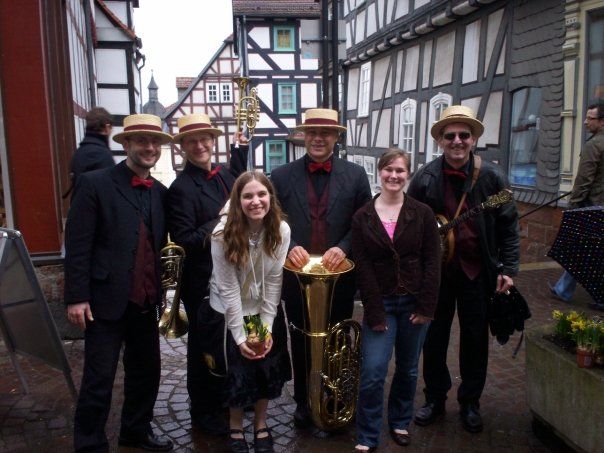
I danced for these street musicians as if no one was watching!

Living authentically isn’t being a jerk about it though. These are people who don’t care if they tick people off but they don’t purposefully go out of their way to do so. It isn’t about being mean. It’s about respectfully disagreeing and holding themselves apart from the judgment of others. It’s more of a live and let live attitude. Like okay, you don’t like that I live my life this way, but it’s no skin off your nose and I don’t have to listen to your criticisms about it if they aren’t constructive or useful. Someone living their best life knows that bees don’t argue with flies that honey is better than crap.

Another benefit to journaling is it can allow us to consider another aspect to a best life, living with purpose. I’m not here to tell you what a purposeful life is or is not. Each of us has a calling. Each of us has a gift or talent. I can’t tell you what those are because I’m not you. In general, a purposeful life involves leaving the world a better place, and helping others. Some people may have very obvious purposes like teachers, nurses and EMT workers. Teaching the next generation, healing the sick and protecting others are all very obviously meaningful things to do based on the values of our society. 

However, almost any job can be infused with meaning when placed into a larger context of helping others. Nor does your purpose have to be tied to your job. I once interned for a group of businessmen who invested money. They were quite good at it, but rather than simply take all the money for profit, they used it to open an orphanage in Africa. This orphanage did not stop assistance at the age of 18, but rather continued to invest in the children, helping them obtain higher education. The children were able to start businesses in their local community and become leaders thus laying a firm foundation for independence in the region. Their calling was to help disadvantaged children and to grow a community in Africa even though their jobs had almost nothing to do directly with this calling. Your talents and your calling may be seemingly disparate things that nonetheless are yours. 

There are, afterall, lots of ways to leave the world a better place.Talents don’t have to be utilized in a specific way. Your job doesn’t have to exactly match your calling. It’s certainly easy when the two directly align, but sometimes they may seem completely disconnected. You also don’t have to have your calling address every ill in the world to leave it a better place. Some people’s calling is to focus on the environment, others may have a calling to help sick children. Both are worthy callings that do not negate the other nor is one automatically better than the other. There are unfortunately a lot of problems in the world and there’s just no way for each of us to address all of them all at once. That isn’t to say don’t do what you can for the problems of the world, do the part you can. Your calling is the thing you focus on. 

The point is for you to determine for yourself what your talents are and how to apply them to your specific calling. I will probably write a more extensive post on a purposeful life, but as I said earlier this post is more to help you start to consider what a best life is and how you might start to consider what your best life looks like. To be honest, I’m still figuring it out. One of the reasons I have a bucket list is to try new things, complete new challenges, to grow, and learn more about myself. 

So what are you waiting for? Go forth, dear reader, and start living your authentic best life!

The Winding Path to Your Destination: Prayer Labyrinth

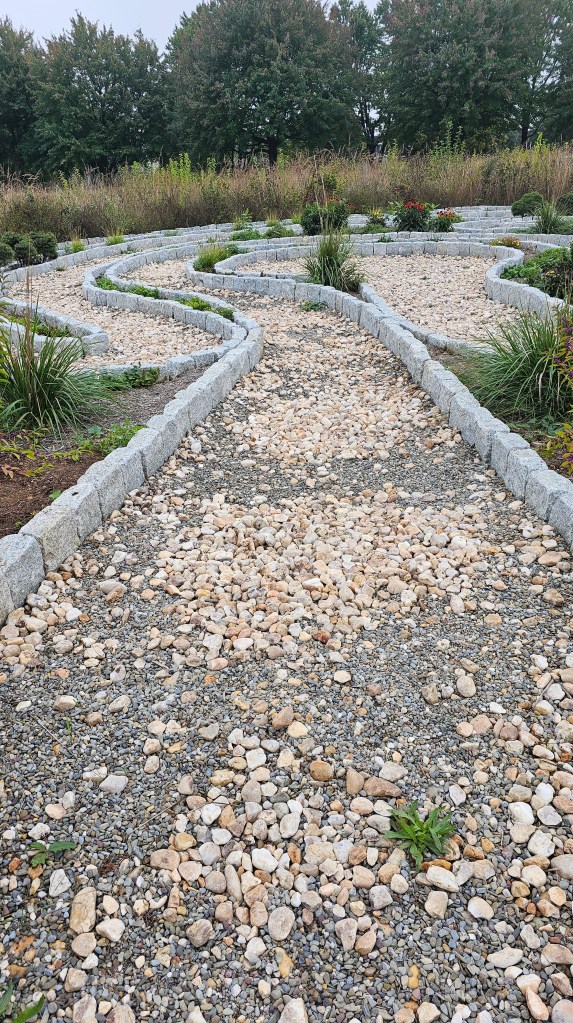
Unlike a maze, a labyrinth does not have many branching paths intent to challenge one’s navigational skills, but instead is one single path leading to the center. It is intended to symbolize a meditative spiritual journey without the possibility of becoming lost. There is one entry point and one endpoint, the only exit is to follow that path in reverse. 

Labyrinths have been used by the Christian faith since at least the 300’s and it gained popularity in the 600’s as a substitute for pilgrimage to the Holy lands after the Muslim conquest. In the faith, the labyrinth represents ones journey with God, as one arrives at the center one is entering arrives to be with God in perfect union. When one leaves, one has left a holy place to go back into the world. The practice is intended to be one of quiet contemplation and meditation, to pray and commune with God. It is a different form of worship as most often other forms are very stagnant in terms of physical movement. You sit at church to hear the preacher speak, you may stand up to sing and more modern churches may have people wave their arms in the air, but for the most part the movement is very limited. In this way, your whole body is part of the worship, the act of walking becomes part of the prayer. 

Many labyrinths are outside allowing creation to return to its intended purpose of being our Cathedrals and places of worship. It returns us in a sense to the garden paradise and thus reinforces the journey back to God which the labyrinth intends to mimic. The ordinary act of walking in nature becomes transcendent. 

The path that leads us back to God is not a straightforward path. It winds around at times seemingly moving us farther away from our goal, turning us away from it even though that is the only way to move towards it. To take that next step is an act of bold faith and trust that the path will lead where it is meant to be. In some labyrinths the path just before the final journey to the center takes us to the farthest point as it winds us all the way out and around before finally turning to the goal. 

Life can often seem that way as well. It can seem that we are being led down paths away from our goals or that we are farther away from what we are striving for than when we started. We may be tempted to turn back and try to go another way, only to discover there is no other way. We may find ourselves frustrated by the seeming lack of progress and give into the despair of hopelessness. The only way is forward, to trust the path and take that step of faith. 

As one walks the path of a labyrinth, one may notice weeds or patches of clovers popping up depending on how vigilant the groundskeepers are. Then again what is truly a weed in a garden devoted to God? Is it not his creation that has been sent there? The judgments of the world hold little sway there, perhaps they serve as a reminder that the flaws and shortcomings we see in ourselves are gifts from the creator. The obstacles in the path are not obstacles at all but blessings. 

It was on a cool October morning, when the land was covered in fog that I embarked on my own prayer journey at a local church. I had read about prayer labyrinths and their meditative uses for quiet reflection and solace. As I was going to be in town on other business, I decided on a whim to drive a little out of my way and go in search of it. The labyrinth was tucked away behind the church in the wildflowers. Although being October, most of the flowers had lost their luster as they prepared for winter. The field itself was devoid of the bright hues one associates with flower fields; instead the plants had been transformed into dark sentinels to stand watch through the darkest months. 

At the entrance, I placed my phone and car keys to the side in order to devote myself fully to the practice intended by the architects of the labyrinth. Pausing at the front, I took three deep breaths to ground myself and be fully present in the moment. Then I began to walk and prayed. I wound around the path allowing it to twist and turn as it would taking in the few still blooming flowers which dotted the inside. As I approached the center, I paused knowing that in the next moment I would be stepping into the inner sanctuary. I then stepped into the middle and rested in the presence. My journey out was slightly different than my journey in as I softly hummed hymns to myself. Perhaps, I was taking the joy of heaven with me in the form of music and song.

Once I returned to my phone, I did pick it up for purposes of documenting in pictures the labyrinth in part to be able to return mentally to that place once more. In part to be able to share the experience with you dear readers with hopes that you will be encouraged to go on your own meditation journey. Still, on my second journey inward, I found myself still meditating and reflecting as if the design itself instills the mindset. It was on this second journey that I considered the imagery that labyrinth invokes. It was during that time that I reflected that at the point where I was seeming farthest away was actually when i was closest, even though when I first entered the center appeared to be just within reach. It was in taking pictures, that I reflected on the apparent weeds and wondered if I could call them weeds since they were in a sense planted by God. If God could have weeds in his Holy place then surely they are not weeds at all and if I saw them as weeds was I not looking with the world’s eyes? What did I see in my own life as weeds? When did I think that I was far from my goals when they were just within reach if only I kept going? What might I see if I looked at my own life as a labyrinth? 

On my way back to my car and out of the wild flowers, a butterfly came floating by my face, twirling around me and floating above. Was it a sign that the prayers asked would be answered? Was it a message of hope? Perhaps. Perhaps it was just a butterfly. Still, I shall take comfort in it for whatever may come in the next days. I shall remember the lessons of the labyrinth and sing the hymns of faith and thanksgiving. 

How can you experience a labyrinth? 

First dear reader, you need not be of the Christian faith or of any faith to enjoy the benefits of a prayer labyrinth. Many are simply called mediation gardens and even those without a faith find benefit to walking in them. The practice of meditative walking still helps people connect with their bodies, commune with nature, alleviates stress, supports their minds and improves over all well-being. You may find yourself making similar reflections as I did that life has its many twists and turns. You may reflect that the only way is to move forward and trust that you will obtain the goals you are reaching for. You may ask yourself if the flaws you observe are truly flaws or simply the way you’ve been trained to see them. Perhaps, you will leave as I did with a slightly different outlook than when you entered. 

Labyrinths can be found all over, at churches, hospitals and other public spaces. Some people have created them in their own backyard. Each one has a unique design and some are much bigger than the one I visited on a misty morning. It may be difficult to find as they are not always advertised and some are not necessarily open to the public. However, I found that with careful research I was able to locate one not 10 minutes from my house. I encourage you dear reader to visit a labyrinth. I think you will find the experience is worthy of your time.

If you don’t have access to one, then a meditative walk could help you achieve a similar affect. After all it’s about getting a similar result from a given experience. As always, dear reader, we needed do the exact thing to achieve the same or even better results.

Completed: Fall 2024

Miles from home: 5

Cost: Free

What is Work Life Balance? Setting Boundaries

With the age of the internet and cell-phones work has managed to invade almost every aspect of our lives. People have stopped talking about work-life balance and talk about things like blending work and life together. Which is really short hand to say, having no boundaries with work and work being able to take precedence in your everyday life. It has even begun to take over things like people’s vacations. 

In countries like France, they’ve adopted the right to disconnect meaning your work may not send you emails after work hours. Some companies have a system in place where if you’re on PTO any email is automatically responded to with “this person is on vacation and your email has been deleted, please reach out to this other team member”. I LOVE these. We should work to live, not live to work. Setting appropriate boundaries with work and holding to them is both difficult and extremely rewarding. 

No wonder we dream of packing up and leaving our homes. Our homes are no longer sanctuaries from work. Instead it follows us to the door, hounding us with phone calls and emails. Sometimes seemingly frantic demands during your off hours. I’m going to hazard a guess that you dear reader are not in the medical profession and therefore are not tasked with the life and death of others. This means that since no one is going to die if you don’t answer that email at 9 pm, maybe it can wait until 8 am. What objectively are  you going to accomplish at 9 pm that cannot be done at 8 am? It will probably take you twice as long to accomplish it late at night than in the morning, when you’re awake and refreshed, especially when adding in the inevitable and natural human response of grumbling to yourself and emotionally having to process this unwanted demand on your private time. 

Rest is important to our functioning, our physical health, our mental well-being, our emotional wellness and spiritual wellness. Paradoxically, when we’re allowed to rest our work performance and output increases rather than decreases. Unfortunately, companies fail to understand that thinking they can just continue to push us to get more results.When we keep work at work and home at home, it allows us to thrive in both places. Once we start blending the two, it can be hard to perform well at either. You find yourself torn in two trying to constantly please two masters. You allow work to encroach on your life so you don’t meet the obligations of the home so then home may start to encroach on your work. It feeds anxieties, worries and distractions. You start to need more and more time to talk out your emotions and process which only robs you of more precious moments and gets you further behind. Just writing this makes me want to scream in frustration. How is anyone supposed to thrive let alone survive in such conditions?  

If you are hourly, you’re probably not tracking this time and ensuring you’re getting reimbursed. If you are, you’re likely getting push back for it. If you’re salaried you have to consider that every hour you work extra is time you aren’t getting back and you aren’t getting paid for, thus lowering your hourly salary. Consider working for 50,000 a year. At 40 hours a week that’s about $24 an hour. If you consistently work closer to 50, you’re now lowering your rate to $19. Would you really do all that you’re doing for $19 an hour? Because you are. By working so many extra hours, your company is essentially robbing you. Even just 1 hour each evening still adds up to 5 extra hours a week or $21 an hour. You’re allowing them to undervalue you and it also means they will continue to not hire the help they clearly need by you enabling this behavior. If protecting your rest time isn’t motivating enough to start setting some boundaries, this monetary incentive should be. 

So what does setting boundaries look like? Well first, what is a boundary?The American Psychological Association defines boundaries as the psychological demarcations that protect the integrity of an individual or group, or that help someone or a group set realistic limits on participation in a relationship or activity. In the most basic terms, it’s about what’s okay and what’s not okay. A boundary isn’t about controlling the other person, that’s impossible. It’s about when person x does y, what will you do? 

Your boss or work colleague will continue to email you even if you request he or she stop. It can be as simple as refusing to answer until the next business day. It could be setting your phone to “do not disturb” and communicating to your boss that after work, your phone goes to “do not disturb”. Some phones let you select which apps and phone numbers to block when which can be really helpful. It could be having a frank conversation about your contracted hours and how often you’re going over them. Letting your boss know that you’re no longer willing to go over your hours without additional compensation because you’re not contracted to (if you have a contract of course). It may be asking your boss to then prioritize the duties and re-allocate them to other team members if you do not have enough time in your day to complete everything they are demanding of you. Some bosses don’t even realize how much they’re asking you to do until you show them. They may even have tricks or strategies to help you structure your day better. Not every boss who has you working overtime is nefarious, sometimes they just don’t know how much you’re doing or how you’re struggling. Use your voice and speak up. 

Photo by Andrea Piacquadio on Pexels.com

It is important to remember that someone else’s poor boundaries does not give them the right to violate yours. It can be very tempting to give in when other people around you consistently allow their boundaries to be violated. You may fear not looking like a team player or missing out on a promotion. The thing is, in most companies, you are no longer rewarded for going above and beyond. It’s often easier to get a promotion or pay raise going to another company than sticking with your current job. That’s why quiet quitting or “acting your wage” was trending as a movement. The reality wasn’t that people were quitting working, rather they were setting healthy boundaries with their company and refusing to be taken unfairly advantage of. 

It will probably look different depending on your company’s culture and your boss. It’s easy for me to say “turn your phone to “do not disturb”, refuse to answer work emails until the next day”, but if your boss berates you if you don’t respond immediately or continues to send escalating emails that will make it more difficult. Especially if you feel you need this job and it’s currently difficult to simply go get another one. So it may be responding with “I saw your email boss and I put your request on my calendar to get done first thing in the morning.” rather than simply ignoring it. You still responded, but you didn’t immediately get it completed on your off hours. It’s a small but important step. Once they start accepting that initial boundary, you may find it easier to follow up with “Hey I’m not going to keep sending you a response that I saw your email, just trust that I will see it and get it done like I’ve been doing”. It may be having a conversation with your boss letting them know that you want to be a team player, and you’d like to know which requests are expected to be answered right away and which requests can wait until the next day. Maybe your boss doesn’t even realize that you don’t know you can wait until the next day to respond. Only you know your boss and your company’s culture to know what approach is right for you. It may also involve going to therapy to get coaching on how to set boundaries if you’re someone who struggles with pleasing people or assertiveness. 

We want to live rich and meaningful lives, but how can we if our jobs are always lurking around every corner of our lives, demanding our time, energy and sacrifice while giving us so little in return? It’s time to return to work being at work and home being at home, keeping those spheres separated to allow us to thrive in both. I always do my best work when I hold to strong boundaries and I think that my performance allows me to back up that claim when I’ve had to speak with my supervisor or colleagues about my boundaries. I do let them know I’m available for emergencies and I define what emergencies look like and what they aren’t. 

Am I perfect with this? No, but I always found that the more I’ve held to my boundaries the better work I do at work and the less burned out I feel because I am able to get the necessary break every day not just when I escape to another state or country. The reality it this, soon you will be dead and then all the emails, powerpoints, deadlines and team meetings will be meaningless. No one gets to the end of their life and wishes they had spent more time at work. They wish they had spent more time with their children or their pets. They wish they had prioritized their personal relationships more than their work colleagues. They wish they had taken the time to learn a language, play and instrument or pursue their hobbies. Life is too short to work all the time, work to live, don’t live to work.

Loneliness Epidemic: How a Bucket List Can Bring Connection

In May 2023, the U.S. The Surgeon General announced that we were experiencing a loneliness epidemic and that it was killing us. Many experts linked loneliness to adverse health effects similar to those of smoking and obesity. It is associated with increased risk for heart disease, stroke, diabetes, dementia, depression, anxiety, self-harm and suicidality. It’s not just in the United States, the World Health Organization recognized this as a global issue and in the fall of 2023 launched an international commission to study the problem.

There are many ideas as to why we’ve increasingly become isolated even though we’re more connected than ever. As we’ve increased our digital presence, we’ve decreased our physical one replacing deeper connections with superficial online ones. That isn’t to say you cannot have a deep connection with someone you met online, people have done it. I’ve done it – but it is rare. There is only one deep online relationship that I’ve had that has lasted more than a year or two, but there’s many more people in my life outside my immediate family whom I’ve had a deep and lasting relationship with for over 20 years.

As a culture we are isolated, in our homes, scrolling on our phones not really knowing each other more than superficially. We present the curated version of ourselves to the outside world, never sharing our struggles or vulnerabilities. We don’t share real authentic conversations and disagreements usually end in blocking and a refusal to work things out. We’ve lost our ability to civilly coexist with differing opinions and perspectives which only leads to more isolation because no one is going to agree with you 100% of the time on every issue. Or we don’t share our whole views and ideas because we don’t want to begin an argument that will lose us yet another friend, leaving us with shallow relationships. We are afraid to be open and vulnerable, to make a mistake or work through discomfort to arrive at a place of mutual understanding and respect. 

Photo by Lisa Fotios on Pexels.com

We fill our spare time up with meaningless and empty consumption of media, to numb the pain of being isolated. With our own family members we sit next to each other in our own worlds on our phones and not with each other. In 2006, I read a book called Bowling Alone which discussed our already declining social capital. Membership in community organizations such as churches, sports leagues, and volunteerism was on the decline then and continues to be now. So this isn’t really a new issue, since at the time of the book’s publication social media and smartphones hadn’t really taken off. Unfortunately, rather than helping the problem, it exasperated the issue of social capital. 

One reason for this, is that we’ve lost third spaces, or places where people can gather for a relatively low cost. Even without the loss of parks, with more extreme weather, we’re losing the ability to access them. No one wants to sit together for hours at a park when it’s 100 degrees and a pool membership is expensive. Malls have closed. Libraries are under funded. Even activities that used to be relatively cheap are no longer accessible. Going to the bowling alley used to be a cheap family activity, but no longer. Many formerly free events open to the public have become ticketed experiences. This means our relationships have suffered from lack of consistent contact and engagement.

So what are we to do, dear reader? Well there are some recommendations which are more policy level, which while we can influence a little bit. Although, it is difficult for the average voter to leverage much in the way of power to force change. However, we can cultivate a culture of connection. How might you ask? Why by inviting your friends and families along to your bucket list adventures, which when kept closer to home are more accessible for everyone. 

Photo by cottonbro studio on Pexels.com

We all know that shared experiences strengthen relationships. These moments become more than just peaks for you, they become peaks for them as well. They become part of the trove of memories that you can reminisce about and form a special shared history. By joining in the ups and downs with one another we foster empathy, support and understanding. Sometimes these moments can create opportunities to be vulnerable with one another. In getting away from the busyness of everyday life and into a relaxing quiet setting, you find yourself opening up and sharing parts of yourself that you wouldn’t necessarily post on your social media pages. There’s room for the nuance of discussion.  

We also know that spending time together is part of the way we express love and caring for one another. Having to navigate experiences helps to foster trust between you and demonstrates reliability. There have been many times when my sister and I have had to come to an agreement about where to go, how to get there or make decisions on the best approach. Luckily, years of sharing a room together had already taught us how to negotiate with one another, but it reinforces the relationship. I’ve often been surprised by how little time other people spend with their siblings who live relatively close by, but consistently going on dates together keeps our bond strong.  

You will almost never read a post about an activity undertaken alone, because part of any bucket list moment is sharing it with people I care about. It’s not about doing alone, it’s about using these as times to connect, to build bridges and create strong relationships. What has been inspiring to me is that by going out and experiencing more of the world, friends have reached out to me with cool ideas knowing that I am someone who will take them up on their offer.  There have been times when I’ve come along for the ride for someone else’s bucket list activity. I was delighted to help make their dreams come true. 

I’ve also inspired them to enjoy more of what our local area has to offer. They’ve taken their boyfriends places or invited their family to join them for adventures. We’re fostering a culture of connection among each other and it’s spreading to other groups. It’s my ardent hope that this blog inspires you, dear reader, to go out with your loved ones on your adventures big and small. I hope that it helps you build connections with people and strengthens your bonds to combat loneliness, anxiety and depression. I hope that these adventures help foster confidence and self-assurance. I hope that this does not stop with myself or your, dear reader, but rather it spreads to other groups so that we’re all a little less lonely and feel like we belong to our communities. I can’t do much to change the world, but I can be the change I want to see in the world. One thing I hope to do is help build stronger connections and help others feel a little less alone. 

Spa Days & Self-Care

If someone had told me that I would be one of those women who get massages every month, I probably would have laughed in their face about the foolishness of such a self-indulgent and frankly expensive habit. I never dreamed that the words “I’m sorry I have my massage that day, I can’t,” would escape my lips. However, that was before I discovered the many health benefits of massage.

I believe I’ve shared my mom’s health issues and how at the age of 46 she suffered a stroke which left her disabled. For almost twenty years, she has had over twenty surgeries, dozens of hospitalizations for various infections, has developed diabetes and other autoimmune disorders and at one point was in a wheelchair. To say that I started taking my health very seriously is an understatement.

For me, massage and other spa related activities are to help prevent having serious issues. Despite the expense of the monthly massage my logic is rather simple for the budget minded (as we all are here on this blog). My mother spends well over $100 every month for her medication and is in near constant pain. I can spend $70-$100 each month on a massage and feel great, look great and enjoy my life to the fullest. This isn’t to say that people with chronic illness can’t enjoy full lives – just, it’s a lot harder when you’re sick and I don’t think a single one of them reading this would argue that point. I think most of them would say, “pick the massages!” over the medications and pain.  

Besides feeling great, massages are known to reduce stress and anxiety, improve sleep, lessen pain and muscle tension, improve immune function and help the facia system. You might not be familiar with the last one on the list. Facia is connective tissue around our joints, muscles and organs which helps provide structure and allow for fluid movement. When our facia isn’t well cared for it can cause many painful conditions. Something they found massage does is help to ensure the facia fibers are nice and straight instead of a tangled mess. That knotted muscle? May actually be “knotted” facia! 

Photo by Photo By: Kaboompics.com on Pexels.com

Fun family side note, my mother was diagnosed with mixed connective tissue disorder which affects her facia which explained the twenty surgeries in twenty years. Her joints were literally falling apart because her facia couldn’t hold them together and since she’s starting going to a massage therapist regularly she hasn’t needed another surgery on her joints. It has a pretty strong genetic component, so there’s a significant chance that I will have issues with my own joints if I’m not careful.

I have found this seemingly self-indulgent habit has been key to keeping me healthy and active, along with a healthy diet and regular exercise. Each month it’s an appointment with myself one hour to truly relax and unwind. I enter the spa greeted by friendly faces who have come to know me well. I sign some paperwork, they review any changes and then my neck is wrapped in a warm towel until my massage therapist is ready for me. She reviews my history, checks to see if there has been any changes. I find it’s important to communicate anything that has stressed my system out whether that’s a lot of time spent in the car, extra gardening or stress at work. Together we formulate a plan, she relying on my own experience and me relying on her expertise of how to address the problems (usually a tense right shoulder). 

After she leaves the room, I underdress to my comfort level and slip into the luxurious blankets, warmed by the heated table. I take a nice deep breath in and hold it before letting it slowly out. Tranquil music plays overhead in the dimly lit room. Already, the stress and tension begins to leave my body and for the next hour, it’s all about me. No one can reach me with my phone turned off and my smart watch tucked away in my purse. There is nothing to interrupt the time I have set aside for my own self-care. Alexandra makes adjustments as needed from the temperature of the bed to the pressure she uses, checking in with me and asking for feedback. Parts of me which ached and protested movement release under her careful administrations leaving me in a state of blissful tranquility where the stress of daily life has melted away. 

Imagine sinking into a comfortable, cushioned table as skilled hands begin to work their magic. The pressure varies from gentle strokes to deeper kneading, melting away any tension you might be holding. The sensation of the massage is both calming and invigorating. As the therapist’s hands glide over your muscles, you might feel a warm, soothing release, almost like a wave of relaxation washing over you. Time is almost suspended as she works over each part of your body. The scents of the oil waft into your nose transporting your far away from the world. Your mind drifts between reality and a dream. Then what could have been an eternity or mere moments, she whispers ever so softly that it’s time. She slips out of the room and you begin to move your heavy limbs, stretching them out as if testing them. You take one more deep breath in and out, before slipping back into your clothes and re-entering the world. 

Photo by Andrea Piacquadio on Pexels.com

I have gotten several different kinds of massage from the classic swedish, to the hot stone, to himalayan salt stones to even alternating between hot and cold. My favorite is the hot stone because the heat sinks deep into the tissues allowing Alexandra to work the muscles and facia more easily to maximize her effectiveness. 

There is something to be said about setting aside time each month for yourself as a “mini-vacation”. For one hour, I completely disconnect from the outside world and focus on nothing else but relaxing. There is no one else to intrude upon it and I can either strike up a conversation with Alexandra or tell her that I want a quiet session where I can focus on my breathing or half doze. I am obliged to no one, not required to think or decide, it is truly a getaway. So many times our trips and free time get filled up with activities that while fun are not necessarily restful and rejuvenating. That is precisely what my monthly appointment entails. There are few other places that bring me the same level of relaxation. 

I think we often overlook self-care and the things we need to do for ourselves as indulgences or even selfish. It is not an indulgence for me to say that given my family history, I need to take extra preventative steps for my physical health. It is also not an indulgence to say that I have a stressful job as a social worker and that carving out untouchable “me-time” is not being selfish. Caring for ourselves is as important as caring for others, after all if we don’t care for ourselves, eventually we will be the ones needing the care. It’s not an indulgence or selfish to do things for yourself.

I liken it to when the oxygen level drops suddenly on an airplane. You are to put your own oxygen mask on first before assisting others. The reasoning is perfectly logical, if you end up passed out from lack of oxygen while trying to help someone else, chances are there will be two people in medical distress instead of one. You do no one any good passed out from lack of oxygen! My mom despite the improvements still isn’t healthy and still needs help around the house. I have to be able to care for us both, which means taking the time to take care of me. Part of that self-care, is the monthly massage. 

Photo by Andrea Piacquadio on Pexels.com

How can you get a massage or begin a monthly self-care routine?

Luckily, there are many options available for a massage from a one time fee to a monthly membership. I happen to have a monthly membership with Hand and Stone for about $70 each month. Which is probably about the cost of most people’s daily coffee habit. The membership fee covers the cost of a one hour massage and if I miss a month it rolls over into the next month, so I never need to worry if I am unable to make it in that I will have “wasted” my money.

Even if you cannot make it a monthly habit, it is good to indulge in yourself occasionally with spa days or even just a massage occasionally as it is a readily accessible mini-vacation that can fit into almost any schedule no matter how busy. 

However, whether you indulge or not in them, I still recommend making a habit of self-care. Schedule meetings with yourself where you take time to stretch, meditate, drink tea or just lie in bed and snuggle your cats. Turn off your phone, listen to relaxing music and just be for a small period of time. Get a spa kit for home and indulge in that way. If you have a partner take turns giving each other neck rubs. There are books and resources to help you learn some of the techniques of the massage therapists. 

Completed July 2017 (ongoing)

Cost: $70 with membership (ongoing) or one time fee $120

Miles from home: 3

Not my Monkey, Not my Circus 

Those have got to be six of the most freeing words I have ever heard uttered. They were spoken by the executive director of my internship placement and it was a lightbulb moment. As a young, budding professional still in graduate school, I often took on more than what was mine. I was shouldering burdens, piling on unnecessary stress and adding to my every growing pile of responsibilities. Seeing her close her eyes and utter those words were deeply profound, it was like getting permission to start setting boundaries around my professional and personal responsibilities even if the actions of other people affected my responsibilities. It gave me the freedom to say if someone else doesn’t get their piece done, it doesn’t mean I have to step in. 

The idiom actually comes from a Polish proverb, but its colorful imagery resonates so strongly that it needed almost no translation when it crossed over to the English speaking world. It perfectly encapsulates personal boundaries and discretion, encouraging us to consider where our responsibilities lie. We we invoke this phrase it means that we must practice discernment about what is ours to handle and what we have to others handle. It helps us prioritize our energy and attention rather than leaping to intervene. It also helps us relinquish control to others. 

I can at times be a bit of a control freak. This probably stems from perfectionism and anxiety. I want to do a good job; I want to be helpful; I want the whole group to do well, and I want to know that it’s done. This means that if someone else on the team isn’t doing their part, I just step in and take over without necessarily being asked or considering that maybe the other person was in the process of doing it, just not on my timeline. This means that sometimes I jump in and just do for someone rather than allowing them to do it themselves.

Photo by RF._.studio on Pexels.com

I was on the receiving end of this once and I was rather annoyed. I was working with a partner in class and we had split the parts of the project it was due in three weeks. Not a week after the assignment, she had completed the entire thing, robbing me of the experience of learning and I was worried I’d get a bad grade on the project because she didn’t let me do anything. It communicated a lack of trust and a poor assessment of my skills. So, instead of both of us being happy with the work and doing well, she felt resentful and overburdened and I felt insulted. 

My mother is also someone who has needed to learn this phrase. She is a go-getter and also a bit of a perfectionist- I can’t imagine where I got my perfectionistic trait from, ‘tis a mystery that only the wisest of sages shall ever be able to solve. Alas, us mere mortals shall simply have to remain in the dark. 

My mother too has fallen into the trap taking on that which was not hers. I saw this play out in her stories from her job. Where one of her co-workers would fall behind and leave work undone. My mother, being the responsible person that she is, would complete her work and then help that person. Well, that person kept leaving more and more work for my mother. Until, she would simply never do anything she didn’t feel like doing leaving my mother feeling resentful and angry. The final straw was when my mother’s supervisor tried to start holding my mother accountable for the undone work instead of her fellow employee! 

So you can see dear reader, the dangers that lurk when one forgets which monkeys belong to your circus and which monkeys belong to the other persons. Your relationships with others suffer. You may reinforce the idea that the person is a failure and can’t be trusted with responsibility undermining their sense of competency and self-worth. You may find them upset that you rob them of opportunities to grow and try. You may find that they take advantage of you by constantly passing on the responsibility to you. You will also find that you’re overburdened and burned out. You will be resentful towards those whose responsibilities you now hold. One thing we know about resentment is that it is a relationship killer. It often leads to anger, fuels criticism and feeds contempt. 

Photo by Merilin Kirsika Tedder on Pexels.com

This phrase is part of setting boundaries, of knowing where you start and stop. It is not my responsibility to get my neighbor to mow his lawn, even though the tall grass might annoy me. Going over there and mowing the lawn for him, may be seen as a nice gesture, but only if I knocked on the door and asked if he would like some assistance. Otherwise, it’s trespassing on private property and socially unacceptable. While it may be nice for me to watch my friend’s child when she goes to the hospital, it’s not my responsibility to do so and if I can’t watch the child because I have other responsibilities that I need to take care of, those needs come before hers. It is not my responsibility to complete the work of my neighbor, partner, parent, friend, co-worker or anyone else. 

My co-worker recently asked if I could switch on-call weeks with her. I almost said yes, but then checked my calendar. I had an appointment that weekend and I purposefully had not taken the on-call phone so I could keep that appointment. I told her no. The on-call phone was not my monkey that week and it wasn’t my problem that she had forgotten about her plans that weekend when she agreed to take it. She did get another co-worker to switch, but had I not heard that phrase I probably would have said yes and then felt resentful and angry if I had gotten called that weekend. 

When I can clearly see what monkeys belong in my circus, I can focus on the things that I am responsible for and let go of what I am not. This freeing phrase is a stable of my life and I hope, dear reader, it becomes a stable of yours. 

New Year’s Resolution or New Year’s Themes?

As it is Christmas Eve, that means that in only one week’s time, the New Year shall be upon us. After the Christmas festivities, carols, feasting, presents, and pageants, our attention shall turn to reflection of the year previous and to the year ahead. If you are like most people, dear reader, as always, you started the year with the best of intentions. You resolved to lose weight, write that novel, go on that vacation, finally get married, pay off that debt and others I haven’t named here.

Like most other people your resolution probably quickly faded. The habit you were trying to set didn’t quite “stick”. You may have faced a set back like an unexpected health issue preventing you from going to the gym every day or the time you set aside to work out got eaten up by staying late at work or if we’re honest, you were probably too exhausted and burned out to keep it up every single day. Then the feeling of failure crept in, negative self-judgments and justifications as to why you just can’t follow through with your plans followed quickly by negative coping usually in the form of doom scrolling through feeds you don’t even actually like and binge watching objectively terrible shows on whatever streaming services you happen to have.

Photo by cottonbro studio on Pexels.com

Now, I could parrot the many articles as to why it is so difficult to keep resolutions. Yes, we often aim too high and bite off more than we can chew. The common advice is to set smaller more obtainable goals along the way like if we want to learn a new language, to devote 5 minutes a day to learn a word of phrase (that won’t work to help you learn a new language that’s terrible advice!). We’re extoled to consider the why we want to change. The experts will remind us of the adage that the pain of not changing has to be greater than the pain of changing for us to really change. Therefore, we must consider the greater purpose to our goals! Which is true to some extent – but I digress. I have yet to see these well meaning advice columns actually help.

However, there is one very clever YouTuber CGP Grey who introduced me to a new and novel approach to New Year’s Resolutions. Now, some of you may already be familiar with his work. If you’re someone who likes history, flags and other niche esoteric topics and have not yet discovered this gem of the internet, now you have and you’re welcome – but I digress again.

He suggests that we throw out the SMART Goal version of resolutions (Specific, Measurable, Achievable, Realistic, Time-bound) and instead introduce ourselves to a general theme. A SMART Goal may be I will reach A2 in Spanish by the end of the year; instead I might say “Year of Spanish”. It’s broad because it’s supposed to be. After all the point of most resolutions is that you’re trying to improve yourself in some manner so exact milestones don’t matter so long as the trend is positive you’re still reaching the goal. Even just stopping a negative trend can be a positive or decelerating one is still improvement. Maybe you didn’t lose weight, but you stopped gaining weight. Maybe you didn’t put on muscle mass, but you created a work out habit.

With a theme you’re focused less on the “big SMART goals” and mostly just focused on any small, positive changes you can make towards your theme. Your life is full of small branching decisions that allow you to have more, less or the same of the things you want. If your theme is Spanish and you find yourself standing in line, rather than scrolling on Instagram you pull out your phone and start learning Spanish words.

Photo by Kindel Media on Pexels.com

As Grey describes it, your theme becomes a friendly little bot pushing you in small moments towards your theme and a good theme can’t really fail because those small changes will start to add up. It’s a matter of picking large enough themes, to move your life in a positive direction that can encompass a myriad of ways to get there. Let’s say you want to lose weight, maybe your theme could instead be “Year of Health”. Your friendly little bot may nudge you towards eating healthier. However, you find that you struggle to make good choices with your eating habits but instead start walking every day, you are still on theme. Maybe you were thinking of going to the gym, instead of that gym member ship, your bot nudges you to buy those weights and you start doing some light exercise at home.

After all, we can’t plan for the future. If the resolution is I will lose x amount of weight by the end of the year and then you become ill, you may not be able to lose weight, heck your only goal may simply to be improve your health at all. If your theme was say health, then you haven’t failed because it wasn’t about the weight it was just making small choices in each moment towards the theme of health. Having a theme allows you to pivot with the hills and dales of life, a theme is adaptable. Maybe you started off trying to memorize different Spanish words and found that learning a word a day didn’t actually help you speak to your Spanish speaking co-worker. However, after a few stumbling interactions, she agrees to have lunch with you each day and starts to teach you – you haven’t failed because you stopped memorizing words. In fact that would be one of the best ways to learn!

By keeping yourself “on theme” you will begin to notice all the different choices that you make each day either towards the theme or away from the theme. This gets you to reflect on how you think which changes how you think. Instead of experiencing yet another failure of not meeting goals of your past self, you are free to experience the successes of the person you are in this moment and free to set down the path for your future self. Often what we envision the theme of the year to mean in January isn’t as we envision it in December, which is beautiful! According to CGP Grey, Themes should be broad, directional and resonant. It’s about building a life you want to live – which incidentally is exactly what this blog is about. Helping people life exceptional lives.

Photo by Andre Furtado on Pexels.com

CGP Grey breaks down “Building A Life You Want to Live” into Themes, which goes into systems to build up those themes, to targets for creating those systems, targets which may or may not get you there and small actions you take to hit those targets. Consider learning a language. An action I may do is practicing Spanish on Duolingo everyday. A target may be “get through 1 unit each week” a system may be that I need to practice for 30 minutes after dinner each day. This encompasses a theme of language learning which helps me build a life in which I can converse in Spanish with relative ease. It’s in those in between steps targets and systems that our resolutions fall apart. We think we need to take the life we want and break it down into small bite size chunks. Instead, with a theme we allow the targets and systems to arise more organically from the actions we can reasonably take towards the theme.

Finally, CGP Grey encourages us to consider that a year is a long time but a season is a very nice chunk of time, not so long as to slip away from us but also not so short as to be unreasonable. As we just hit the Winter Solstice, perhaps you would consider Winter of Order to try and become more organized. As nature changes reminding you of passage of time, it can help keep you “on theme”. So over this next week, I encourage you dear reader to consider a theme instead of a resolution.

Being Okay With Missing Out

In the spring of 2024, a wonderful and amazing phenomenon occurred. The Northern Lights were visible throughout much of Northern America, even down as far as Puerto Rico. Not only was it visible, it was visible on a Friday night, meaning that one was free to stay up late and really enjoy the rare visual display so far south. Unless you were where I lived. Where it was cloudy for miles. Unfortunately, I did not have the capacity to go drive for miles just to see them, though the temptation was certainly there. 

The level of frustration that I felt the next morning seeing thousands of pictures flooding my feeds and social media was astronomical. It seemed that everyone else had gotten to enjoy my dream, but me. People who had not even cared about ever seeing the Northern Lights got to see them, but not me, a person who has been dreaming about it since she was a young child! It is always cloudy during major astronomical events at my house from the planetary alignment, to the comet to this!  It was unfair! It wasn’t right! Stupid weather! Stupid sky! Stupid sun! Grrrrrrrr!!!

I took a deep breath, closed my eyes and reminded myself of all the times the universe had responded to my hopes with a no and how often those “no’s” had led to bigger and better things later. I would trust in the process of life. Had I not just experienced a total solar eclipse in Vermont after missing one almost seven years prior? If I had not missed out on the one, would I have gone to Vermont or New England? Perhaps, not. Did the “no” not open up something wonderful, even if seven years in the making? 

Photo by Andrea Piacquadio on Pexels.com

I could continue to dwell on it, cursing the decision I made to not drive in the middle of the night to go see them. But then would I have even enjoyed them, being tired and stressed out from rushing to see them? Would I have cut my experience short, because of the obligations I needed to meet the next day? Then having “crossed it off the list” no longer consider trying to go and see them to really enjoy them? A bucket list dream come true or a check in the box? There is a reason I opted not to jump in my car and rush to go see them. There is a reason, I choose to wait for the right time, because trying to force an experience often robs us of fully enjoying it. And truth be told, there have been several more instances since May of the Northern lights gracing the skies, only for it to be cloudy. Every. Single. Time. At this point, it’s just comedic, and I just laugh at the universe remembering that now is not the time to force things.

When we try to force things, it’s like trying to fit a square peg into a round hole, it just doesn’t work. There’s all these gaps around the peg where something is missing and it’s a tenuous hold at best. We rush through the experience, we don’t savor or enjoy it. The anxiety and stress of trying to just “make it work” is what we remember rather than the end journey. In our faulty human ways, we may end up sabotaging ourselves and robbing the future us of something much better. We miss the blessing that was being given to us in that moment, rejecting both the current one and the future one.  

It can be difficult to accept missing out, especially when it is something you really wanted. It can be even more so when it seems that everyone else got it. The question becomes when is it my turn? When is it my time? Why can’t I have it right now? Don’t I deserve to have it? The answer may be not yet, it may even be not ever. That last one can be a difficult truth to swallow. Sometimes the “no” is unchanging and we will never get what we’ve asked for. We cannot know the reason for this, but focusing on the no, blinds us to all the times we hear yes. It robs us of the joy of what we have and the gratitude for all the blessings that are still coming. The not ever may be because we were meant for a bigger blessing than the one we were asking for, but if we constantly reject the blessing because we are so focused on the thing we wanted, then we may get neither. 

Photo by Pixabay on Pexels.com

No one likes missing out, and it is a perfectly human response to be frustrated and sad. However, we should not swim in these feelings, building up anger and resentment. Imagine if I had spent my time shaking my fist at heaven for a missed “blessing” when I had only a few weeks prior experienced an awe inspiring total eclipse? How quickly we forget the things we have, when we sit in a moment of lack. How fleeting those moments become when we let them slip through our fingers when the next obstacle comes into our path? If instead we focus on the blessings we have received, we bring those blessings forward with us into the moment. We instill hope for the future and begin to look forward to what surprises the universe may have in store for us. We find ourselves enriched rather than lacking. 

The moment of frustration passed, leaving me sipping my coffee and reminiscing about my recent trip to New England. I relived the awe of seeing the sun slip behind the moon, the way the day turned to twilight, the sudden drop in temperature as the darkness took hold. The northern lights will come again and I will see them when the moment is right. Until then, I will continue to cultivate a bucket list life in all the moments between and continually recall the blessings I have received. I certainly don’t need to wait for the lights to check the other things off my list. After all, if I am become too laser focused on the lights, I may miss other opportunities for bigger and better things. Whatever blessings that are in store for me, I want to be there with arms open to receive them.

Accepting the Suck: Emotional Honesty

I spend quite a bit of my time here writing about having a positive outlook. I talk about looking at challenges as opportunities, to focus on the blessings you have and going with the flow. These are all good things to do. 

However, there are times when life sucks. Sure you may have lost your job and the magical opportunity for a new one may be just around the corner, but in the meantime you still have to pay the electric bill and put food on your table. That’s stressful and it stinks. Sometimes you get terrible news about your health. I suppose good things can come of having cancer but let us not pretend it will be a picnic or that in general life is much better having not had cancer. I have yet to meet a single person with a chronic illness who says the “perks” are worth the price. I know I have written about how lost relationships can be opportunities for new ones to come into our lives, but a loss through death isn’t something that should be reframed in that light. 

It would be emotional dishonesty to not allow yourself the time to really process the negative emotions. Skipping over the “suck” right to the positive rainbows and unicorns of positive thinking renders positive thinking into exactly that, useless positive thoughts. Repressing our emotions is not healthy. If we are hurt, sad or angry, we need to let ourselves fully feel them first before we can move forward. Like a small child our emotions deserve more than a cold “buck up”. They deserve a warm hug and an understanding ear. They deserve acknowledgement and compassion. 

How do we feel when we try to express ourselves to a loved one only to have them rush us through because they cannot sit in our discomfort? Do we feel seen or even valued? Why do we do this to ourselves? 

Photo by Ioana Motoc on Pexels.com

I try to approach myself in the way I might a dear friend when trying to offer genuine comfort. The key is to be curious about what’s really going on rather than offering trite “it will be okay” or “well at least….” I may ask myself why I am so worried. I may ask some challenging questions to stop turning my worries into a catastrophe or even ask okay well if the worst does happen then what? I may ask myself what beliefs about myself I’m currently cultivating or if the situation is a threat to my sense of identity. These are all hard questions that can be difficult to face, but face them I must if I am to truly get down in the muck and embrace the suck. I often find that journaling out the emotions to examine them is the most helpful exercise. I can look at the entries for themes and underlying negative beliefs that ought to be challenged. I can see when I’ve blown something out of proportion.

Often by working through the emotions and acknowledging the truth of the situation as one that is objectively awful to go through, I can start to shift into a genuinely positive state. I can find ways to look at the situation as a place of opportunity. I may look at the situation as a time for me to grow closer to God and renew my faith. I can feel true gratitude for being in such a place at this time. I can say that while not a great experience, it is a necessary one for my own personal growth. This is not always the case, after having a terminal cancer diagnosis isn’t going to suddenly become a good thing with a few journal entries and some light cognitive behavioral therapy. Potentially losing your home and becoming homeless may later on be a great thing because it helped you get your life on a better track and even led to you being eligible for a program that got you permanently out of poverty, but the process is not fun by any stretch of the imagination. It is often extremely traumatizing and trauma isn’t something to be covered up with fairy stickers and glitter.

However, only by working through negative emotions, even trauma, can we begin to move beyond them to the place where we want to be. As long as we ignore them and suppress them, they will continue to rule our lives popping up in the form of anxieties, doubts, negative self-talk, poor self-esteem, depression, sleep disorders and other psycho-somatic and psychological symptoms. We’re not just trying to cross off things on our bucket lists, we’re striving to live life to the fullest and be the best possible versions of ourselves. After all, if we don’t deal with the things that are bothering us, then we may fall into the trap of hedonism and escapism, not fully experiencing life because we’re too numb to feel.

Photo by Andrea Piacquadio on Pexels.com

So embrace, the suck, feel it deeply and fully, cry, scream, yell, punch your pillow, throw something at the wall and watch it shatter! Seriously, go to Goodwill buy some $2 cups and go nuts! Just don’t damage your walls, ensure pets and small children are clear from the area, warn your partner/roommates. Or smash it to bits with a hammer! Put it in a plastic bag wrap it in an old towel and enjoy! Do whatever you need to do to get your emotions out and feel some catharsis. It’s only when we’re emotionally honest and recognize our negative feelings, that we can really begin to process them.

Poisonous Path Not Taken

No one ever wins the game, “what could have been”, but we all play it to our own demerament. The game “what could have been” is when we sit and think about the path not taken. The “one who got away”, the degree not pursued, the job offer you didn’t take, the house you didn’t buy or the trip you didn’t go on. It is usually when we are sitting in regret for not taking that path and say “if only I had….” Indeed, if only you had and then life would be wonderful! That, dear reader, is the dangerous and poisonous trap. 

You see when we play this game, we only ever present ourselves with the idealized version of events had we only made a different choice. I should probably write a post later about the choices we make since I keep saying it, but life is full of choices and saying yes to one thing means no to others. We choose to give up something to take a given path, often more than one thing. If we pursue a higher degree we may land our dream job and make lots of money, we may also find ourselves drowning in student debt working at McDonald’s. Rarely do we consider the second part when playing “what could have been.” We only think of the best possible outcome of the path not taken, dreaming that if we had just done something slightly different we would have a life that frankly was probably never in the cards to begin with.

I had a wonderful co-worker who was quite talented in the social services field. She was arguably better than most people with their master’s given the amount of additional training and experience she had. Unfortunately, without that degree her job prospects were limited and her salary was less than it should have been for what she brought to the table. It was to her deep regret that she did not finish school. However, she shared that she had in part chosen not to pursue a career in order to support her husband’s children in their blended family. They needed additional support and because of her pouring herself into them, they turned out wonderfully. They are successful young men and women who love and adore her.

I reassured her that at the time of the decision she could have no idea that the job market would be so demanding of a higher degree and that she made the best possible decision for her and her family in those moments. I told her that she has no idea the positive impact that her presence in the family brought and what horrible things may have happened if she pursued her higher education which would have required her to sacrifice the extra time and attention she gave those children. I told her she has no idea if the gamble would have paid off or if she would have been stuck with debt or how it would have impacted the dynamics of the home. Perhaps, those children would have gotten into drugs or joined a gang without her love, care and support (a possibility in the city she lived in). Would she be sitting in an office today, wishing she had made a different choice and cursing herself for not staying home?

Much like in the movie it’s a Wonderful Life, we have no idea how the choices we make effect the world around us and how without those choices the world may actually be far darker.

That “dream” home may have been a money pit or a financial stressor that ruined you. That vacation you didn’t go on, maybe would have been the place of a freak accident that left you without a leg. That job that you didn’t take may have been the most toxic work environment that you ever experienced. Yes, it may have led to a magical land of happiness, but look around you, do you know anyone who is truly happy? If so, then I will ask you to look closer at them, are they happy because of a dream life or for some other reason? The Kardarasians are arguably one of the most successful families in America and I don’t need to watch their show to know they are miserable. They spend their lives creating endless drama for our entertainment and that sounds like a gilded hell. How many celebrities have completed suicide or turned to drugs to numb their pain? How many people regret getting married? How many single people long for it?

You accomplish nothing sitting up and thinking up a fantasy life for paths not taken. It only leads to regret for a life that you do not have and for one that may have never existed no matter what choices you made. You cannot change the path that has already been taken. The only possible way is forward to make the best choices you can in the moment with the information that you have. Living our best lives means living this life and making this one the best one we can with the tools at our disposal not trying to live a life that can never be. Do not play what could have been, dear reader, for it is a game you will never win.