
Things that should not be on your list

I should hope that in your explorations of my various posts that it is fairly clear that I wholeheartedly and enthusiastically encourage you to add things that are authentic to you to your list with almost no limitations. If for you a bucket list item is finally baking the perfect cake, then by all means put it on your list. If saving up money to follow your favorite band across the country on tour – go for it!

However, there are some things that I strongly discourage and believe should not grace anyone’s bucket list. Namely items that are harmful or exploitative. Now, I won’t get down too deeply into the various nuances of exploitation and how almost everything we do is exploiting someone in someway, so there may be times when it seems like we’re splitting hairs. However, there are some activities that are quite clearly harmful to engage in. 

Take the ever popular animal encounters. Many of them are quite fine and benefit both the animal and the people. But not every animal encounter is good, some are down right evil. Take baby tiger encounters, if someone is able to make a business entirely out of baby animal interactions you can almost be certain that the animals are being harmed. I would no sooner go to a puppy mill and pay them to interact with their puppies, but that is essentially what you would be doing. After all, animals don’t stay small and cute for long. Where are these babies coming from? How do they keep a continuous supply of baby animals? Where do they go when they grow up? Babies that are being constantly handled by humans are certainly not going back into the wild nor are they probably going to zoos.

It is important to consider if these animals are bred for human interaction, what sort of enclosure do they have, does the facility have any sort of accreditation such as the The Association of Zoos and Aquariums (AZA) the gold standard for the industry, are there limits to group size, is it an animal led interaction and how likely is it that this is an animal that is being exploited? Some animals are much more likely to be part of a larger system of exploitation such as elephants. As much as I would love to interact with an elephant, unless it’s an encounter at a zoo or other facility with a fairly stringent accreditation, I won’t be participating in it. There are many stories coming out of Asia where even at places “meant” to help the elephants are actually places where they are being exploited and harmed.

When I was in Bermuda and I had the opportunity to do a dolphin encounter. Before even signing up for it, I started to do research into whether this was an ethical thing for me to do as I had read that many dolphin encounters in the Caribbean were harmful to the dolphins. I was pleased to see they had several accreditations and even reached out to one of my friends who worked at a zoo to see what she thought. She affirmed in her own investigation the organization seemed above board. With the best of intentions, I signed up for the encounter. 

My caution was rewarded because when I went they kept the groups of visitors small and it was a dolphin led encounter. This meant that they opened the doors whichever dolphin showed up was the dolphin we would work with. The dolphins got to decide on the limits for themselves and make the decision to come or go. Honestly even the “enclosure” they were in, was really a net in the open water. The entire pod could have left at any time with a simple jump out to freedom. It was as effective at keeping them in as a one foot fence might be at keeping your dog in your yard. I am quite happy to recommend the encounter to people as positive for both people and dolphins. I did my research and had an amazing experience. I also don’t have to live with the guilt and even shame of having done something to harm these beautiful creatures that I adore because I took time to reflect first. The same could not have been said had I given into temptation and gone to cuddle the baby tigers. 

Another common area for harm is the environment though this one is a bit fuzzy. Still, I encourage you to do your research and see if what you’re about to embark on is going to be drastically harmful. Releasing items up into the sky is a decided red flag as what goes up must come down. Balloons kill thousands of animals every year because of balloon releases. Would you really kill an animal for a few hours of fun? (We’ll table the hunting debate for now, I’m not referencing hunting.) When I decided to engage in a lantern fest, part of what I was paying for in my ticket price was for the clean up after the event. The lantern was 90% biodegradable and they had a significant rate of lantern recovery of between 85 – 95%. They had an agreement with the local land management that if lanterns were recovered after the event they would donate a certain amount of money to conservation of the land per lantern recovered. It meant that I was confident in my engagement with the activity as something that was minimally harmful to the local environment. Once again, it’s about doing your research and figuring out where you draw the line. For some people, releasing anything into the air is too harmful and risky to be worth it. For some people, my choice to go on a cruise is too much. 

Lantern Fest

This post should not be read as some sort of permission to name and shame. It’s to make you really consider the potential consequences of your actions and to be willing to re-assess past decisions in light of new information. Take the ever popular, simple and seemingly harmless practice of rock stacking. Stacking rocks has been made so popular by social media, the national park service has started to ask people to knock them down as the practice is becoming increasingly harmful to the environment. It turns out, the small animals that need those rocks are the bedrock of the entire ecosystem and we were destroying them with our little instagram pictures. Apparently, If we want the wolves to stick around, we need to leave those rocks be. Things we would never think of as harmful can be devastating. 

Unfortunately, the exploitation of people is probably the most fuzzy area, even though it seems like it should be easiest. This is mostly because there is so much exploitation of people in the tourism industry it is almost impossible not to end up in its clutches. At the risk of sounding like a broken record, do your research. Cruises are notorious for their poor treatment of the crew. Certain cruise lines are the typical offenders whereas others have pretty good reputations. Some hotels hold people in semi-domestic slavery. Others may be hubs of sex trafficking. I won’t publish a list here because these things can change overtime with changes in management and leadership. I certainly don’t want people coming to me later saying that I said a certain line was okay only to find out five years later it’s now one of the worst offenders. 

Going on a mission or service trip may seem like the least exploitive thing you can do, but it can actually be one of the worst things you can do. There are stories of people going to orphanages to give toys that the children never see, or shoes the children will never get to wear. Essentially, saving the “poor orphans” is the thing the company is selling and if there aren’t “poor orphans” they lose their product. They can’t be saved if they’re already living in a beautiful facility provided with toys, food and clothing? 

Handing out food in Haiti

If you go to build houses, you can be assured that there was a group of local professionals who had to come in after you to fix all your mistakes just so you could feel good about what you were doing. There are other tales of churches being painted multiple times in the same summer by various youth groups robbing the locals of a job and money. These weren’t service trips, these were tourism experiences disguised as service. This isn’t to say every mission trip was like that and that by going you are robbing locals of business and self-sufficiency. However, it’s a good idea to question what you’re being asked to do. Are you doing something that is within your expertise or skillset or something you’d call a professional to do? If it’s a company that is consistently sending people to the same place, then why is it in such dire straits all the time? 

Finally, things that go against your ethics and morals should never be on your list. Do your research and use your brain to ask the questions. As you learn more, the questions will begin to seem more and more obvious to ask. Additionally, if you engage in something and then later discover that you did participate in something that goes against your morals and ethics, it may be best to simply leave it off the “list”. This isn’t to hide it or out of a sense of shame. It is so the inclusion of it doesn’t encourage others to do it. For example, I did ride an elephant as a child long before the internet was widely available and the concerns for the elephants had reached my parents. All I knew was that I loved elephants and I got to ride one. However, you won’t see it on my list and other than this brief aside, I don’t think I will publish it elsewhere. This is to discourage elephant rides as I’m not celebrating it as a bucket list item that I have done. When we leave those sorts of things on our list, it is a celebration of that experience and it isn’t an experience worthy of celebration. 

Not everyone’s morals and ethics will align. I already mentioned hunting, lantern releases and cruises. Some people may find consumption of any animal or animal product to be abhorrent. There are activist throwing soup at art because they feel the environmental impact of the museums is too much and so seeing the Mona Lisa probably isn’t something they’d have on their list. For me, cuddling a baby tiger isn’t something I’ll probably ever do because I cannot think of an ethical way to do it. This is a personal decision that you have to make and live with, but I will encourage you to continue to learn about the ethical practices of a given activity. One more reason for staying closer to home, it’s a bit easier for you to find out what’s actually going on. 

30-Day Meditation Challenge 

Some of my bucket list items come from the desire for self-improvement. I have written about how certain things that grace the typical bucket list are representative of some higher value like health. Learning to meditate comes out of that value system. I do want to be a healthy individual physically, mentally, emotionally and spiritually. I had hoped that learning would help me achieve this continuous goal. 

Meditation isn’t something I had been able to do before this challenge. In the movies, they’re always talking about “clearing your mind”. I don’t know about any of you, but my mind is never quiet. It’s always going, thinking of new things, making new connections, analyzing, processing, creating and making up an entire new worlds or languages. I often have trouble sleeping not because I’m up worrying about anything. No, I have a vivid and active imagination. I’ll space out and be dreaming up a whole creative story without even really being conscious of it. So being able to “clear” my mind is almost impossible.

I tried a meditation app which told me to picture my mind as a horse that I’m gently lassoing and making the rope shorter and shorter in order to learn the skill of clearing my mind. It would have me try to build up the time of having a clear mind with short bursts and to not worry if the thoughts drift in. It didn’t really work. My mind does not shut up, like ever. I would be just taking in the sound of a fan and suddenly, I’m thinking about the wind and thunderstorms and writing a poem about a gothic fairy prince stealing children like in the German poem Erlkoenig. I am very easily distracted. 

The word meditation comes from a latin word meaning “to ponder” but the practice of meditation is far older than even the latin language itself going back perhaps 150,000 or even 200,000 years. There are some theories that propose that the very act of “fire-gazing” meditation caused key changes in the brains of our ancestors to give rise to humans meaning that meditation may be older than the human species itself. There is a lot of evidence to suggest a long history of meditative states being used in rituals and shamanic practices. The earliest written records of the practice are found in the Hindu Vedas about 1500 BCE, but It isn’t as many may think strictly an Eastern practice. Records of meditative practices exist in the records of ancient Greeks, the Jewish Torah, druidry practices of the pagans spanning Ireland, France and Spain and even the Christian tradition. However, it got its more secular roots in the late 70’s from Kabat-Zinn when he founded the Stress Reduction Clinic which helped spawn the mindfulness movement in psychology. 

Going into the second summer of the pandemic, I found myself with a little more time at work than usual, in that I actually could take my 30 minute lunch break instead of shoving food in my mouth at my desk for about five minutes in between clients and writing my notes. We were also one of the only agencies not working from home because the nature of my job required me to work directly with people. This meant the common areas of our office building were sitting empty. 

Considering we were entering the second year of the pandemic and there didn’t seem to be a real end in sight to the ongoing upheaval as the affect shocks continued to roll their way through our society, it seemed that it was the opportune time to expand my repertoire of stress management. So I decided to spend a month meditating on my lunch break. I wasn’t doing it as part of a social media craze or anything, I just wanted to try meditation for 30 days and see whether my overall stress was reduced. I once heard a habit takes about 30 days, it actually is closer to 66 days. 

I went to one of the common rooms which was usually vacant away from any distractions or noise and pulled up youtube on my phone. A quick search yielded a 30 day meditation for beginners with most of the videos lasting about 20 minutes. I put myself in a comfortable position on the floor, closed my eyes and hit play. A soothing male voice then introduced me to the world of meditation. It was unlike any meditation I had ever tried before. 

Instead of telling me to clear my mind, my guide invited me to take in all the different sounds to let them flow into my mind and just notice the things around me. Instead of trying to “clear my mind” and ignore things, I was told to become aware of my surroundings. It was the first successful meditation I had ever tried and it was enjoyable. The previous times even a 10 minute habit a day quickly became a dreaded chore. Listen, if your “relaxation” technique becomes a dreaded chore, you’re not relaxing. He also had me try things like walking meditation, which also jived with me. I am someone who fidgets a lot and has trouble sitting still so a walking meditation was perfect for those days that I just needed to move. Ironically by not fighting all the inputs my brain was much quieter than when I was trying to not focus on the inputs and just exist. 

After 30 days, I don’t know that I found my overall stress was that much reduced, but I did have another tool in my belt for handling stress. There are times when I do take a few moments to get a cup of tea and meditate on the tea itself. The principles that I learned and the skill that I began to develop are things I use and have used in my own social work practice. It gave me a better understanding of meditation and a different way of communicating its principles to clients. I actually really enjoyed my daily meditation, so much that even afterwards I continued to visit his videos and listen to his guided mediations. Sadly, work did pick up again and I wasn’t able to keep up with the new lunch time habit. I did not find a way to incorporate it consistently at home. 

Overall, it was a good experience and I do recommend you try it. You may find, like me, that the usual guided meditations don’t work for you. Fear not! You may be neuro-atypical and a

different approach is needed to achieve the same effect. Remember there are many forms of mediation that have been developed over the millenia, it isn’t a one size fits all. Sitting cross legged on the floor breathing deep and clearing your mind is one form. Talking a meditative walk may be more effective for you. It isn’t about the how, more developing the skill of being able to relax and allow the world to happen around you without the need to change it. 

How can you learn to meditate?

It’s easy! There are many aps and youtube channels which take you through various kinds and methods of meditation. The key is finding one that resonates with you. Maybe you find one voice soothing or another irritating (pick the soothing voice), maybe telling you to “notice” things starts your brain racing and you need a different sort of strategy. Experiment and try it. It’s a crazy world and it seems that we are continuing to move from one global crisis to the next. While it won’t fix the crisis, meditation can help give you the extra edge to navigate your way through it successfully. 

I watched a 30 Day Meditation Challenge from One Mind Dharma on Youtube

https://www.youtube.com/@oneminddharma/playlists

Completed: 2021

Miles from home: Can be completed anywhere

Cost: $0-10 depending on the app you use 

Butterfly Garden 

Is there any other insect quite as magical as a butterfly? They have fascinated humans for centuries. The word psyche which is another word for the soul is derived from the Greek root for butterfly or night moth. They show up in myths and folklore throughout the world. They represent love, transformation, resurrection, triumph, endurance, immortality and ephemerality across various cultures and times. We are endlessly enthralled by them. They show up in art, literature, poetry and even political campaigns. For such small creatures, they take up a lot of space in the human world. They are vital pollinators and essential to our ecosystems. 

For all their beauty, they begin as a sort of worm-like creature which actually dissolves itself inside its chrysalis to transform. It is not that a caterpillar grows wings, it becomes complete mush to become something else. Much like how a wildfire clears out old growth to make way for new, the complete and utter destruction of the caterpillar is the only way to transform into a butterfly. 

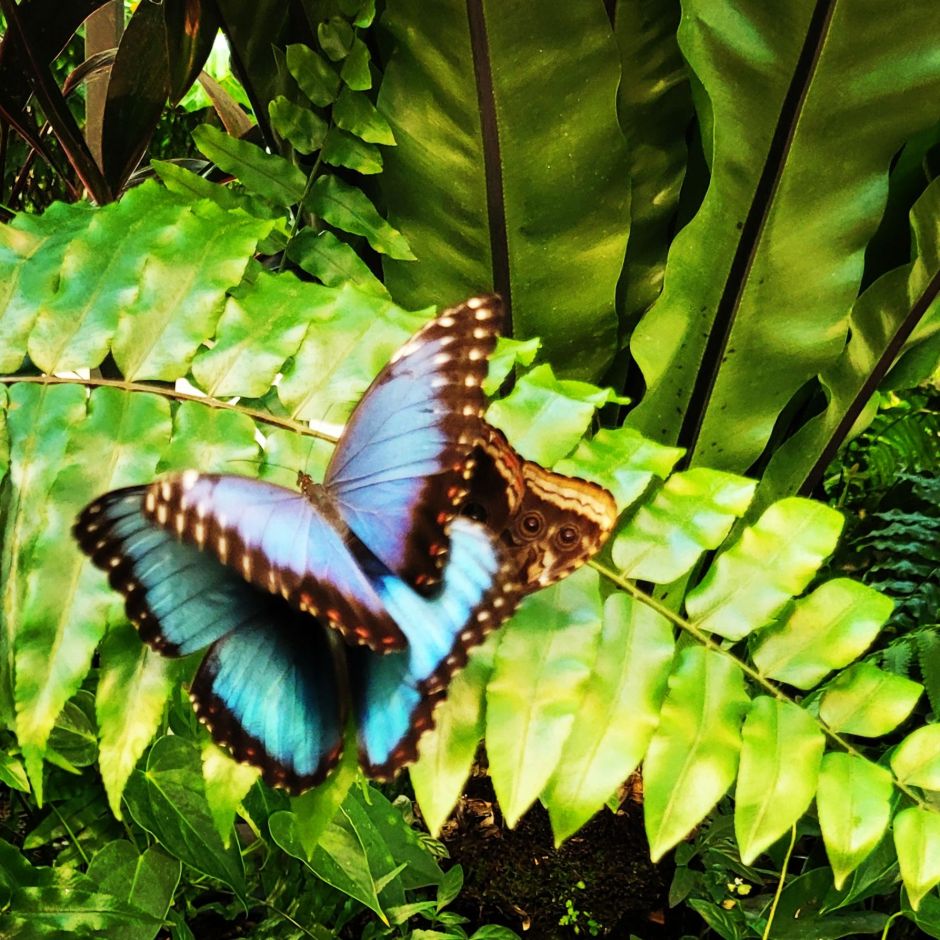
Butterflies flitting through the air

They are in some sense living jewels. Their brilliant hues run the full gambit of the rainbow and even contain colors we will never see as their wings also contain patterns of ultraviolet light. Their wings are unique in that the simmering colors we see are produced by both pigments on the wings themselves and structural color. Structural color is produced by how the light hits the wings themselves causing the color to seem to shift and change suddenly, giving the wings the characteristic iridescence. The wavelengths of light are amplified through layers of the butterfly’s wings. 

Entering the Butterfly Atrium at the Hershey Gardens is to be transported to a tropical paradise where hundreds of butterflies take flight. Visitors are delighted by rare species from South and Central America, Asia and Africa. One strolls through the winding path among the plants imported from far off places to be enchanted by the dancing jewels shimmering in the air. They are enticed to come closer with trays of hanging fruit which they gather around as a never ending feast. Sometimes they will even land on you. The delight at seeing them float effortlessly through the air is unmatched. They swarm together elegantly in a mesmerizing waltz. It is as if you had fallen through a portal to a magical realm and you half expect to be greeted by a member of the fair folk. Perhaps, one should pack a pinch of salt just to be safe when visiting such places and be mindful not to share your name with strangers. 

Different types of chrysalis

The garden is not only for mere enjoyment, there is an educational piece as well where one can see the life cycle of the butterfly and see the various stages of their lives. Additionally, it houses other displays of animals such as frogs and spiders. Do not worry, the only creature that roams free is the butterfly!

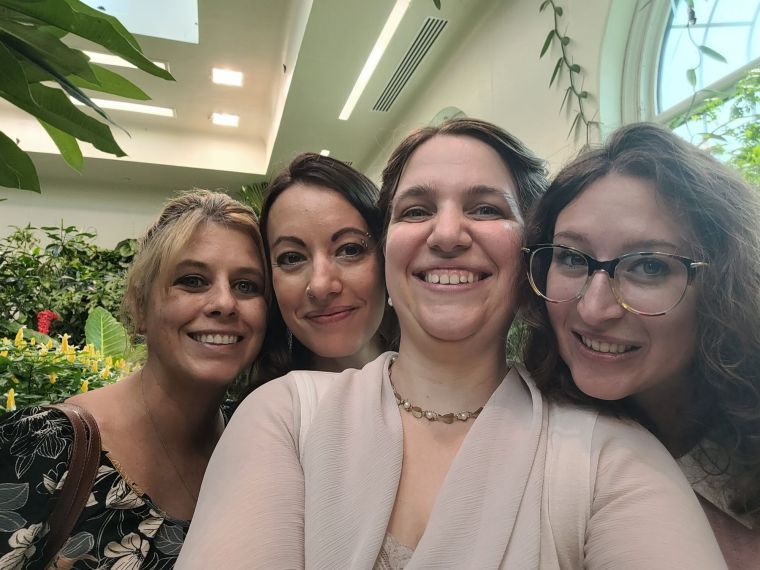
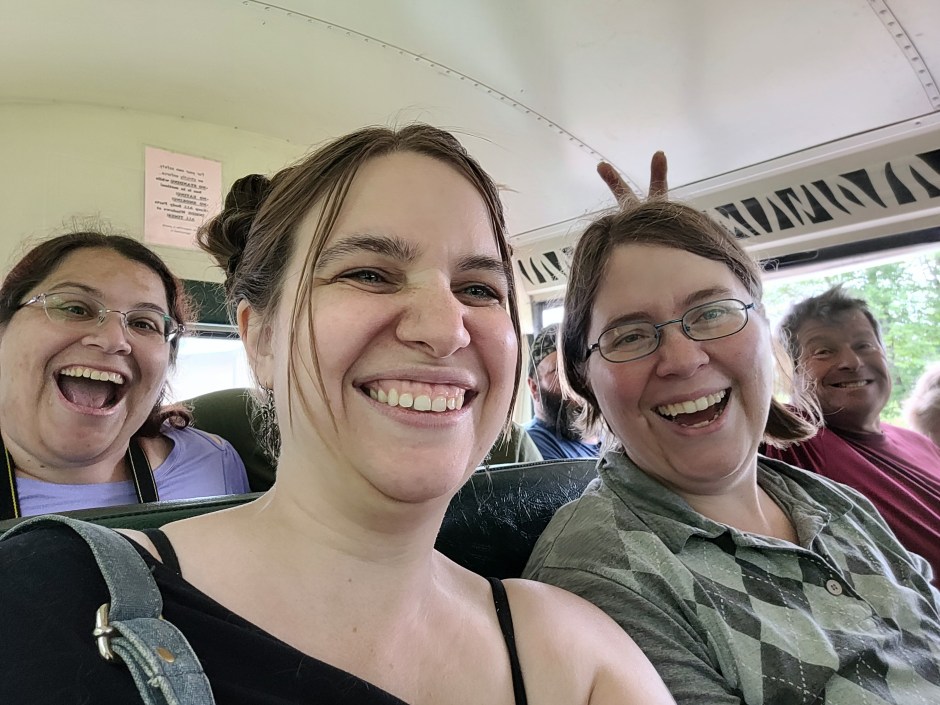
My own visit was an extension of an employee appreciation day by a previous employer. I suppose it was an apt gift to a group of social workers who needed an afternoon of self-care. We all left feeling rejuvenated from the experience. Each person’s face transformed the moment they walked through to the butterflies. The outside world melted away, stress and worries disappeared for just a small window of time. It certainly begs the question, dear reader, though the butterfly be a common creature, is it not truly magical?

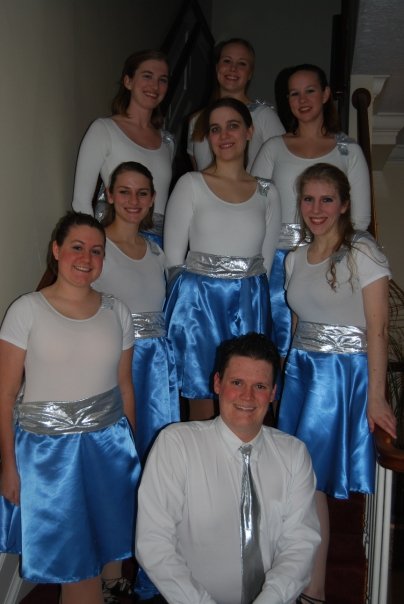
These beautiful ladies that I worked with!

How you can visit a butterfly garden

This one may require you to venture a bit further afield depending on where you are. At the time of this writing, Hershey Butterfly Atrium is one of only 25 indoor butterfly gardens in the country but there are other options for watching butterflies take flight. In my research, I stumbled upon a website that listed out various options here: https://butterflywebsite.com/GARDENS/butterfly-gardens-exhibits-displays-houses-usa.cfm 

Completed: 2022

Miles from home: 30 miles

Cost: Free for me, but regular tickets are $16.50

I left a shortened compiling of the list below in case the website link no longer works. You will note that only 35 of our 50 states have either butterfly gardens or displays. I do hope that those who are in states not listed below are able to find something nearby. I recommend googling and seeing if there is anything closer, or perhaps you are lucky to be in a state where the butterfly migrations occur. Perhaps, it will simply be something to keep in mind when you do travel.

You too may be graced by a butterfly

Alabama

Huntsville Botanical Garden – Purdy Butterfly House

Arizona

Butterfly Wonderland

Tucson Botanical Gardens

California

Gilroy Gardens Family Theme Park

Natural History Museum of Los Angeles County – Butterfly Pavilion

San Diego Zoo Safari Park

Six Flags Discovery Kingdom

Turtle Bay Exploration Park

Butterfly Farms

Fairchild Tropical Botanic Garden

Water Conservation Garden

Colorado

Butterfly Pavilion

Western Colorado Botanical Gardens

Delaware

Ashland Nature Center Butterfly House

District of Columbia

Smithsonian Butterfly Garden

Florida

Arnold’s Butterfly Haven

Butterfly World

Caribbean Gardens, the Zoo in Naples

Central Florida Zoo and Botanical Gardens

Florida Museum of Natural History – Butterfly Rainforest

Lukas Butterfly Encounter

Panhandle Butterfly House

The Key West Butterfly and Nature Conservatory

Georgia

Rosalynn Carter Butterfly Trail in Plains

The Day Butterfly Center

Hawaii

Foster Botanical Garden Butterfly Habitat

Illinois

Brookfield Zoo – Chicago Zoological Society

Peck Farm Butterfly House

Peggy Notebaert Nature Museum

Indiana

Indianapolis Zoo

Iowa

Reiman Gardens

Kansas

Botanica Gardens

Kansas State University Gardens

Kentucky

Louisville Zoo

Louisiana

Audubon Nature Institute Insectarium & Butterfly Garden

Maryland

Brookside Gardens Conservatory

Ladew Gardens

Massachusetts

Magic Wings Butterfly Conservatory and Gardens

Museum of Science Butterfly Garden

The Butterfly Place

Michigan

Detroit Zoological Society

Dow Gardens

Frederik Meijer Gardens & Sculpture Park

Horticultural Gardens and Butterfly House

John Ball Zoological Garden

Mackinac Island Butterfly House

Wings of Mackinac Butterfly Conservatory

Minnesota

Como Park Zoo & Conservatory

Missouri

Saint Louis Zoo

Sophia M. Sachs Butterfly House

The Butterfly Palace & Rainforest Adventure

Nebraska

Lincoln Children’s Zoo – Laura’s Butterfly Pavilion

Omaha’s Henry Doorly Zoo

New Jersey

Camden Childrens Garden

Kate Gorrie Memorial Butterfly House

New York

Breck Chapin Memorial Native Species Butterfly House

Butterfly Garden

Dancing Wings Butterfly Garden

Sweetbriar Nature Center Butterfly House

North Carolina

Airlie Gardens

Museum of Life and Science – Magic Wings Butterfly House

Ohio

Butterfly House at Wheeler Farms

Butterfly Museum at Perry’s Cave

Cleveland Botanical Garden

Cox Arboretum MetroPark

Franklin Park Conservatory and Botanical Garden

.Krohn Conservatory

Oklahoma

Oklahoma City Zoo Butterfly Garden

Tulsa Zoo’s Wings of Wonder

Honor Heights Park Butterfly House and Gardens

Oregon

Elkton Community Education Center

Pennsylvania

Churchville Nature Center

Philadelphia Zoo

Phipps Conservatory and Botanical Gardens

The Academy of Natural Sciences of Drexel University

The Butterfly Atrium at Hershey Gardens

Bear Mountain Butterfly Sanctuary

South Carolina

Coastal Discovery Museum Butterfly House

Cypress Gardens

Roper Mountain Science Center Butterfly Garden

South Dakota

Sertoma Butterfly House & Marine Cove

Tennessee

Butterflies: In Living Color at the Memphis Zoo

Tennessee Aquarium

Texas

Cockrell Butterfly Center

Heard Museum and wildlife sanctuary

NABA National Butterfly Center

River Bend Nature Center

San Antonio Zoo

Texas Discovery Gardens

South Texas Botanical Gardens

Virginia

Bristow Butterfly Garden

Butterfly Station and Garden

Flying Flowers at Beagle Ridge

Lewis Ginter Botanical Garden

Washington

Tropical Butterfly House at Pacific Science Center

Woodland Park Zoo

Wisconsin

Beaver Creek Reserve

Butterfly Gardens of Wisconsin

Happy Tonics, Inc.

Seeking Inspiration Without Living Someone Else’s Life

I have said before not to put down things on your list because it “ought” to be there if it does not speak to you. If you hate running, don’t put down run a marathon. If you aren’t into spending a lot of time in the great outdoors, maybe leave off spending a week in a tent. If sports aren’t for you skip Fenway Park. However, that does not mean you cannot still find inspiration in those goals. 

Why does running a marathon grace so many people’s lists? What does running a marathon represent? What cultural values might we find in this goal? To many people it represents peak fitness. After all, the first man to ever run a marathon allegedly died delivering a message of an invasion, so running a marathon and not dying is an indication of fitness. Which makes the modern marathon a weird flex on a poor dead man – I digress. It also represents perseverance, discipline and overcoming obstacles.

Would developing other health goals fulfill those same things? Perhaps being able to bench press your own body weight or even do ten full pull ups. Those could be just as impressive feats of physical prowess, require just as much discipline and are for many people significant obstacles to overcome. I hate running, but I enjoy weight lifting. Having strength goals to meet and overcome are my own version of a marathon and being strong rather than fast is more important to me. I’m not living someone else’s life training to run a marathon when what I want to do is be strong enough to wield a war hammer. Both reflect the values of fitness, perseverance, discipline and overcoming obstacles. One might be a more popular version of it and imho an inferior one, but this is neither the time nor place to debate the merits of running vs. weight lifting.

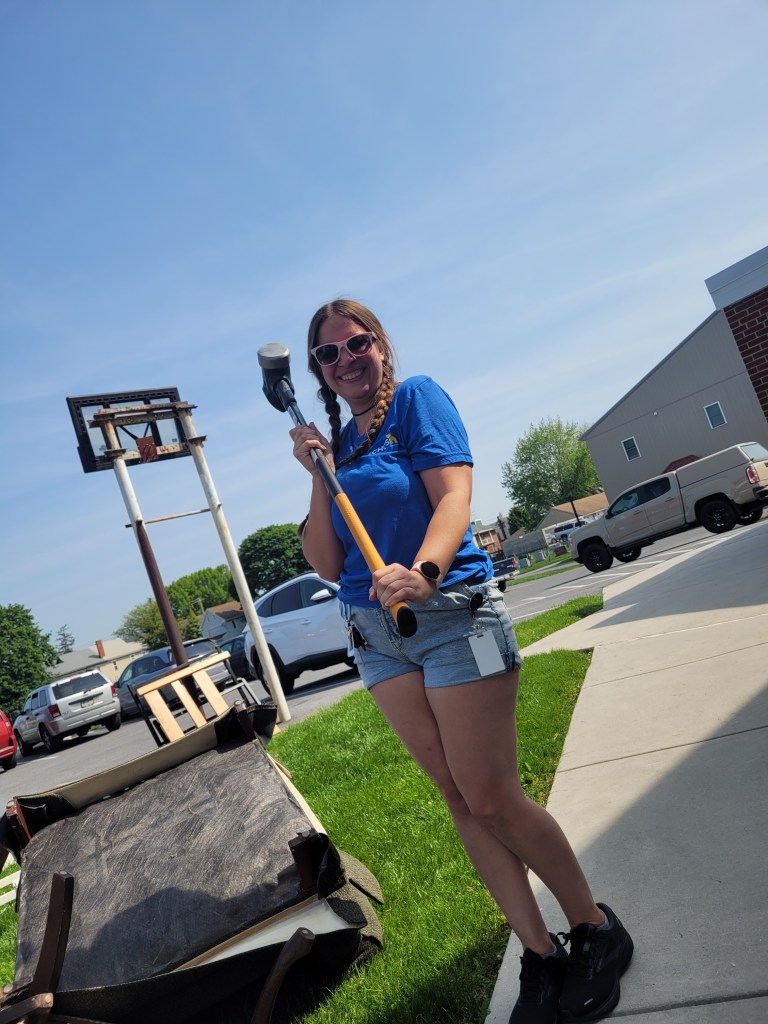
Being able to smash things with a hammer is my kind of fitness goal!

Being healthy is a goal that everyone has. After all, being healthy feels good. So I absolutely encourage you to adopt fitness goals that resonate with you as a person and are reasonably obtainable. What is a measure of health for one person isn’t the same for another given their own limitations and inclinations. Someone with long term chronic health conditions may find that just getting out of bed and being able to walk a few steps is equal to a marathon. They may spend hours in physical therapy trying to get their body to do tasks many of us never think about. And there are many different kinds of body types that are better or worse at certain tasks. A cursory examination of the various sports in the Olympics will showcase various body types, levels of muscularity and abilities, all are in peak physical condition for the task they are trying to perform. The sprinters look very different than the long distance runners. So ask yourself what are the tasks you want your body to perform and then train for those tasks. 

Health of course is not the only thing that graces a bucket list. What are other typical bucket list items? Usually there is some sort of travel like tropical islands, seeing certain things like the pyramids, experiences like sky diving, perhaps life milestones like graduations, obtaining certain degrees, owning your own business. Just as we can easily dismiss those items as “not my thing so not for me” we can easily miss what they represent. Consider owning your own business. You don’t have the capital to do so and even if you did, you know you’re not the sort of person who would enjoy doing so, but what it may represent is having a certain level of freedom within the realm of finances. Having both enough money and freedom to do what you want with it are worthy things to strive to. How you get there may look very different for different people. Perhaps, you want to expand your horizons intellectually and so you add read a certain number of books. However, reading 100 classic books would make your eyes bleed, whereas reading the top rated fantasy novels breeds excitement. Funnily, enough you’ll find that there are books that grace both lists such as Dracula and Frankenstein. 

Once we start considering the actual goal behind the thing, it is much easier to get creative with how we want to approach our own list without getting caught up in the pressure of doing things that don’t resonate with us as individual people. Revisiting common items or even uncommon items, reflecting on what they represent and asking ourselves if those ideals resonate with us can lead us to some surprising experiences or looking at things in a different lens. Take for example, one person’s “walking across a suspension bridge” which at first I thought rather odd. However, for that person (and I’m just guessing) is she may have had some sort of fear about it. So getting across it was conquering a fear. So what was I afraid or anxious about? Well for a long time, spiders and other bugs. Public speaking caused massive panic attacks. So being able to deal with spiders and other bugs without freaking out and being able to give speeches on behalf of my job, are quite the accomplishments and deserving of gracing my list. If you’re someone who doesn’t have either of those fears, then perhaps leave them off.

What are things that you value? What are your areas of interest or expertise? Perhaps there are premier events in your areas of interest. Are you a nerd like me? Is comic-con on your list? Maybe you’re a civil war reenactor, then attending the reenactment camp of a famous battle like Gettysburg should be on your list! It isn’t so much about the thing itself but what is behind the thing. Once you do that it is easy to take inspiration from the things you have no interest in doing to expand your own list to include the things you do. It also has the added benefit of taking some of the pressure off to do certain things that grace most people’s list because you’re able to still fulfill the values of what those represent so long as those values are things that you actually want to fulfill (another post on that later).

Art Gallery Opening

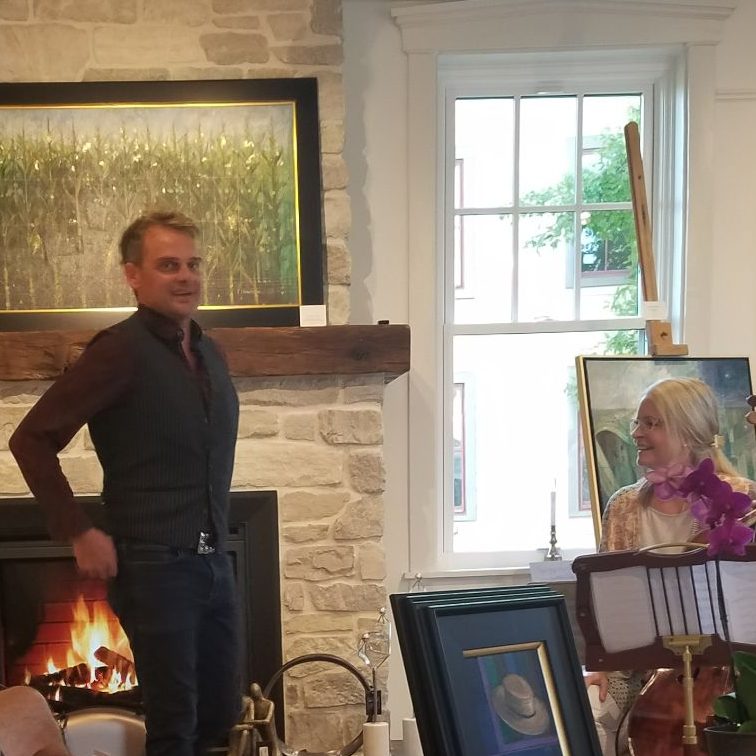
It was a beautiful day in late June, one of those rare, comfortable mid-summer days. The ones where the humidity is low and a cool light breeze blows through the air. After driving about twenty minutes to Intercourse, Pennsylvania through rolling farmlands, I arrived to what might at first seem a rather curious sight. Nestled among the shops peddling Amish made goods, quilts and antiques, an art gallery was hosting its grand opening. Curious indeed – but only to those not in the know about Lancaster’s not so secret art scene. I eagerly stepped into the gallery certain of what I would find.

A few minutest later, the sound of a violin and cello serenaded me as I sipped on a chilled glass of rose and took in the latest collection of art by Freiman Stoltzfus – personal friend and brilliant artist. A small crowd meandered inside speaking in hushed tones to one another excitedly. I caught snippets of conversation as I pursued almost as intrigued by those around me as the art itself. Who doesn’t love people watching? By all accounts, they were as enamored by the art as I was, but of course, his work was resplendent, as always. 

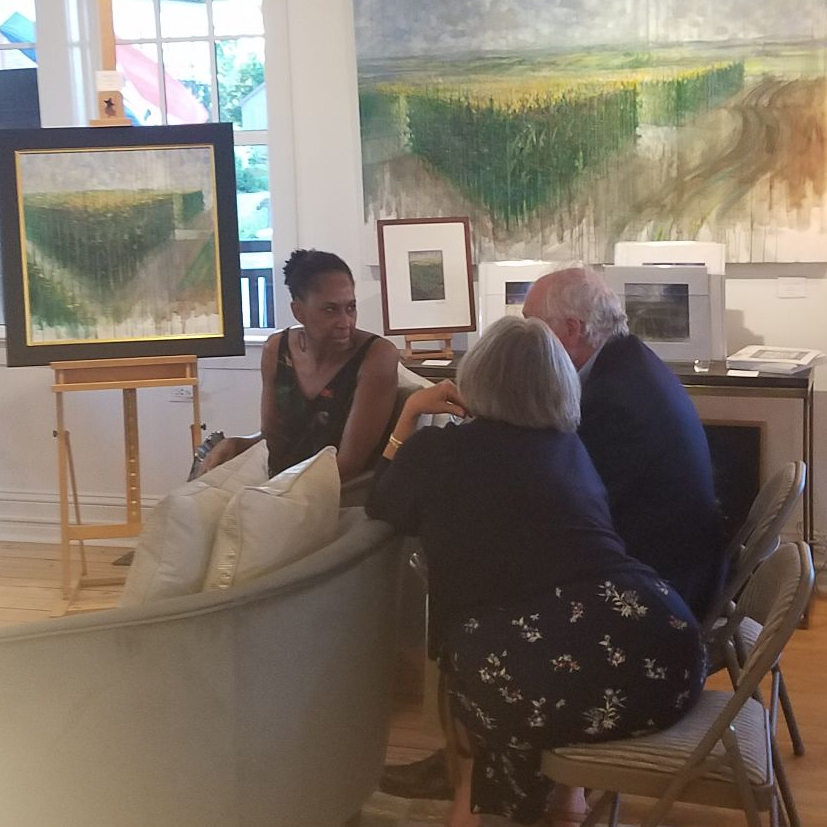
Fellow art enthusiasts

Naturally, I wanted to gush at him for a job well done one his second gallery, but one does not take up too much of an artist’s time on an evening like this. A gallery opening is not the time for catching up and conversing with the artist, but a time for him to mix and mingle with the crowd to sell his art. Manners dictated that I give him a polite hello, a brief congratulations and then space to do his job. An intimate dinner at a later time would be more than sufficient to catch up. 

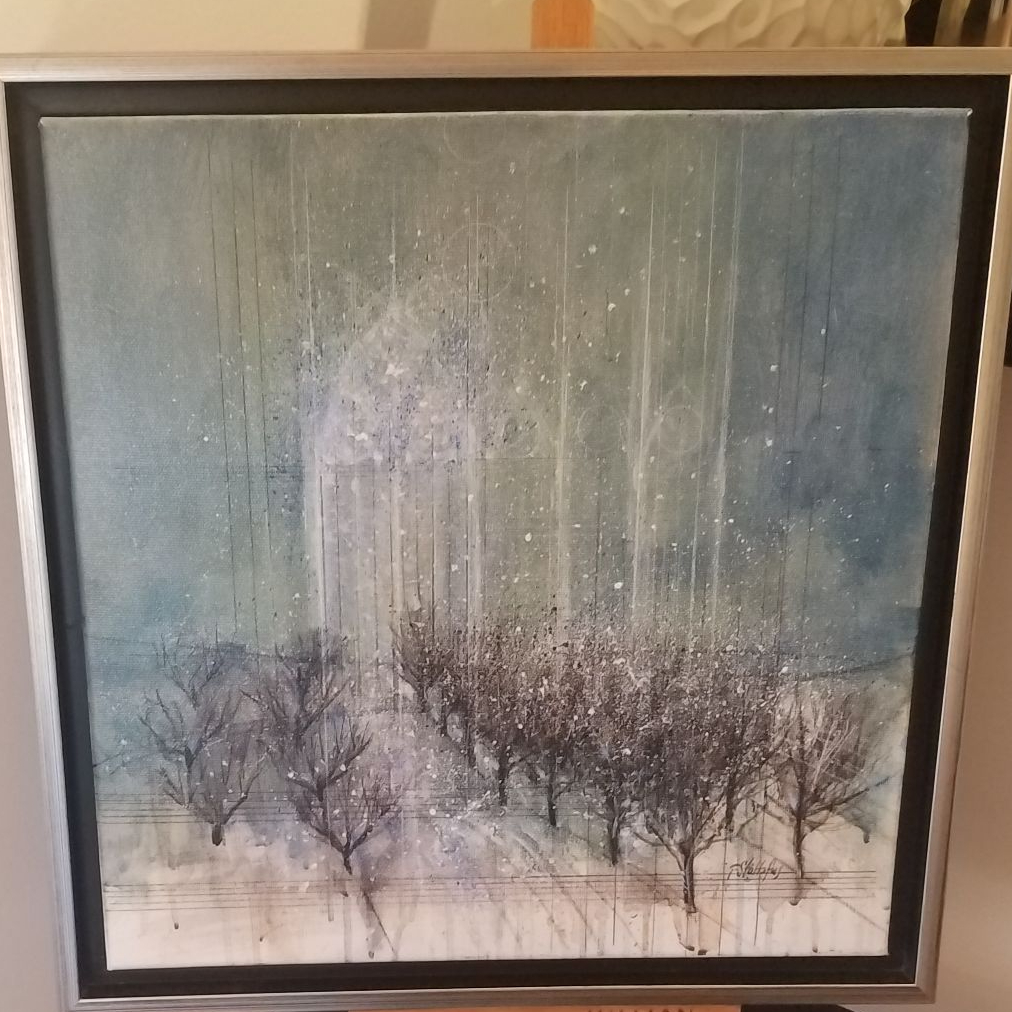
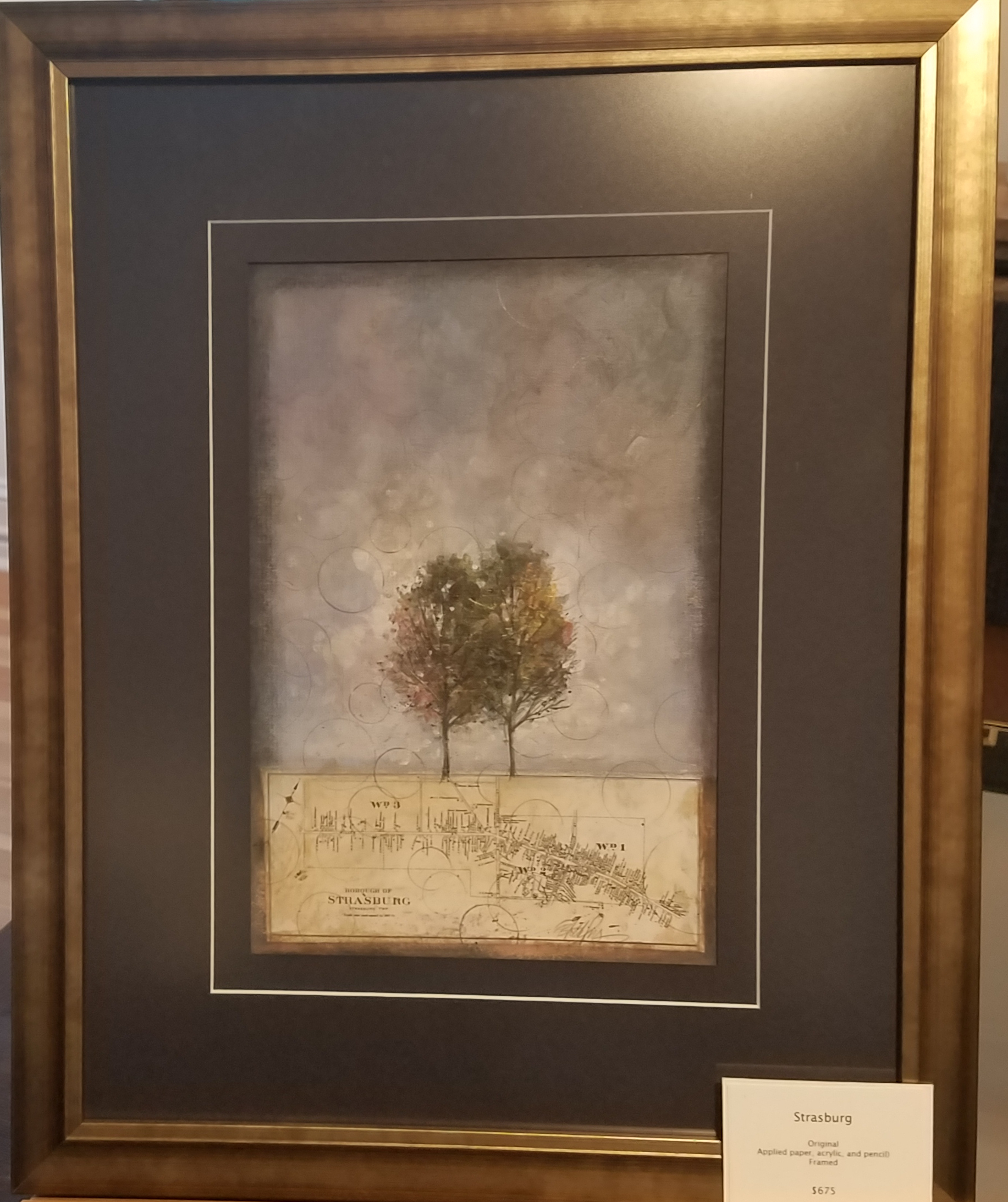
Others mingled nearby, appreciating his use of color in combination with that subtle geometry of nature so prevalent in his works. Somehow his pieces manage to convey movement as well as sound, one can almost hear the pieces of Bach and Vivaldi when looking at them. His juxtaposition of nature and architecture transforms groves of trees into churches and flowers into stained glass windows. Many of his pieces harken back to his Amish roots and feature quilt patterns, pastures, fields and orchards.

I am always dazzled by the re-imagine of the themes that frequent his work. While he may often feature flowers or music, each time a different rendering or another motif has been added to the repertoire. As of this writing, his most recent motif has been Japanese, as he spent about a month visiting a friend in Japan. It is most reminiscent of Van Gogh’s own post-Japan phase. Who can blame either artist for being so enchanted by a country who created an entire profession dedicated to being a living work of art, the geisha? 

When one pictures a gallery opening, perhaps you see in your mind’s eye wealthy men and women milling around in a stark white room, sipping wine as they pretentiously critique the art that adorns the walls. Their oblique vocabulary and near incomprehensible assessment of the pieces in question may lead you to believe that such a place would not be for you. I assure you dear reader that art is indeed for everyone. After all, even the Neanderthals made art! The need and desire to create is embedded in our DNA! I am not recommending we jet off to New York City to attend some opening where an artist has squiggled across the page as some sort of obtuse commentary on the state of the world or art or some other thing. 

Freiman welcoming us all to his gallery

Don’t get me wrong, while I am not an aficionado of the art world and certainly not contemporary or modern or postmodern or whatever we’re calling current art these days, I can appreciate art as a commentary piece. I just object to having to read an entire essay in order to understand a work – at that point, you probably could have skipped the art and gone to the essay, but to each their own! Although, one could make an argument that the piece itself conveys emotions that an essay cannot. I shall halt in my musing less this become its own essay on modern art and its merits. I shall leave you to your own musings, gentle reader. 

This post is for those of us who want to appreciate a more accessible, down to earth art. Few people are going to look at a Renaissance, Neo-classical or Pre-Raphaelite painting and scratch their heads going “I don’t get it”. They at least can identify the subject matter even if they might not fully understand what the artist was trying to convey, the culture surrounding its creation and the values of that culture to influence the work. These however are a good 200 – 400 years old in terms of styles and one may be forgiven thinking the only art being produced these days are bananas taped to walls. However, there are many artists who paint in the older styles with a modern flare. Not every artist is a pretentious snob deriding the masses for simply not “getting” their art and walling art off as some sort of exclusive club. Most, if not all, really are producing art for everyone. They want their pieces to be appreciated by the most unsophisticated child to the greatest art critics of our time. They range from the bright playful colors of Brito, to the surrealist fantasies of Nam Das, to the impressionist Slava Ilyayev and beyond. 

There are many places in the various towns and cities across America where these artists gather either to sell together as a collaborative effort or in their own small galleries. Some blend art and craft together in an almost seamless line where you can’t quite decide where craft becomes art. I suppose the easiest is that crafts tend to have a practical purpose whereas art simply exists for beauty’s sake. I recommend going and checking out the local artists. I especially love speaking with them, learning about their passion, hearing why they tend to pick certain subjects or colors. Go and check them out, see which artist speaks to you and then lend them your support! 

Whether you attend a gallery opening or not, do take time to look at art. You will find your spirit enriched by the experience. Art connects us, communicates with us in a way words cannot, what we see reflected in art is also a reflection of ourselves. Art is creation and destruction. Art reaches across boundaries. Art can propel movements and shake empires. Art can also be a simple thing like a deep breath after a long day of work or a cool glass of water on a hot day. But whatever art is, it is for everyone. 

One his his many cartography inspired pieces

How can you go to an art gallery or exhibition opening?

It’s simple! Find your local art community and watch out for events. You may find your local university frequently displays artists or even one night events at your library. You may be surprised at the talent you see displayed or that your local artist is actually world renowned! Some may be a bit more humble on both counts, but that wasn’t really the point.

Completed: July 2021

Miles from home: 15 miles

Cost: Free to go (most openings are)

Art Cost: You most likely will not be able to purchase the art at an opening because let’s face it, we’re budget bucket listers and having 3 grand to drop on even a modest painting is not something we can do. However, many artists have alternatives such as giclées and prints. Freiman usually has a small collection of 6×6 paintings for $125 to help make his art accessible to those who want original art without the large price tag. 

Mindful Planning and Managing Expectations

How many times have we spent weeks building in anticipation of an event, imagining it so vividly we could almost think ourselves already there only to have the reality fall far short of the expectation upon the moment of arrival? I am convinced that’s why the holiday season is so stressful and the epicenter of many an emotional breakdown. The “magic” of the season and the pressure for it to live up to that impossible ideal is enough to lead anyone down the dark path of overindulgence to cope. 

The same disappointment in the reality of an event has happened to many a bucket list seeker. In another post, I discuss the dangers of over-tourism and the case for staying home. One of my main points in that post was that over-tourism prevents us from being able to fully experience our desired activity as we confront crowds and limited time to see or do the activity we set out to enjoy. Which is why there have been many times when I have found I enjoyed the activities closer to home than the ones farther afield. This is where the practice of being mindful and honest with ourselves comes into play. 

We should understand what we’re really desiring to gain out of a given activity prior to doing it and manage our expectations. It also allows us to zero in on the thing that is important to us. If going to a lantern festival and seeing the lanterns rise to the sky is the entire reason for going, then ensure that you have positioned yourself in a spot to watch the lanterns rise. Perhaps be willing to forgo releasing a lantern of your own. You won’t want to ruin the experience by standing in line waiting endlessly to release your lantern and miss the wonder of the moment of them all rising or be willing to be among the last participants to release it as you spend your time waiting simply watching rather than standing in line. This means you will no doubt be caught in the traffic afterwards, stressed as you try to navigate your way through throngs of people back to your car and spend a good bit of time winding your way slowly back to the main road. There are prices to be paid for the things we wish to do in addition to mere money spent. 

Lantern Fest – watching them rise

My sister and I much more enjoy the experience of watching the lanterns rise than releasing them and would rather drive out to a spot nearby to watch them all rise and float to the sky away from the crowd than attend such an event. Not that we did not enjoy the act of releasing them, only that it was more fun to watch which means when we are considering attending various events we may choose to simply be spectators rather than participants. This is often a much cheaper and less time constrained option which suits the budget part of this bucket list quite well! 

Understanding the constraints on a given activity is helpful in planning for it so that it can be fun rather than stressful and something to be remembered fondly rather than a moment ruined. Understanding what you really want out of something can help you manage those constraints and focus on protecting what you want to protect. Going kayaking on the Susquehanna River is a bucket list item for me in order to see the petroglyphs that are on a small rocky island in the middle of the river. Kayaking is also something that I want to do, but my focus is the petroglyphs. Any other activity that I may engage in around a small trip to the Harrisburg area is secondary to the petroglyphs. If the day comes and I’ve made plans to eat at a restaurant prior to the kayaking and traffic impedes my ability to get there in time, well then I shall simply go to a grocery store and grab something to go instead of going to the restaurant. Yes, my experience would be much improved by enjoying a delightful meal prior to going, but the trip wasn’t about the meal, it was about the petroglyphs. This may seem like something obvious but you would be surprised how easy it is to get caught up in things that don’t matter. 

It is also important to be mindful during the experience itself. The first step of course is to put the damn phone down and actually engage with the thing you are trying to engage with. I love photography as much as the next person, perhaps more so since I was motivated enough to take a photography course in college. However, if you spent your entire time lining up shots and taking pictures your only memories will be of holding your phone and taking pictures. The magic of the moment is robbed. Sure you have some snazzy things to put on your social media but as I have noted before the dopamine rush from those likes are fleeting and only cheapen the whole experience. Remember this isn’t about checking off boxes on a to do list, this is about living joyfully in the moment! 

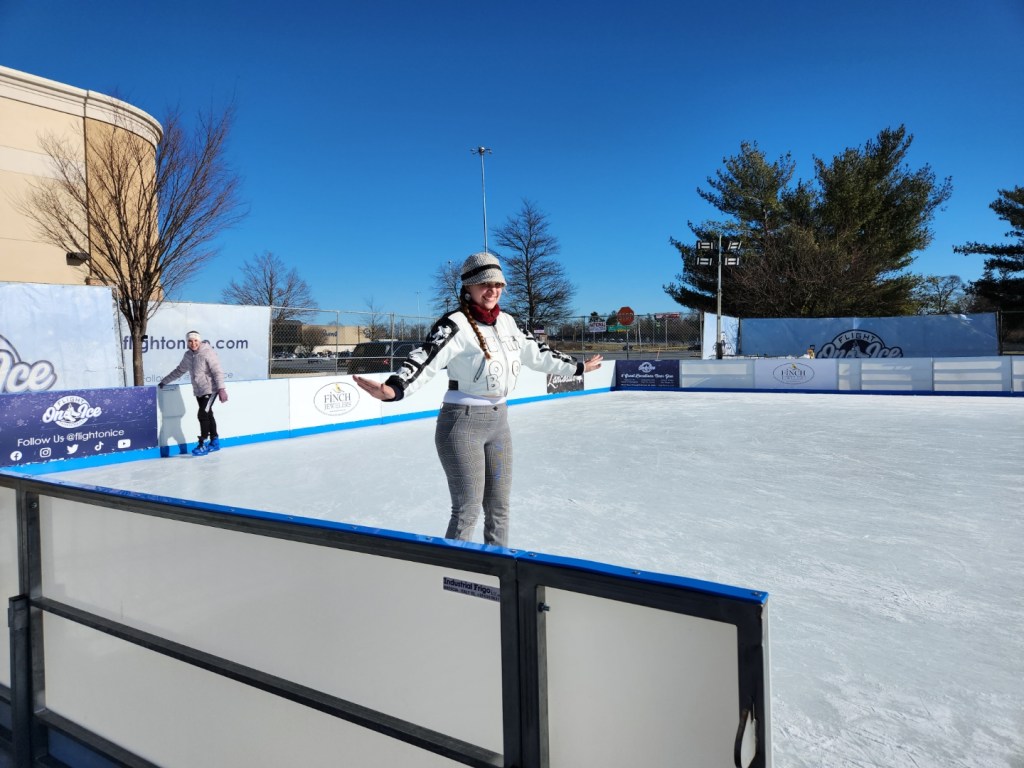
Ice Skating at my local mall

I have very few pictures of ice skating with my sister for the first time. I have maybe five, but those are enough to help trigger the many memories I stored up that day. I remember the slow learning of how to move on the ice, clinging to the side for dear life, my stomach in knots every time I slipped and then the thrill of finally letting go of the sides and skating on my own, the triumph of the moment. I remember how it was a very small crowd of people on the ice that morning being the end of the season and how all of us didn’t know how to skate; how we cheered each other on even though we were perfect strangers, how we celebrated each other’s victories and how proud we all were of one another. If we had all been worried about our social media pages, we wouldn’t have made that real human connection. By building some walls around the activity with regards to the barriers that come between you and actually enjoying what you’re doing. 

It is equally important to make sure things are clearly communicated among those who are going with you. If say you are making a day trip to D.C. and for you the priority is seeing the copy of the Magna Carta under dom of congress and your friend’s priority is seeing the neanderthal skeleton by all means don’t waste most of your day flitting about the National Air and Space Museum. It is important for both of you to clearly communicate your priorities and goals so that there are no hard feelings. If things like weather or traffic or national emergencies prevent you from doing all of your plans, you both know which things to cut out. The same can be said of any time constraints. It is not enough to say “would you like to go to this general area and here all the things we can do” and agree to the itinerary, as it is likely to need to be adjusted or changed. It also prevents those awkward moments where the party must split in order for both people or persons to get what they want. 

Enjoying the capital region

If you agree ahead of time (and with the power of cellphones to easily stay in touch) that should time prevent you from sticking together you are agreed to split. However, that is also the time for a person to object and say “it is actually quite important to me that you experience this with me so that we can have a shared experience to reflect on later”. Time spent together is after all a love language for many people. Be mindful not to judge the other person for their strong desire or what is truly important to them. 

Again, reflecting ahead of time and communication is key. It’s all about having clear boundaries and realistic expectations. You may find that these ideas are so effective with your bucket list, you start applying them to the holiday season as well and discover the magic is still there!

Ice Skating: Let Go of the Wall

Having lived my whole life in Pennsylvania, I am no stranger to winter. Having been a child through some of our largest snowstorms in history, including the blizzards of 1996 and 1993, I am well versed in the traditions of winter. I have enjoyed many-a-cup of hot chocolate after spending hours building snow forts, engaging in snow fights and making snow angels. However, there was one thing I did not do growing up, ice skate. 

I would be lying if I said I hadn’t spent a significant amount of my time as a child watching ice skating competitions. I love watching figure skating or really any sort of physical movement to music, dancing, gymnastics, ballet, the human body in elegant, poetic motion. It may just be a girl thing we seem attracted to such displays. Sure there is a certain beauty in the movements of sports, but there isn’t the same restrained, control of strength that comes from holding an impossible pose for an extended period of time. Don’t get me wrong, I enjoy seeing a chiseled warrior wielding a hammer smashing things to smithereens just as much as the next woman. I digress. I was never a connoisseur of the sport, only a modest observer of it. 

Winter in Pennsylvania

One may be forgiven for the mistake of believing that ice skating is a relatively recent invention in human history, not until the 13th and 14th centuries when steel blades were attached to shoes. But there is evidence to suggest it actually has been utilized in Finland for over 5,000 years and they found a pair of Ice Skates in China that are almost 3,500 years old. This discovery helped establish a clear link of trade between China and Europe! There is a rather silly notion that until the age of exploration with the advent of Christopher Columbus that people didn’t move around much. Not so, the need to explore is etched in our very bones! But to avoid a long winded tangent about the history of trade and interactions over the centuries of human history, I will leave you with that declaration and encouragement to go do your own research.

The first skates were actually made of bone. The first official clubs naturally rose in London – because where else? Metal skates were brought over in the 1600’s and by the 1700’s all sorts of skating clubs had emerged which is also when figure skating emerged. The Dutch, Finns and Swedes had all been competing with one another in races for years back in the 13th and 14th centuries. At first it was just done by men doing circles and figure-eights, but it was an American of all things that incorporated ballet moves into his skating, and thus figure skating was born! 

It was under the auspices of this long and nobel tradition that my sister and I set out one late February day to our local mall. I had seen an advertisement for a “pop-up” ice rink on facebook around back in December. Anticipating the crowds of Christmas, we opted to wait until the initial excitement had died down. Our patience was rewarded with an almost empty rink where we could get the feel for it. The weather was almost perfect, it was right around 30 degrees. The near cloudless sky was that deep, brilliant blue that we only ever see in winter. We walked up to the counter to rent our skates and then on tottering legs took our first steps onto the ice. 

My first moments away from the wall and “flying” free

I will say that many movies lie about the ease by which one can simply strap on a pair of skates and flit about on the ice for the first time.  I was not fooled and well prepared for what was in store! I remembered the first time I had ever gone rollerblading as an equally difficult task. When one has never done it, your body doesn’t quite know what to do with itself in terms of balance. Suddenly, your legs are going in all sorts of directions and the decided lack of friction makes it damn difficult to control. Ah, the eternal law of physics, what is in motion stays in motion and skates are made for motion!  

Slowly, more so than I care to admit, I did start to get the hang of it. I clutched the wall for balance until I began to feel much more confident in my ability to maneuver safely. When one has had four concussions in one’s life, you tend to take the possibility of a head injury a bit more seriously than other people. This made me a bit more timid than my sister with regards to letting go of the safety of the wall and skating away from it. 

As we were making our way around, a few others joined us. They were also first timers on the ice and we built a quick camaraderie through mutual struggle. My sister and I called out the tips we had learned in our short education to the newcomers. Some picked it up faster than others, but rather than jealousy, we cheered enthusiastically for one another’s accomplishments. When my sister fell, I was not the only one who checked on her or encouraged her to keep going. 

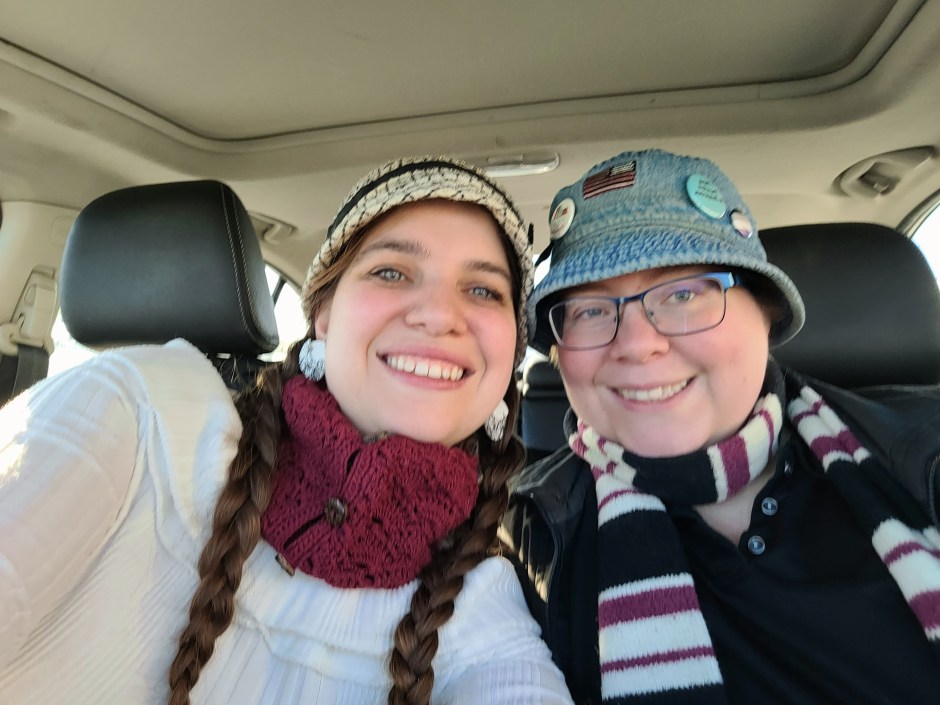
Just two sisters living the dream!

Finally, I let go of the wall and began to skate on my own. There was a thrill of accomplishment even though arguably it was a rather small conquest. Still to glide across the ice confidently was a dream come true at last. Naturally, the small group of strangers cheered for me and it gave others the confidence to join me. I certainly wasn’t going to be adding any ballet moves that day and it was enough to go around in a circle a few times. I am sure that just as with rollerskating, I could quickly begin to conquer the ice, had I more time and inclination. My sister and I will no doubt return to the ice again in the coming winters. 

Bucket lists are more than just doing, they’re about experiencing. That morning was more than just ice skating, it was a reminder of some life lessons. In life one must venture forth from the safety of the nest to really live. At some point every olympic skater had to make the choice to let go of the safety net to risk danger and injury, to trust in their skill and ability to fly. They also had to make the choice, like my sister, to get up after a fall. Life is about risk, it’s about letting go and about getting back up after a fall. It’s also about cheering each other on through the difficulties. No one could skate for anyone else, but each of us uplifted the others there and I’d like to think that because of that encouragement everyone succeeded more than had we stayed silent. Studies demonstrate that positive feedback increases performance. It is important to cheer each other on through the difficulties and celebrate victories big or small. 

My sister may have fallen but she got right back up!

How can you ice skate?

Once the Christmas season starts, look for pop up ice rinks in your area or sales for your local ice rink. If you live in a hotter part of the country, sadly there will be few pop up ice rinks in your area no matter how much Christmas spirit your town may have. You will probably need to look for a local ice rink. Ice skating is fairly easy if you’ve been roller skating or blading before, but if you’re like me and have only done either of those a handful of times in your life you will still probably be pretty wobbly. However, that’s all part of the fun of doing new things. No one is expecting you to land a quad your first time on the ice, that’s obviously for your 3rd time. 

Completed: 2023

Miles from home: 12 miles 

Cost: Tickets were about $20 and ice skate rentals were an additional $10 for a total of $60 for two.

Being a Tourist in Your Own Backyard

It may seem at first a bit strange to consider being a tourist in your own town. It is, after all statistically speaking, boring as most of those reading are not luckily enough to live in those more exciting areas and I am certain that even the epicenters of culture become mundane and dull. The denizens of Paris are most likely quite sick to death of the art in the Louvre, the towering cathedrals and intimate cafes. Perhaps, they dream of the snow capped Rockies and Yellowstone National Park or perhaps, tropical beaches of the caribbean. It is after all human nature to long for the very things we don’t have and abjure the things we do.   

Tourist Center of Lititz, PA

You might wonder what you could possibly do that you have not already done or seen what you have not already seen. I am here to encourage you to look again and to pay attention. As I have mentioned in another post, I had the privilege of seeing several bucket list items: a Russian Ballet, King Tut and the treasures of the Tsars. Those things were only made possible because I or someone I knew was paying attention to what was going on in the local area. This means you must first become aware of the museums and theaters in your area and check their websites regularly for visiting exhibitions and shows. 

Luckily, we live in the age of the internet and knowledge is but a few searches and clicks away. I like to start out by looking at my area’s tourism page and their events calendar. I have been surprised by what actually is around my area that I had no idea existed like the “catacombs” of the local brewery with their ghost hunting or the annual hot air balloon festival. I looked at the website “Only In Your State” and discovered all sorts of interesting places only a few hours away like dog sledding in the winter or lavender fields in the spring. It looks like I don’t need to travel to Alaska or France after all! There’s even indoor sky-diving just 45 minutes from me! I also semi-religiously check Facebook events calendar which is how I discovered that 3 hours away there is a winery where I could stomp grapes, cancel my flight to Italy! Facebook was also how I found out about the pop-up Ice Skating Ring at my local mall. Other touristy sites might be good to check out like Trip Advisor, although I find it’s not as good for finding things I don’t already know about. AtlasObscura is another site similar to Only in Your State that has led me to some interesting ideas. 

A display of Greek artifacts in Reading, PA

The main thing is not to rest on your laurels as it were but be on the lookout for different experiences. Eventually, you will learn what hidden gems your area is hiding. Take the unassuming Reading Museum in Reading, PA. You would never guess that such a small city would be home to a truly remarkable museum. It hosts an Egyptian mummy, a full knight’s armor, items from the Greek and Roman empires and its visiting exhibitions are usually quite good as well. My favorite thus far was Da Vinci’s inventions, where innovative individuals utilized his sketches and ideas to bring his many inventions to life. So often we see his art and hear of his inventions, but this exhibit focused on the more practical and scientific Da Vinci. Less than an hour away from me is a forge where you can make your own throwing ax and they have targets available to test them out afterwards. Hershey has a falconer where you can spend an afternoon learning about the sport of falconry and interacting with a bird yourself. I have attended a Gallery Opening. I have enjoyed a full moon with wolves and so many more things nearby. None of these things I would have found scrolling through some travel influencer’s instagram and all of them were far closer to home than I might have possibly imagined when I first started out.  

I do recognize that I am lucky to live so close to many cities and hubs of activities, Pennsylvania is after all the keystone state for a reason. Washington D.C., Philadelphia, and New York are all within quite reasonable driving distance from me and can be easily connected to via the train which runs from a city not 20 minutes away from my home. It was nothing to do a day trip down to the Cherry Blossom festival in D.C. back in college to see the showcase of Japanese culture or a trip to see a Broadway show in New York in high school. However, I am confident that there are things in your area which are worthy of your time to go discover. After all, despite being rather in the middle of nowhere Boulder, Colorado turned out to be a bit of a tea mecca when I visited, being home to both Celestial Teas and an authentic Russian Tea House! It also plays host to the National Center for Atmospheric Research and a cat cafe. Tea, science and cats, what more could you ask for?! 

Russian Tea House

Some of you may need to go further afield for some of those experiences which may have you scratching your head thinking this advice is contradictory to this blog. It is not intended to be a contradiction, more a recognition that not everyone has the same opportunities and access to extraordinary things near them. Most of the population of the United States is concentrated on the coasts and so there is a high likelihood that you dear reader, live near many hubs of culture. However, some really are living in places where the nearest neighbor is a 30 min drive past miles of cornfields. No amount of internet searches and creative thinking is going to offer them the same opportunities as those of us living on the coasts. This is not to be defeatist for those people who through no fault of their own are forced to go further afield than some of us.

The spirit of this blog is that we can find extraordinary things in our own regular vicinity to live a full life right where we are (generally). Some of us may need to draw wider borders than others of us and that is fine. I don’t often do day trips to New York or D.C. maybe once every five or so years as I have plenty to enjoy nearby. For me to make frequent trips to those places would not be in the spirit of what I am trying to achieve because I can usually find things closer to home. Others may be forced to do more frequent day trips just to see anything at all. Let us not be legalistic but rather embrace the spirit of this blog where we recognize that we can find joy where we are rather than needing to rush off to the far flung corners of the world.

She’s a Hooker! Learning to Crochet

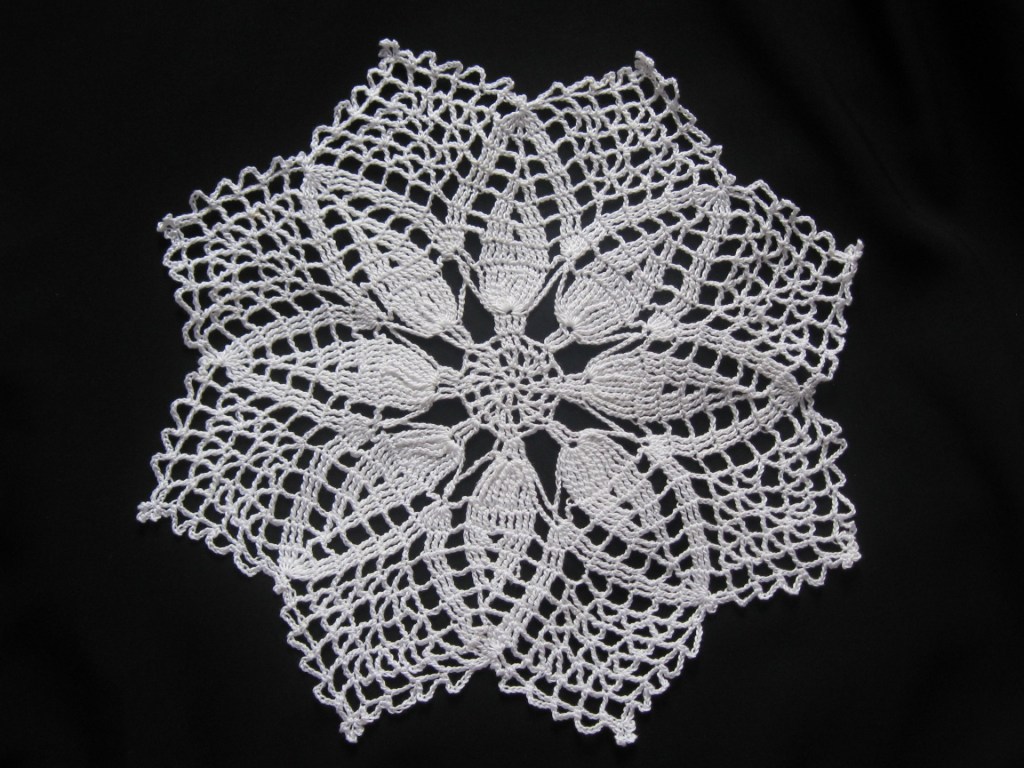
My mother was the one who first introduced crochet to me as a craft that was something other than for grandmothers. When she first became disabled, she suddenly found herself with plenty of time on her hands but not a lot of energy by which to do things. She could no longer fill her days with work and housework. She spent most of her time in bed and as so many of us learned during the pandemic, there is only so many TV shows and movies one can watch before feeling stir crazy. So with plenty of time on her hands, she returned to the crafting of her youth, in this particular case knitting and crocheting. Suddenly our house was being filled with piles of yarn that were transformed before my eyes into elegant scarves, beautiful shawls, stylish hats and warm gloves. I was surprised by how the things she made actually looked fashionable. In particular, I was fascinated by crochet with its ability to take on shape and form so unlike other textiles. Naturally, I wanted to learn.

Despite what you may have heard, there was not a strong association between crochet and prostitution. The lace of the ladies of the night had nothing to do with this fine and noble craft! Crochet originated as an art form in the 1800’s coming from “shepherd’s knitting” which was primarily practiced in Denmark and tambour embroidery, a chain-stitch embroidery from China. Despite its French name meaning “hook” it was actually most popular in England, going to show that the upper class English are quite determined to continue the Norman conquest some 800’s years later. Just kidding! The art continued to flourish and especially took off in Ireland during the potato famine as a way for young ladies to earn a living. It wasn’t until about the 1940’s that it became more popular over here in America and of course in the 1970’s it gave rise to the granny squares. 

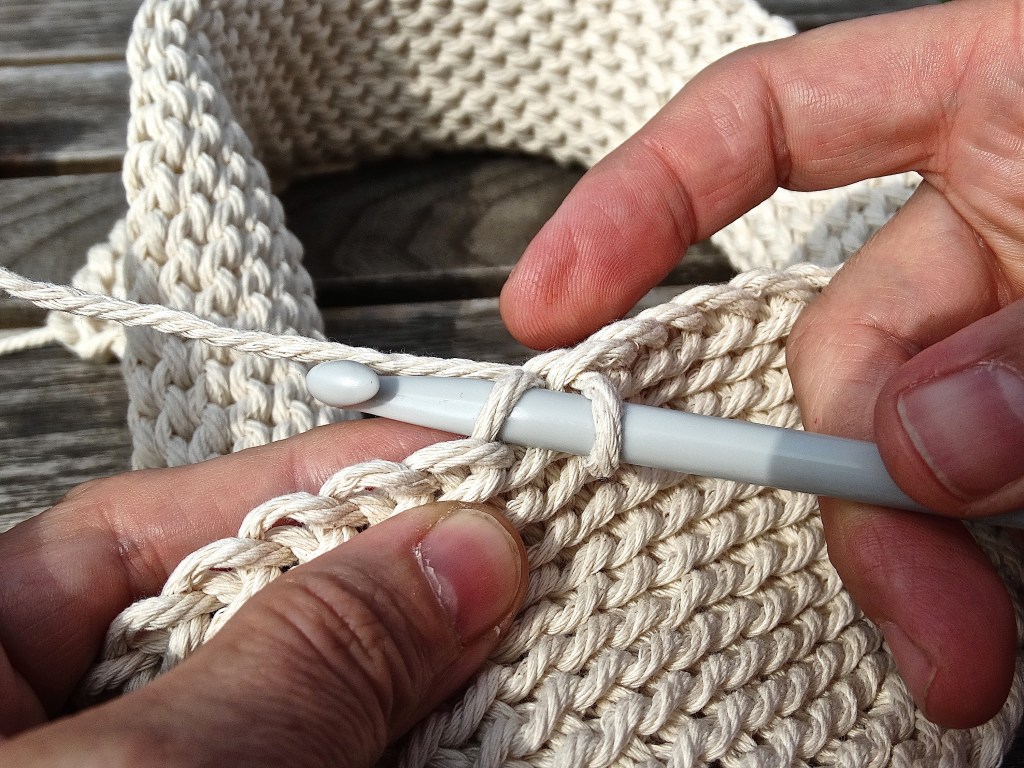
It was with this long and noble tradition in mind that I picked my first project. A simple hat in lime green. I picked lime green primarily because it was a bright color by which to see and learn on. I sat dutifully next to my mother and she began to teach me. In principle, it is a matter of making a loop and then pulling next bit of yarn through the loop, to make another loop and so on and so forth. They use simple terms like yarn over which is just wrapping the yarn around the hook to be able to pull it through one makes bigger. What makes crochet interesting is that because it is so basic one can do things like wrap more yarn around the hook, pull it through a different hole than the one right next to it, twist it one way or the other in order to make interesting shapes. You can make blankets, clothes, flowers, even toys! The world is really your oyster when it comes to this art form. 

However, as with most things it is easier said than done. One would think that one would get a nice uniform size of loops by dint of the size of the hook. After all patterns call for certain sizes of hook in order to ensure the holes are that size. Not so, apparently I subconsciously tense and my holes become smaller and smaller and smaller until my darn hook can barely fit. Then my stitches become bigger. This pulls the existing fabric one way or the other. At times it was truly an exercise in frustration. My mother gave me different pieces of advice and assisted with getting it less lopsided. She encouraged me to keep trying while her pieces continued to dazzle. She made it look so easy, so relaxing, like going for a stroll in the park. My stroll consisted of going up a mountain in the pouring rain followed by falling down the mountain and landing face first in mud. Still, the hat did get done, misshapened as it was and too small for my own head, it graced the head of a stuffed bear. 

Having been abysmal at crocheting, I tried knitting, another noble art form, but failed to even knit a scarf as the problem of “tightness” was even worse with the knitting needles. I literally could not knit loose enough to fit my needles through the holes I was making as they became ever smaller with each stitch. Alas, it would seem that such an art form is not really for me. 

What can be gleaned from this bucket list item? Was it a failure? A waste of time? First, there is value in persistence even in the face of low performance. After all, no one’s first attempt at anything is particularly spectacular. The point was to gain a greater appreciation for the art, to try my hand at it and get the literal feel for it. I had a much better understanding of crochet afterwards, even though I could not replicate it, I had at least begun to develop an eye for the art form. There was a certain satisfaction in completing the project. Sometimes the act of persistence and perseverance through a difficult task makes the task worth it. After all, does it matter how one summit the mountain? 

One of my mom’s scarves

Finally, it was something that I could do with my mom at a time when she couldn’t do much. She had just suffered a stroke at the age of 46, lost her job, lost her income and a lot of her physical abilities. It kick started the next twenty years of surgeries and multiple hospitalizations. There were times when she almost died and so having spent time with her learning one of her passions was in of itself important. I was able to connect with her in a new way through her art. I may not ever get very good at it, but it is something I shall carry with me as a gift from my mom to me.  I do not have that hat with me anymore. I did not see the need to keep it because I have the memories of learning with my mom.

How can you learn crochet?

In the wake of the pandemic lockdowns, many people took up various arts and crafts, including crocheting. There is a rich world of online tutorials, classes at local craft stores and kits you can buy offline. The start up cost can be very little with kits starting at 15 bucks or so. You don’t even need to leave your house and it’s a small project that can be taken anywhere. 

If crocheting isn’t for you, maybe there’s someone special in your life who has a hobby you’ve been meaning to learn. Take the opportunity to ask them to share their passion; maybe find a small project that you can try your hand at. I’m sure they’ll be glad you asked and afterwards you’ll have a newfound appreciation for what they do. Who knows you may find yourself a new hobby!
Completed: 2007

Miles from home: 0 miles 

Cost: Free materials provided (15 – 20 for a starter kit from amazon)

Remembering Your Dreams

Many of the items that grace my bucket list are items taken from my childhood rather than anyone’s list. Children typically dream without limitation. Their passions are boundless and unrestrained by the current reality. A child does not worry about the logistics of how they might be a doctor, astronaut, president and mad scientist all at the same time, only that they are concerned with helping others in a leadership role while exploring the bounds of the known world and those sorts of jobs are just the ticket to fulfill those desires. A child believes that they really can see the world, traverse the mountains, take up sword-fighting, rescue damsels, play the guitar and speak several languages. Then life happens and we forget what we really wanted to do and why. We ignore the things that make our hearts soar and fall into the square hole of society having chipped away our rounded parts. What are things that I never got to do as a child due to constraints of time, money or other resources? What are things I wanted to try but never had the opportunity? Where did I dream of going most? 

It was not the sandy beaches of the Caribbean that called to me, it was stormy moors, windswept fjords and the dance of lights in the sky that I dreamed about. I was fascinated by the geothermal activity of Iceland and the still, fae-haunted forests of the British Isles. I wanted to see castles in the forests of Bavaria. I wanted to take up the art of fencing and learn to speak German. Both of those activities I did during my semester abroad, and one activity I keep up with using an app on my phone. 

Closer to home, I have tried glassblowing, forging my own weapon, falconry and Irish step dancing, all things I really wanted to do as a child. I also wanted to tame a unicorn and take up dragon riding, but sadly the world seems to be a bit short on both unicorns and dragons these days – an argument for conservation if I ever heard of one! 

College: Acclamation Dance Irish Step Dancing

Part of our bucket list is to joyfully express our authentic selves and what better way of knowing our authentic selves then remembering the person we were before all the nonsense of “mature adult” life got in the way? Who were we before our heads were filled with perfectly sensible grown-up advice of what we ought to focus on? What did we want to do before we were told that our arts weren’t things that would keep a roof over our heads and food in our bellies or that the only things worth doing were things we were really talented at instead of things we simply enjoyed? What were we good at before it became ruined by the pressure and expectation of having it be more than something to enjoy? What did we dream of before we learned that there were never dragons to ride and worse never unicorns to tame! We so often forget ourselves in the busyness of the day to day and even in the roles we take up in the lives of others. We look in the mirror and cannot even recognize ourselves much less know what we want.

Have you made a life that isn’t your own? What would you do different to make it your own? Now before we do anything drastic – I am certainly not advocating that you divorce your husband and leave your children to go find yourself, only that you work to remember who you actually are before you lost yourself and then focus on living out that best life. In fact, there is almost quite certainly no need to burn your current life down to start building the one you desire. I never really liked the movies where the protagonist essentially blows up her entire life and has to go on a world tour in order to find happiness. I rather see a story of a woman realizing that her happiness can be the life she has with just a few adjustments of action and perspective.

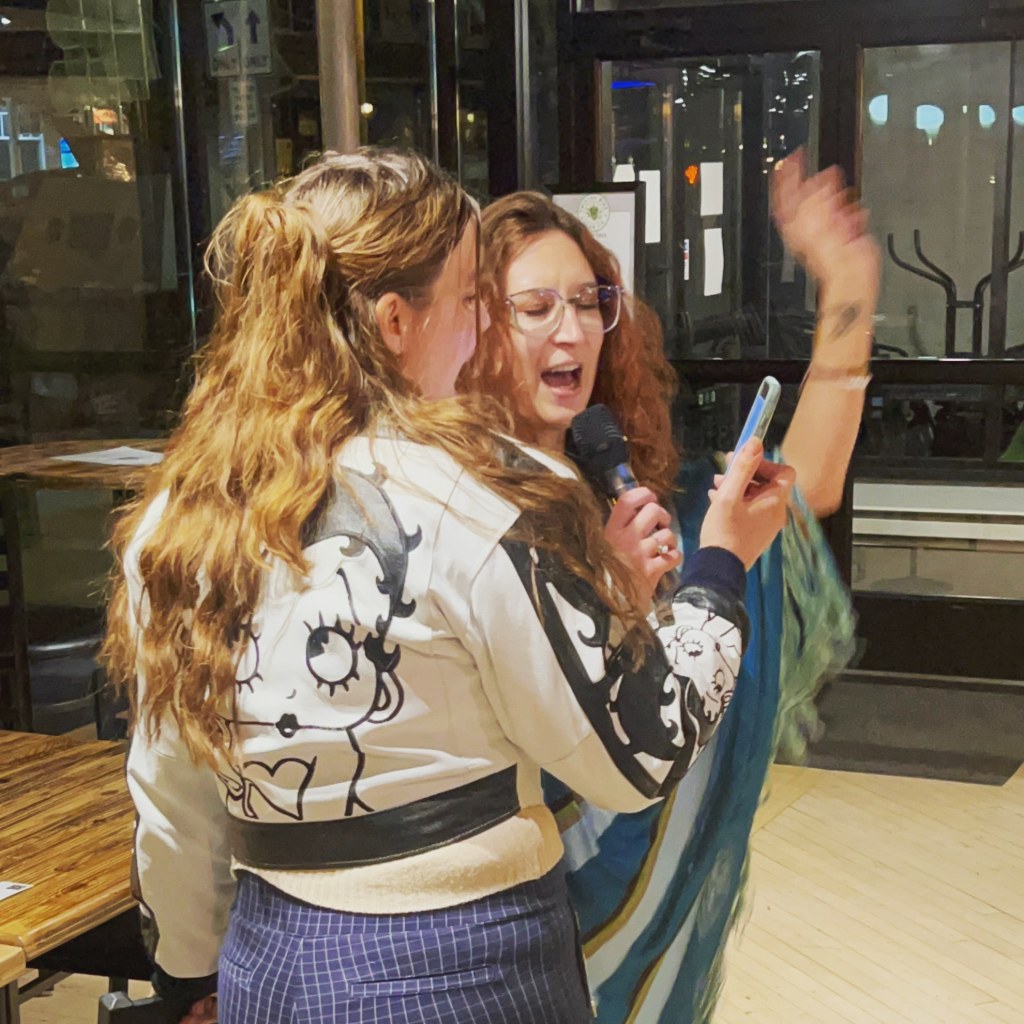
Singing my heart out with my co-worker Kayla for points during trivia night

If you are someone who loved cooking, but nothing you made was ever good enough for your overly critical mother then by all means reclaim it and cook! If you yearned to sing but everyone made fun of you because you couldn’t carry a tune, take some singing lessons and then slay at karaoke night! If you wanted to spend your time painting but your parents made you take extra math courses because artists starve and accountants make money, by all means paint! You will find conquering those mountains far more rewarding and fun than going out and hiking a mountain trail when your inner child never spent a day thinking of the forest. Trust me, the best moments of my bucket list are the ones that my former child-self would squeal with delight if she only knew that yes, one day she will do those things. I will never play a concert to a full audience with my violin, but that doesn’t matter, it was never about becoming a concert violinist, it was about playing the instrument itself. My dream was to learn to play and enjoy playing. What were your dreams? Remember your and let them become reality!