Tales from Abroad: Stonehenge

I am, as of this writing, recently returned from a trip to Merry Ol’ England after finding myself with the unexpected invitation to join a family friend, Shelia, at her long term rental in the beautiful Penzance area of Cornwall. The previously unaffordable trip of plane tickets, lodging, food and sightseeing, suddenly became much more affordable with her willingness to host myself and my mom for over a week. Naturally, I did not let such an opportunity slip through my fingers as England was home to one of my top Bucket List items, Stonehenge.

Now, my non-American readers may be a bit perplexed at my excitement of going to Penzance when Stonehenge is a good four hours away. You may very well think, it’s so far, you couldn’t possibly add that on to your trip! First, dear reader, you underestimate the American enthusiasm for driving. After all, the road trip is a quintessential American experience! Besides lacking any sort of reasonable public transit, driving is just what we do and if you’re like me who drives for a living (at the time of this writing) spending several hours in the car is nothing. I had a co-worker who regularly thought nothing of driving 8 hours every other weekend up to New England to help take care of her ailing mother. Americans love driving. 
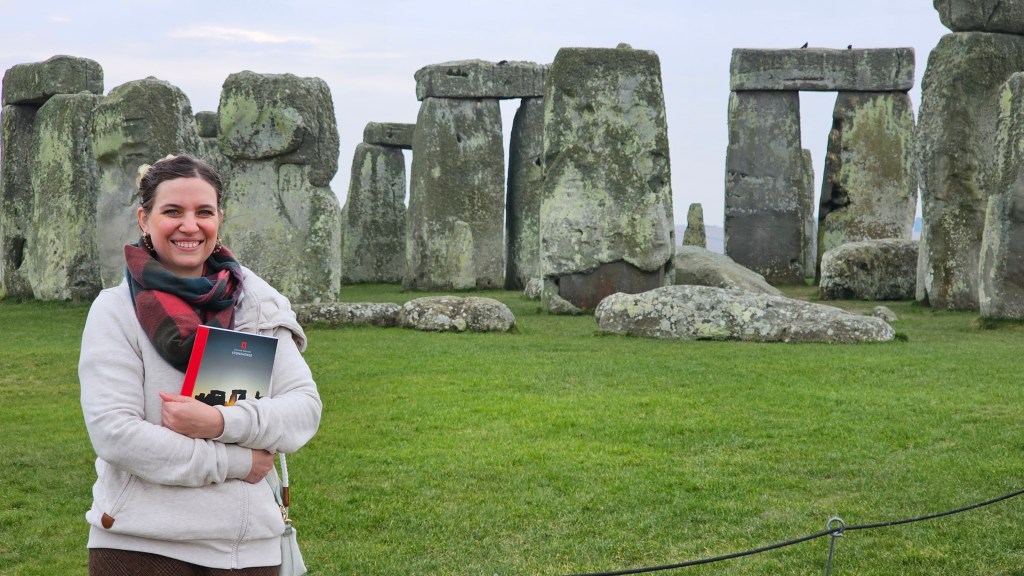
Second, given that in order to have the opportunity to see Stonehenge again I would need to take another 6 hour flight after needing to take up an additional 2 to 3 hours just to get onto the flight after arriving at the airport after a 2 hour drive to the airport, and another 2 hours driving from London to Stonehenge, I think I can afford the day trip back and forth when considering the time and money it would cost to do at a later date. It was this cost analysis that really tipped the scales in favor of renting a car and visiting this site. As I am always reminding you, dear reader, that when one travels one ought to maximize the opportunity in order to get the most bang for your buck. We are, as much as it pains us all to admit, on a budget and when’s the next time we’re gonna be able to hop a plane to England from America? Exactly. 

After determining that in addition to Stonehenge there were sites scattered about Cornwall that were simply too inconvenient to get to via bus (why they don’t go to the neolithic sites like the Merry Maidens or the Cuny Village is beyond me) and given that taking multiple taxis in a day would prove to be quite expensive to do multiple trips to various places around Cornwall in one day, renting a car ended for the week ended up being the optimal solution of almost $175 in savings when I broke down the costs. Plus, I didn’t have to wait around for rides or worry about meeting my taxi driver at a designated pre-booked time. Once again, my cost benefit analysis kicked in and it tipped it in favor of car rental as much as I prefer relying on public transit.

Now, the best laid plans of mice and men will go astray. In this case, the hiccup I encountered was my phone’s gps. Despite paying for the ability to roam and setting it up ahead of time, when I arrived in England my phone refused to connect and kept telling me that I needed to turn on international data. I would go into the phone settings to see that it was indeed turned on and got a text message from my provider stating that it was turned on. We tried several different work-arounds suggested by the internet once I got to my friend’s place and was able to connect to her internet but nothing worked. Luckily, Sheila allowed us to use her phone for the day to get around. With the crisis adverted, we set out in the wee hours of the morning to make it for our 10 am admission time. 

I had downloaded music to my phone for us to jam to and decided to put my newfound mastery of the British road system to the test. I had (smartly in my estimation) scheduled Stonehenge for the middle of the week in order to give me two full days of test driving on the opposite side of the road in more rural areas before trying to go to more populated and congested places. I actually took to it quite well and credit my dyslexia for being an advantage as I really could hardly tell the difference. I just kept the steering wheel in the middle and followed the visuals provided by the gps rather than following her left or right turns since I can’t do that anyways. So, cross off driving on the opposite side of the road as a bonus!

The way up to Stonehenge was relatively uneventful and I got to really take in the rolling English countryside. The morning started out with classic English weather of rain. However, by the time we reached our destination the rain had cleared leaving a mostly overcast sky that threatened sunshine. 

Now to say that I was excited to see this legendary place, is bit of an understatement. Of all the monuments and sights in this world, Stonehenge is without a doubt one of my top destinations and probably one of the first places I ever truly longed to visit. I was fascinated by the ancient world of Great Britain and Ireland, obsessed with learning about them even though I could (when I was younger) find very little about it. It was this blank hole of questions that burned into my mind, what were they like, why did they build this, how did they build it, what spiritual meaning did it have, how did it connect to other sites and on and on these questions plagued me. I loved the theories, no matter how crazy or outlandish they were. And what I love is that we’re still uncovering things about it, only just last year they did yet another study of the stones and discovered that they come from all over indicating that this may have been a unifying project to unite the island.How does that fit with other archaeological evidence for the rest of Britain? There’s just so much we don’t know. 

Stonehenge is over 5,000 years old and is the largest neolithic monument in Britain. There is evidence of important structures and even other henges prior to the building of Stonehenge in the general area marking it as an important or prominent site in the stone age. Some of those sites are from 8000 BC You may be forgiven dear reader for thinking it’s just a stone circle, as impressive as that may be; it actually sits upon an earther work with a marked avenue leading up to it. A “heel stone’ marks the alignment with the summer solstice. This avenue and stone is the reason we can say it aligns with solstice and not some other random astrological event. It is also not just one stone circle but two concentric circles and other stone pieces to create a masterpiece of that era.

I am standing by the “heel stone” which marks the line of the summer solstice

It took over 1,500 years to complete in four different stages. The first stage was in 3100 BC, the second stage occurred in 2500 BC; the third took place 150 years later and the final stage occurred in 1,500 BC. This is when the stones were rearranged into their iconic horseshoe shape. There were about 60 stones originally, but sadly many are broken or even missing today.  Despite the presence of human remains, it is not believed to have been a burial site but that these remains were utilized in religious ritual. Although if you read other people’s opinions they’ll tell you that it was a burial site. See? So much mystery!

It was being armed with this knowledge (and much more, but I shalln’t bore you with all the details), that I practically squealed in sheer anticipation more than once as we approached. I was finally actually there, instead of seeing it on a screen or in a book. There was equal parts excitement and awe as we drew closer. The thing about the site is it is actually located in an almost surreal location because one expects that it would be in an area relatively built up. However, it is just out in the middle of nowhere surrounded by sheep and farmer’s fields. Yet, it fits exactly in the landscape that one finds it in because thousands of years ago the builders may have had sheep. For all we know sheep have been hanging out near those stones this entire time.

I loved being able to closely study the stones, to see how they may have been joined together by the knobs at the top of some of them and to picture how it may have once been so many years ago. I marveled at the craftsmanship that must have taken to hew rock into rough formations of giant blocks and to lift them up atop each other. 

What was particularly nice was that I went at the slower time of the year for England, choosing to go right before spring at the end of winter, so it was relatively uncrowded. I didn’t have to fight to look at it and I was even able to snag pictures without people in them. Most pictures contained very few people. This also meant that I was able to really focus on what I was seeing without having to worry about what everyone else was doing around me. After my first circle around the stones snapping lots of pictures, I put my phone away and made another loop so that I would be able to just enjoy the place taking in the sight and locking it in my memory. Too often we are so busy “documenting” our experiences we forget to actually experience them. I was determined to not make that mistake. 

After spending nearly two hours at Stonehenge, we journeyed back on the bus to the visitor center for a quick bite to eat before departing. There was a reconstructed Stoneage village that I took a brief detour in. But having been in the ancient village of Carn Euny the day before (another post on that later), I didn’t spend very long. They also had a small museum of the artefacts found in and around Stonehenge which is very informative if you haven’t spent a lot of time studying the site. 

How to visit Stonehenge (and other suggested sites): 

I’ll not insult you with instructions on how to get to England. However, it is important to know Stonehenge is located about 2 hours south of London making it a fairly easy trip for most people who are intended to tour the country. It is a far less easy trip if you’re flying into Scotland. My American readers may be forgiven for underestimating the size of Great Britain as it is about a 7 hour drive between the two and while we do love driving that is a bit of a haul even for us unless it’s part of an entire road trip especially since most of us only have two weeks of vacation a year.  

However upon arrival, you have two options to see the actual site. Option 1: Is paying the admission ticket (and parking) to Stonehenge which grants you access to the bus transfer over, the reconstructed village and museum. The main advantages to this option is the bus transfer if you’re with someone with mobility issues and the ability to walk around the entire site to see it from all angles.

Option 2: Is parking a little away from the site and accessing the footpath which traverses right next to the walkway in front of Stonehenge. It does require a bit of a hike to get from where you can park the car and Stonehenge. The path isn’t well maintained, in part because while the English have the right to roam on the ancient footpaths, the right to roam doesn’t necessarily convey the promise that someone will be maintaining those footpaths. It also only allows you to really see the front, but it is the best and most famous vantage point. If you go during the peak season you’ll probably be disappointed by the sheer number of people blocking your view and any pictures you’ll want to take. If you go during the non peak season you will probably be able to get a decent view and maybe a few pictures with only a few people milling around in the background. It honestly depends on your priorities. 

My wonderful and amazing mum!

For me, I was traveling with my mom, who doesn’t have the best health and needed the extra support with mobility. I also wanted to be able to get as close as I was permitted. There was an option to get there at 8 am, pay a lot of extra money and be able to go into the circle at sunrise, but I would have needed to leave by like 3:30 am, wake up at like 2:30 am which would have meant no sleep for me and I didn’t want to be driving that long on no sleep as driving without sleep is akin to driving drunk. I wanted to see Stonehenge, not die in a car accident on the way there. Remember we want to check off our bucket list, not hurry the bucket along. 

Now, you may be thinking that there is absolutely no way that I could possibly write a list of “good enoughs” when comparing them to Stonehenge, but it entirely depends on you as an individual. For me, Stonehenge has been a top priority since childhood, so when given the opportunity I jumped on it. However, there are many Neolithic sites and Neolithic stone circles scattered not only across Britain and Europe but also throughout the world and you may be closer to them than you think. Granted there aren’t many that are quite as old as Stonehenge but there are many that are within the 3,000 – 1,000 range. 

If you don’t care much about the size of the stone circles, Britain, Ireland, and Brittany (France) has over 1,300 circles. Many are quite impressive in their own way. They are also less visited and often allow you to be able to go right up to them without needing to pay for tickets or have them roped off, meaning you don’t have to fight with crowds, you can actually touch them and you can enjoy them more as they were intended, as places of spiritual connection, celebration and reflection.

The Merry Maidens of Cornwall!

Stone circles aren’t just found in Europe. There are stone circles in Australia which are sacred to the Aboriginal peoples like the stone arrangements in Victoria at Carisbrook. You may also be surprised to find out that Japan has stone circles from the late Jomon period located in the northern region. Like Stonehenge the Japanese Stone circles contain an inner and outer ring which is aligned with solstices. Even the states has its own stone circle in Wyoming called the Medicine wheel. There are other less famous circles hidden in Nebraska’s Sandhills and Bluemont Virginia.

If you don’t really care what formation a neolithic site takes, then the world is truly your oyster because scattered throughout the globe are sites from ancient pre-civilization peoples. Ohio is famous for its Great Snake Mound as well as the Newark Earthworks. White Sands New Mexico has footprints from over 20,000 years ago – take that Stonehenge! Colorado is home to the Cliff Palace located in Mesa Verde National Park. New Mexico has its own cliff dwellings as well as Aztec ruins. The small island of Malta has Megalithic temples. Ireland is home to Newgrange. One of the oldest known megaliths in the world, Gobekli Tepe, can be found in Turkey. Spain is home to the Dolmen Menga. India has its own dolmens in Marayoor Munnar and I could go on. As you can see dear reader the world is awash with ancient monuments if you know where to look. You may very well be shocked at how close you are to one. So don’t feel the need to put Stonehenge on your list of “must-do’s” if you haven’t already developed an obsession like me, but if you happen to find yourself in England the it is decidedly something I would recommend you make part of your trip.

Cost: $50*

* give or take with the exchange rate, going during non-peak season for a “super saver” discount and pre-booking online for an additional 15% discount and then accounting for the gas to arrive there from the rental.

Miles from home: 2,000

Miles from rental: 200 miles

Cost accounting for plane tickets, etc.: $150*

* You may wonder how I arrived at this number, it’s simple, I took the total cost of my travel (planes, buses, taxis, etc.) and then counted up all the places I checked off my list as a result of traveling to England, divided the total cost of travel by the number of places I got to go to arrive at about $100 per place. As it turns out England has a lot of places and experiences that are on my list which is why it was a top place to visit. I made certain to check off that list to maximize the money I was spending. Using this basic formula is something you can do when deciding where to go and what to do in order to maximize your travels. Yes, the upfront overall cost is quite high, but when considering how many things you can do at once, it may be worth the cost.

Visiting History: Gettysburg Battlefield

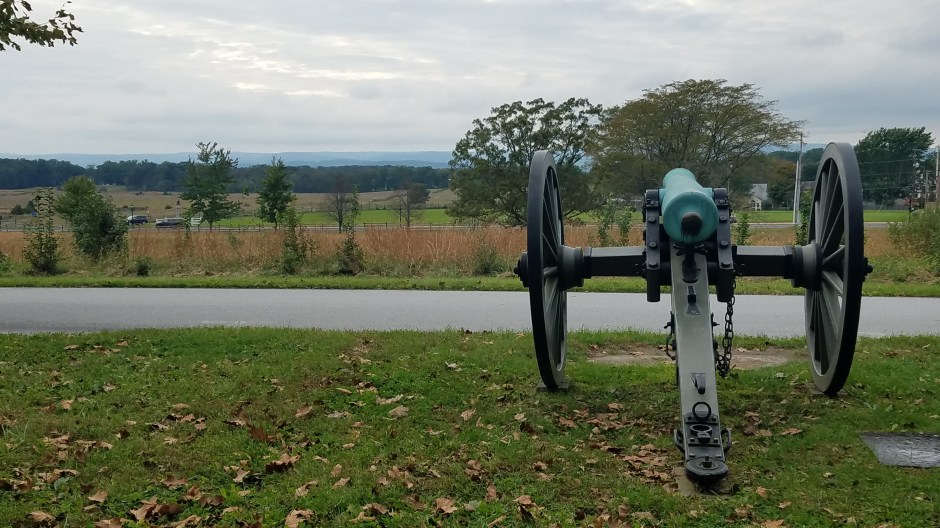
The battle of Gettysburg was one of the defining moments of American history. The Union’s victory over the Confederate army was the turning point in the Civil War, leading to the restoration of the union and ensuring the end of slavery. The battle took place over the course of three days from July 1st to July 3rd, almost coinciding with our nation’s 86th birthday. It was also one of the bloodiest most devastating battles in our history. 

Visiting the site of this place can be a bit surreal. Today, the fields lay semi-empty. The dead have been given proper burial. The gunfire has long since ceased and it only returns for reenactments and salutes to honor the fallen. To the educated eye one can still see the evidence of the battle and how the lay of the land was shaped by it and helped to shape the battle itself. For example, one can still see clearly how the Union’s superior position of the high ground helped them win despite having less troops. 

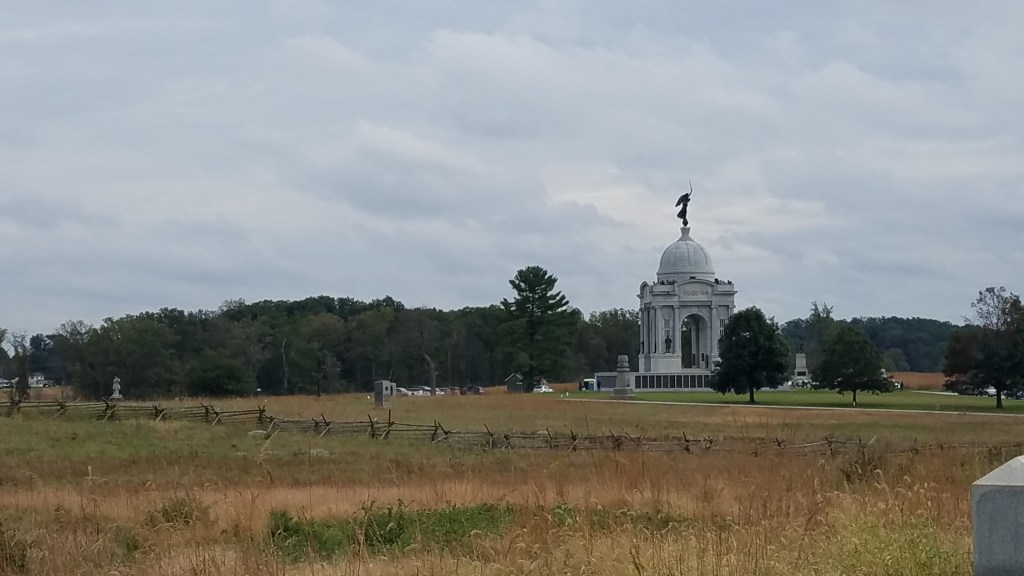
 It is now home to many monuments to the fallen from all over the states. Naturally, the Pennsylvania monument is absolutely massive, but others are smaller. Some are dedicated to large groups, but then there are more specific battalions and legions remembered. It is easy to forget that each of the men who perished on the field had a name, a story and purpose to be there. It is not easy to take up arms against one’s own countrymen. 

In the surrounding town, they offer various walking tours highlighting moments of history. They talk about the miracle that only one civilian died in the fighting, they point out bullet holes. What is really striking though is the sheer amount of death the residents saw, the description of pools of blood from the surgeries and piles of limbs that had been hacked off to try to save lives. They describe the stench that lingered for weeks in the hot summer. They whisper of ghosts still lingering on over a century later. If one believes in such things. 

Still in among the ghost stories, there is real history being remembered. There was a high cost to pay to preserve our country more than the cost to form it originally. It answered the question of whether we truly were a nation of freedom for all or only for some. A question that will need to be periodically asked and answered as we continue to navigate conflicting rights and values. It is a place that when visited demands at least some reflection of the cost that had to be paid for today’s America. 

Despite growing up relatively close to it, I had not really visited the battlefield until I was an adult. The annual classroom field trip that year had been replaced with a trip to Philadelphia to see the visiting display of the Russian Tsars. When my family did finally visit, I was a teenager and the thought of tramping about a field in the heat of summer with my father was unappealing, and I opted to go elsewhere with my mom and let my brother and father walk about the fields. So in the fall of 2018, I finally went with my boyfriend to see where it all happened, put history in perspective and learn more about this monumental event in our nation’s history. 

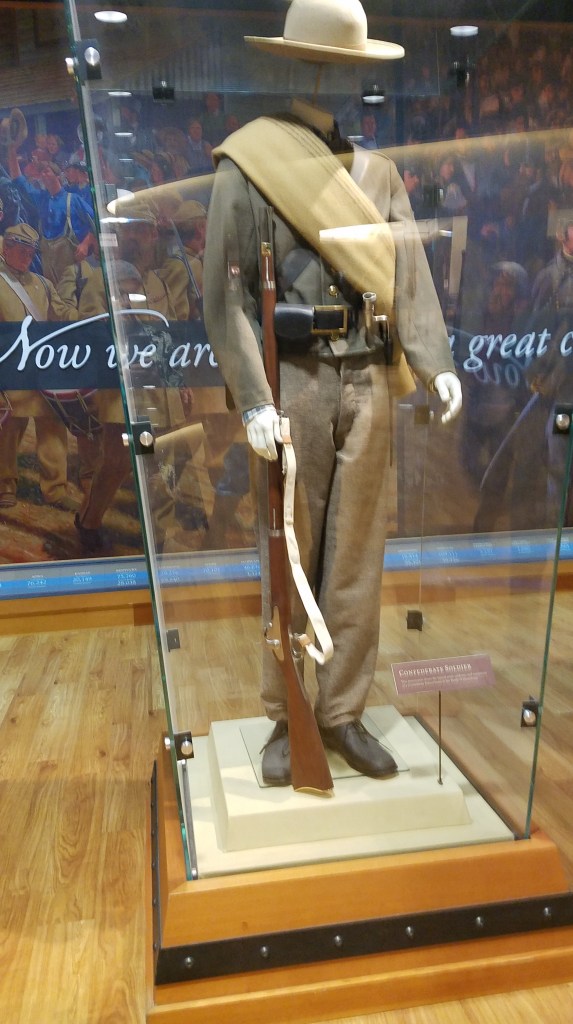
I can’t say that I necessarily learned anything new about the battle that I hadn’t already heard in the classroom or seen in documentaries, but what I did know was brought to life by seeing the physical artifacts from the battle and hearing the intimate stories of the people who were there both solider and civilian on both sides of the war. There’s something to be said about seeing and interacting with physical objects that allows our minds to form a more emotional connection with the knowledge or at least enhance our knowledge through other senses. 

It is always strange to visit the site where tragedy took place and one must acknowledge the Civil War was tragic. It was tragic for a nation to be ripped apart and that the effects of that can still be seen over a hundred years later. It is also tragic it took a civil war to confer the basic human right of freedom from slavery to all living under our nation’s flag. On one hand, it is a place of history that should be remembered and respected, a place where people died to give other people freedom. On the other hand, it’s a site of enjoyment and relaxation. People come to visit on their vacations and for a day off of school. They enact the battle for entertainment, as well as to keep the stories alive. Children run through the fields laughing and playing around the cannons. Tourists take goofy pictures in front of memorials. For me the juxtaposition of both is important, because in some ways it means healing has taken place and is a testament to the resilience of people and our nation. 

How can you add this to your own bucket list?

Unfortunately, this is one of those things that cannot be substituted easily if going to the actual Battlefield of Gettysburg is on your list. It’s in PA and unless you’re nearby, it won’t be cheap or easy to get here. In which case, may I recommend google flight tracker and hotels.com? This may be an instance of the principle of the item rather than the item itself. The principle behind visiting Gettysburg was to see an important site of our nation’s history that helped shape our identity and defined us. If you live in the south, there are many other Civil War battlefields that you can visit. If you live in the North East, especially in New England, then you can visit many sites from the Revolutionary War. In the South West, you have the Mexican-American War. California was home to the gold rush as well as the Japanese Internment Camps and the Watts-Riots. The Midwest is of course home to the west itself and the expansion of white settlers into the territories. I highly recommend seeing what is near your hometown. You may be surprised to find your seemingly insignificant part of the country actually helped shape us in the amazing country that it is today.

Completed: 2018

Miles from home: 75

Cost: Free to visit the Battlefield, Visitor’s Center. Museum is $15, Museum+ Film is $21 

Reverse Bucket List: Unicorn Tapestries

Occasionally, I like to share bucket list items from my reverse bucket list or include tales from further afield. It isn’t to necessarily go off track or to undermine the purpose of my blog, but rather present an open and honest representation of my list, the things I’ve accomplished and how I’ve done them. I would be remiss to only showcase the things that I’ve done close to home as that would be creating a false impression that one really can complete everything without travel. Depending on where you are and what you want to do with your life, some travel may be required. I also don’t want to be held up as some sort of standard of perfection or be accused later on of not practicing what I preach. I’ve watched many influences and internet personalities over the years to see that the truth will come out and I do myself no favors by presenting a false narrative of my life. Who knew honesty was the best policy? 

This item is from both my reverse bucket list and from tales further afield. It should come as no surprise dear reader that I love unicorns. 

I know – you’re in absolute shock, never in a million years did you see this confession coming! Sarcasm may be a 2nd language for me, followed closely by bad English and then German. 

Photo by Karolina Grabowska on Pexels.com

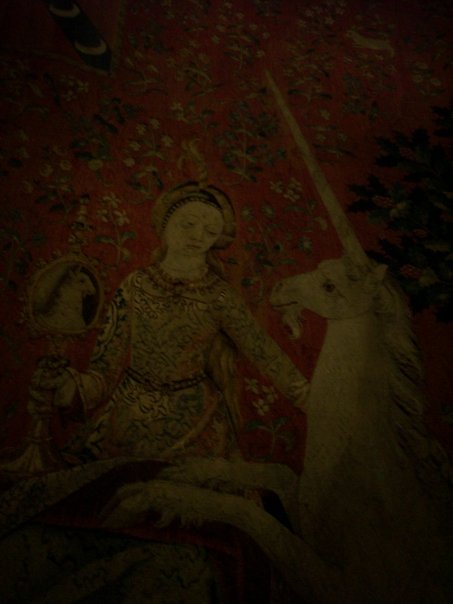
I digress. I love unicorns. My very first stuffed animal from the day I was born was in fact a unicorn. It doubled as a music box that played Somewhere Over the Rainbow. The unicorn’s name is Rainbow and she was my favorite toy. I even took her to Germany with me when I was in college. She still sits on a shelf in my room. Growing up in the 90’s unicorns were difficult to find, but my mother still managed to get me the rare unicorn toy and find me the rare unicorn book. I read every book that had a unicorn in it, including a book which showcased the La Dame a la Licorne or The Lady and the Unicorn. 

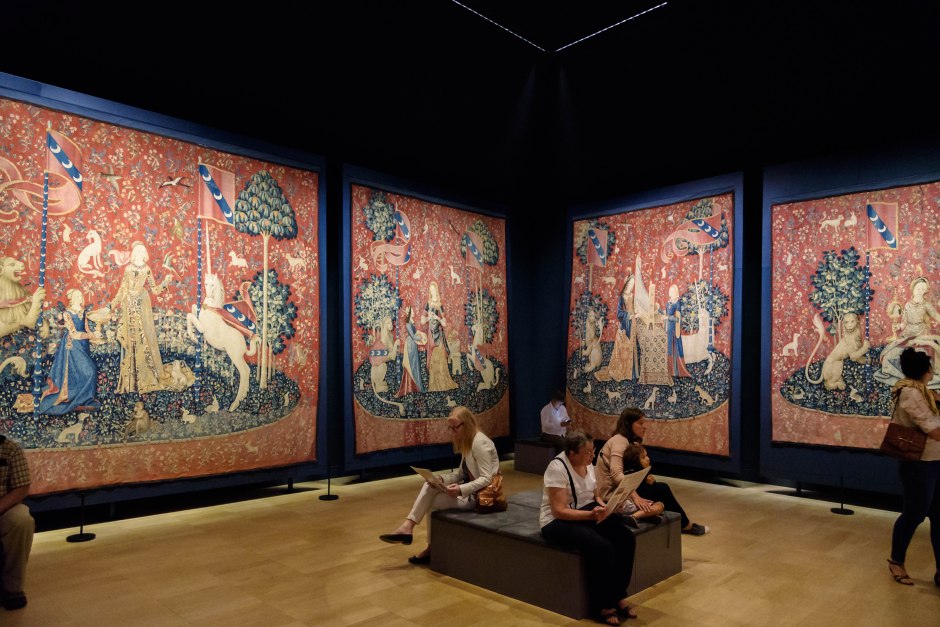
The Lady and the Unicorn tapestries are a collection of six tapestries housed in Paris France. They were created in the style known as thousand flowers and it is easy to see where it gets its name as the background of the tapestries are woven with hundreds of flowers. The tapestries were woven in Flanders out of wool and silk from designs created about 1500 AD. They were hidden away for potentially centuries  in Boussac castle until their discovery in 1841. Interestingly enough they were dated correctly by the novelist George Sand as coming from the 15th century based on the depiction of the ladies’ costumes. Never underestimate a woman’s eye for fashion. 

The six tapestries depict five of the senses, touch, taste, smell, hearing and sight. The sixth one is a bit of a mystery as it displays the following motto on the lady’s tent “A Mon Seul Desir” or “my sole desire”, but it has been translated differently by different people leaving us with some ambiguity. I find it rather strange that the tapestries with no words are the ones with the clearest meanings, but the one with words leaves us scratching our heads. Some interpretations believe is a renunciation of the passions, an assertion of her free will; others see it as representing a sixth sense of understanding. This last one is based on sermons from 1420 which lines up with the timeline of the tapestries. 

Nevertheless these tapestries are beautiful works of medieval art. They not only depict six scenes, but also they are representative of the interplay between the arts and their patrons at that time period with the banners depicting the heraldry of the nobility who sponsored them. The arts could not have survived without the support of patrons. This interplay was an important part of the social structure of the time.  Additionally, it is reflective of the importance of the Christian church as like most art of the time period it carries themes from the Christian faith. One of the reasons I so loved unicorns was they were often a reference to Christ in medieval art. Finally, they demonstrated fashion at the time of their creation. Larger tapestries, like these, were used to showcase wealth and power as well as to provide extra insulation in drafty castles. They were both art and a craft. 

Today, the suite of The Lady and the Unicorn is housed in the Musee de Cluny in Paris. A fitting home for these tapestries and the Cluny mansion was built in the late 1400’s and houses many medieval artifacts like these. I almost missed them entirely on my trip to Paris. I will fully admit that I never thought I would get to Paris. I knew that the tapestries were housed in France, but where in France, I could not have told you where exactly. Because I never thought I’d go, I did not pay much attention to what was actually in Paris other than the famous monuments and the Mona Lisa. 

However, I did get to go in April of 2009, during my study abroad. It was a semi-last minute decision. I found out a friend of mine was going to be in Paris and so I asked Erica, a fellow American girl and fantasy book nerd, if she’d like to go with me to Paris to meet up with him. There, I was in Paris enjoying the museums, the history, the culture, the food – they did not lie, they have delicious food. I kept noticing the unicorn tapestries on bags, pillow covers, notebooks, all those touristy things they try to sell you in the gift shops. At first, I dismissed them as just standard French tourist crap that they sell all over the country. When finally, while at the Sainte Chapelle (one of the most gorgeous churches on the planet), I asked a person behind the counter in a curious voice, “Are those tapestries here in Paris?” “Yes.” I am certain they could feel my excitement go from zero to hundred in under 10 seconds, for they seemed a bit alarmed by my enthusiastic and semi-desperate, “Where?” They politely answered, “The Medieval Museum, it is nearby.” And proceeded to give the overly excitable American directions. Luckily for me, Erica being an archeology major had zero objection to my abrupt course correction to the Medieval Museum and we rushed to get there before it closed for the day. Did my feet hurt from walking nearly 15 miles that day? Yes. Did I care? Absolutely, not there were unicorns to see! (We won’t talk about how we couldn’t figure out the darn subway system and walked the entire historical district of the city).

It took most of my self control not to simply rush through the museum to the tapestries, but I respected Erica’s desire to linger over the various pieces of history displayed. I did my best to hold my excitement back, even though I may have been bouncing up and down at the front desk chanting “unicorn” upon entry to the museum. I was twenty-one, child-like displays of youthful enthusiasm were perfectly permissible. Now, I must display my excitement in more subdued expressions or so I’ve been told. Some people are simply no fun. 

Finally, we came to the tapestries and they were even more glorious in person than on any page or screen. There are many pieces of art that I have seen in the printed form that I have not found to be all that different or impressive in person leaving me a bit disappointed after the build up. The tapestries were certainly not disappointing in person. Because one can really see each piece of woven thread and appreciate every flower. The magnitude of the work cannot be understated when confronted with the sheer size and detail of this masterpiece. It represents hundreds of hours of work. According to a post from the metropolitan museum of art, a set of six large tapestries  would have taken thirty weavers between eight and sixteen months to complete. That is not accounting for the hours of design that went into the cartoon that the weavers would need to produce the tapestry. 

To most people reading this, a textile project taking that long is unthinkable, not when you can hop on amazon, buy a woven blanket for 60 bucks and be enjoying it with prime 2 day delivery. A wall hanging in the medieval style can also be yours for about $220 and also be in your home in about two days. A tapestry at the time of their making would be worth thousands in today’s dollars. 

Upon entering the dark room, my excitement turned to quiet awe. My breath caught in my throat at the sight of them. I floated to them as if caught in a dream. I cannot say for certain, how long I sat there admiring them, taking in their craftsmanship and cursing my lack of botanical knowledge to identify the plants. I examined each one carefully noting the themes and subtle details. I doubt I said much to my travel companion as I studied them. The pictures never did them justice, how could they? How do you capture in words their beauty and masterful craftsmanship? How do you fully appreciate their vibrant colors and shapes without seeing them in person? A picture loses so much when it’s shrunken down to fit on a page and our imaginations are limited by what we’ve experienced. Too soon, I left them, but there was the rest of Paris to see and far too little time to fully appreciate the City of Lights. Adieu mon amour, perhaps we shall meet again one day. 

Pardon the darkness of the picture, this was taken in 2009 and flash photography was not permitted

How can you see tapestries?

Well, you don’t have to hop on a plane to France to see tapestries. There are museums here in the United States that display various tapestries from the Medieval and Renaissance eras. If you are particularly interested in seeing unicorn tapestries after reading me wax poetic about them, there is a set of them at the Cloisters in New York which are governed by the Metropolitan Museum of Art. They are a set of seven tapestries, also from around the same period as The Lady and the Unicorn and are in the style of the thousand flowers. Just as with the tapestries in France, these also hold mysteries such as how to interpret the tapestries and even who they were made for. Depending where you are in the country, a plane ride may or may not be necessary. 

I highly recommend if you ever get to either New York or Paris, to take time to see these masterpieces. Provided of course such things are of interest to you. You know by now, that I always tell people to skip that which holds no interest or intrigue to them. Life is too short to waste it on things you don’t enjoy. 

Kayaking 1,000 Years to the Past

Slowly, slowly he worked stone against stone chiseling out a dimed sized impression. The sun marched its way across the sky as he worked each part of the snake. An hour’s work would only yield four and he had so many to go. Still in this sacred place of sun, earth, water and sky where the underworld opened to the deep below, he kept to his work. One piece among a dozen others each marking the important spiritual events of his people. As the sun kissed the rock on the fall equinox lined up perfectly with the head of the man’s snake, he smiled.  The stories of these drawings the life, spirit and blood of his people, a testament to their presence which would continue to echo for a thousand years and more. A thousand years later, though lost to time after the conquest of the Susquehannocks and the colonization of the Europeans, they are not forgotten but remembered simply as the Safe Harbor tribe. 

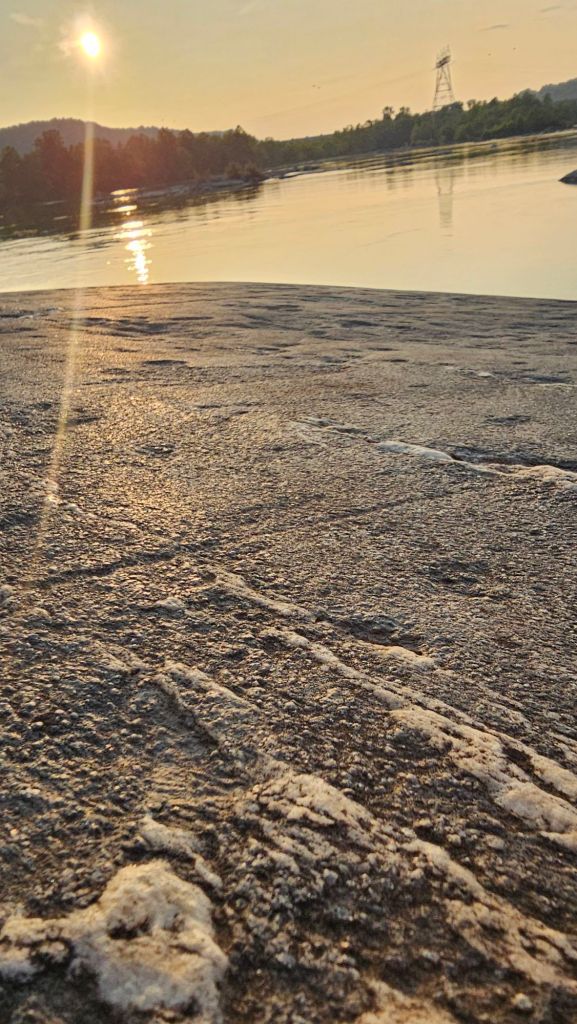
To stand on the Little Indian Rock and Big Indian Rock is to be transported back in time. On either side of the river the trees still stand tall and proud and to the west, not even the telephone lines can break the illusion that one is seeing the forest as it has been for a thousand years. Though truthfully the dam has raised the water levels significantly and the river has eroded the shore line. Still one can see why they felt this place was special. With the thickness of the forest the sky would have been often blocked out from view under the canopy of leaves. The wide river would have opened up to the glittering cosmos even as the deep crevasses beckoned to the underworld below. The jutting rock up out of the water would have been a place of earth within water. A place of earth, water, sky and the underworld colliding where the river goes from a soft, lazy merading flow to rushing current as it suddenly drops. 

Big Indian Rock seemed to have been used primarily for social purposes with its markings for hunting, directions and even a helpful gps tag noting that it is a two day’s walk to the mouth of the river. There is evidence of camp fires perhaps for when they wished to view the night sky. Despite its size the petroglyphs are mainly concentrated in the cardinal directions. Little Indian Rock seems to have primarily been used for spiritual purposes having several Thunderbirds and snakes which line up with the spring and summer equinoxes. There are several which seem to depict the mystical Wendigo and even a Misiginebig. 

One of the largest collections of petroglyphs east of the Mississippi. In this picture you can see a Thunderbird and the mysterious water serpant.

Graffiti dots the rest of the rock from the various visitors over the years primarily from the 1800’s until about the 1980’s when the rediscovery of the petroglyphs and their significance put a halt to any additional markings. Not through any sort of ordinance, but through education and the respect that education has bred through the local populace who still kayak and fish around the rocks. Despite its historical significance and being home to what is considered the greatest collections of petroglyphs east of the Mississippi there is no official protection for either Big or Little Indian Rock, no barriers preventing anyone from clamoring up the rocks to see them. The location of this ancient art is perhaps the best protection that can be offered: a wall of water separates it from the land on either side requiring a boat to gain access and most mischief makers are easily deterred by the strenuous physical exercise required to obtain access. 

At first, one could easily miss the ancient markings as no more than strange impressions in the rock. It takes a sharp eye to spot them, they are most easily seen at sunrise and sunset when the angle of the light allows them to stand out in sharp contrast. Which is why on a late August evening, my sister and I set out with a small tour group in kayaks to the two islands. I was a little nervous having grown up hearing the dangers of the river especially around the dams which so easily can sweep a person down into their churning depths never to be recovered as their body remains trapped within. However, we were a safe distance from the dam and our guides delayed our departure twice due to unsafe river conditions, so I trusted them to take us out. We donned our life jackets and were given a quick overview of kayaking. My sister and I were the only two non-experienced kayakers as the other members of the tour had brought their own kayaks. 

With little ceremony, we hauled our small vessels to the launch site and were quickly swept up in the quick current of the conestoga river rushing to meet the Susquehanna. At first, I paid little heed to my natural surroundings focusing primarily on learning how to steer and maneuver the kayak. There were a few run ins with others but we laughed it off with some pirate jokes. One of our guides rushed to the front of the group where the other stayed in the back to assist any stragglers. We were assured that if we needed a tow back they would assist to ensure we all made it back safely. Being a novice, I was not very good at reading the river and got swept up a few times in quick, churning currents which swirled my vessel around. After a few moments of panic and fruitless fighting, anxious that I would be swept away from the group and lost down river, I regained my footing (so to speak) and allowed myself to literally go with the flow. I was able to maneuver my kayak behind some rocks which broke up the flow long enough for me to jet across to rejoin the group of boats. Having conquered my first challenge, I felt much more confident in my ability to traverse the waterway, though I was certainly not ready for a solo venture. 

Not being quite so nervous about the river, I was able to start to take in my surroundings and really enjoy the experience of the kayak gliding across the surface as my paddle dipped into water. Overhead birds circled and cried to one another. The trees on either side of the river blocked out signs of civilization, the illusion only broken by the distant sounds of traffic and the dam nearby. However, with the dam behind me it was easy to get lost in it. Occasionally, I would place my paddle across the kayak to simply float and breathe. I could see why so many people will spend their weekends out on the water leaving behind the sometimes suffocating atmosphere of the urban environment for the open expanse. 

We first visited Big Indian Rock where we were shown the petroglyphs and given some education on the people who once made them. Though we no longer know their name they are thought to have been part of the Algonquin people who were known for their making of petroglyphs; other artifacts that have been found in the area also point to cultural similarities with other known Algonquins. We were given a brief overview of native beliefs when he showed us a thunderbird. The one on Big Indian Rock is a rarity for its depiction of feathers on the wings. It is uncertain what the significance of the feathers were. We then clamored down the rock back to our kayaks to go back up the river to Little Indian Rock. We were warned to stay away from the poison oak. Having had poison ivy earlier in the summer, I was quite motivated to stay away. 

I was absolutely amazed by the incredible amount of petroglyphs concentrated on Little Indian Rock, a feast, a mythical serpent creature, snakes marking the passage of the sun, deer prints, footprints, bear paws, thunderbirds, animals that could be beavers or otters and more. It was such a plethora of art made meticulously over hundreds of hours. Each dime sized impression took over twenty minutes to make leaving little doubt that it was done with intention rather than something a few bored teens may have completed. It seemed that all too soon we had to leave this magical place, but the announcements coming from the dam warned us that it would soon be time to get off the river and the setting sun threatened us with coming darkness. As a novice kayaker I did not wish to embark on my first night adventure. 

The trip back was considerably more effort than going down as the primary task was steering the kayak with the current. The trip back was against so it required us to hug the shore of the larger island in the middle for a significant portion where the current was slower. I made the mistake of trying to jut across too soon which left me fighting the current. I strained my muscles forcing them to conquer the river’s strength with my own and was quite grateful I had been working out using a sledgehammer to mimic kayaking throughout the summer. My sister required some assistance and was towed part way for the trip back. Primarily to help her navigate the river and not get caught as I was in the stronger currents which threatened to push me back. Despite a novice’s mistake, I was able to overcome and make it back on my own, my arms happily exhausted but not overdone.

The sun had not yet completed its journey to the underworld and we were happy to have made it back. We helped haul the kayaks back up the shore to the grass and thanked our guides for the lovely evening and assistance in getting back. 

How Can You Kayak or See Petroglyphs?

This was definitely one of those “bang for your bucks” kind of trips in that it crossed two things off my list at the same time: petroglyphs and kayaking. I had been kayaking as a child, but it was only on a small lake at summer camp and I wanted a real experience. Renting a kayak would have been pretty easy, but given the dangers of the river nearby, I wasn’t comfortable exploring on my own. Just two weeks before, two people perished in the aftermath of the flooding from the hurricane, and others had to be rescued. The river can be quite dangerous under certain conditions and had it not been for the guide shouting some advice to get out of the churning current, I may have ended up many miles downriver. I recommend that while you can easily purchase or rent a kayak, you ensure you have completed any necessary licensing requirements for boating and you have done the necessary research to ensure you understand the dangers of any particular river. 

As for the petroglyphs, they are found throughout the United States and even the world. They range in ages from 1,000 to 40,000. Some can be found still in the native surroundings like the petroglyphs on Big and Little Indian Rock whereas others have been removed and placed in museums or have had barriers built around them to protect them from harm. It really depends on what you consider “good enough”. For most people, I imagine seeing them in a museum is perfectly fine. For me, it was important to view a set in their original surroundings. For instance, it was really cool to see how close the sun aligned with the snake marking the fall solstice which was only a month away when this trip was untaken. There were footprints on the rocks and we stood close by them wondering what they marked and whether we were supposed to look out and see something important. Has anyone looked to see if they align with any star signs? All of these questions can only be asked and answered if they remain where they were untouched. Unfortunately, leaving them untouched also means risking them to the elements and potential vandalism. 

I found out about these petroglyphs several years ago and was very disappointed to see that they were nearly inaccessible for someone without access to the water via boat or kayak. I had almost resigned myself to not being able to see them, until a post on Facebook caught my eye, Lancaster Uncharted was hosting kayaking tours to them. It was unfortunate that because of an earlier trip I took that year, I was unable to afford to go that summer, but I marked my calendar for the following spring when I was sure tickets would go on sale and sure enough was able to snag them in May for August of the same year. There are many sites dedicated to the location of various petroglyphs and tours to go see them. As always, I encourage you to decide what suits you. Remember it’s not about replicating my adventures as they are merely to inspire you with the possibilities that are out there! After all, what is available in my backyard may not be in yours, but that’s what makes these adventures so fun and unique! Go forth and explore dear reader one never knows when and where one might find a portal to 1,000 years in the past.

Completed: Aug 23, 2024

Cost: $115 per person

Miles from home: 20 (plus another 1/2 mile of kayaking down the river)

Not Your Ordinary Wine Tasting: Wine with a Scenic Train Ride

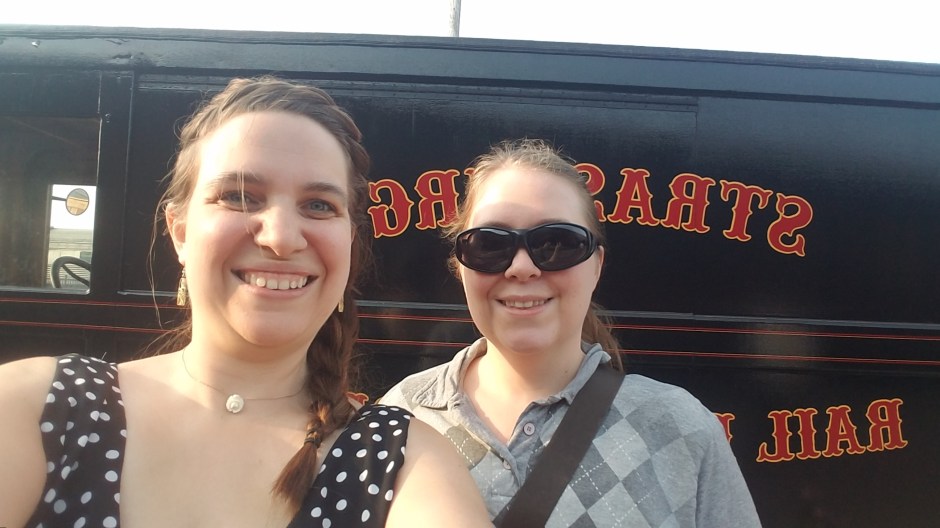
hat could possibly be more romantic than an antique train through the summer countryside, the cornfields lush and green, cows grazing in their pastures and the blue skies dotted with clouds? Other than including a companion known for her poise and stimulating conversation? Why a little wine, of course! And what could be a more perfect place for such an adventure than the oldest continuous railroad in the United States? 

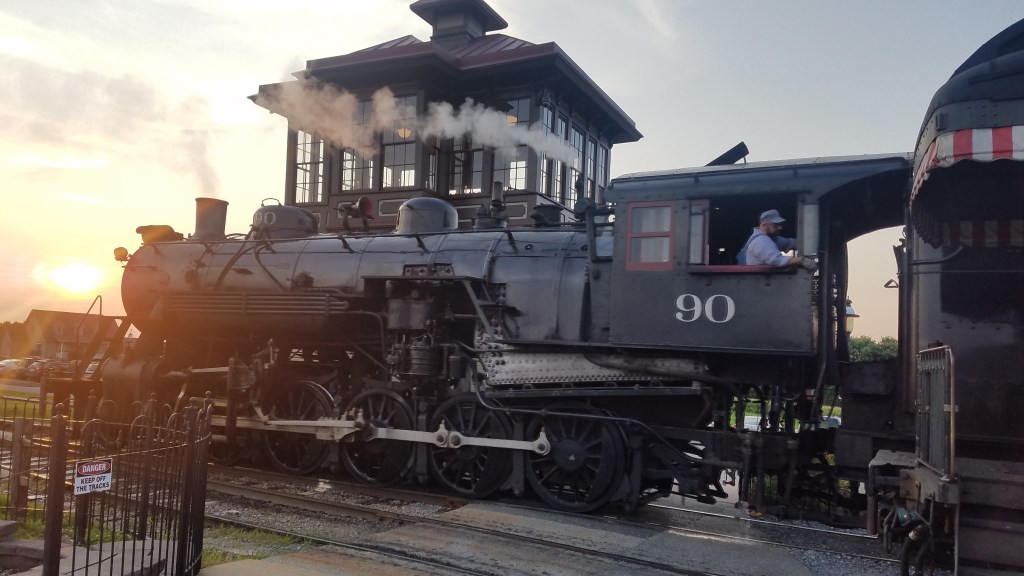
Built in the mid 1800’s, the Strasburg Rail line faithfully provided transportation to the residents of Lancaster county to ensure they stayed connected to the larger railroads. However, with the rise of the automobile and significant changes in rail usage, it had been reduced to the poorest and smallest railroads in the country. In order to save this piece of history, a group of railroad enthusiasts purchased the railroad and began to offer tourist excursion trips. Within three years, ridership had grown from 9,00 a year to 125,000. In order to keep up with customer demand the directors turned to the steam engine. Today, Strasburg offers visitors the opportunity to climb aboard a fully restored steam locomotive in a beautifully restored wooden railcar and gaze out at the lovely Lancaster County countryside. 

While not train enthusiasts per say, my sister and I are history buffs who enjoy experiencing how life once was. What was impressive was not only were the trains historical, the railroad itself from the ticket booth to the staff were also historical. It felt like stepping into a history book where we could leave the hustle of modern life to embrace a slower time. We had arrived early so we were able to not only stake out our seats but also to explore the railcar a little. We loved the details that went into every inch of the car from the light fixtures to the woodwork. It is difficult to imagine such care and craftsmanship being put into our railcars or airplanes today. The environment of the old-fashioned railcar was warm and welcoming rather than the cold industrial experience public transit currently offers. I immediately relaxed into the comfortable leather seats settling in for my 45 minute ride. 

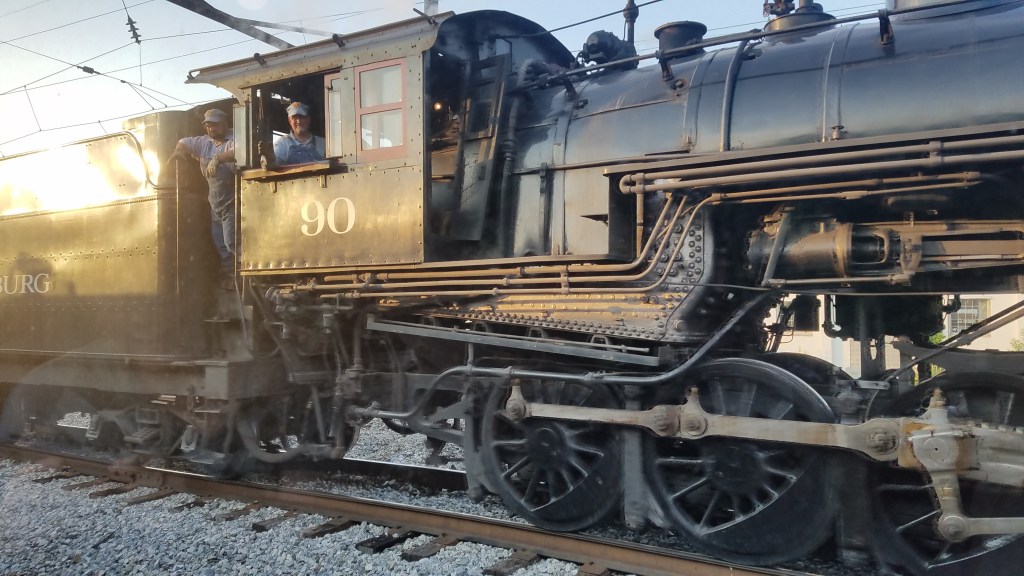
The steam locomotive, also called the Iron Horse, dominated the railways from the early 19th century through the middle of the 20th century. They were a vast improvement over the old system where horses were used to pull carts along rail tracks – hence their nickname. An early model was designed and constructed by John Fitch a steamboat pioneer in the United States in 1794, but it’s the United Kingdom that gets the credit for fully developing the idea and utilizing it for commercial use. They work by using steam to push the pistons of the engine up and down. That movement is converted into the back and forth motion of the wheels through a series of rods – piston rod to main rod, main rod to side rod, side rode to driving wheels. Through such a simple system the age of steam revolutionized the west. 

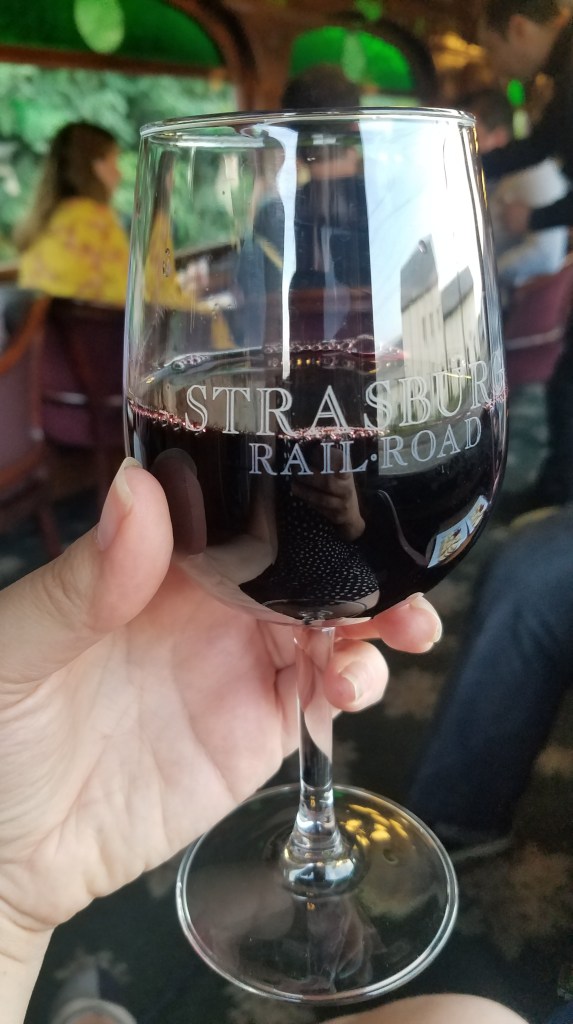
The staff, like the staff at the ticket booth, were dressed as they would have been in the 1800’s when the train was operating to connect passengers to the larger rail systems. They punched our tickets to get us started and gave a brief overview of the train. Then we began the wine tasting being offered two different whites and reds. From the four wines, we would be able to select one to enjoy a full glass. Naturally, I chose one of the reds and my sister, surprisingly, enjoyed the same one – she usually prefers the whites. 

As we snacked on the offering of cheese, crackers and grapes, we gazed out at the rolling hills. The rail car shook rhythmically and under the murmur of conversations, one could hear the characteristic pattern of the steam engine chugging along. The sun began to set, changing the sky from a near perfect blue to a paler almost lavender hue. We sipped on the full bodied red, toasting to life and adventure. We were able to catch sight of another steam engine on the tracks and even snap a few pictures of it in action as it passed us by. 

How forty five minutes manages to stretch out into what could have easily felt like two hours of relaxation can only be explained by the time machine that was the Strasburg Railroad. It seemed as if no time had passed since we started our journey and yet it also felt as if we had just spent hours traversing the fields. We disembarked fairly content with our adventure and with hopes to enjoy the other offerings that the railroad has to offer in the future. Though with an ever growing list of adventures to try, it may be a while until we are able to step back into the history books. 

How can you experience a historic train ride?

Luckily, there are many places where you can experience a ride on a historic steam locomotive, from the line of Whitepass & Yukon in Alaska to the State Train Museum in Georgia. Many places can be found https://www.trainchasers.com/steamdirectory.html though if you don’t see your state listed, it’s not an exhaustive list. It’s just a very good starting point for where you might a locomotive near you. Unfortunately, for those of you living in the middle of the country, most of our rail lines have disappeared, so if this interests you, consider checking out if there are any historical railways near your next travel destination. Remember when we do travel, we want to try and make the most of our travels and explore things we don’t typically have access to. You may also see if there are other historic modes of transportation available to you such as a steamboat ride or early automobile. Perhaps, you can enjoy a steam engine in a train museum. Remember, it isn’t about doing the exact thing but looking at what it symbolizes and what sort of experience you desire to have. 

Additionally, I cannot promise that any of these will offer a wine and cheese pairing, but each of them offer a unique experience from Murder Mystery theaters to sight-seeing to simply moving from one place to the next. On a historic train ride in Panama, we were treated to seeing the country from coast to coast, sampling coffee and being entertained with songs. 

Completed: July 31, 2021

Cost: $70 per person

Miles from home: 45

The Curious Case of the Gettysburg Ghosts: A Walking Tour of One of the Country’s Most Haunted Cities

There’s something mysterious about the late fall, when darkness creeps over the earth stealing away precious daylight hours and the earth loses its color. Once familiar trees transform into shadowy forms at twilight, their fingers reaching out to the unwary traveler. The comforting sounds of animals scurrying about take on a more sinister tone and even the wind begins to moan hauntingly. Is it any wonder that such a time of year made many believe that the veil between worlds was thin and gave rise to the spooky season we know and love so well?

It’s a time of year when many travelers flock to the former places of death in hopes of encountering a being from beyond. Certain places are known to be more haunted than others and few other places top Gettysburg, Pennsylvania on the list of most haunted places frequently earning the 3rd or 4th spot. The majority of these restless dead are thought to come from the decisive battle of Gettysburg, one of the deadliest battles in our nation’s history and is considered by many to be the definitive turning point in the civil war. Over 51,000 soldiers perished and many more were injured. 

Being both curious to learn more about the history of Gettysburg and to get ourselves in the spirit of the season, my sister and I embarked on an evening stroll to suspend belief for an hour or two and perhaps, catch a glimpse of a specter. Given the town’s reputation for its hauntings and that it goes all out with Halloween decorations, it is decidedly recommended to arrive early for a walking tour because parking was rather difficult to find as hundreds of spooky enthusiastics milled about also hoping for a ghost sighting. With a little trouble, we made it to the appointed meeting spot which was difficult to spot as it was an unassuming door for the Museum of Haunted Objects.  

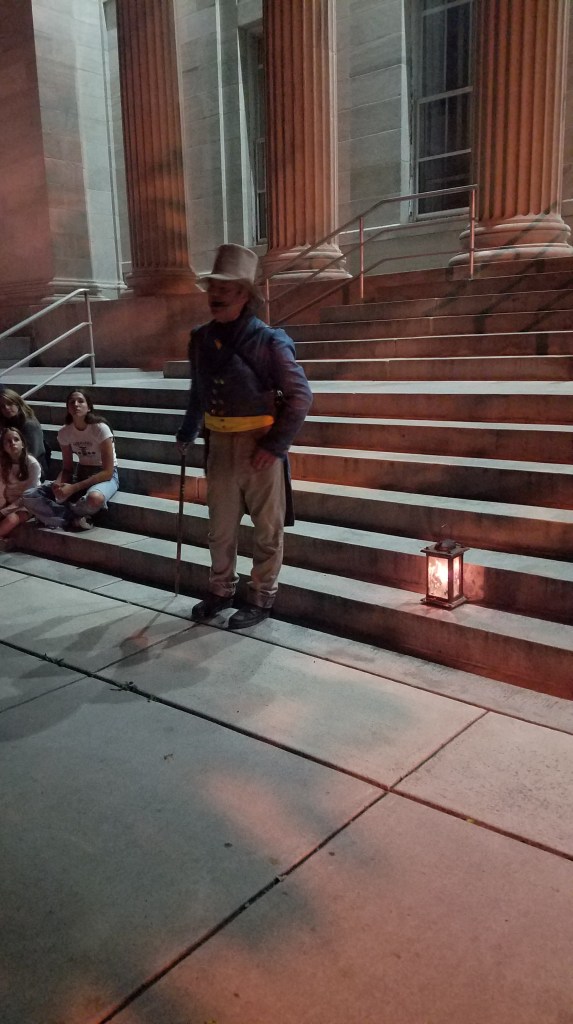
Our guide was a jovial man dressed in the manner of an 1860’s gentleman, complete with top hat, lantern and walking cane. He explained that the reason for the number of hauntings was due primarily to the unburied and still restless ghosts of the Confederate Army. He explained that in the aftermath of the battle, the town and surrounding countryside were overwhelmed with the corpses of the dead. The stench lingered for months as they struggled to lay to rest the dead. It seems almost a natural reaction in the face of so many that the dead of one’s enemies were more hastily buried with little honor or respect. Many of the townsfolk wanted to move on from the aftermath of the battle, to forget the horrors from the streams of blood and piles of amputated limbs littering the outside of the former field hospitals. Unfortunately, the dead not properly put to rest lingered on a constant reminder of the horrors of those three days. 

We actually began our tour at a curious place, the local high school where in the course of an expansion several confederate soldiers were uncovered. It was strange to think that hauntings were so common in this area that one may go to school directly next to ghosts especially when reflecting on all the late night music practices I attended. Having set the tone as being a town so haunted ghost sightings are your local high school are hardly something to comment on as out of the ordinary, we set off to learn more directly about the different places and their stories. It also gave credence to the theory that the hauntings were a result of restless Confederate soldiers in need of peace. Because after the discovery of the Confederate soldiers, they were buried properly and the reported hauntings ceased. 

But not all hauntings can be explained by disrespect for the dead. Ms. Jennie Wade was the only civilian to die during the intense fighting – a rather shocking fact when one considers the numbers lost to the fighting. Jennie had come to support her sister Georgia who had just given birth along with her mother and her brother. She was mixing dough for biscuits when a stray bullet passed through two doors before hitting her in the back. Though certainly given a proper burial by her family, it does seem she remained to haunt the home due to unfinished business – she never got married. Unlike many ghost stories, ending in misfortune, it seems that  Ms. Jennie is a generous spirit rather than a malicious one as she is said to help single ladies who visit her home. Just place your finger on the interior door bullet hole and you shall receive a marriage proposal within the year. One does hope that she is able to find rest after granting happiness to so many others.

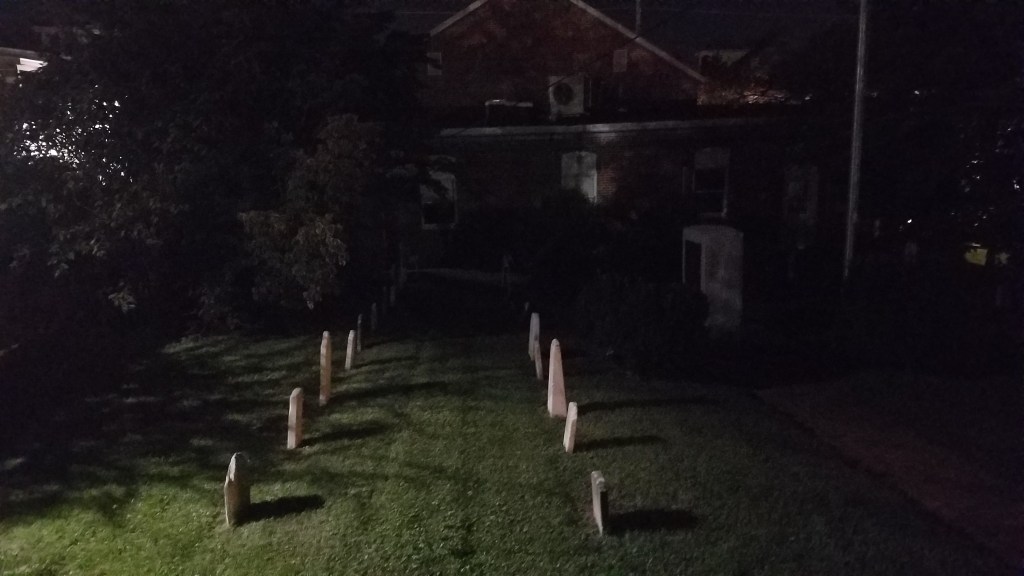
Graves behind the orphanage

We heard other stories of haunting in the area including the orphanage where the guide told us a rather chilling story of children inviting others to join in a game of ring-around-the-rosie much to the dismay of the adults. Interestingly enough the orphanage itself was not directly connected to the battle but rather its aftermath. With so many lost in the war, many children found themselves without a caregiver which led to the founding of a new orphanage in Gettysburg under Ms. Philinda Humiston. Initially, the orphans were well cared for until a new Headmistress took the reins of power, Ms. Rosa Carmichael. Ms. Rosa is reported to have locked a four year old boy in an outhouse in the bitter cold of December, keeping others in chains, sometimes in vats of water where they risked drowning and beaten them. There were several children who were missing and never found. Visitors to the orphanage are said to hear the clanking of chains and the cries and laughter of children. Some report to have seen the visage of the evil head mistress. It seems a bit macabre to me that people will pay for a chance to interact with the lost children of the orphanage and such a cruel creature. It is not the stories of ghost which haunt, but of the cruelty of people.

However, it was not the stories of ghosts that haunted me (pun intended), but rather the description of the carnage of the field hospitals and the battles. It was not just death which turned this quiet town into a horror show, but also the number of amputations. The guide described how there were so many body parts that they began to simply toss them outside the window of the hospital, piling up limbs, that doctors and nurses waded through blood trying to help the wounded and dying. At one place a group of captive soldiers being held in a basement had blood raining down on them through the floorboards. Whether one believes in ghost stories or not the reality of the battle could not be downplayed. I think in our modern era it’s easy to forget the real horrors of war being so far removed from it as we often are. 

What I found most interesting about the tour was seeing the battle from the perspective of the townsfolk and how it affected them many generations after. It is what still defines the town to this day. When many people were frolicking about in their costumes, giggling at the sightings of ghosts and enjoying a festival atmosphere, one must wonder how we arrived at this point. Almost a hundred and fifty years ago nearly 50,000 people perished in a war to decide the fate of America. The town was washed in the blood of patriots fighting for freedom. Doctors and nurses frantically rushed to save lives, hacking off limb after limb in a desperate attempt to mitigate the damage. After the armies left, it was the townsfolk who were left to pick up the pieces and bury the dead. Perhaps, there is something to be said that an experience so horrific can be transformed into an evening of lighthearted fun, traversing the streets by candlelight as the guide does his best to both educate and scare you. Perhaps, it is an indictment of a culture so indifferent to real human suffering that it seeks to capitalize on it. Perhaps, it is a coping mechanism of a place so scared by the horrors witnessed both in those three days and in the years after, that we can hardly blame them for embracing the kitsch nature of the spooky season to transform it into a more palatable form. 

Regardless, it was an intriguing evening of history and even anthropological musings on the response to collective trauma. Though those musings were from my own internal observations than anything the guide said. I found the guide to be quite informative and an avid storyteller who was quite capable of raising goosebumps as he relayed the tales of the ghosts who stalked the streets at night. 

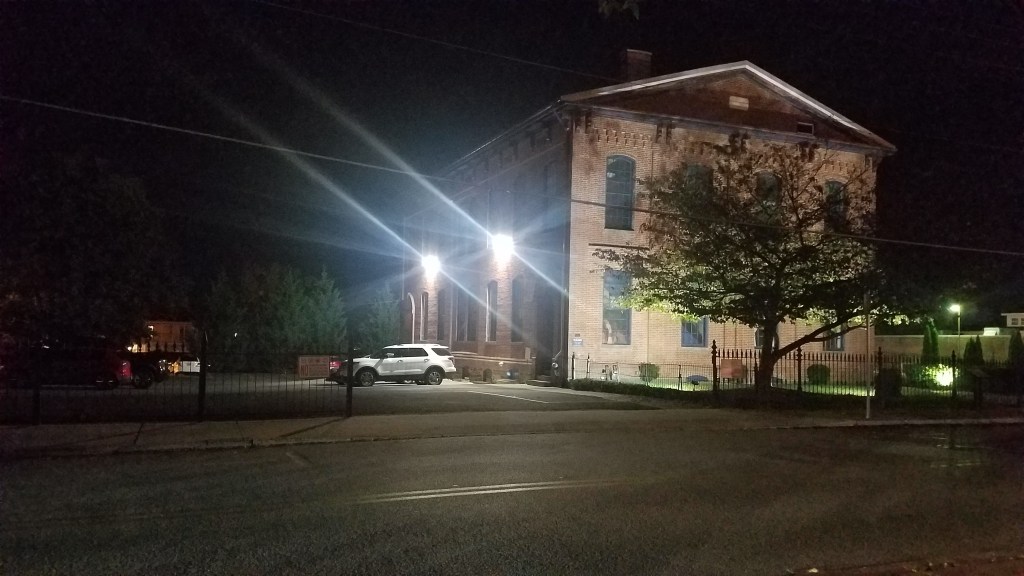
Our guide looks almost ghostly in this picture!

How can you go on a haunted tour?

There are many towns and cities throughout America that have reported hauntings from Gettysburg, PA to Savannah, Ga, from Salem, MA to Portland, OR, from Chicago, IL to Sante Fe, NM and everywhere in between. My own hometown gives a ghost tour each fall! You can usually find them being advertised from Mid-September through early November. There are places that will offer ghost tours throughout the year. 

Whether you believe in ghosts or not, I certainly recommend them for the history as they often give a different perspective than other walking tours. Often, they showcase the lives of ordinary people like Jennie Wade who only wished to help her sister and had dreams of getting married or they help us remember the victims, like the orphans who suffered at the hands of Ms. Rosa. They can be nights of fun and even frivolity, but at their core, they are stories to remember the darker parts of our collective past, even if they’re presented in more palatable forms. Nevertheless, they are stories worth remembering. 

Completed: October 2021

Cost: $35 each

Miles from home: 63 miles

Are You Going to the Ren Faire? Pirates, Fae, Cosplayers & Knights

It is no secret that I am a whimsical sort of person. I see magic in butterflies and can easily imagine that among them may be hiding a fairy. I can easily pretend that lurking in the woods is a dragon hoarding its treasure or an enchanted prince who needs only a maiden’s kiss to set him free. It is not that I am divorced from reality, far from it. I assure you, dear reader, I have both feet firmly planted on the ground. I am a pragmatic, practical person who understands well the constraints of life and the sorry lack of unicorns. However, I am also a person who chooses to live slightly off the beaten path to court the possibility of magic still with a childlike enthusiasm for the world. 

So naturally, a trip to the Renaissance Faire is the salve that those with the same sort of spirit as myself so desperately need. Let me be perfectly clear, the Renaissance Faire is not a place of historical accuracy. It is much more akin to a Renaissance Fantasy Convention with a pretty sweet setting than a historical re-enactment. So if you’re looking for that sort of thing, I suggest googling medieval reenactments and steer very clear of any Ren Faire lest you be sorely disappointed. They are however a very whimsical place for us very whimsical souls. 

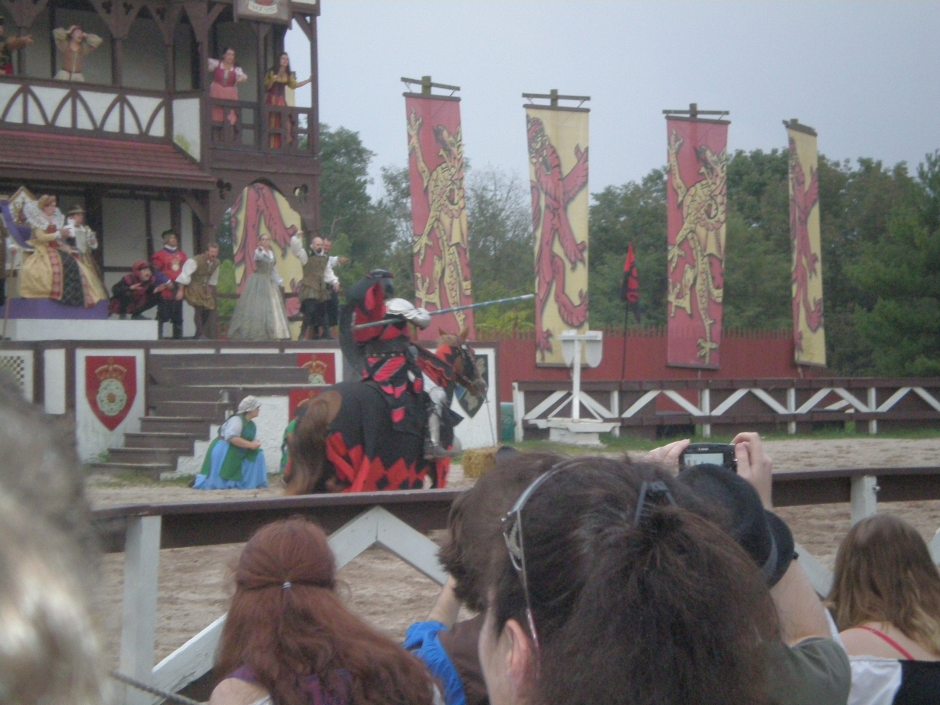
The Pennsylvania Renaissance Faire is considered by many to be one of the best ones in the country. Each year between mid-August and the end of October, Mount Hope Estate opens the door to an alternative 16th century England and invites the public to an interactive fantasy play of sorts. Throughout the day if one follows the going ons of the royal family and its court, a story will unfold. It may be an internal plot to force marriage to Queen Elizabeth or an external threat by the Spanish to conquer England. Occasionally, the story focuses on King Henry rather than his daughter Elizabeth, just to keep things spicy. It always culminates in a joust to settle the score and determine the outcome. Spoiler – England and its crown always win, but the end isn’t the fun part. 

What’s fun is all the stops in between like the Human Chess tournament – which is arguably much more fun than chess because the pieces actually have to fight each other for control of the spot.  You also can follow the actors and see their improv skills put to use. It is not that they merely stand on a stage and you watch, they will stop and speak with you. They will have you join the story and even if you go off script their expertise keeps the play going. There are also dozens of actors wandering the grounds to keep the story alive. They may stop and stare at your phone curious at such a magical device in such a curious traveler’s hands. What on earth are you wearing sir? My goodness, young lady, do you realize your knees are showing? A good sport will join in the fun. 

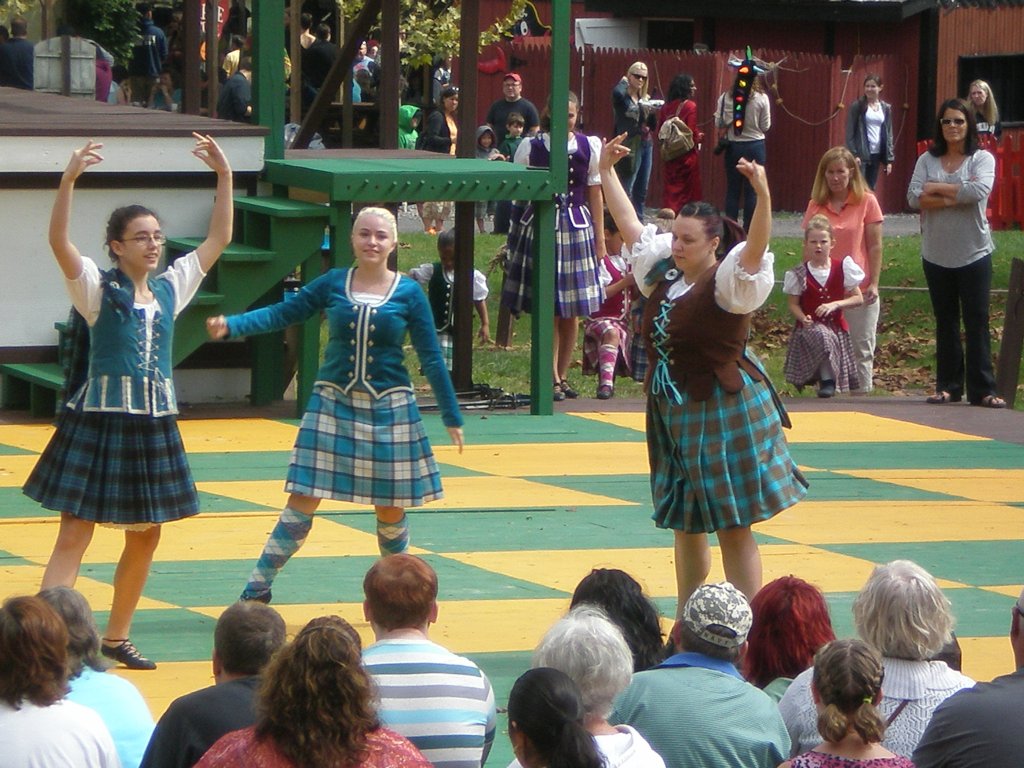
You are encouraged to dress up and different weeks will have different themes. Rather than fight against the crowds of nerds dressing up in various outfits which some people argue don’t belong at Ren Faire, they embraced it by giving the different fandoms their own weekend outlets. Sci. Fi. fans have time traveler’s weekend which welcomes Star Fleet, Whovians and more.  Die hard fantasy nerds have Wizarding Weekend. Us whimsical folks have Fairies and Fantasies. There’s also pirates, vikings, heroes, Irish/Scottish and October is devoted to all things spooky. 

There’s also over a hundred different vendors and merchants selling all sorts of wares, many of them unique to Ren Faires. Though I will admit with the advent of the internet it has gotten a little easier to access similar items than when I was growing up, which makes them seem a little less special than I remember them being. 

OLYMPUS DIGITAL CAMERA

I know I sound impossibly old with my references of the world before the internet was a big thing. We also didn’t have electricity or running water. We made fire by rubbing two sticks together. We used to have to run down big game in order to survive until we discovered farming! I myself invented the wheel, it was a really big hit. 

I digress. In addition to the wares, I would be remiss if I didn’t mention the food. Of course there are the infamous turkey legs which I do recommend if you have not yet tried one. Throughout the faire your mouth will be almost constantly watering with the aroma of both savory and sweet treats to tempt you. On the scorching August days, you will want to try various cold beverages and being next to a winery, they have some of the very best vintages. Though I will remind you, gentle reader, that wine is not known for its hydrating properties and you should be certain to drink plenty of water when wandering about the faire. Besides, too much will be bad for your wallet when you impulse buy that hand forged sword and moving dragon puppet. Although, you will have a sword and a dragon, so I’m not sure what the downside to this situation is. 

There are of course plenty of activities that abound throughout the faire. Face painting, palm reading, ax throwing, a maze, mock fencing, even rides powered by strong men and physics. If nothing else, admire the view ladies. Occasionally there’s a horse dressed up as a unicorn to pet. There’s even retired greyhounds who are there to raise money for their rescue and get petted. Who doesn’t enjoy petting a dog? If you’d like to get more dressed up, there’s face painting and even hair braiding.

And while I have spoken about the wares, the food, the beverages and activities, what I like most about the faire is the various shows and demonstrations scattered throughout. They have glassblowing, blacksmithing and even instrument demonstrations. It was at the Ren Faire that I learned all about the Hurdy Gurdy and was introduced to one of my favorite musical artists because of it. They often have falconry and other sports like jousting. These are the places where you will get a more authentic Renaissance experience as most of these are intended to be educational.  As many of the demonstrations tend to be less attended than the larger shows, I often get to have one on one conversations with the experts of their craft. There’s nothing quite like being able to ask questions and get well throughout, nuanced answers that chat gpt just can’t replicate. 

OLYMPUS DIGITAL CAMERA

There are other sorts of shows, usually either musical or comedic in nature, often a combination of both, as those always do well in larger crowds. One should be warned if bringing your children that many of the shows are for adult audiences so the jokes will reference adult topics. Usually those shows are marked with a small asterisk on your map and program.  When I was a teenager and young adult, I found them amusing. As a middle aged woman, I’m not as into the bawdy humor as I was. Maybe I’m just an old stick in the mud, but that’s okay, if you like that kind of humor attend those shows, enjoy them, I’m not trying to shut them down. Why would I stop other people from having fun? You can find me petting the unicorn. I don’t care if the unicorn is meant for the five year olds, I want to pet the cute animal! 

A day at the faire is a day for fantasy and fun. It can be whatever you make of it. If you’re a shopper, go shopping. If you want to only watch the shows, there are shows throughout the faire every hour and half hour. Some people religiously follow the story and so attend the human chess match, the jousts and follow the court around all day. Some people just come for the food and eat. You may want to spend all day getting a quality education about Renaissance and Medieval Europe and go to the demonstrations. Or you’re like me and go wherever the fancy strikes you. 

Having grown up going to the Ren Faire for most of my childhood I’ve gotten to do just about everything I’ve ever wanted to do. I don’t go every year, but I do go every few years. It is always fun to see what they’ve changed or how they’ve expanded. It’s like coming back to an old and familiar friend. I could probably find my way around half blindfolded. I know most of the songs the performers belt out and am even friends with the owner of a very good kilt shop. Some of my best summer memories are of the Faire and is decidedly one of those bucket list items that are worth repeating! Especially since the faire may have lots of things to check off your list. 

OLYMPUS DIGITAL CAMERA

How can you add some whimsy in your life and get to a faire?

Almost every state has a Renaissance Faire and some even have more than one. Depending on where you live they may take place at different times of the year. Many faires take place in the late summer/early fall in the North East but not every faire does. I believe most faires in the North and North East take place in the summer through fall because of weather, but I think in the southern parts I saw many of them being advertised for the spring months. Probably because their weather would make it impossible to wear things like a knight’s armor without dying. 

I strongly encourage you to dress up a little bit and have some fun your first time. Make sure you’ve set aside plenty of money to buy some of the cool things you’re bound to find. Many Ren Faires run both Saturdays and Sundays with a discount for a weekend pass. You will most likely be overwhelmed with the possibilities that abound, so make Saturday a day for shows and following the storyline and Sunday can be the day you return for shopping.

If you make it to the PA Ren Faire, then you should definitely stop by their winery right next door and do a wine tasting. They have many unique blends and flavors. Not only do they offer wine, but also meads. My personal recommendations are the blackberry merlot and the Traveler’s Mead, a butterfly pea blossom mead. However, you do you, that’s what tasting is for after all. 

Completed: Childhood & throughout adulthood

Miles from home:  11

Cost: $33 for person (local’s tip Turkey Hill often has discount coupons for certain weekends buy one get one free, to make it even cheaper) 

Full disclosure: You will probably spend a lot of money at the faire if you’re not careful between the food and the merchandise so budget closer to $100 if you’ve never been before.