Salt, Steam, and Serenity: Self-Care on the High Seas


I’ve written before about being intentional with travel, seeking experiences that give you the most bang for your buck and making the most of every opportunity. I’ve also shared about my ongoing love affair with self-care and spa days. So when I booked my first cruise with my sister, it felt only natural to explore the ship’s wellness amenities, especially the thermal suite.

This particular suite offered a variety of spa experiences: a steam room, sauna, salt room, sanarium, hot tub, and even a snow room. It was like a smorgasbord of relaxation.

As someone who values health and is always open to new experiences, I chose to pay for the thermal suite upgrade, which granted unlimited access for the full seven-day voyage. At about $200, it felt like a worthwhile investment, an opportunity to explore several treatments without paying for each one individually. I’d been curious about these kinds of experiences for a while but hesitant to try them back home. Here, in the peaceful, adults-only section of the ship, it felt risk-free. The space offered stunning views, heated stone loungers, and a quiet, luxurious ambiance.

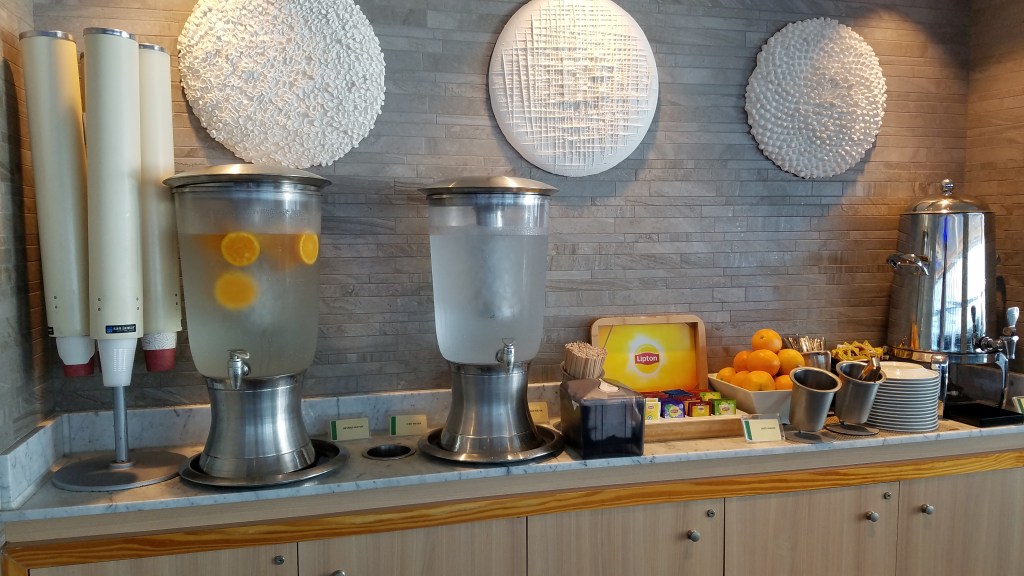
Tucked at the front of the ship and high above the ocean, the thermal suite may have had the best view onboard. The warm, lightly scented air welcomed me instantly. A refreshment station offered fruit-infused water, tea, and plush robes from the changing rooms completed the sense of serenity.

A Spa Circuit at Sea

My first stop? The sauna.

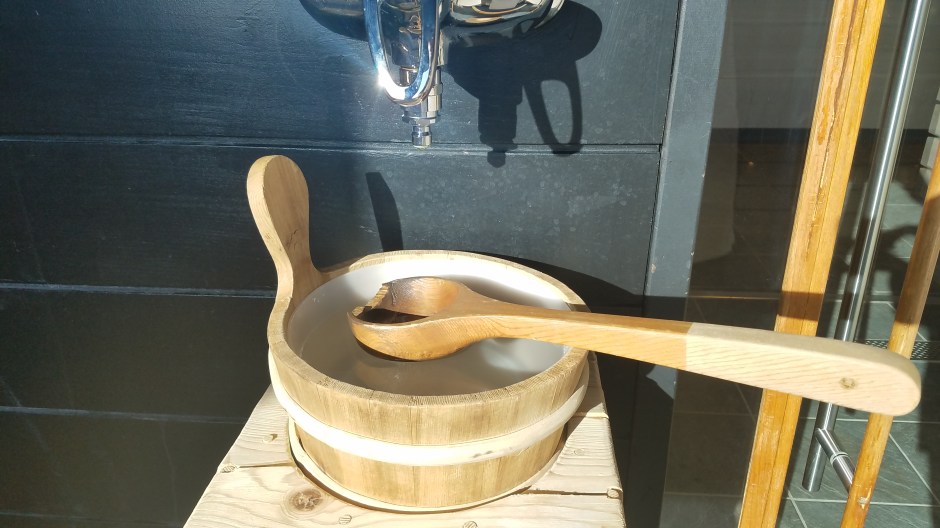
Built in traditional Scandinavian style, the sauna featured pale wood and tiered seating, with a bucket of water to ladle onto the hot stones. While the dry heat felt mild at first, I was quickly overwhelmed and made a dash for the snow room—just like a Scandinavian might leap into a snowbank after a hot session.

Normally, I loathe the cold, but fresh from the sauna, the snow room felt invigorating. I stayed for five to ten minutes, letting the chill settle into me before returning to the sauna. Alternating between hot and cold therapy is said to improve circulation and support immune health, but I simply enjoyed how it made me feel—refreshed, relaxed, and alert. This became my morning ritual. Few others visited early, so I often had the space to myself.

The sanarium, while similar in design to the sauna, was cooler and more humid—ideal for those with allergies or respiratory concerns. It didn’t appeal to me as much. Likewise, I found the steam room too intense; the heavy eucalyptus-scented air and thick mist overwhelmed my senses. I couldn’t see more than a foot in front of me, which made it feel disorienting rather than relaxing.

The salt room, on the other hand, was a quiet surprise. Halotherapy is said to support respiratory health, reduce stress, and improve skin. Whether or not those claims hold up, I appreciated the soft lighting and the calming pink glow of Himalayan salt. Without a view, it became the perfect space for reading and reflection.

To round out my spa circuit, I soaked in the thermal pool—a supersized hot tub with vigorous jets that massaged like a skilled therapist. A gentler hot tub was available nearby, and I alternated between the two before finishing each visit on the heated stone loungers, gazing out across the ocean.

Self-Care at Sea

Throughout the cruise, I returned again and again to the sauna, the thermal pool, and the loungers. These became my personal sanctuary, often the quietest places on the ship besides my own cabin. While not every experience was my favorite, I’m glad I tried them all. This voyage was about exploration, not only of new places, but also of myself. I learned what soothes me, what challenges me, and what I’ll say yes to again. A sauna-and-snow-room combo? Absolutely. Another go in the eucalyptus steam bath? Probably not.

More than anything, this experience reminded me of the importance of self-care. I’ve said it before, and I’ll say it again: it’s easy to forget your own needs. Even on vacation, we tend to bend to others’ expectations or try to do it all. In the rush, we forget to rest.

This spa day at sea gave me permission to slow down, recharge, and care for myself. It wasn’t just a treat; it was a necessity.

How Can You Enjoy a Full Spa Experience?

In my experience, land-based spas are often more limited in scope. You might find a sauna but not a steam room, or a hot tub with no cold plunge or salt room. That’s why this cruise was such a compelling opportunity, a chance to explore a wide range of spa treatments in one location. It’s a perfect example of applying the Budget Bucket List philosophy: maximizing experiences without breaking the bank.

Still, land-based options do exist. Some high-end resorts offer full thermal circuits (at a higher price point), and you might find hidden gems in unexpected places with a little research and curiosity. Keep your eyes open, and don’t hesitate to ask questions or explore.

I encourage you to seek out opportunities like this for yourself. Who knows, you may discover a new ritual to fold into your everyday life. Because a well-lived life isn’t only made up of adventures and accomplishments. It also includes intentional moments of rest, reflection, and renewal.


Completed: 2019

Miles from home: About 800 miles to Bermuda

Cost: $200 upcharge

Not All Who Wander Are Lost… But Some of Us Stay Home on Purpose

The sun peeks through the curtains. The soft chirp of birds is among the first sounds I hear. I burrow deeper into the covers and pull my cat, Luke, in for extra snuggles. I linger in the warmth of the moment, the smell of breakfast floating through the air like a promise. It isn’t until Luke wiggles out of my arms, miffed and hungry, that I finally, reluctantly, stir.

And why should I hurry?

The day stretches out before me, gloriously unstructured. There is no checklist. No Zoom call. No tightly packed schedule to wrestle through. The world may be my oyster, but today, the only oyster I’ll be opening is a good book. This, my friend, is the gentle joy of going nowhere.

My life is full of small adventures. It’s rare for a month to pass without something noteworthy—an art fair, a botanical garden, a random road trip, or simply trying a new café across town. I like having something on the horizon. It gives shape to my days, stirs up my creativity, and helps keep the dull, dragging edge of burnout at bay.

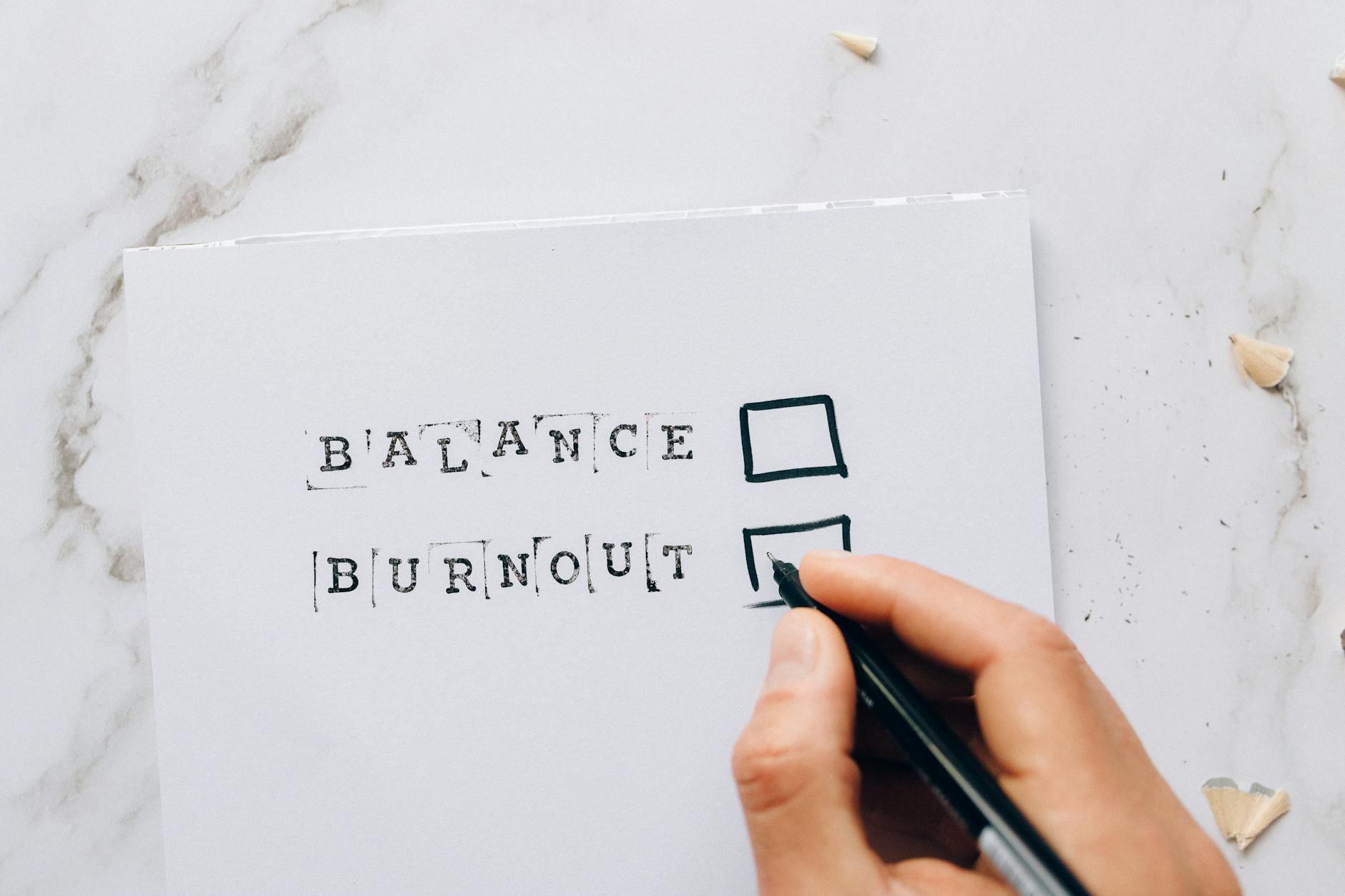
But I’ve learned—sometimes the hard way—not to overdo it. Too much “doing” tips the scales into exhaustion. Even joy can become a chore when overscheduled. My bank account is certainly a grounding force in this, but honestly, the bigger issue is energy. Constant motion, even when enjoyable, can leave me depleted. It turns out that balance isn’t just a nice idea from a wellness podcast. It’s survival.

There’s a particular kind of luxury in staying home on purpose, not because I’m sick, not because I have chores to catch up on, but because I choose to. It’s an act of intentional stillness, of delighting in the familiar. Especially if, like me, you’ve curated your space into a personal sanctuary.

My home holds my books, my tea collection, my cats, my dog, my violin, and my garden. These are not filler items between “real” adventures. They are the adventure. These are things that remind me of who I am when no one else is watching. You may remember that many of these are on my Bucket List, and you’ll find I’m checking them off right from the comfort of my deck with a glass of wine in hand and a sunset to keep me company.

It’s a profoundly healing act to stay home and do…nothing.

In this quiet space, I can finally hear myself think. I’m not trying to wring productivity from every last second like water from a rock. I’m not chasing dopamine hits from Instagram-worthy moments. I’m just being. And in that being, I find presence. Spaciousness. Energy I didn’t know I had.

This is my rebellion against the hustle. A resistance to the noise that tells us we’re only valuable when in motion, only interesting if we’re checking off countries on a map.

Going nowhere lets you find your rhythm again. It allows you to ask, without the usual pressure, “What do I really want today?” And sometimes the answer is “absolutely nothing” in the most glorious way.

Too often, we assume the answers lie far away, on a beach in Bali, on a mountain in Switzerland, in a cottage somewhere in the Scottish Highlands. And yes, those places are beautiful. But they also come with traffic, airports, long lines, and stress. We swap one type of exhaustion for another and call it “escape.” I don’t know about you, but I often need to schedule a rest day just from traveling back from my vacation.

What if, instead of waiting for a two-week vacation to save us, we built tiny vacations into our lives regularly? What if “rest” wasn’t the reward for being good, but the foundation from which we move and make decisions?

We may simplify our lives, but have we simplified ourselves? It’s far easier to declutter your closet than to declutter your expectations. We’re so busy trying to escape our own lives, we forget that it’s possible to build one we don’t feel the need to escape from.

So today, I’m not checking in, checking bags, or checking my itinerary. I’m checking in with myself. I’m home, and that is not the consolation prize.

It’s the destination.

Spend Time With the People Who Build You Up

With summer fast approaching, many of us will find ourselves a little more social. The days are longer, the weather is warmer, and suddenly your calendar is filling up with invitations. Garden tea parties, picnics in the park, birthday celebrations at the lake, beach days, you name it, and someone is planning a soiree. 

And yet… as the days creep closer, you start to dread the plans you already agreed to. You sigh the morning of the event, stare at your closet half-heartedly, and start crafting increasingly creative excuses in your head.

But why?

Maybe you forgot about that post I wrote on boundaries (tsk tsk) and said “yes” when you should have said “no.” Or maybe you genuinely thought you’d enjoy it, after all you want to spend more time connecting with others. You’ve read this wonderful blog encouraging you to get off your phone and into the world more, to drink richly from the marrow of life. It was actually quite exciting until you remembered who would be there. Ask yourself: are you about to spend time with people who energize and encourage you? Or with people who make you feel small, doubtful, and drained?

Spending time with the wrong crowd can take a real toll:

  • Lower confidence
  • Reduced motivation
  • Increased anxiety
  • Stalled personal growth
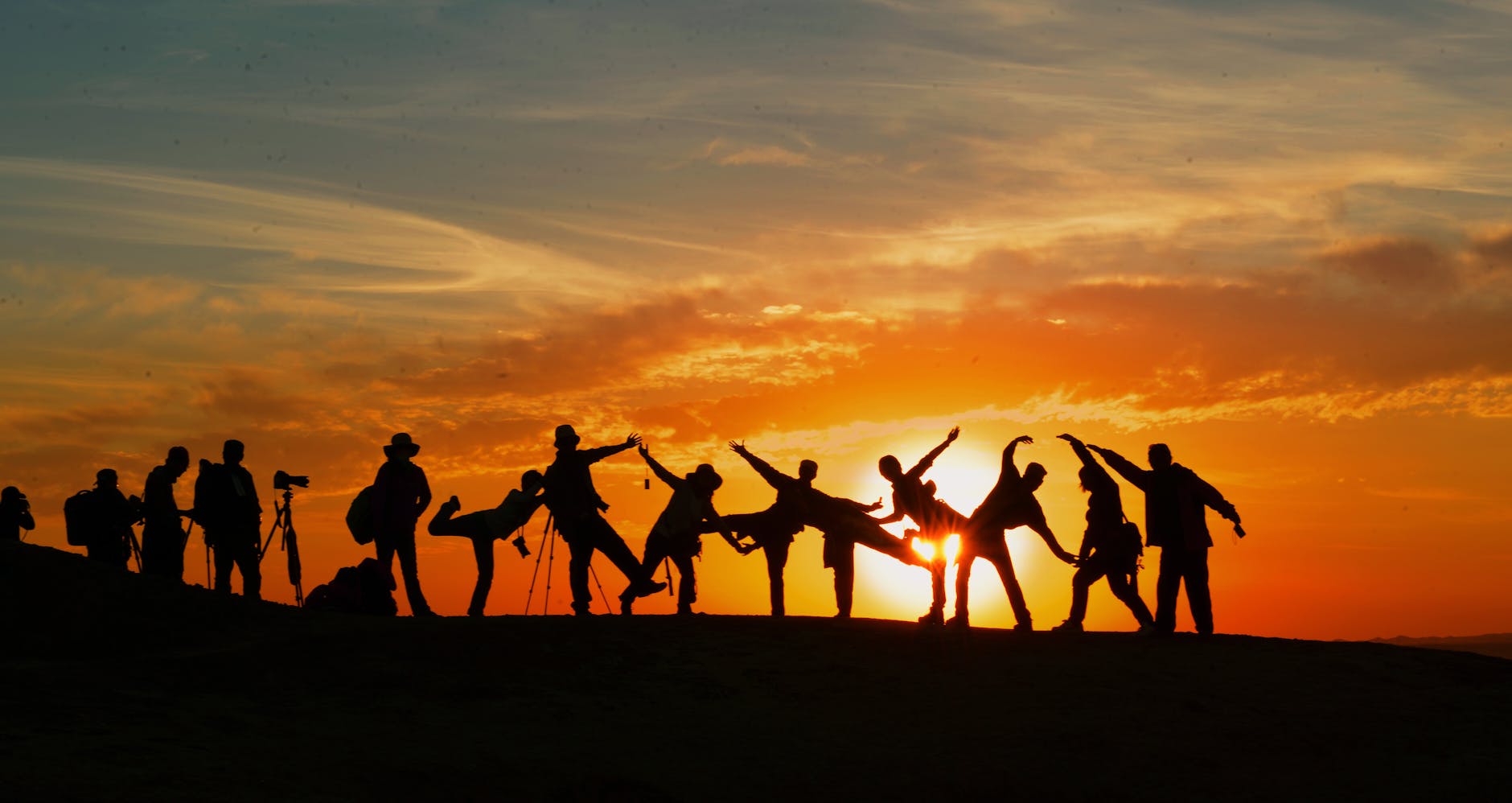
Photo by Dio Hasbi Saniskoro on Pexels.com

But the right people? They light a fire in you. They cheer you on, challenge you in healthy ways, and help you see the best version of yourself, even when you can’t or stubbornly won’t. When I make plans with people who lift me up, I’m counting down the days with excitement, not dread. I leave those hangouts feeling joyful, recharged, and more motivated than ever. Do not mistake my tea parties for merely places to spill the tea, it may also be the place to plan my next conquest! 

My village doesn’t agree with me on everything, far from it. But they challenge me with kindness, although tinged with sarcasm and playful barbs to get me really thinking. I truly do enjoy the mental sparring matches that comes from a good debate! They point out gaps in my logic or offer new perspectives, not to tear me down, but to help me grow. Iron sharpens iron, as they say. And I do the same for them.

So yes, I consider the invite and the guest list. My time is precious, and I’d rather spend it watering relationships that nourish me than trying to revive ones that wilt my spirit.

It’s because of these people that I started working out. That I dove deeper into history. That I re-examined and reshaped long-held beliefs. That I went back to school, earned my LCSW, and am (hopefully soon) launching my own practice.

Photo by Pixabay on Pexels.com

None of that would’ve happened if I’d kept company with people who doubted me or discouraged growth. Because while I do believe in spending time connecting with others and combating the loneliness epidemic, I want to make sure that I am spending my time wisely. After all, the loneliest people are usually the most popular as they are surrounded by the crowd of the wrong people. You will gain none of the benefits of spending time with others described in earlier post if you aren’t with people who build you up. Connection is more than just spending time with others, it’s about being in community with them. A community that thrives together and works towards the good of its members.

So as you fill your own social calendar this summer, ask yourself:

Do these people build me up—or tear me down?

If it’s the latter, it’s okay to politely decline. Protect your time. Spend it with people who inspire you, support your growth, and believe in the version of yourself you’re working toward. You deserve nothing less.

Rest Is Not a Reward

It may seem shocking to people who know me as a bit of a workaholic, but rest isn’t a reward. It’s not something we earn by slogging through long days, hitting every deadline, or checking every box. Rest is a fundamental human need. Still, how often do we hear ourselves or others say, “I’ll rest when I’m done,” or worse, “I can sleep when I’m dead”? An amusing turn of phrase to be sure, but there’s hard truth behind it and that truth often lands us squarely in the doctor’s office or emotionally drained on the bathroom floor.

Rest isn’t a luxury. It’s a lifeline.

This is hardly a new idea. In fact, it’s deeply rooted in the rhythms of life and spirituality. Two of the major monotheistic religions, Judaism and Christianity, place rest at the center of their practice. In both traditions, followers are instructed to rest every seven days, mirroring the divine pattern of creation. Jesus himself reminds us: “The Sabbath was made for man.” That is, we were created to rest. It is not merely permissible; it is essential.

Nature mirrors this cycle. Soil that lies fallow becomes fertile. Trees drop their leaves to rest in winter. Crops rotate and fields pause. So why do we, of all living things, believe that perpetual output makes us better?

Ironically, research shows the opposite: productivity increases when we work less, not more. Countries with shorter workweeks and more frequent breaks often report higher productivity, not lower. It’s not about working harder; it’s about working smarter and that includes knowing when to stop.

Photo by Pixabay on Pexels.com

There was a video circulating online of two people racing to move bottles into a box. The first ran the length of the line, starting from the farthest bottle and working toward the closest. The second began with the closest bottles, exerting more effort up front. Though they both moved the same number of bottles, the first person conserved energy, maintained a steadier pace, and completed the task with less fatigue. The lesson? We aren’t machines. Even in short bursts, poor pacing exhausts us. Conserving energy through rest lets us go further.

Beyond productivity, rest is a matter of health. Chronic stress has been shown to reduce cognitive performance, compromise immune function, and even shrink parts of the brain related to memory and decision-making. One study found that high stress can drop your IQ by as much as 20 points in the moment. That’s not just inconvenient; it’s dangerous. When we’re running on fumes, we’re more likely to make poor decisions, lash out, or withdraw.

Here’s where things get even more interesting: when we rest, we’re not just recovering. We’re improving. Creativity increases. Problem-solving sharpens. Emotional regulation steadies. We return to ourselves.

I used to think I couldn’t rest until everything on my list was done. Laundry needed folding, emails needed replies, the garden needed weeding. There was always something. I would sit down, tea in hand, only to jump back up at the sight of a dusty shelf or an unchecked item on my to-do list. I felt guilty for resting. It felt lazy. But I’ve come to understand that rest itself is a task, one just as essential as any errand. If I only ever rested when the work was done, I’d never rest at all.

Photo by Nataliya Vaitkevich on Pexels.com

Now, I protect my rest. I schedule it, defend it, honor it. Just like I wouldn’t skip meals, I won’t skip rest. And something beautiful has happened: I’m more present. More focused. More me.

Practical Ways to Prioritize Rest

  • Schedule it. Treat rest like an appointment. Block it off.
  • Start small. Try a “mini-Sabbath”: 30 minutes of screen-free silence, a guilt-free nap, or a short walk with no destination.
  • Name your rest. Know what makes you feel restored—books, baths, hikes, baking, journaling, music.
  • Watch the guilt. If you feel it creeping in, treat it as a signal—not to push harder, but to ask yourself why rest feels wrong.

Other cultures have long understood this need. In Spain, the siesta remains a valued (if shrinking) tradition. In Japan, the concept of forest bathing walking quietly in the woods is seen as medicine. Scandinavians practice hygge, a cozy kind of restful living that celebrates softness and slowness. These aren’t lazy practices, they’re wise.

Rest also helps us manage crisis. When I’m in a high-stress period, family illness, professional setbacks, emotional upheaval, I know now that my first move isn’t to power through. It’s to pause. Even five minutes of stillness can reset my thinking, stop a spiral, and allow my rational brain to return. Otherwise, I’m just making tired decisions on a tired brain that will create more problems down the line.

Let me be clear: sometimes we do need to push through. Emergencies happen. Sacrifice is real. But those should be the exception, not the norm. If we consistently ignore our bodies and brains when they beg for rest, we won’t just burn out; we’ll break down.

We live in a culture that worships hustle and labels exhaustion as noble. It tells us to chase productivity like a prize. We see rest as a reward to be earned something we get only when everything else is perfect. But life doesn’t work that way. There’s always another errand. Another inbox. Another obligation.

Photo by Andrea Piacquadio on Pexels.com

So here’s your permission, if you needed it: you don’t have to finish everything to earn rest. You’re allowed to stop. You’re allowed to care for yourself not because you’ve done enough but because you are enough.

Rest isn’t about checking out. It’s about tuning in. It’s the quiet space where we meet ourselves again.

So kick up your heels, grab a cup of tea, find your favorite corner of the couch, and take the rest of the afternoon off. You’ve got nothing to prove. And everything to gain.


Reflection prompt: When was the last time you rested—not because you earned it, but because you needed it? What changed afterward?

The Winding Path to Your Destination: Prayer Labyrinth

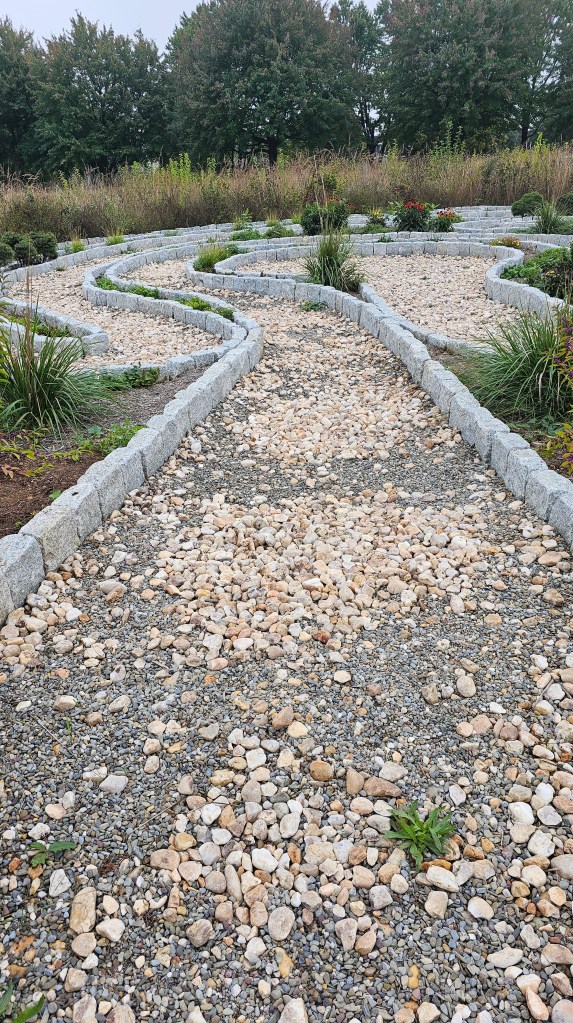
Unlike a maze, a labyrinth does not have many branching paths intent to challenge one’s navigational skills, but instead is one single path leading to the center. It is intended to symbolize a meditative spiritual journey without the possibility of becoming lost. There is one entry point and one endpoint, the only exit is to follow that path in reverse. 

Labyrinths have been used by the Christian faith since at least the 300’s and it gained popularity in the 600’s as a substitute for pilgrimage to the Holy lands after the Muslim conquest. In the faith, the labyrinth represents ones journey with God, as one arrives at the center one is entering arrives to be with God in perfect union. When one leaves, one has left a holy place to go back into the world. The practice is intended to be one of quiet contemplation and meditation, to pray and commune with God. It is a different form of worship as most often other forms are very stagnant in terms of physical movement. You sit at church to hear the preacher speak, you may stand up to sing and more modern churches may have people wave their arms in the air, but for the most part the movement is very limited. In this way, your whole body is part of the worship, the act of walking becomes part of the prayer. 

Many labyrinths are outside allowing creation to return to its intended purpose of being our Cathedrals and places of worship. It returns us in a sense to the garden paradise and thus reinforces the journey back to God which the labyrinth intends to mimic. The ordinary act of walking in nature becomes transcendent. 

The path that leads us back to God is not a straightforward path. It winds around at times seemingly moving us farther away from our goal, turning us away from it even though that is the only way to move towards it. To take that next step is an act of bold faith and trust that the path will lead where it is meant to be. In some labyrinths the path just before the final journey to the center takes us to the farthest point as it winds us all the way out and around before finally turning to the goal. 

Life can often seem that way as well. It can seem that we are being led down paths away from our goals or that we are farther away from what we are striving for than when we started. We may be tempted to turn back and try to go another way, only to discover there is no other way. We may find ourselves frustrated by the seeming lack of progress and give into the despair of hopelessness. The only way is forward, to trust the path and take that step of faith. 

As one walks the path of a labyrinth, one may notice weeds or patches of clovers popping up depending on how vigilant the groundskeepers are. Then again what is truly a weed in a garden devoted to God? Is it not his creation that has been sent there? The judgments of the world hold little sway there, perhaps they serve as a reminder that the flaws and shortcomings we see in ourselves are gifts from the creator. The obstacles in the path are not obstacles at all but blessings. 

It was on a cool October morning, when the land was covered in fog that I embarked on my own prayer journey at a local church. I had read about prayer labyrinths and their meditative uses for quiet reflection and solace. As I was going to be in town on other business, I decided on a whim to drive a little out of my way and go in search of it. The labyrinth was tucked away behind the church in the wildflowers. Although being October, most of the flowers had lost their luster as they prepared for winter. The field itself was devoid of the bright hues one associates with flower fields; instead the plants had been transformed into dark sentinels to stand watch through the darkest months. 

At the entrance, I placed my phone and car keys to the side in order to devote myself fully to the practice intended by the architects of the labyrinth. Pausing at the front, I took three deep breaths to ground myself and be fully present in the moment. Then I began to walk and prayed. I wound around the path allowing it to twist and turn as it would taking in the few still blooming flowers which dotted the inside. As I approached the center, I paused knowing that in the next moment I would be stepping into the inner sanctuary. I then stepped into the middle and rested in the presence. My journey out was slightly different than my journey in as I softly hummed hymns to myself. Perhaps, I was taking the joy of heaven with me in the form of music and song.

Once I returned to my phone, I did pick it up for purposes of documenting in pictures the labyrinth in part to be able to return mentally to that place once more. In part to be able to share the experience with you dear readers with hopes that you will be encouraged to go on your own meditation journey. Still, on my second journey inward, I found myself still meditating and reflecting as if the design itself instills the mindset. It was on this second journey that I considered the imagery that labyrinth invokes. It was during that time that I reflected that at the point where I was seeming farthest away was actually when i was closest, even though when I first entered the center appeared to be just within reach. It was in taking pictures, that I reflected on the apparent weeds and wondered if I could call them weeds since they were in a sense planted by God. If God could have weeds in his Holy place then surely they are not weeds at all and if I saw them as weeds was I not looking with the world’s eyes? What did I see in my own life as weeds? When did I think that I was far from my goals when they were just within reach if only I kept going? What might I see if I looked at my own life as a labyrinth? 

On my way back to my car and out of the wild flowers, a butterfly came floating by my face, twirling around me and floating above. Was it a sign that the prayers asked would be answered? Was it a message of hope? Perhaps. Perhaps it was just a butterfly. Still, I shall take comfort in it for whatever may come in the next days. I shall remember the lessons of the labyrinth and sing the hymns of faith and thanksgiving. 

How can you experience a labyrinth? 

First dear reader, you need not be of the Christian faith or of any faith to enjoy the benefits of a prayer labyrinth. Many are simply called mediation gardens and even those without a faith find benefit to walking in them. The practice of meditative walking still helps people connect with their bodies, commune with nature, alleviates stress, supports their minds and improves over all well-being. You may find yourself making similar reflections as I did that life has its many twists and turns. You may reflect that the only way is to move forward and trust that you will obtain the goals you are reaching for. You may ask yourself if the flaws you observe are truly flaws or simply the way you’ve been trained to see them. Perhaps, you will leave as I did with a slightly different outlook than when you entered. 

Labyrinths can be found all over, at churches, hospitals and other public spaces. Some people have created them in their own backyard. Each one has a unique design and some are much bigger than the one I visited on a misty morning. It may be difficult to find as they are not always advertised and some are not necessarily open to the public. However, I found that with careful research I was able to locate one not 10 minutes from my house. I encourage you dear reader to visit a labyrinth. I think you will find the experience is worthy of your time.

If you don’t have access to one, then a meditative walk could help you achieve a similar affect. After all it’s about getting a similar result from a given experience. As always, dear reader, we needed do the exact thing to achieve the same or even better results.

Completed: Fall 2024

Miles from home: 5

Cost: Free

Spa Days & Self-Care

If someone had told me that I would be one of those women who get massages every month, I probably would have laughed in their face about the foolishness of such a self-indulgent and frankly expensive habit. I never dreamed that the words “I’m sorry I have my massage that day, I can’t,” would escape my lips. However, that was before I discovered the many health benefits of massage.

I believe I’ve shared my mom’s health issues and how at the age of 46 she suffered a stroke which left her disabled. For almost twenty years, she has had over twenty surgeries, dozens of hospitalizations for various infections, has developed diabetes and other autoimmune disorders and at one point was in a wheelchair. To say that I started taking my health very seriously is an understatement.

For me, massage and other spa related activities are to help prevent having serious issues. Despite the expense of the monthly massage my logic is rather simple for the budget minded (as we all are here on this blog). My mother spends well over $100 every month for her medication and is in near constant pain. I can spend $70-$100 each month on a massage and feel great, look great and enjoy my life to the fullest. This isn’t to say that people with chronic illness can’t enjoy full lives – just, it’s a lot harder when you’re sick and I don’t think a single one of them reading this would argue that point. I think most of them would say, “pick the massages!” over the medications and pain.  

Besides feeling great, massages are known to reduce stress and anxiety, improve sleep, lessen pain and muscle tension, improve immune function and help the facia system. You might not be familiar with the last one on the list. Facia is connective tissue around our joints, muscles and organs which helps provide structure and allow for fluid movement. When our facia isn’t well cared for it can cause many painful conditions. Something they found massage does is help to ensure the facia fibers are nice and straight instead of a tangled mess. That knotted muscle? May actually be “knotted” facia! 

Photo by Photo By: Kaboompics.com on Pexels.com

Fun family side note, my mother was diagnosed with mixed connective tissue disorder which affects her facia which explained the twenty surgeries in twenty years. Her joints were literally falling apart because her facia couldn’t hold them together and since she’s starting going to a massage therapist regularly she hasn’t needed another surgery on her joints. It has a pretty strong genetic component, so there’s a significant chance that I will have issues with my own joints if I’m not careful.

I have found this seemingly self-indulgent habit has been key to keeping me healthy and active, along with a healthy diet and regular exercise. Each month it’s an appointment with myself one hour to truly relax and unwind. I enter the spa greeted by friendly faces who have come to know me well. I sign some paperwork, they review any changes and then my neck is wrapped in a warm towel until my massage therapist is ready for me. She reviews my history, checks to see if there has been any changes. I find it’s important to communicate anything that has stressed my system out whether that’s a lot of time spent in the car, extra gardening or stress at work. Together we formulate a plan, she relying on my own experience and me relying on her expertise of how to address the problems (usually a tense right shoulder). 

After she leaves the room, I underdress to my comfort level and slip into the luxurious blankets, warmed by the heated table. I take a nice deep breath in and hold it before letting it slowly out. Tranquil music plays overhead in the dimly lit room. Already, the stress and tension begins to leave my body and for the next hour, it’s all about me. No one can reach me with my phone turned off and my smart watch tucked away in my purse. There is nothing to interrupt the time I have set aside for my own self-care. Alexandra makes adjustments as needed from the temperature of the bed to the pressure she uses, checking in with me and asking for feedback. Parts of me which ached and protested movement release under her careful administrations leaving me in a state of blissful tranquility where the stress of daily life has melted away. 

Imagine sinking into a comfortable, cushioned table as skilled hands begin to work their magic. The pressure varies from gentle strokes to deeper kneading, melting away any tension you might be holding. The sensation of the massage is both calming and invigorating. As the therapist’s hands glide over your muscles, you might feel a warm, soothing release, almost like a wave of relaxation washing over you. Time is almost suspended as she works over each part of your body. The scents of the oil waft into your nose transporting your far away from the world. Your mind drifts between reality and a dream. Then what could have been an eternity or mere moments, she whispers ever so softly that it’s time. She slips out of the room and you begin to move your heavy limbs, stretching them out as if testing them. You take one more deep breath in and out, before slipping back into your clothes and re-entering the world. 

Photo by Andrea Piacquadio on Pexels.com

I have gotten several different kinds of massage from the classic swedish, to the hot stone, to himalayan salt stones to even alternating between hot and cold. My favorite is the hot stone because the heat sinks deep into the tissues allowing Alexandra to work the muscles and facia more easily to maximize her effectiveness. 

There is something to be said about setting aside time each month for yourself as a “mini-vacation”. For one hour, I completely disconnect from the outside world and focus on nothing else but relaxing. There is no one else to intrude upon it and I can either strike up a conversation with Alexandra or tell her that I want a quiet session where I can focus on my breathing or half doze. I am obliged to no one, not required to think or decide, it is truly a getaway. So many times our trips and free time get filled up with activities that while fun are not necessarily restful and rejuvenating. That is precisely what my monthly appointment entails. There are few other places that bring me the same level of relaxation. 

I think we often overlook self-care and the things we need to do for ourselves as indulgences or even selfish. It is not an indulgence for me to say that given my family history, I need to take extra preventative steps for my physical health. It is also not an indulgence to say that I have a stressful job as a social worker and that carving out untouchable “me-time” is not being selfish. Caring for ourselves is as important as caring for others, after all if we don’t care for ourselves, eventually we will be the ones needing the care. It’s not an indulgence or selfish to do things for yourself.

I liken it to when the oxygen level drops suddenly on an airplane. You are to put your own oxygen mask on first before assisting others. The reasoning is perfectly logical, if you end up passed out from lack of oxygen while trying to help someone else, chances are there will be two people in medical distress instead of one. You do no one any good passed out from lack of oxygen! My mom despite the improvements still isn’t healthy and still needs help around the house. I have to be able to care for us both, which means taking the time to take care of me. Part of that self-care, is the monthly massage. 

Photo by Andrea Piacquadio on Pexels.com

How can you get a massage or begin a monthly self-care routine?

Luckily, there are many options available for a massage from a one time fee to a monthly membership. I happen to have a monthly membership with Hand and Stone for about $70 each month. Which is probably about the cost of most people’s daily coffee habit. The membership fee covers the cost of a one hour massage and if I miss a month it rolls over into the next month, so I never need to worry if I am unable to make it in that I will have “wasted” my money.

Even if you cannot make it a monthly habit, it is good to indulge in yourself occasionally with spa days or even just a massage occasionally as it is a readily accessible mini-vacation that can fit into almost any schedule no matter how busy. 

However, whether you indulge or not in them, I still recommend making a habit of self-care. Schedule meetings with yourself where you take time to stretch, meditate, drink tea or just lie in bed and snuggle your cats. Turn off your phone, listen to relaxing music and just be for a small period of time. Get a spa kit for home and indulge in that way. If you have a partner take turns giving each other neck rubs. There are books and resources to help you learn some of the techniques of the massage therapists. 

Completed July 2017 (ongoing)

Cost: $70 with membership (ongoing) or one time fee $120

Miles from home: 3

What a Wonderful World: Cultivating a Vacation Mindset When You’re Not on Vacation

I think one of the reasons everything seems so much better on a vacation is because we’re able to leave behind the worries, stresses, and responsibilities of everyday life. IWhen I do go on vacation, not only do I leave it behind, I almost always have a “flex” day for when I return, I make sure all bills are paid up early and I make sure my house is spotless before I go. This means that I don’t have to worry about returning to housework, everything is paid for and I still have an extra day where I’m not working. I have an entire day to prepare to “return” to the mundanity of life with all the worries, stresses and responsibilities of everyday life. It also means that I don’t have to begin to prepare to return until after the vacation is completely over thus “protecting” the vacation mindset. Another protection I give myself is having things fairly planned out, with room to change them if the need arises, but having done most of the decision making beforehand means that not even the worry of a decision can possibly bother me. 

Sidenote: The flex day is usually spent snuggling my pets who missed me and ensures that I meet their emotional needs after being separated from me. It’s like a whole bonus vacation day and I love absolutely it. 

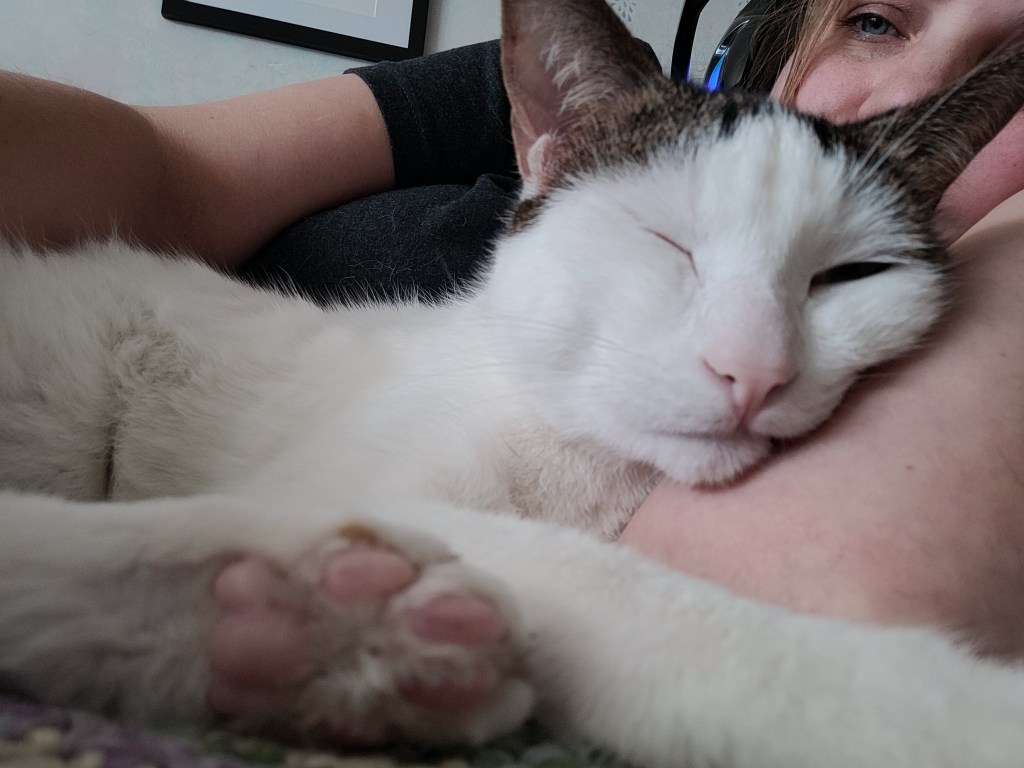
Cat snuggles at the end of a vacation away is the purrrrrfect welcome home

Because we’re able to “set aside” our “real” lives while away, it means that we are much more able to focus on what’s happening to really enjoy what’s happening in the present and savor those moments. Vacations just feel more fun even if we’re doing an activity that we could arguably do at home. 

Consider going to the beach or the lake. A day at the beach or lake nearby is lovely, but what about say going on a cruise and picking a day at a tropical beach. Objectively, a beach is a beach. Sand, check. Water check. Waves check. Yet, in comparison to my last day at the beach on the Atlantic coast vs my day at the beach on my cruise. The cruise one stands out as better. Why? Both trips, I spent time swimming in the water and then laid out under some shade to read my book. Perhaps it was less crowded, but I went to a less crowded beach before. Perhaps, it’s because I didn’t have to lug my chairs and towels. Maybe? Or perhaps it was the mindset I was in. I was mindful to be in the present. It seemed better because I was more relaxed and worry free. I simply was in the moment. All I was concerned about was the beautiful weather, the feel of sand between my toes and the gentle lapping of the waves as I sipped a drink and read. I was in my body in a way that I wasn’t really before. 

I would hazard a guess that was the biggest difference, not the location, not the fact that I was on a cruise or whatever else, but my mindset. If I went away for a vacation and life followed me there, I probably would be miserable and perhaps, vow to never visit that location again having associated it with a terrible experience. No wonder we’re all looking to escape to far flung places rather than living where we’re at. 

Photo by Daniel Moises Magulado on Pexels.com

So how does one cultivate a vacation mindset while doing things at home, perhaps on the weekend, a single day off or on an evening out? First, you must create some boundaries around those activities. For me, I may schedule a preparation evening the day before. One where I do a more thorough cleaning of the house or at least make sure it’s well straightened up so that when I leave to go do what I want to do, a bunch of housework isn’t lingering behind in my mind’s eye. I may look ahead of upcoming responsibilities such as bills or projects I need to get done and try to get as many of them done beforehand. My alternative is to have on my calendar a block of time dedicated to those activities. I find that when I block out time to get a task done, the stress associated with it diminishes greatly. Mostly because my brain is able to accept it will get done and then not worry about it. It also means disconnecting, airplane mode can be your friend or if you’re too afraid of that because you have children at home and you want to make sure you’re available in an emergency, setting your phone to “Do not Disturb” where you can still get phone calls in an absolute emergency. All of these things help me set a boundary to keep the outside world out of my leisure activities. 

By setting a boundary with the rest of the world, it’s much easier to cultivate mindfulness. What do I mean by mindfulness? I mean being fully present in the moment, being aware of the physical realm around you and your own body. One could call it being grounded in your current reality without being distracted by things in the past and the future. This allows you to turn the mundane into something extraordinary. Consider a trip to the farmer’s market. Apparently, this fairly ordinary thing here in Lancaster is a coveted activity by many a tourist and don’t get me started on the “farm to table experience” that people pay an arm and a leg for or as I call it Wednesday night’s dinner. 

When I go shopping, I am on a mission. I get in and out as quickly as possible, I have a list, I know where the items are at and I don’t want to spend a single moment lingering. I am busy and I have things to do. A tourist on the other hand, linger. They pick up the fruit and smell it. They admire the textures and colors of the different vegetables. They see the display baskets as quaint, harkening back to the days when all our food was sold in little markets and stands such as this one. They admire the baked goods, mouths almost watering in anticipation. They strike up a conversation with the farmer behind the counter asking curious questions. For them, this is their bucket list experience. For me it’s grocery shopping. The same place, the same activity, two completely different experiences. 

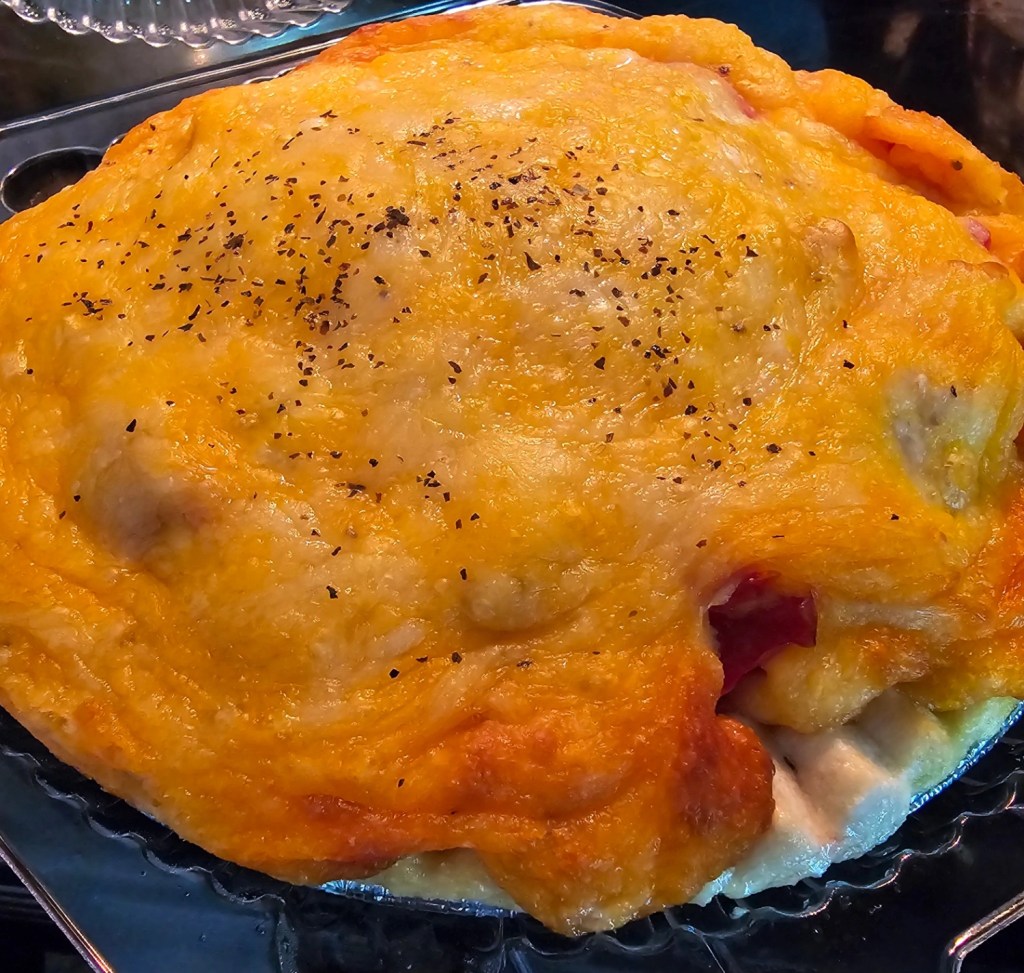
My farm to table dinner: tomato pie

What might I find if I scheduled some extra time in my busy schedule to meander through the aisles? What delights might my eyes see? What smells might make my own mouth water if only I would pay attention? If one can turn grocery shopping into a bucket list experience, what might happen if when one goes to an event like a festival, concert or museum one cultivates this same mindset? As for Wednesday night’s dinner, a trip to Root’s Farmers Market on Tuesday can yield a farm to table experience without the price tag. Buy direct from the farmer at their stand to make in your own kitchen. 

If you take time to cultivate moments to be on vacation, even for an afternoon, you will find you are more refreshed and better equipped for the daily inconveniences and stresses of life. It is different than escaping into your phone which is merely a distraction and often fuels negative feelings about yourself. Unless you’ve carefully trained the instagram algorithm to only show you cat videos – which I have intentionally from day one – scrolling on social media will not help you feel better. Being mindful connects you back to your body, relaxes you and allows you to cultivate moments of joy and gratitude even for simple things like a bushel of tomatoes. 

It isn’t about what you’re doing, but how you’re doing it. We can create amazing moments in the ordinary if we only open our eyes to see what a wonderful world we live in.