East Meets West: D.C.’s Annual Cherry Blossom Festival

This post comes from one of my reverse bucket list items, cataloged in 2017. 

It was my senior year of college and I was the co-president of the Japanese Culture Club with my roommate Ray. The official name was Kouen-Kai for lecture and gathering. Myself and other anime/Japanese culture enthusiasts would gather together each week to watch shows from Japan, talk about Japanese history and learn about the culture. Some of our members had family members who were stationed or resided in Japan. Some were learning the language. It was a way to expand our horizons and share a mutual passion. We might snag Japanese treats from online or local specialty stores or attempt to cook something we found online. It was a causal club of nerds who developed friendships and hung out. We found we had more in common than just a love of anime and so for the next four years, the anime club members became my besties at college. 

Over the years, members came and went, but the greatest loss for myself and Ray came in our senior year when most of our closest friends graduated. I was worried the club would feel empty without these people who I had come to know so well. Then in came the freshman, an adorable group of a-dork-able, socially awkward boys who, if left to their own devices, would isolate themselves in their rooms and never see the sun. Naturally, we pushed them to get out and socialize, not allowing them to sit alone for days on end without human interaction or forget what grass looked like.

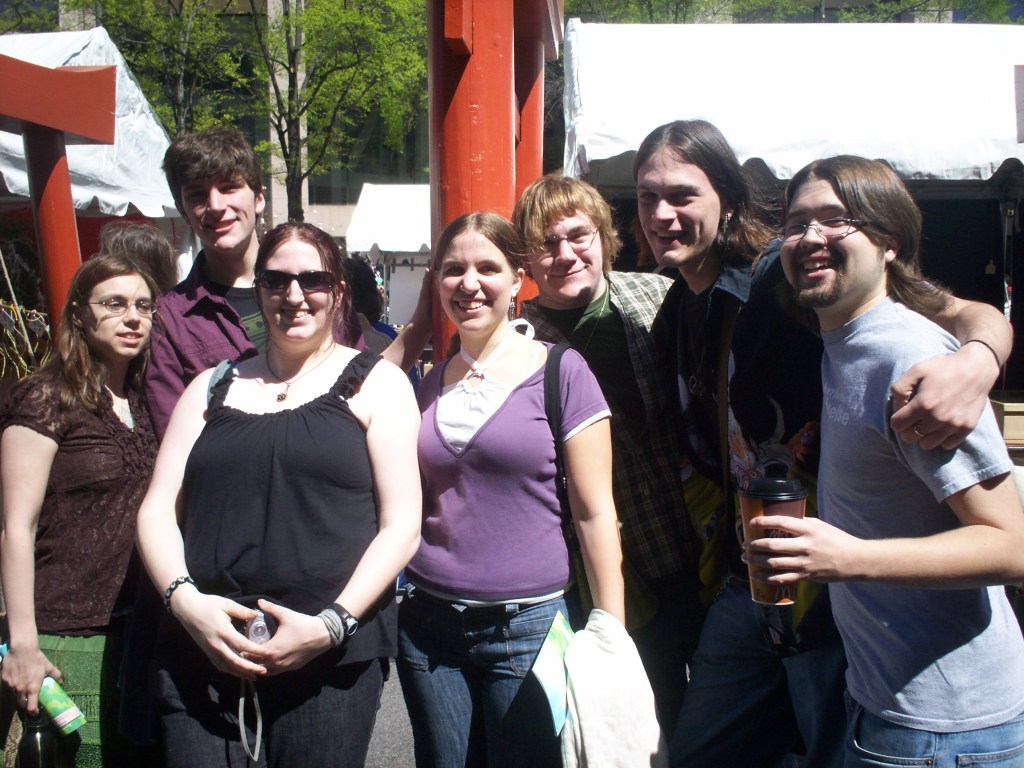
We developed a semi-mom like affection for them and so in the spring of 2006, we decided to take the club on tour. Each year, there is a massive Japanese culture festival in Washington D.C. when the Cherry Blossoms bloom. Being the nerds we are, it was a natural leap to get down to D.C. and experience a taste of Japan in the USA. We gathered up the troops, hopped in a mini-van, drove to a train station in Maryland and hopped on a train. 

Sidenote: I do recommend this for people nervous about driving in D.C. or even other big cities. You can always park outside it and take the light rail in. You often save on parking and you don’t have the stress of trying to navigate a busy unfamiliar place. The light rails are designed to take you to the tourist destinations and most of them are very safe and clean. Plus, walking is healthy for you!

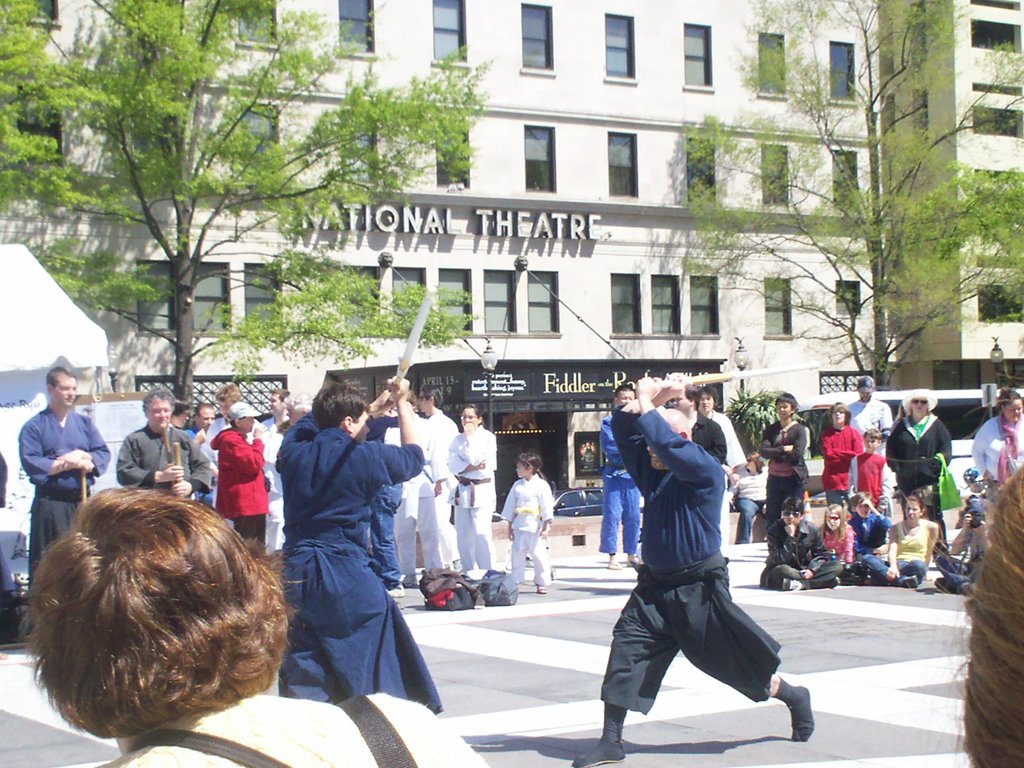
The streets were crowded with all kinds of people. Vendors featuring goods from Japan were around every corner. There were demonstrations of traditional arts from sword fighting, to dance, to tea, to music and more. Food from every corner of Japan was offered. It was a delight for any anime nerd or cultural enthusiast.

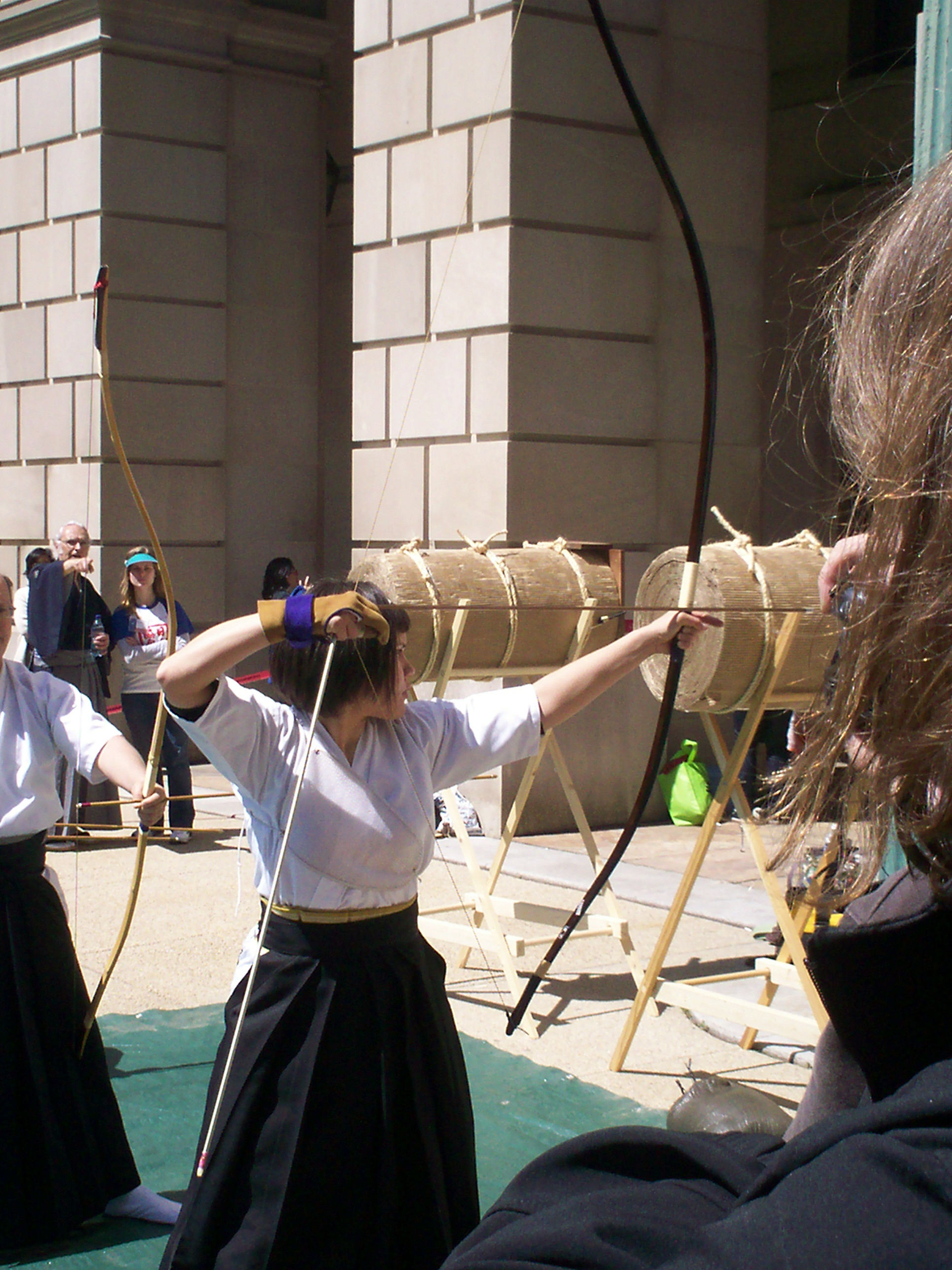
We wondered about the festival together taking in everything we could and pointing things out to one another to watch or do. Naturally, we enjoyed looking at the blossoming cherry trees, a gift from Japan to the United States in 1912. A highlight for me was watching the archery demonstration. It was amazing to see the skill up close and to see the differences between the west and the east. 

Which is really what such a festival is all about. It’s about showcasing a given culture where they can celebrate their heritage and share it with those of us not from it. We get to experience something exotic to us without stepping into the airport all while remaining authentic to the original people. Isn’t that what we’re looking for when we go abroad? A festival such as this one can bring that to you! 

I had a blast leading the gang around and not once did they get lost! Though wrangling them at times was a chore – like herding cats! Still, we managed to have an amazing day together sampling the delights of Japan and having one last hurrah as a group of friends before Ray and I graduated. 

How can you complete a cultural festival and get a taste of a different country?

Usually, you can see these events advertised in the local newspapers or on community event websites. Oftentimes they’re on Facebook. There are times when you may learn about a festival after the fact. The good thing is so many of them are annual things, so you can mark your calendar and come back to it next year. As you go, remember you are a guest of your host and should conduct yourself accordingly. They are sharing their heritage with you and you should honor that gift with respect and courtesy. 

Completed: 2010

Miles from home: 122

Cost: Attendance was Free – travel was about $20, splitting gas and buying the train ticket, plus lunch $20 

Looking for more inspiration for your own Bucket List? Check out both my Bucket List and Reverse List!

How To Cultivate Opportunities

At the end of most of my posts, I will write a little “How You Can” section so that if something I have done peaks your interest, you have a starting point. However, one may very well wonder how I’ve gathered this information in the first place. After all, how did I discover the Wolf Sanctuary or the Firebird Festival or the Wine and Cheese Tasting on the Train? How have I cultivated opportunities for myself to check off my list or to add new things? 

Simply put, I have a few go-to places for inspiration that I regularly check and encourage you, dear reader, to do the same. The first is Onlyinyourstate or atlas obscura to discover unique things that are in my area. Now, Onlyinyourstate isn’t exactly the most accurate name, after all there are many states that share common experiences, it would be more aptly named “collection of cool things to see and do in your state” – that is understandably less catchy, but some of us are sticklers for accuracy. The website is semi-easy to navigate. You click on your state and it brings up a long list of various posts of interesting sights to see and things to do. What makes it difficult is many posts are repetitive, and some of the listed items have closed or are no longer available to the public. 

Since at this point, they’ve pretty much covered most of the things to do, newer posts just tend to rehash what has already been written about but as new things do get added occasionally, one still has to sift through to find the gems. Atlasobscura is similar in both scope and difficulty of use. There are other websites that are similar, such as PAbucklist.com, but I have yet to find one that organizes itself really well. I review these sites maybe once every 6-12 months. Despite their difficulty in use, I still recommend visiting at least once, especially if you are at the start of your Bucket List journey. They not only can help you discover how to check off your list, but also can open your eyes to new and novel possibilities you’ve never even thought of before. 

One of my biggest go-to’s is Facebook Events which I will typically review once to twice a month as it is being continually updated. It’s where I’ve discovered most of my events, festivals and workshops.On almost any given week, I could log on and find something that would interest me for the upcoming weekend and many of the events are relatively cheap or free. It’s become one of the main things I use Facebook for. That’s how I found out about the Christkindlmarkt and Eco-dying. I pay attention to my local newspaper as well checking out announcements from my community which the Facebook algorithm may have missed. 

I also keep a running list of the museums, colleges, universities and theaters in the area making sure to check at the beginning of each season. Depending on the venue, most of the time this means the beginning of the year in January or in July.  That’s how I discovered the Da Vinci Exhibit at the Reading Museum and the performance of Drum Tao at Millersville University. Even smaller universities and colleges can have amazing events and opportunities. In 2016, my small Christian College hosted a presidential debate for the DNC primaries between Obama and Clinton. I have often been surprised at what a small venue can pull off and because of their smaller size many of their events are more intimate affairs. So don’t write off your own smaller venues just yet, dear reader. 

Consider other attractions in your area: aquariums, zoos, community centers and even parks may play host to your dreams. Longs Park in Lancaster City has a summer music series that has brought some serious talent to its small stage for free, opening the opportunity for many to enjoy live concerts and other performances. It was the stage that introduced me to Shakespeare as a child. You will be surprised at the wide variety of opportunities these places offer and often for free or greatly reduced cost. 

Photo by Pixabay on Pexels.com

There is also a simple google search. I will do this for things that may take a little creativity or require me to go a little farther afield than my typical roaming grounds. For example, I read about grape stomping in Italy. It seemed like it would be a fun thing to try. I hadn’t seen it on any previous intel missions to my usual corners of the internet, so I did what any good millennial would do, I went to google to start to see if there were any wineries nearby that would indulge in this ancient tradition. As it turns out there is one in the neighboring state of New Jersey. 

Once I discover a place in a reasonable vicinity (typically no more than 2 hours away unless I really want to make a day of it), I will make a note on my list for future reference. I won’t necessarily rush to go do it just that moment, but I will keep the information tucked away until I have need of it or for when the time is right. Perhaps, if I find myself making plans and I will be in the area anyways then I will tack on my item to the trip. I may also make specific plans to complete the item but cross reference my list to see if there are any other items that may be nearby. I am after all all about being efficient with my time and resources. 

The final way is that my friends and family know that I am always on the hunt for new and novel things to try, so word of mouth goes a long way. When they see something cool that they know I might like to try, they tell me or even better invite me to join them! 

As you can see, dear reader, I am not someone who sits around waiting for good things to come to her. Sometimes the fates need a little nudge. It’s about keeping your eyes and ears open, seeking opportunities and being mindful of what might be around the corner. It doesn’t mean that I can necessarily jump at every opportunity that comes my way or thing that I discover, I have (as of this writing) yet to go indoor skydiving, learn to pole dance, spend time at the alpaca farm, learn a signature dish from a cook or go grape stomping. However, I have pretty good leads on where I might do those things. Which is half the fun! I always have a list of potential adventures I could go on. There’s almost always something new around the corner waiting for me to discover and with only one glaring exception are all within a hour’s drive from my house (most are within 30 minutes). Who needs to dream of escaping your corner of the world to far flung places when it’s so full of excitement? 

Baldwin’s Bookstore: Beautiful Books! 

Book lovers know the allure of bookstores and libraries. There’s something about walking into these sanctuaries of knowledge and stories. The distinct smell of the books, the quiet atmosphere that is seldom found in other public spaces, the aesthetic symmetry of rows and rows of carefully shelved worlds. The promise that an entire universe may be unlocked with just the turn of a page. The stories almost seem to whisper an invitation and your fingers start to itch with an eagerness to begin the search. So many dance partners want to fill your card and it is almost dizzying. 

There is even something extra special about a bookstore that offers a little more. Beautiful bookstores, charming bookstores, the ones with cats and tea, the ones with stacks upon stacks of books. Ones that even use books as structures like the book tunnel in L.A.’s famous Last Bookstore. Baldwin’s bookstore is just the sort of bookstore for booklovers. Named one of the most beautiful Bookstores in America, this hidden treasure of Chester County can be easily overlooked if one is not careful. 

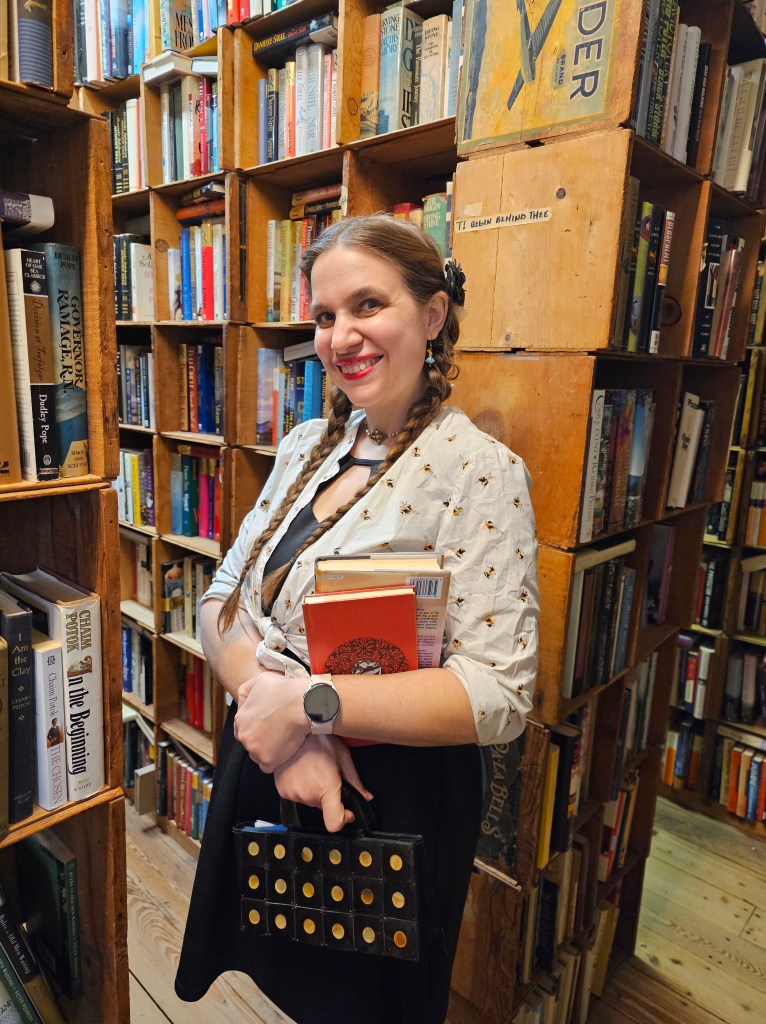
Seriously, you can drive right by it and not even notice that you’ve passed it as outside it is an unassuming stone barn. One would never guess that it houses 5 stories of books and has a sizeable collection of rare and antique books. As it is primarily a used bookstore, it is always a treasure hunt and one never knows what one will find tucked away on the shelves. It is so large and extensive that it has a map for visitors at the front and even with the map, one can find oneself semi-lost among the stacks of books. 

A quirk of the bookstore is that many of the shelves are not shelves at all, but rather nailed together crates. This charming store invites you to venture up stairs to ever higher levels. Tucked around every corner are chairs, some more enticing than others, for you to sit and read to your heart’s content. It would be easy to spend hours if not days inside the store. 

My sister and I ventured forth on a cold’s winter’s day after grabbing breakfast together at a coffee shop near my house. We had saved this particular outing for the colder months as we are not overly fond of extreme hot or cold weather. It is always good to have a few indoor activities in your back pocket for those times when it is simply too miserable to spend much time outdoors. 

Upon entering the store, we were greeted by a delightful display of older and rare books. We breathed in deep, savoring the familiar smell of books. The older gentleman behind the front desk said good morning and inquired as to whether it was our first time to the store. He showed up the map and politely explained the general layout of the store and encouraged us to peak in the backroom which housed a few artifacts from when this barn was also a home. After the short orientation, we began our exploration of the store. 

We carefully meandered through the rows of books of over 300,000 books, stopping to peruse for overlooked gems. One of the gems was the map of Philadelphia from over 100 years ago displayed on a table (not for sale). Both my sister and I adore old maps, so it was an unexpected treat to be able to sit and study it before continuing our book adventure. 

One thing of note for the taller readers, there are numerous signs to “duck” when going up and down the stairs, so be wary when transitioning between floors. Despite being in a barn, most of the areas were quite comfortable with only one or two places lacking in proper insulation for the temperature to be comfortable. We did stop to take a few pictures of ourselves in the books. 

It was easy to see why it was named one of the loveliest bookstores both inside and out. The original stone building was built in 1822 and the rustic shelving and floors only add to its charm. Sadly, I did not spy any of the rumored cats said to be residing in the barn. It is possible they were sleeping in a corner somewhere or perhaps they were no longer in residence.

My sister and I found a few treasures and made our way down the steps to the front of the building for our purchases. Satisfied with our treasure hunt, we went home to enjoy our books. I am certain that I will make the journey again for another visit. After all, with an ever changing inventory there is certain to be other diamonds in the rough to find in the future. 

How can you visit a beautiful bookstore?

Bookstores abound and business is booming. Something good that came out of the pandemic was the increased demand for real things, real recommendations from real people. We’re wired for community and connection, something that a digital reality can’t really replicate (though they do try). Not only are books a form of entertainment, but also people are forming communities around books. Bookstores are also one of the few places that seemed to sell a variety of board and card games aimed at adults. Bookstores have become hubs of community and connection. 

Going to Indie and used bookstores like Baldwin’s is often a treat not only for finding books but also for the atmosphere they provide. I encourage you to seek out the hole in the wall places. They don’t necessarily have to make a list of “most beautiful” because with all the hundreds of bookstores, how could a writer of a popular magazine or blog really know if they missed yours? And besides beauty is in the eye of the beholder. 

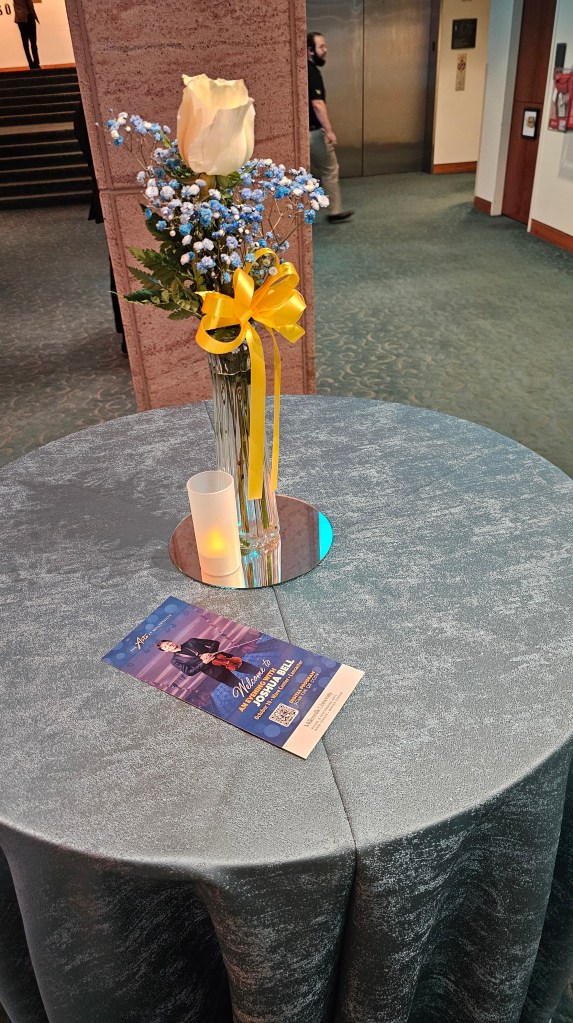
An Evening with Joshua Bell

Perhaps for many people spending an evening listening to a violin virtuoso may not top the list of things to do. However, for those in the classical music world, he is our Taylor Swift or Beyonce or insert your favorite singer/band here. He is a household name, even those who do care for the music he plays, they are still familiar with him. Joshua has been wowing audiences around the world since he was 17 years old. 

As his debut on the world stage coincided with the earliest parts of my childhood, I grew up listening to him on cassette tape and CD. I would be able to pick out his playing the moment I walked into the room being able to determine his playing from other violinists. I started playing the violin in 3rd grade and only became further in love with his command of the instrument as my knowledge grew. Needless to say, that hearing him play on a famous stradivarius violin, has been a long time dream. 

Considering that Joshua is a world-renowned musician having played to sold out concerts in the best concert halls throughout his 40 years of playing, with ticket prices only skyrocketing in recent years, it never even crossed my mind to hope that I could see him in person. Imagine my shock and surprise to see that he would grace the small stage of the Millerville’s Ware Center in Lancaster. Now the tickets were a bit more expensive that are typical of Millersville’s performances, but they were still reasonably priced for a performance of this caliber. In considering the cost of travel to venues further afield, I determined that this was simply the cost of seeing the Paganini of our time. 

I invited my mother and my sister to attend with me. My sister declined as she is not as enamored with the violin as I am, but my mother was more than happy to join me as she shared my love of Joshua Bell. We planned to go out to dinner a little early so that we would have plenty of time to find parking and get to the venue. We both dressed to impress as suitable for the occasion. We enjoyed a glass of wine with our swordfish which was complemented by the butternut squash risotto. Parking was secured in a garage which was just around the corner from the Ware Center. 

I was a little surprised to see that there was an entire reception in the front of the Ware Center with complimentary wine and a small buffet of food. A grand piano was playing softly and everyone was mingling with an air of barely contained excitement. I took the opportunity to mingle with the crowd, stopping to chat with people using small opportunities to open up conversation. A few people stopped me to compliment both my own outfit and my mother’s. After a short wait which felt like an eternity with anticipation, the doors were finally opened and we were able to make our way in. 

I hadn’t paid much attention to the seat numbers as we hadn’t been able to select our seats at the time of purchasing. The tickets had simply arrived in my email and I printed them out ahead of time not wanting to take any chances of last minute technical difficulties. Which meant that once again, I was surprised by my sheer luck. As I slowly descended further down the steps closer and closer to the stage it slowly dawned on me that I was to be in the second row from the stage on the far right (stage left) where Joshua would enter and exit. I was dangerously close to the legend himself. 

From the first note, I knew I was hearing something particularly special;it was clear no recording had ever quite done either the player or the instrument justice. The sound washed over me commanding my attention and I swear I could see the sound as colors dancing across my mind. The notes were like electricity through me filling every limb with it. Words do not quite capture the physical and emotional transcendent experience that happened as I was held hostage by the majesty of the music.  

As I watched and listened, I wanted to take everything in at once, every note, every movement of his bow arm and fingers over the strings. I could see every expression in his face and the way he moved with the music as he played. I could hear him take a breath at the beginning of the musical phrases, breathing in sync with the music. When I had recovered from my initial shock, I did manage to start to study what he was doing to produce such phenomenal sounds. Truly, the violin on which he is playing is a singular instrument, but let us not fool ourselves into thinking that should I ever be handed a Stradivarius such as the Gibson ex Huberman (provided I didn’t faint first), I would not be able to produce the same caliber of music. Whereas many people might focus on how expertly his fingers moved up and down the fingerboard keeping them perfectly disciplined, I was enthralled by the control he exhibited over the bow and how he could subtly move his wrist to change the entire tone. I found myself enraptured in an entirely new way as there is nothing quite like watching a master at work. 

After what seemed an age and all too quickly, time which had been suspended resumed and the concert came to its seeming end. However, there was a small surprise at the end of the published repertoire, he had two more songs for us, Nocturne Chopin No. 9 and The Gypsy Airs. The first Josh dedicated to a dear friend who had only died that morning, though his voice almost broke as Josh begged the audience’s indulgence to dedicate the piece to him, the voice of his instrument remained clear. Only a heart of stone would have remained unmoved by the communication of grief in the notes. The second song, was a balm to soothe the hearts of those listening, with its oft times cheeky and bright tones. 

I never wanted it to end, but once again, we came to a halt, with his bow held in the air the audience held its breath and then with all the confidence of a conductor at the start of a symphony his hand dropped and a chorus of clapping began. We rose to our collective feet giving a standing ovation of a performance truly worthy of it. He graciously accepted our accolades and made a quick exit stage left. The magic of the evening would not soon wear off as the music continues to echo in my mind and I will long to hear it again, knowing that I will have to make due with mere recordings. I understand now why women would faint to hear Paganini play. 

How can you hear a world renowned musician?

As I often remind you dear reader, one will be shocked and surprised at the offerings from your local colleges and universities. Not all world class performances take place in the vaunted halls of opera houses and symphony halls, some take place on much smaller, more intimate stages. I always check in early August for the listings of performances that I can expect over the next 8 to 9 months. I also check my local theaters and community stages. Often these places have shows that are much more affordable to see than in the larger and more famous venues. Yes, seeing a world renown artist performing on a world famous stage can be exciting, it’s also very expensive and many of the newer smaller stages have great acoustics with modern building techniques. By not overlooking my smaller, local venus, I managed to check seeing Joshua Bell playing his famous Stradivarius off my list.  

Completed: Oct. 2024

Cost: $250 

Miles from home: 20 

The Magic of Eco-Dyes: Eucalyptus Magic

For well over 5,000 years humans have been dyeing fabrics and advanced with the techniques for spinning and weaving. Plants such as madder, ford and bearberry were particularly prized for their bright colors. Over time, other plants became popular for their colors such as woad, saffron, kermes, mallow, turmeric, walnut and even juniper. The colors that they could produce ranged across the entire spectrum, although none were as vibrant as the synthetic dyes we use today. 

Given such a long history, I was surprised to learn that Eco-dyeing was a relatively new invention in the 1990’s by an Australian textile artist India Flint. The act itself is so simplistic and produces such a lovely delicate pattern one would have thought it was one of the earliest methods. Perhaps, it was and there just isn’t enough evidence left for us to discern. It is also possible that there were others before India who were using the method, but they just did not popularize it as she did. 

Eco-dyeing is very simple, as it combines two steps of the dyeing process into one. Rather than first boiling the plants to extract the dye and then adding the fabric to the boiling water to dye the fabric one seamless color, the extraction of the pigment and the application to the fabric is the same step. This produces the wonderful patterns of plants on the fabric to create a delicate web of colors and shapes. This process is known as a form of contact dye meaning the dye is transferred from the leaves directly to the fabric. 

However, while it is very simple in concept, I still desired to try my hand at it under the tutelage of an expert. Additionally, the class doubled as a birthday gift to my mom as a mother-daughter outing. I signed us up at the PA Guild of Craftsmen which incidentally was celebrating 80 years of preserving the crafts. The guild serves to promote, educate, support and encourage the craftsmen of Pennsylvania. Through their work many artists have discovered their passions, developed their talents and made a living. 

On an unusually warm October morning, we headed into the small city of Lancaster where the guild was located. As it was still fairly early the streets were still quiet which made finding parking in the garage a breeze. We took an easy stroll about a block to the location taking a note of the local eateries and shops for when the class had its break. There were instructions of how to enter the building before the Guild’s Shop opened which were easy to see and follow. Once we entered, there were lots of people who were helpful in pointing us up the stairs and down through the first room back to our classroom where we met Carol Reed, our wonderful and knowledgeable instructor. 

Carol explained a short history of eco-dyeing and laid out the general flow of the class, first we would lay out the plants, then we would wrap them around the dowel, tie them neatly, plop them in some water, wait about 2 hours and then have the “Great Unveiling”. Carol explained that we would be using Eucalyptus which could produce a color of pinkish-orange akin to salmon, a softer pink, a lighter green or a darker almost purplish green. The color was affected by different things such as the age of the eucalyptus, how long the leaves were left to boil, how tightly the leaves were pressed into the fabric, how hot the water got and how much iron water was in the water. While this is a process that could use just plain water, the iron water helps the dye adhere to the fabric and gives it some added texture and depth. 

Utilizing her expertise, she was able to give us instructions to try and get the best results for what we desired. She explained that the outside pieces would be darker so if we wanted the darker section in the middle we should roll our scarves around the dowel in a different way. She told us which parts would transfer well, telling us that the very small, delicate leaves at the end would not transfer. She explained whether the way we were layering the leaves would end up looking lovely or like a weird blotch. She helped guide us as to when we had too many leaves or too few and how far out to go on the edges. She helped us wrap them with string and explained how the string patterns would turn up like small streaks on the outside edge. 

I did not try to produce any sort of pattern, preferring to fully embrace the nature of the process as organic and natural. I cut down my long stems, having been advised that the stems would not roll well and then arranged the pieces across the scarf to mimic fallen branches and leaves scattered across the ground. I was careful not to add too many layers to avoid having ugly blotches on my scarf. I paid heed to the adage that less was more, knowing that the scarf would be folded over so the dye would be layered over the scarf. With the help of my mother I carefully wound the fabric tightly around the dowel as Carol had explained that the better the contact, the better the dye would be. I tied the string taut around the bundle securing the whole thing and then made a note of what mine looked like since Carol warned us not to put our bundles in until we could compare to discern whose was whose. 

Once everyone had their bundles ready we put them in their designated pots and took a break since we would need to wait close to an hour and a half for the dye to really seep out of the leaves and onto the fabric. We were advised eucalyptus was a particularly hardly leaf which required a longer dyeing time. Carol told us that we could use a myriad of other plants for the same process, but we would find that much less time would be needed. We were also advised that if we did leave more delicate plants in that they would turn to mush and be much more difficult to get off the fabric when the dying process was over. Carol shared that the eucalyptus leaves would just fall off, but other leaves she usually has to carefully remove. 

Having previously scouted out the area on our way in, my mom and I made our way just across the street to the Onion Cafe. It was a curious blend of American and Korean food where bowls of Ramen were offered beside burgers and fries. There were one or two “fusion” items mostly consisting of the addition of kimchi to the American options. However, as I was feeling a little 

under the weather, I opted for a spicy Ramen, figuring a hot, spicy soup was the perfect panacea for what might be ailing me. My intuition was correct, as the Ramen was perfect and I felt much better afterwards. 

We then strolled through the shops. Our favorite was a vintage clothing store,that was sadly going out of business. However, this meant they were running a clearance sale resulting in some steep discounts on our purchases, two hats (one bonus hat pin), a pair of fingerless gloves and a linen top. We then headed back to the guild for the “grand reveal”. 

To say that I was delighted by the outcome is an understatement. I absolutely loved how my scarf turned out. Mine had transformed into soft, delicate pinks, mixed with light green hues which gradually turned into darker greens and purples. The leaves scattered across the fabric had left the impression of a field or forest of plants. The rest of the group oo’d and aw’d when they first saw it as mine was the first to be unwrapped. The others went shortly after. Despite having followed the same process, boiling in the same pots, the results ran the gambit of colors and patterns. It was so interesting and even Carol couldn’t quite explain why one person’s turned out to be a vibrant orange and another person’s stayed almost completely green. 

We were told to rinse our scarves out until the water ran clear and allow them to cure for a few days before washing or wearing them to allow the color to fully set. We were told that the colors may brighten as it dried. We thanked our instructor, packed up the scarves in small plastic bags and headed home with our prizes. 

I think what I really enjoyed about the whole process was how natural it all way from the silk fabric to the dye that only came from the leaves of the plant, to the patterns that were transferred to the fabric to even the simple ingredients of water and iron water (made from rusted nails, water and vinegar).

We are so disconnected from the process of what we wear and often what we wear is synthetic which utilizes process that are harmful to our environment and ultimately ourselves. This was a way to really connect to a tradition that, as I said, goes back thousands of years, even if it’s using a very modern technique. It was simple and elegant leading to beautiful results. 

How can you make your own eco-dyed scarf?

You can, like me, find a class nearby which offers a lesson in the technique which not only teaches you the basics but also gives you access to an expert to help guide you in learning the smaller nuances of the craft. I find such experiences worthwhile and helps to enhance any first endeavor into a craft. I also like supporting local artisans, by helping them I continue to have access to specially made objects which enrich my life and my home. My local economy improves and I help preserve this precious piece of human culture for the future. 

However, not everyone has access to craftsmen and women. However, these sorts of classes are increasing in popularity as many people are realizing that they’ve lost something by going completely digital. They want to feel physical objects, interact with their environment and embrace life. Plus studies have shown that engaging in activities of creation is good for our mental wellbeing, it reminds us that we aren’t helpless and capable of great things. 

Still, you may find, dear reader, that you are unable to locate an instructor for your dyeing needs. Do not despair, as I have told you the principles of the task are quite simple and through some experimentation you are surely to get results you are happy with. I will say that it is recommended not to use the same pot for dyeing as you do for cooking. Luckily cheap pots can be found at a local thrift store. Silk scarves can be found at dharmatrading.com and the eucalyptus can be found at your local flower shop or even some chain grocery stores. Iron water is easily made with some rusty nails, water and vinegar and you’re off! More explicit instructions can of course be found online. 

You may find that you truly enjoy the process of making eco-dyed fabrics and a new hobby as been discovered. I will say the temptation to make more is certainly there, but I shalln’t give in to the temptation as I don’t know that I have space in my life right now for another hobby. Mostly my storage spades for the supplies. Perhaps one day, dear reader. 

Completed: October 2024

Cost: $80 for the class (materials cost included) 

Miles from home: 12 

The Winding Path to Your Destination: Prayer Labyrinth

Unlike a maze, a labyrinth does not have many branching paths intent to challenge one’s navigational skills, but instead is one single path leading to the center. It is intended to symbolize a meditative spiritual journey without the possibility of becoming lost. There is one entry point and one endpoint, the only exit is to follow that path in reverse. 

Labyrinths have been used by the Christian faith since at least the 300’s and it gained popularity in the 600’s as a substitute for pilgrimage to the Holy lands after the Muslim conquest. In the faith, the labyrinth represents ones journey with God, as one arrives at the center one is entering arrives to be with God in perfect union. When one leaves, one has left a holy place to go back into the world. The practice is intended to be one of quiet contemplation and meditation, to pray and commune with God. It is a different form of worship as most often other forms are very stagnant in terms of physical movement. You sit at church to hear the preacher speak, you may stand up to sing and more modern churches may have people wave their arms in the air, but for the most part the movement is very limited. In this way, your whole body is part of the worship, the act of walking becomes part of the prayer. 

Many labyrinths are outside allowing creation to return to its intended purpose of being our Cathedrals and places of worship. It returns us in a sense to the garden paradise and thus reinforces the journey back to God which the labyrinth intends to mimic. The ordinary act of walking in nature becomes transcendent. 

The path that leads us back to God is not a straightforward path. It winds around at times seemingly moving us farther away from our goal, turning us away from it even though that is the only way to move towards it. To take that next step is an act of bold faith and trust that the path will lead where it is meant to be. In some labyrinths the path just before the final journey to the center takes us to the farthest point as it winds us all the way out and around before finally turning to the goal. 

Life can often seem that way as well. It can seem that we are being led down paths away from our goals or that we are farther away from what we are striving for than when we started. We may be tempted to turn back and try to go another way, only to discover there is no other way. We may find ourselves frustrated by the seeming lack of progress and give into the despair of hopelessness. The only way is forward, to trust the path and take that step of faith. 

As one walks the path of a labyrinth, one may notice weeds or patches of clovers popping up depending on how vigilant the groundskeepers are. Then again what is truly a weed in a garden devoted to God? Is it not his creation that has been sent there? The judgments of the world hold little sway there, perhaps they serve as a reminder that the flaws and shortcomings we see in ourselves are gifts from the creator. The obstacles in the path are not obstacles at all but blessings. 

It was on a cool October morning, when the land was covered in fog that I embarked on my own prayer journey at a local church. I had read about prayer labyrinths and their meditative uses for quiet reflection and solace. As I was going to be in town on other business, I decided on a whim to drive a little out of my way and go in search of it. The labyrinth was tucked away behind the church in the wildflowers. Although being October, most of the flowers had lost their luster as they prepared for winter. The field itself was devoid of the bright hues one associates with flower fields; instead the plants had been transformed into dark sentinels to stand watch through the darkest months. 

At the entrance, I placed my phone and car keys to the side in order to devote myself fully to the practice intended by the architects of the labyrinth. Pausing at the front, I took three deep breaths to ground myself and be fully present in the moment. Then I began to walk and prayed. I wound around the path allowing it to twist and turn as it would taking in the few still blooming flowers which dotted the inside. As I approached the center, I paused knowing that in the next moment I would be stepping into the inner sanctuary. I then stepped into the middle and rested in the presence. My journey out was slightly different than my journey in as I softly hummed hymns to myself. Perhaps, I was taking the joy of heaven with me in the form of music and song.

Once I returned to my phone, I did pick it up for purposes of documenting in pictures the labyrinth in part to be able to return mentally to that place once more. In part to be able to share the experience with you dear readers with hopes that you will be encouraged to go on your own meditation journey. Still, on my second journey inward, I found myself still meditating and reflecting as if the design itself instills the mindset. It was on this second journey that I considered the imagery that labyrinth invokes. It was during that time that I reflected that at the point where I was seeming farthest away was actually when i was closest, even though when I first entered the center appeared to be just within reach. It was in taking pictures, that I reflected on the apparent weeds and wondered if I could call them weeds since they were in a sense planted by God. If God could have weeds in his Holy place then surely they are not weeds at all and if I saw them as weeds was I not looking with the world’s eyes? What did I see in my own life as weeds? When did I think that I was far from my goals when they were just within reach if only I kept going? What might I see if I looked at my own life as a labyrinth? 

On my way back to my car and out of the wild flowers, a butterfly came floating by my face, twirling around me and floating above. Was it a sign that the prayers asked would be answered? Was it a message of hope? Perhaps. Perhaps it was just a butterfly. Still, I shall take comfort in it for whatever may come in the next days. I shall remember the lessons of the labyrinth and sing the hymns of faith and thanksgiving. 

How can you experience a labyrinth? 

First dear reader, you need not be of the Christian faith or of any faith to enjoy the benefits of a prayer labyrinth. Many are simply called mediation gardens and even those without a faith find benefit to walking in them. The practice of meditative walking still helps people connect with their bodies, commune with nature, alleviates stress, supports their minds and improves over all well-being. You may find yourself making similar reflections as I did that life has its many twists and turns. You may reflect that the only way is to move forward and trust that you will obtain the goals you are reaching for. You may ask yourself if the flaws you observe are truly flaws or simply the way you’ve been trained to see them. Perhaps, you will leave as I did with a slightly different outlook than when you entered. 

Labyrinths can be found all over, at churches, hospitals and other public spaces. Some people have created them in their own backyard. Each one has a unique design and some are much bigger than the one I visited on a misty morning. It may be difficult to find as they are not always advertised and some are not necessarily open to the public. However, I found that with careful research I was able to locate one not 10 minutes from my house. I encourage you dear reader to visit a labyrinth. I think you will find the experience is worthy of your time.

If you don’t have access to one, then a meditative walk could help you achieve a similar affect. After all it’s about getting a similar result from a given experience. As always, dear reader, we needed do the exact thing to achieve the same or even better results.

Completed: Fall 2024

Miles from home: 5

Cost: Free

Forging Axes & Sibling Bonds!

As an avid fantasy reader, blacksmithing has always carried a bit of an allure. So when I was invited to attend a birthday party with my sister at the Drunken Smithy, I naturally acquiesced and trekked with her on a cold’s winter day to get warmed up by the forge. To say I was excited is an under-exaggeration. What could be more exciting than combining some of my favorite things, sharp objects, fire and hitting things? 

I was stoked to put my muscles to the test hammering out molten hot metal and shaping it to my will. I do work out and I always enjoy using my muscles for something other than merely moving weights up and down semi-pointlessly. It makes all those hours spent sweating worth it when I can use them competently to accomplish my goals independently. 

Forging weapons is an ancient human art. In fact the very materials that we humans used for weapons give rise to the delineation of pre-historical epochs Stone Age (stone weapons and tools – though this is such a long period of time it’s now broken down into palaeolithic, mesolithic and neolithic), Copper Age (copper weapons), Bronze Age (bronze weapons), and Iron Age. There is evidence that we humans have been using metals for over 40,000 years with the discovery of gold in some Spanish caves dating back to the neolithic era. The oldest known culture which utilized smelting was located in Serbia in the 6th millennium BC. Many places say that it originated there, but I allow for the possibility that there is an even older, yet undiscovered culture which may go back even further either in the same area of the world or perhaps, another part. 

It is this very long and ancient history that has always captured my imagination when reading about blacksmithing or other metallurgical crafts. In a way, it is the magic of our world. We take two lumps of unrefined metal and somehow through fire and our own sheer will manage to craft it into something truly useful. It was this craft that gave the rise to empires and civilizations. Advance knowledge or lack thereof could topple a once mighty kingdom or stop an invading horde. I was always fascinated by how different styles of weaponry and fighting arose in different parts of the world and how their strengths and weaknesses interacted with the styles of other cultures to rise to power or fall into ruin. 

There is reading about something and then there is doing something. I am someone who relishes doing, even if it’s only a small taste of the activity as it gives me a more intimate understanding of what I’m reading or studying. Being able to physically see how the metal really does slowly flow when it’s heated up and to feel the feedback of my strikes against the anvil through my arm really made it a visceral connection to all the things I’d learned. Abstract concepts became cemented in firm reality. Also, it’s just really fun to hit stuff. 

The gentlemen of the Drunken Smithy were excellent teachers. They gave general guidance to the whole group and then one on one assistance as we needed it. They listened to your goals and vision first, to try and give you enough information to go in the direction you desired without holding your hand or doing it for you. They provided just enough scaffolding for us as students of the craft to keep us engaged and excited without feeling overwhelmed. 

They did this by first limiting the range of options we could choose from keeping the initial lessons fairly simple, throwing axes or knives. Each of those options came with a pre-cut piece of metal which meant it shortened the process of crafting considerably. We would not be melting down the metals, mixing them and then shaping our weapons from a hard lump. That would be one too advanced for beginners and two take way too long for a single afternoon. 

I picked a throwing ax, because I am a Viking at heart, and my sister picked the knife. As the one who always has to go slightly off the beaten path, I naturally added a little bit of flair to my ax by splitting butt into two artfully curled pieces. I was informed this was a little more of an advanced technique but rather than discourage me from my vision, they supported me by spending a little more time one on one with me to help me see it through. 

After picking out our templates, we set to work by first making them extremely hot. We did this by placing them inside the forge which is about 1,800 degrees fahrenheit and waited until the metal looked red. Once they were red, we pulled them out with tongs and took them to the anvil. The anvil is a peculiar shape, but each part is useful in creating the different desired shapes of the various tools and weapons a smith may desire to create. The act of hammering causes the metal to flow in a desired direction and shape in the process of “drawing out” the metal. In my case, rather than only focusing on the blade of the ax, I also focused on the butt of the ax. In order to achieve the desired shape, the butt had to be split. They did this by first cutting a small piece of the metal out and then helping me drive down the split. I then drew the metal out in two different directions giving it a distinctive shape. 

What I appreciated about the process was they consistently told us that it was when we felt the blade had reached a desired shape that it was done. They gave praise and constructive feedback about how a given shape may affect the weapon’s performance, but never dissuaded people from what they were doing or trying to achieve. If we were happy with it, they were happy with it. 

After we got our weapons into the general desired shape, we left them all to cool off in sand. As they were cooling, our gracious hosts offered us snacks including sausage that we could roast near the forge. They also allowed us free reign of their drinks which included some delicious cider. If you are a vegetarian, vegan or do not eat pork products you may wish to bring something along as the primary source of protein was sausage.  

After a quick snack, we then went to the sanding machines to further refine and grind down the rougher parts. Once sanded, we dipped them in some sort of chemical that I don’t really remember what they said it was (oil?) to give them a characteristic black color rather than the gray of stainless steel. Then we put the final touches on our work by sharpening the edges into a true blade worthy of the shield wall! 

The day could not have been complete, without some ax throwing. It is a bit trickier than you’d think because the ax has to hit the target bladeside up in order to stick otherwise it bounces harmlessly off. We had a glorious time trying to hit the target and make it stick. My sister was a little better at it than myself, but in my next attempt at ax throwing, I not only hit the target, I managed a bullseye (more on that later). 

Satisfied with our weapons, we got back into our car and the first thing we said was “We have to take Josh!” (our brother). It took almost five years (thanks COVID), but we did return to the forge with our brother and forged again. The smithy has moved to a bigger location and has another expansion in the works. Once again, my sister chose a knife, but a bigger one. I chose an ax (but a bigger one) and my brother also chose an ax. We truly enjoyed both experiences and look forward to returning to the forge for another time. Who says Bucket List items can’t be done more than once? 

How can you forge your own weapon?

If you’re in the south-central PA area then the Drunken Smithy is the best choice. There are blacksmiths throughout the United States, some of them may offer classes like this one. Depending on how hands-on they want to be, the classes may range from a half day (like this one) or several days, if they are trying to give you more of the process. If you want a more intensive course, then your local college, trade school or arts centers may offer an introductory course. Artist Blacksmith Association of North America may be a good online resource to find blacksmiths in your area. 

Be on the lookout for demonstrations and ask the person where they got their start or if they know of any instructors who may be interested in teaching. One of the great things about artisans is that they desire to keep their craft alive especially in this age of technology when crafts are in danger of dying out, so many are very eager to find and direct students to keep the craft alive.

Completed: Feb. 2019 & May 2024 

Miles from home:  23

Cost: Ranges depending on the project and type of class. The Drunken Smithy has weapons ranging from $150 – $375, but they have other options such as rings and flowers which are about $50. 

My siblings and I opted for a more expensive experience. We were able to do this in part because the following month the sister outing was much cheaper. 

Christkindlmarkt: A 700 Year Old German Tradition 

Since the 1300’s small pop-up markets have been part of the Christmas season in Europe. These small December markets intended to allow people to stock up on meat and other necessities at the beginning of the winter season. These markets grew overtime to allow toy makers, confectioners and other craftsmen to set up stalls under the name “Saint Nicholas market”. They also began to sell roasted chestnuts, nuts and almonds. This tradition spread throughout the German Speaking world. It was later renamed Christkindlmark during the Reformation and the tradition continues to this day. 

Each December stalls are set up to showcase various wares for either a few days or for weeks depending on the event. Along with the wares, food vendors come out to sell traditional foods like currywurst, potato pancakes, gulasch, sauerkraut and of course Gluhwein (a mulled red wine). Those stalwart enough to brave the cold can enjoy pursuing these outdoor markets by the light of twinkling lights. 

So popular and beloved are these markets, that there are entire river cruises devoted to taking tourists along the Rhein to visit them during the Christmas season. These visitors bring back tales of the delicious food, sparkling lights and of course carefully crafted wares. After seeing photos of these places, one might begin to think that the magic of the season is best found abroad and start to dream of flying over to the old country. However, dear reader, as you have no doubt already guessed, these coveted markets are not only found across the vast expanse of ocean but rather can be found right here in the United States. Like their European counterparts, there are the larger and more famous Christkindlmarkts, such as the ones found in Grand Rapids Michigan or Bethlehem Pennsylvania. However, just as there are smaller markets in the smaller towns of Germany, there are smaller markets here in the United States. 

So it was early in the evening that I set out with my work partner, Nicole, to visit the Reading Liederkranz Christkindlmarkt. We choose that time because the market would just be getting dark and the lights would really pop against the darkness of the sky. The city of Reading is situated along the Blue Mountain Ridge of the Appalachian Mountains and so part of our journey included going up the side of the ridge overlooking the city. As we climbed above the urban center, the city gave way to suburban areas covered with trees, reminding us both of our time in Marburg, Germany. Up, up, up we went, passing houses that vaguely resembled German architecture and it was if we had been transported across the sea. Suddenly on our right the forest gave way to a small piece of Germany, the Reading Liederkranz. 

For those not in the know a Liederkranz is a German singing and cultural society which was established to promote and perpetuate German singing, dancing, music, language, foreign exchange and culture. Branches of Liederkranz can be found throughout the United States with many of them established in the mid to late 1800’s. There does not appear to be one overarching society which oversees all the branches, but rather each branch is independent of the others. Like many branches, the Reading Liederkranz hosts various german festivals throughout the year to mirror the ones in Germany. So, just like their German counterparts the Christkindlmarkt of the Reading Liederkranz occurs for a few short days during the Christmas season with stalls set up outside for customers to shop for unique gifts for their loved ones.

In addition to unique gifts, some of them imported from Germany and Austria, they offered traditional German food that can be found at the markets. I naturally had to buy some choosing to partake in the Currywurst, and potato pancakes. I was a little disappointed that the potato pancakes did not come with the traditional applesauce but instead came with sourcream. It is possible that they were simply sold out of the applesauce. I noted there were some items crossed off the menu as no longer available. As it was cold, I could not pass up the opportunity to sip on some warm Gluhwein. Gluhwein is a mulled red wine served at almost every Christkindlmarkt and I highly recommend it as a part of your Christmas tradition. 

Not every stand was exclusively German, many of the stands featured local artisans and craftsmen selling their wares. I managed to find a few treasures while I was there for both my loved ones and myself. I picked up a few business cards for later reference. I met Santa Claus giving out Candy Canes and hopefully made it to the nice list (fingers crossed). Nicole found a book that she promised I could borrow from her later and her own gifts.We enjoyed looking at the different wares and meeting the sellers which is not something one can often do these days when looking online or shopping at a big box store.  

It was not a huge Christkindlmarkt, certainly not like the larger one in Bethlehem, PA which mirrors more closely those larger markets of Vienna and Munich and is open from Mid November through late December Friday through Sunday. It’s a sprawling market of hundreds of stalls, dozens of food vendors, authentic German artists, ice skating, St. Nicholas, music and more. It’s known as one of the top holiday markets in the world rivaling its European counterparts. 

However, as I have said in other places, I’m not a huge fan of crowds and sometimes it’s better to enjoy something on a smaller, more intimate scale. After all, the towns of Germany often have their own smaller celebrations and what could be more authentic than a homegrown festival? So I spent about an hour or so wandering bundled up against the cold, sipping my Gluhwein and enjoying the piece of Germany they’ve carved out on the side of the mountain. I will certainly have to see what other festivals they bring across the ocean for us to enjoy here in the states. It may not have been perfectly authentic after all, I didn’t have to stumble through my half forgotten German to order my food, but to two people who lived in Germany it certainly got our stamp of approval. Just proving once again that one doesn’t need to book a ticket to see the world, sometimes the world comes for a visit in a nearby town. 

How can you visit a German Christkindlmarkt?

The first step is to obviously wait for the right time of the year, it is after all a Christmas Market. Most of them take place between Thanksgiving and Christmas with a few occurring earlier in November. The smaller ones often only occur on one weekend with the larger markets spanning the entire season. There are of course the more famous ones such as the one in Bethlehem but there are smaller ones like the one I went to in Reading, PA and the one in Lancaster, PA (which I am told has even better food). 

Travel websites are a useful tool to get a start as they will often name the “best” ones. Keep in mind these “best” are subjective and will be prone to more tourists and crowds. If you’re looking for a smaller, more intimate version, then google searching Christkindlmarkt or Weihnachtsmarkt (another name for these markets) may yield some good results. As always, I keep an eye out on my Facebook events page. I haven’t found other social media formats that so easily showcase events in my area. 

Completed: December 2024

Cost: $30 for admission and food 

Miles from home: 30 miles

Below is a small list of Christkindlmarkts in the United States. It is by no means a complete list but it is a good place to start especially if you’re in these areas. The dates vary each year and there is often a ticket price associated with entry.  

Arlington, TX Texas Christkindl Market

Atlanta, GA Atlanta Christkindl Market

Augusta, NJ German Christmas Market of NJ

Baltimore, MD Christmas Village in Baltimore

Belleville, IL Belleville Christkindlmarkt

Bethlehem, PA Christkindlmarkt Bethlehem

Cambria, CA Cambria Christmas Market

Canandaigua, NY Canandaigua Christkindl Market

Carlinville, IL Carlinville Christmas Market

Carmel, IN Carmel Christkindlmarkt

Charlotte, NC Charlotte Christkindlmarkt

Chicago, IL Chicago Christkindlmarkt

Chicago, IL Christkindlmarkt Wrigleyville

Cincinnati, OH Germania Christkindlmarkt

Dayton, OH Dayton Liederkranz Turner Christkindlmarkt

Denver, CO Denver Christkindlmarkt

Des Moines, IA Christkindlmarket Des Moines

Elkhart Lake, WI Old World Christmas Market

Ferdinand, IN Ferdinand Christkindlmarkt

Frankenmuth, MI Frankenmuth Christkindlmarkt

Georgetown, CO Georgetown Christmas Market

Harmony, PA Harmony Museum WeihnachtsMarkt

Helen, GA Helen Christkindlmarkt

Holland, MI Holland Kerstmarkt

Lake Worth, FL The American-German Club of the Palm Beaches Christkindlmarkt Leavenworth, WA Leavenworth Christkindlmarkt

Mifflinburg, PA Mifflinburg Christkindl Market

Minneapolis, MN Holidazzle

Mountain View, CA German Holiday Market

Nevada City, CA Nevada City Victorian Christmas

New Orleans, LA New Orleans Deutsches Haus Christmas Market

New York, NY Bank of America Winter Village at Bryant Park

New York, NY Union Square Holiday Market

New York, NY Columbus Circle Holiday Market

Oconomowoc, WI German Christmas Market of Oconomowoc

Philadelphia, PA Christmas Village in Philadelphia

Pittsburgh, PA Peoples Gas Holiday Market

Poughkeepsie, NY Germania Club of Poughkeepsie Christkindlmarkt

Reading, PA Reading Liederkranz Christkindlmarkt

San Francisco, CA The Great Dickens Christmas Fair & Victorian Holiday Party

Solvang, CA Solvang Julefest

St Paul, MN St Paul European Christmas Market

Tomball, TX Tomball German Christmas Market

Tulsa, OK German American Society of Tulsa Christkindlmarkt

Washington DC DowntownDC Holiday Market

Koizer’s Christmas Village: Let There Be Light! 

It seems almost impossible to think about Christmas without thinking about lights. In Western culture almost no other holiday is so linked with light, which is appropriate considering it is celebrated at the darkest time of the year (for those of us in the Northern hemisphere). There’s just something so mesmerizing about small points of light holding back the dark. They always bring a smile to my face. I especially enjoy seeing larger displays where people can showcase their creativity and transform an ordinary place into something extraordinary, and Koizar’s Christmas village is exactly that sort of place!  

Since 1948, the Spring Lake Dairy Farm has been delighting people. Originally, a display created for the enjoyment of his wife Grace and their four children, it quickly expanded front he original house and barn. People soon began to flock every year to see the display at the locally named “Christmas House.” Eventually, Koziar began to admit visitors while still operating the dairy farm. Overtime, the dairy farm and even the house were abandoned to the ever expanding light displays.  For over 75 years, the farm has been literally lighting up the night as the lights can be seen from miles around. It has even been named Best Outdoor Christmas Display in the World by Display World magazine (according to Wikipedia anyways).  

It takes approximately 90 minutes to walk through the many displays which run the gambit of themes from beloved classic tales like the Nutcracker to Bible scenes from displays showing Christmas traditions around the world to prehistoric dinosaurs. There were plenty of places for photo ops, tucked in various places and with such frequency most of them were without long lines. There are panoramas, a kissing bridge, gift shops and snack shops. One can warm up with a hot beverage like apple cider or hot chocolate while munching on popcorn or chocolate chip cookies. There is one place which serves more substantial food such as pizza and burgers. It is almost entirely outside, so dressing warmly was a must for this particular outing. 

How does one capture in writing what 8 acres of over a million lights looks like in simple words? Even the pictures I share here, dear reader, are only the smallest snippets of the sheer magnitude of that many lights. Each area held a new delight and theme, some had seamless and natural transitions, others were abrupt and almost disjointed side by side. 

What most delighted me was how simple and even outdated everything was. There were wooden decorations clearly from the 60’s and 70’s. There were handmade items which had been lovingly repainted over the years. It was in stark contrast to so many of the other light displays that one could go see, because it felt organic and human. It was clearly a labor of love untaken over decades. There were many store bought displays but they were interspersed with homemade characters and storyboards. It was simultaneously a display of Christmas lights and a museum of decorations over the decades. One of my favorites was the Wild West section with the christmas buffalo. There’s even a whole section featuring a model train. Despite being a professionally run tourist attraction, it still felt like a display cobbled together by your overly enthusiastic neighbors, perfectly capturing the nostalgia of seeing Christmas lights.  

My sister and I ambled through the lights, taking time to soak in the array of themes. We stopped to study the displays, finding small touches which brought us smiles of delight, like the angel fawn near a nativity or the zoo train with the tigers. We stopped to enjoy hot apple cider and churros. I also bought a pair of gloves having realized I accidently left mine at home. There were only a few places where we could slip into to escape the biting cold of the evening, but we were lucky that it wasn’t too cold. Eventually we ended up passing through a large garage which proudly displayed the history of the village before going into the final gift shop. We left fully satisfied and well in the Christmas spirit. 

How can you see amazing displays of Christmas Lights?

Luckily, this is something that you can see almost anywhere during the Christmas season and there is almost always a place nearby with overly enthusiastic neighbors. Some may be drive through places, others may be like Koziar Christmas Village where you can walk. It depends on whether you wish a slow meandering stroll in the cold where you can stop and really take in each display or if you wish to remain warm in your car. There may be ones that are put on by professionals such as Candy Lane at Hershey Park or family affairs with all their quirks like Kozier’s Christmas Village. You can also find a local neighborhood and walk around to see everyone’s displays. In the last few years, my home town has been holding a contest which has helped to revitalize people’s interests in putting up lights. You could even start a contest in your hometown if you’re feeling particularly entrepreneurial. 

Completed: December 2023

Cost: $13 per person (It would have been an extra five dollars to attend on a weekend or the week of christmas)

Miles from home: 26 miles

Visiting History: Gettysburg Battlefield

The battle of Gettysburg was one of the defining moments of American history. The Union’s victory over the Confederate army was the turning point in the Civil War, leading to the restoration of the union and ensuring the end of slavery. The battle took place over the course of three days from July 1st to July 3rd, almost coinciding with our nation’s 86th birthday. It was also one of the bloodiest most devastating battles in our history. 

Visiting the site of this place can be a bit surreal. Today, the fields lay semi-empty. The dead have been given proper burial. The gunfire has long since ceased and it only returns for reenactments and salutes to honor the fallen. To the educated eye one can still see the evidence of the battle and how the lay of the land was shaped by it and helped to shape the battle itself. For example, one can still see clearly how the Union’s superior position of the high ground helped them win despite having less troops. 

 It is now home to many monuments to the fallen from all over the states. Naturally, the Pennsylvania monument is absolutely massive, but others are smaller. Some are dedicated to large groups, but then there are more specific battalions and legions remembered. It is easy to forget that each of the men who perished on the field had a name, a story and purpose to be there. It is not easy to take up arms against one’s own countrymen. 

In the surrounding town, they offer various walking tours highlighting moments of history. They talk about the miracle that only one civilian died in the fighting, they point out bullet holes. What is really striking though is the sheer amount of death the residents saw, the description of pools of blood from the surgeries and piles of limbs that had been hacked off to try to save lives. They describe the stench that lingered for weeks in the hot summer. They whisper of ghosts still lingering on over a century later. If one believes in such things. 

Still in among the ghost stories, there is real history being remembered. There was a high cost to pay to preserve our country more than the cost to form it originally. It answered the question of whether we truly were a nation of freedom for all or only for some. A question that will need to be periodically asked and answered as we continue to navigate conflicting rights and values. It is a place that when visited demands at least some reflection of the cost that had to be paid for today’s America. 

Despite growing up relatively close to it, I had not really visited the battlefield until I was an adult. The annual classroom field trip that year had been replaced with a trip to Philadelphia to see the visiting display of the Russian Tsars. When my family did finally visit, I was a teenager and the thought of tramping about a field in the heat of summer with my father was unappealing, and I opted to go elsewhere with my mom and let my brother and father walk about the fields. So in the fall of 2018, I finally went with my boyfriend to see where it all happened, put history in perspective and learn more about this monumental event in our nation’s history. 

I can’t say that I necessarily learned anything new about the battle that I hadn’t already heard in the classroom or seen in documentaries, but what I did know was brought to life by seeing the physical artifacts from the battle and hearing the intimate stories of the people who were there both solider and civilian on both sides of the war. There’s something to be said about seeing and interacting with physical objects that allows our minds to form a more emotional connection with the knowledge or at least enhance our knowledge through other senses. 

It is always strange to visit the site where tragedy took place and one must acknowledge the Civil War was tragic. It was tragic for a nation to be ripped apart and that the effects of that can still be seen over a hundred years later. It is also tragic it took a civil war to confer the basic human right of freedom from slavery to all living under our nation’s flag. On one hand, it is a place of history that should be remembered and respected, a place where people died to give other people freedom. On the other hand, it’s a site of enjoyment and relaxation. People come to visit on their vacations and for a day off of school. They enact the battle for entertainment, as well as to keep the stories alive. Children run through the fields laughing and playing around the cannons. Tourists take goofy pictures in front of memorials. For me the juxtaposition of both is important, because in some ways it means healing has taken place and is a testament to the resilience of people and our nation. 

How can you add this to your own bucket list?

Unfortunately, this is one of those things that cannot be substituted easily if going to the actual Battlefield of Gettysburg is on your list. It’s in PA and unless you’re nearby, it won’t be cheap or easy to get here. In which case, may I recommend google flight tracker and hotels.com? This may be an instance of the principle of the item rather than the item itself. The principle behind visiting Gettysburg was to see an important site of our nation’s history that helped shape our identity and defined us. If you live in the south, there are many other Civil War battlefields that you can visit. If you live in the North East, especially in New England, then you can visit many sites from the Revolutionary War. In the South West, you have the Mexican-American War. California was home to the gold rush as well as the Japanese Internment Camps and the Watts-Riots. The Midwest is of course home to the west itself and the expansion of white settlers into the territories. I highly recommend seeing what is near your hometown. You may be surprised to find your seemingly insignificant part of the country actually helped shape us in the amazing country that it is today.

Completed: 2018

Miles from home: 75

Cost: Free to visit the Battlefield, Visitor’s Center. Museum is $15, Museum+ Film is $21