
Travel Tips: Packing

One might not think that this topic deserves its own post, after all packing is pretty simple, gather things, throw in luggage, take with you, done! However, this is a vital part of travel as it can make or break your whole trip. Pack too little and you may find yourself in a rather awkward situation or in need of some vital item that you cannot precure easily. Pack too much and you don’t have room for souvenirs, you end up having to pay more to check your luggage and your back is sore from carrying it around everywhere. 

Obviously the first step is to double check the luggage allotment for how you’re traveling. After all, that will often determine what you can even take, so before you even start selecting items, it’s important to consider how much room you even have for all those cute outfits and stylish heels. How many carry-ons can you take, what are the allowed dimensions? Don’t assume that every mode of transportation or even company has the same rules. Check every one and go with the least/smallest amount, this will help you avoid unexpected fees and difficult decisions.

Personally, I try to avoid checking luggage whenever possible, especially when going to a place. I don’t mind it as much on my return because if luggage is lost I usually have the essentials in my carry on and I have plenty of extras at my house. However, if luggage is lost when I’m traveling to a place, I may find myself without enough clothing or I missed a connection trying to sort out the lost luggage resulting in extra expenses and unnecessary stress. Most of the time if I have to gate check luggage I can pick it up at the gate. Sometimes, I will pack an extra bag that I can use as a personal item later and then check my carry on and turn my previous personal item into my carry on. This ensures I have plenty of room for souvenirs. Another consideration is wheeling your luggage versus carrying it. One might think that the best answer is wheels. After all, I just said earlier how carrying luggage around can make your back sore. 

Photo by Abdulvahap Demir on Pexels.com

However, that doesn’t take into consideration the bane of wheeled luggage, stairs. This can be especially important if one is trying to take more than two wheeled pieces of luggage which I did when I spent a semester abroad in Germany. Not having traveled much previously, I only ever encountered transportation which was easily accessible meaning that wheeled luggage had no problems. Not so, in Germany where the trains had steps. Narrow almost ladder-like steps. This meant I had to quickly throw my luggage up the steps and try to climb up myself all before the doors closed. I almost fell out of the train and got left behind because I was struggling with my luggage. Had I been able to put it around my body and just climb up, I wouldn’t have had that issue. My recommendation is try not to bring more than one wheeled luggage and make sure your other luggage can comfortably sit on top of the wheeled luggage for easy transportation. This also means that you can easily switch to carrying your luggage if the terrain calls for it. 

There is also the debate between hard and soft luggage. Some people swear by the soft luggage, others by the hard cases. The soft luggage tends to give a bit more give for packing, but is less secure. It comes down to a matter of preference and what you’re using the luggage for. There is also a large market out there for luggage that helps you maximize space. Before shelling out tons of money for expensive bags, remember there is really only so much you can do to reduce the amount of space an object takes up in your bag. Often those viral videos are too good, so maybe save your money for souvenirs.

Now if one is pressed for space, then clever use of pockets may be necessary to help expand your carry-on capacity. There are all sorts of things one can purchase from cargo pants, to scarves with hidden pockets to jackets that specialize in acting as a second carry-on. Just be mindful that stuffing your pants pockets full of various items won’t make you the most popular person at the security line and will add extra time to your check in procedure. This method can lead to extra discomfort during your travels. A scarf will make you warm. A jacket with items in it, won’t be comfortable to sit with. Just like with luggage, vial videos make it seem like a great idea until you actually try it it.

Additional thought and consideration should be given to what you’re going to wear. It is generally recommended to wear your bulkiest items when traveling. Maximizing what’s on your person will help maximize your limited space. Wearing layers on the plane is another good way to turn your body into additional bag storage. However, you do want to consider your travel outfit for more than just storage so don’t go too crazy here or your may end up on a very long flight wearing things that are very uncomfortable. I usually opt for an extra layer, a scarf with a pocket and shoes that are easy to slip on and off, breathable fabrics that are stretchy and I avoid anything with zippers or buttons. 

As you can see before you’ve even packed a single item, careful thought must be given to your luggage and potentially the outfit you’re going to wear to travel. 
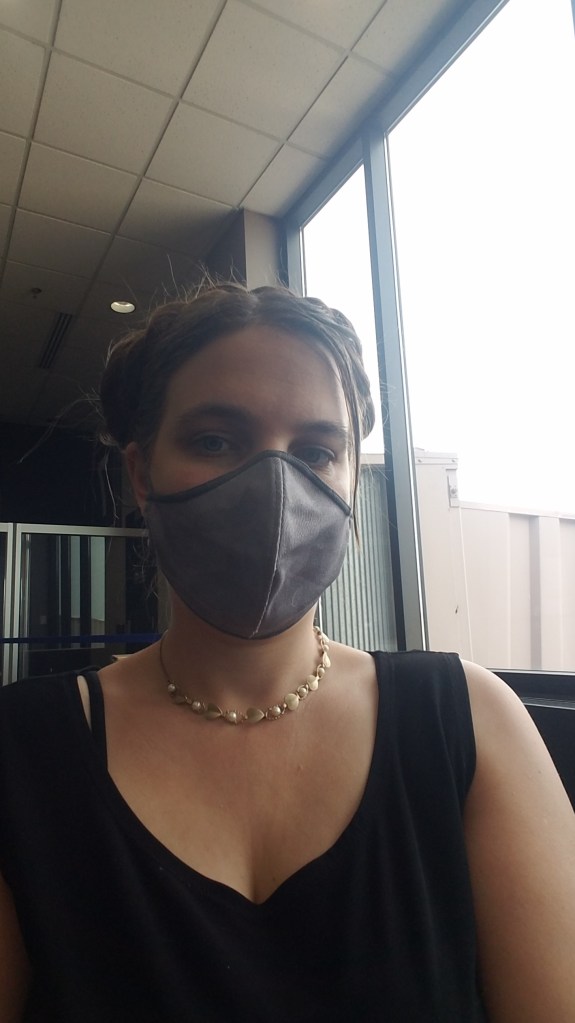
During COVID, I opted for a sleeves top with a light jacket and a Norwex cloth mask for a plane ride. My hair was up in braids that kept it out of my way and allowed me to comfortably recline when I went out to visit some friends in Michigan.

So once you’ve figured out what luggage to use, then it’s a matter of figuring out what to pack. Pretty much googling “essential packing list” will pull up a good checklist for packing. Obviously, don’t pack everything suggested on the list, you’re supposed to make adjustments based on where you’re going. If traveling to a tropical beach destination you probably don’t want to pack a sweater. If you aren’t going anywhere formal, then leave the formalwear at home, but if you’re going to a wedding, then pack your formal attire. When picking outfits, consider sticking with a color pallet that mixes well together so you can mix and match. You should also try and pack items that can be dressed up or dressed down. I happen to own several yoga pants that look like dress pants, so I can pack those and be comfortable going on a hike or attending a meeting. I usually pack more tops than bottoms since my legs don’t usually get sweaty so I can wear bottoms several times. However, if one is expecting to get muddy then you may want to pack more bottoms than tops. Most carry-on luggage fits roughly two pairs of jeans, three sweaters, two dresses, and five shirts, so if you’re going longer than a week, you may need to get creative. Often people advise you to pick out what you need and then halve (with exception of underwear) the clothes you’re going to take. Consideration should be given for how often you can do laundry and for how sweaty you will get. Some people will pack small laundry sheets to be able to do laundry in their sink or utilize the laundry services at their destination.

Try to get liquids that can multitask. For example, did you know that you can use conditioner for shaving cream? If you can get a tinted moisturizer you can use that as foundation. You can also get tinted chapstick to substitute for lipstick. If you’re going to a hotel, most provide some toiletries, usually shampoo, conditioner and soap. You could also consider purchasing travel sized from a local store at your destination if the prices aren’t too different from your home. If traveling with companions, consider sharing some items like sunscreen, bug spray or moisturizers.

Try and minimize your devices if you can substitute with another you should. My only exception is my kindle because it’s bad for your eyes to read books from a tiny phone screen and I’m not getting a headache from tiny print. I have one universal portable charger that has all the attachments for various devices neatly attached to it. Always try and get creative with

Once you formalize your packing list, it’s a matter of locating the items. 

Photo by Hana Brannigan on Pexels.com

In general, pack clothes that won’t wrinkle like knits and stretchy fabrics. Fabrics that are woven tend to wrinkle more. Unfortunately, traveling in colder months or to cooler destinations means that your clothes will take up more space. A good trick is to pack lighter clothes with a light sweater that can go over them rather than several bulkier items. There are lots of videos debating between rolling or folding clothing, but in general either method will work so long as the focus is on eliminating air. Packing cubes can be very helpful in squeezing out extra air and ensuring every space is filled. They can also help create easily arranged “blocks” inside your luggage. I personally, like to use several smaller cubes rather than one big cube. If packing an extra purse or tote, these can also be used to organize and store items. This also helps make unpacking easy and keeps my stuff organized at the hotel. I often will pack two empty cubes for dirty laundry which helps keep my luggage from smelling. I have a bag for my shoes which also keeps the rest of my luggage clean. 

Place heavier items, like shoes, towards the bottom to help stabilize the luggage. As shoes often result in wasted space, consider packing items inside the shoes, like socks. The key is to try and maximize every inch of your luggage and ensure there’s no wasted space in between items. Although many airports no longer make you take your liquids out, organize your liquids in one bag that you keep at the top of your luggage for easy access to help make security a breeze just in case. If you have outside pockets, then packing items that you want ready access to should be placed there. 

If traveling with fragile items, place them in a plastic bag (in case they break) and pack them surrounded by clothing to help act as a cushion or bubble wrap substitute. 

Photo by Esther on Pexels.com

If you do decide to check your luggage make sure to put essentials such as medications, at least one change of clean clothes, a cell phone charger, etc. inside your carry-on luggage. You should be able to survive at least one to two days without your checked luggage. Make sure you have your contact information, like your email and phone number, on your checked luggage in case the airline loses it so they’re able to contact you. I would not put your home address on it for security reasons. 

Unless your luggage is a unique color or design consider putting a brightly colored ribbon or other distinguishing mark on your luggage to help prevent people from accidentally grabbing yours or from you accidently grabbing someone else’s. I usually have a yellow ribbon on mine since it’s black.  Baggage claim can take a long while as luggage has the lowest priority when it comes to runway traffic, so if you think you’ll have to catch a train or other form of transportation at your destination be sure to add plenty of time when purchasing tickets.

Hopefully, these tips will help you maximize your available space and ensure you have everything you need to make your trip wonderful.
East Meets West: D.C.’s Annual Cherry Blossom Festival

This post comes from one of my reverse bucket list items, cataloged in 2017. 

It was my senior year of college and I was the co-president of the Japanese Culture Club with my roommate Ray. The official name was Kouen-Kai for lecture and gathering. Myself and other anime/Japanese culture enthusiasts would gather together each week to watch shows from Japan, talk about Japanese history and learn about the culture. Some of our members had family members who were stationed or resided in Japan. Some were learning the language. It was a way to expand our horizons and share a mutual passion. We might snag Japanese treats from online or local specialty stores or attempt to cook something we found online. It was a causal club of nerds who developed friendships and hung out. We found we had more in common than just a love of anime and so for the next four years, the anime club members became my besties at college. 

Over the years, members came and went, but the greatest loss for myself and Ray came in our senior year when most of our closest friends graduated. I was worried the club would feel empty without these people who I had come to know so well. Then in came the freshman, an adorable group of a-dork-able, socially awkward boys who, if left to their own devices, would isolate themselves in their rooms and never see the sun. Naturally, we pushed them to get out and socialize, not allowing them to sit alone for days on end without human interaction or forget what grass looked like.

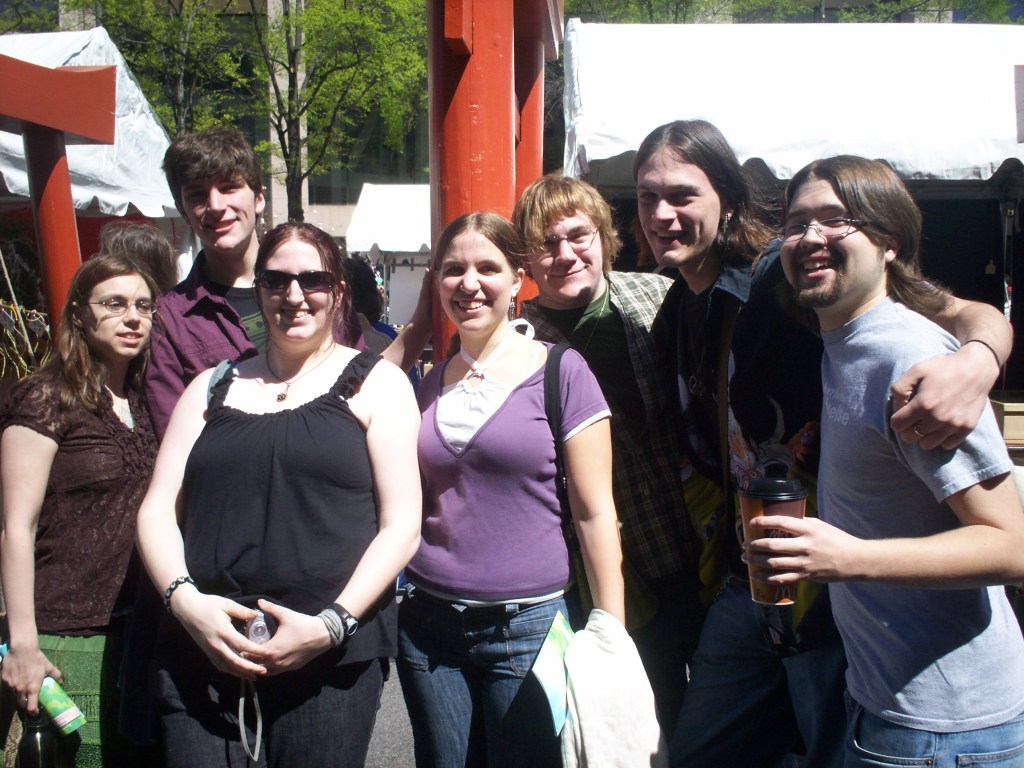
We developed a semi-mom like affection for them and so in the spring of 2006, we decided to take the club on tour. Each year, there is a massive Japanese culture festival in Washington D.C. when the Cherry Blossoms bloom. Being the nerds we are, it was a natural leap to get down to D.C. and experience a taste of Japan in the USA. We gathered up the troops, hopped in a mini-van, drove to a train station in Maryland and hopped on a train. 

Sidenote: I do recommend this for people nervous about driving in D.C. or even other big cities. You can always park outside it and take the light rail in. You often save on parking and you don’t have the stress of trying to navigate a busy unfamiliar place. The light rails are designed to take you to the tourist destinations and most of them are very safe and clean. Plus, walking is healthy for you!

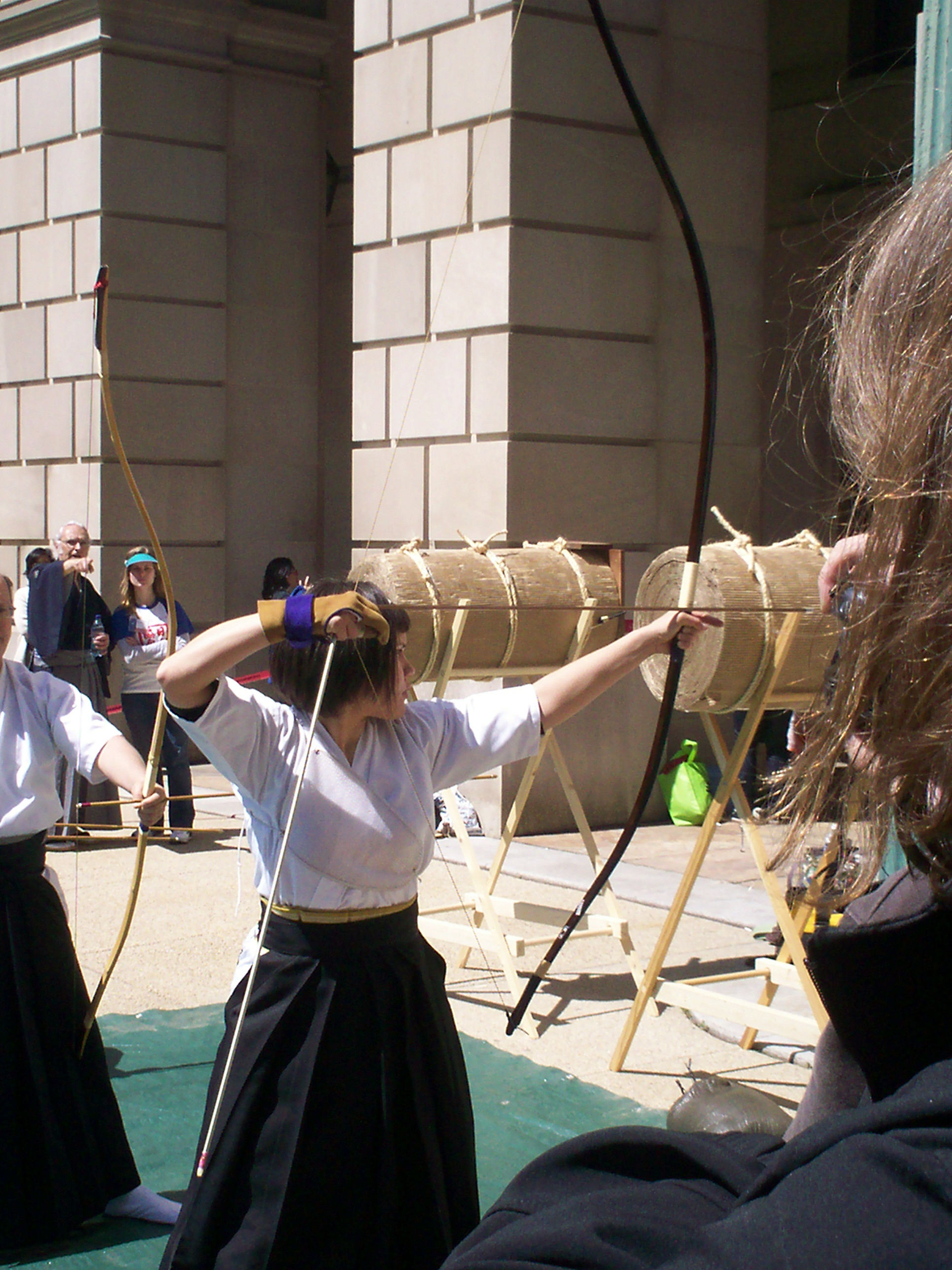
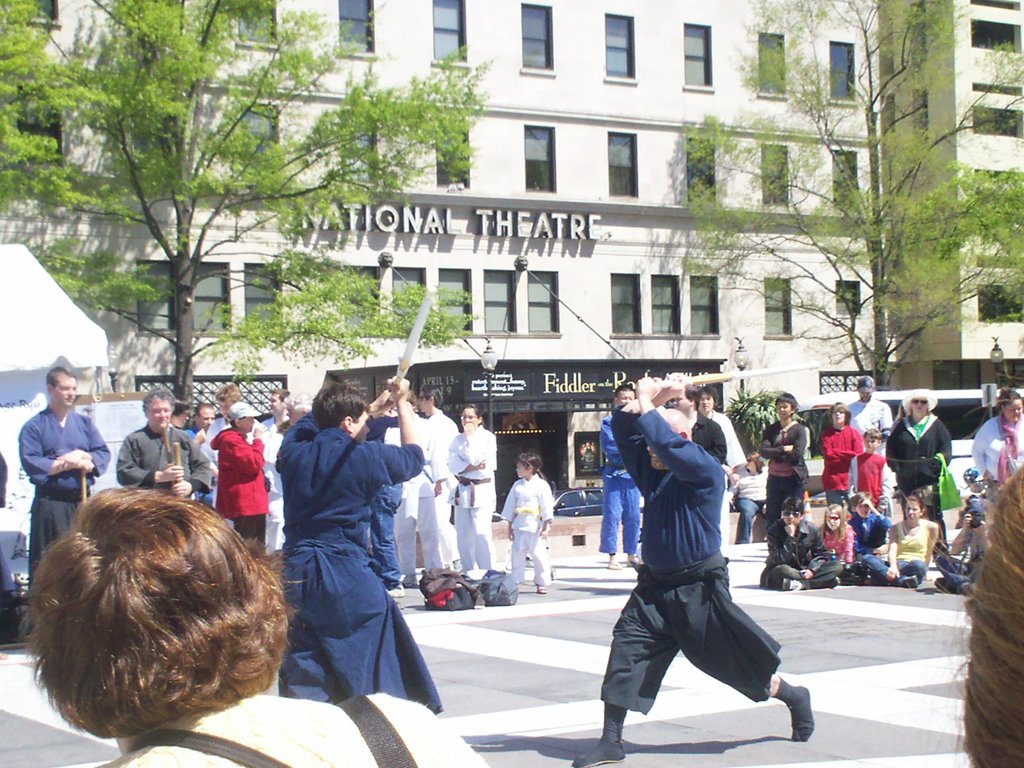
The streets were crowded with all kinds of people. Vendors featuring goods from Japan were around every corner. There were demonstrations of traditional arts from sword fighting, to dance, to tea, to music and more. Food from every corner of Japan was offered. It was a delight for any anime nerd or cultural enthusiast.

We wondered about the festival together taking in everything we could and pointing things out to one another to watch or do. Naturally, we enjoyed looking at the blossoming cherry trees, a gift from Japan to the United States in 1912. A highlight for me was watching the archery demonstration. It was amazing to see the skill up close and to see the differences between the west and the east. 

Which is really what such a festival is all about. It’s about showcasing a given culture where they can celebrate their heritage and share it with those of us not from it. We get to experience something exotic to us without stepping into the airport all while remaining authentic to the original people. Isn’t that what we’re looking for when we go abroad? A festival such as this one can bring that to you! 

I had a blast leading the gang around and not once did they get lost! Though wrangling them at times was a chore – like herding cats! Still, we managed to have an amazing day together sampling the delights of Japan and having one last hurrah as a group of friends before Ray and I graduated. 

How can you complete a cultural festival and get a taste of a different country?

Usually, you can see these events advertised in the local newspapers or on community event websites. Oftentimes they’re on Facebook. There are times when you may learn about a festival after the fact. The good thing is so many of them are annual things, so you can mark your calendar and come back to it next year. As you go, remember you are a guest of your host and should conduct yourself accordingly. They are sharing their heritage with you and you should honor that gift with respect and courtesy. 

Completed: 2010

Miles from home: 122

Cost: Attendance was Free – travel was about $20, splitting gas and buying the train ticket, plus lunch $20 

Looking for more inspiration for your own Bucket List? Check out both my Bucket List and Reverse List!

Travel Tips: Reverse Planning

In honor of the coming spring, I’ve decided to do a few travel posts. You see dear reader, it seems that with the end of winter with the warmer weather on the horizon, I always get a bit of wanderlust at this time of year and find myself going to far flung corners of the world. Or at least farther afield than is typical as I certainly can’t afford to travel too far every spring. Perhaps, it’s something in the air, maybe it’s from being cooped up in the house during the cold winter months. 

Before we clutch our pearls in shock at such a notion, remember dear reader, I am not against travel. I simply believe that we can live a bucket-list life right where we are and that we needn’t travel frequently to experience amazing things. However, there are times when we do travel, so we may as well do it well, to ensure that it is a wise investment of our limited resources. After all, traveling is expensive and time consuming. As budget conscious people, we certainly don’t want to experience travel regret or wish we had been more thoughtful prior to hopping on a plane and wasting hundreds of dollars on a less than stellar trip. To that end, I hope that these tips will help you make the most of your travels. At this point I believe I am at least a fairly experienced traveler to be speaking on such things.

I shall begin my travel tips with the most fundamental decision of all, where to go. 

Photo by Andrea Piacquadio on Pexels.com

Now there are many considerations to picking a place to travel. Now you may have a very specific place in mind already. In which case skip this post and read the Travel Tips for the First Time Traveler: The Art of the Deal. In this post, I’m going to share a method of reverse planning or rather than picking a place first and then planning around that. You first plan the big three: time, budget and season and based on those constraints narrow down options of where to go. It can be helpful in managing your budget and ensuring you stay within the constraints of your means. Many people underestimate the cost of their trips and it’s easier to do when blinded by a pre-made decision. This method allows you to place your constraints ahead of time and then plan from there. 

My very first consideration would be time, how much time do you realistically have? Time can be a huge constraint. For example, I recently traveled to England after being invited to join a friend in her long term rental down in Penzance. The accommodations were completely free and I naturally took advantage of this. However, it took 2 hours to get to the airport, allowing for the recommended 2.5 hours to get through security and boarding onto the plane before take off, another 6 hour flight, another hour to deboard, get through customs and navigate a new airport, and another 8 hours of buses and trains. I left my house at 2 pm and arrived at 5 pm the next day. The return flight was 7 hours, with almost 2 hours to get through customs, secure our bags, take a bus back to the economy parking and 2 hours to get home. We left the hotel in London at 8 am and arrived home at 7 pm. That wasn’t accounting for the 6 hour train ride back north to London that we took 3 days before our flight to allow us two days in London. Just travel alone was 3 days of our trip. That also didn’t account for recovery days from jet lag which depending on how easily you bounce back from disrupted sleep could take another whole day from your trip. So, I really don’t recommend taking a week to travel across an ocean because you realistically end up with maybe 3 to 4 good days. This is why I took two weeks off of work to allow myself plenty of time for travel to and from, recover, unpack and get ready to return to my normally scheduled programming. 

Time really determines a lot of things. It can influence your budget, how far you can travel, what you can do and whether it’s worth adding in things like rental cars and taxis or if you can stick to public transit. After all, public transit adds time to a trip. If I had access to a car that 5 to 6 hour train ride could have been closer to 3 and with the multiple train delays stretching the initial ride down to 8 hours, a car would have been preferable.  Time also determines how much you can do. I only had two days in London which meant that I had to be picky about what I did and what I saw. One could spend an entire day at the British Museum but then one will have only seen one museum, granted it packs a lot into one place, but then one isn’t seeing other things. If one rushes through things can one really enjoy it or will you be so exhausted from your vacation you need a vacation to recover from your vacation? It’s very easy to overestimate the amount of time you have which can lead to exhaustion from rushing around and stress from worrying about things like missed train connections, traffic or just getting lost in a strange place. 

Photo by Photo By: Kaboompics.com on Pexels.com

The other major consideration is of course budget. How much money can you spend on a holiday? Do you have paid time off? If you don’t, then any time off work is calculated into the cost of your trip. The budget can really determine how and where you can travel. Perhaps you can take a 12 hour direct flight to that far flung place, but it costs twice as much as the 20 hour flight with multiple connections. When considering a budget, you should be asking yourself how much are you typically saving in a month, how much have you already saved and how much can you still save? Consider the costs of transportation, accommodations, food and souvenirs. Hint: it is always more than you think, especially if you’re going to places where your currency is weaker than theirs where it’s easy to underestimate how much you’re spending. Just because the flight is cheap doesn’t mean accommodations will be, just because the accommodations are free doesn’t mean the flights will be cheap. I recently read a blog post outlining the actual cost of a trip for a couple who managed to snag really cheap flight tickets. Even though their flight was very affordable, the cost of other transportation, sight-seeing, food, accommodations, etc. for two weeks was still $5,000. So before jumping on that “great deal”, consider the other costs. 

To help you plan you may want to check out places like Expatistan, Price of Travel or Numbeo. These resources can help you with your budget to see if where you’re going is actually somewhere you can afford to go. What is cheap to one person may be expensive to another person. If you make 100,000 a year spending 5,000 is only 5% of your yearly salary but if you only make 45,000 then it’s 11% which is a significant difference. However, if you make 100,000 and you’re supporting a family of 5, spending 5,000 is less affordable than if it’s just you and your cats.

The final consideration is the time of year you’re able to travel. My sister’s job requires her to help test major systems updates which happen routinely at certain points of the year. This means there are just certain times when she knows she cannot reasonably take off without it causing a lot of issues for her work and her time off approval is tentative. When I was the Winter Shelter Coordinator for an Emergency Winter Homeless Shelter at one of my jobs, I knew I could not take off during the Winter months for extended periods of time. It was a major job expectation that I would be generally available during that season. There are certain times of the year that just aren’t good for certain destinations. It may look like an amazing deal to go during the off season, but good luck enjoying that tropical beach vacation in Maldives during the rainy season. 

Now depending if you’re traveling solo or in a group, you may have to consider what others can afford in terms of time, money and when they can take off. As I previously stated, my sister has a job that semi-dictates when she can take off and I also had a job where I couldn’t take off during the winter months. If you’re traveling with a school employee, you can’t travel much from August through June. Additionally, if your travel companion has limited mobility that can impact when and how you travel. Someone who needs assistance at the airport will most likely need an additional hour or more for pre-boarding. It’s important to have open and honest discussions with your travel companions before you spend a dime. 

One subcategory of all these considerations is the type of traveler you are. Do you like museums or the party scene? Do you want to spend your time lounging on the beach or do you want to go hiking? Are you content so long as you have a roof over your head and a pillow under it or do you want a little more luxury? When I was a student studying abroad I traveled as cheaply as I could, snagging deals on Ryanair, booking hostels and buying most of my food at local stores rather than eating out. Are you comfortable flying economy or do you require extra leg room? When traveling to England my mom paid for an upgraded seat both ways because she has had blood clots and decided it was worth having extra leg room and the ability to put her feet up in order to ensure she wasn’t going to spend her trip in the hospital. That impacted her budget. 

Once you have your time, budget and season you’ll be traveling, it’s much easier to narrow down where you can go based on your research. Depending on where you’re traveling from you can reasonably estimate how far you can go based on your time. If you’re on the East Coast like me then Europe is a more reasonable flight than from the West Coast. There can be surprises that pop up for example, flying to Costa Rica was a 10 hour flight despite it being about the same distance as the United Kingdom. However, Costa Rica is a lot cheaper to visit. The constraints of your aforementioned decisions can dictate where you’re going to go. If you divide up your budget and discover that you only have about 50 dollars a day then you may need to go to cheaper areas of the world. Once you have your list of possible places to go, you can pick.

Step Up: Irish Step Dancing

When I was a little girl, I loved watching people dance. I was absolutely obsessed, spending hours watching the Nutcracker Ballet and Riverdance on VHS. I wanted so badly to take dance lessons, but sadly, growing up in a lower middle class household we lacked the funds for dance. This meant I would have to content myself with mimicking what I saw on the screen in my living room with little success both from lack of coaching and space. Jumping around in my room, causing a ruckus wouldn’t have been appreciated. 

As I entered my teen years, it was something that I began to mentally put away. Dance was something that kids and teens did and after highschool, if you didn’t “make it” by having the skill and talent to progress beyond, it was “too late”. I enjoyed color guard for three of my six years in marching band, but that was as close as I came to it. I still sighed somewhat wistfully whenever I got a chance to watch professional dancers especially ballet or Irish Step dance, but I accepted they were things that I wouldn’t be doing. 

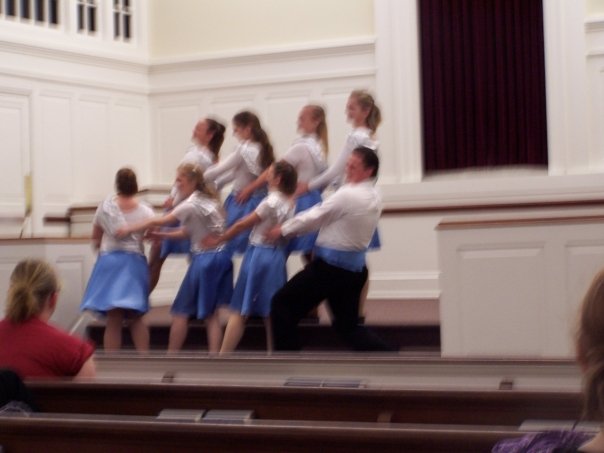
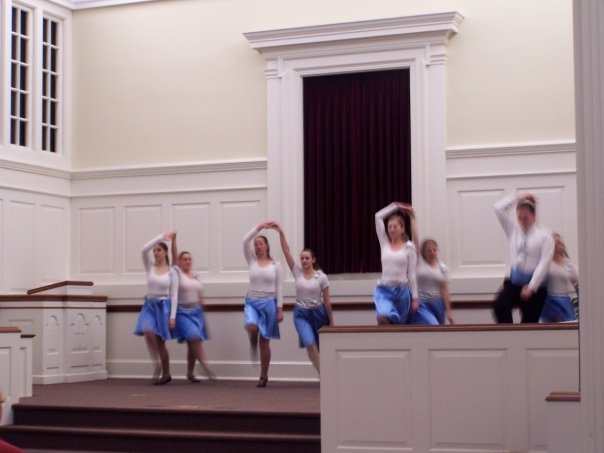
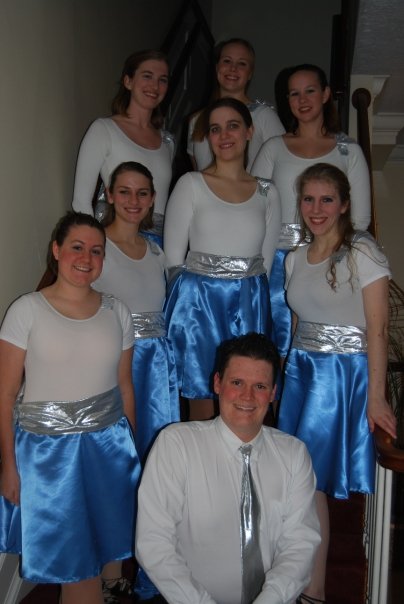
However, that was not to be the final chapter on my foray into dance. Because, in the fall of my freshman year at college, I discovered there was in fact a dance ministry on campus. The ministry was student run by young women who had been doing dance since they were young and were willing to pass on their knowledge and skills to anyone who wanted to join up. They did group us by skill level so the more advanced dancers could still be challenged and grow, but they were incredibly welcoming to those of us who had never danced before. 

We were given the option to try out different dances and then commit for the semester (or full year). I ended up picking Irish Step Dancing and flags. We paid a small membership due of about $10 each semester. So for $20 bucks, I was able to have a year’s worth of dance classes. Not only that, but also they had a huge collection of costumes meaning that I had very little to buy for the concerts. They directed us to a discount retailer for things like our shoes and I was able to snag my Irish Step Dancing shoes for $10. I believe the total cost for the year was about $50 between the dues, the shoes and one or two items for the costumes.

I will say my first day of class, I felt a bit like a five year old again. I was so excited to finally learn at least something of a dance I’ve loved so much for so long. My teacher was absolutely amazing and the sweetest person. She was a junior year nursing student who brought her calm, compassionate bedside manner into the classroom. She never scolded or lectured us when we messed up, but instead offered gentle correction and critique. We never sought perfection, only to do better each time. 

There are references to Irish step dancing as far back as the 16th century. In a letter to Queen Elizabeth, Sir Henry Sydney references his love for Irish jigs. At first, the music was primarily bagpipes with the hornpipe entering in the 1760’s giving the music its distinctive rhythms. There is some arguments as to when the fiddle was introduced with some people placing it in the 1700’s, but there are references in writing to fiddles in the mid to late 1600’s. 

The modern day form is recognizable for its rigid torso and dancing primarily on the balls of ones feet – like in Riverdance. However, that wasn’t always the case and it is as the name suggests a more modern form of the dance. There are also two distinctive types known as hard shoe and soft shoe. Hard shoe is basically like the tap dance of Irish Step. The hard shoe clacks on the floor making a noise and so the dancer becomes a moving percussion instrument. I danced soft shoe as hard shoe was for the more advanced students. I, sadly, did not get to dance hard shoe. Long story short, I needed to have two years of experience to be able to go into the more advanced class, I went abroad my junior year to study German and in my senior year, there was no one to teach Irish Step as the dances offered depended on having dancers with enough experience to teach it. 

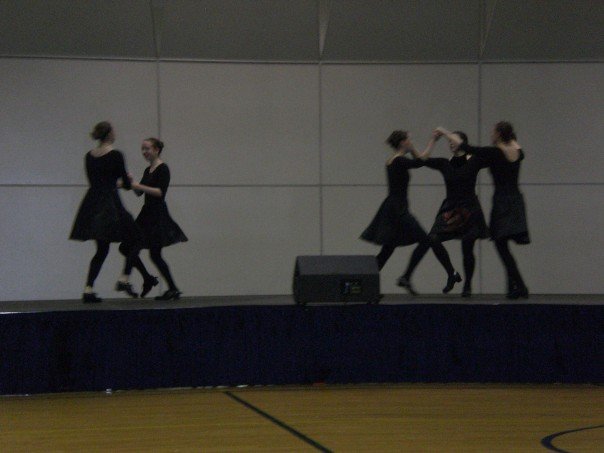
What I found interesting about learning Irish step was that I expected the steps to have fancy Irish sounding names like how ballet has french words for their many movements. We did not have those at all, we had a seemingly limited vocabulary mostly consisting of lifts, beats, cuts, steps, and overs. She would tell us “now we’re going to do the step, step, back” or “Lift, step, step” to help us figure out what set of movements we were about to do. We’d put them together to the beat do them with one foot, then reverse it and do it on the other foot. The pieces of the whole movement would last a few bars of the music. We’d take turns circling our partners and join up as a larger circle going in and out. I cannot say that we were ready to take on the world stage by any stretch of the imagination. Our lifts were certainly not as high as they could be, legs lower, foot movements were decidedly sloppy at times, but we had fun learning. 

Each week I looked forward to going to it even if I was left exhausted by the end of class. Although, it did make going to flags right afterward difficult. My legs would feel like jelly by the time we were finished and instead of being able to go back to my nearby dorm room, I had to trek across campus, often in the cold darkness to the racquetball courts where we held flag practice. By the time I finished flags both my legs and my arms were exhausted. In between class, I practiced my steps in my dorm room and tried to increase my flexibility. I like to think it paid off in our performances.

Every year, we put on two concerts. One was the Christmas concert in the small chapel on campus. That one was free for anyone to attend. The other was the larger one in the gymnasium which was put on each spring, to the delight of the entire school. The second one had a small fee to attend to help us raise money to continue to buy costumes. The college let us have access to the sound system and set up a stage for us. During the concerts, each class picked a bible verse to share which went along with the song that we picked. 

My favorite song and verse combination came from my freshman year. Our song was the Salt Lick by Gaelic Storm and our verse was Mathew 5:30 “You are the salt of the earth. But if the salt loses its saltiness, how can it be made salty again? It is no longer good for anything, except to be thrown out and trampled underfoot.” It was a verse to remind us to be as salt, preserving, enhancing and flavoring the world with God’s love and light. 

I was incredibly blessed to have the opportunity to dance in college and to live out a childhood dream of learning a skill I thought was closed off to me. I think many of us wish we had certain opportunities to learn things when we were younger, but we think that there won’t be people to teach us. Perhaps, like me, you may think that unless you’re super talented there isn’t aren’t opportunities for you as an adult to learn. It may seem that the time to try and get into an interest has passed, but there are actually opportunities all around you if you keep your eyes and ears open. I can say that there are places which offer adult dance lessons even if they are harder to find. I also see that there are places for adult beginners to learn martial arts, sports, music, art and more. 

One of the people I do a podcast with, started his martial arts journey in his late 40’s. While he may not be as flexible or learn as quickly as some of the younger guys, he is doing it and loving it. He wasn’t afraid to be embarrassed by his lack of skill and embraced learning something new. Nor is the goal or focus to be a world champion or professional, it’s something that can be done just for fun. 

So often the activities we do in childhood semi-translate to work at this thing really hard so you can get a scholarship or go be a professional. The messages we receive as children is that these activities are not for themselves, they’re for doing something with them. They have to be tied to these larger goals. There’s also this obsession with accomplishing things as a young person and this false narrative that if you don’t master it by the time you’re 20, you’re never going to, so don’t even bother. So as adult learners we have to say to the first, actually, I can do this just for fun. To the second, we can say my life has not already been completely written and I can still accomplish a lot, so if I want to master this thing, I still can. It really depends on your own individual goals for whatever it is you want to do. 

So how can you step up as it were?

As I said earlier, it’s a matter of keeping your eyes and ears open. In my area, there are several places which offer adult classes for dance. One place is another dance ministry which helps keep the cost down. It is even offering a martial arts class which I am hopeful to join next year! Occasionally, you can find places offering introductory workshops for dance which gives you a taste of what a class would be like. It’s really a matter of actively seeking out those opportunities. 

Now, I have seen some online dance apps and courses. I’m not sure how effective they are because you may not have the feedback that you’d get from a live person to help correct your form and to explain a move more fully if you don’t understand the first explanation. Also you won’t be in an actual dance studio. I personally found the mirrors in the dance studio to be really helpful because I could visually see exactly what my body looked like. So I knew that my leg wasn’t perfectly straight or the lift was sloppy. I could see if my arms weren’t held up evenly with one side dropping down. I think they’d be really good for absolute beginners and for people who just want to try it for fun. There is of course no substitution for personalized instruction that live classes bring, but I do think the apps provide access to tools and information that are difficult to otherwise obtain.

Completed: Fall 2006 through Fall 2008

Cost: $100 for 3 semesters

Miles from home: 0 from college dorm / 39 from home

How To Cultivate Opportunities

At the end of most of my posts, I will write a little “How You Can” section so that if something I have done peaks your interest, you have a starting point. However, one may very well wonder how I’ve gathered this information in the first place. After all, how did I discover the Wolf Sanctuary or the Firebird Festival or the Wine and Cheese Tasting on the Train? How have I cultivated opportunities for myself to check off my list or to add new things? 

Simply put, I have a few go-to places for inspiration that I regularly check and encourage you, dear reader, to do the same. The first is Onlyinyourstate or atlas obscura to discover unique things that are in my area. Now, Onlyinyourstate isn’t exactly the most accurate name, after all there are many states that share common experiences, it would be more aptly named “collection of cool things to see and do in your state” – that is understandably less catchy, but some of us are sticklers for accuracy. The website is semi-easy to navigate. You click on your state and it brings up a long list of various posts of interesting sights to see and things to do. What makes it difficult is many posts are repetitive, and some of the listed items have closed or are no longer available to the public. 

Since at this point, they’ve pretty much covered most of the things to do, newer posts just tend to rehash what has already been written about but as new things do get added occasionally, one still has to sift through to find the gems. Atlasobscura is similar in both scope and difficulty of use. There are other websites that are similar, such as PAbucklist.com, but I have yet to find one that organizes itself really well. I review these sites maybe once every 6-12 months. Despite their difficulty in use, I still recommend visiting at least once, especially if you are at the start of your Bucket List journey. They not only can help you discover how to check off your list, but also can open your eyes to new and novel possibilities you’ve never even thought of before. 

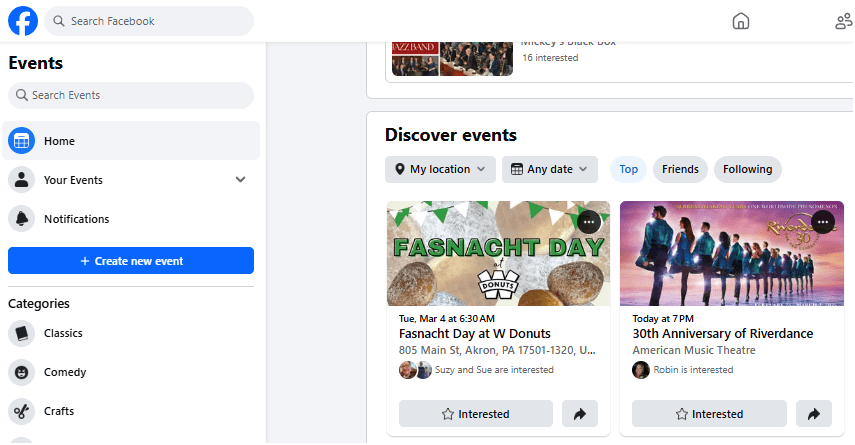
One of my biggest go-to’s is Facebook Events which I will typically review once to twice a month as it is being continually updated. It’s where I’ve discovered most of my events, festivals and workshops.On almost any given week, I could log on and find something that would interest me for the upcoming weekend and many of the events are relatively cheap or free. It’s become one of the main things I use Facebook for. That’s how I found out about the Christkindlmarkt and Eco-dying. I pay attention to my local newspaper as well checking out announcements from my community which the Facebook algorithm may have missed. 

I also keep a running list of the museums, colleges, universities and theaters in the area making sure to check at the beginning of each season. Depending on the venue, most of the time this means the beginning of the year in January or in July.  That’s how I discovered the Da Vinci Exhibit at the Reading Museum and the performance of Drum Tao at Millersville University. Even smaller universities and colleges can have amazing events and opportunities. In 2016, my small Christian College hosted a presidential debate for the DNC primaries between Obama and Clinton. I have often been surprised at what a small venue can pull off and because of their smaller size many of their events are more intimate affairs. So don’t write off your own smaller venues just yet, dear reader. 

Consider other attractions in your area: aquariums, zoos, community centers and even parks may play host to your dreams. Longs Park in Lancaster City has a summer music series that has brought some serious talent to its small stage for free, opening the opportunity for many to enjoy live concerts and other performances. It was the stage that introduced me to Shakespeare as a child. You will be surprised at the wide variety of opportunities these places offer and often for free or greatly reduced cost. 

Photo by Pixabay on Pexels.com

There is also a simple google search. I will do this for things that may take a little creativity or require me to go a little farther afield than my typical roaming grounds. For example, I read about grape stomping in Italy. It seemed like it would be a fun thing to try. I hadn’t seen it on any previous intel missions to my usual corners of the internet, so I did what any good millennial would do, I went to google to start to see if there were any wineries nearby that would indulge in this ancient tradition. As it turns out there is one in the neighboring state of New Jersey. 

Once I discover a place in a reasonable vicinity (typically no more than 2 hours away unless I really want to make a day of it), I will make a note on my list for future reference. I won’t necessarily rush to go do it just that moment, but I will keep the information tucked away until I have need of it or for when the time is right. Perhaps, if I find myself making plans and I will be in the area anyways then I will tack on my item to the trip. I may also make specific plans to complete the item but cross reference my list to see if there are any other items that may be nearby. I am after all all about being efficient with my time and resources. 

The final way is that my friends and family know that I am always on the hunt for new and novel things to try, so word of mouth goes a long way. When they see something cool that they know I might like to try, they tell me or even better invite me to join them! 

As you can see, dear reader, I am not someone who sits around waiting for good things to come to her. Sometimes the fates need a little nudge. It’s about keeping your eyes and ears open, seeking opportunities and being mindful of what might be around the corner. It doesn’t mean that I can necessarily jump at every opportunity that comes my way or thing that I discover, I have (as of this writing) yet to go indoor skydiving, learn to pole dance, spend time at the alpaca farm, learn a signature dish from a cook or go grape stomping. However, I have pretty good leads on where I might do those things. Which is half the fun! I always have a list of potential adventures I could go on. There’s almost always something new around the corner waiting for me to discover and with only one glaring exception are all within a hour’s drive from my house (most are within 30 minutes). Who needs to dream of escaping your corner of the world to far flung places when it’s so full of excitement? 

Baldwin’s Bookstore: Beautiful Books! 

Book lovers know the allure of bookstores and libraries. There’s something about walking into these sanctuaries of knowledge and stories. The distinct smell of the books, the quiet atmosphere that is seldom found in other public spaces, the aesthetic symmetry of rows and rows of carefully shelved worlds. The promise that an entire universe may be unlocked with just the turn of a page. The stories almost seem to whisper an invitation and your fingers start to itch with an eagerness to begin the search. So many dance partners want to fill your card and it is almost dizzying. 

There is even something extra special about a bookstore that offers a little more. Beautiful bookstores, charming bookstores, the ones with cats and tea, the ones with stacks upon stacks of books. Ones that even use books as structures like the book tunnel in L.A.’s famous Last Bookstore. Baldwin’s bookstore is just the sort of bookstore for booklovers. Named one of the most beautiful Bookstores in America, this hidden treasure of Chester County can be easily overlooked if one is not careful. 

Seriously, you can drive right by it and not even notice that you’ve passed it as outside it is an unassuming stone barn. One would never guess that it houses 5 stories of books and has a sizeable collection of rare and antique books. As it is primarily a used bookstore, it is always a treasure hunt and one never knows what one will find tucked away on the shelves. It is so large and extensive that it has a map for visitors at the front and even with the map, one can find oneself semi-lost among the stacks of books. 

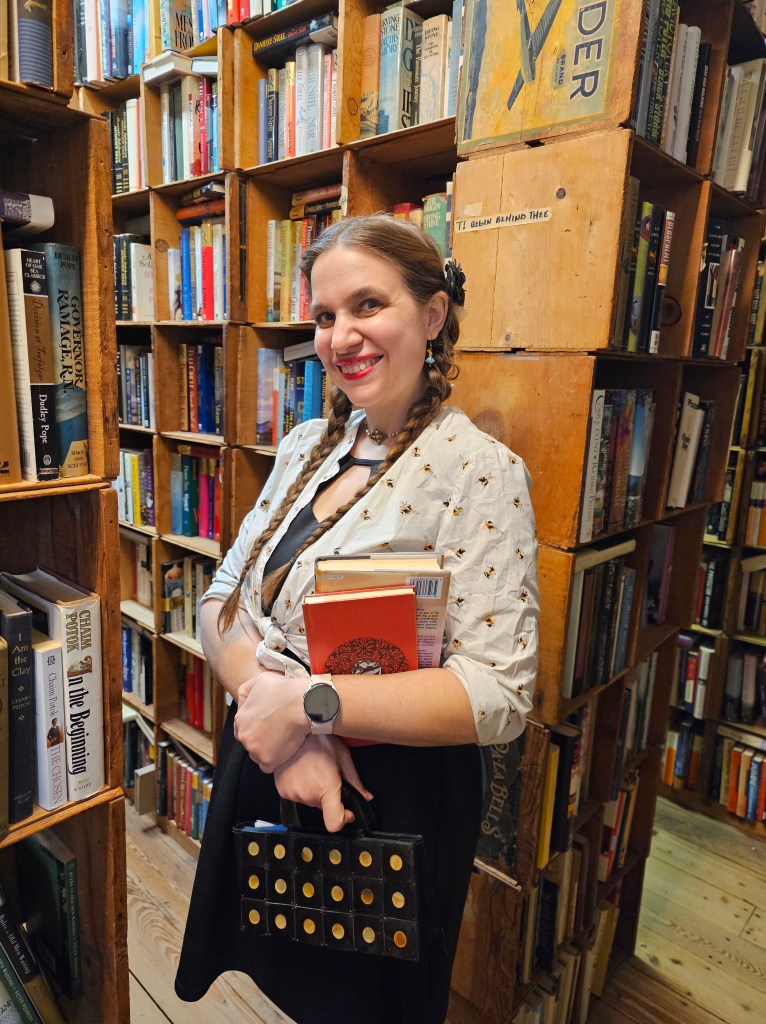
A quirk of the bookstore is that many of the shelves are not shelves at all, but rather nailed together crates. This charming store invites you to venture up stairs to ever higher levels. Tucked around every corner are chairs, some more enticing than others, for you to sit and read to your heart’s content. It would be easy to spend hours if not days inside the store. 

My sister and I ventured forth on a cold’s winter’s day after grabbing breakfast together at a coffee shop near my house. We had saved this particular outing for the colder months as we are not overly fond of extreme hot or cold weather. It is always good to have a few indoor activities in your back pocket for those times when it is simply too miserable to spend much time outdoors. 

Upon entering the store, we were greeted by a delightful display of older and rare books. We breathed in deep, savoring the familiar smell of books. The older gentleman behind the front desk said good morning and inquired as to whether it was our first time to the store. He showed up the map and politely explained the general layout of the store and encouraged us to peak in the backroom which housed a few artifacts from when this barn was also a home. After the short orientation, we began our exploration of the store. 

We carefully meandered through the rows of books of over 300,000 books, stopping to peruse for overlooked gems. One of the gems was the map of Philadelphia from over 100 years ago displayed on a table (not for sale). Both my sister and I adore old maps, so it was an unexpected treat to be able to sit and study it before continuing our book adventure. 

One thing of note for the taller readers, there are numerous signs to “duck” when going up and down the stairs, so be wary when transitioning between floors. Despite being in a barn, most of the areas were quite comfortable with only one or two places lacking in proper insulation for the temperature to be comfortable. We did stop to take a few pictures of ourselves in the books. 

It was easy to see why it was named one of the loveliest bookstores both inside and out. The original stone building was built in 1822 and the rustic shelving and floors only add to its charm. Sadly, I did not spy any of the rumored cats said to be residing in the barn. It is possible they were sleeping in a corner somewhere or perhaps they were no longer in residence.

My sister and I found a few treasures and made our way down the steps to the front of the building for our purchases. Satisfied with our treasure hunt, we went home to enjoy our books. I am certain that I will make the journey again for another visit. After all, with an ever changing inventory there is certain to be other diamonds in the rough to find in the future. 

How can you visit a beautiful bookstore?

Bookstores abound and business is booming. Something good that came out of the pandemic was the increased demand for real things, real recommendations from real people. We’re wired for community and connection, something that a digital reality can’t really replicate (though they do try). Not only are books a form of entertainment, but also people are forming communities around books. Bookstores are also one of the few places that seemed to sell a variety of board and card games aimed at adults. Bookstores have become hubs of community and connection. 

Going to Indie and used bookstores like Baldwin’s is often a treat not only for finding books but also for the atmosphere they provide. I encourage you to seek out the hole in the wall places. They don’t necessarily have to make a list of “most beautiful” because with all the hundreds of bookstores, how could a writer of a popular magazine or blog really know if they missed yours? And besides beauty is in the eye of the beholder. 

A Purpose Life: Lifting Up Others

I’ve now espoused upon cultivating your talents and exploring your calling as pieces of a purposeful life or applying your y amounted to applying your talents in support of your calling to serve others in some nebulous manner. Of course in my post about your calling, it was basically looking at your passions and applying them to helping others. But what does it look like to help others? How does one help? Who does one choose? 

It really does depend doesn’t it? On who you are helping and what you are helping them achieve. How do we choose who to help? Does the who have to be another human being? There are plenty of people who dedicate themselves to helping animals. Jane Goodall is often hailed in the same breath as Martin Luther King Jr or Ghandi and she concerned herself primarily with gorillas. Julia Hill was lauded for her activism to save a tree from a logging company. Yes, their actions certainly helped the human race as a whole later on but in the meantime their energy could have been put forth in other areas. 

As someone who has worked and interned at non-profits one of my favorite interview questions to ask people both when I was being interviewed and when I was doing the interviewing, was “why this issue”. Why out of the hundreds of social issues and concerns this one. Why Haiti? Why the homeless? Why mothers and children? Why not Kenya? Why not veterans? Why not people suffering from addiction? Why not cute, cuddly puppies? After all, if you devote a majority of your time, effort and resources into a given area that means those same resources aren’t being spent on another area of importance and naturally one cannot reasonably support all areas of importance. In a way, that means you are saying that this thing here is the most important thing to me to be doing. That’s a pretty big statement when you think about it. 

Photo by Matthias Zomer on Pexels.com

Now it may be that there were numerous things that were important to you and this is the one that happened to have the opportunity for you at the time to use your gifts and passions for it. When I did an internship for a non-profit that worked in Haiti it was because I needed an internship and that happened to be the one offered to me. It wasn’t because Haiti was the top of my list of countries that needed my support and I was particularly passionate about Haiti. I have become more passionate about it for my experience, but I also understand it is because I now have a personal connection to that country whereas previously there was nothing to push Haiti higher on my list than any other developing country. I wanted to help others and this happened to be an opportunity that opened up for me – but remember my job isn’t necessarily my calling (we already discussed how the two shouldn’t be conflated). 

Still, one can find that one has stumbled more or less into something that is calling adjacent. That doesn’t make it wrong necessarily. After all, one may be called to something and then discover the opportunities just aren’t there or you haven’t found them yet. The point is that one should not leave it unexamined. Why this population in this particular part of the world? Why this issue and not another issue? Is this really your top priority? There are, after all, a near infinite array of issues facing us today that all scream for attention from climate change to housing issues from substance use disorders to lack of access to healthcare. There are different ways to approach these issues as well from a one on one individual level to pushing for larger social and political changes. Which one do you pick? 

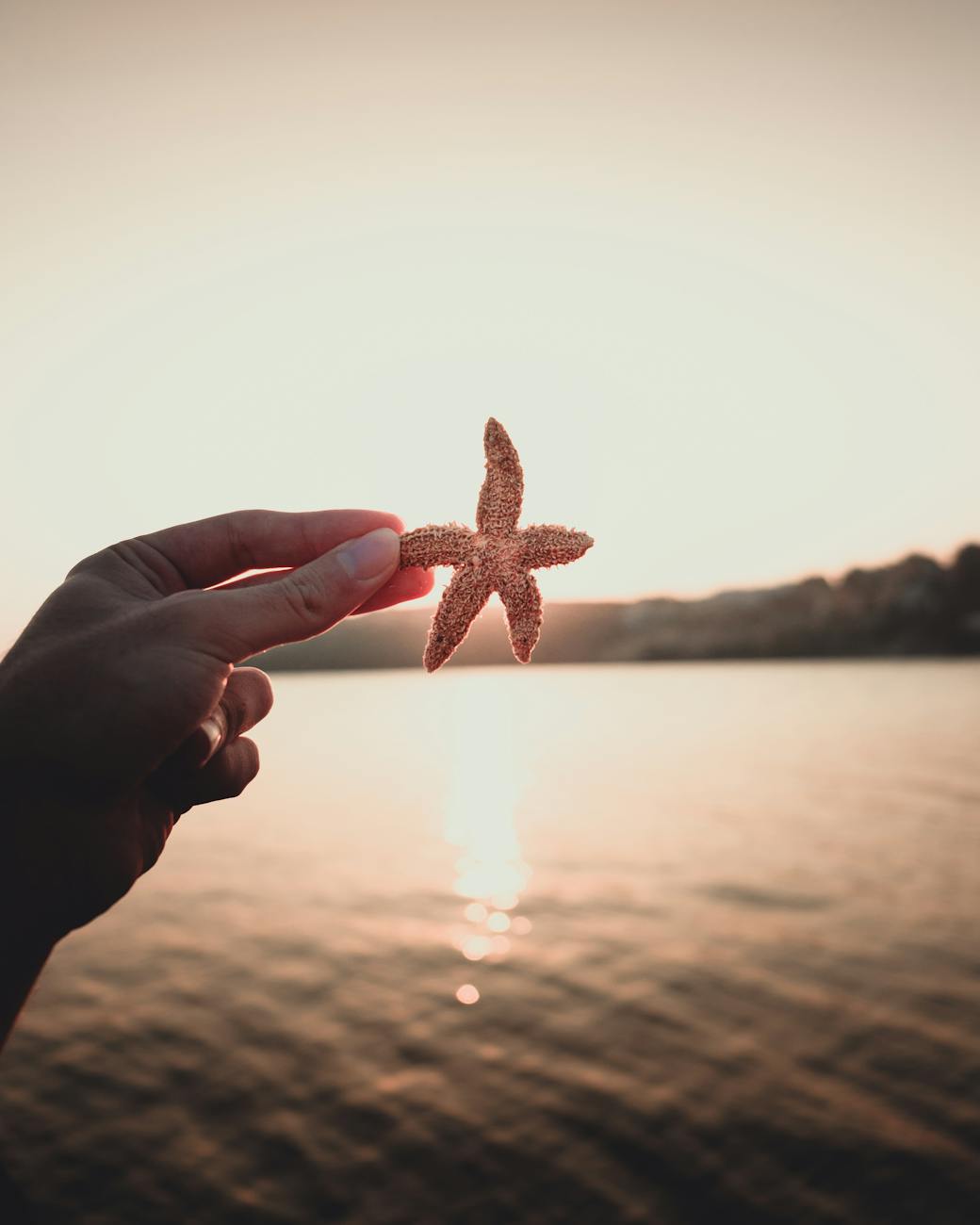
In social work, we have this adorable story of a boy walking along the beach picking up starfish and throwing them back into the ocean. Around the boy there are hundreds of starfish all struggling to survive. An old man asks the boy what he’s doing telling him sadly that there is simply no way for him to save all the starfish so what does it matter? The boy responds that it mattered to the one that he threw back. It reminds those of us working in a system that is always throwing more “starfish” on the beach not to stop fighting, not to give up because it matters to each person we do help, each life we’re able to impact. Personally, I like to add that there’s another child, a girl, who has climbed onto a boat and is out in the water looking for the reason why all the damn starfish are washing up on the shore in the first place. I call those people the macro-level social workers who are trying to fix the underlying issue. 

Now, I’m not saying the people on the shore are doing something wrong. The macro level people may remind us that you can feed a man a fish and he will eat one day of his life, but if you teach a man to fish, he will eat every day of his life. My flippant response is he can’t learn if he’s dead so many you should feed him first anyways. In other words, you need to triage the problem and fix the underlying issue. Some people are there to prevent an issue, some people are there to stabilize one diaster hits, others are there to fix underlying causes and other are there to repair damage. It’s like how in the Intensive Care Unit you often have a patients who require multiple different specialties in order to recover. If all the doctors had said that only the heart is necessary and to forget about pesky other organs like lungs then a lot of us would be dead. If the only science anyone cared about was chemistry we wouldn’t have gone to the moon. Each of us is part of a bigger whole trying to triage this patient called human society. 

Photo by Efe Yau011fu0131z Soysal on Pexels.com

Some of us have been called to fix plants and save trees. Others of us have been asked to focus on the cute fuzzy creatures or not so fuzzy creatures. Some of us need to answer the call to our neighbors here in our backyard, others are to be called away to lands far from home. There are many, many different areas of the world that desperately need your time, talent, attention and resources. The question is which ones are you most drawn to help? Which ones need your talents the most? My great uncle was an amazing statistician and helped work on projects like calculating where the fish in the ocean are to help guide international fishing laws and treaties through the UN. He also worked with astronomers to help unmask the mysteries of space.

As always it’s important to reflect on these things when talking stock of your own life. What have you been doing with your time? Does it line up with your values? Was it something you just sort of fell into? Have you looked around more recently to see if there are opportunities that more align with what you feel called to do? Do you know why you’re supporting this particular cause over others? Some of us are lucky and obtain a singular vision that helps guide them forward. The majority of us are left stumbling about grasping at whatever happens to be near and hoping it’s the right thing. Although truthfully, it might not matter that you land on precisely the right thing. There are many different passions one can pursue and there are many different causes by which one can apply one’s talents and passions to. 

Perhaps, we spend too much time wondering about our purpose in life and worrying about it when the truth is there are many different paths to living a purposeful life so long as you are able to do meaningful work where your talents and skills are utilized. Some people are meant to be devoted their whole lives to a singular issue. Others are meant to move between issues. After all, my great uncle didn’t spend his whole time focused on the movement of fish in the ocean. He helped them figure out how much they could reasonably fish and where so that we wouldn’t run out of food. A huge contribution to the human race if I do say so myself. However, he was one of several people who prepared reports and of course, he wasn’t the one who drew up the final agreements, so it was a group effort. However, he moved on from that project and applied himself to the next. Which was fine! There are some people out there whose sole purpose is just to start things and let others take over once they’ve started a project. The point is to reflect on your own personal journey toward meaning and allow yourself to shape it without preconceived notions about what it should look like. The most purposeful life is not necessarily becoming a nun and spoon feeding the starving orphans of some wartorn area of the world. A purposeful life is one in which we can develop our interests into skills, to apply those skills and gifts to alleviate a deep wound in the world that we are passionate about healing in whatever way that may be. 

The Ultimate Fear Factor: Public Speaking

Did you know that over 75% of people report being fearful of public speaking? Some people even have anxiety or even full blown panic attacks. My very first one happened while giving a speech in 10th grade. I ended up in the bathroom in tears and could not finish the speech I was giving in class. It probably could have happened during any sort of anxiety inducing activity, but unfortunately or fortunately depending on how you look at the situation, it happened during a speech and my “fate” as it were, was sealed. 

Most people don’t realize that the first anxiety attack can be triggered off without warning, but whatever situation you’re in the first time it happens, becomes a trigger for more. For me, it became speeches and auditions. Which sort of tanked any career in music. I had wanted to do music, but performing in front of anyone solo was impossible. Perhaps, if I had been a piano player I could have managed my shaking fingers to do something productive, but alas I chose a cruel and mercurial mistress. The violin is not for the faint of heart for she must be played boldly and masterfully, lest she shake you off as unworthy of her affections.

In my Freshman year of college, I had to take a communications course. I picked intrapersonal communications because everytime I went to give a speech, I would end up having an anxiety attack. I purposefully picked courses where speeches were at a minimum to non-existent. I might be able to get through the speech (barely) and then immediately run to the bathroom to cry. Like many people, I avoided the thing that made me anxious. However, as fate would have it, I had an amazing psychology professor for Psych 101 who briefly talked about anxiety and panic attacks from his clinical practice. He told us about how he would help his clients get over their fears. Which was to face them and to not run from the situation when the attacks happened because it was training the brain to respond to the stimulus as something catastrophic and life threatening. 

Which meant that I learned from him that I had to stop running out of the room every time the panic and anxiety hit and at least finish the speech. Curiously, there was one place where I could give speeches without panicking. German class. An interesting tidbit for you gentle reader, is that when we activate the more logical parts of our brain it’s harder for us to anxious. So asking someone who is having a panic attack to complete simple math problems helps activate the parts of their brains which can help emotionally regulate them. 

Photo by Matheus Bertelli on Pexels.com

Because German was a second language, it helped to activate that part of my brain. I was so focused on just getting the words out regardless of how it was delivered I half-forgot it was technically a speech. Also it helped that I was being graded more on how I spoke the language and not my presentation skills. However, it helped me find a place of strength to build from. I was able to see where the symptoms weren’t present in a similar activity in order to find a starting point. I understood that it was stemming from an underlying anxiety related to performance and perfectionism, so I worked to find ways to manage the anxiety and to put myself in situations where I could safely not be perfect. No one expects you to speak your second language perfectly so it was easy to shrug off mistakes. 

From my successes in German class where I stopped having any anxiety during presentations at all, I was able to sign up for a pass/fail acting class. I purposefully choose it as pass/fail so that way even if I completely bombed it wouldn’t negatively impact my GPA and the worst outcome that could be was not earning the credits I didn’t need. It was difficult at first to stand up in front of people and read off lines. I felt awkward with my expressions and that I wasn’t doing it very well. My stance felt wooden and my deliverance stilted. The professor was enthusiastic and my fellow students were gracious. We bonded over trying to overcome the awkwardness together. It was kind of like being in German class where no one expected to do great, but we’re all trying and learning anyways. I only ended up crying in the bathroom once the whole semester and it was after the “final” exam. 

The experiences I had in college, helped me form a foundation from which to build from. I learned about how to better manage my anxiety, what triggered it, and how to challenge some of the thoughts that came with it. I started to look at public speaking differently recognizing that when I tied expectations and pressure of performance that’s when I made it worse. When I could relax and just enjoy the interplay between myself and the audience, it became a lot less stressful. I went back to grad school and was able to do better with presentations once again analyzing when I was able to do well to replicate the success, and forcing myself to stick with it even when the panic started to rise, remembering that I wasn’t going to train my brain to see this as something to freak out about. 

After graduate school, I have been in positions where I’ve needed to do case presentations in front of a hundred other clinicians. I have given speeches at multiple churches and other functions to raise money and recruit volunteers. I’ve developed and given trainings to volunteers and staff. All with ease. The road was not by any means easy, and it took over 15 years to really conquer it and there are still times when I start to feel the anxiety rising once again in the middle of a speech. However, each time, I roll with it, use positive self-talk, take a few deep breaths and refuse to let it control me. I will probably be giving a presentation in a few months and I’m actually looking forward to it. 

Photo by Suzy Hazelwood on Pexels.com

How can you conquer your fears?

Not everyone has a fear of public speaking, but I bet, dear reader,  you’re afraid of something. You may not have panic attacks or anxiety attacks which leave you gasping for breath and crying uncontrollably, but you probably have things that you avoid doing or places you avoid going because of anxiety. Don’t get me wrong, I’m not saying we remove all fears and begin to simply roam around in the dark without any regard for safety, that unlit alley at midnight should probably be avoided. Fear and anxiety help to inform us of danger to keep us safe. That is why conquering fear can be so tricky, it’s meant to help us survive. 

The key is to try and start with something that is similar enough to the thing without causing the panic and then exposing yourself repeatedly to the it. Let’s say you’re terrified of spiders. Perhaps, you can kill them in World of Warcraft, you might not be thrilled about them, but a tiny one on your desk makes you freak out. So you’d start with maybe going out of your way to kill them in the game. It teaches you that hey this big scary spider isn’t so scary after all, in fact, I can conquer them. Or if you’re not into gaming, maybe just a picture of one. You look at a whole slew of pictures, using grounding, deep breathing and other calming techniques to keep yourself from feeling overly anxious. A little is good, but not too much. 

Once you are able to handle the baseline situation well, you move onto the next stage. Maybe it’s watching movies with spiders (not scary ones but like documentaries). Once you can handle that then you move up again. Maybe it’s visiting spiders in a zoo and spending a long time with the spiders at the zoo or pet store. You may follow up this step with touching the spider or letting it crawl on you. As you can see, the process is a gradual exposure to increasingly more difficult and fear-inducing things. However, by scaffolding the experiences you are continually teaching yourself not to respond with fear but instead relative calmness. Each small step is a building block upon which you can add to. 

Photo by MART PRODUCTION on Pexels.com

Now this isn’t something that will be done in an afternoon and you have to be intentional in your approach to the fear. I purposefully sought out and put myself in situations where I would have to speak in public in order to get myself to get over it. Our natural inclination is to avoid that which makes us afraid because it’s a survival instinct. Don’t go hang out with the hungry lions, the fool who wasn’t afraid of them got eaten! However, we need to recognize when our emotional brain is in the driver seat making up irrational nonsense. Public speaking won’t kill me, hundreds of people do it every day. Very few spiders will actually cause me harm and many are quite useful. When we see that it’s irrational nonsense, then we have to take over and show it, gently, that there isn’t anything to be afraid of and that we are indeed safe. 

If you are someone who suffers from panic and anxiety attacks, my recommendation is to seek professional assistance in this journey. I know very few people who were able to do it on their own. Know that this is the process you will most likely endure, a gradual exposure to the things you’re afraid of. There may be other cognitive behavioral components such as an exploration of why you developed this fear, where it comes from and how your beliefs shape and fuel it. 

An Evening with Joshua Bell

Perhaps for many people spending an evening listening to a violin virtuoso may not top the list of things to do. However, for those in the classical music world, he is our Taylor Swift or Beyonce or insert your favorite singer/band here. He is a household name, even those who do care for the music he plays, they are still familiar with him. Joshua has been wowing audiences around the world since he was 17 years old. 

As his debut on the world stage coincided with the earliest parts of my childhood, I grew up listening to him on cassette tape and CD. I would be able to pick out his playing the moment I walked into the room being able to determine his playing from other violinists. I started playing the violin in 3rd grade and only became further in love with his command of the instrument as my knowledge grew. Needless to say, that hearing him play on a famous stradivarius violin, has been a long time dream. 

Considering that Joshua is a world-renowned musician having played to sold out concerts in the best concert halls throughout his 40 years of playing, with ticket prices only skyrocketing in recent years, it never even crossed my mind to hope that I could see him in person. Imagine my shock and surprise to see that he would grace the small stage of the Millerville’s Ware Center in Lancaster. Now the tickets were a bit more expensive that are typical of Millersville’s performances, but they were still reasonably priced for a performance of this caliber. In considering the cost of travel to venues further afield, I determined that this was simply the cost of seeing the Paganini of our time. 

I invited my mother and my sister to attend with me. My sister declined as she is not as enamored with the violin as I am, but my mother was more than happy to join me as she shared my love of Joshua Bell. We planned to go out to dinner a little early so that we would have plenty of time to find parking and get to the venue. We both dressed to impress as suitable for the occasion. We enjoyed a glass of wine with our swordfish which was complemented by the butternut squash risotto. Parking was secured in a garage which was just around the corner from the Ware Center. 

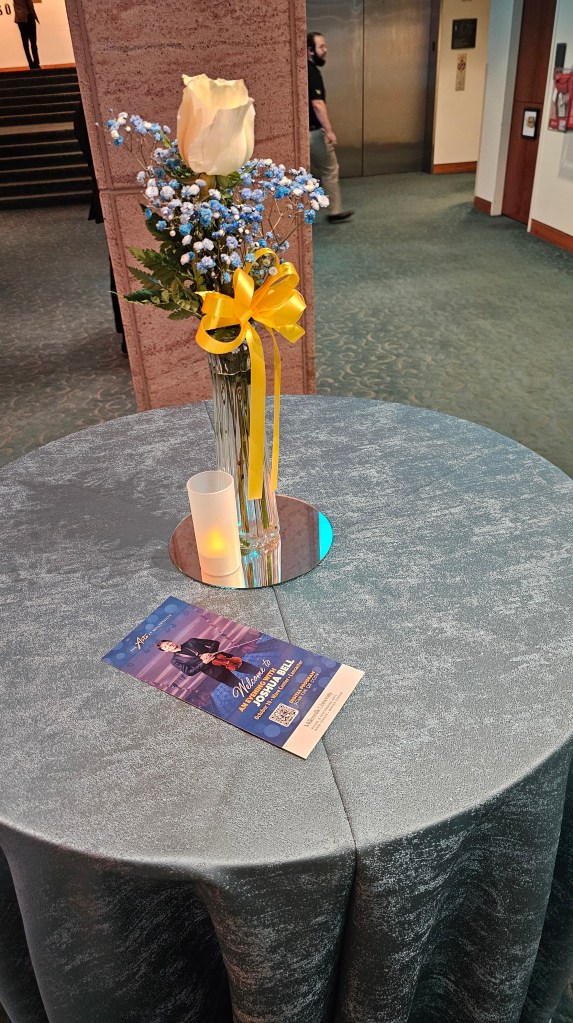
I was a little surprised to see that there was an entire reception in the front of the Ware Center with complimentary wine and a small buffet of food. A grand piano was playing softly and everyone was mingling with an air of barely contained excitement. I took the opportunity to mingle with the crowd, stopping to chat with people using small opportunities to open up conversation. A few people stopped me to compliment both my own outfit and my mother’s. After a short wait which felt like an eternity with anticipation, the doors were finally opened and we were able to make our way in. 

I hadn’t paid much attention to the seat numbers as we hadn’t been able to select our seats at the time of purchasing. The tickets had simply arrived in my email and I printed them out ahead of time not wanting to take any chances of last minute technical difficulties. Which meant that once again, I was surprised by my sheer luck. As I slowly descended further down the steps closer and closer to the stage it slowly dawned on me that I was to be in the second row from the stage on the far right (stage left) where Joshua would enter and exit. I was dangerously close to the legend himself. 

From the first note, I knew I was hearing something particularly special;it was clear no recording had ever quite done either the player or the instrument justice. The sound washed over me commanding my attention and I swear I could see the sound as colors dancing across my mind. The notes were like electricity through me filling every limb with it. Words do not quite capture the physical and emotional transcendent experience that happened as I was held hostage by the majesty of the music.  

As I watched and listened, I wanted to take everything in at once, every note, every movement of his bow arm and fingers over the strings. I could see every expression in his face and the way he moved with the music as he played. I could hear him take a breath at the beginning of the musical phrases, breathing in sync with the music. When I had recovered from my initial shock, I did manage to start to study what he was doing to produce such phenomenal sounds. Truly, the violin on which he is playing is a singular instrument, but let us not fool ourselves into thinking that should I ever be handed a Stradivarius such as the Gibson ex Huberman (provided I didn’t faint first), I would not be able to produce the same caliber of music. Whereas many people might focus on how expertly his fingers moved up and down the fingerboard keeping them perfectly disciplined, I was enthralled by the control he exhibited over the bow and how he could subtly move his wrist to change the entire tone. I found myself enraptured in an entirely new way as there is nothing quite like watching a master at work. 

After what seemed an age and all too quickly, time which had been suspended resumed and the concert came to its seeming end. However, there was a small surprise at the end of the published repertoire, he had two more songs for us, Nocturne Chopin No. 9 and The Gypsy Airs. The first Josh dedicated to a dear friend who had only died that morning, though his voice almost broke as Josh begged the audience’s indulgence to dedicate the piece to him, the voice of his instrument remained clear. Only a heart of stone would have remained unmoved by the communication of grief in the notes. The second song, was a balm to soothe the hearts of those listening, with its oft times cheeky and bright tones. 

I never wanted it to end, but once again, we came to a halt, with his bow held in the air the audience held its breath and then with all the confidence of a conductor at the start of a symphony his hand dropped and a chorus of clapping began. We rose to our collective feet giving a standing ovation of a performance truly worthy of it. He graciously accepted our accolades and made a quick exit stage left. The magic of the evening would not soon wear off as the music continues to echo in my mind and I will long to hear it again, knowing that I will have to make due with mere recordings. I understand now why women would faint to hear Paganini play. 

How can you hear a world renowned musician?

As I often remind you dear reader, one will be shocked and surprised at the offerings from your local colleges and universities. Not all world class performances take place in the vaunted halls of opera houses and symphony halls, some take place on much smaller, more intimate stages. I always check in early August for the listings of performances that I can expect over the next 8 to 9 months. I also check my local theaters and community stages. Often these places have shows that are much more affordable to see than in the larger and more famous venues. Yes, seeing a world renown artist performing on a world famous stage can be exciting, it’s also very expensive and many of the newer smaller stages have great acoustics with modern building techniques. By not overlooking my smaller, local venus, I managed to check seeing Joshua Bell playing his famous Stradivarius off my list.  

Completed: Oct. 2024

Cost: $250 

Miles from home: 20 

A Purposeful Life: The Calling

In my last post, I referenced how living one’s best life is in part living a life with purpose or a life in which one applies ones talents in support of a calling to serve others. I went on to wax poetic about the first of three parts, mostly about talents and how to cultivate them. In this post, I shall attempt to unpack the second part of that statement, mainly one’s calling. This is probably the trickiest part of the whole thing. The first part is rather simple, just consider your interests and start to develop them, they’ll become skills and later talents. Yes, there is a certain difficulty in the discipline required to do that, but in general one is not sitting around with no idea of what one’s own interests are. The third part is also fairly easy, find other people, utilize said skills/talents to assist them. 

So what is a calling? How would we even know what it looks like? What does it mean? I am no philosopher and certainly lack the wisdom of the sages to give a definitive answer. Still, if one seeks enlightenment then one must learn to wrestle with such questions and start to consider the answers for oneself and not merely rely on the elders who have come before to answer for us. We are not here to merely echo the philosophers that came before otherwise we would have been satisfied with the answers of Plato and Socretes and Descartes and Vonnegut would have needed to occupy themselves with other diversions. So that is what I shall do here and perhaps, dear reader, you shall wrestle with this question yourself. I certainly hope so, otherwise how shall I become wiser if no one challenges me – I digress. 

So first what is a calling? Often people will feel a strong desire towards a certain profession or job that feels fulfilling. Passion + meaning = calling. However, I question the idea that it should be connected with a particular profession. At risk of coming off conceited or judgemental, I doubt that most people would consider being a garbage man or grocery work a calling. Do not mistake, dear reader, the statement for condescension. It takes little stretch of the imagination to see how vital these roles are, but our society does not hold such roles in high regards despite their inherent importance. When the pandemic shut down much of the world, it was not the garbage collectors and grocery workers who stayed home. Yet, I doubt that many of those in those positions would say that such a profession is their calling even though these are vital to the functioning of society.  Those jobs are meaningful in that they help others, but few people are passionate about them. 

Photo by shajahan shaan on Pexels.com

Contrarywise, many people in higher paying and higher status jobs lack both passion and meaning. They may push papers around a desk, crunch numbers and complete tasks for the corporate overlords. Many may not even really understand why their position is vital to the company, some may even struggle to articulate what precisely they do when their friends and families ask. If their job disappeared tomorrow would it have a negative impact on society? Would others miss it? Would they even notice it’s passing? When mass layoffs occurred in the tech sector, were many of us concerned about it? Did any of us outside the industry truly worry that vital goods and services would be disrupted? That isn’t to diminish the pain of those who were part of that, it is merely to illustrate that those jobs most likely do not have much meaning associated with them as it requires the stretch of the imagination to consider how they are all that helpful to society as a whole. 

 In fact, there’s an anthropologist who theorizes that up to 40% of our jobs are “bullshit” jobs or a job that is so completely pointless, unnecessary, the person doing it can’t justify its existence. These are jobs usually taken up by meetings and emails and are so bogged down in paperwork that one is left wondering if you’re doing anything other than existing. Elon Musk fired 90% of people at twitter and it had almost zero impact on the service it provided. Do you see the danger in tying a calling to one’s profession? These jobs are still important, some are quite meaningful if not readily recognized and others lack passion and meaning are nonetheless important in other ways. I won’t go too far down the rabbit trail of the sheer amount of job bloat in corporate America. It is only that there are very few professions that will allow a person to pursue a passion and have meaning. 

For most of human history, one’s profession was the way to keep a roof overhead, food in one’s stomach and clothes on one’s back. It truly wasn’t until much more recently that we started hearing the message that we should follow our dreams and surely good things would follow. Most of my generation grew up on stories admonishing us that happiness was to be found in pursuing jobs that were our “calling” and the reality came crashing down on us. While others may waggle their fingers at us for pursuing “underwater basket weaving” as majors, who was it that told us we not only could by offering it to us in the first place as a legitimate major but encouraged us that we should do it from our earliest years? I know I certainly grew up on stories that one should follow one’s passions as the path to happiness. A lovely notion perhaps for a different time. 

Photo by Pixabay on Pexels.com

As with many ideals our society pushes, we must free ourselves of the shackles that bind us to them. Our calling need not be our job – a good thing too, considering the constraints upon us otherwise. That isn’t to say that one cannot find a profession that exactly matches one’s calling, simply that it isn’t necessary. Your job does not have to be your calling or even your passion. It’s nice when that happens and there are a few lucky people who “never have to work” because they love what they do so much. If you are one of them, I raise a glass to your good fortune friend! However, there will always be people who are needed to complete the passionless work – whether that be the necessary paper pushing bureaucrats who shuffle the necessary government forms about or the oil rig workers who risk life and limb to ensure we have the necessary fuel for our modern world. It is a rare person indeed who finds either one of those to be their passion. 

Now that we’ve dispensed, such a silly notion that our calling must directly lead to our job, we discover that there is in fact quite a wide range of things we could do in those hours not spent on the job. Your job could help fund your passion or otherwise help connect you with the right resources be they monetary or social to pursue them. So long as whatever you do arises from things that you are truly passionate about and works towards the benefit of others. Perhaps, you have a strong talent for sports and take up coaching youth soccer in your hometown. Perhaps, you have strong feelings about conservation and turn your efforts to going to your town meetings to make your voice heard or you go around collecting signatures on a petition. 

You may not even quite know yet how to figure out which one of your many passions to pursue. There are a myriad of things to be passionate about, music, art, sports, politics, the environment, trees, air quality, public health, homelessness, the law, philosophy, teaching, psychology, and well, pretty much anything in existence. I am rather passionate about cats myself, but are they my calling? I have adopted several of them and care for them, they certainly enrich my life, but I don’t know that I’d call it a calling. I don’t feel called to be a pet parent. I merely enjoy being one. A calling is the match of your deepest passions and beliefs with the deep needs of the world around you. 

It can take many years to discover one’s true calling or path and one must be willing to pivot with new information. Most people simply do not have the necessary introspection or knowledge base at 18 or 19 to decide what their calling truly is. Most have some inkling of interests if no actual skill set or talent and they certainly don’t know enough to be truly passionate about anything. If you, dear reader, are of the younger sort, put down your pitch fork before you angrily respond to the above statement in the comments. There is simply far too much to know about the world in order for you not to go down some well-meaning and perhaps misguided path. There is some evidence to suggest that you don’t really have a good idea of your true calling until you’re about 40 years old. Which is honestly a bit of a relief for those of us who are younger than that. You may dear reader, be breathing a sigh of relief – “Oh good, I’m not supposed to have it figured out yet”. Perhaps, I really am meant to open up that cat cafe and spending my days with my feline friends is actually my calling after all! 

Photo by Pixabay on Pexels.com

I encourage you dear reader to take some time to journal and explore your passions. Think about the things you used to enjoy or were once interested in before the world got in the way and told you it was dumb or not valuable. Perhaps, your calling lurks in there. Consider what you enjoyed when you were quite small. Think about your heroes and people you really admired. I find that a lot of good things comes from journaling, especially when you let go and just let the thoughts come forth. It’s like your subconscious builds a bridge to your unconscious and everything just sort of flows out. You may be quite shocked at what you put to page once you let it go. 

The key is not to let whatever you think your calling is become part of your ego. Don’t get too attached to any one path or idea because it will change and evolve. After all, I just said that one’s job is probably not one’s calling. Money is necessary to do things like eat and have a roof over your head. And the expression of ones calling can take many forms. A person whose calling is working with the youth may become a teacher, a coach, a youth pastor, a therapist who specializes in children, a volunteer for big brothers, big sisters, a mentor, a foster parent or something else not listed here. However, if one is too stuck on a singular idea or path you may miss the boat entirely. If you think that you must be a teacher because you feel called to prepare the next generation and you objectively suck at teaching larger groups of students, you will be miserable and your students won’t get your gifting. If you instead volunteer for big brothers, big sisters after becoming an accountant, you will find that your gift is working as a mentor for disadvantaged youth and perhaps tutoring them in math thus helping shape their futures in a much more meaningful and powerful way. 

I’m not exactly sure if this post is all that useful, since finding one’s calling is rather tricky. I only hope that I have helped dispel some of the misconceptions that people have around their calling to help free you to be a bit more creative and open to the possibilities of how it might manifest itself. Truth be told, I’m still working out exactly what my calling is, but I keep getting closer with each trial and error that I make and with each new experience that I have. After all, part of my bucket list is to help me explore and get to know myself better.