
The Gift You Give Yourself

There comes a point in adulthood when you look around at your own life and realize just how much of it was built from other people’s expectations. Parents, partners, coworkers, even strangers on the internet all seem to carry opinions about what a “good” life should look like whether that’s the classic white picket fence and 2 kids, jetting around the world or having that corner office. With the shorter days and colder nights which entice us to stay inside sipping a warm cup of tea, December has a way of handing us a quiet pause in the middle of all that noise. In that stillness you can ask a gentler and more liberating question: What if the best gift you give yourself this year is a life that actually fits you? Not a life you are supposed to want. Not a life that earns gold stars. A life that feels like home when you step into it.

Most of us carry at least a few pieces of life that no longer fit. A commitment you keep out of habit. A routine that once served you but now drains you. A goal you set years ago that you are still dragging around even though it no longer reflects who you are. Just like clothes that shrink in the dryer, some roles tighten over time until they restrict your movement. One of the most compassionate things you can do for yourself is to notice what feels constricting. If something consistently brings dread or resentment, it deserves a second look.

Try asking yourself: What do I continue to do only because I feel I should? What parts of my week feel like a performance? What drains me more than it fills me? These small gut checks can reveal more truth than grand resolutions ever will. Because often resolutions are about adding things to our lives when maybe we should be asking what isn’t serving us anymore. 

Photo by The Lazy Artist Gallery on Pexels.com

Permission to Want What You Want

Wanting something different for your life can feel almost rebellious. We are taught early that desire is selfish or impractical. Yet desire is really a compass. It points you toward what brings meaning. The permission you refuse to give yourself is often the permission you most need. You are allowed to want a simple life. You are allowed to want a bold one. You are allowed to want rest, creativity, adventure, peace or a mix of them. 

Let go of the guilt around wanting something others do not understand. You do not have to justify your dream life like it is a court case. Your preferences do not require a panel of approval. They only require your honesty. After all, the only person who gets to live your life is you. They have their own. 

Every person inherits a set of default settings. These can be expectations from family, cultural messages or values absorbed without question. Some defaults are helpful. Others keep you living a script that never belonged to you. December is an ideal moment to ask where those settings came from. Did you choose them or were they assigned to you? Are they aligned with who you are now or with a past version of you who no longer exists?

Letting go does not always require a dramatic overhaul. It can be as simple as replacing one outdated belief with a more generous one. It can be as quiet as deciding your worth is not measured by productivity. Sometimes the life that fits begins with subtracting what never matched your shape in the first place.

Photo by Kassandre Pedro on Pexels.com

Crafting a Life That Fits

Once you clear the space, you can begin creating a life that feels right in your hands. Think of it like tailoring. Small adjustments can change everything. You might shift your morning routine to match your natural rhythm. You might redefine what rest means so it supports you instead of feeling like a guilty pleasure. You might choose relationships that nourish you instead of ones that keep you hustling for belonging.

Crafting a life that fits is not a single grand gesture. It is a set of choices made consistently. When something feels peaceful instead of performative, you are moving in the right direction.

A good life should give you room. Room to breathe. Room to change your mind. Room to fail safely. Room to explore new interests without embarrassment. If your life feels like a tight shoe, it is not a sign that you need to force yourself into it. It is a sign that you need to loosen the laces. When you prioritize a life that can expand with you, you trade perfection for sustainability. You also create conditions in which joy can actually take root instead of feeling like a visitor.

Photo by JESHOOTS.com on Pexels.com

A Gift You Keep Giving Yourself

The gift of a well-fitting life is not wrapped once and placed under a tree. It is something you give yourself again and again. Through honesty. Through reflection. Through paying attention to what your life is telling you. You will outgrow some things. You will discover new ones. You will learn what brings you back to yourself. The point is not to build a life that looks impressive. The point is to build one that feels true.

As this year winds down, take a moment to appreciate the small ways you have already reshaped your life into something more authentic. And if you have not started yet, that is all right. The gift is not in the timing. The gift is in choosing yourself.

What is Work Life Balance? Setting Boundaries

With the age of the internet and cell-phones work has managed to invade almost every aspect of our lives. People have stopped talking about work-life balance and talk about things like blending work and life together. Which is really short hand to say, having no boundaries with work and work being able to take precedence in your everyday life. It has even begun to take over things like people’s vacations. 

In countries like France, they’ve adopted the right to disconnect meaning your work may not send you emails after work hours. Some companies have a system in place where if you’re on PTO any email is automatically responded to with “this person is on vacation and your email has been deleted, please reach out to this other team member”. I LOVE these. We should work to live, not live to work. Setting appropriate boundaries with work and holding to them is both difficult and extremely rewarding. 

No wonder we dream of packing up and leaving our homes. Our homes are no longer sanctuaries from work. Instead it follows us to the door, hounding us with phone calls and emails. Sometimes seemingly frantic demands during your off hours. I’m going to hazard a guess that you dear reader are not in the medical profession and therefore are not tasked with the life and death of others. This means that since no one is going to die if you don’t answer that email at 9 pm, maybe it can wait until 8 am. What objectively are  you going to accomplish at 9 pm that cannot be done at 8 am? It will probably take you twice as long to accomplish it late at night than in the morning, when you’re awake and refreshed, especially when adding in the inevitable and natural human response of grumbling to yourself and emotionally having to process this unwanted demand on your private time. 

Rest is important to our functioning, our physical health, our mental well-being, our emotional wellness and spiritual wellness. Paradoxically, when we’re allowed to rest our work performance and output increases rather than decreases. Unfortunately, companies fail to understand that thinking they can just continue to push us to get more results.When we keep work at work and home at home, it allows us to thrive in both places. Once we start blending the two, it can be hard to perform well at either. You find yourself torn in two trying to constantly please two masters. You allow work to encroach on your life so you don’t meet the obligations of the home so then home may start to encroach on your work. It feeds anxieties, worries and distractions. You start to need more and more time to talk out your emotions and process which only robs you of more precious moments and gets you further behind. Just writing this makes me want to scream in frustration. How is anyone supposed to thrive let alone survive in such conditions?  

If you are hourly, you’re probably not tracking this time and ensuring you’re getting reimbursed. If you are, you’re likely getting push back for it. If you’re salaried you have to consider that every hour you work extra is time you aren’t getting back and you aren’t getting paid for, thus lowering your hourly salary. Consider working for 50,000 a year. At 40 hours a week that’s about $24 an hour. If you consistently work closer to 50, you’re now lowering your rate to $19. Would you really do all that you’re doing for $19 an hour? Because you are. By working so many extra hours, your company is essentially robbing you. Even just 1 hour each evening still adds up to 5 extra hours a week or $21 an hour. You’re allowing them to undervalue you and it also means they will continue to not hire the help they clearly need by you enabling this behavior. If protecting your rest time isn’t motivating enough to start setting some boundaries, this monetary incentive should be. 

So what does setting boundaries look like? Well first, what is a boundary?The American Psychological Association defines boundaries as the psychological demarcations that protect the integrity of an individual or group, or that help someone or a group set realistic limits on participation in a relationship or activity. In the most basic terms, it’s about what’s okay and what’s not okay. A boundary isn’t about controlling the other person, that’s impossible. It’s about when person x does y, what will you do? 

Your boss or work colleague will continue to email you even if you request he or she stop. It can be as simple as refusing to answer until the next business day. It could be setting your phone to “do not disturb” and communicating to your boss that after work, your phone goes to “do not disturb”. Some phones let you select which apps and phone numbers to block when which can be really helpful. It could be having a frank conversation about your contracted hours and how often you’re going over them. Letting your boss know that you’re no longer willing to go over your hours without additional compensation because you’re not contracted to (if you have a contract of course). It may be asking your boss to then prioritize the duties and re-allocate them to other team members if you do not have enough time in your day to complete everything they are demanding of you. Some bosses don’t even realize how much they’re asking you to do until you show them. They may even have tricks or strategies to help you structure your day better. Not every boss who has you working overtime is nefarious, sometimes they just don’t know how much you’re doing or how you’re struggling. Use your voice and speak up. 

Photo by Andrea Piacquadio on Pexels.com

It is important to remember that someone else’s poor boundaries does not give them the right to violate yours. It can be very tempting to give in when other people around you consistently allow their boundaries to be violated. You may fear not looking like a team player or missing out on a promotion. The thing is, in most companies, you are no longer rewarded for going above and beyond. It’s often easier to get a promotion or pay raise going to another company than sticking with your current job. That’s why quiet quitting or “acting your wage” was trending as a movement. The reality wasn’t that people were quitting working, rather they were setting healthy boundaries with their company and refusing to be taken unfairly advantage of. 

It will probably look different depending on your company’s culture and your boss. It’s easy for me to say “turn your phone to “do not disturb”, refuse to answer work emails until the next day”, but if your boss berates you if you don’t respond immediately or continues to send escalating emails that will make it more difficult. Especially if you feel you need this job and it’s currently difficult to simply go get another one. So it may be responding with “I saw your email boss and I put your request on my calendar to get done first thing in the morning.” rather than simply ignoring it. You still responded, but you didn’t immediately get it completed on your off hours. It’s a small but important step. Once they start accepting that initial boundary, you may find it easier to follow up with “Hey I’m not going to keep sending you a response that I saw your email, just trust that I will see it and get it done like I’ve been doing”. It may be having a conversation with your boss letting them know that you want to be a team player, and you’d like to know which requests are expected to be answered right away and which requests can wait until the next day. Maybe your boss doesn’t even realize that you don’t know you can wait until the next day to respond. Only you know your boss and your company’s culture to know what approach is right for you. It may also involve going to therapy to get coaching on how to set boundaries if you’re someone who struggles with pleasing people or assertiveness. 

We want to live rich and meaningful lives, but how can we if our jobs are always lurking around every corner of our lives, demanding our time, energy and sacrifice while giving us so little in return? It’s time to return to work being at work and home being at home, keeping those spheres separated to allow us to thrive in both. I always do my best work when I hold to strong boundaries and I think that my performance allows me to back up that claim when I’ve had to speak with my supervisor or colleagues about my boundaries. I do let them know I’m available for emergencies and I define what emergencies look like and what they aren’t. 

Am I perfect with this? No, but I always found that the more I’ve held to my boundaries the better work I do at work and the less burned out I feel because I am able to get the necessary break every day not just when I escape to another state or country. The reality it this, soon you will be dead and then all the emails, powerpoints, deadlines and team meetings will be meaningless. No one gets to the end of their life and wishes they had spent more time at work. They wish they had spent more time with their children or their pets. They wish they had prioritized their personal relationships more than their work colleagues. They wish they had taken the time to learn a language, play and instrument or pursue their hobbies. Life is too short to work all the time, work to live, don’t live to work.

Loneliness Epidemic: How a Bucket List Can Bring Connection

In May 2023, the U.S. The Surgeon General announced that we were experiencing a loneliness epidemic and that it was killing us. Many experts linked loneliness to adverse health effects similar to those of smoking and obesity. It is associated with increased risk for heart disease, stroke, diabetes, dementia, depression, anxiety, self-harm and suicidality. It’s not just in the United States, the World Health Organization recognized this as a global issue and in the fall of 2023 launched an international commission to study the problem.

There are many ideas as to why we’ve increasingly become isolated even though we’re more connected than ever. As we’ve increased our digital presence, we’ve decreased our physical one replacing deeper connections with superficial online ones. That isn’t to say you cannot have a deep connection with someone you met online, people have done it. I’ve done it – but it is rare. There is only one deep online relationship that I’ve had that has lasted more than a year or two, but there’s many more people in my life outside my immediate family whom I’ve had a deep and lasting relationship with for over 20 years.

As a culture we are isolated, in our homes, scrolling on our phones not really knowing each other more than superficially. We present the curated version of ourselves to the outside world, never sharing our struggles or vulnerabilities. We don’t share real authentic conversations and disagreements usually end in blocking and a refusal to work things out. We’ve lost our ability to civilly coexist with differing opinions and perspectives which only leads to more isolation because no one is going to agree with you 100% of the time on every issue. Or we don’t share our whole views and ideas because we don’t want to begin an argument that will lose us yet another friend, leaving us with shallow relationships. We are afraid to be open and vulnerable, to make a mistake or work through discomfort to arrive at a place of mutual understanding and respect. 

Photo by Lisa Fotios on Pexels.com

We fill our spare time up with meaningless and empty consumption of media, to numb the pain of being isolated. With our own family members we sit next to each other in our own worlds on our phones and not with each other. In 2006, I read a book called Bowling Alone which discussed our already declining social capital. Membership in community organizations such as churches, sports leagues, and volunteerism was on the decline then and continues to be now. So this isn’t really a new issue, since at the time of the book’s publication social media and smartphones hadn’t really taken off. Unfortunately, rather than helping the problem, it exasperated the issue of social capital. 

One reason for this, is that we’ve lost third spaces, or places where people can gather for a relatively low cost. Even without the loss of parks, with more extreme weather, we’re losing the ability to access them. No one wants to sit together for hours at a park when it’s 100 degrees and a pool membership is expensive. Malls have closed. Libraries are under funded. Even activities that used to be relatively cheap are no longer accessible. Going to the bowling alley used to be a cheap family activity, but no longer. Many formerly free events open to the public have become ticketed experiences. This means our relationships have suffered from lack of consistent contact and engagement.

So what are we to do, dear reader? Well there are some recommendations which are more policy level, which while we can influence a little bit. Although, it is difficult for the average voter to leverage much in the way of power to force change. However, we can cultivate a culture of connection. How might you ask? Why by inviting your friends and families along to your bucket list adventures, which when kept closer to home are more accessible for everyone. 

Photo by cottonbro studio on Pexels.com

We all know that shared experiences strengthen relationships. These moments become more than just peaks for you, they become peaks for them as well. They become part of the trove of memories that you can reminisce about and form a special shared history. By joining in the ups and downs with one another we foster empathy, support and understanding. Sometimes these moments can create opportunities to be vulnerable with one another. In getting away from the busyness of everyday life and into a relaxing quiet setting, you find yourself opening up and sharing parts of yourself that you wouldn’t necessarily post on your social media pages. There’s room for the nuance of discussion.  

We also know that spending time together is part of the way we express love and caring for one another. Having to navigate experiences helps to foster trust between you and demonstrates reliability. There have been many times when my sister and I have had to come to an agreement about where to go, how to get there or make decisions on the best approach. Luckily, years of sharing a room together had already taught us how to negotiate with one another, but it reinforces the relationship. I’ve often been surprised by how little time other people spend with their siblings who live relatively close by, but consistently going on dates together keeps our bond strong.  

You will almost never read a post about an activity undertaken alone, because part of any bucket list moment is sharing it with people I care about. It’s not about doing alone, it’s about using these as times to connect, to build bridges and create strong relationships. What has been inspiring to me is that by going out and experiencing more of the world, friends have reached out to me with cool ideas knowing that I am someone who will take them up on their offer.  There have been times when I’ve come along for the ride for someone else’s bucket list activity. I was delighted to help make their dreams come true. 

I’ve also inspired them to enjoy more of what our local area has to offer. They’ve taken their boyfriends places or invited their family to join them for adventures. We’re fostering a culture of connection among each other and it’s spreading to other groups. It’s my ardent hope that this blog inspires you, dear reader, to go out with your loved ones on your adventures big and small. I hope that it helps you build connections with people and strengthens your bonds to combat loneliness, anxiety and depression. I hope that these adventures help foster confidence and self-assurance. I hope that this does not stop with myself or your, dear reader, but rather it spreads to other groups so that we’re all a little less lonely and feel like we belong to our communities. I can’t do much to change the world, but I can be the change I want to see in the world. One thing I hope to do is help build stronger connections and help others feel a little less alone. 

Not my Monkey, Not my Circus 

Those have got to be six of the most freeing words I have ever heard uttered. They were spoken by the executive director of my internship placement and it was a lightbulb moment. As a young, budding professional still in graduate school, I often took on more than what was mine. I was shouldering burdens, piling on unnecessary stress and adding to my every growing pile of responsibilities. Seeing her close her eyes and utter those words were deeply profound, it was like getting permission to start setting boundaries around my professional and personal responsibilities even if the actions of other people affected my responsibilities. It gave me the freedom to say if someone else doesn’t get their piece done, it doesn’t mean I have to step in. 

The idiom actually comes from a Polish proverb, but its colorful imagery resonates so strongly that it needed almost no translation when it crossed over to the English speaking world. It perfectly encapsulates personal boundaries and discretion, encouraging us to consider where our responsibilities lie. We we invoke this phrase it means that we must practice discernment about what is ours to handle and what we have to others handle. It helps us prioritize our energy and attention rather than leaping to intervene. It also helps us relinquish control to others. 

I can at times be a bit of a control freak. This probably stems from perfectionism and anxiety. I want to do a good job; I want to be helpful; I want the whole group to do well, and I want to know that it’s done. This means that if someone else on the team isn’t doing their part, I just step in and take over without necessarily being asked or considering that maybe the other person was in the process of doing it, just not on my timeline. This means that sometimes I jump in and just do for someone rather than allowing them to do it themselves.

Photo by RF._.studio on Pexels.com

I was on the receiving end of this once and I was rather annoyed. I was working with a partner in class and we had split the parts of the project it was due in three weeks. Not a week after the assignment, she had completed the entire thing, robbing me of the experience of learning and I was worried I’d get a bad grade on the project because she didn’t let me do anything. It communicated a lack of trust and a poor assessment of my skills. So, instead of both of us being happy with the work and doing well, she felt resentful and overburdened and I felt insulted. 

My mother is also someone who has needed to learn this phrase. She is a go-getter and also a bit of a perfectionist- I can’t imagine where I got my perfectionistic trait from, ‘tis a mystery that only the wisest of sages shall ever be able to solve. Alas, us mere mortals shall simply have to remain in the dark. 

My mother too has fallen into the trap taking on that which was not hers. I saw this play out in her stories from her job. Where one of her co-workers would fall behind and leave work undone. My mother, being the responsible person that she is, would complete her work and then help that person. Well, that person kept leaving more and more work for my mother. Until, she would simply never do anything she didn’t feel like doing leaving my mother feeling resentful and angry. The final straw was when my mother’s supervisor tried to start holding my mother accountable for the undone work instead of her fellow employee! 

So you can see dear reader, the dangers that lurk when one forgets which monkeys belong to your circus and which monkeys belong to the other persons. Your relationships with others suffer. You may reinforce the idea that the person is a failure and can’t be trusted with responsibility undermining their sense of competency and self-worth. You may find them upset that you rob them of opportunities to grow and try. You may find that they take advantage of you by constantly passing on the responsibility to you. You will also find that you’re overburdened and burned out. You will be resentful towards those whose responsibilities you now hold. One thing we know about resentment is that it is a relationship killer. It often leads to anger, fuels criticism and feeds contempt. 

Photo by Merilin Kirsika Tedder on Pexels.com

This phrase is part of setting boundaries, of knowing where you start and stop. It is not my responsibility to get my neighbor to mow his lawn, even though the tall grass might annoy me. Going over there and mowing the lawn for him, may be seen as a nice gesture, but only if I knocked on the door and asked if he would like some assistance. Otherwise, it’s trespassing on private property and socially unacceptable. While it may be nice for me to watch my friend’s child when she goes to the hospital, it’s not my responsibility to do so and if I can’t watch the child because I have other responsibilities that I need to take care of, those needs come before hers. It is not my responsibility to complete the work of my neighbor, partner, parent, friend, co-worker or anyone else. 

My co-worker recently asked if I could switch on-call weeks with her. I almost said yes, but then checked my calendar. I had an appointment that weekend and I purposefully had not taken the on-call phone so I could keep that appointment. I told her no. The on-call phone was not my monkey that week and it wasn’t my problem that she had forgotten about her plans that weekend when she agreed to take it. She did get another co-worker to switch, but had I not heard that phrase I probably would have said yes and then felt resentful and angry if I had gotten called that weekend. 

When I can clearly see what monkeys belong in my circus, I can focus on the things that I am responsible for and let go of what I am not. This freeing phrase is a stable of my life and I hope, dear reader, it becomes a stable of yours. 

30-Day Meditation Challenge 

Some of my bucket list items come from the desire for self-improvement. I have written about how certain things that grace the typical bucket list are representative of some higher value like health. Learning to meditate comes out of that value system. I do want to be a healthy individual physically, mentally, emotionally and spiritually. I had hoped that learning would help me achieve this continuous goal. 

Meditation isn’t something I had been able to do before this challenge. In the movies, they’re always talking about “clearing your mind”. I don’t know about any of you, but my mind is never quiet. It’s always going, thinking of new things, making new connections, analyzing, processing, creating and making up an entire new worlds or languages. I often have trouble sleeping not because I’m up worrying about anything. No, I have a vivid and active imagination. I’ll space out and be dreaming up a whole creative story without even really being conscious of it. So being able to “clear” my mind is almost impossible.

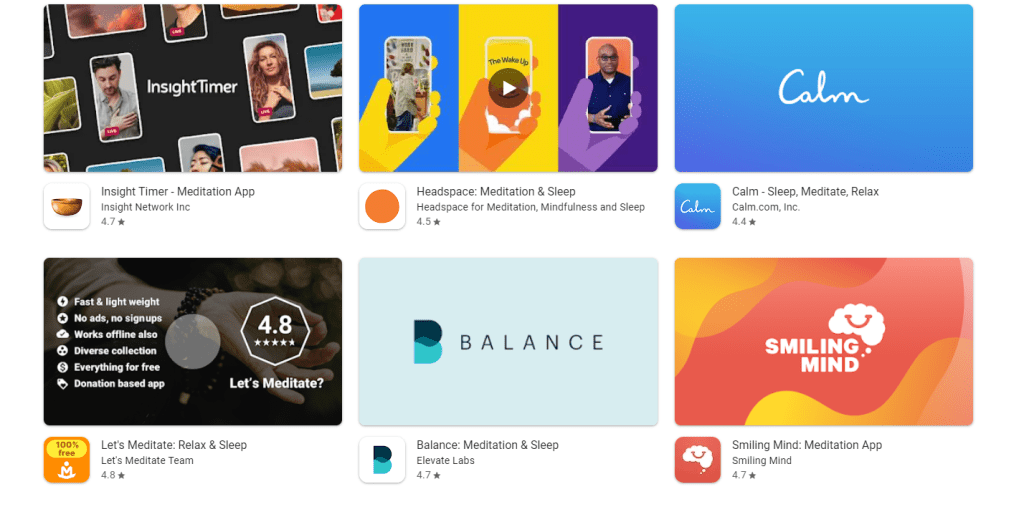
I tried a meditation app which told me to picture my mind as a horse that I’m gently lassoing and making the rope shorter and shorter in order to learn the skill of clearing my mind. It would have me try to build up the time of having a clear mind with short bursts and to not worry if the thoughts drift in. It didn’t really work. My mind does not shut up, like ever. I would be just taking in the sound of a fan and suddenly, I’m thinking about the wind and thunderstorms and writing a poem about a gothic fairy prince stealing children like in the German poem Erlkoenig. I am very easily distracted. 

The word meditation comes from a latin word meaning “to ponder” but the practice of meditation is far older than even the latin language itself going back perhaps 150,000 or even 200,000 years. There are some theories that propose that the very act of “fire-gazing” meditation caused key changes in the brains of our ancestors to give rise to humans meaning that meditation may be older than the human species itself. There is a lot of evidence to suggest a long history of meditative states being used in rituals and shamanic practices. The earliest written records of the practice are found in the Hindu Vedas about 1500 BCE, but It isn’t as many may think strictly an Eastern practice. Records of meditative practices exist in the records of ancient Greeks, the Jewish Torah, druidry practices of the pagans spanning Ireland, France and Spain and even the Christian tradition. However, it got its more secular roots in the late 70’s from Kabat-Zinn when he founded the Stress Reduction Clinic which helped spawn the mindfulness movement in psychology. 

Going into the second summer of the pandemic, I found myself with a little more time at work than usual, in that I actually could take my 30 minute lunch break instead of shoving food in my mouth at my desk for about five minutes in between clients and writing my notes. We were also one of the only agencies not working from home because the nature of my job required me to work directly with people. This meant the common areas of our office building were sitting empty. 

Considering we were entering the second year of the pandemic and there didn’t seem to be a real end in sight to the ongoing upheaval as the affect shocks continued to roll their way through our society, it seemed that it was the opportune time to expand my repertoire of stress management. So I decided to spend a month meditating on my lunch break. I wasn’t doing it as part of a social media craze or anything, I just wanted to try meditation for 30 days and see whether my overall stress was reduced. I once heard a habit takes about 30 days, it actually is closer to 66 days. 

I went to one of the common rooms which was usually vacant away from any distractions or noise and pulled up youtube on my phone. A quick search yielded a 30 day meditation for beginners with most of the videos lasting about 20 minutes. I put myself in a comfortable position on the floor, closed my eyes and hit play. A soothing male voice then introduced me to the world of meditation. It was unlike any meditation I had ever tried before. 

Instead of telling me to clear my mind, my guide invited me to take in all the different sounds to let them flow into my mind and just notice the things around me. Instead of trying to “clear my mind” and ignore things, I was told to become aware of my surroundings. It was the first successful meditation I had ever tried and it was enjoyable. The previous times even a 10 minute habit a day quickly became a dreaded chore. Listen, if your “relaxation” technique becomes a dreaded chore, you’re not relaxing. He also had me try things like walking meditation, which also jived with me. I am someone who fidgets a lot and has trouble sitting still so a walking meditation was perfect for those days that I just needed to move. Ironically by not fighting all the inputs my brain was much quieter than when I was trying to not focus on the inputs and just exist. 

After 30 days, I don’t know that I found my overall stress was that much reduced, but I did have another tool in my belt for handling stress. There are times when I do take a few moments to get a cup of tea and meditate on the tea itself. The principles that I learned and the skill that I began to develop are things I use and have used in my own social work practice. It gave me a better understanding of meditation and a different way of communicating its principles to clients. I actually really enjoyed my daily meditation, so much that even afterwards I continued to visit his videos and listen to his guided mediations. Sadly, work did pick up again and I wasn’t able to keep up with the new lunch time habit. I did not find a way to incorporate it consistently at home. 

Overall, it was a good experience and I do recommend you try it. You may find, like me, that the usual guided meditations don’t work for you. Fear not! You may be neuro-atypical and a

different approach is needed to achieve the same effect. Remember there are many forms of mediation that have been developed over the millenia, it isn’t a one size fits all. Sitting cross legged on the floor breathing deep and clearing your mind is one form. Talking a meditative walk may be more effective for you. It isn’t about the how, more developing the skill of being able to relax and allow the world to happen around you without the need to change it. 

How can you learn to meditate?

It’s easy! There are many aps and youtube channels which take you through various kinds and methods of meditation. The key is finding one that resonates with you. Maybe you find one voice soothing or another irritating (pick the soothing voice), maybe telling you to “notice” things starts your brain racing and you need a different sort of strategy. Experiment and try it. It’s a crazy world and it seems that we are continuing to move from one global crisis to the next. While it won’t fix the crisis, meditation can help give you the extra edge to navigate your way through it successfully. 

I watched a 30 Day Meditation Challenge from One Mind Dharma on Youtube

https://www.youtube.com/@oneminddharma/playlists

Completed: 2021

Miles from home: Can be completed anywhere

Cost: $0-10 depending on the app you use