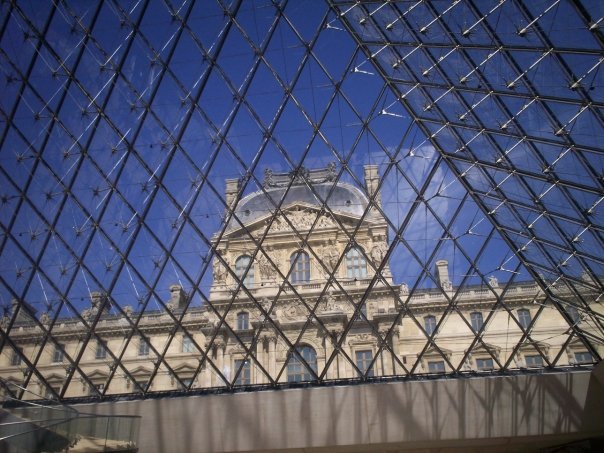
Paris, Part II: Walking the City and Choosing What Matters

Forgive the brief interlude in my tale of Paris, but as you well know, I always sprinkle tidbits of wisdom between my stories of adventure. After all, I don’t just want you to go off and have fun. I truly hope this is a place where we can grow together and create lives punctuated by adventure rather than longing for it as an escape from daily misery.

Now, we left off, dear reader, with my arrival: tired and exhausted from a sleepless night but pumped full of adrenaline, the equivalent of five or six cups of coffee coursing through my veins.

I had already gotten thoroughly lost on the way to the hostel and had largely given up on public transit as a viable means of navigating the city. Honestly, that’s only a feat a young twenty-something can get away with.

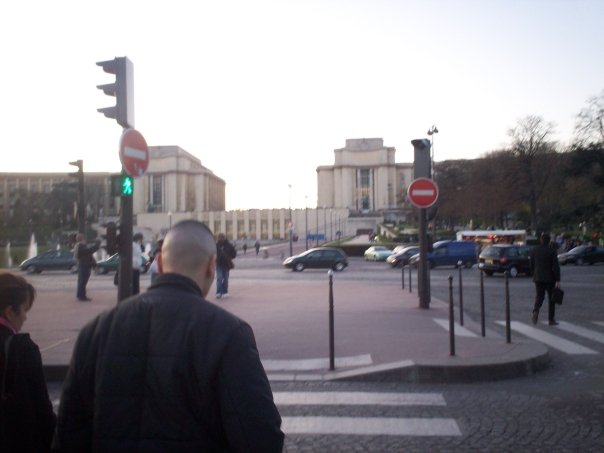
Now, I’m not entirely certain what the rules are for crossing the streets in Paris, but they did not appear to follow the ones I had grown up with. There were multiple occasions when the light was clearly red and people were walking, and others when it was green and everyone simply stopped.

Both my travel partner and I were quite confused by this apparent inconsistency.

It was decidedly not like Germany, where people display an almost obsessive adherence to rules. Even if there isn’t a car in sight, they will dutifully wait at the crosswalk until the light indicates it is time to cross.

However, after one or two close calls with traffic, we simply looked at each other, shrugged, said “when in Rome,” and followed the Parisians for guidance, forgoing the lights entirely since they clearly could not be trusted.
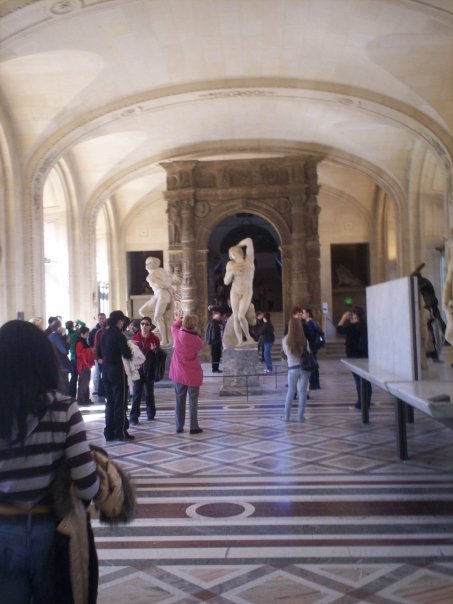
Our first stop was the Louvre, which is a must for any lover of art and history. Not only does it house one of the most famous paintings on earth, it is also the largest and most visited art museum in the world.

Originally built as a fortress and later expanded into a royal palace, the Louvre now spans roughly 2.3 million square feet. Of its approximately 380,000 objects, around 35,000 are on display at any given time.

Considering it would take over three months to see the entire collection, we decided to focus only on the highlights and the pieces that spoke most to us.

There are plenty of guides that will tell you the “must-see” works at the Louvre. But if something doesn’t speak to you, skip it. Focus on the areas of art and history you genuinely enjoy.

I, for one, would recommend skipping the Mona Lisa.

All it really amounts to is a photo opportunity for social media. It’s tiny, placed behind thick glass in a poorly lit room with hundreds of people pushing and shoving for a better look. You’re honestly better off googling a picture for all you’ll actually see.

Any contemplative awe you might have felt is drowned out by the din of the crowd and the smell of raised armpits as phones are hoisted into the air for a better shot.
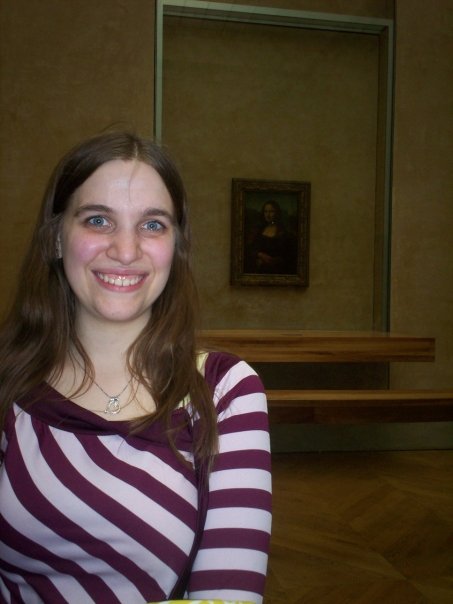
If you aren’t paying attention, your belongings might get nicked, and you could spend the rest of your Paris trip trying to recover stolen credit cards while cursing the day you were introduced to the pernicious lady with her sly smile.

After all, she too was once stolen. Why not cavort with thieves once again?

As I’ve said in other posts, don’t let other people’s opinions dictate what you do or do not do. So if you must see the Mona Lisa, I shall not judge you for it.

Just remember that the Louvre houses centuries of art, offering millennia of history to explore, not just stuffy Italians and pretentious French painters.

Its oldest piece is estimated to be around 9,000 years old and is well worth the trek to see.

Since I was traveling with an archaeology major, we spent most of our time in the Greek and Roman sections, along with some of the French collections.

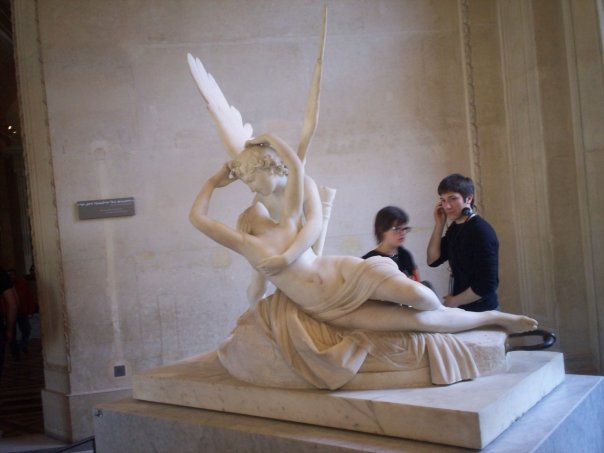
My personal favorite was the sculpture Psyche Revived by Cupid’s Kiss. Not because I have a particular fondness for eighteenth-century French sculpture, but because one of my favorite books is Psyche and Cupid by C. S. Lewis.

Art isn’t always just about what the artist intended, its place in history, or the techniques used. It is also about what it evokes in us.

I would argue that this is what art is most about: what we bring to the moment of encounter.

When I looked at that sculpture, I did not simply see the Greek myth. I saw it retold through a different lens. A revival not just of Psyche, but of myself.
Small tip: book your ticket in advance.

Prior to the pandemic, the best way to get into the Louvre was through one of the side entrances to skip the long lines. However, with its ever-growing popularity, daily visitor numbers are now capped, meaning the only way to guarantee entry is with a pre-booked ticket.

Sorry to all my free-spirited wanderers.

Having conquered a small portion of the Louvre, we ventured forth to the Lady of Paris: the Notre Dame Cathedral.

Walking through Paris instead of taking public transit allows you to experience the city in a completely different way. You breathe it in.

On foot, you notice the small shops and hidden corners that would otherwise blur past from a bus window or subway seat. The scent of coffee lingers in the air as you stroll by cafés, while the temptation of fresh-baked bread drifts from bakeries onto the street.

In early spring, the flowers spill across the sidewalks and painters emerge as if the season itself has burst through the concrete, refusing to remain buried beneath winter any longer.

Everywhere is a riot of color and life. Musicians greet you with cheerful melodies, and you cannot help but sway your hips just a bit in time with the music.

It was on our way to Notre Dame that we stumbled upon an artist selling watercolor paintings of the Eiffel Tower, the Arc de Triomphe, Notre Dame, and the Basilica of the Sacred Heart of Montmartre.

For a set of four, it was perhaps forty euros, an absolute steal, and it was there that my habit of buying art as a souvenir was born.

Erika and I split the cost and decided we would determine who received which painting at the end of the trip.

Long before we saw its doors, the twin towers of Notre Dame rose proudly above the surrounding buildings, beckoning us closer.

The cathedral was completed in 1260, though additions were made in the centuries that followed. Like any church nearly eight hundred years old, it has seen its share of glory and hardship: wars, neglect, desecration, and most recently, fire.

Fortunately, we visited before the fire and the subsequent debates over the restoration of its windows.

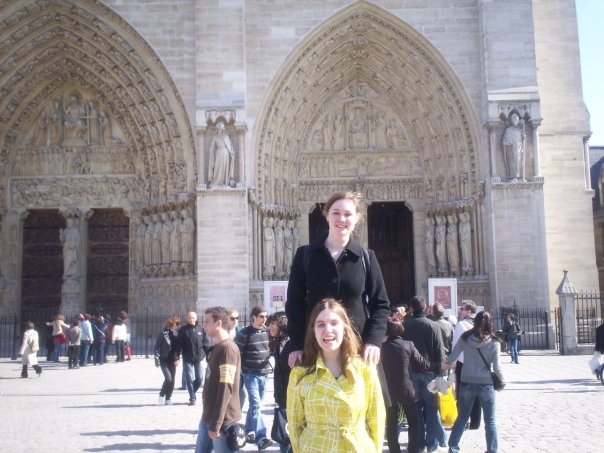
As a Christian myself, I was fascinated by the displays of Catholic artifacts that told the story of the church’s role in medieval Europe. I saw relics carefully displayed and read about how the church intersected with everyday life in the heart of France.
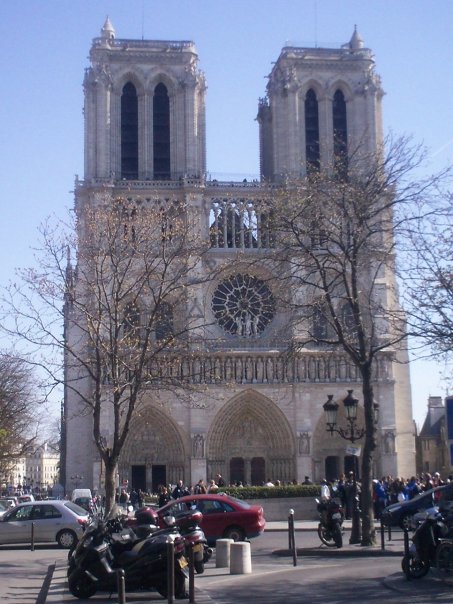
However, much like the Mona Lisa room, it was not a place of hushed awe but rather a chaotic stream of tourists passing through.

Contemplation was not something I readily found there. (For that, I recommend seeking out some of the lesser-known churches.)

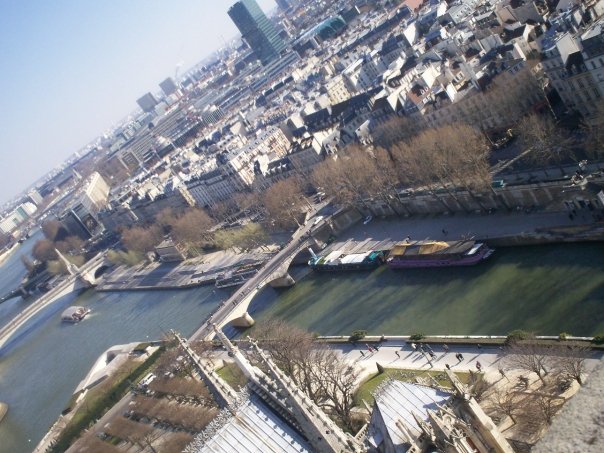
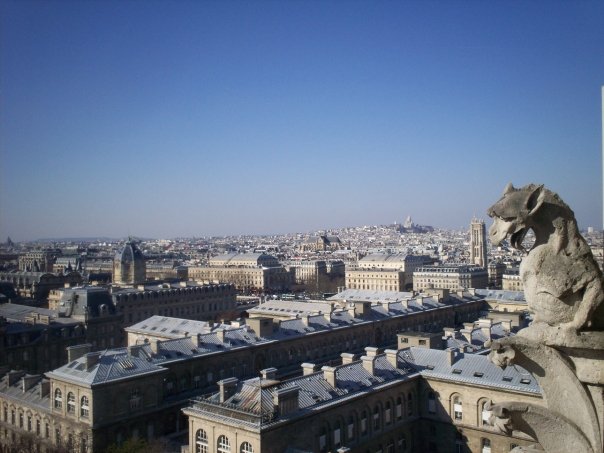
By this point my legs were beginning to feel the day’s journey, but that did not dissuade me from climbing to the top of the cathedral to take in the city below.

From there we saw, glittering in the bright spring sun, the white dome of the Basilique du Sacré-Cœur.

At the time, I must admit my ignorance. I had never heard of the church, and neither had Erika.

She suggested we should visit it.

I squinted across the grid of busy streets at what appeared to be an impossible distance to walk and declared quite confidently that there was absolutely no way I would trek all the way there.

Oh, dear reader, how the universe loves to laugh at the things we believe are beyond us.

For unbeknownst to me, I would indeed walk there.

But that is a story for another day.

And so, in the interest of time, I must pause my tale here.
You will have to return for Part Three.

Reverse Bucket List: A Weekend in Paris (Part I)

“How do you feel about a weekend in Paris?”

I twirled in my chair, hair whipping across my face, and fixed my friend Erika with a look that needed no elaboration. Her response was immediate. A squeal. A clap. An emphatic, “Yes.”

After all, what else does one say to Paris in the spring?

Such spontaneity, dear reader, is only possible when you are determined to drink deeply from the cup of life while living abroad. For an American especially, there is something intoxicating about the ability to hop on a train and cross into another country before lunch. When you come from a place where a single state can rival the size of an entire nation, the idea feels almost illicit, perhaps even scandalous.

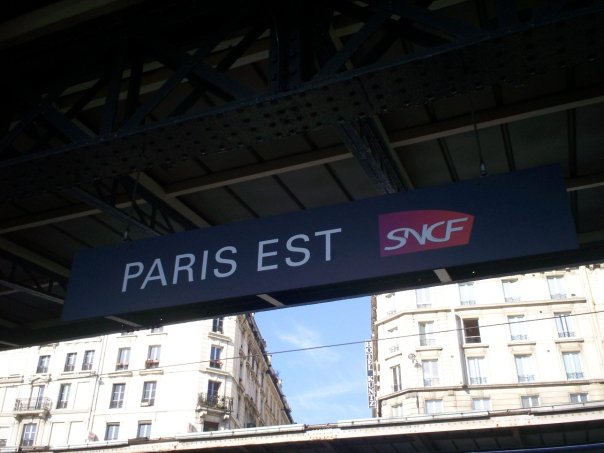
So without further ado, we secured tickets on the high-speed train from Frankfurt to Paris. Arm in arm, we walked toward the station, already breathless with plans: art, museums, music, culture, food, people. And what a people!

A sudden unplanned Paris in a weekend?

Madness. An affliction surely.

Which is precisely why we had to do it.

The true catalyst was a message from a dear friend who would be spending a week in the city and wondered if I might join him for a day. An afternoon in Paris with a friend who happened to be an artist of some renown? The answer could only be yes. After all, who could be the more perfect tour guide?

This was before smartphones lived in our pockets. Before we had google at our fingertips and the assuredness that comes with having all the answers tucked away. We packed lightly, wrote down the number of the American embassy, ensured we had our emergency contacts into our bags, and armed ourselves with a travel guide and a healthy dose of gumption. Travel then required nerve. Trust. If you got lost, you figured it out. If you mispronounced something, you survived the embarrassment. There was no digital rescue waiting in your palm. Which is honestly, what I miss most about travel these days.

The train hurled us across the countryside, fields bursting with early spring color flashing past the windows. I could not help comparing it to Pennsylvania. Lancaster County, in particular, bears a resemblance to parts of Germany, and for the first time I understood, in a small but tangible way, why so many Germans had settled there. Hiemweh melted away leaving a strange sense of coming home even across an ocean.

Three hours is long enough to plan a city and short enough to realize you cannot conquer it. We trimmed our ambitions to a few must-sees and a handful of hopefuls. The Louvre alone could swallow a week. Paris, we decided, would not be conquered. It would simply be experienced.

Crossing the border was almost anticlimactic. An announcement crackled overhead. That was all. No passport stamp. No interrogation. It felt like slipping into Ohio, except the anticipation hummed in your bones. No offense to Ohio of course, but really are we going to say it compares to France?

And then we arrived.

First Things First: Find the Bed

Before romance, before art, before croissants on café terraces, there is one universal truth of travel; You must find where you are sleeping.

Armed with a folded map and confidence wildly disproportionate to our navigational skill, we set off to locate our hostel.

Now, in our defense, the streets of Paris are confusing.

Unlike the tidy grid systems Americans grow up with, Paris feels as though it was designed by someone who enjoyed curves, diagonals, and the occasional act of mischief. Streets fork unexpectedly. They change names without warning. A road that appears straight on a map somehow bends in real life. And the street signs? They are affixed to the sides of buildings, charming blue plaques that would be immensely helpful if they were not routinely obscured by graffiti, peeling posters, or layers of mysterious paper advertising concerts long since passed. It was an exercise in hopeless confusion and frustration.

More than once we stood directly beneath a sign, craning our necks and squinting upward, trying to determine whether we were on Rue de Something Important or merely staring at a band flyer partially concealing our destiny.

And then there was the metro.

For the uninitiated American traveler, the Paris metro is not transportation. It is an initiation ritual.

Lines spiderweb across the city in a dizzying tangle of colors and numbers. Trains are labeled by their final destination rather than the direction you believe you are traveling, which requires you to know far more geography than you actually do. Stops are announced quickly, sometimes swallowed by the metallic roar of the car, and the maps inside the train might as well have been abstract art for all the clarity they offered at first glance. Especially, if one has never traversed public transit before. Which alas, many Americans have never been on anything more than a school bus.

You descend into the underground with confidence. You emerge twenty minutes later into a vast plaza with six exits, each pointing toward a different arrondissement, blinking in the daylight thinking, This seems right.

It is rarely right.

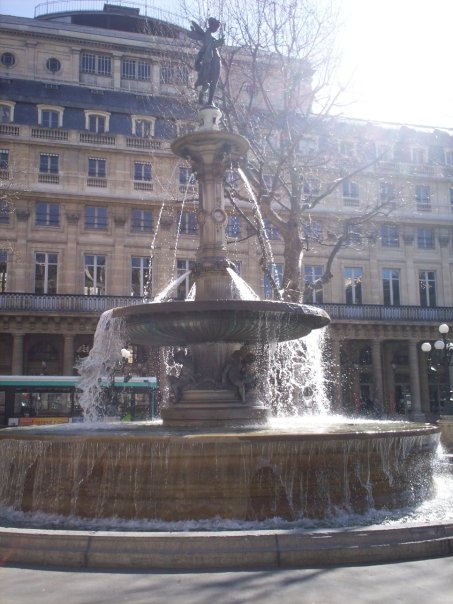
One exit leads you in the exact opposite direction. Another deposits you onto a boulevard you did not know existed. A third leaves you staring at a fountain that looks vaguely familiar but is, in fact, not the fountain you were seeking.

Given these small obstacles, I consider it nothing short of miraculous that after a few wrong turns and some enthusiastic but misguided pointing, we found our hostel at all. 

Little did we know, this was only the beginning of our navigational adventures and given the amount of confusion the metro caused, we determined that the best way to get anywhere was by foot. Yes, you read that correctly. I walked Paris in a weekend. I estimated that I traversed at least 15 miles. Though as this was before the popularity of step counters, I only have my best estimates.

The hostel itself was functional in the most generous sense of the word.

If you have never experienced a European student hostel, allow me to clarify something, it is not glamorous by any stretch of the imagination. It is economical. And it is very much a young person’s sport.

The shower required physical encouragement. You had to press the button, and water would flow for approximately twelve optimistic seconds before shutting off again. Want to rinse shampoo from your hair? You had to keep pressing it like you were negotiating terms. The “hot” water hovered somewhere between hopeful and politely lukewarm.

Breakfast was included, which sounded promising until we discovered that “included” meant toast, jelly, and coffee. For Americans raised on sprawling hotel buffets complete with eggs, waffles, fruit, yogurt, and pastries, this was a humbling cultural exchange. There was no omelet station. No waffle iron. There was toast.

And you were grateful for it.

We adapted quickly. A stop at a neighborhood grocery store provided bread, cheese, and sliced meat. It was the perfect strategy: sustain ourselves during the day, conserve our funds, and reserve our modest budget for dinners out in the evening. For two college students, it was a masterclass in practical travel. Frugal by day. Indulgent by night.

The hostel was never meant to be the highlight. It was the launchpad. A place to drop our bags. A place to sleep. A place from which to begin.

And begin we did.

What followed was a blur of museums and miscalculations, attempted French and accidental detours. We wandered into neighborhoods we had only read about. We misread maps. At one point, quite unintentionally, we discovered that we had strayed into the red-light district. There is nothing quite like realizing you are lost in a foreign city and that the neon lighting is… intentional.

But that, dear reader, deserves its own telling.

Because Paris was not merely art and architecture. It was a lesson in courage. In frugality. In friendship. In the quiet bravery required to step into the unknown without guarantees and trust that you will find your way.

This is what I mean by a reverse bucket list. Not the grand achievements we hope to accomplish someday when everything is perfect, but the moments we dared to say yes to when they appeared. The train we boarded. The map we unfolded. The hostel we made work. The city we entered anyway.

A fulfilling life is not built by waiting until conditions are ideal.

It is built by saying yes before you feel entirely ready.

In the next post, we will step fully into the city itself. The beauty. The bewilderment. The glorious inconvenience of getting lost in Paris.

And why, sometimes, that is exactly the point.

Reverse Bucket List: Unicorn Tapestries

Occasionally, I like to share bucket list items from my reverse bucket list or include tales from further afield. It isn’t to necessarily go off track or to undermine the purpose of my blog, but rather present an open and honest representation of my list, the things I’ve accomplished and how I’ve done them. I would be remiss to only showcase the things that I’ve done close to home as that would be creating a false impression that one really can complete everything without travel. Depending on where you are and what you want to do with your life, some travel may be required. I also don’t want to be held up as some sort of standard of perfection or be accused later on of not practicing what I preach. I’ve watched many influences and internet personalities over the years to see that the truth will come out and I do myself no favors by presenting a false narrative of my life. Who knew honesty was the best policy? 

This item is from both my reverse bucket list and from tales further afield. It should come as no surprise dear reader that I love unicorns. 

I know – you’re in absolute shock, never in a million years did you see this confession coming! Sarcasm may be a 2nd language for me, followed closely by bad English and then German. 

Photo by Karolina Grabowska on Pexels.com

I digress. I love unicorns. My very first stuffed animal from the day I was born was in fact a unicorn. It doubled as a music box that played Somewhere Over the Rainbow. The unicorn’s name is Rainbow and she was my favorite toy. I even took her to Germany with me when I was in college. She still sits on a shelf in my room. Growing up in the 90’s unicorns were difficult to find, but my mother still managed to get me the rare unicorn toy and find me the rare unicorn book. I read every book that had a unicorn in it, including a book which showcased the La Dame a la Licorne or The Lady and the Unicorn. 

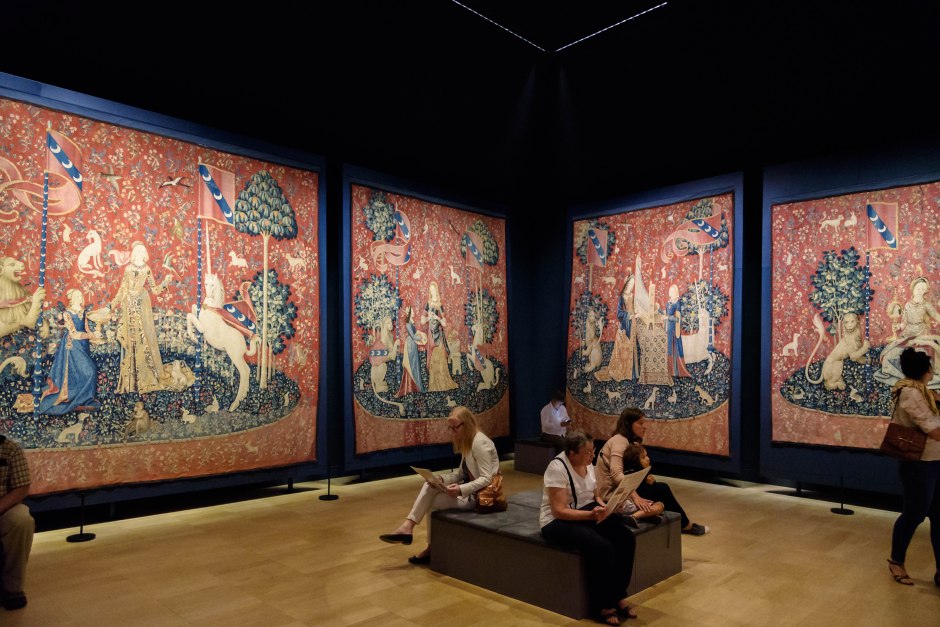
The Lady and the Unicorn tapestries are a collection of six tapestries housed in Paris France. They were created in the style known as thousand flowers and it is easy to see where it gets its name as the background of the tapestries are woven with hundreds of flowers. The tapestries were woven in Flanders out of wool and silk from designs created about 1500 AD. They were hidden away for potentially centuries  in Boussac castle until their discovery in 1841. Interestingly enough they were dated correctly by the novelist George Sand as coming from the 15th century based on the depiction of the ladies’ costumes. Never underestimate a woman’s eye for fashion. 

The six tapestries depict five of the senses, touch, taste, smell, hearing and sight. The sixth one is a bit of a mystery as it displays the following motto on the lady’s tent “A Mon Seul Desir” or “my sole desire”, but it has been translated differently by different people leaving us with some ambiguity. I find it rather strange that the tapestries with no words are the ones with the clearest meanings, but the one with words leaves us scratching our heads. Some interpretations believe is a renunciation of the passions, an assertion of her free will; others see it as representing a sixth sense of understanding. This last one is based on sermons from 1420 which lines up with the timeline of the tapestries. 

Nevertheless these tapestries are beautiful works of medieval art. They not only depict six scenes, but also they are representative of the interplay between the arts and their patrons at that time period with the banners depicting the heraldry of the nobility who sponsored them. The arts could not have survived without the support of patrons. This interplay was an important part of the social structure of the time.  Additionally, it is reflective of the importance of the Christian church as like most art of the time period it carries themes from the Christian faith. One of the reasons I so loved unicorns was they were often a reference to Christ in medieval art. Finally, they demonstrated fashion at the time of their creation. Larger tapestries, like these, were used to showcase wealth and power as well as to provide extra insulation in drafty castles. They were both art and a craft. 

Today, the suite of The Lady and the Unicorn is housed in the Musee de Cluny in Paris. A fitting home for these tapestries and the Cluny mansion was built in the late 1400’s and houses many medieval artifacts like these. I almost missed them entirely on my trip to Paris. I will fully admit that I never thought I would get to Paris. I knew that the tapestries were housed in France, but where in France, I could not have told you where exactly. Because I never thought I’d go, I did not pay much attention to what was actually in Paris other than the famous monuments and the Mona Lisa. 

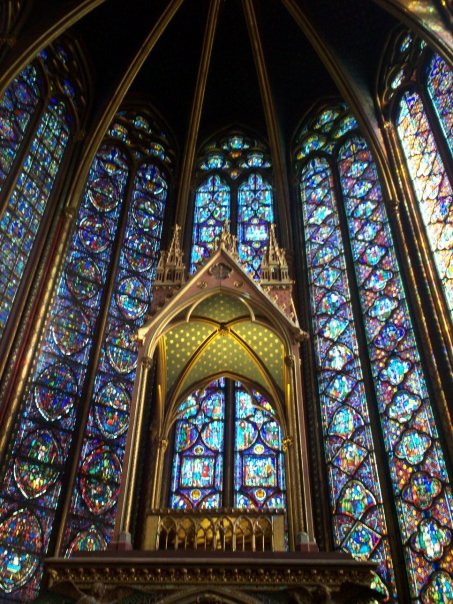
However, I did get to go in April of 2009, during my study abroad. It was a semi-last minute decision. I found out a friend of mine was going to be in Paris and so I asked Erica, a fellow American girl and fantasy book nerd, if she’d like to go with me to Paris to meet up with him. There, I was in Paris enjoying the museums, the history, the culture, the food – they did not lie, they have delicious food. I kept noticing the unicorn tapestries on bags, pillow covers, notebooks, all those touristy things they try to sell you in the gift shops. At first, I dismissed them as just standard French tourist crap that they sell all over the country. When finally, while at the Sainte Chapelle (one of the most gorgeous churches on the planet), I asked a person behind the counter in a curious voice, “Are those tapestries here in Paris?” “Yes.” I am certain they could feel my excitement go from zero to hundred in under 10 seconds, for they seemed a bit alarmed by my enthusiastic and semi-desperate, “Where?” They politely answered, “The Medieval Museum, it is nearby.” And proceeded to give the overly excitable American directions. Luckily for me, Erica being an archeology major had zero objection to my abrupt course correction to the Medieval Museum and we rushed to get there before it closed for the day. Did my feet hurt from walking nearly 15 miles that day? Yes. Did I care? Absolutely, not there were unicorns to see! (We won’t talk about how we couldn’t figure out the darn subway system and walked the entire historical district of the city).

It took most of my self control not to simply rush through the museum to the tapestries, but I respected Erica’s desire to linger over the various pieces of history displayed. I did my best to hold my excitement back, even though I may have been bouncing up and down at the front desk chanting “unicorn” upon entry to the museum. I was twenty-one, child-like displays of youthful enthusiasm were perfectly permissible. Now, I must display my excitement in more subdued expressions or so I’ve been told. Some people are simply no fun. 

Finally, we came to the tapestries and they were even more glorious in person than on any page or screen. There are many pieces of art that I have seen in the printed form that I have not found to be all that different or impressive in person leaving me a bit disappointed after the build up. The tapestries were certainly not disappointing in person. Because one can really see each piece of woven thread and appreciate every flower. The magnitude of the work cannot be understated when confronted with the sheer size and detail of this masterpiece. It represents hundreds of hours of work. According to a post from the metropolitan museum of art, a set of six large tapestries  would have taken thirty weavers between eight and sixteen months to complete. That is not accounting for the hours of design that went into the cartoon that the weavers would need to produce the tapestry. 

To most people reading this, a textile project taking that long is unthinkable, not when you can hop on amazon, buy a woven blanket for 60 bucks and be enjoying it with prime 2 day delivery. A wall hanging in the medieval style can also be yours for about $220 and also be in your home in about two days. A tapestry at the time of their making would be worth thousands in today’s dollars. 

Upon entering the dark room, my excitement turned to quiet awe. My breath caught in my throat at the sight of them. I floated to them as if caught in a dream. I cannot say for certain, how long I sat there admiring them, taking in their craftsmanship and cursing my lack of botanical knowledge to identify the plants. I examined each one carefully noting the themes and subtle details. I doubt I said much to my travel companion as I studied them. The pictures never did them justice, how could they? How do you capture in words their beauty and masterful craftsmanship? How do you fully appreciate their vibrant colors and shapes without seeing them in person? A picture loses so much when it’s shrunken down to fit on a page and our imaginations are limited by what we’ve experienced. Too soon, I left them, but there was the rest of Paris to see and far too little time to fully appreciate the City of Lights. Adieu mon amour, perhaps we shall meet again one day. 

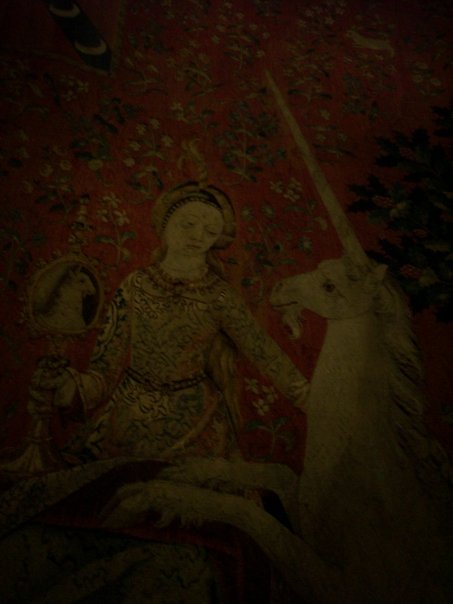
Pardon the darkness of the picture, this was taken in 2009 and flash photography was not permitted

How can you see tapestries?

Well, you don’t have to hop on a plane to France to see tapestries. There are museums here in the United States that display various tapestries from the Medieval and Renaissance eras. If you are particularly interested in seeing unicorn tapestries after reading me wax poetic about them, there is a set of them at the Cloisters in New York which are governed by the Metropolitan Museum of Art. They are a set of seven tapestries, also from around the same period as The Lady and the Unicorn and are in the style of the thousand flowers. Just as with the tapestries in France, these also hold mysteries such as how to interpret the tapestries and even who they were made for. Depending where you are in the country, a plane ride may or may not be necessary. 

I highly recommend if you ever get to either New York or Paris, to take time to see these masterpieces. Provided of course such things are of interest to you. You know by now, that I always tell people to skip that which holds no interest or intrigue to them. Life is too short to waste it on things you don’t enjoy.