
The Gift You Give Yourself

There comes a point in adulthood when you look around at your own life and realize just how much of it was built from other people’s expectations. Parents, partners, coworkers, even strangers on the internet all seem to carry opinions about what a “good” life should look like whether that’s the classic white picket fence and 2 kids, jetting around the world or having that corner office. With the shorter days and colder nights which entice us to stay inside sipping a warm cup of tea, December has a way of handing us a quiet pause in the middle of all that noise. In that stillness you can ask a gentler and more liberating question: What if the best gift you give yourself this year is a life that actually fits you? Not a life you are supposed to want. Not a life that earns gold stars. A life that feels like home when you step into it.

Most of us carry at least a few pieces of life that no longer fit. A commitment you keep out of habit. A routine that once served you but now drains you. A goal you set years ago that you are still dragging around even though it no longer reflects who you are. Just like clothes that shrink in the dryer, some roles tighten over time until they restrict your movement. One of the most compassionate things you can do for yourself is to notice what feels constricting. If something consistently brings dread or resentment, it deserves a second look.

Try asking yourself: What do I continue to do only because I feel I should? What parts of my week feel like a performance? What drains me more than it fills me? These small gut checks can reveal more truth than grand resolutions ever will. Because often resolutions are about adding things to our lives when maybe we should be asking what isn’t serving us anymore. 

Photo by The Lazy Artist Gallery on Pexels.com

Permission to Want What You Want

Wanting something different for your life can feel almost rebellious. We are taught early that desire is selfish or impractical. Yet desire is really a compass. It points you toward what brings meaning. The permission you refuse to give yourself is often the permission you most need. You are allowed to want a simple life. You are allowed to want a bold one. You are allowed to want rest, creativity, adventure, peace or a mix of them. 

Let go of the guilt around wanting something others do not understand. You do not have to justify your dream life like it is a court case. Your preferences do not require a panel of approval. They only require your honesty. After all, the only person who gets to live your life is you. They have their own. 

Every person inherits a set of default settings. These can be expectations from family, cultural messages or values absorbed without question. Some defaults are helpful. Others keep you living a script that never belonged to you. December is an ideal moment to ask where those settings came from. Did you choose them or were they assigned to you? Are they aligned with who you are now or with a past version of you who no longer exists?

Letting go does not always require a dramatic overhaul. It can be as simple as replacing one outdated belief with a more generous one. It can be as quiet as deciding your worth is not measured by productivity. Sometimes the life that fits begins with subtracting what never matched your shape in the first place.

Photo by Kassandre Pedro on Pexels.com

Crafting a Life That Fits

Once you clear the space, you can begin creating a life that feels right in your hands. Think of it like tailoring. Small adjustments can change everything. You might shift your morning routine to match your natural rhythm. You might redefine what rest means so it supports you instead of feeling like a guilty pleasure. You might choose relationships that nourish you instead of ones that keep you hustling for belonging.

Crafting a life that fits is not a single grand gesture. It is a set of choices made consistently. When something feels peaceful instead of performative, you are moving in the right direction.

A good life should give you room. Room to breathe. Room to change your mind. Room to fail safely. Room to explore new interests without embarrassment. If your life feels like a tight shoe, it is not a sign that you need to force yourself into it. It is a sign that you need to loosen the laces. When you prioritize a life that can expand with you, you trade perfection for sustainability. You also create conditions in which joy can actually take root instead of feeling like a visitor.

Photo by JESHOOTS.com on Pexels.com

A Gift You Keep Giving Yourself

The gift of a well-fitting life is not wrapped once and placed under a tree. It is something you give yourself again and again. Through honesty. Through reflection. Through paying attention to what your life is telling you. You will outgrow some things. You will discover new ones. You will learn what brings you back to yourself. The point is not to build a life that looks impressive. The point is to build one that feels true.

As this year winds down, take a moment to appreciate the small ways you have already reshaped your life into something more authentic. And if you have not started yet, that is all right. The gift is not in the timing. The gift is in choosing yourself.

Leaves, Branches, and Roots: The Art of Choosing Who to Grow With

In my earlier post, The Secret to Lifelong Friendships, I talked about how showing up isn’t enough. Friendship, real friendship, requires discernment. We only have so much time and energy, and it’s important to invest those precious resources in people who truly deserve them.

But how do you know who those people are?

Several years ago, I stumbled across a short clip that’s stuck with me ever since. I wish I could credit the original creators, but the message has taken root (pun intended) in my mind all the same. They explained that there are three kinds of people in your life: leaves, branches, and roots. Once you hear it, you’ll never look at your relationships the same way again. 

Photo by Ben Cheung on Pexels.com

The Leaves

Leaves are lovely things—bright, colorful, full of life. They make the tree beautiful for a time, dancing in the sunlight. But when the season changes, they do too. They fade, fall, and blow away.

Leaves are the people who come into your life for a season. Maybe it’s a college roommate you clicked with instantly, a coworker who made a tough job bearable, or a friend who was exactly who you needed for that chapter of your life. They bring joy and color, but they aren’t meant to stay.

It’s easy to mourn when a leaf drifts away. You might think, What did I do wrong? But often, nothing went wrong at all. Their purpose in your story was simply fulfilled. 

Leaves aren’t bad. They’re just temporary. And that’s okay.

After all, we’re all leaves in someone’s life at some point. Even as a therapist, I remind myself that I’m a leaf for my clients. I’m there for a specific season, to help them heal, but not to continue into their next one. Leaves are beautiful for their ephemeral nature and I treasure the memory of those who have been leaves in my own journey. 

Photo by Jude Mitchell-Hedges on Pexels.com

The Branches

Branches are trickier. They seem sturdy, reliable, and capable of holding weight. They’re there year after year,  and you might trust them to always be there, until one day, a storm hits, and that branch snaps.

Branches are the people who seem like roots. They’re present for birthdays, celebrations, even crises. You lean on them, and for a time, they hold you up. But when life gets heavy or messy, they can’t always bear the load.

Sometimes a branch breaks because they’re dealing with their own storm. Sometimes it’s because the relationship was only meant to grow to a certain point. Either way, it hurts, but that doesn’t mean they didn’t serve a purpose.

Not everyone has the capacity to be more than a branch in your life. Some people are meant to offer shade, not structure. The key is to recognize the difference before you climb too high and find yourself falling. 

Photo by Kennst du schon die Umkreisel App? on Pexels.com

The Roots

And then, there are the roots.

Roots don’t look like much. They’re hidden underground, unglamorous, and often unnoticed. But they’re the reason the tree stands tall through every season. Roots are the reason a fallen tree can seemingly rise up as a new sprout from the ashes of destruction.  

Roots are the ones who anchor you when the winds howl. They draw strength from deep places and share it freely. They know your history and love you anyway. They notice your silences. They show up not only when it’s convenient but when it’s costly. 

Roots are rare, and they deserve to be cherished. You don’t need many, just a few that go deep enough to hold you steady.

These are the relationships that you should nurture and prioritize most, because they will be there when the leaves have faded and the branches have failed you. 

How to Tell Who’s Who

So how do you know if someone’s a leaf, branch, or root? Here are a few clues:

Consistency reveals character. Does their care depend on convenience? Leaves and branches often vanish when the weather turns cold; roots stay, even when it’s uncomfortable.

Depth over drama. Branches can be fun and lively, but roots go deep. They’re not always loud, but their love has substance.

Mutual growth. A root relationship nourishes both sides. If you’re always pouring out but never being replenished, you might be watering a branch.

Conflict doesn’t end it. Roots can handle disagreement. Leaves blow away at the first strong wind.

Time tests truth. You don’t truly know what someone is until you’ve been through a few seasons together, joy, loss, distance, and change. Roots endure them all.

Photo by Vlad Cheu021ban on Pexels.com

One Last Thought

Not everyone is meant to be a root in your life, and that’s okay. You aren’t meant to be a root for everyone who is in your life. We are all playing those three parts for various people in our lives. I am a leaf for my therapy clients, a branch for my friends and acquaintances but I am a root for my closest friends and family. 

Leaves and branches have their beauty and their purpose. The goal isn’t to cut them off, it’s to recognize them for what they are so we are able to make wise decisions with whom to trust and count on.

What matters most is that we know where to invest our energy and learn to celebrate people for the role they play, not the one we wish they’d fill.

Because friendship, like a tree, thrives when we tend to the roots, and let the leaves fall when it’s time.

Spend Time With the People Who Build You Up

With summer fast approaching, many of us will find ourselves a little more social. The days are longer, the weather is warmer, and suddenly your calendar is filling up with invitations. Garden tea parties, picnics in the park, birthday celebrations at the lake, beach days, you name it, and someone is planning a soiree. 

And yet… as the days creep closer, you start to dread the plans you already agreed to. You sigh the morning of the event, stare at your closet half-heartedly, and start crafting increasingly creative excuses in your head.

But why?

Maybe you forgot about that post I wrote on boundaries (tsk tsk) and said “yes” when you should have said “no.” Or maybe you genuinely thought you’d enjoy it, after all you want to spend more time connecting with others. You’ve read this wonderful blog encouraging you to get off your phone and into the world more, to drink richly from the marrow of life. It was actually quite exciting until you remembered who would be there. Ask yourself: are you about to spend time with people who energize and encourage you? Or with people who make you feel small, doubtful, and drained?

Spending time with the wrong crowd can take a real toll:

  • Lower confidence
  • Reduced motivation
  • Increased anxiety
  • Stalled personal growth
Photo by Dio Hasbi Saniskoro on Pexels.com

But the right people? They light a fire in you. They cheer you on, challenge you in healthy ways, and help you see the best version of yourself, even when you can’t or stubbornly won’t. When I make plans with people who lift me up, I’m counting down the days with excitement, not dread. I leave those hangouts feeling joyful, recharged, and more motivated than ever. Do not mistake my tea parties for merely places to spill the tea, it may also be the place to plan my next conquest! 

My village doesn’t agree with me on everything, far from it. But they challenge me with kindness, although tinged with sarcasm and playful barbs to get me really thinking. I truly do enjoy the mental sparring matches that comes from a good debate! They point out gaps in my logic or offer new perspectives, not to tear me down, but to help me grow. Iron sharpens iron, as they say. And I do the same for them.

So yes, I consider the invite and the guest list. My time is precious, and I’d rather spend it watering relationships that nourish me than trying to revive ones that wilt my spirit.

It’s because of these people that I started working out. That I dove deeper into history. That I re-examined and reshaped long-held beliefs. That I went back to school, earned my LCSW, and am (hopefully soon) launching my own practice.

Photo by Pixabay on Pexels.com

None of that would’ve happened if I’d kept company with people who doubted me or discouraged growth. Because while I do believe in spending time connecting with others and combating the loneliness epidemic, I want to make sure that I am spending my time wisely. After all, the loneliest people are usually the most popular as they are surrounded by the crowd of the wrong people. You will gain none of the benefits of spending time with others described in earlier post if you aren’t with people who build you up. Connection is more than just spending time with others, it’s about being in community with them. A community that thrives together and works towards the good of its members.

So as you fill your own social calendar this summer, ask yourself:

Do these people build me up—or tear me down?

If it’s the latter, it’s okay to politely decline. Protect your time. Spend it with people who inspire you, support your growth, and believe in the version of yourself you’re working toward. You deserve nothing less.

Living Your Best Life

We often hear or even say the phrase “living my best life”, but what does it actually mean? Is it being able to reach your goals? To live a full life? What is a full life? In general when we use say look at this person living their best life, we usually see someone who has fully embraced being themselves without caring what others think. But how do we even know that they really are living their best life? What does a “best life” even entail? It probably does and should look different for different people. What makes my life “best” isn’t what will make your life “best”. There are, of course, guiding principles. After all, this whole blog is in part to help people live better lives. For most people a best life is one that comes from connection to others and a sense of meaning or purpose without worrying too much about the judgment of people. 

There are a myriad of ways to arrive at those two things. I have seen lists of anywhere from 6 items to 30 items of how to arrive at a “best life” or to live a fuller one. Some of these lists even conflict with each other like focusing on yourself and your own personal growth yet being “other” centered. If you grew up in the Christian community you may have been told that JOY comes by putting Jesus first, others second and yourself last. All well and good, until you stop caring for yourself at all and forgetting that you can’t help other people if you haven’t been taking care of yourself first. On the other hand, always putting yourself first is obviously narcissistic and self-ish, certainly not the way to form meaningful connections to others. How to reconcile the two conflicting sides? 

This post isn’t necessarily to tell you how to arrive at those two things, more to get you to try and think about what might help you get there. As illustrated above, there are people for whom the advice of putting yourself first is absolutely necessary! I talk about boundaries and self-care in other posts precisely because putting my own needs last was something I struggled with leading to burn out, resentment and bitterness. Not things that helped my relationships. 

However, there are certainly many people who need to be told to put others at the center and to focus on getting out of their own world and be more mindful about how their actions affect others. The character of Ebenezer Scrooge in Charles Dickens’ A Christmas Carol certainly needed that lesson lest he find himself cast into hell for his self-centeredness. All things in moderation I suppose. 

Photo by Andrea Piacquadio on Pexels.com

For some people living their best life may be learning to let go of stress and worries, for other people it may be that they need to worry about the future a little more. You may need to learn to stop caring so much about what others think or you may want to consider others opinions a little more. The path to a “best life” is one that is always evolving and changing. Each person is an individual and what their best life looks like is going to be different. 

One of the best ways to achieve a best life is through self-reflection. 

After all, how do we know what we need to learn and how do we know when we’re being ourselves if we don’t take time to self-reflect? One way to really get to know ourselves is to “talk to ourselves”, not in the crazy person sort of way, but through journaling. I often find myself surprised by some of the things that come out of my own journaling where I let the flow of the subconscious go where it will. I may look for various prompts to consider to help jump start my self-exploration. There are also journals out there geared to specific topics or goals. For journaling to be truly effective requires us to be really honest with ourselves willing to face possibly ugly truths. 

Journaling can also help us explore our relationships to help us determine if we are truly connected to others. In learning more about ourselves, would we be able to share these insights with those closest to us? Do we have people who we can truly express ourselves and be vulnerable with? True connection to others means that you can be authentically yourself. After all, some of the loneliest people on the planet are those who are extremely popular. Why? Because in pursuing being liked by everyone, they are too afraid to show their real selves lest they be rejected. The hard truth is that you won’t be everyone’s cup of tea, but you have a choice to make, be your authentic self to have real connection with others or disguise yourself and be alone.  

This can be extremely difficult because it requires us to live without fear of the judgment of others, which is the main reason so many of us choose to live inauthentic lives and to settle for relationships that are shallow. However, this is a key piece of living our best lives. As I said at the beginning of this post, when we say “look at this person living their best life” it’s often said as a form of respect for someone who clearly doesn’t give a “f” what others think. They’re the people walking down the street dressed outrageously. The people dancing in the street to a musician. The ones who call you darling as they don a hat before splashing in a fountain. They laugh too loud, love too deeply, hear poetry in the rain and see works of art in the swirling of leaves in the wind. They may also be the ones who aren’t afraid to piss people off with how they view the world, unafraid to speak up and speak out. However they live, they are authentically and unapologetically themselves. 

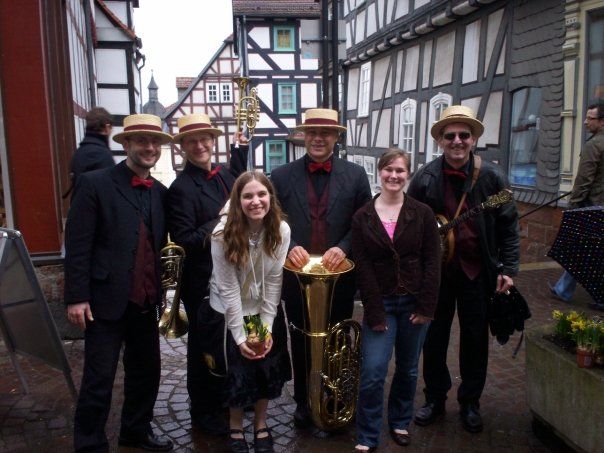
I danced for these street musicians as if no one was watching!

Living authentically isn’t being a jerk about it though. These are people who don’t care if they tick people off but they don’t purposefully go out of their way to do so. It isn’t about being mean. It’s about respectfully disagreeing and holding themselves apart from the judgment of others. It’s more of a live and let live attitude. Like okay, you don’t like that I live my life this way, but it’s no skin off your nose and I don’t have to listen to your criticisms about it if they aren’t constructive or useful. Someone living their best life knows that bees don’t argue with flies that honey is better than crap.

Another benefit to journaling is it can allow us to consider another aspect to a best life, living with purpose. I’m not here to tell you what a purposeful life is or is not. Each of us has a calling. Each of us has a gift or talent. I can’t tell you what those are because I’m not you. In general, a purposeful life involves leaving the world a better place, and helping others. Some people may have very obvious purposes like teachers, nurses and EMT workers. Teaching the next generation, healing the sick and protecting others are all very obviously meaningful things to do based on the values of our society. 

However, almost any job can be infused with meaning when placed into a larger context of helping others. Nor does your purpose have to be tied to your job. I once interned for a group of businessmen who invested money. They were quite good at it, but rather than simply take all the money for profit, they used it to open an orphanage in Africa. This orphanage did not stop assistance at the age of 18, but rather continued to invest in the children, helping them obtain higher education. The children were able to start businesses in their local community and become leaders thus laying a firm foundation for independence in the region. Their calling was to help disadvantaged children and to grow a community in Africa even though their jobs had almost nothing to do directly with this calling. Your talents and your calling may be seemingly disparate things that nonetheless are yours. 

There are, afterall, lots of ways to leave the world a better place.Talents don’t have to be utilized in a specific way. Your job doesn’t have to exactly match your calling. It’s certainly easy when the two directly align, but sometimes they may seem completely disconnected. You also don’t have to have your calling address every ill in the world to leave it a better place. Some people’s calling is to focus on the environment, others may have a calling to help sick children. Both are worthy callings that do not negate the other nor is one automatically better than the other. There are unfortunately a lot of problems in the world and there’s just no way for each of us to address all of them all at once. That isn’t to say don’t do what you can for the problems of the world, do the part you can. Your calling is the thing you focus on. 

The point is for you to determine for yourself what your talents are and how to apply them to your specific calling. I will probably write a more extensive post on a purposeful life, but as I said earlier this post is more to help you start to consider what a best life is and how you might start to consider what your best life looks like. To be honest, I’m still figuring it out. One of the reasons I have a bucket list is to try new things, complete new challenges, to grow, and learn more about myself. 

So what are you waiting for? Go forth, dear reader, and start living your authentic best life!

How I Prioritize Conflicting Values

I’ve written before that we often have to pick and choose our battles when it comes to living out our values as almost nothing we can do in this modern world exempts us from harming others, short of going completely off grid and homesteading out in the middle of the wilderness surviving on nothing but what you create yourself. However, even those intrepid homesteaders buy some of their things at least to get started, so they still participate even if they say otherwise because without a village full of specialized craftsmen how could they not? Even the fact that they can live peacefully on their land free from marauding warbands is because they are surrounded by a modern society with an active army and local law enforcement agencies.Plus the tax man always comes in one form or another and if they’re youtubing their experience guess what they’re participating in?

The truth is we have to accept that we cannot make perfectly ethical choices that always align with our values. We have to pick and choose our battles and make compromises. I value the environment, but I have gone on cruises with my mother. Which is arguably one of the worst choices when it comes to environmentalism. Unfortunately, I’ve found that cruising is one of the friendliest travel options for someone with chronic health conditions if you want to see multiple countries and a bit more of the world. She worked very hard as my mom and practically killed herself to provide for me a modicum of middle class lifestyle growing up and to support me as best she could through college, a job that while it required a college degree paid me less than 20,000 a year, and grad school. She gave up her dreams of travel to give me a good life, so I help make her bucket list happen. The best way to do that has been cruising once every three to four years.  

The two values that conflict are the environment and family. In general, my family lives in a very environmentally friendly way. We reduce our energy consumption as much as possible, avoid purchasing new items preferring thrift shops, ebay and Facebook marketplace. We buy “ugly” produce and check the quick sale items to reduce food waste. As one can see in the rest of this blog, in general we avoid travel to far flung places. I try to garden with native plants or at least plants that are non-invasive and friendly to my local area. I’ve planted a number of trees which all contribute to the environment. Even our toilet paper and tissues are made from bamboo to try and reduce the waste. However, every three to four years we do go on a trip that is truthfully bad for the environment. Is it better than the person who takes a week trip to various foreign countries around the world once a year? It’s probably on par to be honest. 

Photo by Burst on Pexels.com

It could be easy to start trying to calculate carbon “credits” to “off-set” the indulgence, which isn’t really the point of our daily lifestyle choices. If you indulge occasionally in fast fashion you may try to justify it with all the second hand purchases you’ve made. It may be a logical fallacy to say “well I can be ‘bad’ in this one instance because I’m so good all the other times.” We see this when people decide to go off their diets, or buy something from a place they know has a terrible reputation for how they treat their employees. It can be easy to judge people (or ourselves) who do make these compromises negatively. However, we all do it and we all make judgments about what compromises we’re willing to make when our values conflict or our budgets come up against certain realities of life. 

It may not even be about having different values but how we rank our values in a given situation. Would I much rather purchase all my clothing from etsy shops supporting American small businesses? Absolutely. Do I have the money to do so? Absolutely not. Clothing is expensive to make at $15 to $20 an hour for a living wage. It’s even more expensive if you want them to use material that is also American made; perhaps you want it to be of all natural fibers and dyes from an organic cotton farm here on US soil using only the best sustainable, environmentally friendly practices. 

I’m someone blogging about living her best life on a salary that is less than the median income. I don’t have that sort of cash, despite my greatest wishes otherwise. Almost none of us do and sometimes despite your best efforts you can’t find what you need at the thrift store given that it’s based on donations. I’m lucky in that I wear pretty common sizes but even then I can’t always find what I need and I’m forced to go to a regular store to purchase something new and not sustainably made, free from exploitative labor practices. 

The overarching value is reduction of waste, but it sometimes conflicts with what I may feel I need. Like when I needed to go to the gala as part of a fundraising event as part of my job and I didn’t have a dress for the occasion. I wasn’t spending over $100 on a dress for my non-profit job. I also wasn’t buying a used prom dress from my local thrift shop to do it because I don’t want to look like I’m 15 instead of over 30. I placed the value of helping raise money for a good cause over my usual value of reducing consumption of goods.  

Photo by Andrea Piacquadio on Pexels.com

The point of this post is to simply have you begin to reflect on how you personally navigate your values and to recognize that sometimes it’s not about being a hypocrite but rather having two conflicting values where you make a decision about which one to value more given your own limited resources whether that be time, money or energy. It’s not about telling you what to do but to get you to pause and reflect on how you may be navigating these conflicts without putting much thought into it leading to negative judgements of yourself and perhaps even others. This is a time to practice some self-compassion as well as compassion for the choices that others are making. It’s easy to throw stones in glass houses, but one really shouldn’t. It’s a kinder gentler approach to living out values

You can be more mindful about the decisions you are making to more align your actions with the things you actually care about. This allows us to create more meaningful and impactful lives that bring us joy. This also causes reflection about what we might be doing that doesn’t align and to ask, is there a different way to achieve the same ends without as extreme of a compromise? I like quality clothing that will last years not months, so I may go to ebay and try to find used designer clothing for a steal. Goodbye fast fashion, hello sustainability that isn’t breaking the bank. If I decide to go on a cruise because I want to be able to travel places with my mother and help her obtain her dreams, is there a line that is a little better for the environment than the rest? Is there one that also treats their staff well? What about the excursions it offers? Even something as simple as purchasing biodegradable paper plates if I decide I want to have a picnic with my sister in the park. 

I’m always asking, is there a way I can do this better to fit my values? I am also willing to revisit previous decisions. I may say that upon further reflection that it was a compromise I shouldn’t have made. I can’t change the past, but I can move forward with making a different decision moving forward. Perhaps, I am at a different place where I have more freedom to choose. When I was purchasing my car there wasn’t really a hybrid with four wheel drive in my price range. I had to determine which was more important to me: the safety of having four wheel drive in a job that required me to drive in bad weather or a hybrid that was better for the environment considering the amount of driving I was doing. At the time, I chose safety, because I like living and couldn’t afford to become disabled from a catastrophic accident. As I begin to consider purchasing another car, my driving needs have changed so I will more likely choose a hybrid. Additionally, there are now more options which combine hybrid technology with all wheel drive.

We won’t always be able to live out our lives in perfect harmony with our values. We will have to pick and choose. We should be asking ourselves which values are in competition with one another and weigh the impact of those choices against the conflicting values. Sometimes one value will win out over another value. The ranking can vary from decision to decision. We should be willing to recognize when there is conflict to allow for self-reflection and arrive at the best decision for ourselves while owning that we are making a choice that conflicts with the values we have.