It can be tempting, dear reader, to read my blog and believe that I have written many posts with the goal of self-improvement. After all, I challenge you to rethink your beliefs around what makes a life meaningful and to establish daily practices of gratitude and mindfulness. I admonish you to not merely live for the weekend but for each day. And to be honest, we all can use a little self-improvement, even myself who is nearly perfect could benefit with a few tweaks (humility comes to mind). However, a more careful reading will reveal that at its core, I am not writing towards improving your lives but rather encouraging you to enjoy your life.
Life is not something to optimize or synergize. This can be a difficult concept for us Americans, as we are taught from the moment we take our first steps that life is to be productive. Even our schooling is not centered around enhancing ourselves as humans but rather to prepare us for work. Our hobbies are encouraged to be monetized. Showing up sick for work is seen as a badge of honour. Vacations are measured in to-do lists checked off. We have working lunches or just eat at our desks. We even have sleep apps to optimize sleep and rest. We say that an afternoon spent under a tree just enjoying nature is time wasted. We forget life is to be experienced.
The French have almost no trouble with this concept. They are ruthlessly protective of their private boundaries with regards to work. They would scoff at the concept of unpaid after-work drinks. They do not rush through their meals but rather linger over wine for hours. I still remember spending three hours in a restaurant eating pizza, a meal that would take the typical American 45 minutes tops. Looking back at it now, I wish I could have enjoyed the lingering more instead of sitting there nearly losing my mind at the slowness when there was a cathedral to explore.
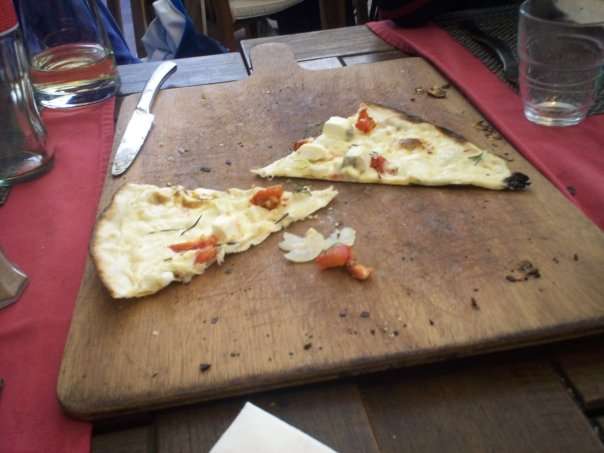
Now that seems like the perfect afternoon. Enclosed in an ancient courtyard, enjoying the relief from the summer sun, sipping a glass of Merlot, discussing the latest politics over oven-cooked slices of Margherita pizza. Perhaps we could read our poetry or revisit philosophy as if we were in a French salon.
There is no rush or hurry, there is just the moment, being fully present in your body. You may notice the warmth of the sun on your arms or the coolness of the wind. In the fall, you may breathe in the scent of pumpkin spice wafting in the air as you seek out the crunchiest leaf to stomp down with your foot. In the winter, you may spend your walk delighting in the Christmas decorations. You might linger over your morning tea, watching the birds at the feeder, or spend an entire afternoon in the garden because you have become rather invested in what the earthworms are doing. You don’t need to achieve anything. You don’t need to emerge from the experience with a new skill, a better understanding of yourself, or a photograph worthy of social media. You can simply enjoy it.
Of course, there is nothing wrong with self-improvement. I enjoy learning new things, challenging myself, and discovering that I am capable of things I couldn’t do before. There is a particular satisfaction in developing a skill or finally understanding something that has puzzled you. But there is a difference between doing something because you enjoy it and doing it because you believe it will make you a more acceptable, accomplished, or productive human being.
Consider our hobbies. We are encouraged to turn our passions into side hustles, our creativity into content, and our interests into marketable skills. We measure our progress, track our streaks, set goals, and compare our achievements. Even when we sit down to relax, we may feel compelled to choose an activity that will somehow benefit us. Read a book, but make it educational. Exercise, but make sure it improves your metrics. Learn a language, but ideally make it useful for your career. Take up a hobby, but wouldn’t it be wonderful if you could sell what you make?
And heaven forbid you spend an afternoon doing something you are not particularly good at.
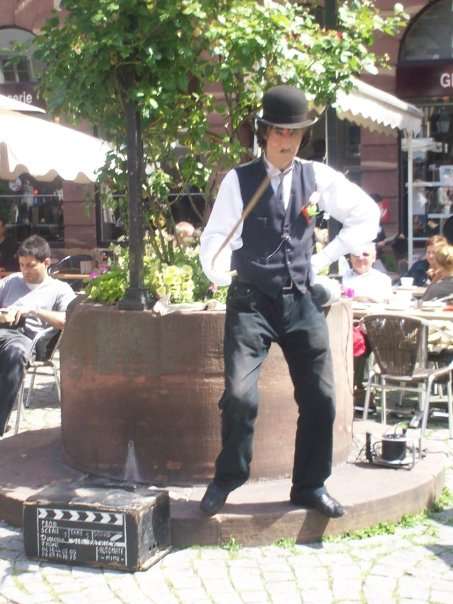
What if you play an instrument badly because you enjoy making music? What if you paint something terrible and hang it on the fridge? What if you read a novel simply because the story delights you, rather than because it will make you more cultured? What if you try something new, discover that you don’t particularly enjoy it, and move on without needing to turn the experience into a lesson about perseverance?
Not everything needs to become an accomplishment. Not everything needs to lead somewhere. Sometimes the experience itself is the point.
I think we can even turn the pursuit of a meaningful life into another optimisation project. We establish our gratitude practices, build our morning routines, schedule our social connections, and try to make sure we are fulfilling all our various needs. We read about mindfulness and then become frustrated when our minds wander. We take a walk in nature and feel that we ought to be more present, more appreciative, more connected to the world around us.
Suddenly, enjoying life becomes another thing we aren’t doing well enough.
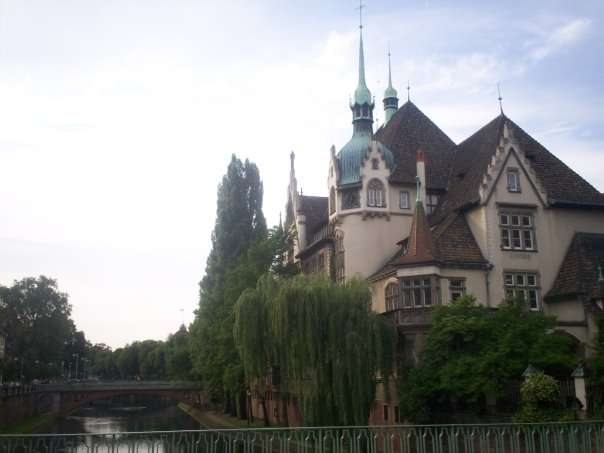
But you don’t need to experience every moment perfectly. You don’t have to achieve some enlightened state of presence in which you appreciate every bird, breeze, and passing cloud. Sometimes you’ll be distracted. Sometimes you’ll be impatient. Sometimes you’ll spend half your walk thinking about what you need to buy at the supermarket. You’re human. The point isn’t to perform enjoyment correctly. Honestly I think we Americans could create an app to optimize enjoyment and ensure it is done correctly. Perhaps, I shall cue up the Powerpoint presentation for the next corporate meeting.
The point is to give yourself permission to enjoy things when you can.
This is where I think our relationship with travel offers a particularly good example. We spend months planning a holiday, researching attractions, comparing accommodation, and building itineraries. We want to make the most of our limited time and money, and there is nothing inherently wrong with that. When you have travelled a long way to see something extraordinary, naturally you want to see it!
But we can become so concerned with getting the most out of a destination that we forget to enjoy being there. We hurry through a meal because there is another attraction to visit. We photograph a beautiful view without really looking at it. We spend our time documenting an experience so that we can prove we had it, rather than allowing ourselves to be absorbed in it.
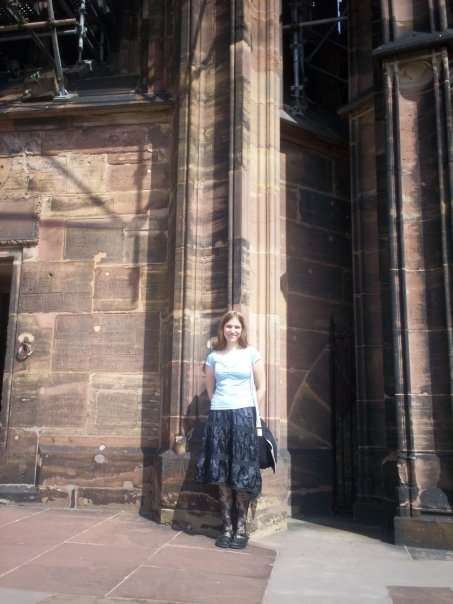
I am certainly guilty of this. I sat in that ancient courtyard wanting to hurry through my pizza so I could get to the cathedral. I wanted to see more, to experience more, to make the most of my time in a place I might never visit again. I understand the impulse. But I also wonder what I might have gained if I had simply allowed myself to enjoy the afternoon I was already having.
Perhaps the cathedral would have been just as beautiful an hour later. Perhaps the conversation would have been more memorable than another photograph. Perhaps I would have remembered the taste of the pizza, the shade of the courtyard, and the pleasure of having nowhere else I needed to be. Because if I’m being truly honest with you by the time I was done my semester in Europe the Cathedrals all sort of blended together but that pizza was delicious!
We cannot experience everything. There will always be another cathedral, another book, another skill to learn, another destination to visit. A bucket list can be a wonderful invitation to curiosity, but it can also become a race if we aren’t careful. The goal isn’t to collect as many experiences as possible before our time runs out. It is to have experiences that make being alive feel worthwhile.
And some of those experiences will be extraordinary. Others will be remarkably ordinary. A new country, an unusual market, a walk through the woods, an afternoon spent gardening, a cup of tea with someone you love. They do not need to compete with one another. They do not need to justify their place in your life by how impressive they sound when you tell someone about them.
There is a difference between building a life that you enjoy and building a life that looks impressive from the outside. One is about your actual experience of being alive. The other can become an endless pursuit of evidence that you are living correctly.

Dear reader, I want you to have adventures. I want you to learn things, follow your curiosity, try hobbies, visit strange places, and discover what makes your heart sing. I also want you to have afternoons where absolutely nothing of consequence happens. I want you to enjoy your breakfast, laugh with your friends, get distracted by a particularly interesting bird, and spend an hour doing something that will never make it onto a résumé.
I want you to improve when improvement serves you, and to stop improving when what you really need is to enjoy what you already have.
You do not have to earn your rest by being productive. You do not have to turn your interests into achievements. You do not have to make every experience count towards some larger goal.
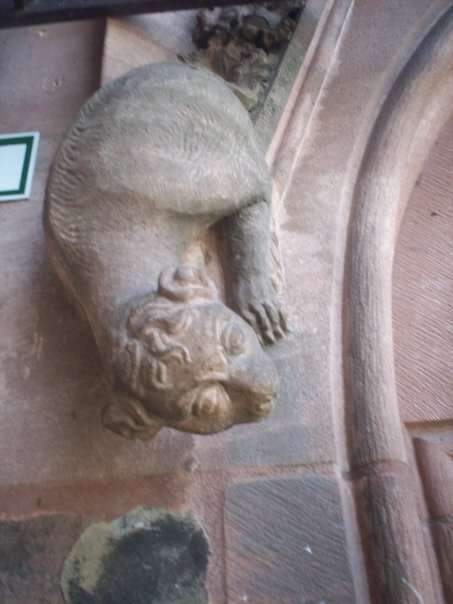
You are already alive. You are already here.
Perhaps the question isn’t how to get the most out of life, but how to be more present for the life you are already living.
And if that means spending three hours eating pizza in an ancient courtyard when there is a cathedral waiting to be explored, perhaps the cathedral can wait.

