Book lovers know the allure of bookstores and libraries. There’s something about walking into these sanctuaries of knowledge and stories. The distinct smell of the books, the quiet atmosphere that is seldom found in other public spaces, the aesthetic symmetry of rows and rows of carefully shelved worlds. The promise that an entire universe may be unlocked with just the turn of a page. The stories almost seem to whisper an invitation and your fingers start to itch with an eagerness to begin the search. So many dance partners want to fill your card and it is almost dizzying.
There is even something extra special about a bookstore that offers a little more. Beautiful bookstores, charming bookstores, the ones with cats and tea, the ones with stacks upon stacks of books. Ones that even use books as structures like the book tunnel in L.A.’s famous Last Bookstore. Baldwin’s bookstore is just the sort of bookstore for booklovers. Named one of the most beautiful Bookstores in America, this hidden treasure of Chester County can be easily overlooked if one is not careful.
Seriously, you can drive right by it and not even notice that you’ve passed it as outside it is an unassuming stone barn. One would never guess that it houses 5 stories of books and has a sizeable collection of rare and antique books. As it is primarily a used bookstore, it is always a treasure hunt and one never knows what one will find tucked away on the shelves. It is so large and extensive that it has a map for visitors at the front and even with the map, one can find oneself semi-lost among the stacks of books.
A quirk of the bookstore is that many of the shelves are not shelves at all, but rather nailed together crates. This charming store invites you to venture up stairs to ever higher levels. Tucked around every corner are chairs, some more enticing than others, for you to sit and read to your heart’s content. It would be easy to spend hours if not days inside the store.
My sister and I ventured forth on a cold’s winter’s day after grabbing breakfast together at a coffee shop near my house. We had saved this particular outing for the colder months as we are not overly fond of extreme hot or cold weather. It is always good to have a few indoor activities in your back pocket for those times when it is simply too miserable to spend much time outdoors.
Upon entering the store, we were greeted by a delightful display of older and rare books. We breathed in deep, savoring the familiar smell of books. The older gentleman behind the front desk said good morning and inquired as to whether it was our first time to the store. He showed up the map and politely explained the general layout of the store and encouraged us to peak in the backroom which housed a few artifacts from when this barn was also a home. After the short orientation, we began our exploration of the store.
We carefully meandered through the rows of books of over 300,000 books, stopping to peruse for overlooked gems. One of the gems was the map of Philadelphia from over 100 years ago displayed on a table (not for sale). Both my sister and I adore old maps, so it was an unexpected treat to be able to sit and study it before continuing our book adventure.
One thing of note for the taller readers, there are numerous signs to “duck” when going up and down the stairs, so be wary when transitioning between floors. Despite being in a barn, most of the areas were quite comfortable with only one or two places lacking in proper insulation for the temperature to be comfortable. We did stop to take a few pictures of ourselves in the books.
It was easy to see why it was named one of the loveliest bookstores both inside and out. The original stone building was built in 1822 and the rustic shelving and floors only add to its charm. Sadly, I did not spy any of the rumored cats said to be residing in the barn. It is possible they were sleeping in a corner somewhere or perhaps they were no longer in residence.
My sister and I found a few treasures and made our way down the steps to the front of the building for our purchases. Satisfied with our treasure hunt, we went home to enjoy our books. I am certain that I will make the journey again for another visit. After all, with an ever changing inventory there is certain to be other diamonds in the rough to find in the future.
How can you visit a beautiful bookstore?
Bookstores abound and business is booming. Something good that came out of the pandemic was the increased demand for real things, real recommendations from real people. We’re wired for community and connection, something that a digital reality can’t really replicate (though they do try). Not only are books a form of entertainment, but also people are forming communities around books. Bookstores are also one of the few places that seemed to sell a variety of board and card games aimed at adults. Bookstores have become hubs of community and connection.
Going to Indie and used bookstores like Baldwin’s is often a treat not only for finding books but also for the atmosphere they provide. I encourage you to seek out the hole in the wall places. They don’t necessarily have to make a list of “most beautiful” because with all the hundreds of bookstores, how could a writer of a popular magazine or blog really know if they missed yours? And besides beauty is in the eye of the beholder.
I’ve now espoused upon cultivating your talents and exploring your calling as pieces of a purposeful life or applying your y amounted to applying your talents in support of your calling to serve others in some nebulous manner. Of course in my post about your calling, it was basically looking at your passions and applying them to helping others. But what does it look like to help others? How does one help? Who does one choose?
It really does depend doesn’t it? On who you are helping and what you are helping them achieve. How do we choose who to help? Does the who have to be another human being? There are plenty of people who dedicate themselves to helping animals. Jane Goodall is often hailed in the same breath as Martin Luther King Jr or Ghandi and she concerned herself primarily with gorillas. Julia Hill was lauded for her activism to save a tree from a logging company. Yes, their actions certainly helped the human race as a whole later on but in the meantime their energy could have been put forth in other areas.
As someone who has worked and interned at non-profits one of my favorite interview questions to ask people both when I was being interviewed and when I was doing the interviewing, was “why this issue”. Why out of the hundreds of social issues and concerns this one. Why Haiti? Why the homeless? Why mothers and children? Why not Kenya? Why not veterans? Why not people suffering from addiction? Why not cute, cuddly puppies? After all, if you devote a majority of your time, effort and resources into a given area that means those same resources aren’t being spent on another area of importance and naturally one cannot reasonably support all areas of importance. In a way, that means you are saying that this thing here is the most important thing to me to be doing. That’s a pretty big statement when you think about it.
Now it may be that there were numerous things that were important to you and this is the one that happened to have the opportunity for you at the time to use your gifts and passions for it. When I did an internship for a non-profit that worked in Haiti it was because I needed an internship and that happened to be the one offered to me. It wasn’t because Haiti was the top of my list of countries that needed my support and I was particularly passionate about Haiti. I have become more passionate about it for my experience, but I also understand it is because I now have a personal connection to that country whereas previously there was nothing to push Haiti higher on my list than any other developing country. I wanted to help others and this happened to be an opportunity that opened up for me – but remember my job isn’t necessarily my calling (we already discussed how the two shouldn’t be conflated).
Still, one can find that one has stumbled more or less into something that is calling adjacent. That doesn’t make it wrong necessarily. After all, one may be called to something and then discover the opportunities just aren’t there or you haven’t found them yet. The point is that one should not leave it unexamined. Why this population in this particular part of the world? Why this issue and not another issue? Is this really your top priority? There are, after all, a near infinite array of issues facing us today that all scream for attention from climate change to housing issues from substance use disorders to lack of access to healthcare. There are different ways to approach these issues as well from a one on one individual level to pushing for larger social and political changes. Which one do you pick?
In social work, we have this adorable story of a boy walking along the beach picking up starfish and throwing them back into the ocean. Around the boy there are hundreds of starfish all struggling to survive. An old man asks the boy what he’s doing telling him sadly that there is simply no way for him to save all the starfish so what does it matter? The boy responds that it mattered to the one that he threw back. It reminds those of us working in a system that is always throwing more “starfish” on the beach not to stop fighting, not to give up because it matters to each person we do help, each life we’re able to impact. Personally, I like to add that there’s another child, a girl, who has climbed onto a boat and is out in the water looking for the reason why all the damn starfish are washing up on the shore in the first place. I call those people the macro-level social workers who are trying to fix the underlying issue.
Now, I’m not saying the people on the shore are doing something wrong. The macro level people may remind us that you can feed a man a fish and he will eat one day of his life, but if you teach a man to fish, he will eat every day of his life. My flippant response is he can’t learn if he’s dead so many you should feed him first anyways. In other words, you need to triage the problem and fix the underlying issue. Some people are there to prevent an issue, some people are there to stabilize one diaster hits, others are there to fix underlying causes and other are there to repair damage. It’s like how in the Intensive Care Unit you often have a patients who require multiple different specialties in order to recover. If all the doctors had said that only the heart is necessary and to forget about pesky other organs like lungs then a lot of us would be dead. If the only science anyone cared about was chemistry we wouldn’t have gone to the moon. Each of us is part of a bigger whole trying to triage this patient called human society.
Some of us have been called to fix plants and save trees. Others of us have been asked to focus on the cute fuzzy creatures or not so fuzzy creatures. Some of us need to answer the call to our neighbors here in our backyard, others are to be called away to lands far from home. There are many, many different areas of the world that desperately need your time, talent, attention and resources. The question is which ones are you most drawn to help? Which ones need your talents the most? My great uncle was an amazing statistician and helped work on projects like calculating where the fish in the ocean are to help guide international fishing laws and treaties through the UN. He also worked with astronomers to help unmask the mysteries of space.
As always it’s important to reflect on these things when talking stock of your own life. What have you been doing with your time? Does it line up with your values? Was it something you just sort of fell into? Have you looked around more recently to see if there are opportunities that more align with what you feel called to do? Do you know why you’re supporting this particular cause over others? Some of us are lucky and obtain a singular vision that helps guide them forward. The majority of us are left stumbling about grasping at whatever happens to be near and hoping it’s the right thing. Although truthfully, it might not matter that you land on precisely the right thing. There are many different passions one can pursue and there are many different causes by which one can apply one’s talents and passions to.
Perhaps, we spend too much time wondering about our purpose in life and worrying about it when the truth is there are many different paths to living a purposeful life so long as you are able to do meaningful work where your talents and skills are utilized. Some people are meant to be devoted their whole lives to a singular issue. Others are meant to move between issues. After all, my great uncle didn’t spend his whole time focused on the movement of fish in the ocean. He helped them figure out how much they could reasonably fish and where so that we wouldn’t run out of food. A huge contribution to the human race if I do say so myself. However, he was one of several people who prepared reports and of course, he wasn’t the one who drew up the final agreements, so it was a group effort. However, he moved on from that project and applied himself to the next. Which was fine! There are some people out there whose sole purpose is just to start things and let others take over once they’ve started a project. The point is to reflect on your own personal journey toward meaning and allow yourself to shape it without preconceived notions about what it should look like. The most purposeful life is not necessarily becoming a nun and spoon feeding the starving orphans of some wartorn area of the world. A purposeful life is one in which we can develop our interests into skills, to apply those skills and gifts to alleviate a deep wound in the world that we are passionate about healing in whatever way that may be.
Did you know that over 75% of people report being fearful of public speaking? Some people even have anxiety or even full blown panic attacks. My very first one happened while giving a speech in 10th grade. I ended up in the bathroom in tears and could not finish the speech I was giving in class. It probably could have happened during any sort of anxiety inducing activity, but unfortunately or fortunately depending on how you look at the situation, it happened during a speech and my “fate” as it were, was sealed.
Most people don’t realize that the first anxiety attack can be triggered off without warning, but whatever situation you’re in the first time it happens, becomes a trigger for more. For me, it became speeches and auditions. Which sort of tanked any career in music. I had wanted to do music, but performing in front of anyone solo was impossible. Perhaps, if I had been a piano player I could have managed my shaking fingers to do something productive, but alas I chose a cruel and mercurial mistress. The violin is not for the faint of heart for she must be played boldly and masterfully, lest she shake you off as unworthy of her affections.
In my Freshman year of college, I had to take a communications course. I picked intrapersonal communications because everytime I went to give a speech, I would end up having an anxiety attack. I purposefully picked courses where speeches were at a minimum to non-existent. I might be able to get through the speech (barely) and then immediately run to the bathroom to cry. Like many people, I avoided the thing that made me anxious. However, as fate would have it, I had an amazing psychology professor for Psych 101 who briefly talked about anxiety and panic attacks from his clinical practice. He told us about how he would help his clients get over their fears. Which was to face them and to not run from the situation when the attacks happened because it was training the brain to respond to the stimulus as something catastrophic and life threatening.
Which meant that I learned from him that I had to stop running out of the room every time the panic and anxiety hit and at least finish the speech. Curiously, there was one place where I could give speeches without panicking. German class. An interesting tidbit for you gentle reader, is that when we activate the more logical parts of our brain it’s harder for us to anxious. So asking someone who is having a panic attack to complete simple math problems helps activate the parts of their brains which can help emotionally regulate them.
Because German was a second language, it helped to activate that part of my brain. I was so focused on just getting the words out regardless of how it was delivered I half-forgot it was technically a speech. Also it helped that I was being graded more on how I spoke the language and not my presentation skills. However, it helped me find a place of strength to build from. I was able to see where the symptoms weren’t present in a similar activity in order to find a starting point. I understood that it was stemming from an underlying anxiety related to performance and perfectionism, so I worked to find ways to manage the anxiety and to put myself in situations where I could safely not be perfect. No one expects you to speak your second language perfectly so it was easy to shrug off mistakes.
From my successes in German class where I stopped having any anxiety during presentations at all, I was able to sign up for a pass/fail acting class. I purposefully choose it as pass/fail so that way even if I completely bombed it wouldn’t negatively impact my GPA and the worst outcome that could be was not earning the credits I didn’t need. It was difficult at first to stand up in front of people and read off lines. I felt awkward with my expressions and that I wasn’t doing it very well. My stance felt wooden and my deliverance stilted. The professor was enthusiastic and my fellow students were gracious. We bonded over trying to overcome the awkwardness together. It was kind of like being in German class where no one expected to do great, but we’re all trying and learning anyways. I only ended up crying in the bathroom once the whole semester and it was after the “final” exam.
The experiences I had in college, helped me form a foundation from which to build from. I learned about how to better manage my anxiety, what triggered it, and how to challenge some of the thoughts that came with it. I started to look at public speaking differently recognizing that when I tied expectations and pressure of performance that’s when I made it worse. When I could relax and just enjoy the interplay between myself and the audience, it became a lot less stressful. I went back to grad school and was able to do better with presentations once again analyzing when I was able to do well to replicate the success, and forcing myself to stick with it even when the panic started to rise, remembering that I wasn’t going to train my brain to see this as something to freak out about.
After graduate school, I have been in positions where I’ve needed to do case presentations in front of a hundred other clinicians. I have given speeches at multiple churches and other functions to raise money and recruit volunteers. I’ve developed and given trainings to volunteers and staff. All with ease. The road was not by any means easy, and it took over 15 years to really conquer it and there are still times when I start to feel the anxiety rising once again in the middle of a speech. However, each time, I roll with it, use positive self-talk, take a few deep breaths and refuse to let it control me. I will probably be giving a presentation in a few months and I’m actually looking forward to it.
Not everyone has a fear of public speaking, but I bet, dear reader, you’re afraid of something. You may not have panic attacks or anxiety attacks which leave you gasping for breath and crying uncontrollably, but you probably have things that you avoid doing or places you avoid going because of anxiety. Don’t get me wrong, I’m not saying we remove all fears and begin to simply roam around in the dark without any regard for safety, that unlit alley at midnight should probably be avoided. Fear and anxiety help to inform us of danger to keep us safe. That is why conquering fear can be so tricky, it’s meant to help us survive.
The key is to try and start with something that is similar enough to the thing without causing the panic and then exposing yourself repeatedly to the it. Let’s say you’re terrified of spiders. Perhaps, you can kill them in World of Warcraft, you might not be thrilled about them, but a tiny one on your desk makes you freak out. So you’d start with maybe going out of your way to kill them in the game. It teaches you that hey this big scary spider isn’t so scary after all, in fact, I can conquer them. Or if you’re not into gaming, maybe just a picture of one. You look at a whole slew of pictures, using grounding, deep breathing and other calming techniques to keep yourself from feeling overly anxious. A little is good, but not too much.
Once you are able to handle the baseline situation well, you move onto the next stage. Maybe it’s watching movies with spiders (not scary ones but like documentaries). Once you can handle that then you move up again. Maybe it’s visiting spiders in a zoo and spending a long time with the spiders at the zoo or pet store. You may follow up this step with touching the spider or letting it crawl on you. As you can see, the process is a gradual exposure to increasingly more difficult and fear-inducing things. However, by scaffolding the experiences you are continually teaching yourself not to respond with fear but instead relative calmness. Each small step is a building block upon which you can add to.
Now this isn’t something that will be done in an afternoon and you have to be intentional in your approach to the fear. I purposefully sought out and put myself in situations where I would have to speak in public in order to get myself to get over it. Our natural inclination is to avoid that which makes us afraid because it’s a survival instinct. Don’t go hang out with the hungry lions, the fool who wasn’t afraid of them got eaten! However, we need to recognize when our emotional brain is in the driver seat making up irrational nonsense. Public speaking won’t kill me, hundreds of people do it every day. Very few spiders will actually cause me harm and many are quite useful. When we see that it’s irrational nonsense, then we have to take over and show it, gently, that there isn’t anything to be afraid of and that we are indeed safe.
If you are someone who suffers from panic and anxiety attacks, my recommendation is to seek professional assistance in this journey. I know very few people who were able to do it on their own. Know that this is the process you will most likely endure, a gradual exposure to the things you’re afraid of. There may be other cognitive behavioral components such as an exploration of why you developed this fear, where it comes from and how your beliefs shape and fuel it.
Perhaps for many people spending an evening listening to a violin virtuoso may not top the list of things to do. However, for those in the classical music world, he is our Taylor Swift or Beyonce or insert your favorite singer/band here. He is a household name, even those who do care for the music he plays, they are still familiar with him. Joshua has been wowing audiences around the world since he was 17 years old.
As his debut on the world stage coincided with the earliest parts of my childhood, I grew up listening to him on cassette tape and CD. I would be able to pick out his playing the moment I walked into the room being able to determine his playing from other violinists. I started playing the violin in 3rd grade and only became further in love with his command of the instrument as my knowledge grew. Needless to say, that hearing him play on a famous stradivarius violin, has been a long time dream.
Considering that Joshua is a world-renowned musician having played to sold out concerts in the best concert halls throughout his 40 years of playing, with ticket prices only skyrocketing in recent years, it never even crossed my mind to hope that I could see him in person. Imagine my shock and surprise to see that he would grace the small stage of the Millerville’s Ware Center in Lancaster. Now the tickets were a bit more expensive that are typical of Millersville’s performances, but they were still reasonably priced for a performance of this caliber. In considering the cost of travel to venues further afield, I determined that this was simply the cost of seeing the Paganini of our time.
I invited my mother and my sister to attend with me. My sister declined as she is not as enamored with the violin as I am, but my mother was more than happy to join me as she shared my love of Joshua Bell. We planned to go out to dinner a little early so that we would have plenty of time to find parking and get to the venue. We both dressed to impress as suitable for the occasion. We enjoyed a glass of wine with our swordfish which was complemented by the butternut squash risotto. Parking was secured in a garage which was just around the corner from the Ware Center.
I was a little surprised to see that there was an entire reception in the front of the Ware Center with complimentary wine and a small buffet of food. A grand piano was playing softly and everyone was mingling with an air of barely contained excitement. I took the opportunity to mingle with the crowd, stopping to chat with people using small opportunities to open up conversation. A few people stopped me to compliment both my own outfit and my mother’s. After a short wait which felt like an eternity with anticipation, the doors were finally opened and we were able to make our way in.
I hadn’t paid much attention to the seat numbers as we hadn’t been able to select our seats at the time of purchasing. The tickets had simply arrived in my email and I printed them out ahead of time not wanting to take any chances of last minute technical difficulties. Which meant that once again, I was surprised by my sheer luck. As I slowly descended further down the steps closer and closer to the stage it slowly dawned on me that I was to be in the second row from the stage on the far right (stage left) where Joshua would enter and exit. I was dangerously close to the legend himself.
From the first note, I knew I was hearing something particularly special;it was clear no recording had ever quite done either the player or the instrument justice. The sound washed over me commanding my attention and I swear I could see the sound as colors dancing across my mind. The notes were like electricity through me filling every limb with it. Words do not quite capture the physical and emotional transcendent experience that happened as I was held hostage by the majesty of the music.
As I watched and listened, I wanted to take everything in at once, every note, every movement of his bow arm and fingers over the strings. I could see every expression in his face and the way he moved with the music as he played. I could hear him take a breath at the beginning of the musical phrases, breathing in sync with the music. When I had recovered from my initial shock, I did manage to start to study what he was doing to produce such phenomenal sounds. Truly, the violin on which he is playing is a singular instrument, but let us not fool ourselves into thinking that should I ever be handed a Stradivarius such as the Gibson ex Huberman (provided I didn’t faint first), I would not be able to produce the same caliber of music. Whereas many people might focus on how expertly his fingers moved up and down the fingerboard keeping them perfectly disciplined, I was enthralled by the control he exhibited over the bow and how he could subtly move his wrist to change the entire tone. I found myself enraptured in an entirely new way as there is nothing quite like watching a master at work.
After what seemed an age and all too quickly, time which had been suspended resumed and the concert came to its seeming end. However, there was a small surprise at the end of the published repertoire, he had two more songs for us, Nocturne Chopin No. 9 and The Gypsy Airs. The first Josh dedicated to a dear friend who had only died that morning, though his voice almost broke as Josh begged the audience’s indulgence to dedicate the piece to him, the voice of his instrument remained clear. Only a heart of stone would have remained unmoved by the communication of grief in the notes. The second song, was a balm to soothe the hearts of those listening, with its oft times cheeky and bright tones.
I never wanted it to end, but once again, we came to a halt, with his bow held in the air the audience held its breath and then with all the confidence of a conductor at the start of a symphony his hand dropped and a chorus of clapping began. We rose to our collective feet giving a standing ovation of a performance truly worthy of it. He graciously accepted our accolades and made a quick exit stage left. The magic of the evening would not soon wear off as the music continues to echo in my mind and I will long to hear it again, knowing that I will have to make due with mere recordings. I understand now why women would faint to hear Paganini play.
How can you hear a world renowned musician?
As I often remind you dear reader, one will be shocked and surprised at the offerings from your local colleges and universities. Not all world class performances take place in the vaunted halls of opera houses and symphony halls, some take place on much smaller, more intimate stages. I always check in early August for the listings of performances that I can expect over the next 8 to 9 months. I also check my local theaters and community stages. Often these places have shows that are much more affordable to see than in the larger and more famous venues. Yes, seeing a world renown artist performing on a world famous stage can be exciting, it’s also very expensive and many of the newer smaller stages have great acoustics with modern building techniques. By not overlooking my smaller, local venus, I managed to check seeing Joshua Bell playing his famous Stradivarius off my list.
In my last post, I referenced how living one’s best life is in part living a life with purpose or a life in which one applies ones talents in support of a calling to serve others. I went on to wax poetic about the first of three parts, mostly about talents and how to cultivate them. In this post, I shall attempt to unpack the second part of that statement, mainly one’s calling. This is probably the trickiest part of the whole thing. The first part is rather simple, just consider your interests and start to develop them, they’ll become skills and later talents. Yes, there is a certain difficulty in the discipline required to do that, but in general one is not sitting around with no idea of what one’s own interests are. The third part is also fairly easy, find other people, utilize said skills/talents to assist them.
So what is a calling? How would we even know what it looks like? What does it mean? I am no philosopher and certainly lack the wisdom of the sages to give a definitive answer. Still, if one seeks enlightenment then one must learn to wrestle with such questions and start to consider the answers for oneself and not merely rely on the elders who have come before to answer for us. We are not here to merely echo the philosophers that came before otherwise we would have been satisfied with the answers of Plato and Socretes and Descartes and Vonnegut would have needed to occupy themselves with other diversions. So that is what I shall do here and perhaps, dear reader, you shall wrestle with this question yourself. I certainly hope so, otherwise how shall I become wiser if no one challenges me – I digress.
So first what is a calling? Often people will feel a strong desire towards a certain profession or job that feels fulfilling. Passion + meaning = calling. However, I question the idea that it should be connected with a particular profession. At risk of coming off conceited or judgemental, I doubt that most people would consider being a garbage man or grocery work a calling. Do not mistake, dear reader, the statement for condescension. It takes little stretch of the imagination to see how vital these roles are, but our society does not hold such roles in high regards despite their inherent importance. When the pandemic shut down much of the world, it was not the garbage collectors and grocery workers who stayed home. Yet, I doubt that many of those in those positions would say that such a profession is their calling even though these are vital to the functioning of society. Those jobs are meaningful in that they help others, but few people are passionate about them.
Contrarywise, many people in higher paying and higher status jobs lack both passion and meaning. They may push papers around a desk, crunch numbers and complete tasks for the corporate overlords. Many may not even really understand why their position is vital to the company, some may even struggle to articulate what precisely they do when their friends and families ask. If their job disappeared tomorrow would it have a negative impact on society? Would others miss it? Would they even notice it’s passing? When mass layoffs occurred in the tech sector, were many of us concerned about it? Did any of us outside the industry truly worry that vital goods and services would be disrupted? That isn’t to diminish the pain of those who were part of that, it is merely to illustrate that those jobs most likely do not have much meaning associated with them as it requires the stretch of the imagination to consider how they are all that helpful to society as a whole.
In fact, there’s an anthropologist who theorizes that up to 40% of our jobs are “bullshit” jobs or a job that is so completely pointless, unnecessary, the person doing it can’t justify its existence. These are jobs usually taken up by meetings and emails and are so bogged down in paperwork that one is left wondering if you’re doing anything other than existing. Elon Musk fired 90% of people at twitter and it had almost zero impact on the service it provided. Do you see the danger in tying a calling to one’s profession? These jobs are still important, some are quite meaningful if not readily recognized and others lack passion and meaning are nonetheless important in other ways. I won’t go too far down the rabbit trail of the sheer amount of job bloat in corporate America. It is only that there are very few professions that will allow a person to pursue a passion and have meaning.
For most of human history, one’s profession was the way to keep a roof overhead, food in one’s stomach and clothes on one’s back. It truly wasn’t until much more recently that we started hearing the message that we should follow our dreams and surely good things would follow. Most of my generation grew up on stories admonishing us that happiness was to be found in pursuing jobs that were our “calling” and the reality came crashing down on us. While others may waggle their fingers at us for pursuing “underwater basket weaving” as majors, who was it that told us we not only could by offering it to us in the first place as a legitimate major but encouraged us that we should do it from our earliest years? I know I certainly grew up on stories that one should follow one’s passions as the path to happiness. A lovely notion perhaps for a different time.
As with many ideals our society pushes, we must free ourselves of the shackles that bind us to them. Our calling need not be our job – a good thing too, considering the constraints upon us otherwise. That isn’t to say that one cannot find a profession that exactly matches one’s calling, simply that it isn’t necessary. Your job does not have to be your calling or even your passion. It’s nice when that happens and there are a few lucky people who “never have to work” because they love what they do so much. If you are one of them, I raise a glass to your good fortune friend! However, there will always be people who are needed to complete the passionless work – whether that be the necessary paper pushing bureaucrats who shuffle the necessary government forms about or the oil rig workers who risk life and limb to ensure we have the necessary fuel for our modern world. It is a rare person indeed who finds either one of those to be their passion.
Now that we’ve dispensed, such a silly notion that our calling must directly lead to our job, we discover that there is in fact quite a wide range of things we could do in those hours not spent on the job. Your job could help fund your passion or otherwise help connect you with the right resources be they monetary or social to pursue them. So long as whatever you do arises from things that you are truly passionate about and works towards the benefit of others. Perhaps, you have a strong talent for sports and take up coaching youth soccer in your hometown. Perhaps, you have strong feelings about conservation and turn your efforts to going to your town meetings to make your voice heard or you go around collecting signatures on a petition.
You may not even quite know yet how to figure out which one of your many passions to pursue. There are a myriad of things to be passionate about, music, art, sports, politics, the environment, trees, air quality, public health, homelessness, the law, philosophy, teaching, psychology, and well, pretty much anything in existence. I am rather passionate about cats myself, but are they my calling? I have adopted several of them and care for them, they certainly enrich my life, but I don’t know that I’d call it a calling. I don’t feel called to be a pet parent. I merely enjoy being one. A calling is the match of your deepest passions and beliefs with the deep needs of the world around you.
It can take many years to discover one’s true calling or path and one must be willing to pivot with new information. Most people simply do not have the necessary introspection or knowledge base at 18 or 19 to decide what their calling truly is. Most have some inkling of interests if no actual skill set or talent and they certainly don’t know enough to be truly passionate about anything. If you, dear reader, are of the younger sort, put down your pitch fork before you angrily respond to the above statement in the comments. There is simply far too much to know about the world in order for you not to go down some well-meaning and perhaps misguided path. There is some evidence to suggest that you don’t really have a good idea of your true calling until you’re about 40 years old. Which is honestly a bit of a relief for those of us who are younger than that. You may dear reader, be breathing a sigh of relief – “Oh good, I’m not supposed to have it figured out yet”. Perhaps, I really am meant to open up that cat cafe and spending my days with my feline friends is actually my calling after all!
I encourage you dear reader to take some time to journal and explore your passions. Think about the things you used to enjoy or were once interested in before the world got in the way and told you it was dumb or not valuable. Perhaps, your calling lurks in there. Consider what you enjoyed when you were quite small. Think about your heroes and people you really admired. I find that a lot of good things comes from journaling, especially when you let go and just let the thoughts come forth. It’s like your subconscious builds a bridge to your unconscious and everything just sort of flows out. You may be quite shocked at what you put to page once you let it go.
The key is not to let whatever you think your calling is become part of your ego. Don’t get too attached to any one path or idea because it will change and evolve. After all, I just said that one’s job is probably not one’s calling. Money is necessary to do things like eat and have a roof over your head. And the expression of ones calling can take many forms. A person whose calling is working with the youth may become a teacher, a coach, a youth pastor, a therapist who specializes in children, a volunteer for big brothers, big sisters, a mentor, a foster parent or something else not listed here. However, if one is too stuck on a singular idea or path you may miss the boat entirely. If you think that you must be a teacher because you feel called to prepare the next generation and you objectively suck at teaching larger groups of students, you will be miserable and your students won’t get your gifting. If you instead volunteer for big brothers, big sisters after becoming an accountant, you will find that your gift is working as a mentor for disadvantaged youth and perhaps tutoring them in math thus helping shape their futures in a much more meaningful and powerful way.
I’m not exactly sure if this post is all that useful, since finding one’s calling is rather tricky. I only hope that I have helped dispel some of the misconceptions that people have around their calling to help free you to be a bit more creative and open to the possibilities of how it might manifest itself. Truth be told, I’m still working out exactly what my calling is, but I keep getting closer with each trial and error that I make and with each new experience that I have. After all, part of my bucket list is to help me explore and get to know myself better.
Before I begin, I feel it is important to stress that choosing to be a pet parent should be a highly intentional decision taken with the understanding of the full responsibilities associated with the decision. This is a living, breathing creature with its own physical and emotional needs that as their owner, you have an obligation to meet. Are you in a position to meet their needs? When you adopt or purchase a pet, your home is their forever home, not you until you finish college home, get married home or have a child home. This is often a 15 to 20 year commitment. They may have unexpected medical bills or complications. They may require a special diet or food. They may break your favorite vase. They may ruin your carpet because of a urinary tract infection. Your clothes will constantly be covered in fur. At least one piece of furniture will be destroyed. There are many, many drawbacks to having a pet that should be considered before you get one.
Most bucket list items are fleeting, ephemeral experiences. That week in the mountains, that afternoon swimming with dolphins, those hours watching the northern lights are all there for such a short time before they are memories. They punctuate our lives as peaks among the hills and dales of life. Having a pet, however, is an ongoing joy. There’s nothing quite like developing a loving relationship with another creature across the species. The human-animal bond can be a deeply rewarding experience. Research suggests that the loss of a beloved pet is equal to the loss of a spouse, meaning that your relationship with your pet can be as meaningful as a relationship with your spouse.
I have always had pets. Growing up, we mostly had cats. Taking care of another creature’s needs helped me to have a sense of purpose. Cats taught me responsibility, compassion, empathy, selflessness and unconditional love. Some may be surprised by the last one given cat’s reputation as aloof, solitary creatures rather than the friendly and social animals I adore. However, I will assert that cats do express love, quite a lot of it actually.The problem that most people have with cats is that they expect them to act like dogs and to express their feelings in much the same manner. One must remember that a dog’s nervous system is almost identical to our own and that they have a specific region in their brains devoted to humans. A cat does not. A cat sees us as big clumsy cats who can’t hunt but know where the good snacks are anyways.
OLYMPUS DIGITAL CAMERA
Still a cat does have many ways of showing affection and love. They give slow blinks, sit near you, snuggle up next to you, bring you gifts, give little love nibbles, groom you, give head bumps and of course, rub against you purring. I could wax poetic about their little toe beans or button noses.They are often the first thing I see in the morning and my last thought at night when they hop up to join me. I know their personalities, what they like and dislike, their favorite toys, their preferred spots for napping, even what temperature they like the rooms to be. They seek me out for comfort and safety. They know my routines. They check on me when I’m sick or sad. They’ve protected me when they sense I’m threatened. I play with them and cuddle them. I’ve developed an understanding of their body language and the noises they make from demanding meows to curious trills. They are my wonderful companions.
I’ve developed a bond with them that transcends the two species which has been incredibly rewarding. Earning a cat’s trust is a precious thing. Many cats when frightened will seek out a hiding place like under the bed, mine seek me out. While many cats will show their bellies to those they trust, mine let me pet their bellies. They let me manipulate them in ways other cats won’t tolerate from most humans, all because they trust me. They know I love them and won’t harm them.
OLYMPUS DIGITAL CAMERA
Unlike many human relationships, the loyalty that I have given them is rewarded with reciprocal loyalty. A pet does not abandon you when life gets tough, often they sense you’re upset and seek you out to give comfort. They don’t ask what’s wrong; they don’t rush you through your emotions; they don’t judge you for what happened, they’re simply there giving what little they are able to help. Having a pet decreases stress, anxiety and depression. But it is a bit difficult to stay sad when a cat is rubbing its face against your cheek, purring just giving pure love and affection to you.
When I was 25, I heard the soft cry of a kitten hidden among the taller plants of my garden. A mother cat had been seen moving her kittens earlier in the day, but this one with his face crusted with mucus had been left behind. He was crying for help that was never going to come, at least not from his mother. Despite my best efforts, I was unable to get him and so I enlisted the assistance of my neighbor in getting him. I took him inside my room with every intention of taking him to the animal rescue the next day after all I still lived with my parents, and was told in no uncertain terms adopting a cat was out of the question. Still I insisted on having assistance to drive him down to be surrendered and hopefully be given some medical care. I lacked a cat carrier and was not going to drive down to the city with a stray kitten climbing all over my car and being a hazard. We made it not 3 minutes down the road before he stuck his little head out of the box with a pathetic little mew when I heard “turn the car around.” I called to make an appointment at the vet and three hundred dollars later (free kitten from the yard was not free) was nursing him back to health with zero promises from the vet that he would survive – spoiler alert, he’s now 12 years old!
OLYMPUS DIGITAL CAMERA
I still remember on the second or third morning that I had him, I woke up and he came trotting out from a hiding place, mewing, desperate to get up to me, he leapt to cling to the blanket, not able to quite get up to the bed. I plucked him up in one hand and brought him close to me telling him not to worry that I would be his mama. That was the moment I truly bonded with him as my baby kitten and I still adore him.
I could probably write for hours about how much I have enjoyed having cats. I could share endless stories of their playful antics and sweet moments of affection. I also love cultivating the relationship between them, especially my bonded pair, a set of adopted brothers. Not every moment has been amazing. Have I been scratched? Absolutely. Have they broken things? Of course. Would I trade them for anything? Absolutely not. They’re my boys.
I do not consider myself a pet owner. I consider myself their faithful guardian. They’re precious treasures under my protection. I feel daily gratitude for their companionship and love. As someone who desires to live life to the fullest right where she is, having this rich relationship with my pets helps make life worth living. Have I spent nearly $10,000 on Luke with his unexpected surgeries? Yes. Would I trade him for a trip to Bali? Nope. I would still bring that baby kitten that I found out in the yard inside the house. I would still nurse him back to health. His life is worth far more than any trip around the world. He has enriched my life more than any trip or short term experience.
OLYMPUS DIGITAL CAMERA
How can you get a cat (or other pet)?
As stated at the start, please consider carefully and fully whether you can meet the emotional and physical needs of a pet before bringing one home. Consider carefully whether the pet you are considering fits your lifestyle needs, not all pets are created equal, especially dog breeds. If you get a border collie, you will probably need to spend much of your evening playing and training with your dog as they require a lot of physical and mental training to be happy. Do careful research about what a given animal requires before jumping into pet ownership.
Once you’ve done your research, considered your ability to meet the needs of your chosen pet, I strongly encourage you to go to an animal shelter and adopt. Be willing to have hard conversations with the shelter staff if you’re unsure about a given mix or breed presented. Talk with them about the temperament of the specific one you’re looking to adopt. This is an important decision, after all you may be with this animal for the next 10 to 20 years depending on the age at time of adoption, breed and health. The staff will probably appreciate that you’re taking this decision with the seriousness that it truly requires. Once you make your decision, fill out the paperwork, pay the adoption fee and take your new companion home. It may take a few days to really bond with them or perhaps, you fall in love before you have even signed the paperwork.
Again, pets are not for everyone, but they are for me. They are so important to me, that they top my list of bucket list experiences to have.
Completed: Childhood, 2012 as an adult
Miles from home: 0
Cost: Free? (found an abandoned kitten in my yard)
Full disclosure, my “free” kitten from the yard has been a rather expensive cat. In addition to his initial $300 vet bill, Luke has had to have multiple surgeries in his life totaling close to $10,000 in addition to regular check-ups and vaccinations. An adoption from a local shelter would have $60 and all his vet care such as the antibiotics, vaccinations and neutering would have already been covered. I wouldn’t trade him for anything and would still choose to save him even knowing the amount of money I would need to spend on him over the course of his lifetime. My other cats have not been nearly as expensive, but this is something you should prepare for if you’re going to adopt a pet.
I’ve written earlier about how living one’s best life is in part living a life with purpose. It was truthfully a small paragraph at the end of another post which mostly amounted to applying your talents in support of your calling to serve others in some nebulous manner. A trite piece of advice which commits to almost nothing and leaves you saying “yes, yes, very nice, but how exactly is one supposed to do that?!” An understandable response, dear reader. I beg your indulgence as I did not wish to make a long winded post.
There are some clues in my nebulous statement. The first is understanding and cultivating your talents. The second is understanding your calling, which is probably the trickiest part and the “meat” of this series of posts. The third is service to others. Which can honestly range from your next door neighbors to strangers on the other side of the globe.
Depending on your level of self-esteem, finding and cultivating your talents may be as easy as taking a walk or as difficult as learning to do a 360 flip on a snowboard. Although, those with an inflated sense of self may find reality is a cruel teacher when faced with the truth that one is not as “smart” and “talented” as one first believed. When reality inevitably smacks one in the face, there can be an understandable re-examining. This can lead to questions of whether one really has a talent worthy of cultivating and the temptation to “throw in the towel” or “give up” may soon creep in. It may be better to replace the idea of talents with skills or interests. These may be less daunting to consider and our egos are not as tied up in a skill or interest allowing us to be more honest in our current abilities.
Given that most of the population is on a bell curve for almost any given trait, the best most of us can hope for is slightly above average, maybe, if we are quite lucky, gifted in a certain area. For those of you unfamiliar with the actual definition of gifted when discussing the overall population, it means that a person is above 84% of the population in a given ability. I can assure you dear reader that neither yourself nor me shall find ourselves in that coveted 26%. To be a true “genius”, one must be greater than 98% of the population. Can you truly say, dear reader, that you are better than nearly 8 billion people in anything?
Now the pessimistic reader will most likely be throwing up their hands in defeat at these facts. If one cannot expect greatness why even bother? Should we not leave such things to those who are our betters? Let those with the gifts toil away and leave the rest of us to our petty amusements. If you are one of those, do not despair just yet! As most people are not innately talented in any given area we can free ourselves of a false assumption that people are talented because they are born that way or that we cannot better ourselves. However, talent is often just a skill or interest that someone has built upon with consistent practice and coaching. It is not a matter of “having it or not”, it is more a matter that you are born with inclinations towards certain skills or interests and then in building upon those they become talents.
One does not need to be a child prodigy or the world’s “best whatever” to use talents for a calling. The world famous violinist Joshua Bell is not described as a child prodigy. In fact, he is considered rather unremarkable until his natural inclination towards music was cultivated by his parents and then his teachers when he was an older child. Nor was it the goal for him to become a prodigy of sorts, instead his parents simply wanted him to enjoy the instrument. He became what he is through dedicated practice and excellent coaching. Having access to world class teachers, he became a world class violinist thus shattering any notion that unless a person begins before the age of 5 one can never achieve the greatest heights.
Now, this doesn’t mean that one should expect that you will achieve the greatest heights in any given field or area. The higher one goes the less and less opportunities there are for advancement that is the way of things. Competition becomes more fierce as the field narrows. So focusing overly much on climbing a ladder of sorts is probably not the best use of your time and consideration. The aforementioned example was more to illustrate that one need not begin in early childhood to start cultivating a skill or talent and that you can, through hardwork and dedication, achieve a true talent. Remember the cultivation of the skill is part of the purposeful life not the end of itself.
Not every interest and skill needs to lead to the highest heights. Not every hobby must become a fortune 500 business, not every skill must yield profit. Cannot a thing be simply for yourself? It is nice when one’s talents and purposes yield income, but it is not necessary. There is something in us as humans that longs to simply be – a drive towards something. It may be the creation of art or music; it may be a connection to nature through hiking or fishing; it may be the thrill of pushing yourself physically through a sport. It needs no audience other than ourselves. In the words of Kurt Vonnegurt, “Practice any art, music, singing, dancing, acting, drawing, painting, sculpting, poetry, fiction, essays, reportage, no matter how well or badly, not to get money and fame, but to experience becoming, to find out what’s inside you, to make your soul grow.”
So how do we make room for our souls to grow? My general rule of thumb is 10-15 minutes a day. After all, finding an hour or even 30 minutes every day can be challenging. However, it’s almost impossible not to find a spare 10-15 minutes laying around. You certainly scroll on your phone for longer than that here and there in those awkward in between moments where you don’t quite have enough time for longer activities like when you’re waiting on water to boil or you’ve got a few minutes in the morning after you’re done getting ready. Besides, there’s almost certainly some sort of app that you can put on your phone which will allow you to focus on that interest. Perhaps, you can utilize your morning commute to listen to a podcast or audiobook about your given interest area. Maybe you can enroll in an online course, or read textbooks on your phone. Replace your phone habit with your interests and suddenly, you’ve started to develop a talent.
What’s interesting is that oftentimes, I may start a given activity under my “10-15 minute rule” and soon discover that I have spent 20 to 40 minutes on it. Sometimes it’s difficult to muster up the mental energy to do something for 60 minutes or even 30, but once you get going it’s easy to keep going. Just as objects that once in motion stay in motion, so too do we. However, given my busy schedule, there are just as many days where it’s all I can do to find the 10 minutes. Still, by keeping with the 10-15 minutes every day, I stay in the habit of making time to do the interests I actually want to develop. This way the habits don’t slip away among the busyness of life. Sometimes, you have a period of days where it’s all you can do to go to work, make dinner, clean up the house and take care of the basics. It can be so easy to let your good habits slip and let doom scrolling or other distractions take over if you’re trying for those longer stretches of time every day as opposed to those “stolen” in between moments.
Soon, those interests start to muscle in on the parts of your day that aren’t dedicated to other things. It becomes your way of relaxing and instead of reaching for the TV remote you find yourself locking yourself away to be with that thing. There are certainly days when I spend a considerable amount of time playing the violin and have even found myself getting irritated if I haven’t been able to play. It has become part of my self-care routine as important as any other form of relaxation. I cannot tell you the last time I binged watched a show. My time has been consumed by other interests that I am actively trying to develop. Scrolling on my phone has been replaced with learning languages, practicing calligraphy and reading. That isn’t to say I look down my nose at people who watch shows or scroll, I still do those things along with playing video games. It’s that those things are no longer my first “go-to” activities because I’m now focused on skills that I want to improve.
I’m not entirely sure what I am “becoming” just yet. However, I do know that by spending time each day on those things I feel more myself than I have before. What might your own interests yield if given the opportunity to grow?
For well over 5,000 years humans have been dyeing fabrics and advanced with the techniques for spinning and weaving. Plants such as madder, ford and bearberry were particularly prized for their bright colors. Over time, other plants became popular for their colors such as woad, saffron, kermes, mallow, turmeric, walnut and even juniper. The colors that they could produce ranged across the entire spectrum, although none were as vibrant as the synthetic dyes we use today.
Given such a long history, I was surprised to learn that Eco-dyeing was a relatively new invention in the 1990’s by an Australian textile artist India Flint. The act itself is so simplistic and produces such a lovely delicate pattern one would have thought it was one of the earliest methods. Perhaps, it was and there just isn’t enough evidence left for us to discern. It is also possible that there were others before India who were using the method, but they just did not popularize it as she did.
Eco-dyeing is very simple, as it combines two steps of the dyeing process into one. Rather than first boiling the plants to extract the dye and then adding the fabric to the boiling water to dye the fabric one seamless color, the extraction of the pigment and the application to the fabric is the same step. This produces the wonderful patterns of plants on the fabric to create a delicate web of colors and shapes. This process is known as a form of contact dye meaning the dye is transferred from the leaves directly to the fabric.
However, while it is very simple in concept, I still desired to try my hand at it under the tutelage of an expert. Additionally, the class doubled as a birthday gift to my mom as a mother-daughter outing. I signed us up at the PA Guild of Craftsmen which incidentally was celebrating 80 years of preserving the crafts. The guild serves to promote, educate, support and encourage the craftsmen of Pennsylvania. Through their work many artists have discovered their passions, developed their talents and made a living.
On an unusually warm October morning, we headed into the small city of Lancaster where the guild was located. As it was still fairly early the streets were still quiet which made finding parking in the garage a breeze. We took an easy stroll about a block to the location taking a note of the local eateries and shops for when the class had its break. There were instructions of how to enter the building before the Guild’s Shop opened which were easy to see and follow. Once we entered, there were lots of people who were helpful in pointing us up the stairs and down through the first room back to our classroom where we met Carol Reed, our wonderful and knowledgeable instructor.
Carol explained a short history of eco-dyeing and laid out the general flow of the class, first we would lay out the plants, then we would wrap them around the dowel, tie them neatly, plop them in some water, wait about 2 hours and then have the “Great Unveiling”. Carol explained that we would be using Eucalyptus which could produce a color of pinkish-orange akin to salmon, a softer pink, a lighter green or a darker almost purplish green. The color was affected by different things such as the age of the eucalyptus, how long the leaves were left to boil, how tightly the leaves were pressed into the fabric, how hot the water got and how much iron water was in the water. While this is a process that could use just plain water, the iron water helps the dye adhere to the fabric and gives it some added texture and depth.
Utilizing her expertise, she was able to give us instructions to try and get the best results for what we desired. She explained that the outside pieces would be darker so if we wanted the darker section in the middle we should roll our scarves around the dowel in a different way. She told us which parts would transfer well, telling us that the very small, delicate leaves at the end would not transfer. She explained whether the way we were layering the leaves would end up looking lovely or like a weird blotch. She helped guide us as to when we had too many leaves or too few and how far out to go on the edges. She helped us wrap them with string and explained how the string patterns would turn up like small streaks on the outside edge.
I did not try to produce any sort of pattern, preferring to fully embrace the nature of the process as organic and natural. I cut down my long stems, having been advised that the stems would not roll well and then arranged the pieces across the scarf to mimic fallen branches and leaves scattered across the ground. I was careful not to add too many layers to avoid having ugly blotches on my scarf. I paid heed to the adage that less was more, knowing that the scarf would be folded over so the dye would be layered over the scarf. With the help of my mother I carefully wound the fabric tightly around the dowel as Carol had explained that the better the contact, the better the dye would be. I tied the string taut around the bundle securing the whole thing and then made a note of what mine looked like since Carol warned us not to put our bundles in until we could compare to discern whose was whose.
Once everyone had their bundles ready we put them in their designated pots and took a break since we would need to wait close to an hour and a half for the dye to really seep out of the leaves and onto the fabric. We were advised eucalyptus was a particularly hardly leaf which required a longer dyeing time. Carol told us that we could use a myriad of other plants for the same process, but we would find that much less time would be needed. We were also advised that if we did leave more delicate plants in that they would turn to mush and be much more difficult to get off the fabric when the dying process was over. Carol shared that the eucalyptus leaves would just fall off, but other leaves she usually has to carefully remove.
Having previously scouted out the area on our way in, my mom and I made our way just across the street to the Onion Cafe. It was a curious blend of American and Korean food where bowls of Ramen were offered beside burgers and fries. There were one or two “fusion” items mostly consisting of the addition of kimchi to the American options. However, as I was feeling a little
under the weather, I opted for a spicy Ramen, figuring a hot, spicy soup was the perfect panacea for what might be ailing me. My intuition was correct, as the Ramen was perfect and I felt much better afterwards.
We then strolled through the shops. Our favorite was a vintage clothing store,that was sadly going out of business. However, this meant they were running a clearance sale resulting in some steep discounts on our purchases, two hats (one bonus hat pin), a pair of fingerless gloves and a linen top. We then headed back to the guild for the “grand reveal”.
To say that I was delighted by the outcome is an understatement. I absolutely loved how my scarf turned out. Mine had transformed into soft, delicate pinks, mixed with light green hues which gradually turned into darker greens and purples. The leaves scattered across the fabric had left the impression of a field or forest of plants. The rest of the group oo’d and aw’d when they first saw it as mine was the first to be unwrapped. The others went shortly after. Despite having followed the same process, boiling in the same pots, the results ran the gambit of colors and patterns. It was so interesting and even Carol couldn’t quite explain why one person’s turned out to be a vibrant orange and another person’s stayed almost completely green.
We were told to rinse our scarves out until the water ran clear and allow them to cure for a few days before washing or wearing them to allow the color to fully set. We were told that the colors may brighten as it dried. We thanked our instructor, packed up the scarves in small plastic bags and headed home with our prizes.
I think what I really enjoyed about the whole process was how natural it all way from the silk fabric to the dye that only came from the leaves of the plant, to the patterns that were transferred to the fabric to even the simple ingredients of water and iron water (made from rusted nails, water and vinegar).
We are so disconnected from the process of what we wear and often what we wear is synthetic which utilizes process that are harmful to our environment and ultimately ourselves. This was a way to really connect to a tradition that, as I said, goes back thousands of years, even if it’s using a very modern technique. It was simple and elegant leading to beautiful results.
How can you make your own eco-dyed scarf?
You can, like me, find a class nearby which offers a lesson in the technique which not only teaches you the basics but also gives you access to an expert to help guide you in learning the smaller nuances of the craft. I find such experiences worthwhile and helps to enhance any first endeavor into a craft. I also like supporting local artisans, by helping them I continue to have access to specially made objects which enrich my life and my home. My local economy improves and I help preserve this precious piece of human culture for the future.
However, not everyone has access to craftsmen and women. However, these sorts of classes are increasing in popularity as many people are realizing that they’ve lost something by going completely digital. They want to feel physical objects, interact with their environment and embrace life. Plus studies have shown that engaging in activities of creation is good for our mental wellbeing, it reminds us that we aren’t helpless and capable of great things.
Still, you may find, dear reader, that you are unable to locate an instructor for your dyeing needs. Do not despair, as I have told you the principles of the task are quite simple and through some experimentation you are surely to get results you are happy with. I will say that it is recommended not to use the same pot for dyeing as you do for cooking. Luckily cheap pots can be found at a local thrift store. Silk scarves can be found at dharmatrading.com and the eucalyptus can be found at your local flower shop or even some chain grocery stores. Iron water is easily made with some rusty nails, water and vinegar and you’re off! More explicit instructions can of course be found online.
You may find that you truly enjoy the process of making eco-dyed fabrics and a new hobby as been discovered. I will say the temptation to make more is certainly there, but I shalln’t give in to the temptation as I don’t know that I have space in my life right now for another hobby. Mostly my storage spades for the supplies. Perhaps one day, dear reader.
We often hear or even say the phrase “living my best life”, but what does it actually mean? Is it being able to reach your goals? To live a full life? What is a full life? In general when we use say look at this person living their best life, we usually see someone who has fully embraced being themselves without caring what others think. But how do we even know that they really are living their best life? What does a “best life” even entail? It probably does and should look different for different people. What makes my life “best” isn’t what will make your life “best”. There are, of course, guiding principles. After all, this whole blog is in part to help people live better lives. For most people a best life is one that comes from connection to others and a sense of meaning or purpose without worrying too much about the judgment of people.
There are a myriad of ways to arrive at those two things. I have seen lists of anywhere from 6 items to 30 items of how to arrive at a “best life” or to live a fuller one. Some of these lists even conflict with each other like focusing on yourself and your own personal growth yet being “other” centered. If you grew up in the Christian community you may have been told that JOY comes by putting Jesus first, others second and yourself last. All well and good, until you stop caring for yourself at all and forgetting that you can’t help other people if you haven’t been taking care of yourself first. On the other hand, always putting yourself first is obviously narcissistic and self-ish, certainly not the way to form meaningful connections to others. How to reconcile the two conflicting sides?
This post isn’t necessarily to tell you how to arrive at those two things, more to get you to try and think about what might help you get there. As illustrated above, there are people for whom the advice of putting yourself first is absolutely necessary! I talk about boundaries and self-care in other posts precisely because putting my own needs last was something I struggled with leading to burn out, resentment and bitterness. Not things that helped my relationships.
However, there are certainly many people who need to be told to put others at the center and to focus on getting out of their own world and be more mindful about how their actions affect others. The character of Ebenezer Scrooge in Charles Dickens’ A Christmas Carol certainly needed that lesson lest he find himself cast into hell for his self-centeredness. All things in moderation I suppose.
For some people living their best life may be learning to let go of stress and worries, for other people it may be that they need to worry about the future a little more. You may need to learn to stop caring so much about what others think or you may want to consider others opinions a little more. The path to a “best life” is one that is always evolving and changing. Each person is an individual and what their best life looks like is going to be different.
One of the best ways to achieve a best life is through self-reflection.
After all, how do we know what we need to learn and how do we know when we’re being ourselves if we don’t take time to self-reflect? One way to really get to know ourselves is to “talk to ourselves”, not in the crazy person sort of way, but through journaling. I often find myself surprised by some of the things that come out of my own journaling where I let the flow of the subconscious go where it will. I may look for various prompts to consider to help jump start my self-exploration. There are also journals out there geared to specific topics or goals. For journaling to be truly effective requires us to be really honest with ourselves willing to face possibly ugly truths.
Journaling can also help us explore our relationships to help us determine if we are truly connected to others. In learning more about ourselves, would we be able to share these insights with those closest to us? Do we have people who we can truly express ourselves and be vulnerable with? True connection to others means that you can be authentically yourself. After all, some of the loneliest people on the planet are those who are extremely popular. Why? Because in pursuing being liked by everyone, they are too afraid to show their real selves lest they be rejected. The hard truth is that you won’t be everyone’s cup of tea, but you have a choice to make, be your authentic self to have real connection with others or disguise yourself and be alone.
This can be extremely difficult because it requires us to live without fear of the judgment of others, which is the main reason so many of us choose to live inauthentic lives and to settle for relationships that are shallow. However, this is a key piece of living our best lives. As I said at the beginning of this post, when we say “look at this person living their best life” it’s often said as a form of respect for someone who clearly doesn’t give a “f” what others think. They’re the people walking down the street dressed outrageously. The people dancing in the street to a musician. The ones who call you darling as they don a hat before splashing in a fountain. They laugh too loud, love too deeply, hear poetry in the rain and see works of art in the swirling of leaves in the wind. They may also be the ones who aren’t afraid to piss people off with how they view the world, unafraid to speak up and speak out. However they live, they are authentically and unapologetically themselves.
I danced for these street musicians as if no one was watching!
Living authentically isn’t being a jerk about it though. These are people who don’t care if they tick people off but they don’t purposefully go out of their way to do so. It isn’t about being mean. It’s about respectfully disagreeing and holding themselves apart from the judgment of others. It’s more of a live and let live attitude. Like okay, you don’t like that I live my life this way, but it’s no skin off your nose and I don’t have to listen to your criticisms about it if they aren’t constructive or useful. Someone living their best life knows that bees don’t argue with flies that honey is better than crap.
Another benefit to journaling is it can allow us to consider another aspect to a best life, living with purpose. I’m not here to tell you what a purposeful life is or is not. Each of us has a calling. Each of us has a gift or talent. I can’t tell you what those are because I’m not you. In general, a purposeful life involves leaving the world a better place, and helping others. Some people may have very obvious purposes like teachers, nurses and EMT workers. Teaching the next generation, healing the sick and protecting others are all very obviously meaningful things to do based on the values of our society.
However, almost any job can be infused with meaning when placed into a larger context of helping others. Nor does your purpose have to be tied to your job. I once interned for a group of businessmen who invested money. They were quite good at it, but rather than simply take all the money for profit, they used it to open an orphanage in Africa. This orphanage did not stop assistance at the age of 18, but rather continued to invest in the children, helping them obtain higher education. The children were able to start businesses in their local community and become leaders thus laying a firm foundation for independence in the region. Their calling was to help disadvantaged children and to grow a community in Africa even though their jobs had almost nothing to do directly with this calling. Your talents and your calling may be seemingly disparate things that nonetheless are yours.
There are, afterall, lots of ways to leave the world a better place.Talents don’t have to be utilized in a specific way. Your job doesn’t have to exactly match your calling. It’s certainly easy when the two directly align, but sometimes they may seem completely disconnected. You also don’t have to have your calling address every ill in the world to leave it a better place. Some people’s calling is to focus on the environment, others may have a calling to help sick children. Both are worthy callings that do not negate the other nor is one automatically better than the other. There are unfortunately a lot of problems in the world and there’s just no way for each of us to address all of them all at once. That isn’t to say don’t do what you can for the problems of the world, do the part you can. Your calling is the thing you focus on.
The point is for you to determine for yourself what your talents are and how to apply them to your specific calling. I will probably write a more extensive post on a purposeful life, but as I said earlier this post is more to help you start to consider what a best life is and how you might start to consider what your best life looks like. To be honest, I’m still figuring it out. One of the reasons I have a bucket list is to try new things, complete new challenges, to grow, and learn more about myself.
So what are you waiting for? Go forth, dear reader, and start living your authentic best life!
Unlike a maze, a labyrinth does not have many branching paths intent to challenge one’s navigational skills, but instead is one single path leading to the center. It is intended to symbolize a meditative spiritual journey without the possibility of becoming lost. There is one entry point and one endpoint, the only exit is to follow that path in reverse.
Labyrinths have been used by the Christian faith since at least the 300’s and it gained popularity in the 600’s as a substitute for pilgrimage to the Holy lands after the Muslim conquest. In the faith, the labyrinth represents ones journey with God, as one arrives at the center one is entering arrives to be with God in perfect union. When one leaves, one has left a holy place to go back into the world. The practice is intended to be one of quiet contemplation and meditation, to pray and commune with God. It is a different form of worship as most often other forms are very stagnant in terms of physical movement. You sit at church to hear the preacher speak, you may stand up to sing and more modern churches may have people wave their arms in the air, but for the most part the movement is very limited. In this way, your whole body is part of the worship, the act of walking becomes part of the prayer.
Many labyrinths are outside allowing creation to return to its intended purpose of being our Cathedrals and places of worship. It returns us in a sense to the garden paradise and thus reinforces the journey back to God which the labyrinth intends to mimic. The ordinary act of walking in nature becomes transcendent.
The path that leads us back to God is not a straightforward path. It winds around at times seemingly moving us farther away from our goal, turning us away from it even though that is the only way to move towards it. To take that next step is an act of bold faith and trust that the path will lead where it is meant to be. In some labyrinths the path just before the final journey to the center takes us to the farthest point as it winds us all the way out and around before finally turning to the goal.
Life can often seem that way as well. It can seem that we are being led down paths away from our goals or that we are farther away from what we are striving for than when we started. We may be tempted to turn back and try to go another way, only to discover there is no other way. We may find ourselves frustrated by the seeming lack of progress and give into the despair of hopelessness. The only way is forward, to trust the path and take that step of faith.
As one walks the path of a labyrinth, one may notice weeds or patches of clovers popping up depending on how vigilant the groundskeepers are. Then again what is truly a weed in a garden devoted to God? Is it not his creation that has been sent there? The judgments of the world hold little sway there, perhaps they serve as a reminder that the flaws and shortcomings we see in ourselves are gifts from the creator. The obstacles in the path are not obstacles at all but blessings.
It was on a cool October morning, when the land was covered in fog that I embarked on my own prayer journey at a local church. I had read about prayer labyrinths and their meditative uses for quiet reflection and solace. As I was going to be in town on other business, I decided on a whim to drive a little out of my way and go in search of it. The labyrinth was tucked away behind the church in the wildflowers. Although being October, most of the flowers had lost their luster as they prepared for winter. The field itself was devoid of the bright hues one associates with flower fields; instead the plants had been transformed into dark sentinels to stand watch through the darkest months.
At the entrance, I placed my phone and car keys to the side in order to devote myself fully to the practice intended by the architects of the labyrinth. Pausing at the front, I took three deep breaths to ground myself and be fully present in the moment. Then I began to walk and prayed. I wound around the path allowing it to twist and turn as it would taking in the few still blooming flowers which dotted the inside. As I approached the center, I paused knowing that in the next moment I would be stepping into the inner sanctuary. I then stepped into the middle and rested in the presence. My journey out was slightly different than my journey in as I softly hummed hymns to myself. Perhaps, I was taking the joy of heaven with me in the form of music and song.
Once I returned to my phone, I did pick it up for purposes of documenting in pictures the labyrinth in part to be able to return mentally to that place once more. In part to be able to share the experience with you dear readers with hopes that you will be encouraged to go on your own meditation journey. Still, on my second journey inward, I found myself still meditating and reflecting as if the design itself instills the mindset. It was on this second journey that I considered the imagery that labyrinth invokes. It was during that time that I reflected that at the point where I was seeming farthest away was actually when i was closest, even though when I first entered the center appeared to be just within reach. It was in taking pictures, that I reflected on the apparent weeds and wondered if I could call them weeds since they were in a sense planted by God. If God could have weeds in his Holy place then surely they are not weeds at all and if I saw them as weeds was I not looking with the world’s eyes? What did I see in my own life as weeds? When did I think that I was far from my goals when they were just within reach if only I kept going? What might I see if I looked at my own life as a labyrinth?
On my way back to my car and out of the wild flowers, a butterfly came floating by my face, twirling around me and floating above. Was it a sign that the prayers asked would be answered? Was it a message of hope? Perhaps. Perhaps it was just a butterfly. Still, I shall take comfort in it for whatever may come in the next days. I shall remember the lessons of the labyrinth and sing the hymns of faith and thanksgiving.
How can you experience a labyrinth?
First dear reader, you need not be of the Christian faith or of any faith to enjoy the benefits of a prayer labyrinth. Many are simply called mediation gardens and even those without a faith find benefit to walking in them. The practice of meditative walking still helps people connect with their bodies, commune with nature, alleviates stress, supports their minds and improves over all well-being. You may find yourself making similar reflections as I did that life has its many twists and turns. You may reflect that the only way is to move forward and trust that you will obtain the goals you are reaching for. You may ask yourself if the flaws you observe are truly flaws or simply the way you’ve been trained to see them. Perhaps, you will leave as I did with a slightly different outlook than when you entered.
Labyrinths can be found all over, at churches, hospitals and other public spaces. Some people have created them in their own backyard. Each one has a unique design and some are much bigger than the one I visited on a misty morning. It may be difficult to find as they are not always advertised and some are not necessarily open to the public. However, I found that with careful research I was able to locate one not 10 minutes from my house. I encourage you dear reader to visit a labyrinth. I think you will find the experience is worthy of your time.
If you don’t have access to one, then a meditative walk could help you achieve a similar affect. After all it’s about getting a similar result from a given experience. As always, dear reader, we needed do the exact thing to achieve the same or even better results.







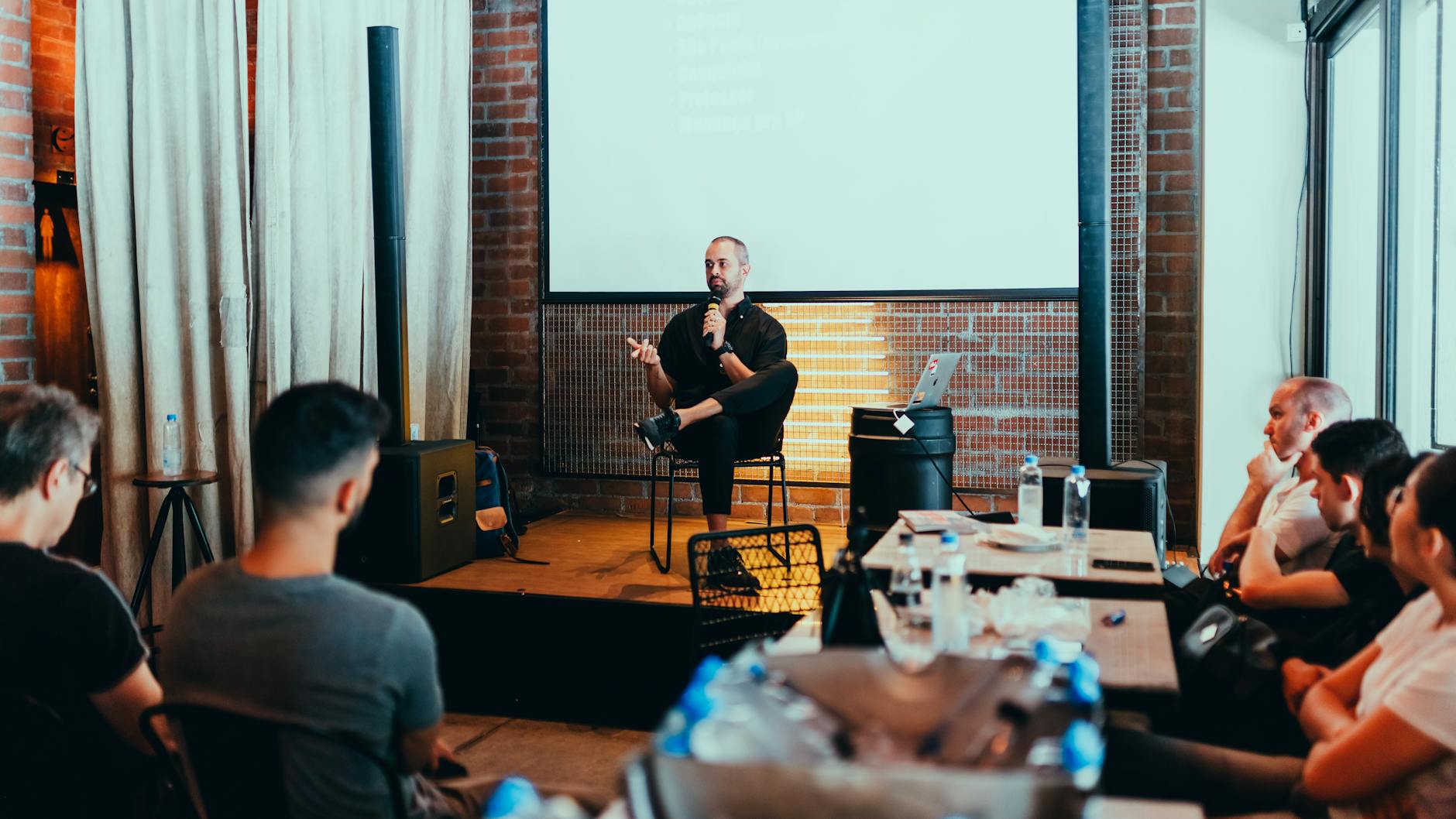



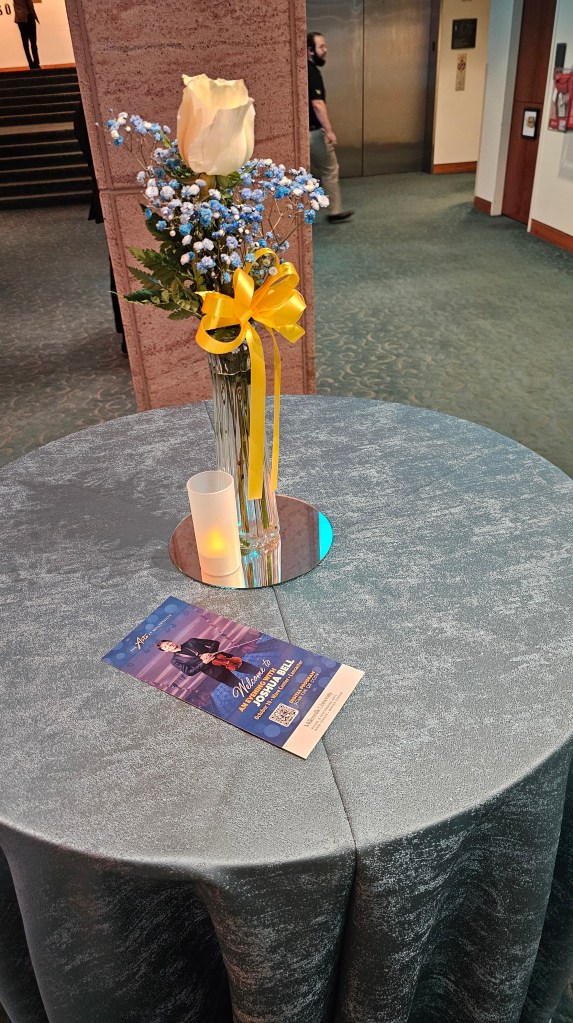

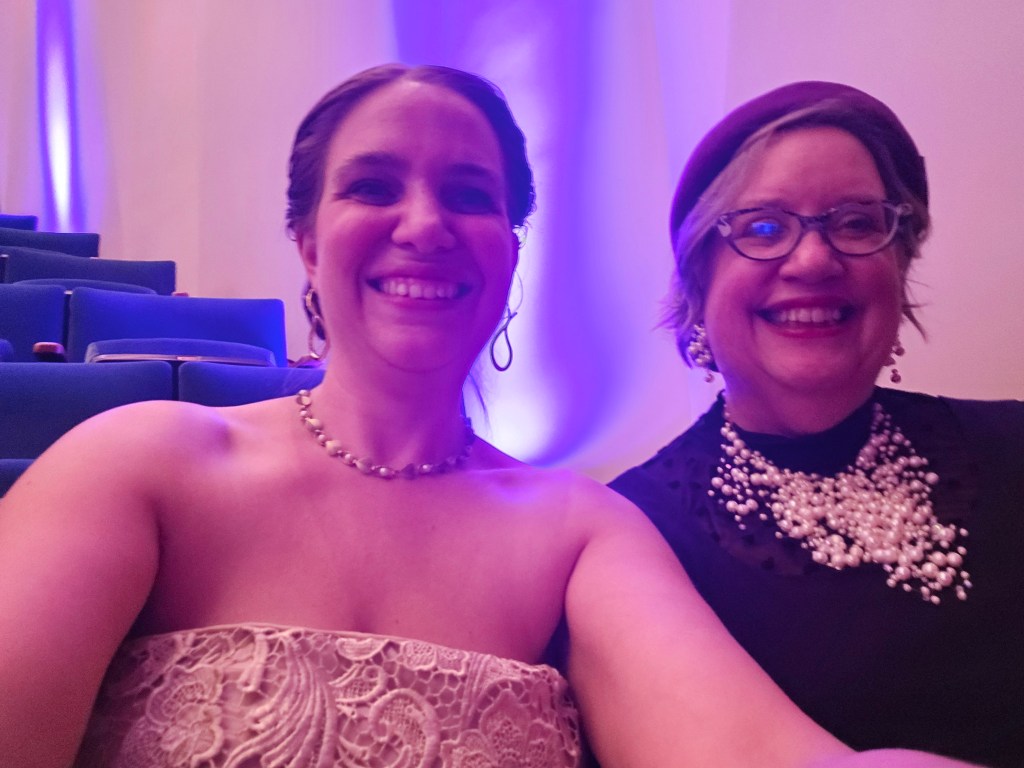



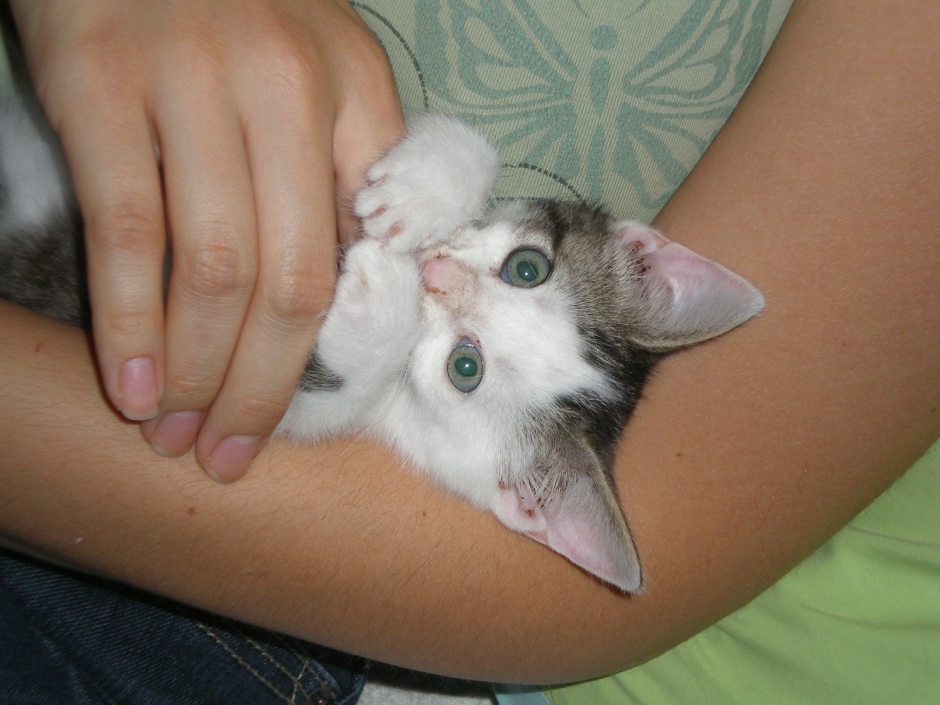
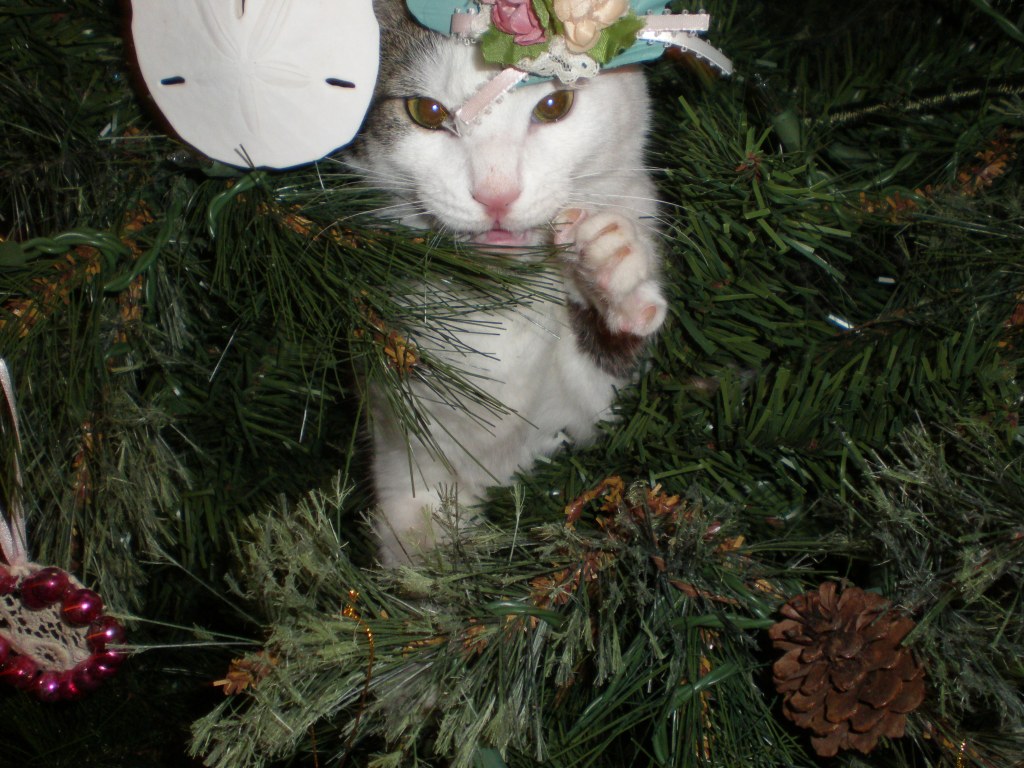


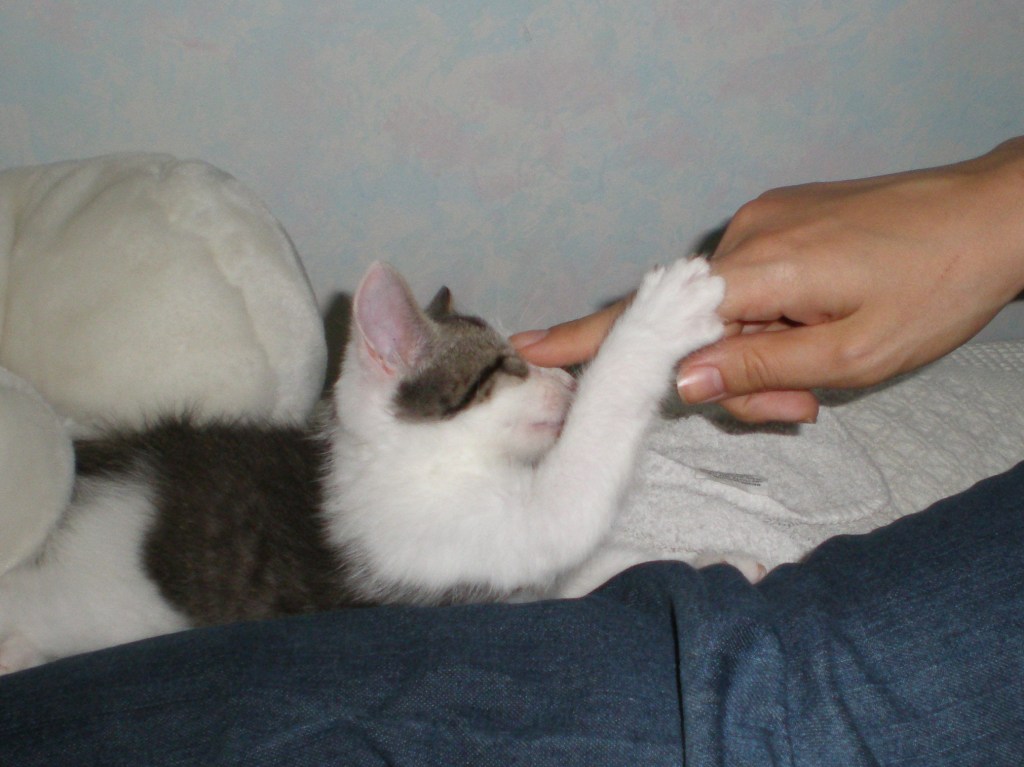



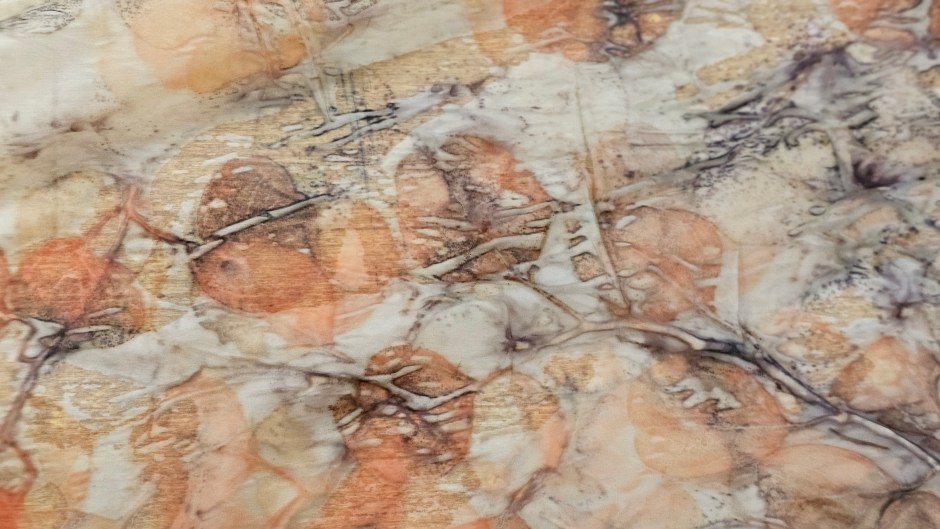
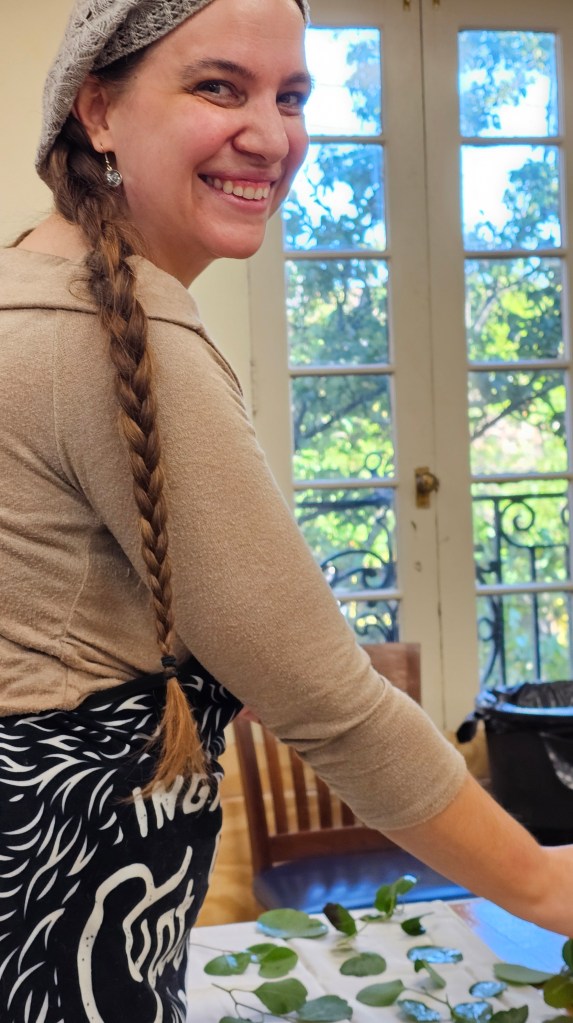
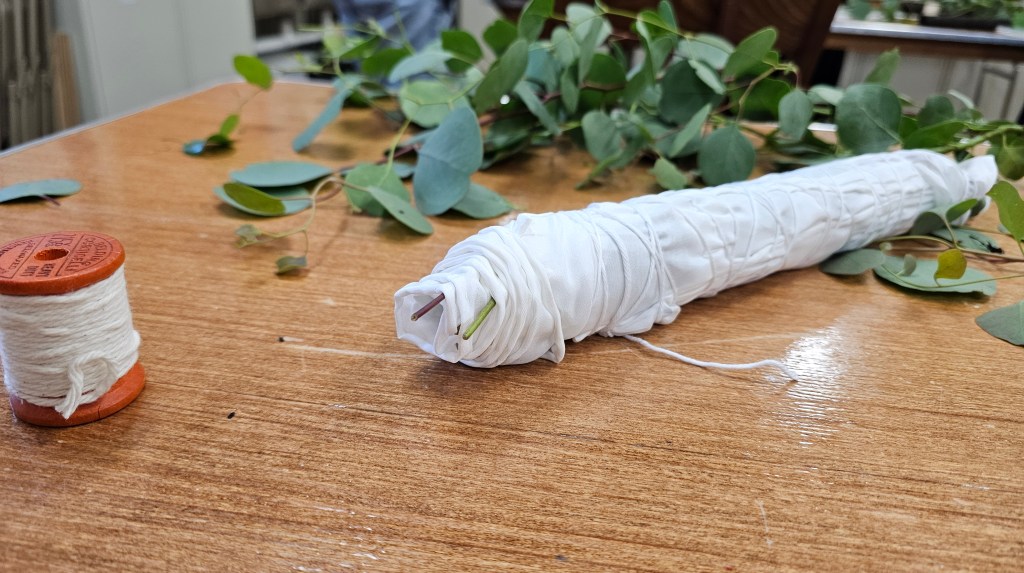


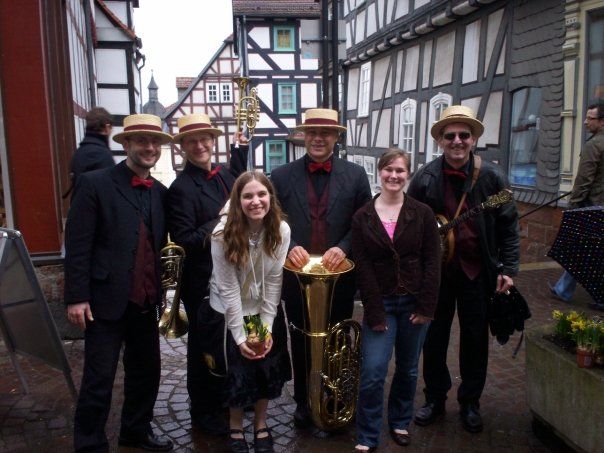



 Budget Bliss: Bucket List