All Aboard for Christmas Magic

There is something undeniably quintessential about a model train at Christmas. Perhaps it is the nostalgia of it, those miniature worlds humming softly beneath a glowing tree, harkening back to simpler times. Or perhaps it is the romance of travel itself, when journeys felt grand and full of promise, long before crowded terminals and flight delays dulled their shine.

Model trains were not just toys but marvels. At the turn of the twentieth century, railroads represented the height of modern technology. They stitched together cities, transformed commerce, and shrank vast distances into something manageable. It was only natural that this fascination would find its way into the home. Trains became one of the earliest mechanized toys of the modern era, first gaining popularity in the early 1900s. These were not flimsy playthings but sturdy, intricate machines meant to be admired as much as played with.

By the 1920s and 1930s, model trains had cemented their place in Christmas tradition. Department stores leaned heavily into the spectacle, constructing increasingly elaborate displays that wound through snowy villages and bustling cities, all carefully designed to stop shoppers in their tracks. The base of the Christmas tree became the perfect stage. It was practical, yes, but it was also symbolic. A glowing tree overhead, a circling train below, motion and magic contained within the heart of the home.

Whether by convenience or clever marketing, Christmas and trains became inseparable. That connection only deepened over time. Films like The Polar Express reignited the wonder for new generations, reminding us that belief, imagination, and a little suspension of disbelief are part of the season. During the pandemic, when traditions were disrupted and people sought comfort in familiar rituals, many rediscovered hobbies that had quietly faded into the background. Model trains experienced a resurgence, not as relics, but as reminders of patience, craftsmanship, and shared joy.

In recent years, that magic has increasingly moved into public spaces. Libraries, historical societies, and community centers across the country now host model train displays each December. Often these exhibits double as fundraisers, particularly for children’s literacy programs, ensuring that the magic of stories and imagination carries on long after the trains are packed away.

It was on a cold December evening that I found myself invited to see one of these displays for myself. I will admit, dear reader, that I was not initially enthused. I am not someone who has ever considered myself a “train person,” and model trains seemed, at best, mildly interesting. However, I was willing to indulge my companions in a bit of whimsy; I am nothing if not whimsical. Imagine my surprise, then, at just how utterly delightful the library display turned out to be.

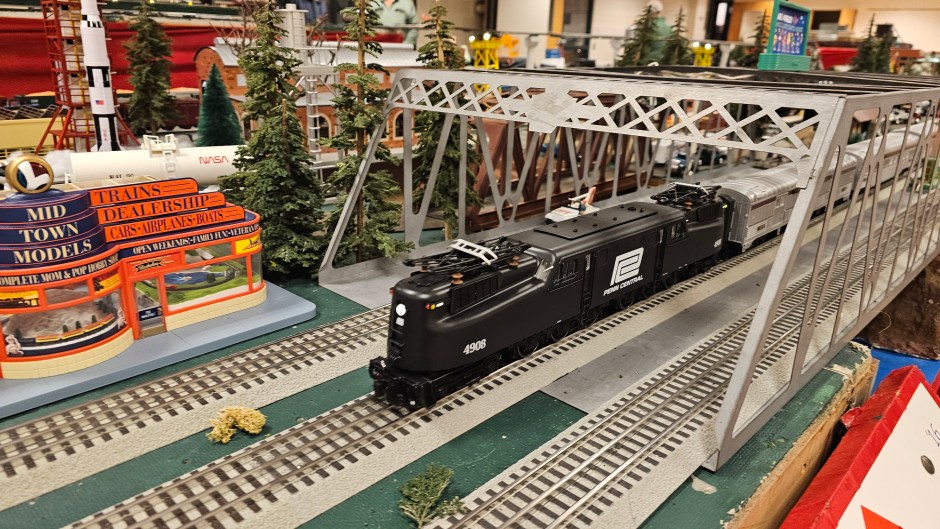
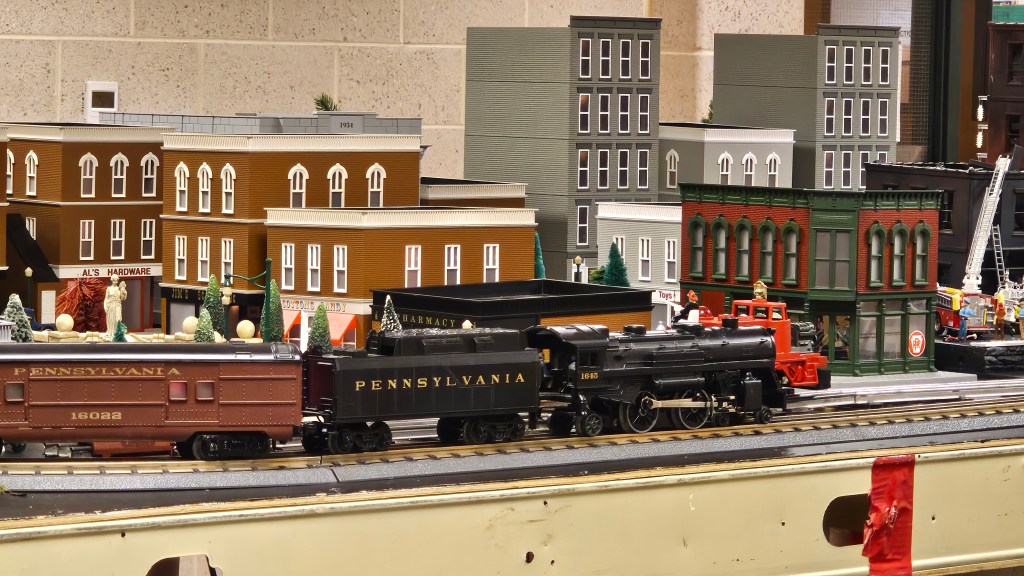
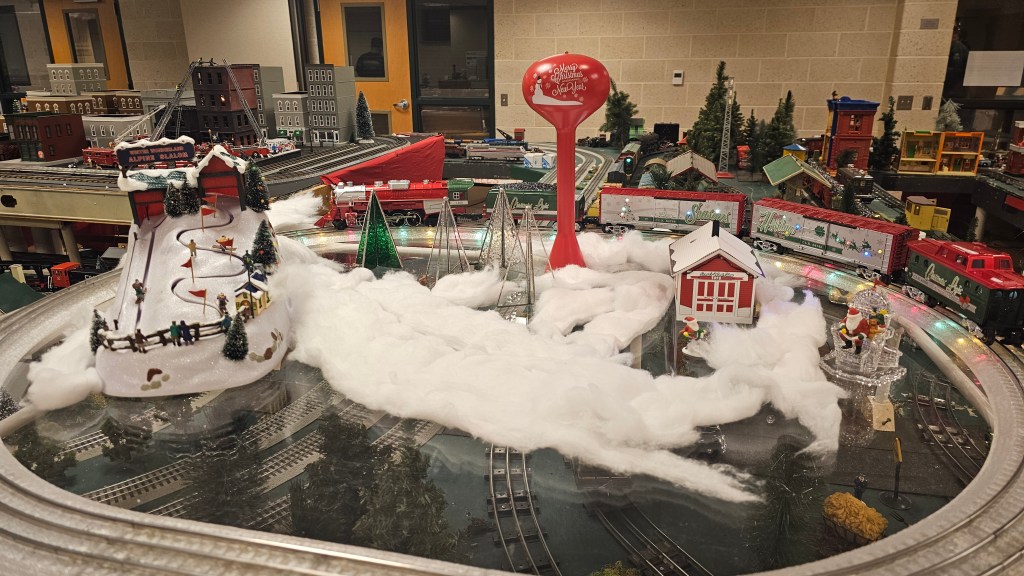
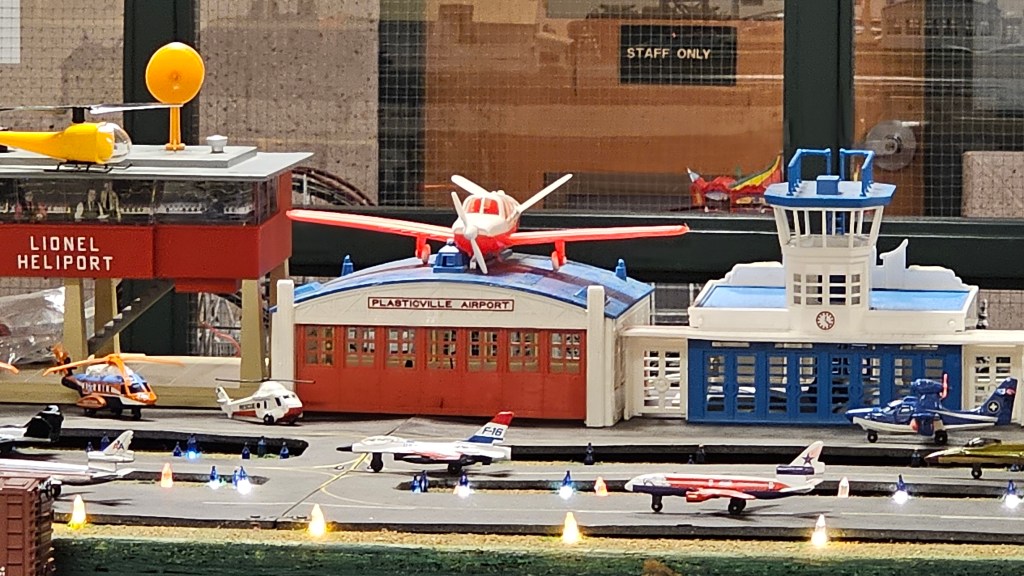
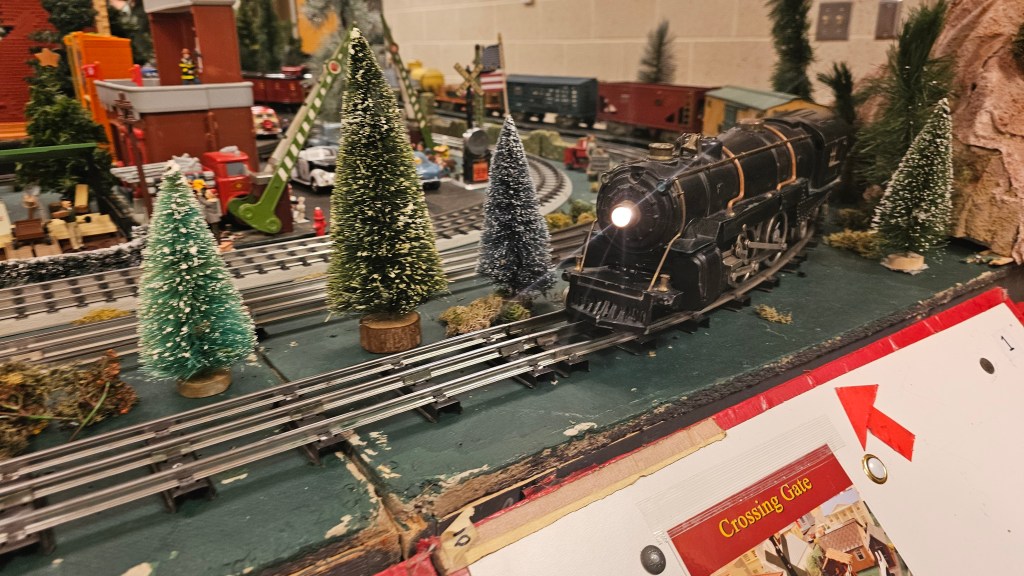
The small library’s basement had been transformed into a sprawling miniature world. The display ran nearly wall to wall, a carefully constructed metropolis alive with motion and detail. Multiple tracks wove through snowy villages and industrial hubs. A baseball field sat mid-game, an airport buzzed with tiny planes, shipping lanes carried cargo through a busy harbor, and a circus burst with color and whimsy. There was even a theme park, complete with rides in motion.

What made it truly special was how interactive it all was. Throughout the display, visitors were encouraged to press buttons and bring the city to life. A ski slope sprang into motion. Barrels were loaded onto a train car. Lights flickered on in tiny buildings. Each interaction revealed another layer of thought and care poured into the exhibit.

I felt like a child again, eagerly pressing buttons and craning my neck to take it all in. Every section had been lovingly created by a volunteer using their own personal train sets. One display even featured a train over a hundred years old, still running, still enchanting, a direct link to the earliest days of electric model trains. It was humbling to realize how many Christmases that little engine had seen.

For nearly an hour, I was completely absorbed, pointing out details to my companions and discovering something new with each pass around the room. The volunteers were just as much a part of the experience as the trains themselves. They eagerly shared stories about the models and about the local area. One tale recounted the time a major league baseball team stopped to play the local team while passing through town, a small but vivid slice of history preserved alongside the miniature world.

It was, in every sense, magical.

Where can you see Christmas Magic?

For those inspired to seek out a display of their own, they are often closer than you think. Local libraries are a wonderful place to start, especially in December. Historical societies, model railroad clubs, botanical gardens, and even shopping centers frequently host seasonal displays. Many towns also have dedicated train shows or open houses where hobbyists invite the public to view their layouts. And for the truly adventurous, there is always the option of creating a small display at home. Even a single loop of track under a tree can carry more charm than one might expect.

Sometimes, Christmas magic arrives in unexpected forms. Sometimes, it hums quietly, circles endlessly, and reminds us that wonder is often found in the smallest of worlds.

Completed: 2025

Cost: Suggested donation $2

Miles from home: 18 miles

Rooted in Community: A Favorite Local Market Adventure

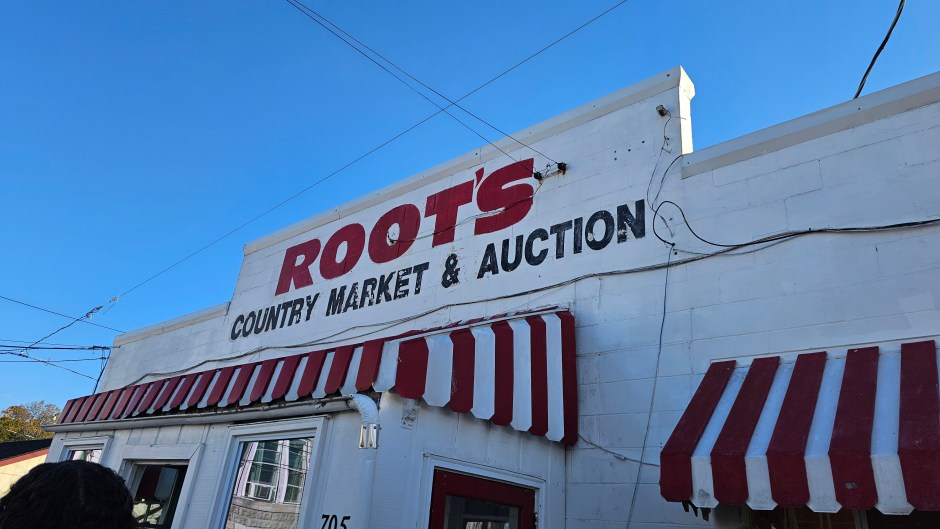
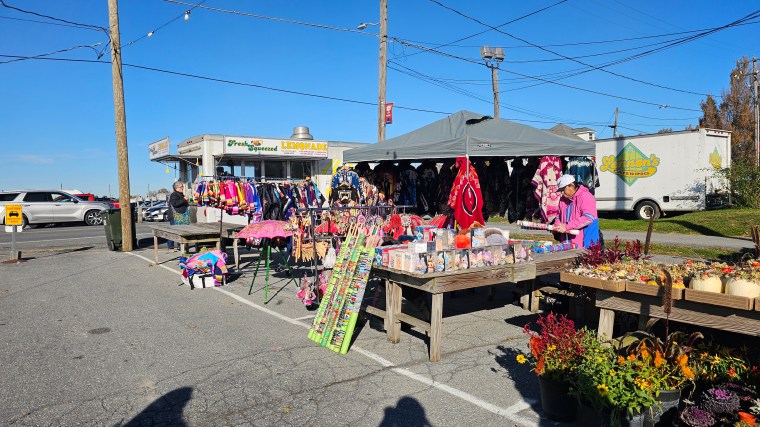
Every Tuesday, without fail, something wonderful happens in the next town over. Long before the rest of the world has finished its morning coffee, Root’s Country Market comes alive. It starts quietly at first, a few trucks pulling in, the soft murmur of vendors setting up, the smell of early morning coffee drifting across the lots, and then, before you know it, the place is buzzing. Root’s has been a Lancaster County staple since 1925, and in the hundred years since it first opened, it’s become something more than just a market. It’s a living, breathing community tradition.

Side bar: Locals pronounce it “Ruut’s,” not like tree roots, a small detail, but one that marks you as someone who really knows the place. Welcome to Lancaster County where nothing is pronounced like you think it would be, not even Lang-kiss-ter.

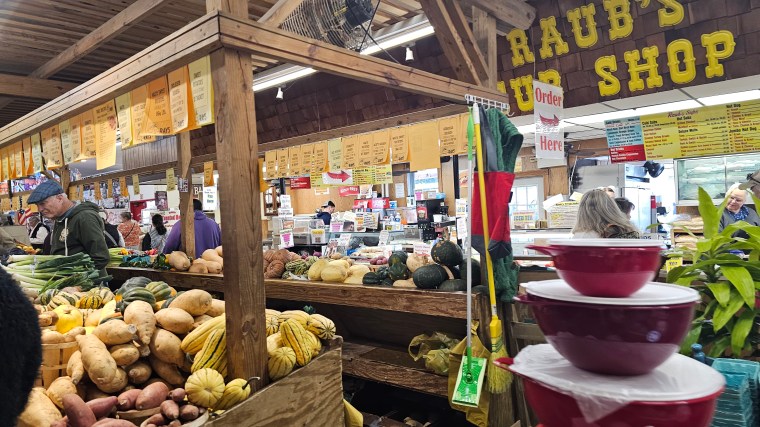
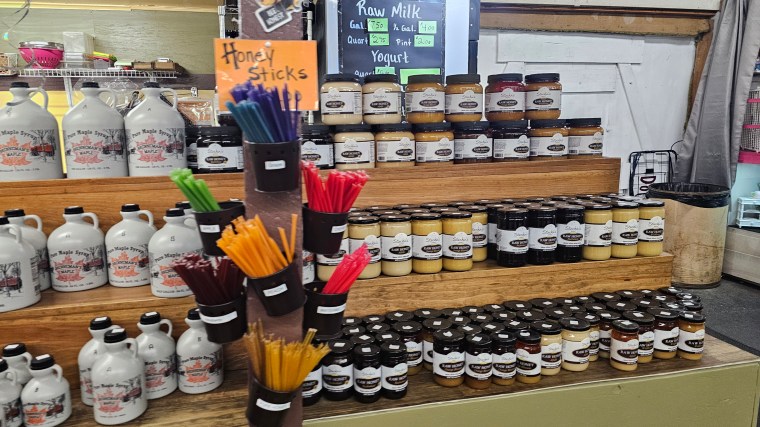
Roots is a sprawling labyrinth of over 175 indoor and outdoor stalls, each one offering a little piece of local life. You’ll find farmers with fresh produce still damp from the morning dew, bakers arranging pies so fragrant you can smell them before you see them, and crafters setting out handmade candles, quilts, and wooden toys. Step a little further and you’ll stumble into antiques and flea market finds, old tools, vintage glassware, forgotten records. It’s perfect for a treasure hunt! There’s even a livestock auction, which means you might be standing in line for a soft pretzel while hearing the rhythmic chant of a fast-talking auctioneer in the background. It’s part of the charm.

Root’s is the kind of place that engages all five senses at once. The air is thick with the smells of kettle corn and barbecued chicken, mingling with freshly turned earth from the produce stands and, occasionally, that unmistakable farm scent that reminds you you’re in the heart of the country. Fresh country air takes on a new meaning in farm country. There’s the shine of ripe tomatoes, the golden glow of honey jars, the colorful chaos of flower bouquets. Vendors call out greetings to regulars. 

If you visit during the busy seasons, late spring through early fall, the crowd hums like a hive. There’s a rhythm to it, a flow of movement as people drift from stall to stall, chatting, sampling, bargaining. You can lose hours wandering without realizing it. And then, just when you think you’ve seen it all, you’ll turn a corner and find something unexpected: a new baker, a quirky handmade sign, a table full of fresh herbs or a bin of farm-fresh eggs that look like they came from a paint box.

I may not be a morning person, but my favorite time at Root’s is the early morning, when the sun is barely up and the crowd hasn’t yet arrived. The vendors are still setting out their goods, the coffee is hot and strong, and there’s a quiet peace to it all. That’s when you can have those real, unhurried conversations, when you can talk to the man who grows the apples you buy every fall, or the woman who hand-pours every candle on her table. You’re not just shopping; you’re connecting.

What makes Root’s special isn’t just what you can buy, it’s who you’re buying it from. There’s something grounding about handing your money directly to the person who grew your tomatoes or baked your bread that morning. You can ask them how the season’s been, or what variety of pepper this is, or how long they’ve been coming to Root’s, and they’ll tell you, usually with a story that’s worth hearing.

Some families have been selling here for generations. Others are just starting out, testing their small business dreams one Tuesday at a time. Together, they form the heartbeat of this place, a reminder that commerce can still be personal, that community can be built over a counter full of peaches and pies.

And the prices? Let’s just say that fresh, local, and affordable aren’t mutually exclusive terms here. You can fill a tote bag with vegetables, grab a fresh-baked loaf of bread, and still have money left for lunch, maybe a chicken pot pie or a funnel cake, depending on how virtuous you’re feeling, and I am seldom neglect to give into temptation here. 

Root’s began back in 1925, when local farmers gathered to sell their goods directly to neighbors. A century later, it’s grown into a sprawling market and auction complex that somehow still feels small-town. It’s open year-round, rain, snow, or sunshine (not blizzards or floods though) every Tuesday without fail. Generations have grown up wandering its aisles, marking time not by the seasons but by the rhythms of Root’s, sweet corn in July, apples in October, wreaths and crafts in December.

It’s rare, in a world where everything feels increasingly online and anonymous, to have a place like this, one where you can see the faces behind your food, hear the laughter of old friends meeting up by the pretzel stand, and know that you’re part of something with roots (pun intended) deep in local soil.

Not everyone is lucky enough to have a place like Root’s right outside their door. For me, it’s not just a market, it’s a midweek adventure, a reminder to slow down and savor the simple joys: fresh food, friendly faces, a good deal, and a connection to the land and people that make up my home. Every visit feels different, but it always leaves me with that same contented feeling — a mix of nostalgia, community, and appreciation for the abundance that surrounds us.

So if you ever find yourself in Lancaster County on a Tuesday, make your way to Root’s. Come early, bring cash (although most vendors do now accept cards), and be ready to wander. Take in the smells, the sounds, the cheerful chaos of it all. Chat with the farmers and crafters, find something unexpected, and maybe grab a slice of shoo-fly pie for the road.

Because at Root’s, you’re not just shopping,  you’re stepping into a century-old story that still unfolds, week after week, right in the heart of the community.

How can you experience your own farmer’s market adventure?

If you don’t live near Lancaster County, don’t worry, almost every community has its own version of Root’s tucked away somewhere. Previously, it seemed farmer’s markets were going the way of the dodo, but community efforts have revived the practice all over as determined locals, with pride and love for their communities decided to reconnect us all with our roots. Look for local farmers markets or seasonal pop-ups in your town or the next one over. Many run weekly through the spring and summer, while others operate year-round. Visit early, bring cash, and take the time to talk with the people behind the tables. You’ll find that even the smallest market has its own personality, its own rhythm, and its own sense of community. It’s one of the easiest, and most rewarding, ways to connect with the place you call home.

Completed: A Tuesday in my childhood and ongoing into my adulthood

Miles from home: About 10

Cost: Free parking and however much you want to spend. My most recent visit was about 6 dollars.

Still looking for ideas to do in your own local community? Check out the rest of my Bucket List – most of the items completed from my own backyard!

How I Became a Lady (Sort Of)

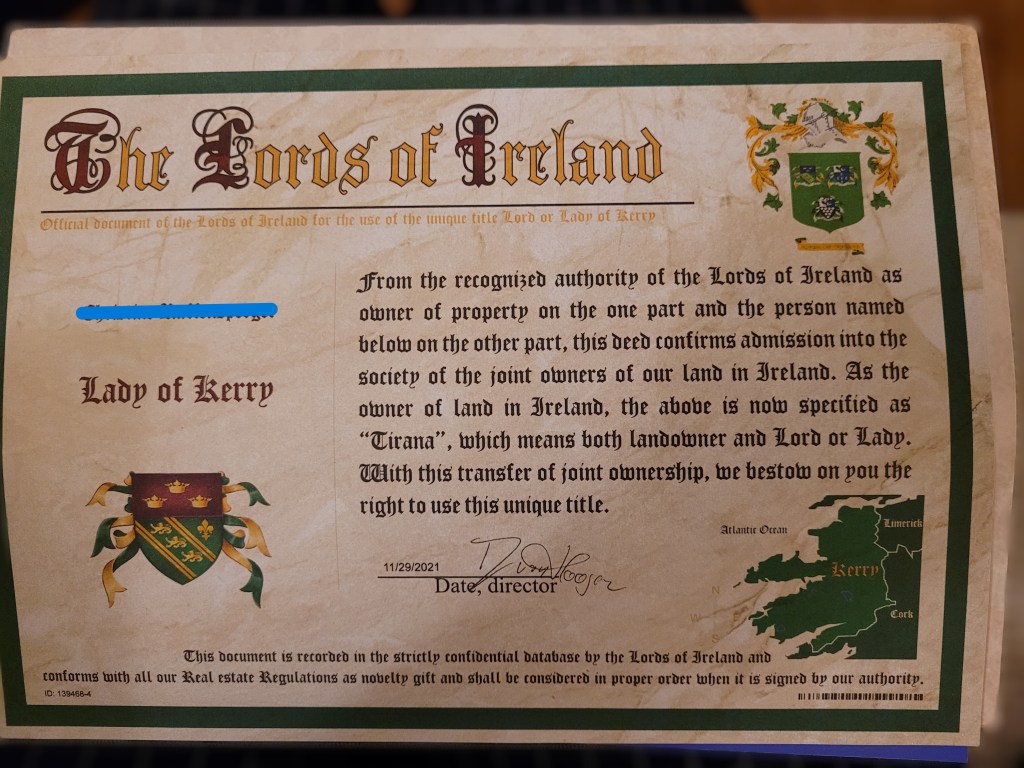
It finally happened, dear reader, I’ve ascended the social ladder or perhaps I was just finally given my due. After years of modest living and an enduring fondness for mud-splattered hiking boots, I am now… a Lady. Or at least, that’s what the certificate says.

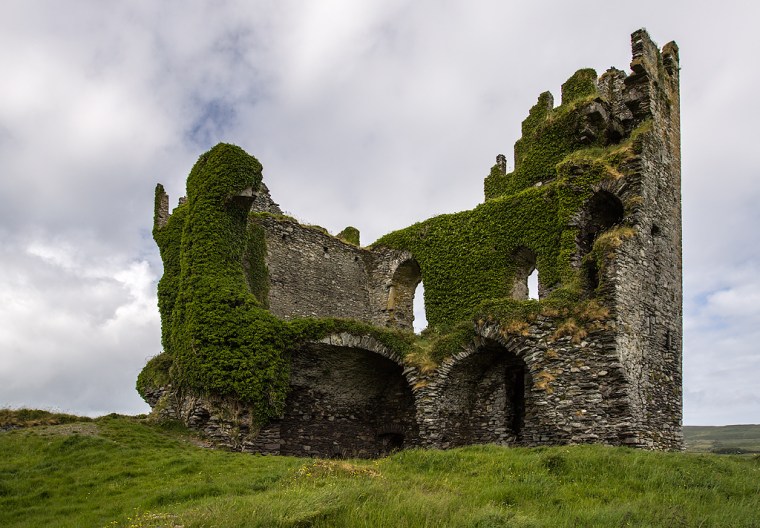
This rather illustrious transformation occurred thanks to my brother, who, in an act of Christmas generosity (and perhaps a touch of mischief), purchased me an “Irish title.” Technically, I am now the Lady of Kerry, complete with a small plot of land, or as the fine print clarifies, a symbolic square foot that could just about accommodate a particularly skinny daisy. I can go visit it, but I can’t redecorate or reside there on a permanent basis. 

A castle in Kerry, Ireland

Now, before you curtsey, a word of reality: companies like Established Titles offer honorary recognition rather than true nobility. My title doesn’t come with a castle, serfs, or even a teapot emblazoned with my crest. Although, now that I think of it, I could perhaps purchase one for my stove here at home. Historically, “Lord” and “Lady” were titles granted by monarchs or inherited through noble bloodlines, not acquired via online checkout. But honestly, who am I to let historical accuracy get in the way of a good story?

Besides, the funds go toward preserving the land and history of Ireland, a cause close to my heart. My mother’s family is Scots-Irish, and I’ve always felt a deep connection to that misty emerald isle. I fell in love with its spirit: the wild cliffs, the songs that seem to rise from the earth itself, and the way history hums beneath every stone wall and ruined abbey. I love reading its stories, exploring its history back into the very days of Newgrange over 7,000 years old.

When I was younger, I took up the Irish fiddle and have returned to the instrument of my youth. I dabbled in Irish step dance in college. More recently, I even tried my hand at learning the language through Duolingo — Dia dhuit, if you will. When I finally visited Ireland, it felt like walking into the pages of an old legend. The Book of Kells took my breath away, and the rolling green hills seemed to whisper secrets older than time. Part of me was quite tempted to simply disappear into the countryside and see if the fae truly existed.

A day in Dublin

So yes, while my noble title may be symbolic, the sentiment behind it is genuine. And as an avid fantasy reader, I’d be lying if I said I hadn’t dreamed of being a Lady, though perhaps more the sword-wielding, dragon-slaying kind. If this little piece of parchment brings me one step closer to that dream, then I say it was money well spent.
Of course, being a lady hasn’t exactly transformed my daily routine. I still brew my own tea, scrub my own floors, and trip over my own dignity with regularity. No invitations to high society luncheons have arrived (yet), and my “estate” is still contained within a flowerpot on my porch. But perhaps the true nobility lies not in titles, but in finding humor, history, and heart in the small things.

So here I stand, Lady of Kerry, warrior of laundry day, slayer of dust bunnies, and humble admirer of the Irish hills. My crown may be metaphorical, but my affection for Ireland is entirely real.

My very own title!

So how might you become a “lord” or “lady”

Ever since the launch of Established Titles, there has been a plethora of copy-cat companies all offering the same thing, a little certificate saying you “own” a piece of land or castle in Ireland or elsewhere in the British Isles and therefore can now call yourself a “lady”. The money raised usually goes to the preservation of that land or castle, because it is expensive to maintain that history. Who knew that nobility was only a mouse click away?

Completed: 2021

Miles from home: 0

Cost: $25- $60 depending on the kit purchased

Beyond the Classics: Fantasy Books to Add to Your Reading Bucket List

While most bucket list items require at least a trip out your front door, some of the best ones ask for nothing more than a comfortable chair, a cup of tea, a purring cat, and a book. Not everyone thinks of reading as a bucket list activity, but plenty of readers consider finishing the “greats” an accomplishment worth doing before you “kick the bucket.”

Lists of Books to Read Before You Die are everywhere, compiled by literary authorities, publishers, or critics. The argument for reading them is solid: classics can enrich your life through timeless themes, enduring wisdom, and universal insights into the human condition. They can expand your vocabulary, sharpen your writing, and deepen your appreciation for culture and history. Sometimes, one book really does shift your perspective forever.

And yet, I don’t always agree with these lists. It’s not that the classics aren’t worthy, it’s just that… well… many of them are boring. There, I said it and I shan’t take it back! I’m a fantasy and science fiction reader at heart. Outside a few exceptions, books outside those genres are of little interest to me. Oh, do not mistake me for an uneducated plebian. I’ve read my share of “required” classics (even in German, no less), but some really do go on. Did I really need to know that much about the Parisian sewer system, Victor? I appreciate the symbolism, but I nodded off halfway through. Perhaps, it’s my ADHD mind which just wanders off when things don’t spark my intrigue.
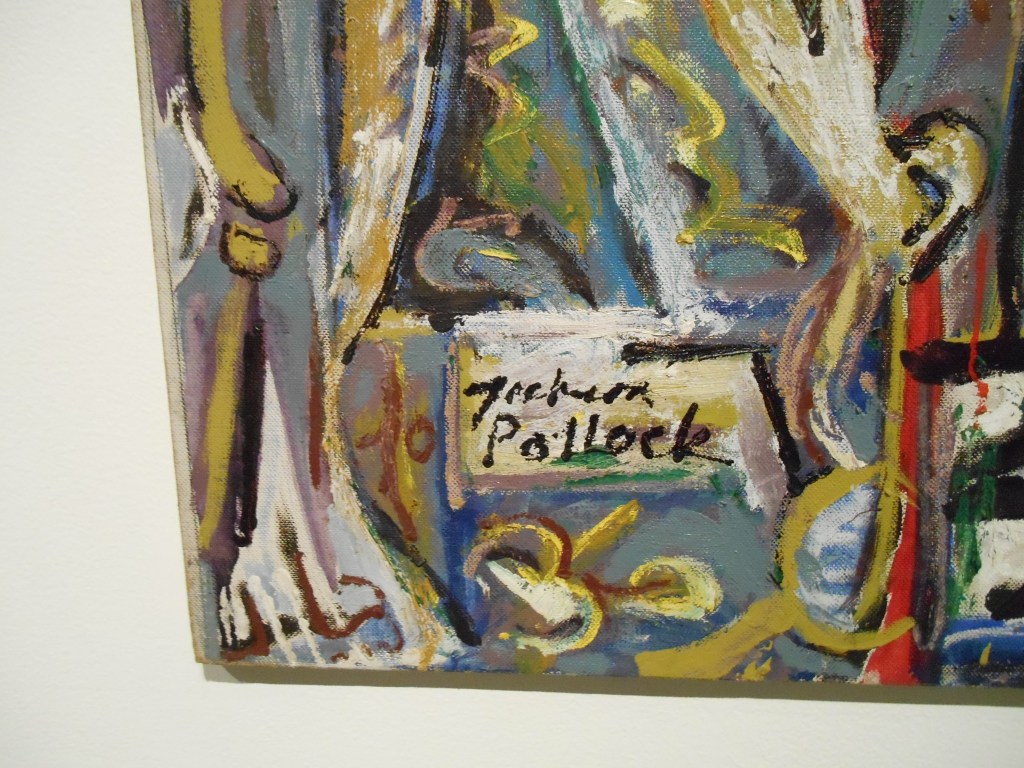
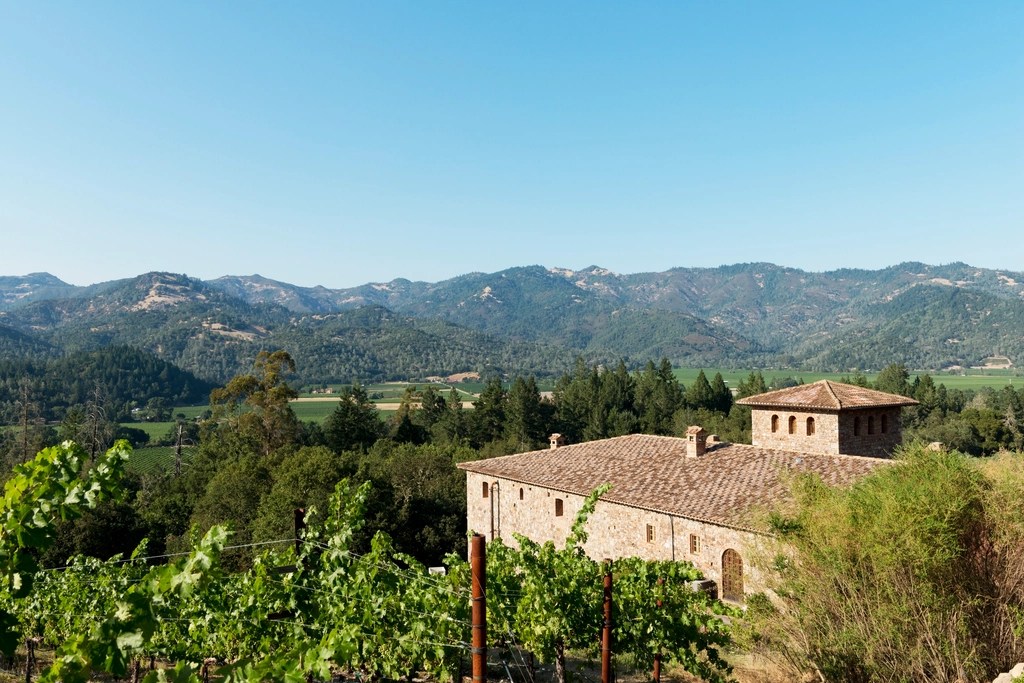
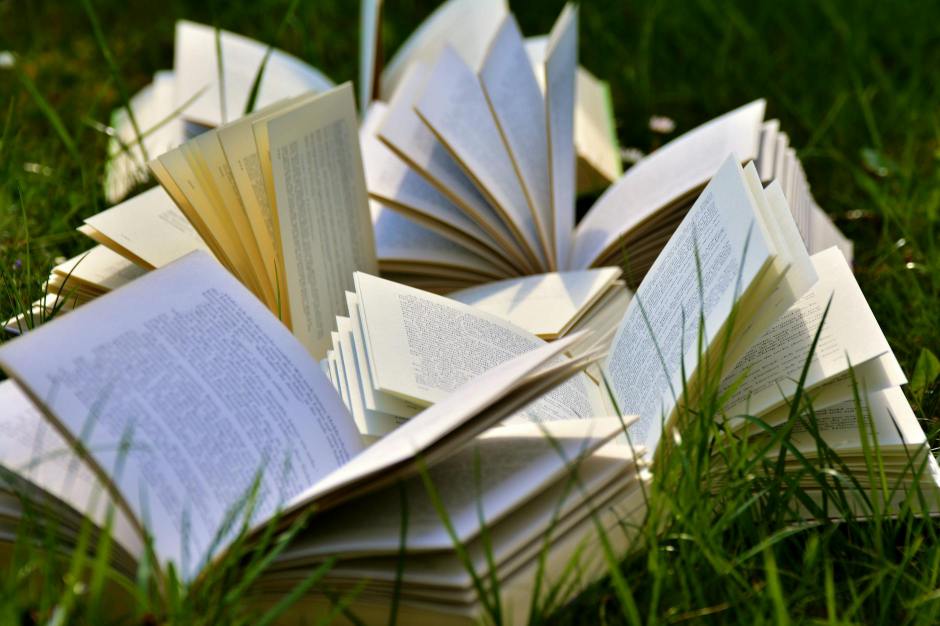
Photo by Suzy Hazelwood on Pexels.com

That doesn’t mean I don’t have a reading bucket list outside my “To Be Read Pile”, which we aren’t discussing. They will be read, when they are read! I digress.

My Reading Bucket List simply reflects my love for fantasy and science fiction, the genres that spark my imagination most. A few years ago, I stumbled upon a “Top 20 Fantasy Series of All Time” list, not compiled by critics, but by a survey of BookTube influencers. Yes, it’s biased toward modern titles (and leans millennial/Gen Z), but I liked the idea of readers (not industry insiders) deciding which stories deserved a place on the list. (We won’t get into all the politics behind what books get placed on those classic lists, we’d be here all day with me ranting.)

To my delight, I had already read about half. The rest became my summer project in 2022. Armed with my library card and Kindle, I sampled each new series, reading at least the first book to see if it hooked me. Some didn’t, but then not every book will be my cup of tea. Others were revelations, hidden gems I never would have found without the list. They were witty, profound, beautifully written, and layered with history, culture, and insight, even while transporting me to other worlds. While none of them were life-changing, they certainly sparked introspection and reflection, opened up ideas, and at times challenged my ways of thinking.

If you’ve struggled through traditional “must-read” lists and found yourself uninspired, maybe it’s time to look at fantasy. Between epic sagas and modern masterpieces, there’s a wealth of stories waiting to change the way you think, or at least keep you delightfully entertained. The list below is a great place to start. You’ll find household names alongside underappreciated treasures, each with the potential to expand your reading horizons.

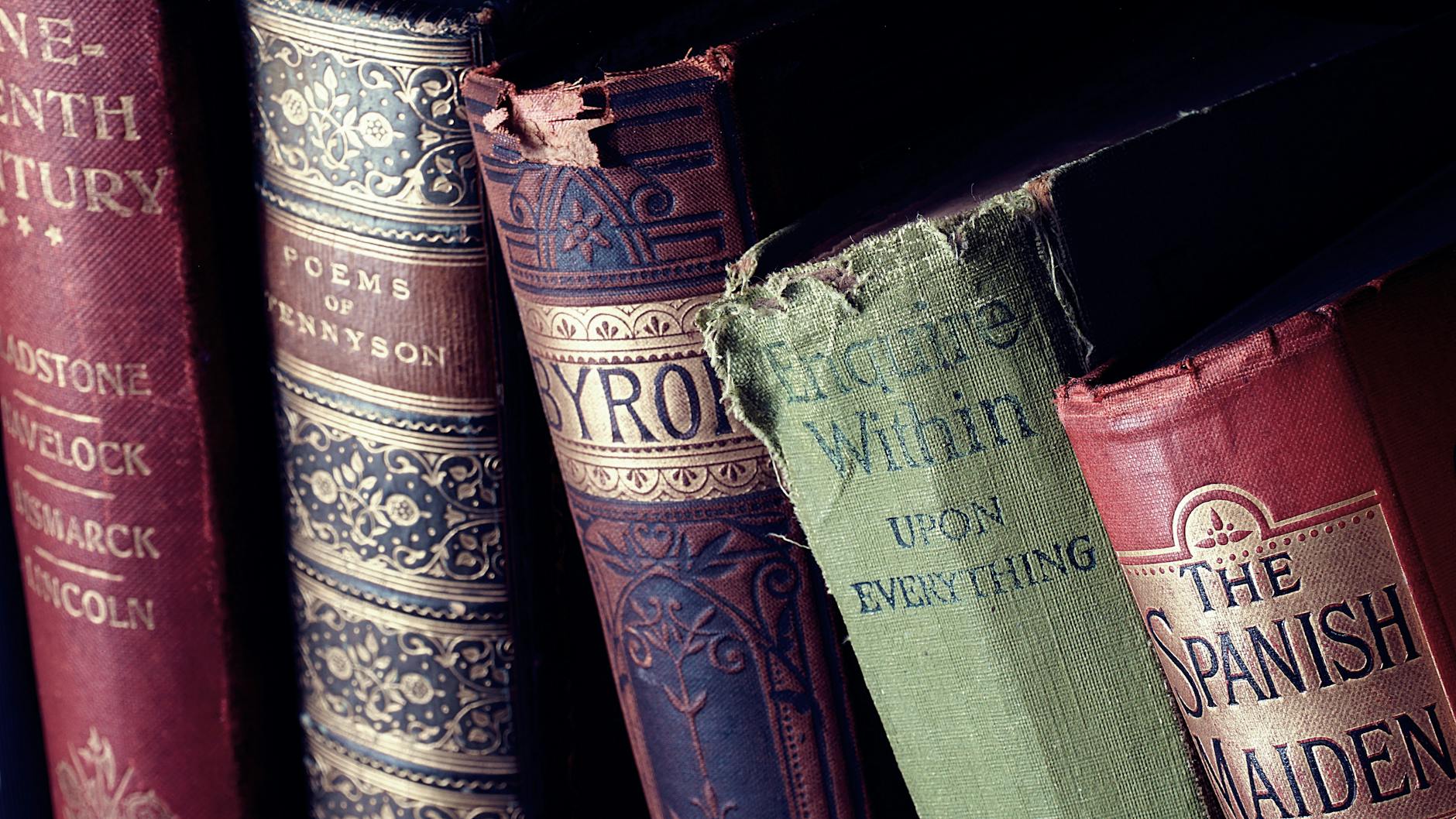
Photo by Jeffry S.S. on Pexels.com

Suggested Top 20 Fantasy Series to Read Before You Die

Rank 19 (3 series)

  • Ash and Sand — Richard Nell
  • The Dandelion Dynasty — Ken Liu
  • The Earthsea Cycle — Ursula K. Le Guin

Rank 17 (2 series)

  • Harry Potter — J.K. Rowling
  • The Kingkiller Chronicle — Patrick Rothfuss (warning this series is unfinished and has been for over 10 years)

Rank 15 (2 series)

  • The Books of Babel — Josiah Bancroft
  • The Broken Earth Trilogy — N.K. Jemisin

Rank 14

  • Memory, Sorrow, and Thorn — Tad Williams

Rank 13

  • The Green Bone Saga — Fonda Lee

Rank 11 (2 series)

  • The Poppy War Trilogy — R.F. Kuang
  • Gentleman Bastard — Scott Lynch (also an unfinished series, my recommendation is you read the first as a stand alone as it does give a satisfying ending)

Rank 10

  • The Greatcoats — Sebastien de Castell

Rank 9

  • Discworld — Terry Pratchett

Rank 8

  • Malazan — Steven Erikson & Ian Esslemont,

Rank 7

  • The Realm of the Elderlings — Robin Hobb

Rank 5 (2 series)

  • A Song of Ice and Fire — George R.R. Martin (Also unfinished, but feel like you all should know this by now)
  • The First Law Universe — Joe Abercrombie

Rank 4

  • The Wheel of Time — Robert Jordan

Rank 3

  • The Banished Lands — John Gwynne

Rank 2

  • Middle-earth — J.R.R. Tolkien

Rank 1

  • The Cosmere — Brandon Sanderson

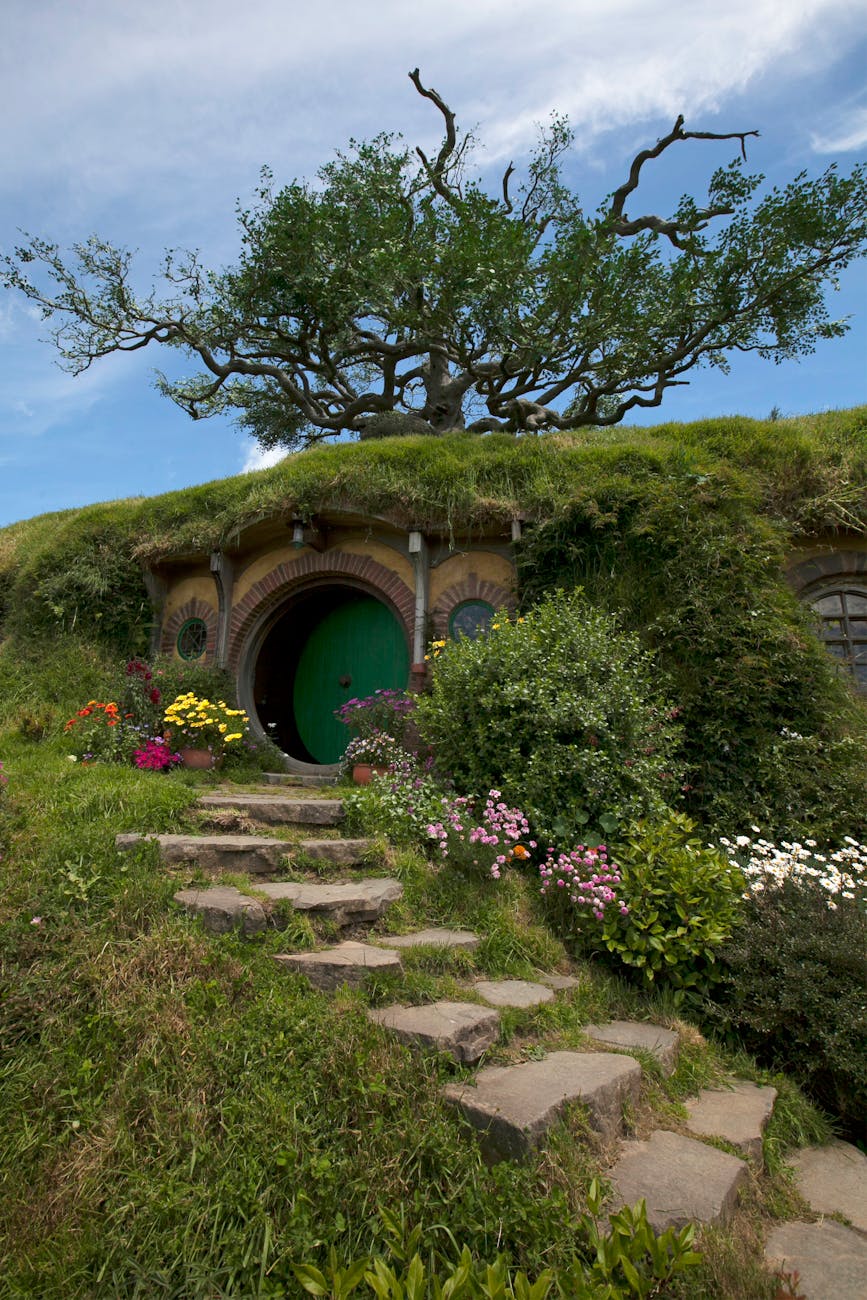
Photo by Lisa from Pexels on Pexels.com

Final Thought

Reading bucket lists don’t need to be confined to dusty classics or daunting tomes. If fantasy and sci-fi are what light you up, then let those genres guide your journey. After all, books are more than assignments, they’re invitations into new worlds. And what better way to spend your limited time than wandering through worlds filled with wonder?

Your Bucket List Is a Lie

Before we clutch our pearls at such a title, you must first indulge me in a bit of theatrical storytelling.

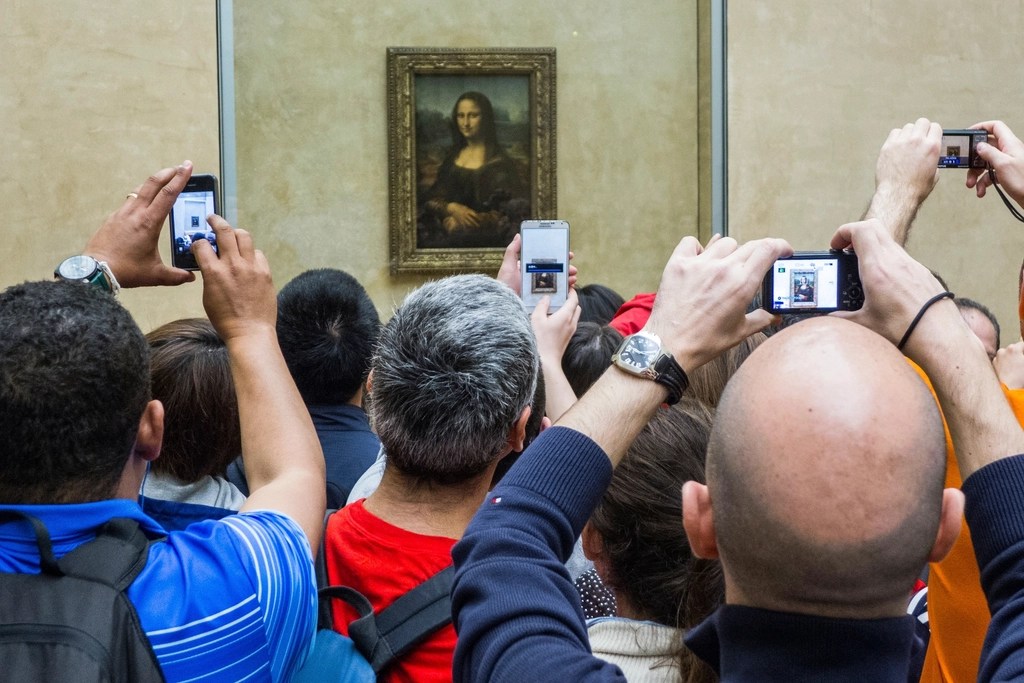
There was once a painting known to the art world but given little regard by the general public. Sure, some waxed poetic about it, but the intelligentsia has always been a bit eccentric in its proclamations of greatness. To anyone outside the art world, it was unremarkable. It may have hung in a museum, but no one would have gone out of their way to see it. Like so many other paintings in a gallery, it was forgettable, small, dark, and easy to overlook.

Then it was stolen.

No one knew how. One day, it was just gone. And suddenly, people noticed. For two years, the public speculated wildly. The fever-dream of mystery only grew with every twist. Perhaps absence does make the heart grow fonder, or at least more curious. While the intelligentsia is eccentric, the general public is fickle, like a cat who demands to be let out only to want back in the moment the door shuts.

When the painting was returned, it became a sensation. A must-see. A cultural event. And not just any painting – THE painting.

The painting in question? The Mona Lisa.
The real reason it’s famous? The drama. The theft. The story. The hype.

Without that? It might still be hanging half-forgotten, quietly smirking at a handful of art students instead of hoarding crowds behind velvet ropes.

And that, dear reader, is what your bucket list might be made of: hype.


So many bucket list items are fueled not by intrinsic value, but by the frenzy that surrounds them. Don’t get me wrong, the Mona Lisa is a lovely painting, and Da Vinci was no slouch, but why that painting? Why not another of his works? Why not another artist entirely? Yes, yes, I am sure you’ll tell me all the reasons it’s such a great painting, a master piece of its time, blah, blah, blah., but there’s lots of great paintings you can’t name or even are aware of. The answer lies in marketing. In myth-making. In the way a compelling narrative shapes our desires

Travel magazines dazzle, influencers entice, advertisements whisper, “You must go here.” But what’s really behind that? How many times have you visited a place only to find it…underwhelming? A glorified photo op? Something that looks better on Instagram than it feels in person?

Perception shapes reality. And marketing shapes perception. Don’t believe me? Riddle me this, dear reader why do we consider Jackson Pollock a great artist? The CIA orchestrated the entire Art Movement of Abstract Expressionism’s rise to prominence, engineering hype around the artist Jackson Pollock by buying his paintings and creating a frenzy around the art movement through bought and paid for critics. It was for political reasons and to combat the dangers of Soviet Russia. However, until the CIA engineered the hype, it was mostly ignored and barely considered real art. After all, it looked like a five year old could have painted it.

Nor is the art world, the only place where bought and paid for critics shape our perceptions. There was an rather large controversy in the video game world of creators influencing magazines and reviewers to generate hype around game releases. Those travel influencers filling your feed are often being paid by travel magazines, hotels and even the local department of tourism to promote various locations and experiences.

Signature of Jackson Pollock on Pasiphaë (1943; Metropolitan Museum of Art) Ned Hartley – Own work

Let’s be clear: I’m not criticizing your personal travel goals. I’m encouraging you to interrogate them.

Are your bucket list items there because you want to experience them, or because someone told you they’re “must-see”? Would another location fulfill the same desire, perhaps with less hype and fewer crowds?

For instance: Why London? What do you actually want to see there? Do you even know the history behind the city’s major attractions? Could a neighboring town offer the same experience without the same price tag?

Yes, Stonehenge is cool. But have you heard of the Calanais Standing Stones in Scotland? Same vibe. Fewer tour buses. Also, older.

We should be asking ourselves:

  • Do I understand why this place matters?
  • Does it resonate with me personally?

I, for example, will probably never visit the Great Wall of China. It’s a feat of engineering, sure. But so was ancient Rome. And frankly, the Wall didn’t even fulfill its intended purpose, more a monument to hubris than a functional defense system. And trust, me there are plenty of monuments to hubris. There are other ancient walls, built with equal ingenuity, that never make the “Top 10 Things to See Before You Die” lists. Just because it’s the biggest, doesn’t mean it’s the best or even the most impressive.


Take Napa Valley, for example, America’s answer to French wine country. It became famous after a 1976 wine tasting in which Napa wines beat out French ones and cementing its place in the wine world as one of the premier wine regions. But wine tasting is…flawed. Studies show judges rate wines inconsistently. Presentation plays an outsized role. In one study, the same wine earned wildly different scores when served in different bottles.

So why is Napa “the place” and not, say, the Finger Lakes or Walla Walla? Marketing. Perception. Hype. South-central Pennsylvania has lots of wineries that produce lots of delicious wines.

If we let others dictate what’s “best,” we surrender our own preferences to their story. But if we challenge that narrative, we open the door to a world of options.

Maybe that famed “must-see” destination isn’t any better than the quieter, lesser-known place next door. And that’s great news for the budget-conscious among us. It means you can experience something wonderful without the tourist trap markup, and maybe even get a more authentic experience while you’re at it.


Vineyard Napa Valley, California by Carol M Highsmith is licensed under CC-CC0 1.0

More importantly, it means you’re not missing out.

So many bucket list items are inaccessible to people with normal jobs and normal paychecks. That doesn’t make your life less fulfilling. It just means your version of “extraordinary” isn’t dictated by a Top 10 list.

Why the Panama Canal and not the Welland Canal in Canada? They use the same technology. One just has better PR. Okay, yes, there are certain historical contexts which does make the Panama extremely significant, perhaps more so than Welland Canal. But could you honestly, tell me what those are without looking them up? I didn’t think so. Would you have done that research before booking your trip to Panama? Probably not.

If you told your friend you went to Welland, they might look at you funny. But unless they’re an engineering nerd (in which case, they’d love it), they probably can’t explain why Panama is “better.” They’re just repeating what they’ve heard.


To help you separate real desires from borrowed hype, ask yourself:

  • What is the historical or cultural significance of this place or experience?
  • Do I genuinely care about that significance?
  • Are there other options that fulfill the same interest or vibe?
  • If it’s “the best,” who decided that—and how subjective is that claim?
  • Is it overrun with tourists to the point of losing what made it special?
  • Are there similar or adjacent experiences nearby that are less crowded, more affordable, or more authentic?
  • Am I excited for this because it aligns with my values and interests, or because I saw an influencer do it?

Once you start asking these questions, you may find your list isn’t a map of your soul’s desires—but a collage of other people’s priorities.

The good news? You can scrap that list and make your own.

Because the best journeys aren’t built on hype, they’re built on what matters to you.

Sole-Full Sips: The Joy of Grape Stomping

If a bottle of wine contains more philosophy than all the books in the world, then a barrel of freshly picked grapes awaiting their fate must contain all the mysteries of the ancients. Wine making has been a centuries-old tradition, originating over 8,000 years ago when the transformation of juice to wine was thought to be a divine mystery. Though the modern era has brought stainless steel presses and fermentation machines, it may have lost some of its ancient wisdom and mystery, rendering the process more mundane. Perhaps that’s why there’s such allure in the old ways, hand-picked grapes tossed into wooden barrels, squished by stomping feet, then carefully aged in wood to absorb its complex flavors over time.

The crushing releases the grape’s juice, allowing it to mix with the skins to absorb flavor, color, and tannins. Depending on the type of wine desired, the presence of stems or skins may be either vital or avoided. After the initial crushing, yeast is added; the juice is fermented, pressed, and finally aged. While details may vary, the process has remained largely unchanged for centuries.

Many were first introduced to grape stomping through the infamous I Love Lucy episode. For me, it was A Walk in the Clouds, the laughter, singing, and juice-splashing celebration enchanted me. It transformed wine into a celebration of life and love. Hollywood may have romanticized it, but wine itself is inherently romantic, so I can be forgiven my idealized vision of the process.

Determined to check off this long-standing bucket list item, I began searching for grape stomping opportunities. While I was certain a plane ticket to Portugal wouldn’t be necessary, I was surprised to discover just how few vineyards in my state actually offered it. Some festivals held stomping competitions, but alas, I lacked a team. And most options were three to four hours away, not exactly convenient for a quick outing. Perhaps, if I could make a weekend of it, but I was loathe to do an overnight.

Undeterred, I expanded my search. That’s how I found Four Sisters Winery, just across the Pennsylvania/New Jersey border, only two hours away. They offered barefoot grape stomping, wine tasting, and dinner. When I floated the idea to my sister, she declined, apparently, squishy, slimly, sticky grapes between the toes was not her idea of a good time. Which, fair. It’s not everyone’s glass of wine.

What is a bucketlister to do when one’s partner in crime is not up for the proposed heist? Would I need to shelve the idea? Remove it from possibility altogether? Fear not, dear reader, I had a backup adventurer: my mother. As fate would have it, she also had grape stomping on her bucket list. And thus, it became a perfect Mother’s Day gift.

We registered for the event on June 21st, a fine way to ring in the summer. With the heatwave beginning, we drove through picturesque farm hills dotted with vineyards, perfect for a potential wine-themed day trip. We used the time to chat and simply enjoy each other’s company.

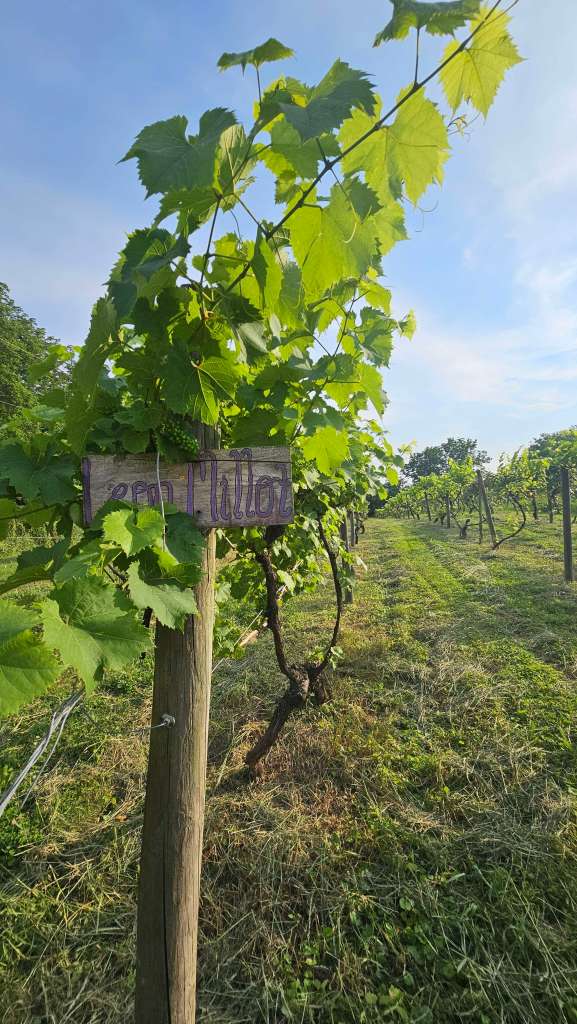
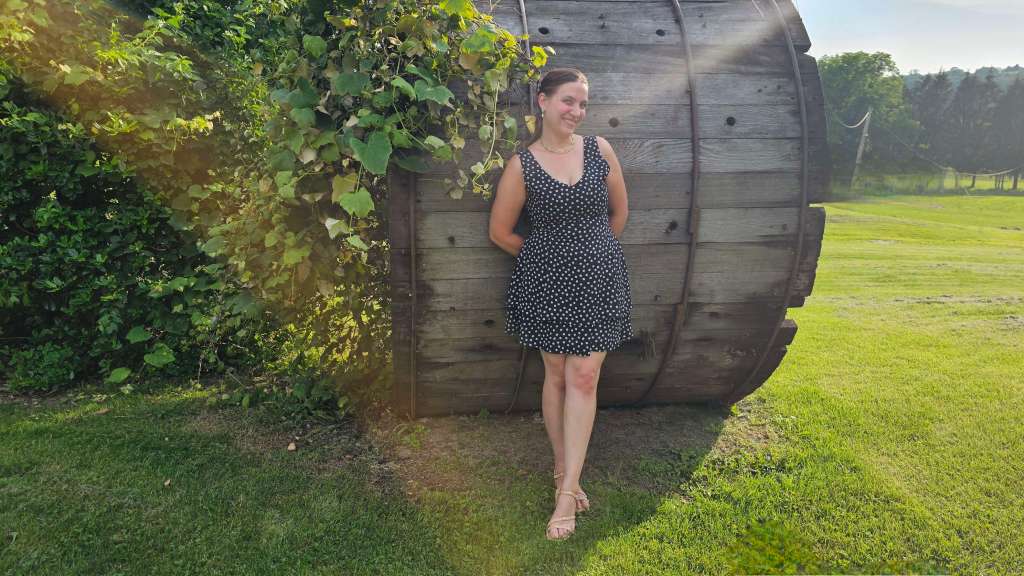
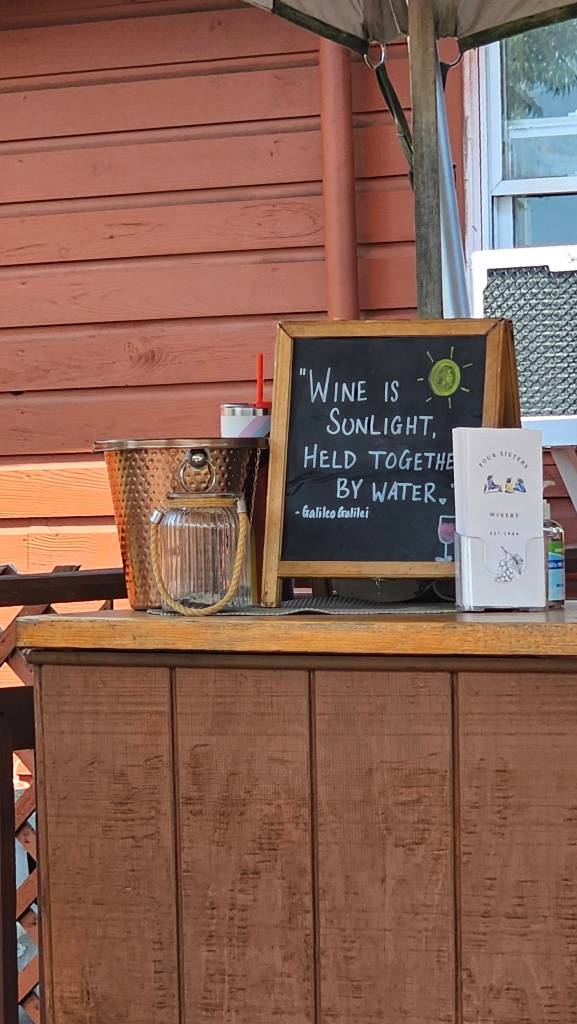
Four Sisters Winery was tucked among the trees with an unassuming sign and small shop. It belied the expansive four-acre vineyard boasting 19 varieties of grapes and three event spaces. We arrived early and relaxed under an awning listening to live music. The rustic benches and tables added to the atmosphere that they’ve clung to the older ways (although they probably have the modern machinery tucked away).

Once ushered into the event space, we were seated at a table with two other adult children treating their mothers and a pair of friends. It was delightful to make new acquaintances over the course of the evening.

Before the dinner commenced, we were given a short overview of the winery. The Four Sisters has been in operation for over 40 years, having begun by a farmer from Essex in 1984. His main focus was on vegetables but began to produce wine as a secondary revenue stream. It was such a success, the vineyard paid for all four sisters to go to college and obtain both their masters and PhD. However, it meant that none of the sisters were much interested in continuing to manage the vineyard and it was sold to the new owners a few years ago.

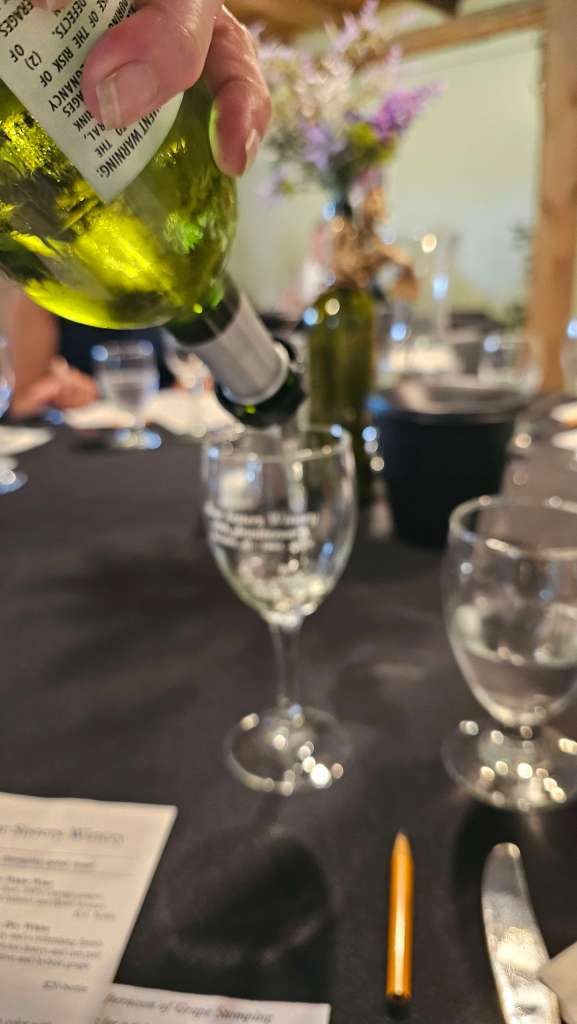
We tasted ten wines, ranging from whites to reds, dry to sweet. My preference leaned toward the reds and dry varieties, though a semi-dry called Cayuga stood out. We rated each wine, chatted about pairings, and judged grape varietals like seasoned sommeliers.

Dinner included a raspberry vinaigrette salad, parmesan chicken with pasta and seasonal vegetables, and a brownie for dessert. Dietary restrictions? Accommodated with grace. The vegan dessert of peaches and blueberries looked particularly delicious, a strong case for food envy.

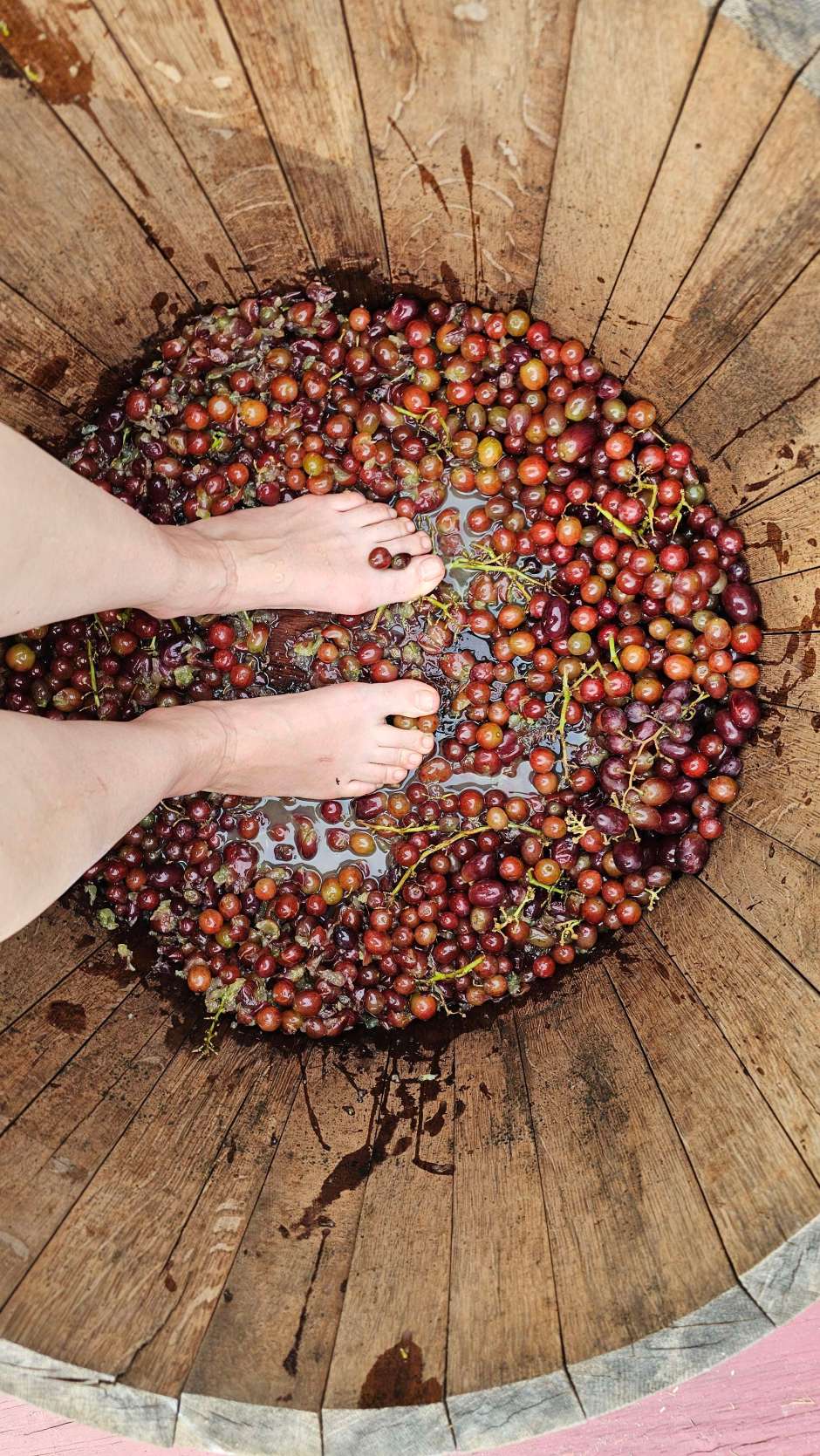
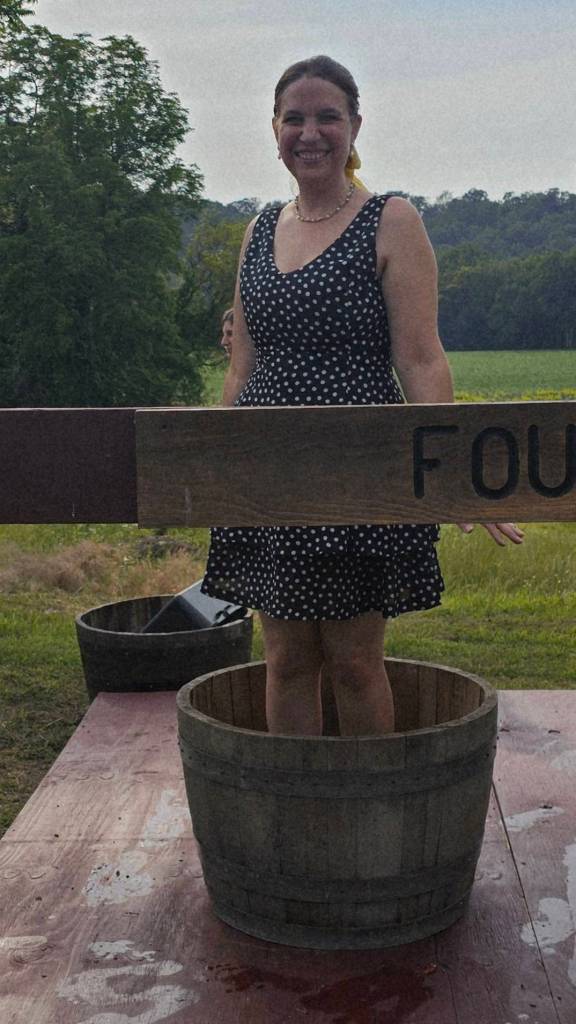
Then came the moment we’d been waiting for: the stomp. Three barrels were prepped for us to take turns. Slipping off my shoes, I stepped in. The sensation was surprising; the grapes rolled like a foot massage, slick and dense underfoot.  They slipped around as I tried to crush them and the barrel became slick underneath me. Grapes are a bit more dense than one may imagine. The stems of the grapes added an extra texture which lightly scraped my feet. I could not help but remember the songs about crushing the grapes as I moved around in the small barrel. It was clumsy, slippery, and joyful. I paused for a photo, then climbed out to let others have their turn.

A rinse station awaited to wash off the sticky grape residue. I grabbed my complimentary wine glass, said my goodbyes, and my mother and I set off, bottles of our favorite wines in hand, winding our way home with laughter and plans for our next adventure.

Most of my escapades happen close to home, but sometimes a short road trip delivers a memory worth bottling. This one was certainly like walking among the clouds.

How can you have a stomping good time?

If you’re lucky, you may live near a winery offering grape stomping events. A quick Google search of local wineries or wine festivals may reveal hidden gems. If it requires a road trip, consider turning it into a full-day or weekend experience.

But for those far from the vines? Bring the stomp to you. Invite friends, fill a barrel with grapes, spin some music, open a few bottles, and get stomping. (Just don’t drink the juice!) When you’re done, convert the barrel into a flower planter or save it for your next party.

Whether we go to the adventure or bring the adventure to us, life tastes better when we take the time to stomp the grapes.


Completed: 2025

Miles from home: 95

Cost: $60 per person

A Blind Date: A Bookshop, A Park, and A Historic Site

We were first introduced on Indie Book Day, with a subtle hint of mystery and the allure of suspense among the bookshelves of the BookBar. The bartender handed me a drink on the house with a wink and a smile. The aroma wafted up from the cup, promising a rare treat. With a slow sip, a burst of rich flavor exploded across my tongue, accenting the dark roast and chocolate with a lingering whisper of strawberry for a sweeter finish. It was with this drink in hand that I browsed the shelves in search of hidden treasures.

The aesthetic of the shop resembled an old private library in England with a slightly gothic bent: dark walls, rich old leather sofas, and trinkets more expected in a professor’s office than a place of capitalism. It all set the atmosphere of whispered stories on stormy nights. But indie bookstores are known for their peculiarities.

It was there that I was first introduced. Not directly, of course—nothing so uncouth. Our meeting was arranged through the usual channels: a third party carefully selecting options suited to a lady’s general tastes. The matchmaker, ever busy, offered a short meeting and a curated selection of potentials. Each came wrapped, labeled only by genre, with a few clues as to what might await.

I made my choice and a plan was hatched: a rendezvous, a park, a picnic, and of course, my blind date. My sister joined me, not as a chaperone, but with a date of her own. A married woman, you ask? Was I part of a scandal? Not when the blind date is with a book, dear reader!

Yes, BookBar not only serves up delicious coffee and mocktails with a side of dark academia, but it also offers a unique reading experience designed to stretch your literary palate. Each mystery book is carefully wrapped with a genre label, accompanied by a few sprigs of lavender, a lip balm, bookmarks, and stickers—everything you need to charm a curious reader.

A few days before, we checked the weather and settled on a park near my sister’s home. To our delight, we discovered a local hidden gem: the oldest existing water transportation tunnel in the United States. Naturally, the history nerds in us were thrilled.

The canal’s beginnings date back to 1792, during George Washington’s administration, though financial troubles delayed its completion until 1828. This golden link of trade connected east and west, serving the expanding nation until 1881, when the Lebanon Valley Railroad rendered it obsolete.

Today, the remaining stretch is lovingly maintained by the Historical Society of Lebanon County. Only a small fraction of the canal remains, surrounded by parkland and dotted with plaques detailing the history and engineering marvels of the time. The park includes a pavilion, picnic benches, and a meandering path alongside the river. Every Sunday, they even offer boat tours through the tunnel—a dream for any history buff.

My sister and I spread out a picnic of crackers, cheese, and meats under a shady grove. We caught up on life as the breeze gently rustled the trees. The weather was cool for mid-May, but nearly perfect for reading. No harsh glare from the sun, no stifling heat—just peace and pages.

When we opened our blind date books, mine turned out to be a historical mystery thriller with a dash of time travel, set in Victorian Scotland. A surprisingly perfect pairing with our 19th-century setting! I found the forensic methods of the era fascinating, especially in contrast to modern crime-solving techniques. My sister’s book was a thriller translated from Ukrainian, and she was equally pleased with her pick. We agreed this date was well worth repeating.

After an hour of reading, we explored the rest of the park. What we found was a quiet oasis tucked away from the modern world. Birdsong echoed across the water, interrupted only by the occasional “plop” of frogs and fish. We climbed a small hill to better see the tunnel and read each historical plaque. A small bridge overlooked an old lock that once helped boats travel along the canal.

It wasn’t quite the Panama Canal we visited last spring, but it was still an impressive feat of engineering and a reminder of human perseverance. We couldn’t help but reflect on how far we’ve come—not just in terms of technology, but culture and society. What would the Irish laborers who built the canal think of the world today?

Want to Plan Your Own Literary Adventure?

You don’t need a fancy bookstore to enjoy the fun of a blind date with a book. Etsy has plenty of options, and you can always go with a DIY version. Take a friend or sibling to a bookstore, pick out books for one another, wrap them up, and head to your favorite park for a reading picnic.

Even cheaper? Just borrow something new from a friend’s bookshelf. My sister and I frequently swap books this way, and we’ve each discovered new favorite authors as a result.

To find local gems, try Google Maps with keywords like “historic site”, “attractions,” “museums” “hidden park,” or “walking trails.” Check the reviews on obscure places with 4.5+ stars but few reviews as these are often true gems. Believe it or not Reddit can be a source for ideas from locals that you won’t find on the travel sites. Try searching for hidden gems in your city or browse the local subreddits. I also recommend going to your local library and checking out the bulletin board. Some cities have bloggers devoted to uncovering local secrets—you might be surprised what you find just outside your front door.

Completed: 2025

Miles from home: 25 miles

Cost: $50 (for the book and picnic)

Beneath the Blooms: Sakura Dreams

I believe it shall come as no surprise to you, dear reader, that I’ve long held a dream of visiting Japan and count myself as a bit of an otaku. I’ve imagined seeing Mt. Fuji rising above the mist, taking in the sights of Tokyo, enjoying the fashion, engaging in traditional dances, exploring vibrant festivals, wandering through a pagoda, pausing at a temple, sipping macha in a teahouse, visiting a cat café, contemplating nature in a garden and, of course, strolling beneath the cherry blossoms.

A few of these I’ve managed to do here in the States. Others remain only possibilities, others still achievable only if I someday find myself walking on Japanese soil.

Each spring, I see flowering trees dotting my neighborhood and lining the roads, and I sigh wistfully. They tease me with just a taste of what could be. My social media feeds fill with dreamy pictures from the far East (or perhaps more accurately, the West?). Japan’s landscape becomes a fleeting spectacle of pink and white blooms, a soft riot of ephemeral beauty.

This delicate flower, sakura, is more than just a seasonal joy. It is a cultural icon, deeply rooted in Japanese tradition and mythology. The goddess of blossoms and delicate matters is said to have nurtured the cherry trees. One beloved tale tells of Princess Sakura, cursed to bloom and wither like the trees she loved. Only a prince who could watch her fade without despair could break the spell. The blossoms have graced artwork for centuries, inspired poets, and appeared again and again in anime and manga as symbols of renewal and hope.

Is it any wonder, then, that I too have fallen in love with this flower?

So, each spring, I look longingly at the blooming trees and wish I could follow the blossoms across Japan, chasing their brief splendor up the country. Imagine my delight, then, when I discovered that a nearby town is home to a row of 150 cherry trees that burst into bloom each year. Naturally, I set out on a quiet morning to witness the display.

The trees stood in a stately row, forming a tunnel of soft pink. The delicate scent hung in the air, and a gentle breeze coaxed the blossoms into a graceful dance. Bicyclists glided past on the quiet street, and two painters sat capturing the season’s glory on canvas.

I wandered beneath the trees, breathing in the fragrance, taking photos to help preserve the memory. There was no formal path beneath them, just dark, soft earth that yielded slightly beneath my feet. The blossoms hadn’t yet begun to fall, though a few brave petals had already drifted to the ground, a gentle reminder that all too soon the branches would give way to summer’s green.

I was in good company as several painters were scattered along the row of trees. It was a delightful treat to be able to watch them capture the beauty of the trees extending it beyond the ephemeral spring season.

While it may not rival the landscapes of Japan, it was a small and beautiful taste of a dream. I’m glad I made the short journey to Marietta to witness their bloom, even if only for a moment.

How can you stroll beneath the cherry blossoms?

You may not need a passport or a plane ticket to find them. Sometimes, the dreams we tuck away for “someday” bloom quietly just down the road. Perhaps your local trees are smaller, or fewer, or missing the dramatic backdrop of a mountain temple, but their beauty is no less worthy of awe. A few trees in a quiet town, the whisper of petals in the breeze, and a moment stolen from the rush of life to simply stand and marvel, that, too, is magic.

So, dear reader, look around. Google may be your travel agent, but curiosity is your compass. The world, as it turns out, is blooming right outside your door.

Completed: 2025

Miles from home: 20

Cost: Free

Tiptoe Through the Tulips

Tulips the early heralds of spring and the changing weather fill the hills with bright rows of color. Their hues stretch across the spectrum, from fiery red to deepest purple, and their petals are just as varied. They’re also famously tied to history’s first financial speculative bubble, a craze that plunged many Dutch citizens into ruin and left a lasting mark on market regulations. Still, despite that rocky past, the Dutch never forgot their love affair with the flower. Today, they remain a leading producer of tulip bulbs, and each spring, massive swaths of land transform into a living quilt of color as millions of flowers bloom.

I’ve always loved pictures of those majestic fields, windmills standing vigil over seas of blossoms. That said, my allergies would likely stage a protest in the Dutch countryside—and truthfully, the Netherlands doesn’t rank high on my list of must-see destinations. Maybe I’d go if the opportunity presented itself, but there’s no guarantee that it would align with the short-lived tulip season.

What’s a budget-minded girl to do? As it turns out, sometimes you stumble upon the perfect solution when you’re not even looking for it.

There are times when an answer appears to a question you didn’t even know you’d asked. I’ve certainly enjoyed pictures of Holland’s flower fields, but they never inspired the wistful longing other countries have stirred in me. So, I didn’t add them to my list, dismissing the idea out of hand. I try to keep my travel dreams at least somewhat realistic—or else the list would be three times as long. But let this be a lesson, dear reader: never dismiss a dream, no matter how small or unformed.

Though I never truly asked, the universe still answered with a humble billboard: “Tulip Field, Opening April 12th.” Tulip fields? In Pennsylvania? Perhaps I was too quick to rule out my floral fantasy.

April 12th turned out to be cold, wet, and rainy and not ideal for tiptoeing through anything. Besides, opening day crowds come with added chaos and, let’s be honest, possibly terrible music. Twangy Country or bouncy pop blasting over loudspeakers isn’t how I envision my contemplative flower field stroll. I checked my calendar for a better date, one early enough to catch peak bloom, but not a weekend (crowds again!) and ideally with cheaper tickets (this is a budget minded blog, after all).

Less than a week later, on a balmy spring day, I made my way to Flaughbach’s Orchard. The temperature was a perfect 70°F (21°C), and a cheerful breeze danced among the tulips, gently teasing them as she passed. While it was a far cry from the sprawling Dutch fields of my imagination, it was a lovely scene in its own right. Had I been truly committed to a riot of color, I could’ve waited two more weeks and driven three hours north to Brown Hill Farms, where 500,000 tulips bloom across four acres.

Upon arrival, I was handed a pair of shears and informed I could pick two flowers as part of my ticket (with the option to purchase more). But my goal wasn’t to build a bouquet, it was to bask in beauty. I wandered through neatly arranged rows of flowers, encountering charming photo ops along the way: antique bikes, vintage tractors, even a swing for a more whimsical touch. Naturally, I couldn’t resist snapping a few photos, but mostly, I just walked. The field reminded me of a stained-glass window or a floor made of colorful mosaic tiles.

Benches were thoughtfully scattered around the field, perfect for quiet contemplation. I loved feeling the warm sun on my face and the breeze on my skirt. I didn’t stay long, but long enough to enjoy the moment and properly welcome spring in all her glory.

Next year, I may make that pilgrimage north to see the larger fields that have enchanted me for so long. But maybe not. This experience might fall under my “good enough” category; it was joyful, beautiful, and deeply satisfying.

So, how can you tiptoe through the tulips?

You don’t need to wait for the universe to come knocking. Just open your browser and search for tulip fields near you. If you live in the South, it may be a bit trickier, but don’t lose hope. Pilot Point, Texas, and New Market, Alabama both boast quite respectable fields. Up North, there are plenty of spots to chase tulip season. Some may come in the form of botanical gardens; others, humble local farms like Flaughbach’s. Or you might go all in and visit Windmill Island Gardens in Holland, MI (with over four miles of tulips!), or top spots like Pella, Iowa; Woodburn, Oregon; Modesto, California; Mount Vernon, Washington; and Exeter, Rhode Island.

The lesson I learned? Don’t be so quick to downplay your dreams, even the small ones. I try to keep my “undone” list reasonable, and I often add to my “done” list as opportunities arise, especially if they’re spur-of-the-moment or just for fun. But this was something I truly wanted to do, and I’m glad the universe nudged me toward it.

So, I encourage you, dear reader: dream big. Write it all down. Ask for it. The blessing may find you anyway.

Completed: 2025

Cost: $7 to visit the field

Miles from home: 25

Money Matters: Real-life Budgeting that Doesn’t Suck the Joy out of Living (Part 3 Entertainment)

Are You Not Entertained?

If you’re on a budget, the answer could very well be “no, not really.” But fear not, my fiscally responsible friend! I’ve got a bag of tricks to help stave off boredom without emptying your pocketbook. Whether your vibe is books, movies, games, or local adventures, there’s always a fun, frugal version to explore.

Let’s start with the screen-sized elephant in the room: entertainment subscriptions. Cable? Extinct. Like a fossilized VHS, it’s long gone in my world. Streaming? It gets a seat at the table, but only as a guest, not a live-in family member. I rotate subscriptions the way fashionistas rotate seasonal wardrobes. Netflix one month, Hulu the next, and maybe Disney+ when I’m in the mood for animated nostalgia or intergalactic drama. This way, I avoid both boredom and ballooning bills. Pro tip: brands have no feelings, and loyalty won’t earn you discounts so play hard to get. They often toss free trials or discounts your way just to lure you back. Works like a charm.

YouTube also fills in the gaps with everything from quirky documentaries to cozy cottagecore vlogs. Admittedly, the recent AI invasion is a bit much, but with some creative searching, there are still gems to be found.

Photo by Anton Porsche on Pexels.com

Gaming on a budget? Don’t let the $80 price tags on new Triple-A titles scare you. Steam is a wonderland of indie games, charming, innovative, and often under $20. Many are just as satisfying (if not more so) than their big-budget cousins. Your local library might surprise you too, offering games for various consoles. And don’t forget secondhand marketplaces, because gently loved games still spark joy.

Speaking of libraries, they’ve fully stepped into the digital age. Between the Libby app, Project Gutenberg, and Librivox, you can have books (ebooks, audiobooks, classics) all for free, 24/7. Libraries are no longer just for the Dewey Decimal devotees; many offer board games, workshops, and community events like Dungeons & Dragons or Magic: The Gathering nights. If Magic’s your thing, I recommend building your own Commander decks; they’re easier on the budget and still a blast to play.

Now let’s talk about the ultimate budget hack: borrowing. Not just from libraries, but from your friends, family, and community. Swap DVDs, music, books, board games, video games, you name it. Not only does it cut down costs, it gives you access to a curated collection based on people who know you. You might even discover a new favorite hobby through someone else’s obsession. Gather your friends and family for game nights.

Photo by Element5 Digital on Pexels.com

And don’t sleep on your local area! Free events, museum days, neighborhood festivals, and nature trails are often just a quick search away. Parks, gardens, and hiking paths offer a change of scenery (and pace) without a price tag. You may be shocked at the fun things you discover that are close by and completely free! Apps like Meetup can connect you to like-minded folks for everything from book clubs to language exchanges to “bring your own blanket” picnics. Socializing doesn’t have to cost more than a smile and a snack.

Some libraries even offer museum and state park passes, yes, you read that right. Free access to enriching experiences, courtesy of your dusty old library card. And you all thought libraries only offered books.

So: are you entertained?

Why yes.