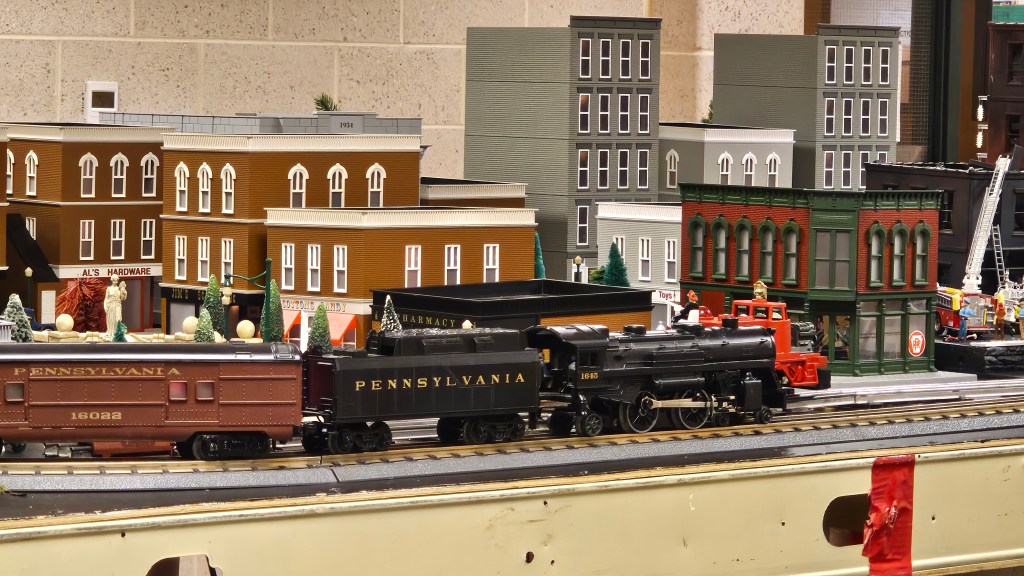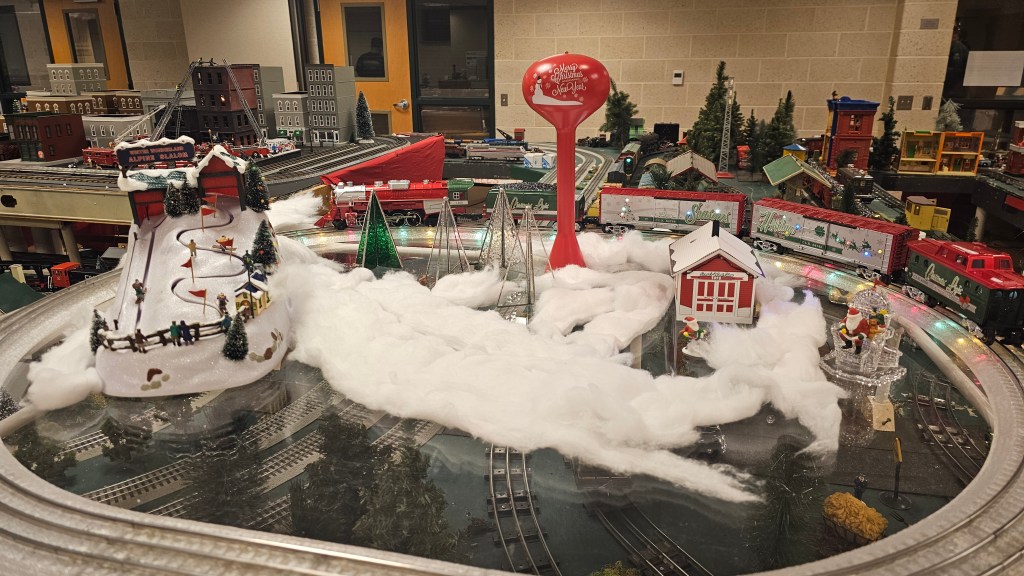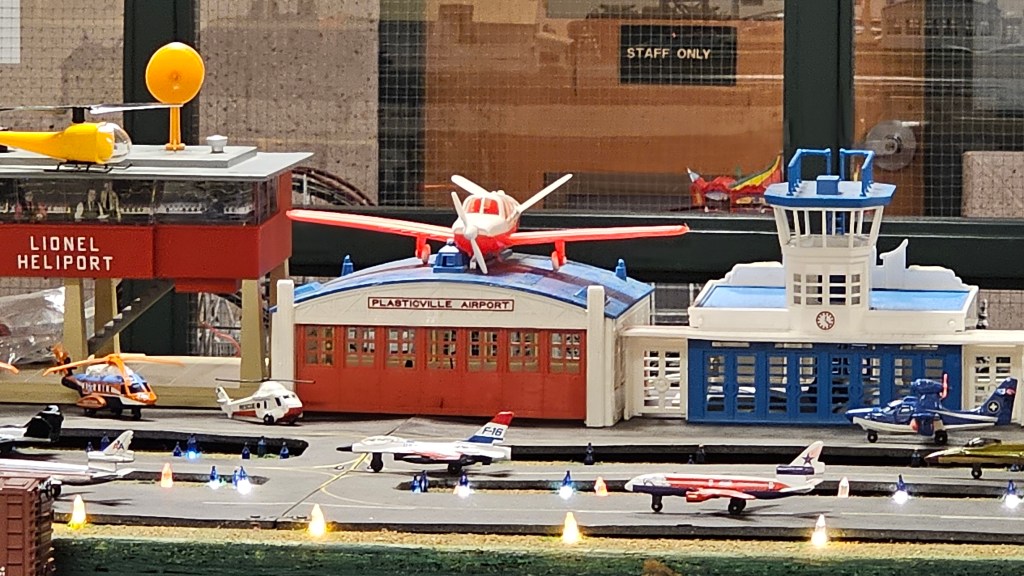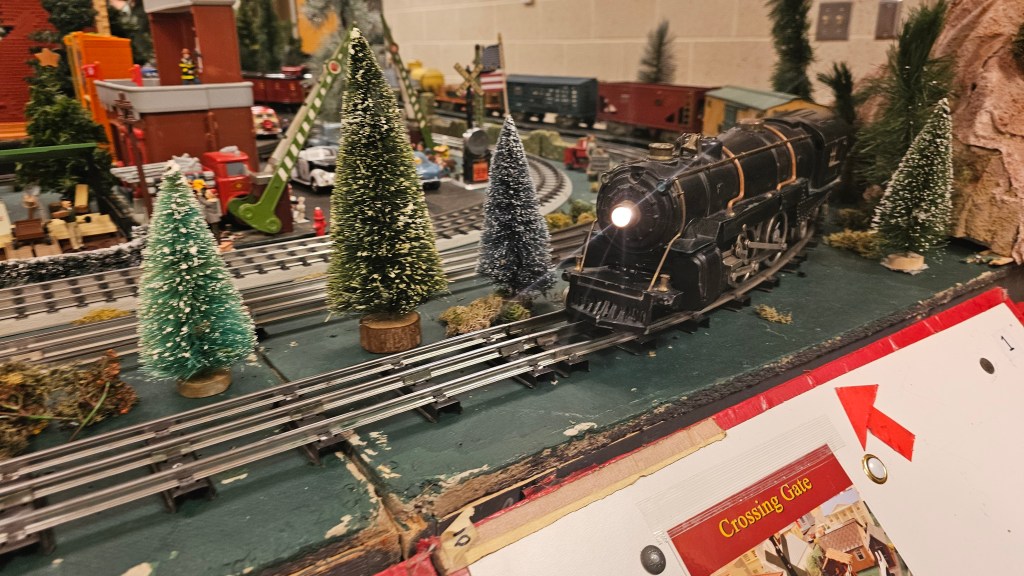
There is something undeniably quintessential about a model train at Christmas. Perhaps it is the nostalgia of it, those miniature worlds humming softly beneath a glowing tree, harkening back to simpler times. Or perhaps it is the romance of travel itself, when journeys felt grand and full of promise, long before crowded terminals and flight delays dulled their shine.
Model trains were not just toys but marvels. At the turn of the twentieth century, railroads represented the height of modern technology. They stitched together cities, transformed commerce, and shrank vast distances into something manageable. It was only natural that this fascination would find its way into the home. Trains became one of the earliest mechanized toys of the modern era, first gaining popularity in the early 1900s. These were not flimsy playthings but sturdy, intricate machines meant to be admired as much as played with.
By the 1920s and 1930s, model trains had cemented their place in Christmas tradition. Department stores leaned heavily into the spectacle, constructing increasingly elaborate displays that wound through snowy villages and bustling cities, all carefully designed to stop shoppers in their tracks. The base of the Christmas tree became the perfect stage. It was practical, yes, but it was also symbolic. A glowing tree overhead, a circling train below, motion and magic contained within the heart of the home.
Whether by convenience or clever marketing, Christmas and trains became inseparable. That connection only deepened over time. Films like The Polar Express reignited the wonder for new generations, reminding us that belief, imagination, and a little suspension of disbelief are part of the season. During the pandemic, when traditions were disrupted and people sought comfort in familiar rituals, many rediscovered hobbies that had quietly faded into the background. Model trains experienced a resurgence, not as relics, but as reminders of patience, craftsmanship, and shared joy.
In recent years, that magic has increasingly moved into public spaces. Libraries, historical societies, and community centers across the country now host model train displays each December. Often these exhibits double as fundraisers, particularly for children’s literacy programs, ensuring that the magic of stories and imagination carries on long after the trains are packed away.
It was on a cold December evening that I found myself invited to see one of these displays for myself. I will admit, dear reader, that I was not initially enthused. I am not someone who has ever considered myself a “train person,” and model trains seemed, at best, mildly interesting. However, I was willing to indulge my companions in a bit of whimsy; I am nothing if not whimsical. Imagine my surprise, then, at just how utterly delightful the library display turned out to be.
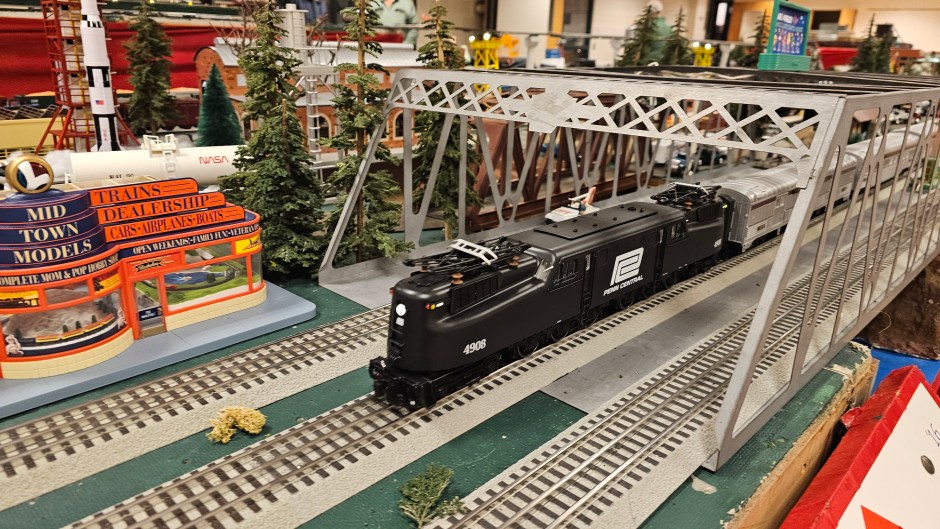
The small library’s basement had been transformed into a sprawling miniature world. The display ran nearly wall to wall, a carefully constructed metropolis alive with motion and detail. Multiple tracks wove through snowy villages and industrial hubs. A baseball field sat mid-game, an airport buzzed with tiny planes, shipping lanes carried cargo through a busy harbor, and a circus burst with color and whimsy. There was even a theme park, complete with rides in motion.
What made it truly special was how interactive it all was. Throughout the display, visitors were encouraged to press buttons and bring the city to life. A ski slope sprang into motion. Barrels were loaded onto a train car. Lights flickered on in tiny buildings. Each interaction revealed another layer of thought and care poured into the exhibit.
I felt like a child again, eagerly pressing buttons and craning my neck to take it all in. Every section had been lovingly created by a volunteer using their own personal train sets. One display even featured a train over a hundred years old, still running, still enchanting, a direct link to the earliest days of electric model trains. It was humbling to realize how many Christmases that little engine had seen.
For nearly an hour, I was completely absorbed, pointing out details to my companions and discovering something new with each pass around the room. The volunteers were just as much a part of the experience as the trains themselves. They eagerly shared stories about the models and about the local area. One tale recounted the time a major league baseball team stopped to play the local team while passing through town, a small but vivid slice of history preserved alongside the miniature world.
It was, in every sense, magical.
Where can you see Christmas Magic?
For those inspired to seek out a display of their own, they are often closer than you think. Local libraries are a wonderful place to start, especially in December. Historical societies, model railroad clubs, botanical gardens, and even shopping centers frequently host seasonal displays. Many towns also have dedicated train shows or open houses where hobbyists invite the public to view their layouts. And for the truly adventurous, there is always the option of creating a small display at home. Even a single loop of track under a tree can carry more charm than one might expect.
Sometimes, Christmas magic arrives in unexpected forms. Sometimes, it hums quietly, circles endlessly, and reminds us that wonder is often found in the smallest of worlds.
There comes a point in adulthood when you look around at your own life and realize just how much of it was built from other people’s expectations. Parents, partners, coworkers, even strangers on the internet all seem to carry opinions about what a “good” life should look like whether that’s the classic white picket fence and 2 kids, jetting around the world or having that corner office. With the shorter days and colder nights which entice us to stay inside sipping a warm cup of tea, December has a way of handing us a quiet pause in the middle of all that noise. In that stillness you can ask a gentler and more liberating question: What if the best gift you give yourself this year is a life that actually fits you? Not a life you are supposed to want. Not a life that earns gold stars. A life that feels like home when you step into it.
Most of us carry at least a few pieces of life that no longer fit. A commitment you keep out of habit. A routine that once served you but now drains you. A goal you set years ago that you are still dragging around even though it no longer reflects who you are. Just like clothes that shrink in the dryer, some roles tighten over time until they restrict your movement. One of the most compassionate things you can do for yourself is to notice what feels constricting. If something consistently brings dread or resentment, it deserves a second look.
Try asking yourself: What do I continue to do only because I feel I should? What parts of my week feel like a performance? What drains me more than it fills me? These small gut checks can reveal more truth than grand resolutions ever will. Because often resolutions are about adding things to our lives when maybe we should be asking what isn’t serving us anymore.
Wanting something different for your life can feel almost rebellious. We are taught early that desire is selfish or impractical. Yet desire is really a compass. It points you toward what brings meaning. The permission you refuse to give yourself is often the permission you most need. You are allowed to want a simple life. You are allowed to want a bold one. You are allowed to want rest, creativity, adventure, peace or a mix of them.
Let go of the guilt around wanting something others do not understand. You do not have to justify your dream life like it is a court case. Your preferences do not require a panel of approval. They only require your honesty. After all, the only person who gets to live your life is you. They have their own.
Every person inherits a set of default settings. These can be expectations from family, cultural messages or values absorbed without question. Some defaults are helpful. Others keep you living a script that never belonged to you. December is an ideal moment to ask where those settings came from. Did you choose them or were they assigned to you? Are they aligned with who you are now or with a past version of you who no longer exists?
Letting go does not always require a dramatic overhaul. It can be as simple as replacing one outdated belief with a more generous one. It can be as quiet as deciding your worth is not measured by productivity. Sometimes the life that fits begins with subtracting what never matched your shape in the first place.
Once you clear the space, you can begin creating a life that feels right in your hands. Think of it like tailoring. Small adjustments can change everything. You might shift your morning routine to match your natural rhythm. You might redefine what rest means so it supports you instead of feeling like a guilty pleasure. You might choose relationships that nourish you instead of ones that keep you hustling for belonging.
Crafting a life that fits is not a single grand gesture. It is a set of choices made consistently. When something feels peaceful instead of performative, you are moving in the right direction.
A good life should give you room. Room to breathe. Room to change your mind. Room to fail safely. Room to explore new interests without embarrassment. If your life feels like a tight shoe, it is not a sign that you need to force yourself into it. It is a sign that you need to loosen the laces. When you prioritize a life that can expand with you, you trade perfection for sustainability. You also create conditions in which joy can actually take root instead of feeling like a visitor.
The gift of a well-fitting life is not wrapped once and placed under a tree. It is something you give yourself again and again. Through honesty. Through reflection. Through paying attention to what your life is telling you. You will outgrow some things. You will discover new ones. You will learn what brings you back to yourself. The point is not to build a life that looks impressive. The point is to build one that feels true.
As this year winds down, take a moment to appreciate the small ways you have already reshaped your life into something more authentic. And if you have not started yet, that is all right. The gift is not in the timing. The gift is in choosing yourself.
Sometimes, dear reader, our own bucket lists take a polite step to the side so someone else’s long-cherished dream can finally march forward in all its glory. In this case, it wasn’t a bucket list at all. It was a basket list. A Nantucket Shiplight Basket list, to be precise, which I admit feels far more poetic. After all, who among us would not be charmed by the idea of holding a piece of maritime history in our hands.
My mother certainly was. Ever since she was a teenager, she had been enchanted by these elusive vessels after reading about them in some long-forgotten book or article. I picture her as a younger version of herself, curled up somewhere cozy, imagining the rugged New England coastline, the wild Atlantic surf and perhaps, if I know her, a sailor or two with a jawline sharp enough to cut rope. I cannot blame her. The sea does tend to conjure such visions.
I am sorry, where were we. Ah yes. Baskets. The point is, dear reader, these particular baskets are not ordinary containers for fruit or wayward junk mail. They are woven pieces of history, shaped by sailors who braved storms, isolation and boredom of legendary proportions. The romance is built right in.
A Bit of History for the Curious Soul
Long before tourist shops and Instagram feeds filled with beach scenes, the waters south of Nantucket Island were treacherous. Shoals shifted like restless spirits and ships were known to meet rather unfortunate ends. Since the terrain was not suitable for a proper lighthouse, lightships known as shiplights took up residence. Picture a floating lighthouse, bobbing in the waves, anchored against the dark and fog and hoping a vessel would notice it in time. That was the job of the lightship. Simple in theory. Terrifying in practice.
These ships were staffed by small crews who lived aboard for long stretches, typically thirty days at a time. They battled storms, loneliness and the constant fear that some overconfident captain might sail directly into them. Many did. More than one lightship was destroyed after being struck by the very boats it tried to save.
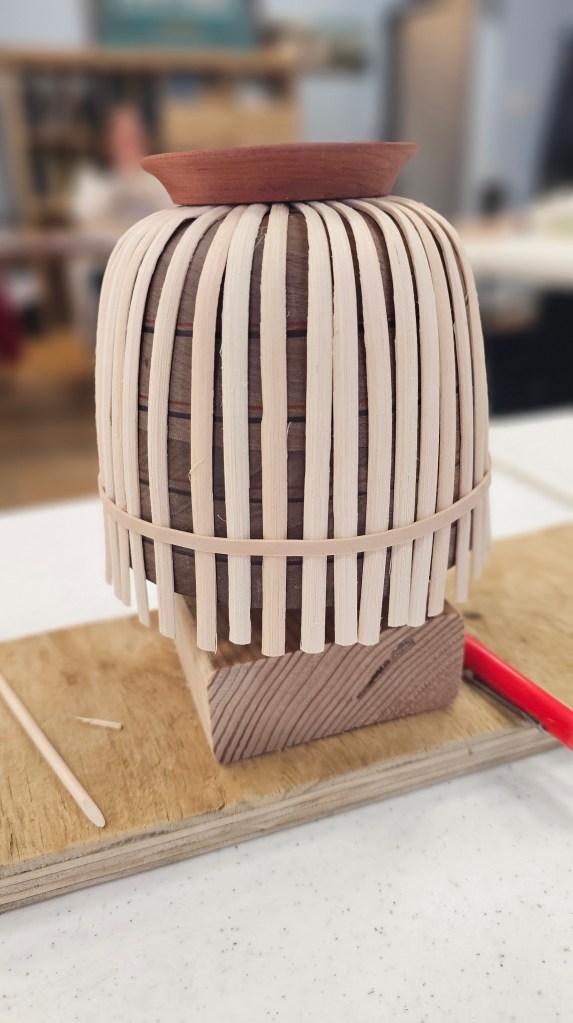
With little to do during calmer stretches, sailors turned to crafting. By the 1860s, the earliest Nantucket Lightship Baskets began to appear. These were not decorative heirlooms but practical, sturdy, beautifully utilitarian containers. Their bases, rims and staves were usually made back on the island. Sailors then brought them aboard, using the long quiet hours to weave. The moulds were created from old ships’ masts, giving the baskets yet another tie to maritime life.
Over generations, the basket-making tradition shifted from survival activity to artistic craft. Baskets became more decorative, more intricate and far more sought after. Today, Nantucket baskets are treasured symbols of New England craftsmanship. And, thanks to the price tags, they are also symbols of New England’s talent for charging quite a lot for tradition.
A Dream My Mother Tucked Away
My mother fell in love with the history long before she ever saw an actual basket in person. For decades she dreamed of owning one. But as prices climbed higher and higher, the dream began to sag under the weight of practicality. The baskets became something for “someday.” And someday, as we all know, is a tricky creature. It slinks away easily.
Years passed. Then decades. The dream gathered dust like so many silent hopes. She never complained about it. She never pined or sighed dramatically like a Victorian heroine. She simply tucked it away, which was somehow even sadder.
Thankfully, dear reader, she has me. And I am not someone who lets dreams die quietly.
A Daughter on a Mission
The spark reignited on a trip to Boston to visit a friend who, as it happened, made Nantucket baskets as a hobby. When my mother held one of his creations, her whole face softened. There was awe. There was longing. And there was that quiet little note of resignation. The “oh well, not meant to be” tone that mothers perfect somewhere around the third decade of adulthood.
Absolutely not, I thought. To hell with resignation. Not on my watch.
Now, could I have snagged her a $400 basket. Technically yes. But financially, spiritually and stubbornly, no. That felt like cheating. I wanted something more meaningful. Something rooted in effort and delight and a little bit of chaos, as most great family stories are.
The opportunity arrived in the most unexpected way, as opportunities often do. Last fall, my mother and I took an eco-dyeing class at the PA Guild of Craftsmen. We spent the morning dunking fabric into pots of botanical color like two witches brewing questionable potions. During the class, we met a man named Bob, who casually mentioned that he taught classes on Nantucket Baskets.
Was it fate. Probably. Was it the universe gently nudging me toward destiny. Quite possibly. Was it also the direct result of my inability to mind my own business and my tendency to ask questions of every friendly stranger. Absolutely yes. Sometimes, fate needs a little nudge or a full on push.
The Watch Begins
From that moment on, I became a woman possessed. I haunted the Guild’s website like a Victorian ghost with unfinished business. Week after week I checked for upcoming classes. I refreshed the page with the kind of intensity usually reserved for airline deals or Taylor Swift ticket drops.
Then one day, I saw it. A class scheduled for the weekend of my mother’s birthday. Perfect. Beautiful. A sign from the gods themselves.
I contacted my sister. I confirmed schedules. I clicked the button to register.
The class had just filled.
Great was the gnashed teeth. Fierce was the shaking of my fist. Dramatic was my lamentation to the heavens. I am after all nothing if not dramatic!
But if you know nothing else about me, know this: I do not give up. Not even when the universe tests my patience for sport.
Not two weeks later, a new class appeared. Spots: available. And I pounced. I registered so fast you would think I was trying to secure the last lifeboat on the Titanic. Victory was mine. And so was a guaranteed memory for the ages.
The Big Day Arrives
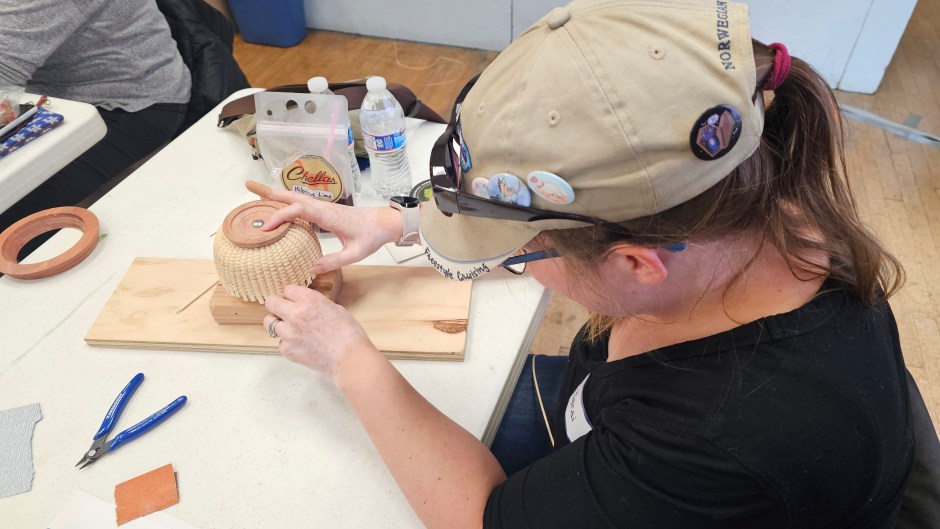
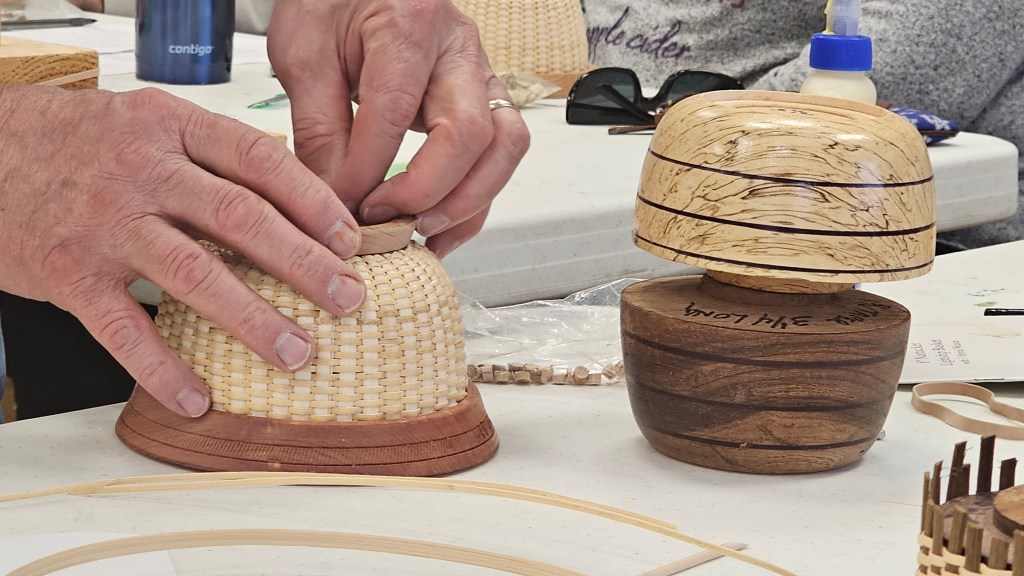
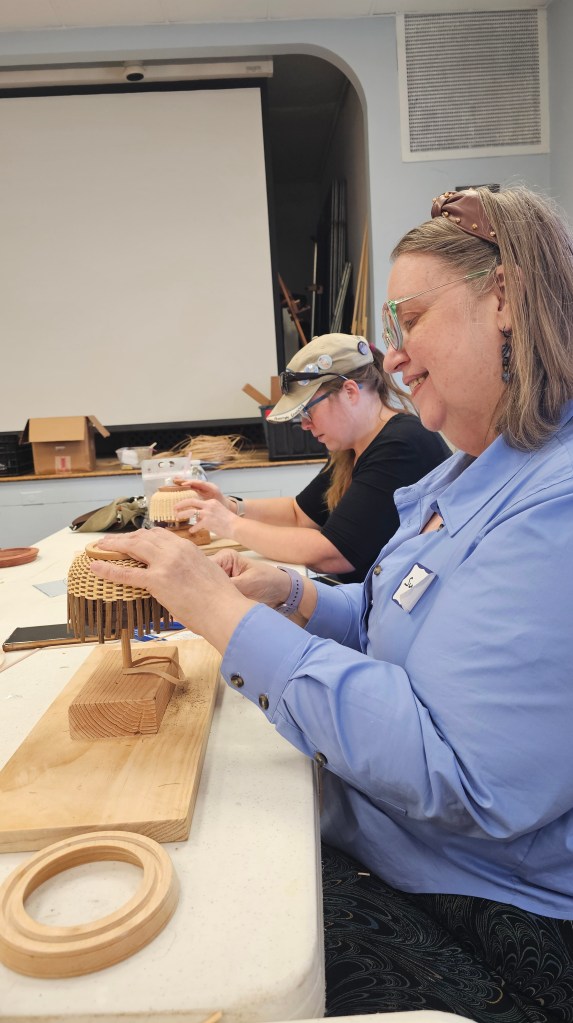
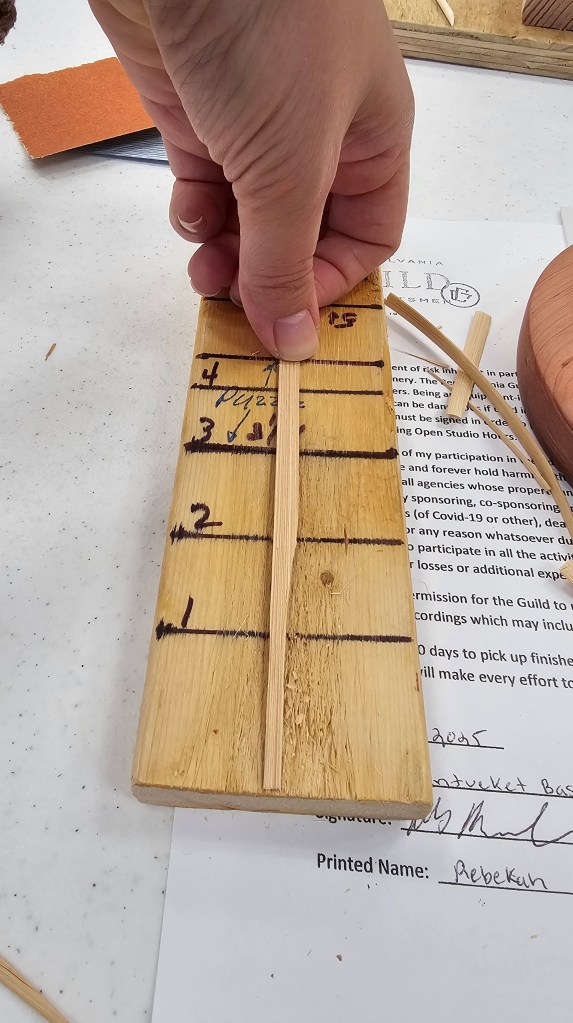
Two weeks after her birthday, my mother, sister and I arrived for our class. For those unfamiliar, Nantucket baskets are not really considered beginner friendly. They require precision, patience and a willingness to accept that reeds will snap at the least convenient moment. Luckily, we had Bob. And Bob is a gem. If basket making had spirit guides, he would be one.
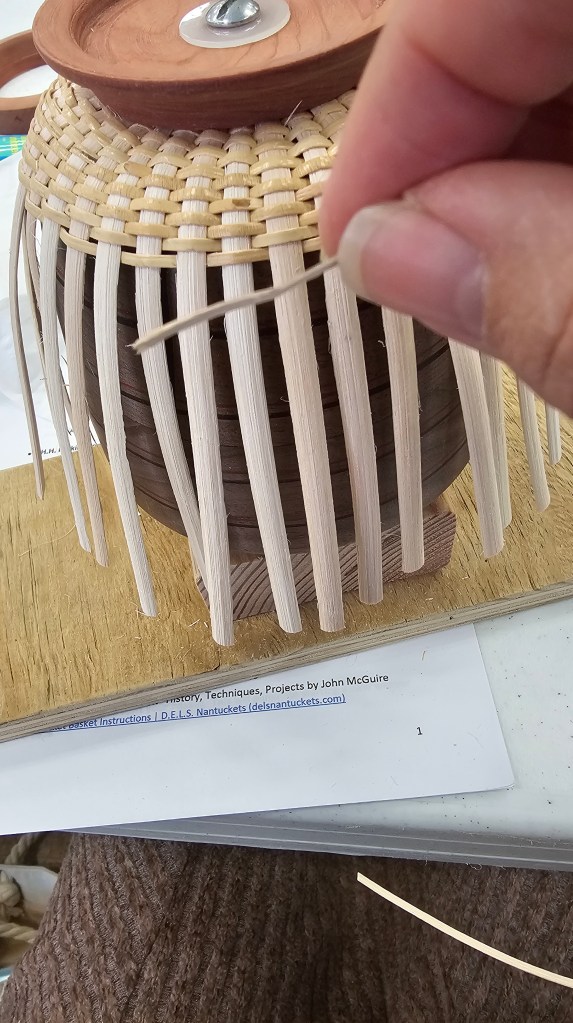
With calm instruction and gentle humor, he helped us understand the mechanics behind the magic. He showed us how to keep the weave tight. How to handle breakage. How to adjust when things started to go sideways, which they did often. There was laughter. There was mild cursing. There was one moment when my mother threatened to throw her reeds into the void, but Bob intervened with the patience of a saint.
My mother struggled at times, especially early on. Her arthritis made the tight initial weaving difficult. But here is where the real beauty emerges. When her hands faltered, my sister and I stepped in. We held reeds steady. We tightened the weave. We supported her hands with our own. And together, we built something worth far more than its materials. Something no price tag could ever reflect.
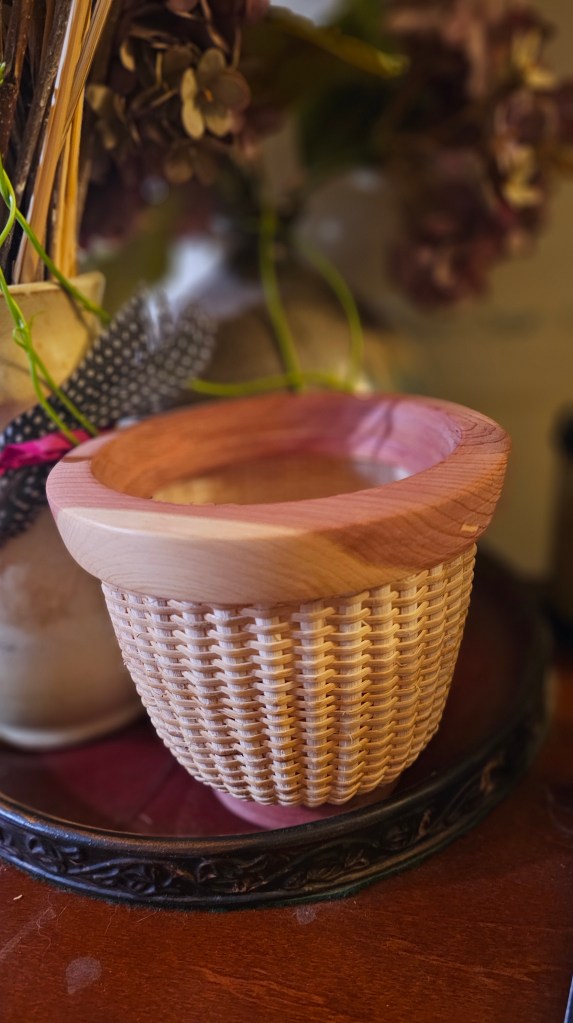
When the baskets were finally complete, we sat back in awe. They were beautiful. Not flawless. Not identical. But better. They were us. They were hers. They were woven with history and love and the combined effort of three determined women.
A Dream Fulfilled at Last
My mother waited more than forty years for this. Four decades spent admiring a dream from afar, telling herself it was too impractical, too expensive, too indulgent. But standing there with her basket in her hands, crafted by her own perseverance and supported by her daughters, something shifted. The dream became real. Tangible. Hers.
At sixty-five years old, she crossed something off her list that she never thought possible. And she did it in the best way imaginable. Not by purchasing a finished piece but by creating one with her own hands.
And if that is not the very heart of bucket lists, I do not know what is.
We often think of bucket lists as daring adventures or far-flung travels, but sometimes they are simpler. Sometimes they are woven, stitch by stitch, in quiet rooms with people we love. Sometimes the most meaningful items are the ones rooted in memory and heritage and personal longing. And sometimes the best thing we can do is help someone else check off something they stopped believing was possible.
So here is the lesson for you, dear reader. Do not be fooled by dreams that go silent. They are still there, waiting for you. Whether they are big or small or slightly unexpected, they deserve air and attention and the chance to surprise you. And it is never too late. Never too strange. Never too sentimental.
Sometimes a dream is simply a basket. But sometimes that basket carries forty years of hope, a good story, a tiny bit of chaos and a whole lot of love woven into its staves.
And those are the dreams worth chasing.
How might you chase your own piece or maritime history?
If reading this has awakened something in your soul, dear reader, perhaps a tiny spark whispering that you too might enjoy owning or crafting your very own bit of seafaring heritage, then rejoice. You are not alone. There is something irresistible about holding an object shaped by hands, hope and history. It connects you to all the sailors who once sat aboard those rocking lightships, weaving to pass the time while storms rolled over the horizon.
So how might you chase your own piece of maritime magic.
First, you can absolutely look for a class in your local area. Basket weaving workshops pop up in the most unexpected places. Community art centers, craft guilds, even the occasional museum loves to host heritage craft classes. The only caveat is that the further you wander from Nantucket’s salty shores, the rarer these particular baskets become. The tradition simply never spread far inland, perhaps because weaving a basket while imagining rolling waves is far more romantic when you can actually hear them outside the window.
If you would rather skip the learning curve entirely, you can always purchase your own Nantucket basket from a skilled maker. These pieces are true works of art, and buying directly from an artisan helps keep the craft alive. It also saves you from the mild existential crisis that comes from snapping reeds for the fourth time in an hour. Trust me. I have lived it.
But maybe you are like me and prefer a little chaos with your creativity. Maybe you want to try your hand at the weaving itself. In that case, you are in luck. You do not need a ship. You do not need a lighthouse. You do not need to brave the open ocean with only six crewmates and a questionable supply of biscuits.
What you need is a guidebook, some materials and the enthusiasm of a determined dreamer.
Thanks to the endless wonders of the internet, you can now find instructional books for a very modest sum along with kits containing everything from bases to staves to the all-important mould. No need to fashion one from a retired ship’s mast like the sailors of old. Unless you happen to have a ship’s mast lying around, in which case, dear reader, I have questions.
With online tutorials, craft forums and even weaving groups on social media, it has never been easier to learn a heritage craft from the comfort of your own home. You can chase your own dream while sipping tea in your pajamas, which feels like a delightful improvement from doing it aboard a lightship in a gale.
And that is the beauty of our modern world. Dreams that once required proximity, luck or a friendly sailor now simply require curiosity and a willingness to start.
So whether you sign up for a class, purchase a handmade treasure or gather your supplies and embark on the weaving adventure yourself, may your own journey into maritime history be filled with joy, discovery and perhaps a little bit of mischief. After all, the best stories are the ones we make with our own hands.
Every Tuesday, without fail, something wonderful happens in the next town over. Long before the rest of the world has finished its morning coffee, Root’s Country Market comes alive. It starts quietly at first, a few trucks pulling in, the soft murmur of vendors setting up, the smell of early morning coffee drifting across the lots, and then, before you know it, the place is buzzing. Root’s has been a Lancaster County staple since 1925, and in the hundred years since it first opened, it’s become something more than just a market. It’s a living, breathing community tradition.
Side bar: Locals pronounce it “Ruut’s,” not like tree roots, a small detail, but one that marks you as someone who really knows the place. Welcome to Lancaster County where nothing is pronounced like you think it would be, not even Lang-kiss-ter.
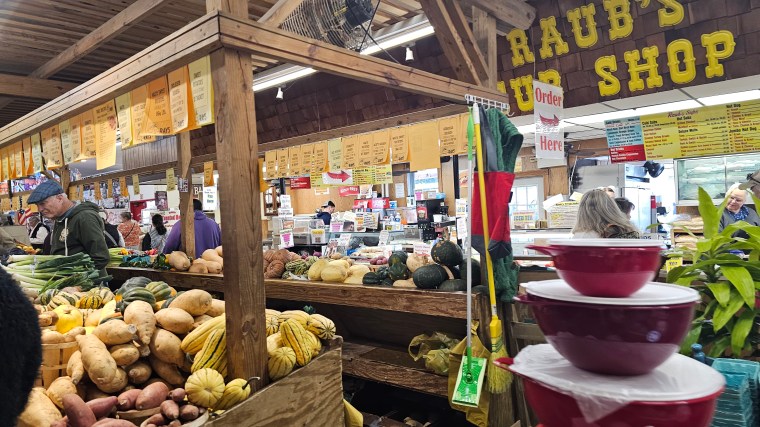
Roots is a sprawling labyrinth of over 175 indoor and outdoor stalls, each one offering a little piece of local life. You’ll find farmers with fresh produce still damp from the morning dew, bakers arranging pies so fragrant you can smell them before you see them, and crafters setting out handmade candles, quilts, and wooden toys. Step a little further and you’ll stumble into antiques and flea market finds, old tools, vintage glassware, forgotten records. It’s perfect for a treasure hunt! There’s even a livestock auction, which means you might be standing in line for a soft pretzel while hearing the rhythmic chant of a fast-talking auctioneer in the background. It’s part of the charm.
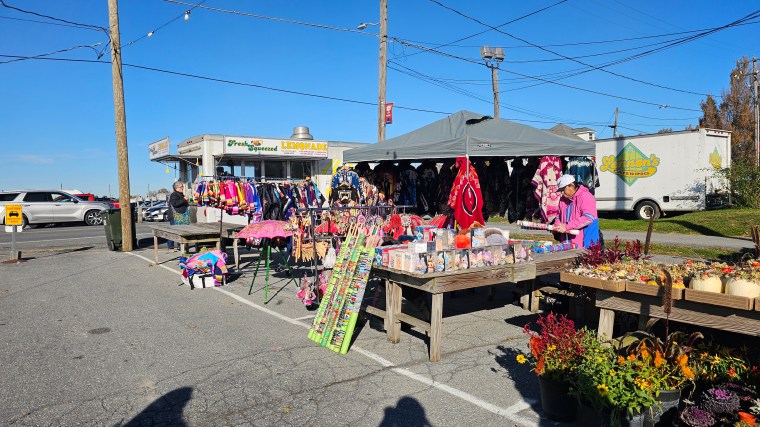
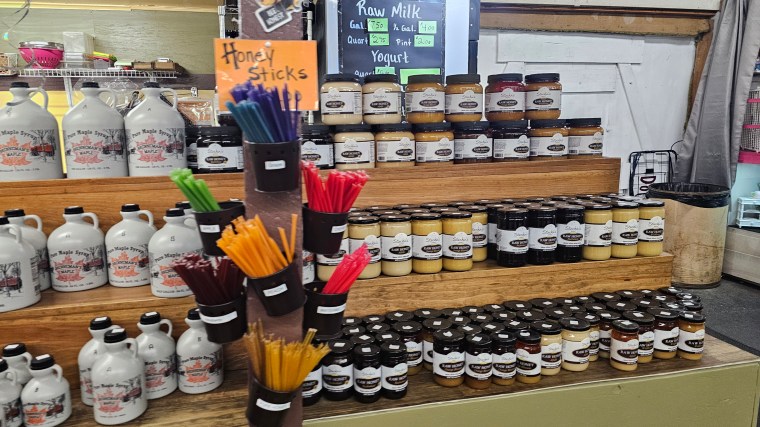
Root’s is the kind of place that engages all five senses at once. The air is thick with the smells of kettle corn and barbecued chicken, mingling with freshly turned earth from the produce stands and, occasionally, that unmistakable farm scent that reminds you you’re in the heart of the country. Fresh country air takes on a new meaning in farm country. There’s the shine of ripe tomatoes, the golden glow of honey jars, the colorful chaos of flower bouquets. Vendors call out greetings to regulars.
If you visit during the busy seasons, late spring through early fall, the crowd hums like a hive. There’s a rhythm to it, a flow of movement as people drift from stall to stall, chatting, sampling, bargaining. You can lose hours wandering without realizing it. And then, just when you think you’ve seen it all, you’ll turn a corner and find something unexpected: a new baker, a quirky handmade sign, a table full of fresh herbs or a bin of farm-fresh eggs that look like they came from a paint box.
I may not be a morning person, but my favorite time at Root’s is the early morning, when the sun is barely up and the crowd hasn’t yet arrived. The vendors are still setting out their goods, the coffee is hot and strong, and there’s a quiet peace to it all. That’s when you can have those real, unhurried conversations, when you can talk to the man who grows the apples you buy every fall, or the woman who hand-pours every candle on her table. You’re not just shopping; you’re connecting.
What makes Root’s special isn’t just what you can buy, it’s who you’re buying it from. There’s something grounding about handing your money directly to the person who grew your tomatoes or baked your bread that morning. You can ask them how the season’s been, or what variety of pepper this is, or how long they’ve been coming to Root’s, and they’ll tell you, usually with a story that’s worth hearing.
Some families have been selling here for generations. Others are just starting out, testing their small business dreams one Tuesday at a time. Together, they form the heartbeat of this place, a reminder that commerce can still be personal, that community can be built over a counter full of peaches and pies.
And the prices? Let’s just say that fresh, local, and affordable aren’t mutually exclusive terms here. You can fill a tote bag with vegetables, grab a fresh-baked loaf of bread, and still have money left for lunch, maybe a chicken pot pie or a funnel cake, depending on how virtuous you’re feeling, and I am seldom neglect to give into temptation here.
Root’s began back in 1925, when local farmers gathered to sell their goods directly to neighbors. A century later, it’s grown into a sprawling market and auction complex that somehow still feels small-town. It’s open year-round, rain, snow, or sunshine (not blizzards or floods though) every Tuesday without fail. Generations have grown up wandering its aisles, marking time not by the seasons but by the rhythms of Root’s, sweet corn in July, apples in October, wreaths and crafts in December.
It’s rare, in a world where everything feels increasingly online and anonymous, to have a place like this, one where you can see the faces behind your food, hear the laughter of old friends meeting up by the pretzel stand, and know that you’re part of something with roots (pun intended) deep in local soil.
Not everyone is lucky enough to have a place like Root’s right outside their door. For me, it’s not just a market, it’s a midweek adventure, a reminder to slow down and savor the simple joys: fresh food, friendly faces, a good deal, and a connection to the land and people that make up my home. Every visit feels different, but it always leaves me with that same contented feeling — a mix of nostalgia, community, and appreciation for the abundance that surrounds us.
So if you ever find yourself in Lancaster County on a Tuesday, make your way to Root’s. Come early, bring cash (although most vendors do now accept cards), and be ready to wander. Take in the smells, the sounds, the cheerful chaos of it all. Chat with the farmers and crafters, find something unexpected, and maybe grab a slice of shoo-fly pie for the road.
Because at Root’s, you’re not just shopping, you’re stepping into a century-old story that still unfolds, week after week, right in the heart of the community.
How can you experience your own farmer’s market adventure?
If you don’t live near Lancaster County, don’t worry, almost every community has its own version of Root’s tucked away somewhere. Previously, it seemed farmer’s markets were going the way of the dodo, but community efforts have revived the practice all over as determined locals, with pride and love for their communities decided to reconnect us all with our roots. Look for local farmers markets or seasonal pop-ups in your town or the next one over. Many run weekly through the spring and summer, while others operate year-round. Visit early, bring cash, and take the time to talk with the people behind the tables. You’ll find that even the smallest market has its own personality, its own rhythm, and its own sense of community. It’s one of the easiest, and most rewarding, ways to connect with the place you call home.
Completed: A Tuesday in my childhood and ongoing into my adulthood
Miles from home: About 10
Cost: Free parking and however much you want to spend. My most recent visit was about 6 dollars.
Still looking for ideas to do in your own local community? Check out the rest of my Bucket List – most of the items completed from my own backyard!
I spend a lot of time writing about things that you ought to do. I share adventures I’ve taken that I think you might enjoy and encourage the choices that make our lives better. After all, my goal, both for myself and for you, dear reader, is to build a life so rich and fulfilling that we no longer crave escape from it.
A life where our bucket list adventures don’t act as brief breaks from monotony, but as extensions of a life we already love.
Seldom do I write about what we shouldn’t do. But as we work toward creating lives worthy of gracing any bucket list, there are habits, beliefs, and quiet mental traps that can drag us down. They don’t announce themselves with flashing lights. They sneak in through our routines, our comparisons, our “shoulds.” And before long, they sap the joy right out of us.
This post kicks off a new mini-series: things to avoid if you want to protect your joy.
The first joy-sucker on our list? Measuring your life by how it “should” be by now.
The Tyranny of the Timeline
Many of us were handed a script early on.
Go to school. Get a job. Meet someone nice. Get married. Buy a house. Have kids. Work hard. Retire. Enjoy your golden years.
It’s tidy, it’s predictable, and for some people, it works. But for many of us, life doesn’t follow that script. We graduate later, or not at all. We change jobs. We move. We fall in and out of love. We skip the house. We skip the kids. Or we find new dreams entirely.
And yet, that little voice in the back of our heads still whispers: “You should have figured it out by now.” “You should be married by 30.” “You should have your dream job by 40.”
As if our lives are meant to unfold like clockwork, all hitting the same milestones at the same time.
And when we don’t? We call ourselves failures.
Not married by 30? Spinster. Might as well get a cat and a cardigan. Didn’t make partner by 40? A has-been. Still renting at 50? Must’ve done something wrong.
But let’s pause here. Whose voice is that, really? Society’s? Our parents’? Our own inner critic, parroting what we were taught?
The truth is, there’s no such thing as “too late.”
Colonel Sanders didn’t start Kentucky Fried Chicken until he was 62. Julia Child didn’t write her first cookbook until she was 50. Stan Lee didn’t create Spider-Man until his 40s. Milton Hershey failed with multiple candy shops before founding Hershey’s Chocolate. And sliced bread? It took over a decade to catch on as an idea people actually wanted.
Even Abraham Lincoln, that pillar of perseverance, lost job after job and election after election before becoming one of the greatest presidents in history.
If any of these people had believed the story that they’d “missed their window,” they would’ve stopped before success ever arrived.
And if that seems like ancient history, look around today. Some of the most interesting, creative, and fulfilled people I know are those who stopped trying to follow the timeline and started following their curiosity instead.
They’re going back to school at 45. They’re switching careers at 50. They’re learning to paint or surf or start a business long after the world says they should’ve “settled down.”
You’re Not Late. You’re Just on Your Path.
Julius Caesar once lamented, at age 32, that he hadn’t yet achieved what Alexander the Great had by the same age. At the time, Caesar was a minor administrator with little acclaim. He had no idea that his greatest accomplishments were still ahead of him.
We all have those moments, standing before the metaphorical statue of someone else’s success, feeling small by comparison.
But your path isn’t supposed to look like anyone else’s. You’re not on Alexander’s timeline, or your neighbor’s, or your sibling’s. You’re on yours.
Every detour, every pause, every “failure” teaches you something that smooth sailing never could.
Spending time lamenting what hasn’t happened yet only keeps us stuck. It traps us in the past, in a cycle of comparison and self-judgment. We get so focused on the shoulds, what we should have done, where we should be, that we miss what’s right in front of us.
It’s like staring at the GPS instead of enjoying the drive. You’ll get to where you’re going, but you’ll have missed all the scenery along the way.
And let’s be honest: nobody builds a bucket list life by following someone else’s map.
Charting a Different Course
Here’s the thing: your “timeline” is just a story. You can rewrite it anytime you want.
Maybe your bucket list includes seeing the Northern Lights, writing a book, starting a garden, or falling in love again. None of those dreams come with an expiration date.
You don’t have to “make it big” to make your life meaningful. Sometimes the best things we build are small, moments of joy, quiet progress, and self-acceptance.
The most extraordinary lives often grow from the most ordinary days, repeated with care and curiosity.
Stop measuring yourself by where you should be. Start asking where you want to be—and what small step you can take today to move in that direction.
Because life isn’t a race. It’s not a checklist. It’s a collection of moments that, if we’re lucky, we get to fill with wonder, growth, and connection.
You’re not behind. You’re becoming.
And that, dear reader, is exactly where you’re supposed to be.
When you’re young, some skills seem cloaked in mystery, like sorcery reserved for geniuses and tech wizards. Building a computer? That was right up there with rocket science and brain surgery. I assumed there were secrets mere mortals like me weren’t meant to know.
But life has a funny way of pushing you toward the very things you once swore you couldn’t do. You can either jump in feet first and learn to swim, or wait for the tide to rise and drag you under anyway. Either way, you’re getting wet.
And so, in my mid-twenties, I found myself staring down yet another failing laptop. It wheezed, groaned, and crashed under the weight of programs it could no longer handle. I was broke, still living with my parents, and drowning in student loans. The idea of dropping another few hundred dollars on a “cheap” computer that would die in two years made me want to scream into a pillow.
Alright, maybe I’m being a little dramatic, but that’s what you’re here for, isn’t it?
Anyway, I was ranting to my boyfriend about how all laptops were secretly designed to self-destruct after the warranty expired, when he calmly suggested, “Why don’t you just build your own computer?”
I blinked. Me? Build a computer? Was he crazy?He did remember who he was talking to right?
Computers, to me, were mysterious boxes powered by tiny gremlins and questionable magic. I had no idea what lived inside those metal cases, chips, cards, wires, possibly dark energy? I was convinced it was all beyond my comprehension or at the very least too expensive for me to fail at. No, the safe bet was just leave it to the experts.
But my boyfriend reassured me that he’d done it before and that he’d teach me. And that, to me, made all the difference. I’ve always appreciated people who say, “Let’s do this together,” not “Let me just do it for you.” He believed I could do it and all I needed was a little guidance.
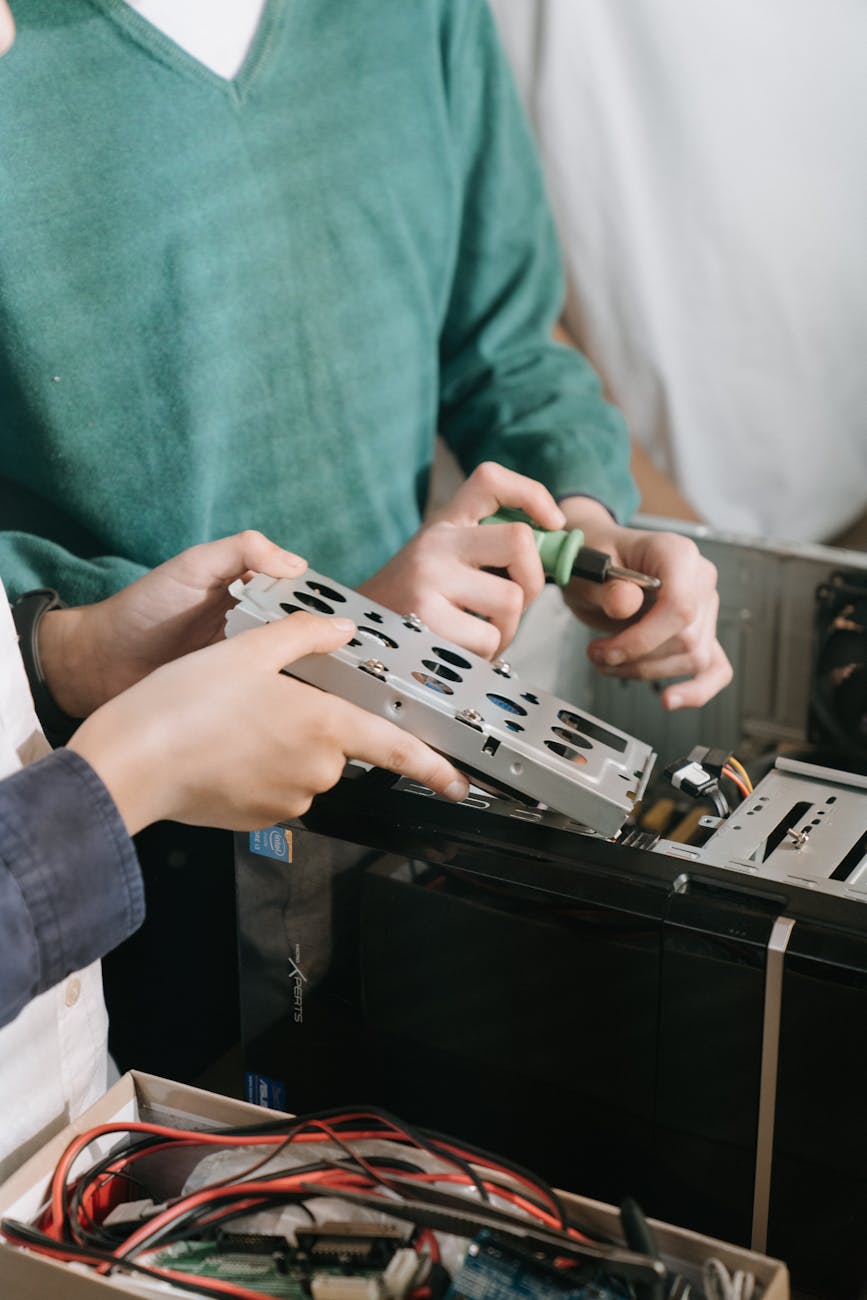
It turns out, building a computer isn’t mystical at all, it’s basically adult LEGO. Or, if you prefer, a high-stakes IKEA project without the Allen wrench and with slightly more terrifying price tags.
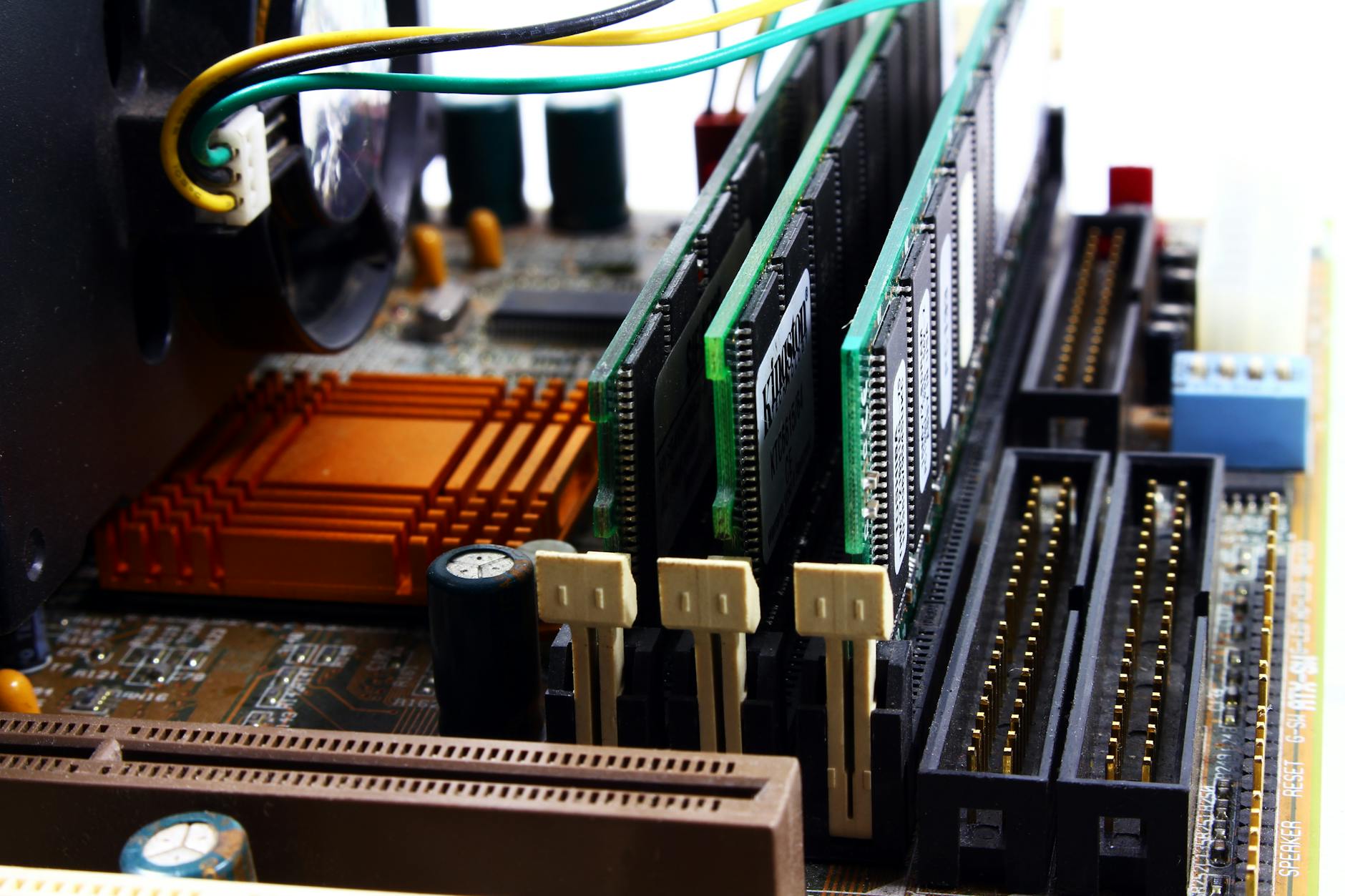
Once you know which parts fit together (the motherboard and CPU have to be compatible, for instance), the rest is pretty much plug-and-play. We picked out the parts piece by piece: RAM, graphics card, hard drive, case, power supply. He explained what everything did, how much power I’d need, and why I shouldn’t cheap out on cooling fans unless I enjoyed the smell of burning plastic.
Assembly was surprisingly satisfying. The motherboard, that flat green city of circuits, practically tells you where each piece goes. Most parts only fit in one spot, it’s almost foolproof. The trickiest part? Making sure every last cord is plugged in correctly. There’s always one that likes to hide and sometimes cords don’t quite reach so you have to get a different one.
Once it was all together, we booted it up with an operating system on a USB drive (a step up from the “CD-ROM” era). The screen flickered to life, and, voilà, my very own computer.
I’ve only had to swap out a few parts since, upgrading the graphics card here, adding a new hard drive there. Instead of throwing down thousands on a brand-new computer every few years, I get to be strategic and invest in pieces that will last. If one piece gets old or outdated, I replace just that piece. It’s like car maintenance, but less greasy.
My first build cost me about $1,000, spread out over a few months of saving, but it’s still running strong. Not bad for something I once thought required a degree in wizardry.
But the best part wasn’t the computer, it was what it did for me.
That project shifted something in my mindset. It made me question how many other things I’d written off as “too complicated.” Since then, I’ve built a shed, laid a patio, and even tried to fix my washing machine (it almost worked, turns out the part required more muscle than I had).
Now, I don’t rush to say, “I can’t.” Instead, I ask, “How hard could it be?”
It’s not about proving I “don’t need no man”, it’s about proving to myself that I’m capable. Because the truth is, most obstacles aren’t out there in the world; they’re in our heads. Once you push past that mental block, confidence grows like compounding interest.
And if it all goes sideways? Well, at least you’ll have a good story, and probably a few extra screws. Okay, in my case, a lot of extra screws.
If you’ve ever thought, “I could never build a computer,” consider this your sign. Start by watching a few YouTube tutorials, read a build guide on PCPartPicker, and pick components that match your budget and goals.
It might take patience (and maybe a few deep breaths when cables don’t click in right), but when that screen finally flickers to life, you’ll feel like you just performed magic—minus the wand.
And if all else fails? You’ll still have learned more about how your tech works than 90% of people ever do. Plus, you’ll gain something far more valuable than a PC: proof that you can tackle things that once terrified you.
Because sometimes, the best way to build confidence… is to literally build something.
What You Need
Case – The shell that holds everything together.
Motherboard – The “main board” that connects all components.
CPU (Processor) – The brain of the operation
RAM – The short-term memory; helps your computer multitask.
Storage – SSD or HDD, where all your files live.
Power Supply (PSU) – Feeds electricity to every component.
Graphics Card (GPU) – Optional, but crucial for gaming or design work.
Cooling System – Fans or liquid cooling to keep things chill.
completed: 2010
cost: About $1000(has saved me at least that much in replacement costs over a 15 year lifespan)
It finally happened, dear reader, I’ve ascended the social ladder or perhaps I was just finally given my due. After years of modest living and an enduring fondness for mud-splattered hiking boots, I am now… a Lady. Or at least, that’s what the certificate says.
This rather illustrious transformation occurred thanks to my brother, who, in an act of Christmas generosity (and perhaps a touch of mischief), purchased me an “Irish title.” Technically, I am now the Lady of Kerry, complete with a small plot of land, or as the fine print clarifies, a symbolic square foot that could just about accommodate a particularly skinny daisy. I can go visit it, but I can’t redecorate or reside there on a permanent basis.
A castle in Kerry, Ireland
Now, before you curtsey, a word of reality: companies like Established Titles offer honorary recognition rather than true nobility. My title doesn’t come with a castle, serfs, or even a teapot emblazoned with my crest. Although, now that I think of it, I could perhaps purchase one for my stove here at home. Historically, “Lord” and “Lady” were titles granted by monarchs or inherited through noble bloodlines, not acquired via online checkout. But honestly, who am I to let historical accuracy get in the way of a good story?
Besides, the funds go toward preserving the land and history of Ireland, a cause close to my heart. My mother’s family is Scots-Irish, and I’ve always felt a deep connection to that misty emerald isle. I fell in love with its spirit: the wild cliffs, the songs that seem to rise from the earth itself, and the way history hums beneath every stone wall and ruined abbey. I love reading its stories, exploring its history back into the very days of Newgrange over 7,000 years old.
When I was younger, I took up the Irish fiddle and have returned to the instrument of my youth. I dabbled in Irish step dance in college. More recently, I even tried my hand at learning the language through Duolingo — Dia dhuit, if you will. When I finally visited Ireland, it felt like walking into the pages of an old legend. The Book of Kells took my breath away, and the rolling green hills seemed to whisper secrets older than time. Part of me was quite tempted to simply disappear into the countryside and see if the fae truly existed.
A day in Dublin
So yes, while my noble title may be symbolic, the sentiment behind it is genuine. And as an avid fantasy reader, I’d be lying if I said I hadn’t dreamed of being a Lady, though perhaps more the sword-wielding, dragon-slaying kind. If this little piece of parchment brings me one step closer to that dream, then I say it was money well spent.
Of course, being a lady hasn’t exactly transformed my daily routine. I still brew my own tea, scrub my own floors, and trip over my own dignity with regularity. No invitations to high society luncheons have arrived (yet), and my “estate” is still contained within a flowerpot on my porch. But perhaps the true nobility lies not in titles, but in finding humor, history, and heart in the small things.
So here I stand, Lady of Kerry, warrior of laundry day, slayer of dust bunnies, and humble admirer of the Irish hills. My crown may be metaphorical, but my affection for Ireland is entirely real.
My very own title!
So how might you become a “lord” or “lady”
Ever since the launch of Established Titles, there has been a plethora of copy-cat companies all offering the same thing, a little certificate saying you “own” a piece of land or castle in Ireland or elsewhere in the British Isles and therefore can now call yourself a “lady”. The money raised usually goes to the preservation of that land or castle, because it is expensive to maintain that history. Who knew that nobility was only a mouse click away?
While most bucket list items require at least a trip out your front door, some of the best ones ask for nothing more than a comfortable chair, a cup of tea, a purring cat, and a book. Not everyone thinks of reading as a bucket list activity, but plenty of readers consider finishing the “greats” an accomplishment worth doing before you “kick the bucket.”
Lists of Books to Read Before You Die are everywhere, compiled by literary authorities, publishers, or critics. The argument for reading them is solid: classics can enrich your life through timeless themes, enduring wisdom, and universal insights into the human condition. They can expand your vocabulary, sharpen your writing, and deepen your appreciation for culture and history. Sometimes, one book really does shift your perspective forever.
And yet, I don’t always agree with these lists. It’s not that the classics aren’t worthy, it’s just that… well… many of them are boring. There, I said it and I shan’t take it back! I’m a fantasy and science fiction reader at heart. Outside a few exceptions, books outside those genres are of little interest to me. Oh, do not mistake me for an uneducated plebian. I’ve read my share of “required” classics (even in German, no less), but some really do go on. Did I really need to know that much about the Parisian sewer system, Victor? I appreciate the symbolism, but I nodded off halfway through. Perhaps, it’s my ADHD mind which just wanders off when things don’t spark my intrigue.
That doesn’t mean I don’t have a reading bucket list outside my “To Be Read Pile”, which we aren’t discussing. They will be read, when they are read! I digress.
My Reading Bucket List simply reflects my love for fantasy and science fiction, the genres that spark my imagination most. A few years ago, I stumbled upon a “Top 20 Fantasy Series of All Time” list, not compiled by critics, but by a survey of BookTube influencers. Yes, it’s biased toward modern titles (and leans millennial/Gen Z), but I liked the idea of readers (not industry insiders) deciding which stories deserved a place on the list. (We won’t get into all the politics behind what books get placed on those classic lists, we’d be here all day with me ranting.)
To my delight, I had already read about half. The rest became my summer project in 2022. Armed with my library card and Kindle, I sampled each new series, reading at least the first book to see if it hooked me. Some didn’t, but then not every book will be my cup of tea. Others were revelations, hidden gems I never would have found without the list. They were witty, profound, beautifully written, and layered with history, culture, and insight, even while transporting me to other worlds. While none of them were life-changing, they certainly sparked introspection and reflection, opened up ideas, and at times challenged my ways of thinking.
If you’ve struggled through traditional “must-read” lists and found yourself uninspired, maybe it’s time to look at fantasy. Between epic sagas and modern masterpieces, there’s a wealth of stories waiting to change the way you think, or at least keep you delightfully entertained. The list below is a great place to start. You’ll find household names alongside underappreciated treasures, each with the potential to expand your reading horizons.
Suggested Top 20 Fantasy Series to Read Before You Die
Rank 19 (3 series)
Ash and Sand — Richard Nell
The Dandelion Dynasty — Ken Liu
The Earthsea Cycle — Ursula K. Le Guin
Rank 17 (2 series)
Harry Potter — J.K. Rowling
The Kingkiller Chronicle — Patrick Rothfuss (warning this series is unfinished and has been for over 10 years)
Rank 15 (2 series)
The Books of Babel — Josiah Bancroft
The Broken Earth Trilogy — N.K. Jemisin
Rank 14
Memory, Sorrow, and Thorn — Tad Williams
Rank 13
The Green Bone Saga — Fonda Lee
Rank 11 (2 series)
The Poppy War Trilogy — R.F. Kuang
Gentleman Bastard — Scott Lynch (also an unfinished series, my recommendation is you read the first as a stand alone as it does give a satisfying ending)
Rank 10
The Greatcoats — Sebastien de Castell
Rank 9
Discworld — Terry Pratchett
Rank 8
Malazan — Steven Erikson & Ian Esslemont,
Rank 7
The Realm of the Elderlings — Robin Hobb
Rank 5 (2 series)
A Song of Ice and Fire — George R.R. Martin (Also unfinished, but feel like you all should know this by now)
Reading bucket lists don’t need to be confined to dusty classics or daunting tomes. If fantasy and sci-fi are what light you up, then let those genres guide your journey. After all, books are more than assignments, they’re invitations into new worlds. And what better way to spend your limited time than wandering through worlds filled with wonder?
I know, dear reader, this might be the last place you’d expect to find a defense of boredom. After all, many of you probably clicked here to escape boredom, not embrace it. I may even be digging my own blogging grave by suggesting you spend less time scrolling and more time staring at your ceiling. But this space was never meant to trap you for hours. Its intention has always been to help you live a fuller, more mindful life, without breaking the bank.
As someone with ADHD, the idea of boredom used to feel impossible. Tedium was my sworn enemy. Yet I’ve come to realize that boredom is a rare luxury these days. With our phones glued to our palms, we rarely get the stillness that allows us to simply be.
And here’s the secret: boredom isn’t the enemy. It’s the birthplace of philosophy, creativity, and growth.
Why We Need Boredom
When you’re left alone with your thoughts, they can be loud, uncomfortable, even overwhelming. But without that discomfort, how can you truly know yourself? When do you ever stop to ask:
Am I on the right path?
Are my relationships enriching or draining me?
What do I actually want out of this short, strange life?
Noise drowns out those questions. Silence, and yes, boredom, makes space for them. And while the answers might not always be pleasant, they’re necessary for meaningful growth. It’s only when we ask those questions that we begin to fully develop a meaningful life which according to some researchers may be the antidote for the crushing anxiety we’ve all been feeling. According to Harvard Professor Arthur Brooks, it is the lack of meaning that drives so much of our modern world’s anxiety and depression and boredom would be part of the cure!
Boredom also boosts creativity. When the mind wanders, it problem-solves. Einstein famously worked at the Swiss Patent Office for seven years, a job so dull it practically begs for daydreaming. Out of that monotony came some of the most groundbreaking ideas in physics. Imagine what we might uncover if we swapped YouTube shorts for a little mental white space. You may be quite shocked at what problems you solve whilst driving your car.
Finally, boredom sparks curiosity. That restless itch pushes us to seek out novelty, to wander past the familiar bend in the road. Dissatisfaction with the status quo has always been the engine of human progress. It’s what drove Columbus to set sail and spark the West’s discovery of the world. It’s what drove the Wright Brothers to the sky. It’s what made humanity ask “what is up there in the vast expanse above us?”
Some of my best ideas have come when I was bored. This very blog was born while I was gardening. Insights about my therapy clients have surfaced while I was elbow-deep in dishes. I’ve written entire stories in my head while waiting in line, or mulled over questions of faith while driving down long stretches of highway.
Boredom isn’t wasted time, it’s compost. Given space, it grows something new.
How to Reclaim It
So how do you let boredom back in? Start small.
Turn off your podcast or music while you drive or clean.
Try a tech-free meal and see what real conversation shows up.
Block out one phone-free evening a week.
Take breaks from social media, or better yet, set parental controls on yourself.
Use your phone’s Do Not Disturb mode generously (you can allow emergency calls to still come through).
Will it be fun at first? No. That’s the point. But over time, you’ll come to see boredom not as an absence but as an opening. I’ve even started protecting mine, because that mental wandering is often far richer than anything TikTok could offer.
I’m not sure if you’ve noticed, dear reader, but we’re in the thick of a technological revolution—what with artificial intelligence, immersive media, and smart devices popping up faster than I can finish my morning coffee. With every leap forward, the world reshapes itself: some innovations are delightful, others… decidedly less so.
But before you brace for a philosophical tirade, rest easy. This isn’t about the doom and gloom of progress. Today’s post is about something far more charming, and perhaps a bit science fiction, how technology is transforming the way we experience visual art, and how I got to see that transformation firsthand through the Immersive Van Gogh Experience.
For centuries, visual art has been something we look at, admired behind velvet ropes or under museum lighting. We view a painting, reflect on its symbolism, absorb its mood, and then move on. It’s typically a passive interaction, appreciated but always held at arm’s length.
Now, thanks to clever combinations of projection mapping, music, props, and sometimes even VR goggles, we can step into the world of a painting. These experiences dissolve the frame. The art swirls around us, alive with movement, sound, and color. It invites not just observation, but participation. We’re transported into a world shaped by brushstroke and emotion, where time bends and the impossible feels touchable. If you’re a fan of Star Trek it can feel as though the Holodeck isn’t far behind us – or would it be ahead of us?
Such was my adventure on the outskirts of Philadelphia. I attended the Immersive Van Gogh Exhibit, where his iconic works leapt from flat canvas into full surround. It was a modest production by immersive art standards, but well worth the 50-minute drive. The exhibit unfolded in three rooms, beginning with a respectful introduction to the artist’s life: the genius, the grief, and the legacy.
Vincent Willem van Gogh, the Dutch Post-Impressionist painter, is now recognized as one of the most influential artists in Western history. He created over 2,000 works, 800 of which were oil paintings, many during the final two years of his life. Though immensely talented, he also struggled deeply with mental illness, most likely Bipolar Disorder, experiencing intense periods of depression and mania. He spent time in psychiatric hospitals, often neglected his health, and famously cut off part of his left ear after a dispute with a close friend.
I would be remiss if not highlighting the efforts of his sister-in-law. As It’s entirely possible the world would have forgotten him, had it not been for her, Johanna van Gogh-Bonger, who championed his work and preserved his letters after his death. Her tireless efforts not only shared his story but helped cement his artistic legacy. Too often we focus on the face and talent of a given operation without appreciating the supporting cast of characters. After all in any endeavor it takes a village to succeed.
While the trope of the “tortured artist” is often romanticized, Van Gogh’s story has opened broader conversations about mental health, creativity, and resilience. Beyond the mythos, his art also sparked interest in unexpected fields, like fluid dynamics. Scientists have observed that Starry Night mirrors real-world mathematical models of turbulence, patterns that weren’t formally understood until decades after Van Gogh painted them. He may not have known the equations, but his brush captured the energy of the cosmos with stunning intuition.
His story gently unfolded as I walked through the exhibit. I heard excerpts from his letters and watched his still-lifes float, twist, and evolve across the walls. One moment, I was standing in his bedroom; the next, sunflowers danced around me, filling the space with golden light. My favorite moment was in the largest room, reclining on a seat and watching Starry Night come to life, accompanied by music that echoed the emotion of each painting. I could’ve stayed there for hours, had my parking meter not rudely reminded me of the outside world.
There was something deeply calming about it all. The way the paintings moved, the soft narration, the glow of color, it felt like being wrapped in a blanket of light and sound. The only thing missing was a hot cup of tea to sip while I drifted through it all.
Eventually, I had to peel myself away from Van Gogh’s swirling skies and rejoin reality. I refilled the meter and met my traveling companion (my mom) in the gift shop to find a souvenir. She chose a beautiful necklace that still earns her compliments. I, ever the practical one, picked up a set of coasters, because if I must collect things, they might as well be useful. Additionally, if I must have things, they may as well be beautiful. A memento with function and a memory with purpose.
While technology certainly has its downsides, I’m genuinely excited to see how it will continue to open new windows into the past, especially when it’s done with care, creativity, and reverence. If we can blend art and innovation without losing the soul of either, I’d say that’s progress worth celebrating.
Finding Your Own Immersive Art Adventure
If your curiosity is piqued and you’re ready to step inside a painting (or at least escape your laundry pile for an afternoon), immersive art exhibits are popping up in cities all over the world. A quick search for “immersive art experience near me” or checking sites like Exhibit Listings, Eventbrite, and even local museum calendars can help you find upcoming shows. Popular exhibitions include Immersive Van Gogh, Monet: The Immersive Experience, and Frida Kahlo: Immersive Biography, among others. Many cities now have dedicated digital art spaces that rotate different artists throughout the year. Social media is also surprisingly helpful, follow local art museums, galleries, and pop-up exhibit pages to stay in the loop. And don’t be afraid to go solo! These exhibits are made to be experienced personally, and sometimes the quietest wanderings are the most rewarding.